Reading Form: The Unseen Language of Jewellery at TEFAF
Ahead of TEFAF New York, I am looking back at my trip to TEFAF Maastricht – at my personal highlights and the underlying themes that bring them together: the dialogue between jewellers exhibiting for the first time and established houses, between carefully curated histories and newly formed collections. What emerges is a network of relationships, where each piece exists not in isolation, but as part of a larger, evolving whole.
Held the day before the fair opened more widely to the public, the Collector’s Preview at TEFAF Maastricht is dedicated to the serious connoisseurs who know what they are looking for – the rare pieces that will complete, refine or transform the collections they are building. In this space, decisions are rarely impulsive and objects are valued not only for what they are, but for the significance they hold. An architect by profession, I attended the preview with a different way of looking at jewels. Trained to analyse what is in front of me – to read structure before surface, to understand how something is built and to follow how light moves, where it settles and where it slips away – in my world form is resolved through three key decisions: material, proportion and balance.
Otto Jakob
Otto Jakob
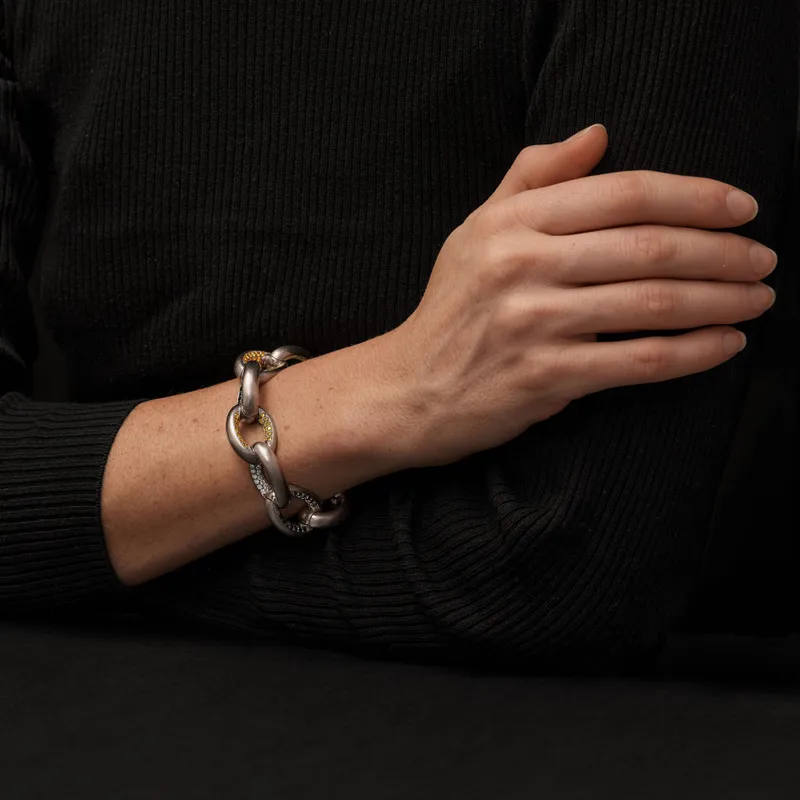
Xio bracelet in 18K white gold, set with white, yellow and black diamonds
Otto Jakob
Otto Jakob
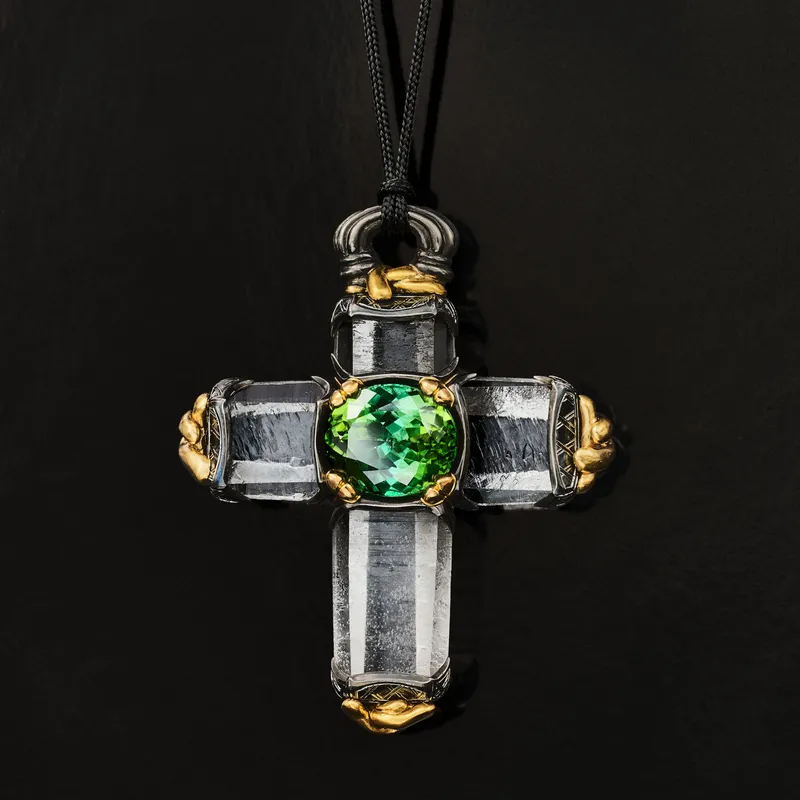
Prospera cross pendant in 18K yellow and white gold, set with rock crystal, tourmaline and diamond
The magnitude of the fair is difficult to put into words, and I was struck by how thoughtfully each jewellery house and contemporary designer presented their pieces to such a discerning audience. Below are the highlights from my first TEFAF experience.
Otto Jakob: Sculpting Nature in Gold
There are certain names at TEFAF that do not seek loud announcements, and Otto Jakob is one of them. This German artist-goldsmith appears at very few fairs, and perhaps because of that, encountering his work is always accompanied by a sense of discovery.
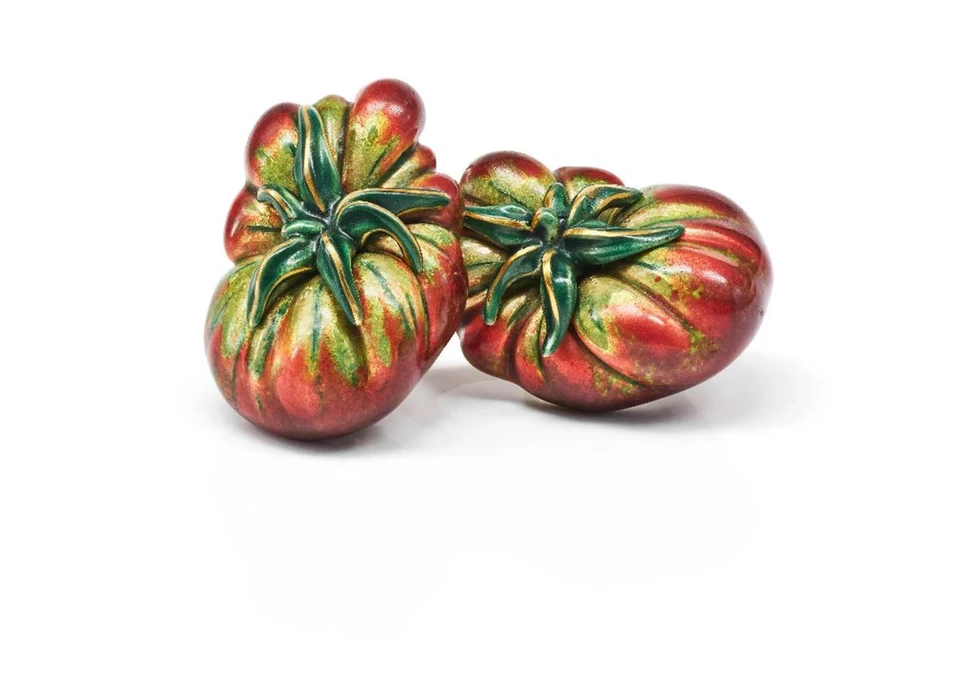
Otto Jakob Pomo d’oro earrings in 18K yellow and white gold with vitreous enamel
At the edge of his stand, it was impossible not to be drawn in by the Pomo d’Oro earrings. Featuring two ripening tomatoes, full and naturally misshapen, one might expect them to be weighty. Yet they are actually very light, achieved through their hollow gold structure. Glowing beneath layers of red and green vitreous enamel, they are so realistic you could almost eat them.When I asked Jakob to show me something more personal, he presented the Tycho IV ring, the final piece he completed in December ahead of TEFAF Maastricht. Inspired by early Celtic adornment, the form is restrained, almost austere. Hand-carved in wax and cast in white gold, its raw casting crust is left intentionally untouched, while at its centre, a Renaissance-inspired table-cut diamond deepens the design’s links to the past.
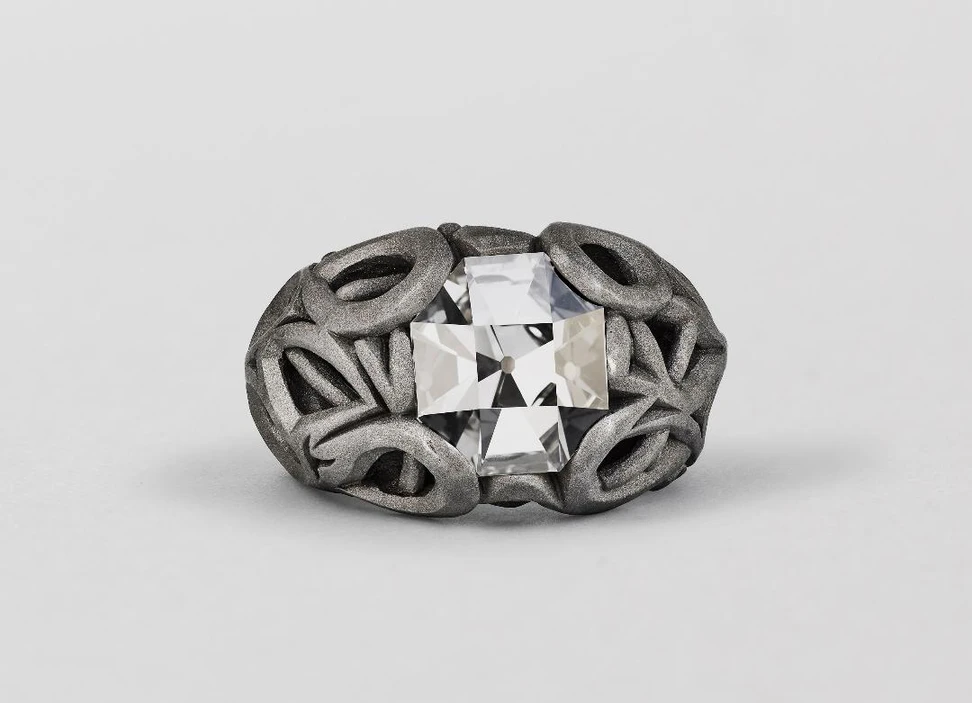
Otto Jakob Tycho IV ring in 18K white gold, set with a diamond, front view
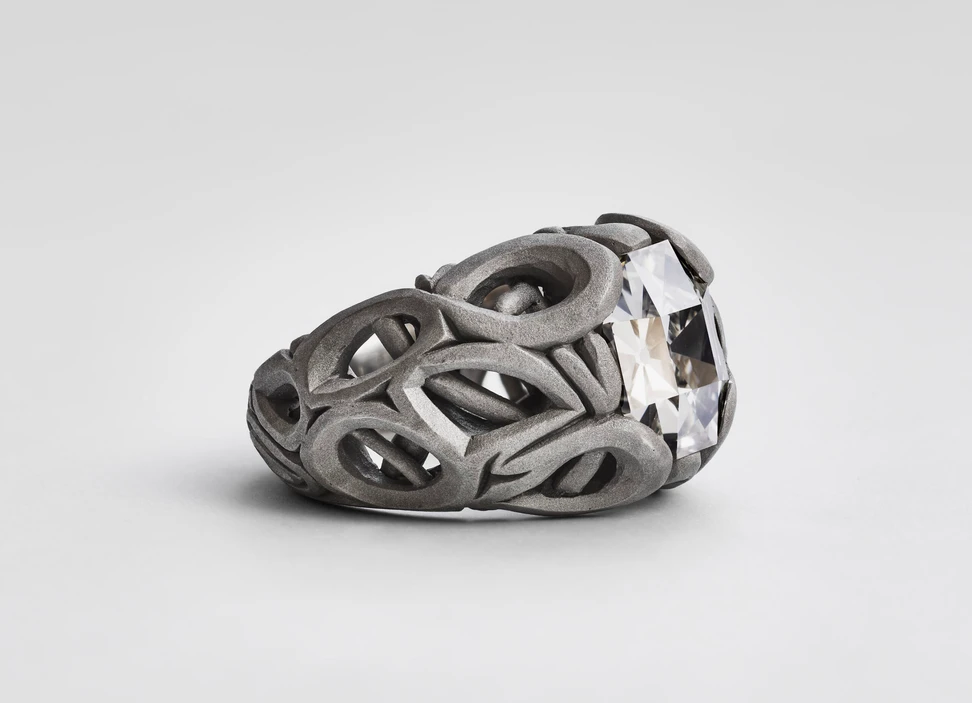
Otto Jakob Tycho IV ring in 18K white gold, set with a diamond, side view
Hemmerle & Van Cleef & Arpels: Time, in Dialogue
At the heart of the fair, Hemmerle holds a distinct position. It is a house with a fervent following of collectors who return not simply to see what is new, but to observe how material, form and technique continue to evolve in its hands. Hemmerle has been showing at TEFAF Maastricht since 1997. Its presence at the fair is not simply about presenting new work, but about sustaining an ongoing conversation with those who share a deep appreciation for craftsmanship and materials. That presence is visible beyond the stand itself. Throughout the preview, I spotted Hemmerle’s creations on collectors. Instantly recognisable for their bold engineering and unexpected creations, they are worn with a confidence that reflects their esteemed place within the fair.
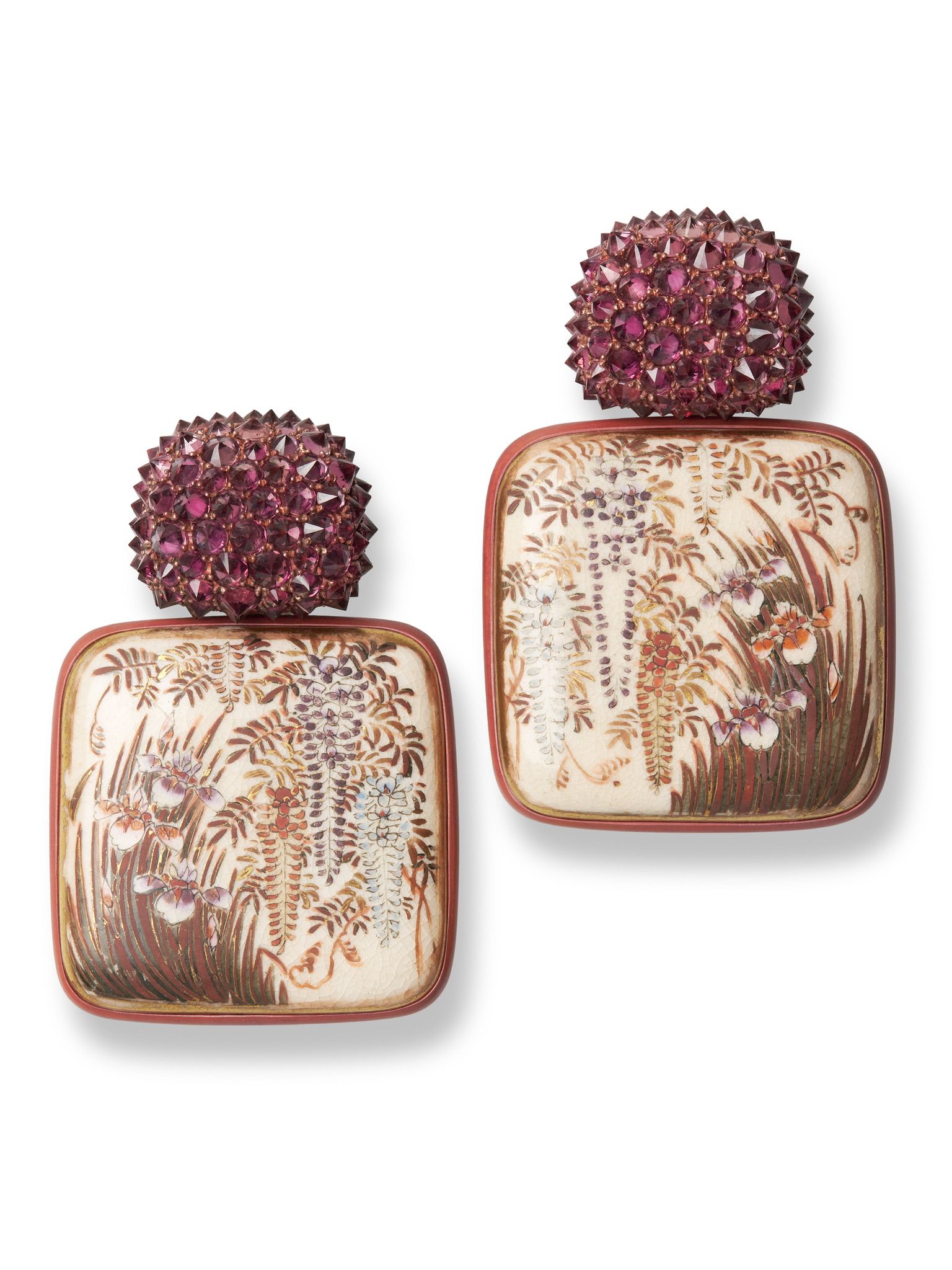
Hemmerle earrings featuring 19th century Japanese ceramics, Umba sapphires, copper and 18K white gold
At the stand, fragments of time are allowed to exist again in a new form. Nineteenth-century Japanese ceramics are combined with orangey-red Umba sapphires, copper and white gold in a pair of earrings. Turn them over and the ceramic squares are signed by the artist who painted them, a detail known only to the wearer.
And then, more earrings that recontextualise history, featuring French medallions from Rouen, dated 1813, set against brushed pink iron. This juxtaposition of artefact and industrial material reflects Hemmerle’s long-standing approach, where iron is used alongside precious stones and historical fragments to create compositions that are both technically poetic and materially unconventional.
There is, in this approach, something akin to an architectural retrofit, where existing structures are not erased but reworked to serve a new purpose. Hemmerle applies a similar logic, integrating historical elements that are not merely decorative, but structurally reimagined within each piece.
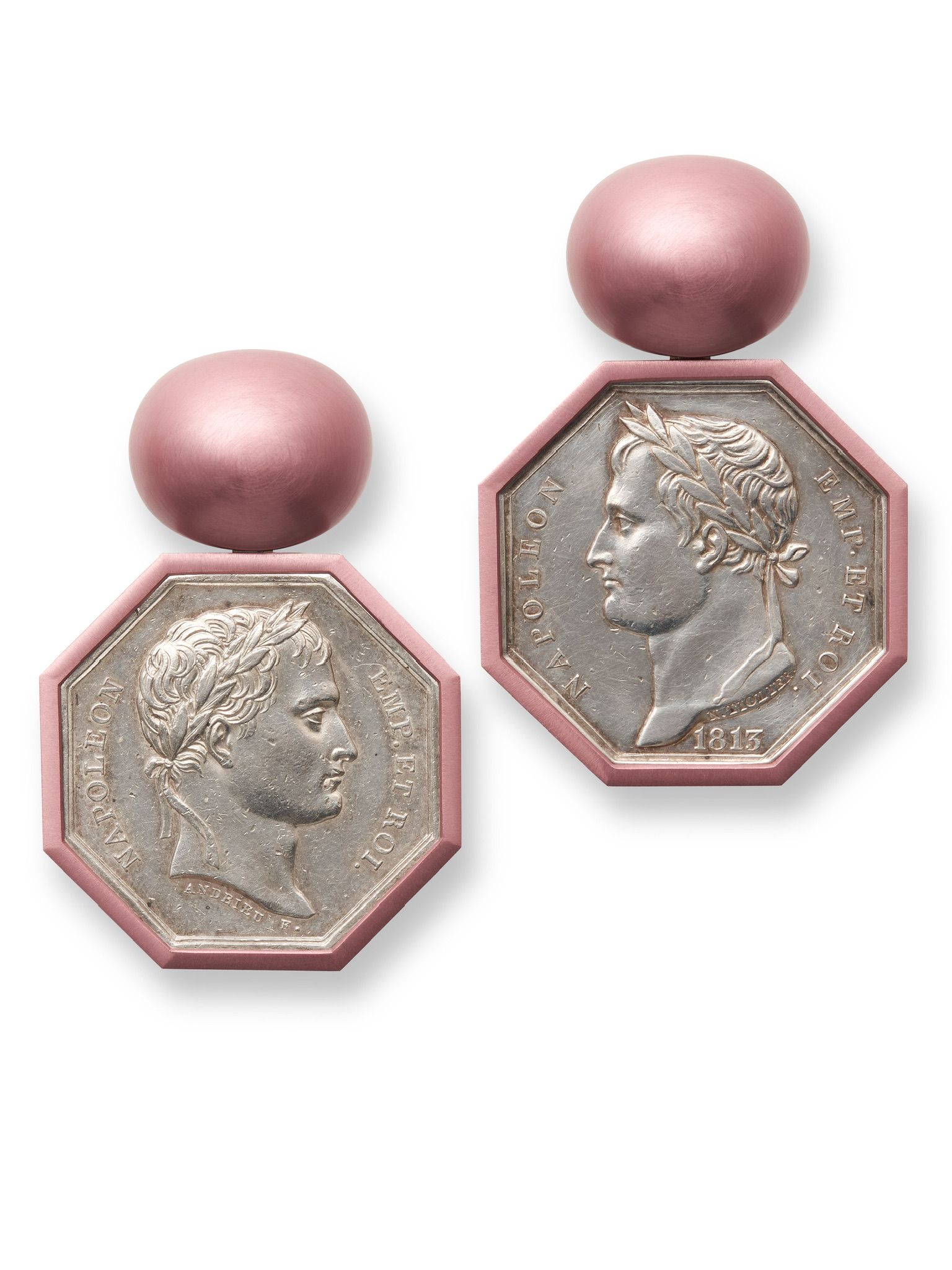
Hemmerle earrings featuring French medallions “Conseil des Prud’Hommes Rouen”, Napoleon 1813, aluminium and 18K white gold
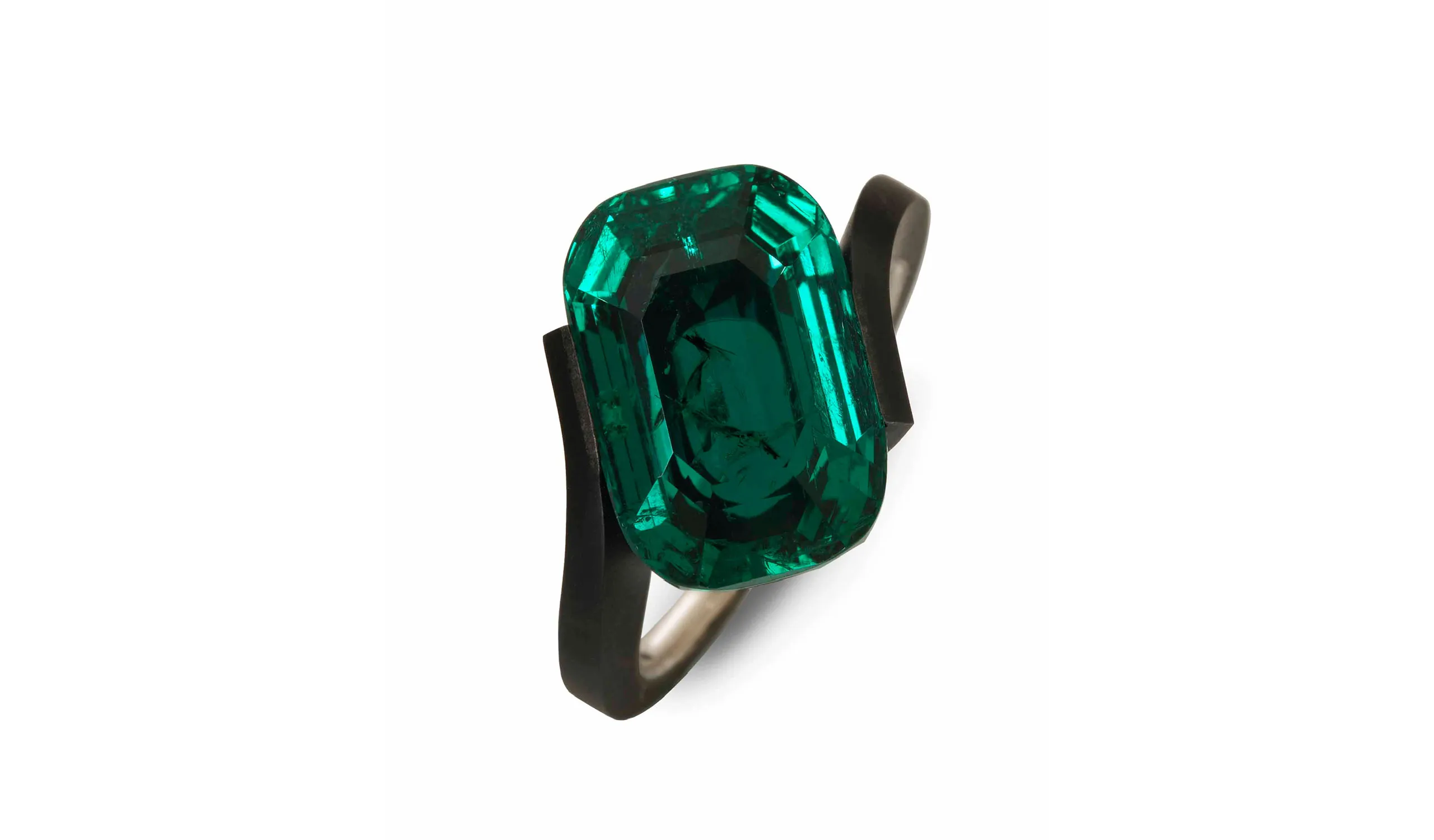
Hemmerle emerald ring, in iron and 18K white gold
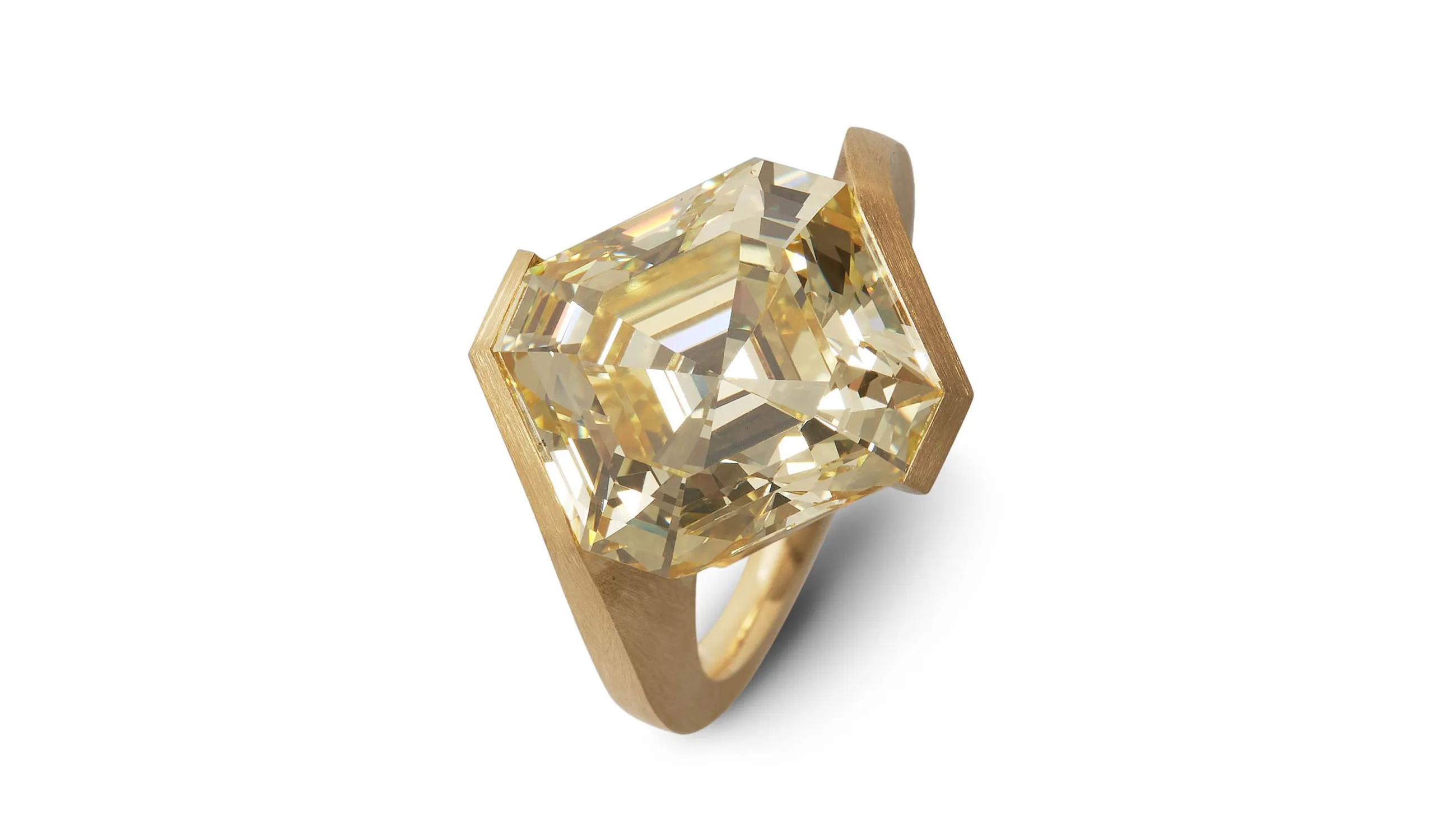
Hemmerle ring featuring a Fancy Intense Yellow diamond set in 18K yellow gold
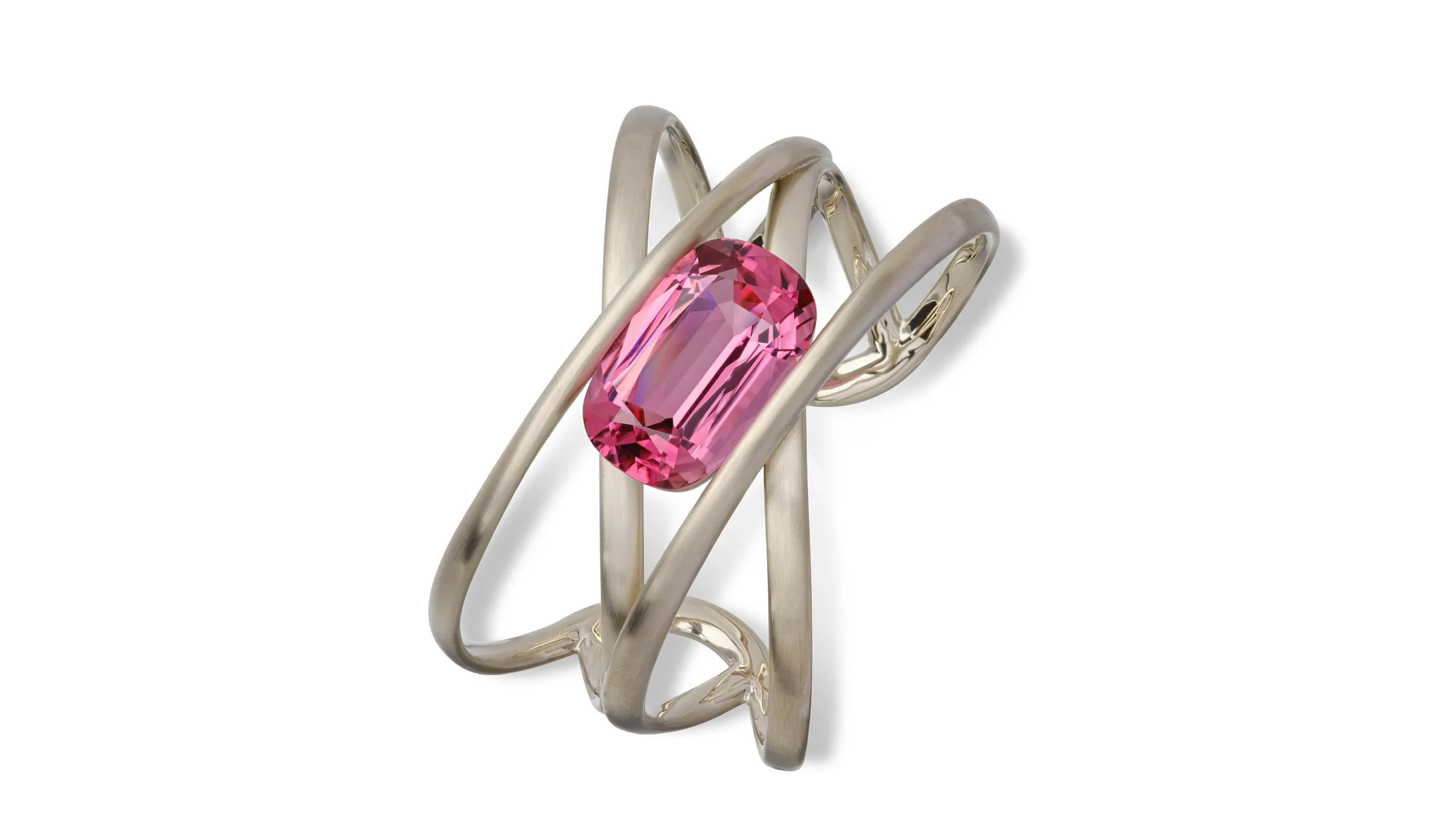
Hemmerle rubellite bangle in 18K white gold
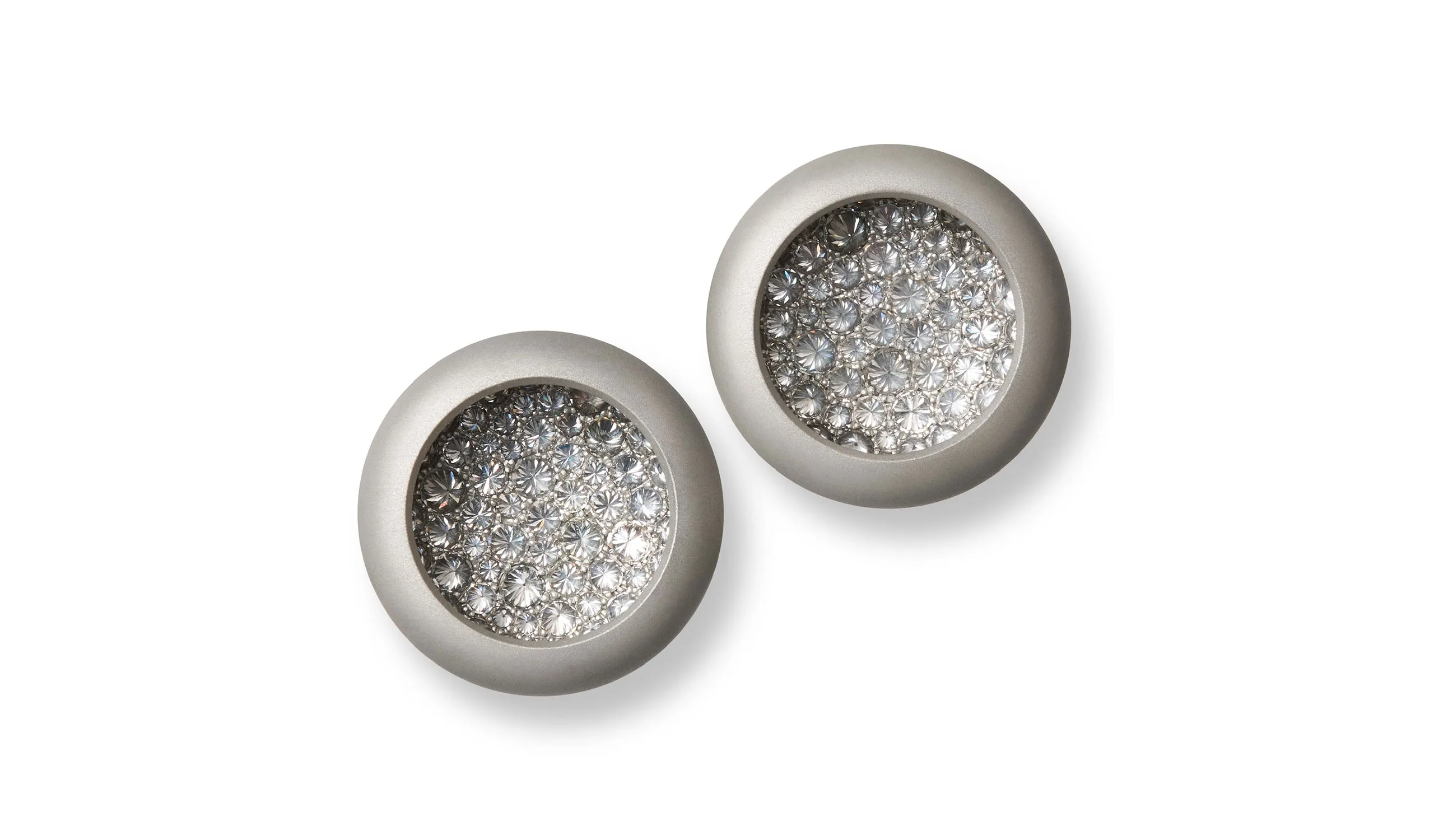
Hemmerle diamond earrings, in aluminium and 18K white gold
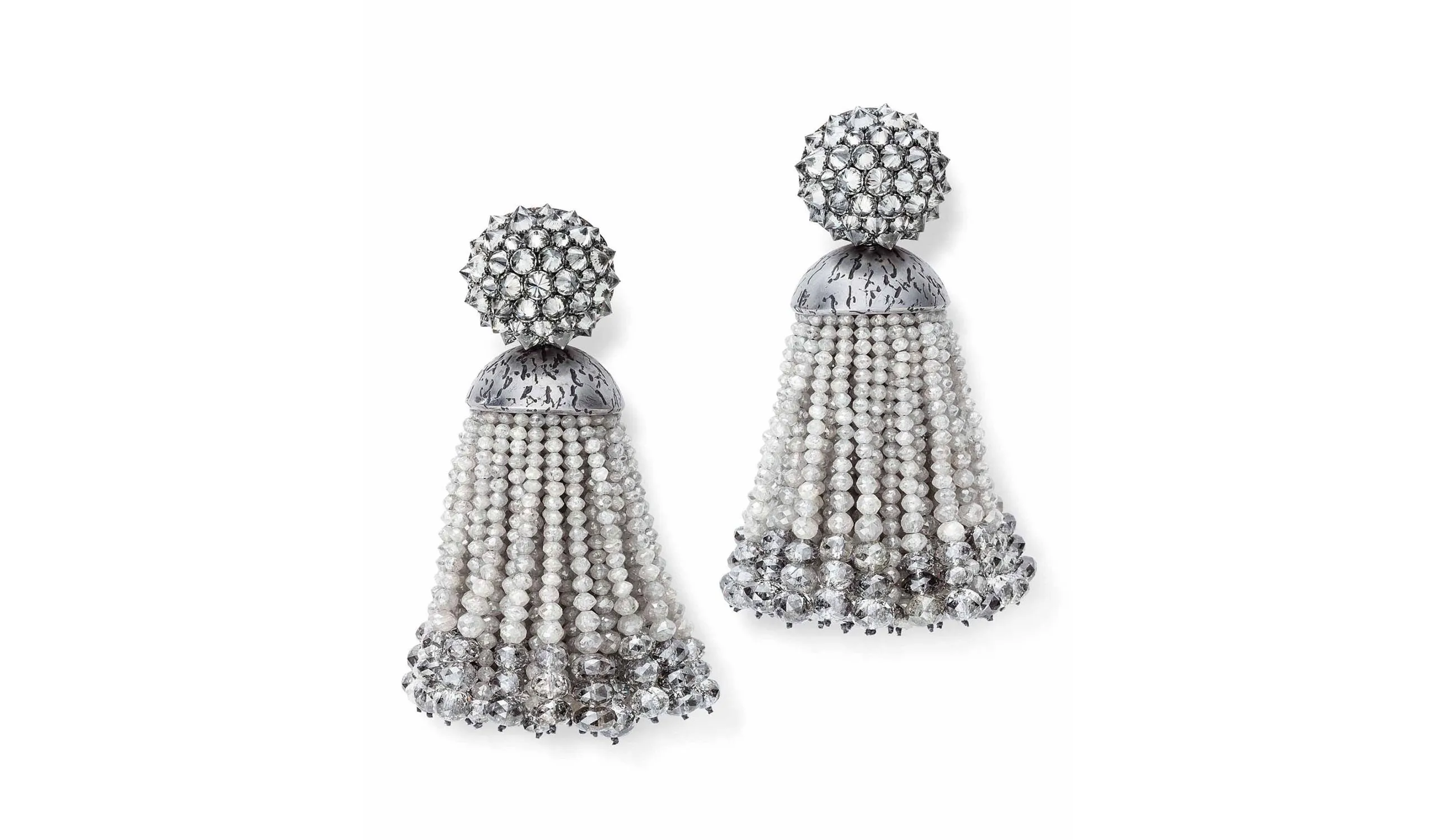
Hemmerle diamond earrings, in iron, silver and 18K white gold
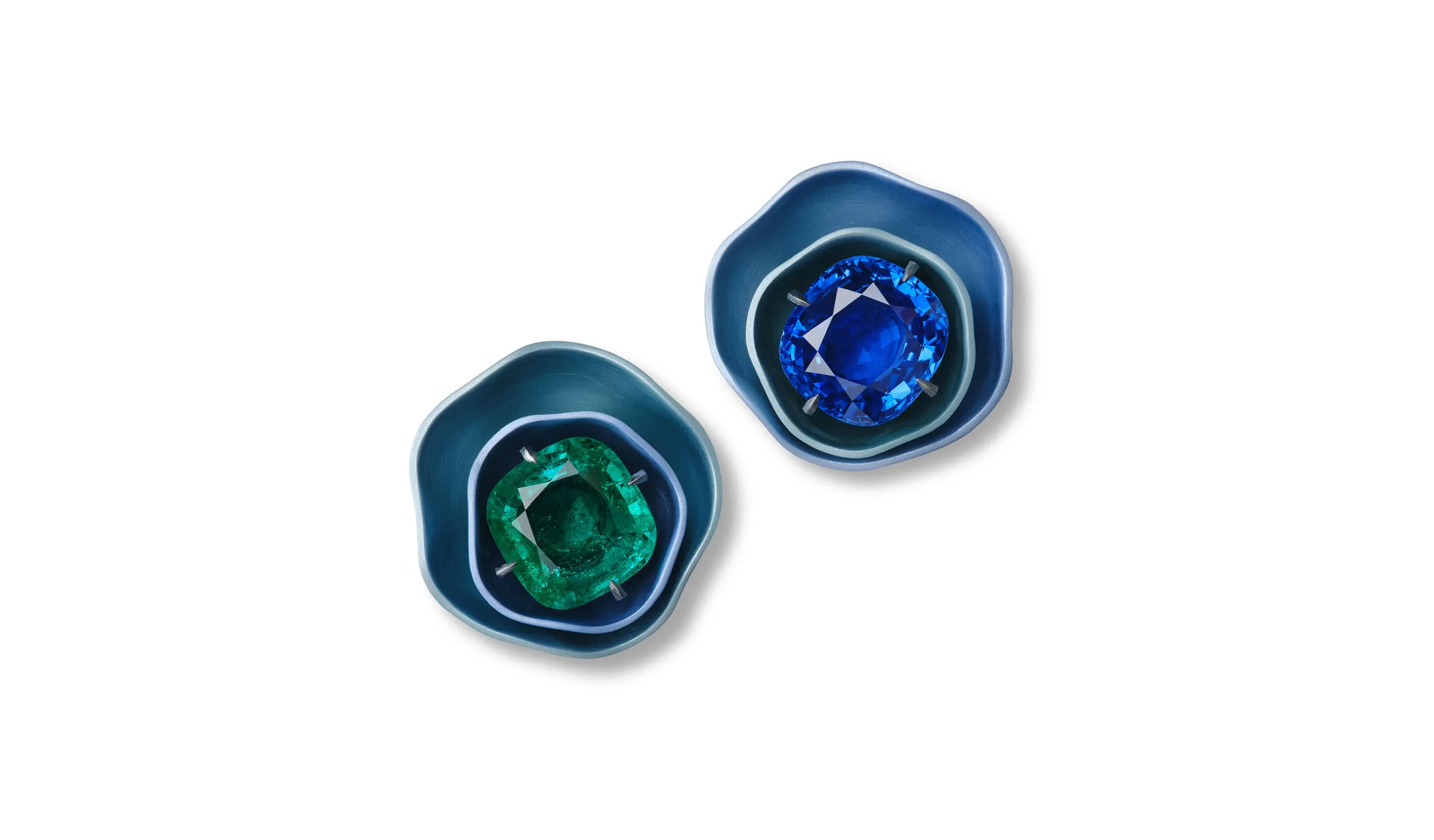
Hemmerle emerald, sapphire earrings in aluminium and 18K white gold
Across from Hemmerle, Van Cleef & Arpels presented more than 50 archival pieces alongside contemporary creations, bridging past and present. At the stand, I was drawn to two pieces in particular: a Hawaii clip from 1942, once worn by Wallis Simpson, and a 1977 gold money clip. The Hawaii clip carries the exuberance of its time, a piece of rubies, sapphires and diamonds arranged in a floral spray that reflects the naturalistic language the maison developed in the late 1930s. Its association with Wallis Simpson, one of the 20th century’s most influential jewellery patrons, places it within both a design and a cultural history. The money clip, by contrast, is almost austere. Designed as an object of function, it was acquired during the preview and immediately clipped onto a collector’s suit. In being worn, it slips out of its original role and into another, shaped by the one who chooses it – a reprogramming of its function, where its original utility is replaced by a more symbolic role.
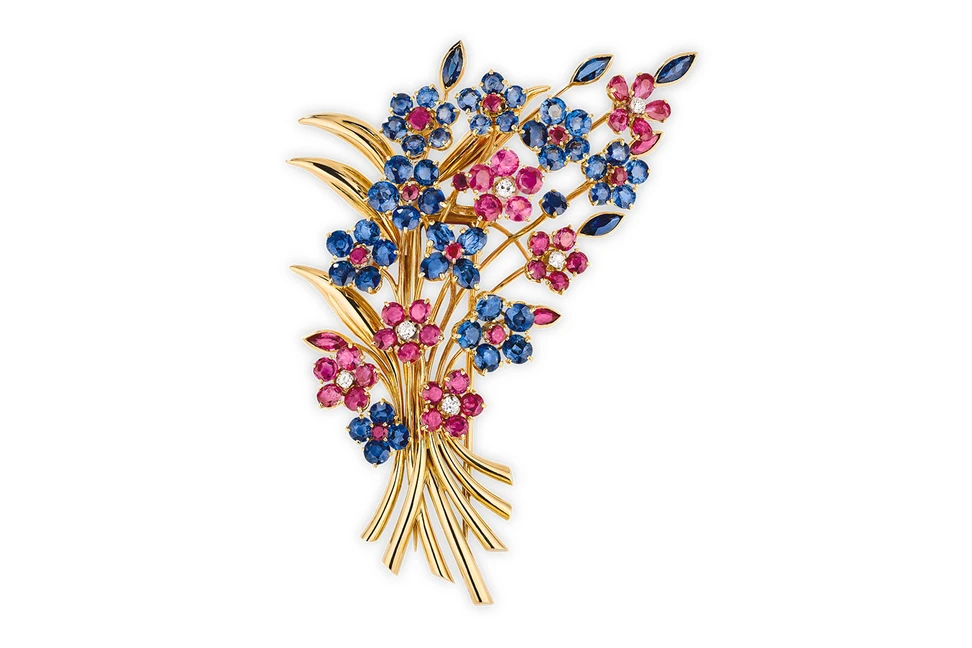
Van Cleef & Arpels clip from 1942
Cora Sheibani: Objects that Remember
Rather than preserving artefacts, Cora Sheibani reanimates them. Making her debut at TEFAF Maastricht, her jewels feel as though they have already lived, travelled and gathered stories before arriving here. The Fern earrings carry that spirit. Vivid green aluminium fronds move independently, their lightness set against tops carved from fossilised dinosaur bone. Materials from different times sit together without hierarchy, each holding its own presence.
That same thinking unfolds in the Timeline ring. Twelve diamonds, twelve distinct cuts, arranged in chronological order to trace the evolution of diamond cutting. Each cut reflects what was valued at the time, in both material and cultural terms. In the transition from the old mine cut to the modern brilliant, a clear shift emerges, from preserving weight to cutting for light, even at the expense of the stone itself. In the design, these shifts are held together in a single form, where the history of the diamond is made visible.
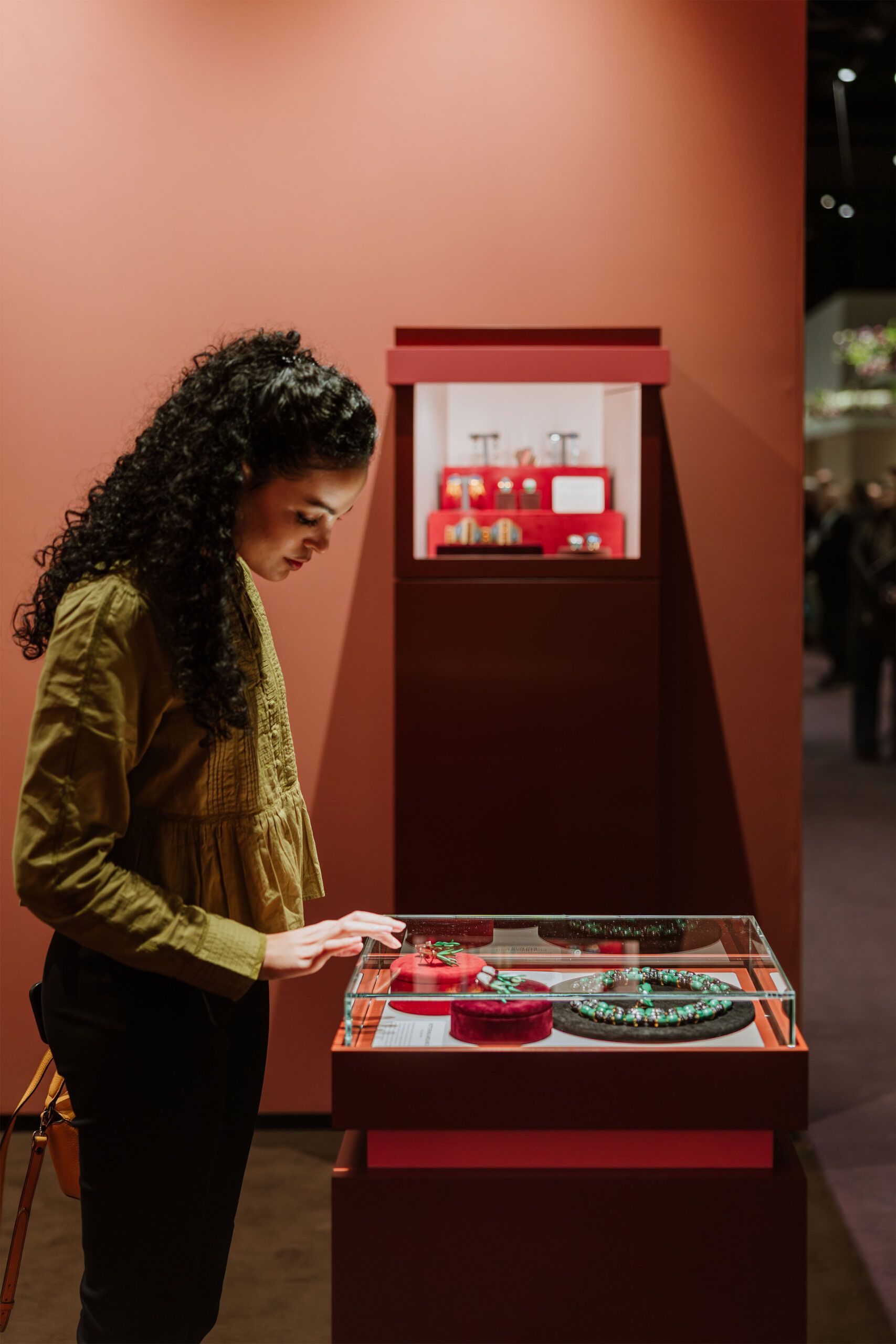
Cora Sheibani at TEFAF Maastricht 2026 Courtesy of TEFAF
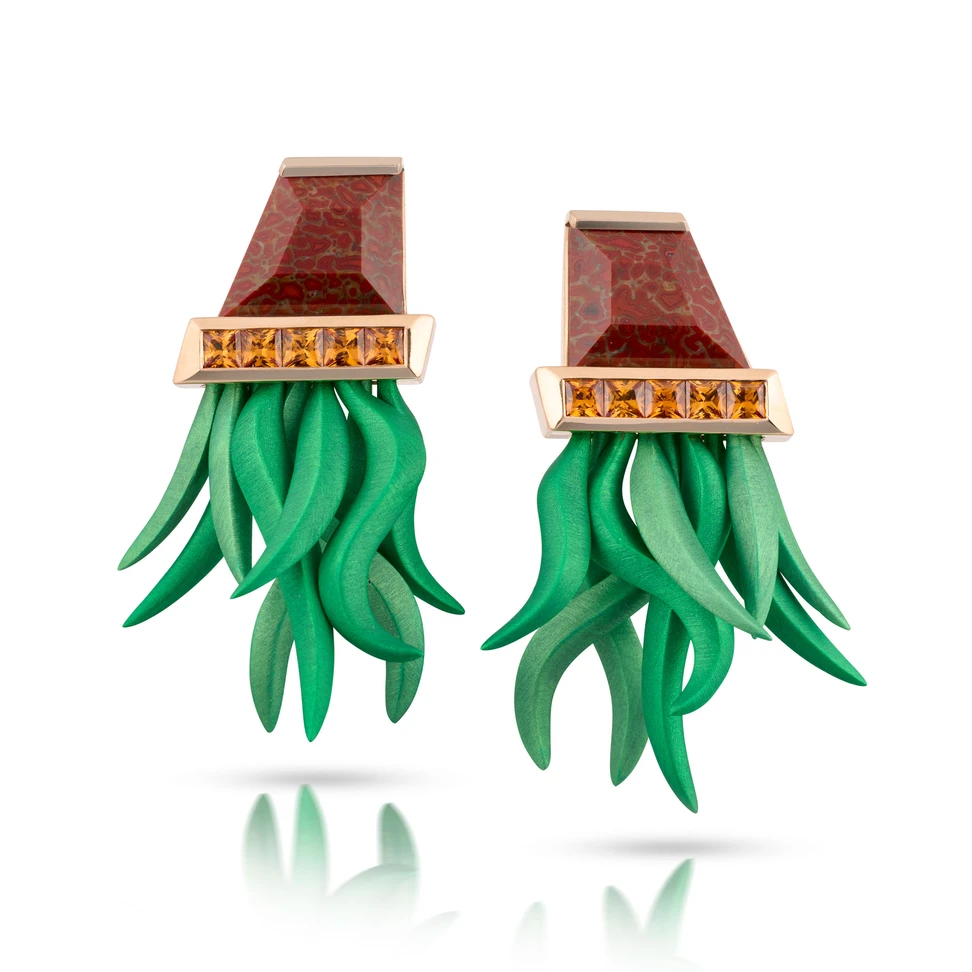
Cora Sheibani Large Fern earrings in 18K red gold, set with dark mandarin garnets, dino bone pots and green aluminium leaves
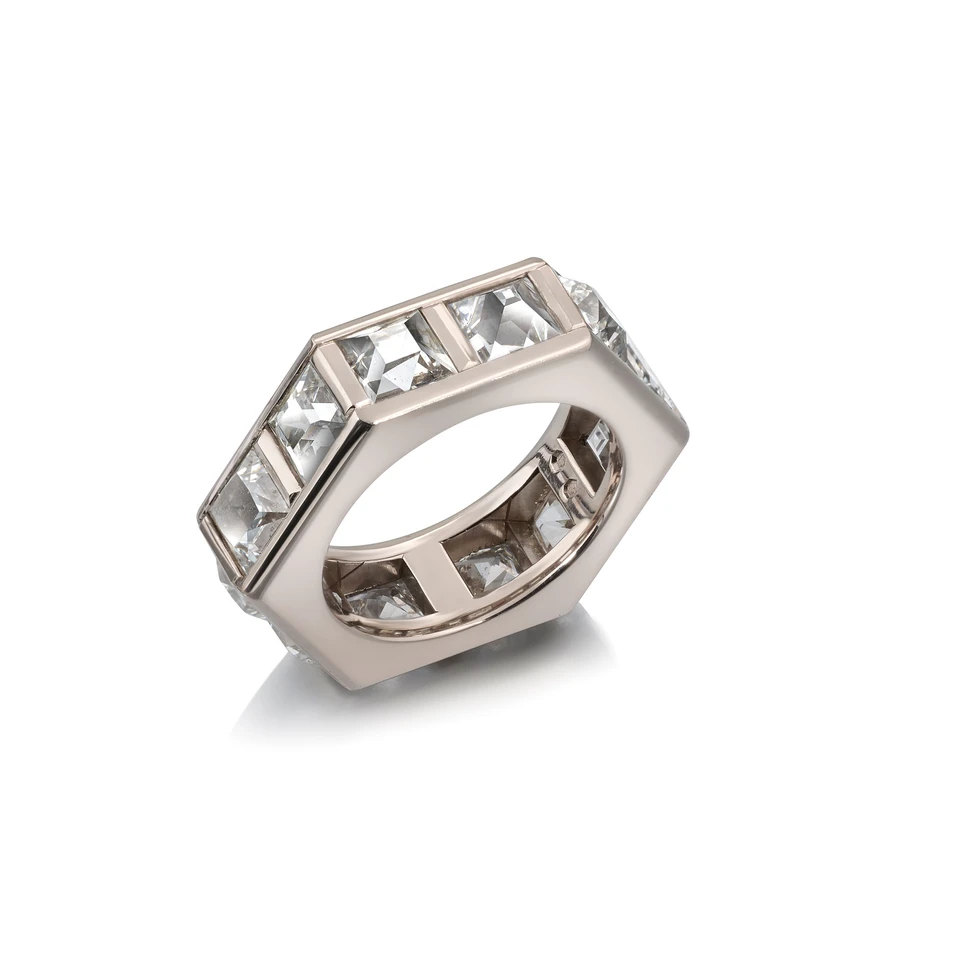
Cora Sheibani Time Line ring in 18K champagne gold, set with diamonds
FORMS Jewellery: Orchestrated Diamonds
Forms Jewellery operates within its own system, where structure, light and form are treated as one. Structure is reduced to its minimum so that light can move freely, and form emerges as the result of that balance. Their seamless setting technique holds each diamond on an almost indiscernible frame, creating the impression that the stones are suspended rather than fixed.
In one pair of earrings, the form opens like a shell. Rows of graduated brilliant-cut diamonds spread outward in a controlled curve, each line widening as it moves away from the ear. Worn, the form feels fluid, yet that fluidity is exact. The surface reads as continuous because every stone has been calibrated to sustain a single movement across the entire earring.
The second pair reveal a different logic. The construction is driven by two distinct vectors: a centripetal movement that anchors the form to the ear, and a descending curve that draws the eye downwards. Between them, a counterpoint is held, balancing stability with release. The brilliance is articulated through this structure, in the way each element is positioned, aligned and held in relation to the next. Here, light follows structure, and form is the result of that alignment.
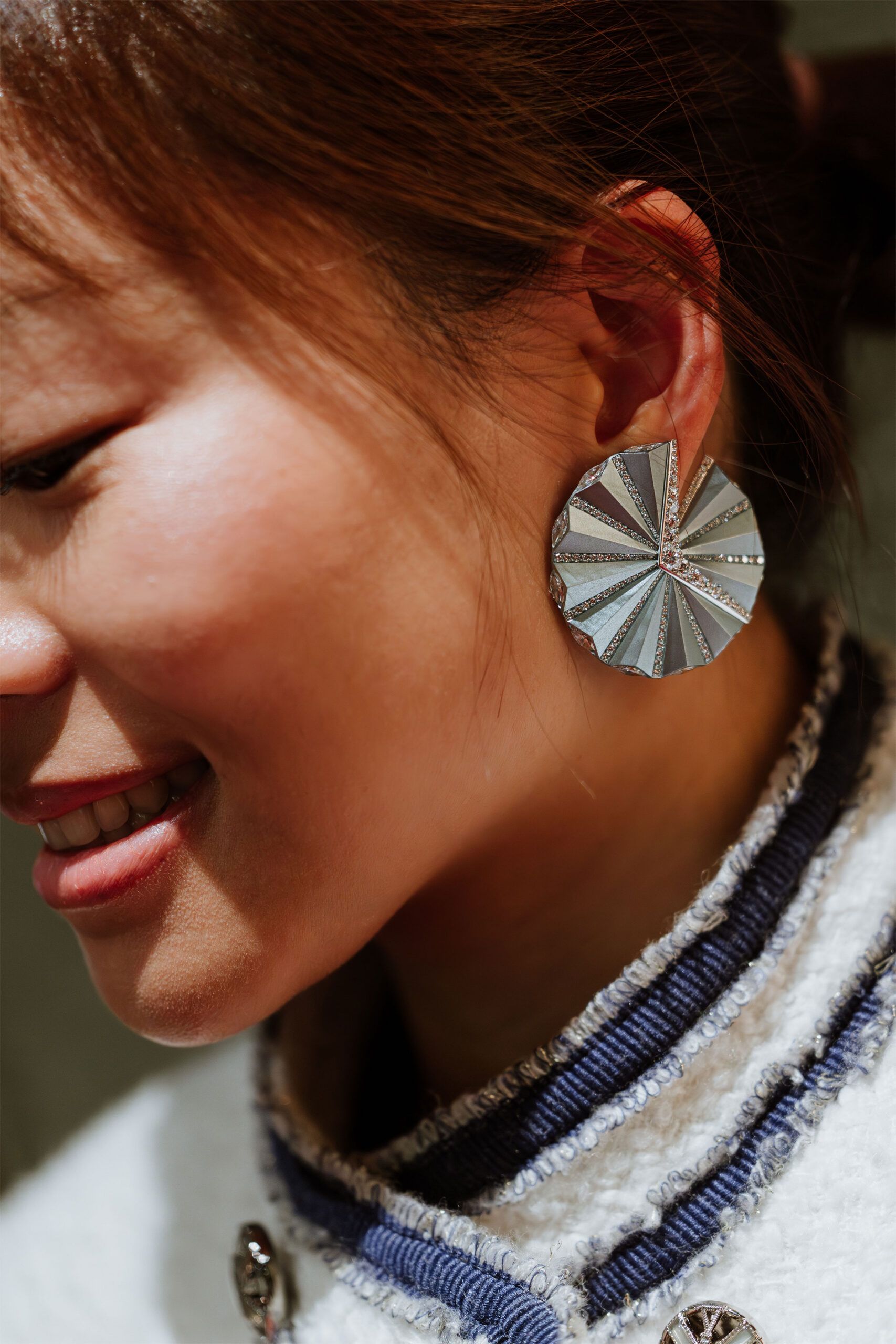
FORMS Jewellery at TEFAF Maastricht 2026 Courtesy of TEFAF
This architectural logic of structure, where light is not applied but constructed through proportion and alignment, will continue at TEFAF New York, where such relationships will further distil.
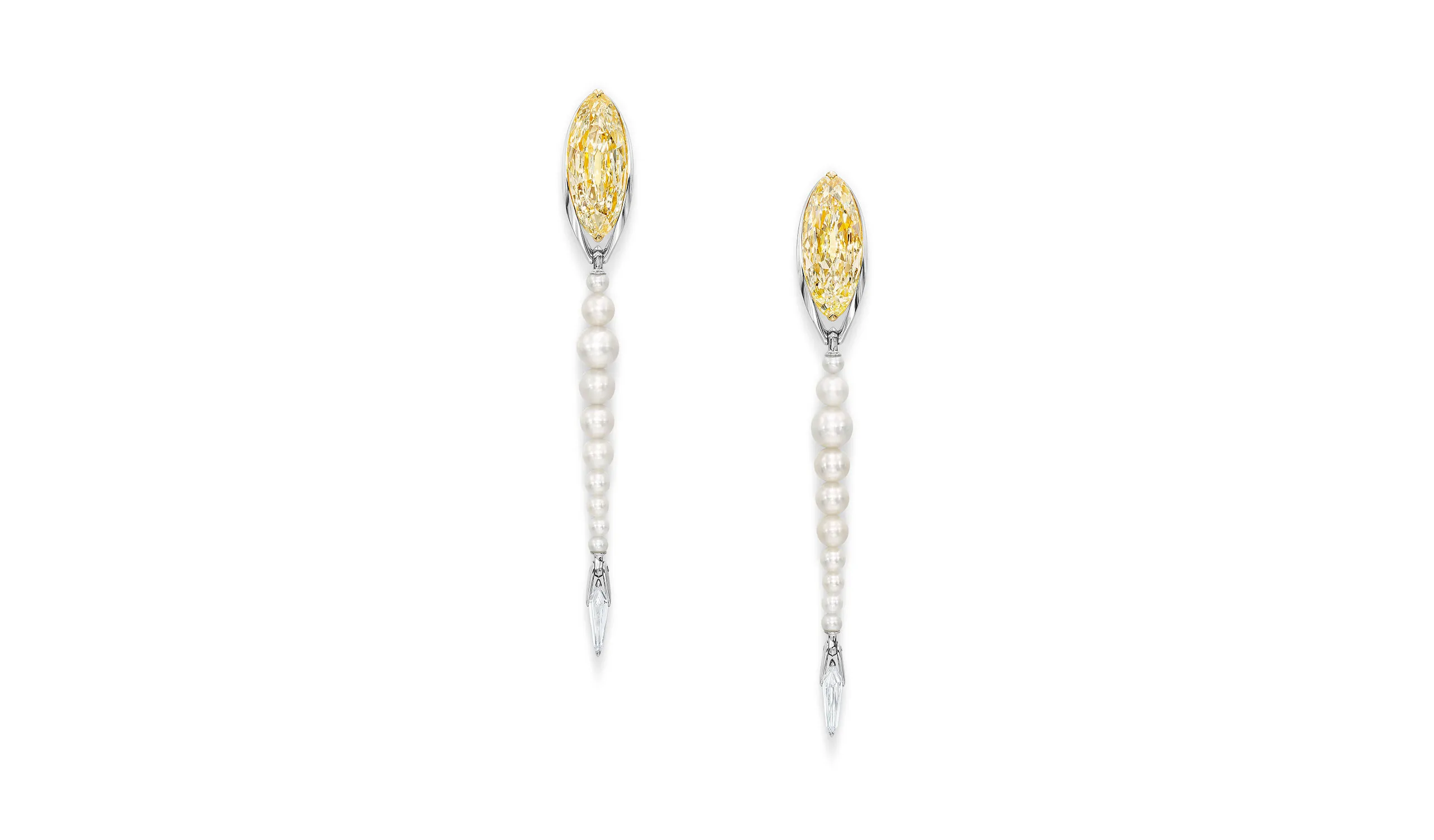
FORMS Jewellery diamond and natural pearl pendant earrings in 18K white gold, set with 5.07ct and 5.11ct diamonds, 0.77ct additional diamonds and 12.44ct natural pearls
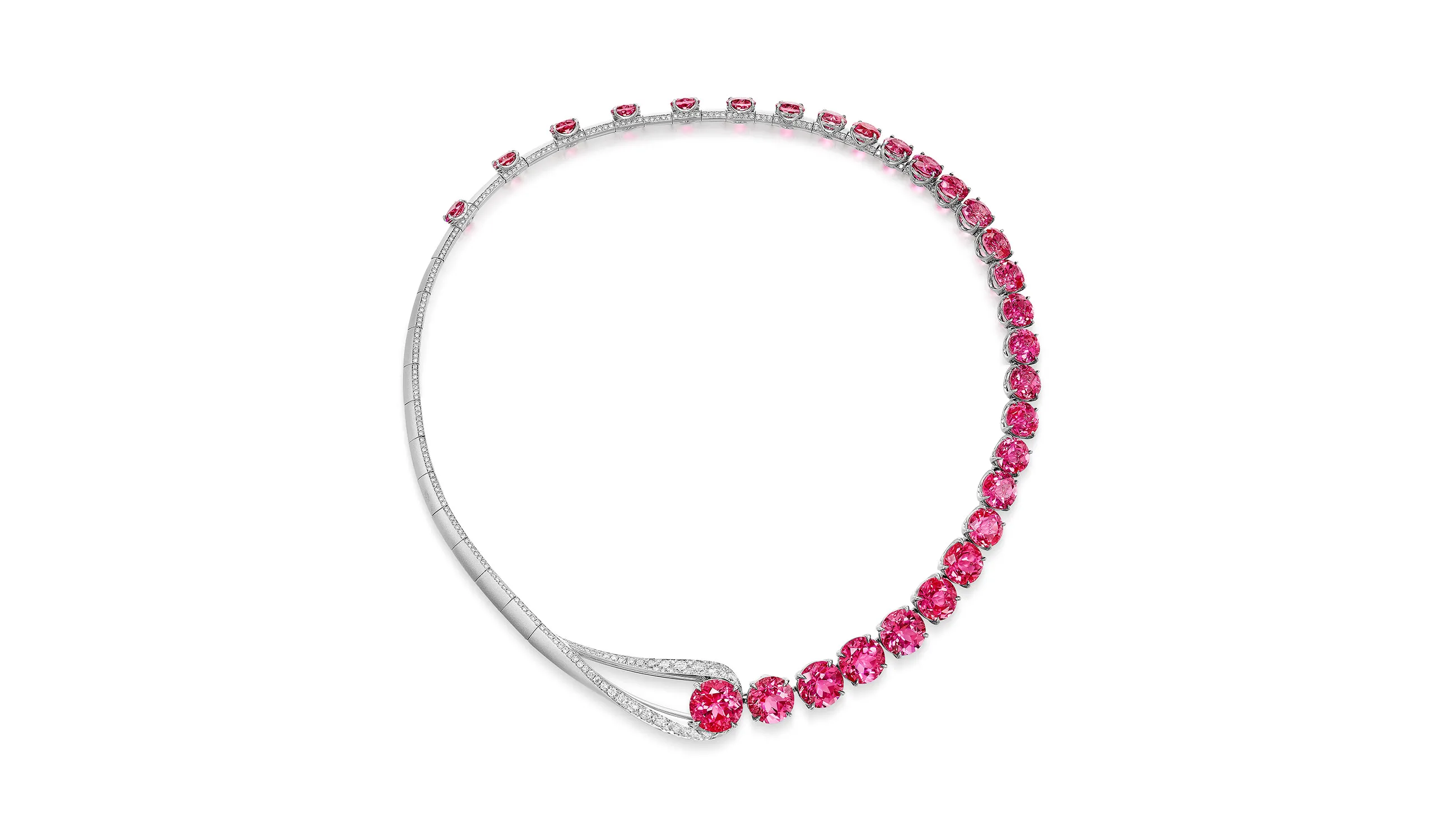
FORMS Jewellery pink tourmaline and diamond necklace in 18K white gold, set with 50.28ct pink tourmalines and 3.81ct diamonds
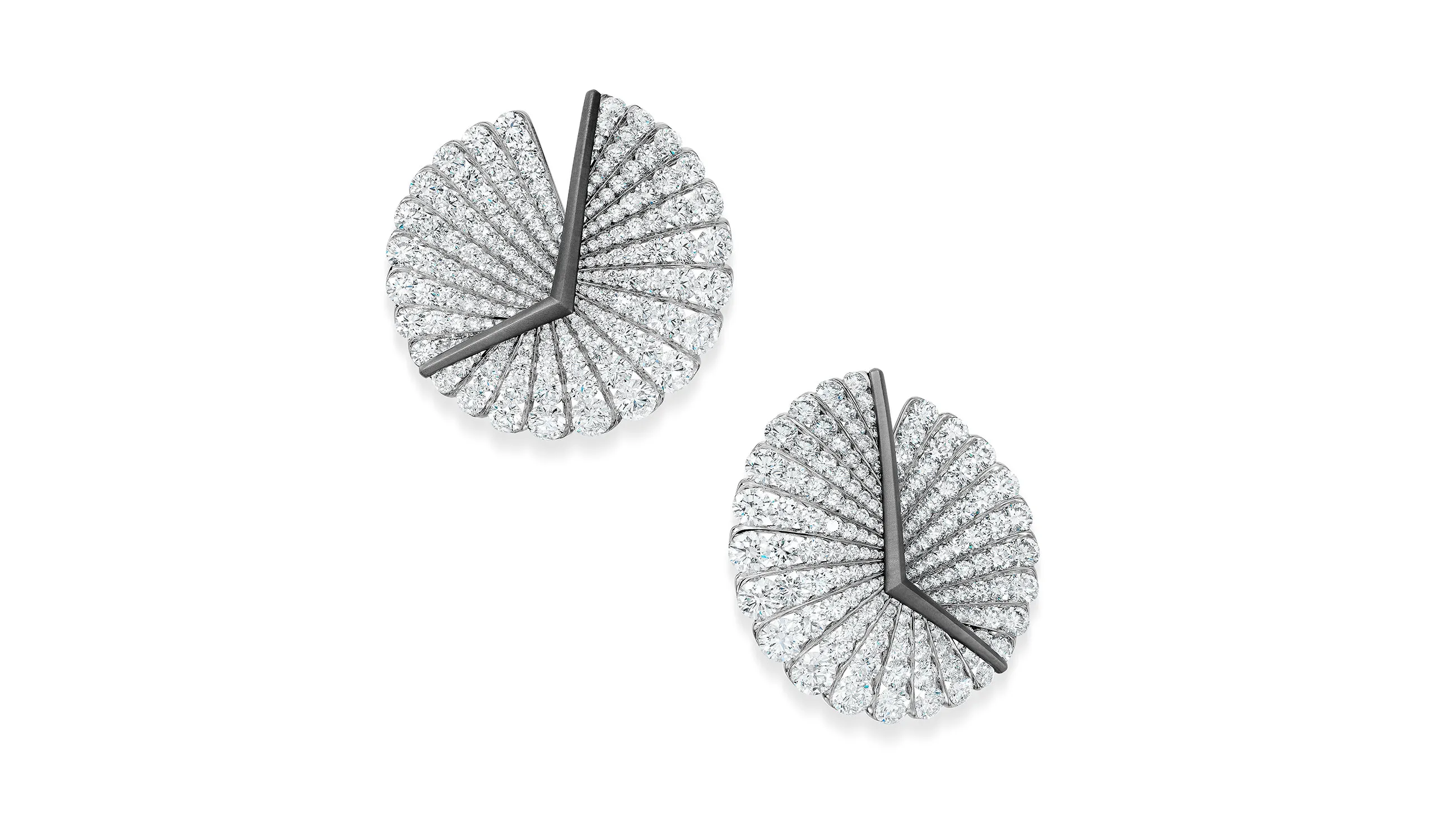
FORMS Jewellery diamond and grey titanium sphere earrings in grey titanium, set with 40.79ct diamonds
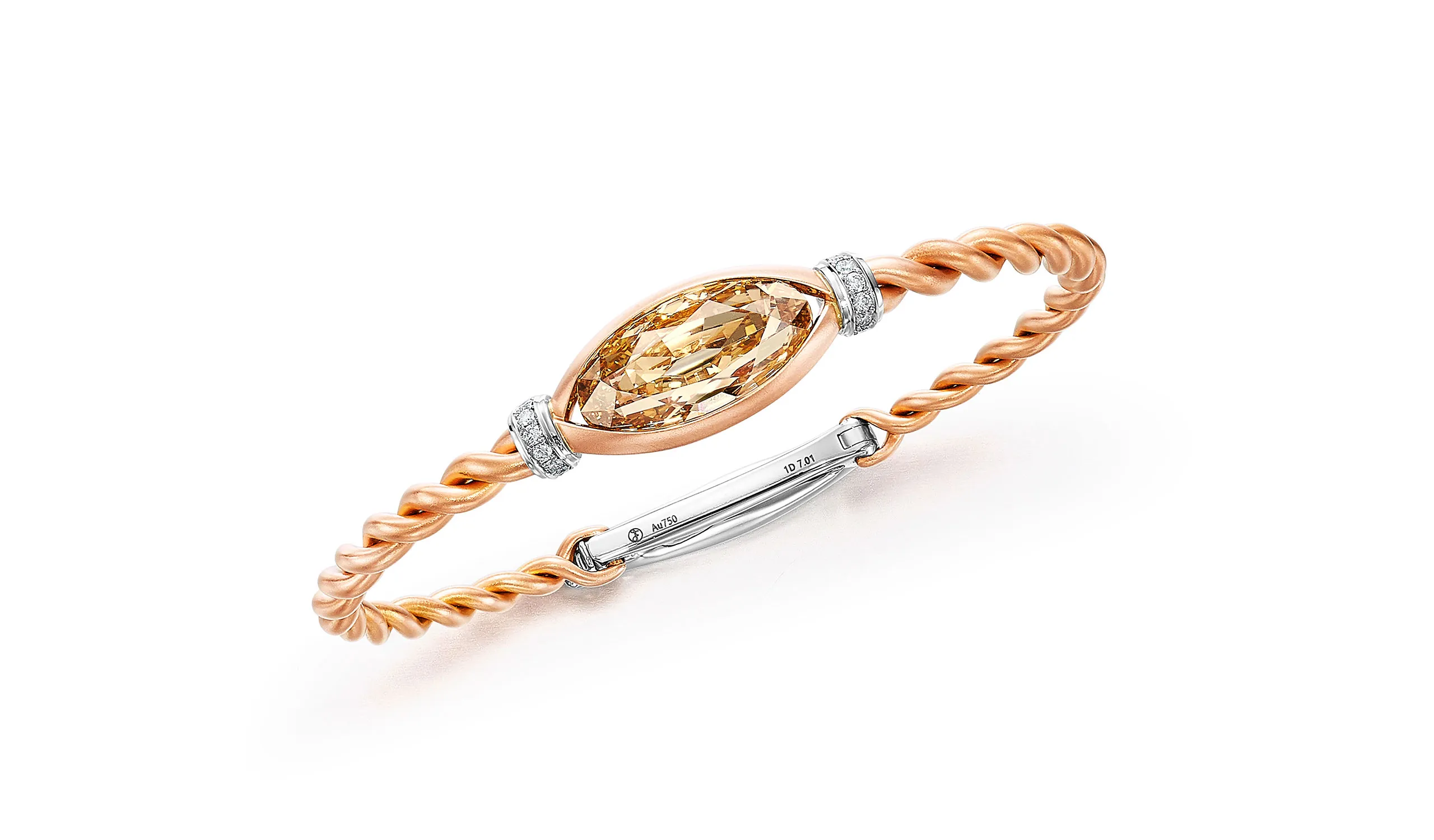
FORMS Jewellery fancy brown-orange diamond bangle in 18K rose and white gold, set with a 7.01ct Fancy Brown-Orange diamond and 0.84ct diamonds
Margot McKinney: Colour Composed
Margot McKinney presents her world through an interior that evokes a private salon or tearoom, where colour, texture and object are thoughtfully layered. A sculptural fountain, adorned with classical figures, introduces a sense of movement, fantasy and opulence, reinforcing the space’s almost theatrical intimacy. Soft green surfaces, floral elements and glass forms establish a palette that mirrors the gems themselves, with opals and pearls appearing as if they have emerged from the space rather than been placed within it.
Two rings bring the scene into focus. Both are of a similar scale, each centred on a significant opal. At first glance, their size suggests weight. In hand, and on the finger, that weight disappears. The structure of the band and the distribution of the stones define the form so completely that it feels held rather than heavy. In the Rainforest Bloom ring, the black opal holds depth, its blues and greens layered and contained, like a breath of ocean. In the Galah ring, the direction shifts. The white opal expands, allowing pinks, golds and greens to extend beyond its centre. McKinney’s world is constructed through colour, where Australian opals and South Sea pearls are not set apart but belong to the same visual field.
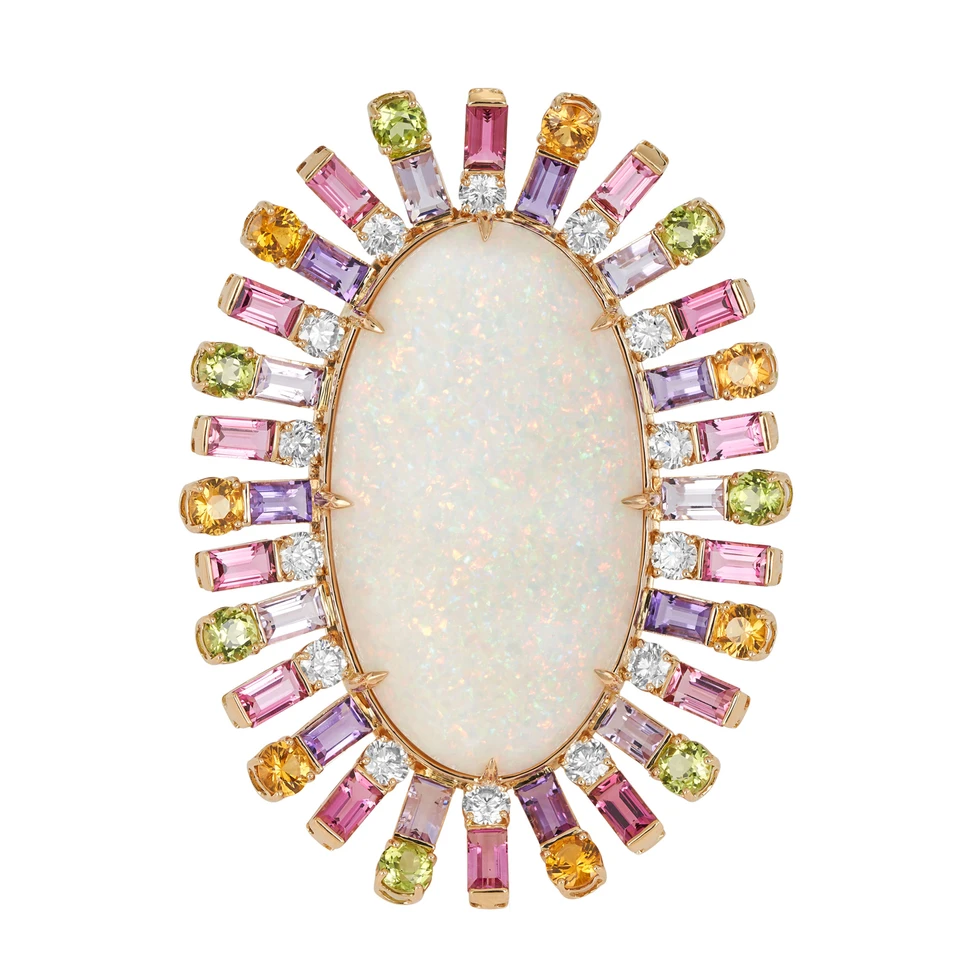
Margot McKinney Galah ring in 18K yellow gold, set with a 40.46ct white opal, diamonds, yellow sapphires, amethysts, rose de France, peridots and pink tourmalines
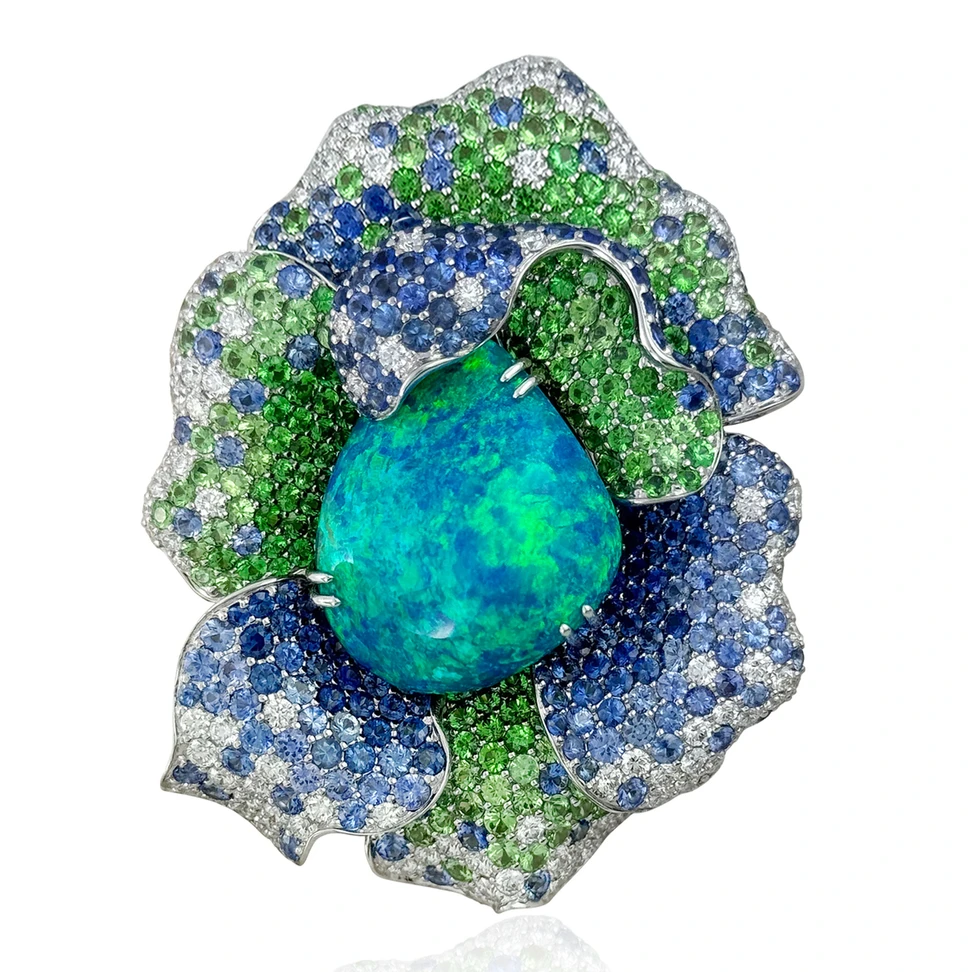
Margot McKinney Rainforest Bloom ring in 18K white gold, set with a 37.52ct Australian black opal, diamonds, blue sapphires and tsavorites
VKD Gallery: A Family Continuum
Within VKD Jewels, the atmosphere shifts to something more personal, shaped by a lineage of connoisseurship. Founded in 1969 by Jan van Kranendonk Duffels and now led by his daughters, the gallery reflects a continuity of knowledge and an instinct for exceptional jewellery honed over decades. This family-run gallery has long specialised in European and American antique jewellery from the late 19th and early 20th century, each piece selected for its authorship, provenance and execution. Alongside these historical works, VKD introduces a small number of contemporary artist-jewellers.
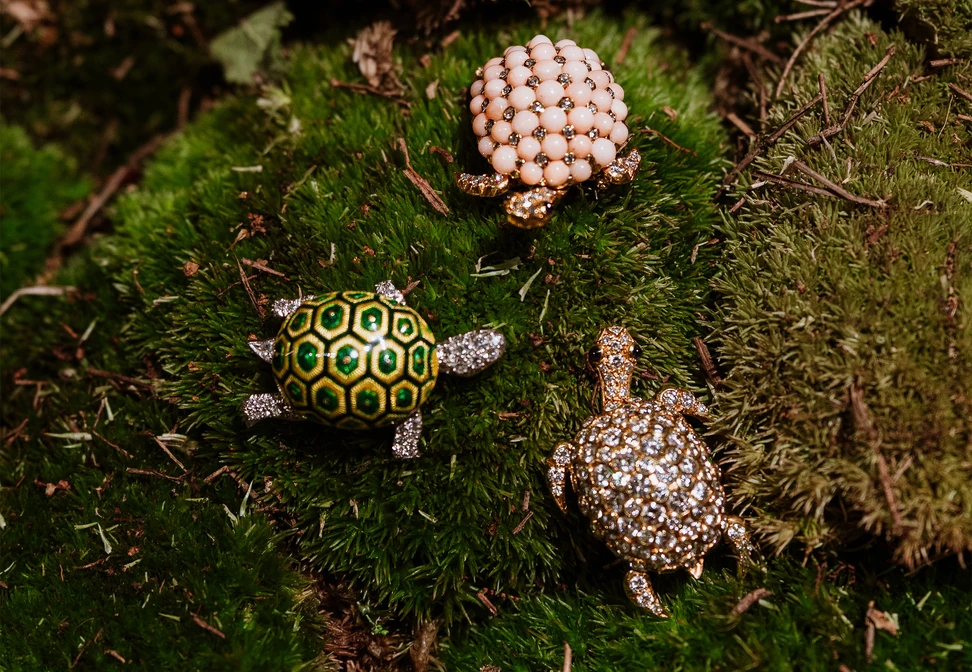
VKD Gallery at TEFAF Maastricht 2026 Courtesy of TEFAF
Luz Camino
Luz Camino’s jewels are sculptural, almost tactile, where form is developed through carving rather than assembly, and volume is approached with a lightness that challenges expectation. A brooch by Camino, a peach almost the size of a palm, drew me in immediately. Not a full sphere, but a sliced form, deliberate, almost architectural. You expect weight, yet it surprises. It is light. Turn it, and the structure reveals itself, an open framework that allows volume without mass. When I asked Camino how many pieces she creates in a year, she smiled and said, “I never count.” Her work is not defined by quantity, but by the time and attention it demands, shaped through a practice where making and living remain inseparable.
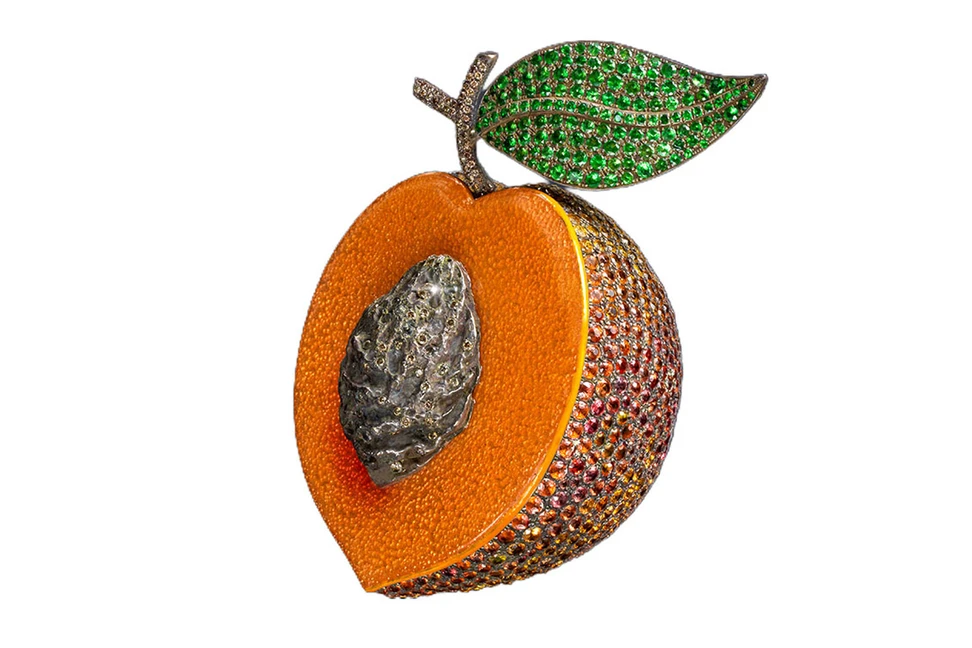
Luz Camino peach brooch in 18K gold and silver, set with sapphires, chrome diopside, spinels, enamel and diamonds
Fabio Salini
Another contemporary voice introduced within VKD, Fabio Salini marks his debut at TEFAF Maastricht with a pair of earrings that bring a different precision to the conversation. At first encounter, the language is defined by the intensity of rubies, framed by diamonds and arranged in a descending sequence. But it is only in movement that the structure fully reveals itself. As the earrings shift, mirrored side panels appear along the edges, momentarily interrupting the colour with reflection. Seen from the front, they almost disappear. From the side, they become essential. This creates a measured tension between colour and reflection, between the saturation of the stones and the neutrality of the mirrored surface. What could read as opposition is instead held in balance, with each element placed in relation to the other so that brilliance and reflection do not compete but cohere into a unified whole.
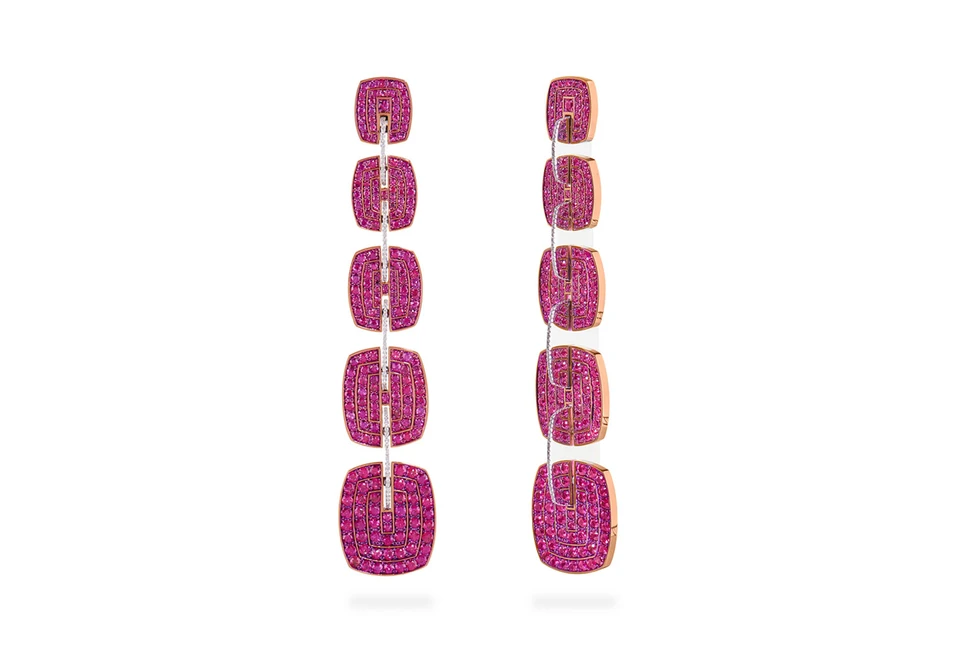
Fabio Salini ‘Mirror’ earrings in 18K gold and titanium, set with 12.97ct rubies and 0.56ct diamonds
Angela Cummings
I always look for the pieces that speak for their maker or the gallery that represents them. That is what led me to ask Fleur, one of VKD’s directors, to point me to a piece she particularly admires: a pair of earrings by Angela Cummings. In rock crystal and gold, the articulation shifts with movement, revealing and concealing form. The arrangement carries a restrained architectural clarity, echoing an abstract language reminiscent of Kazimir Malevich and Wassily Kandinsky.
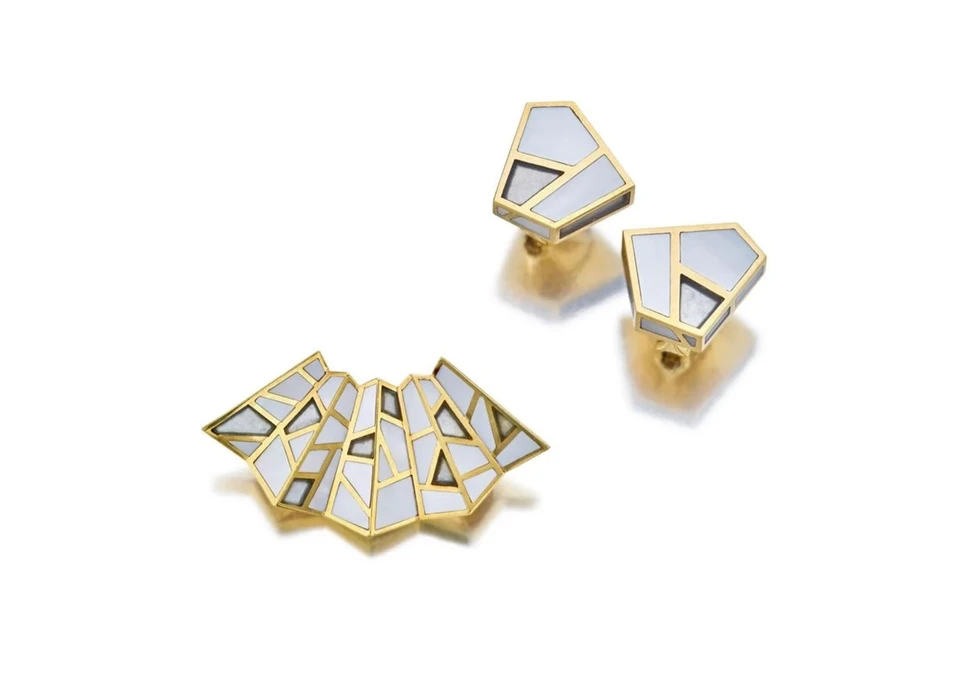
Angela Cummings earring and brooch set in 18K yellow gold, mother-of-pearl and rock crystal
Fernando Jorge and Dries Criel: Between Flow and Control
To draw this moment to a close, two distinct voices emerge, both grounded in movement. Fernando Jorge approaches movement through curvature and material. His forms gather and fold into themselves, shaped as if by time rather than design. The line curves, thickens and gathers into volume, often approaching the spherical. Materials drawn from the earth are absorbed into this movement, each carrying its own sense of time. The old mine cut diamond settles naturally within this language, its diffused light allowing it to exist within the flow rather than dominate it.
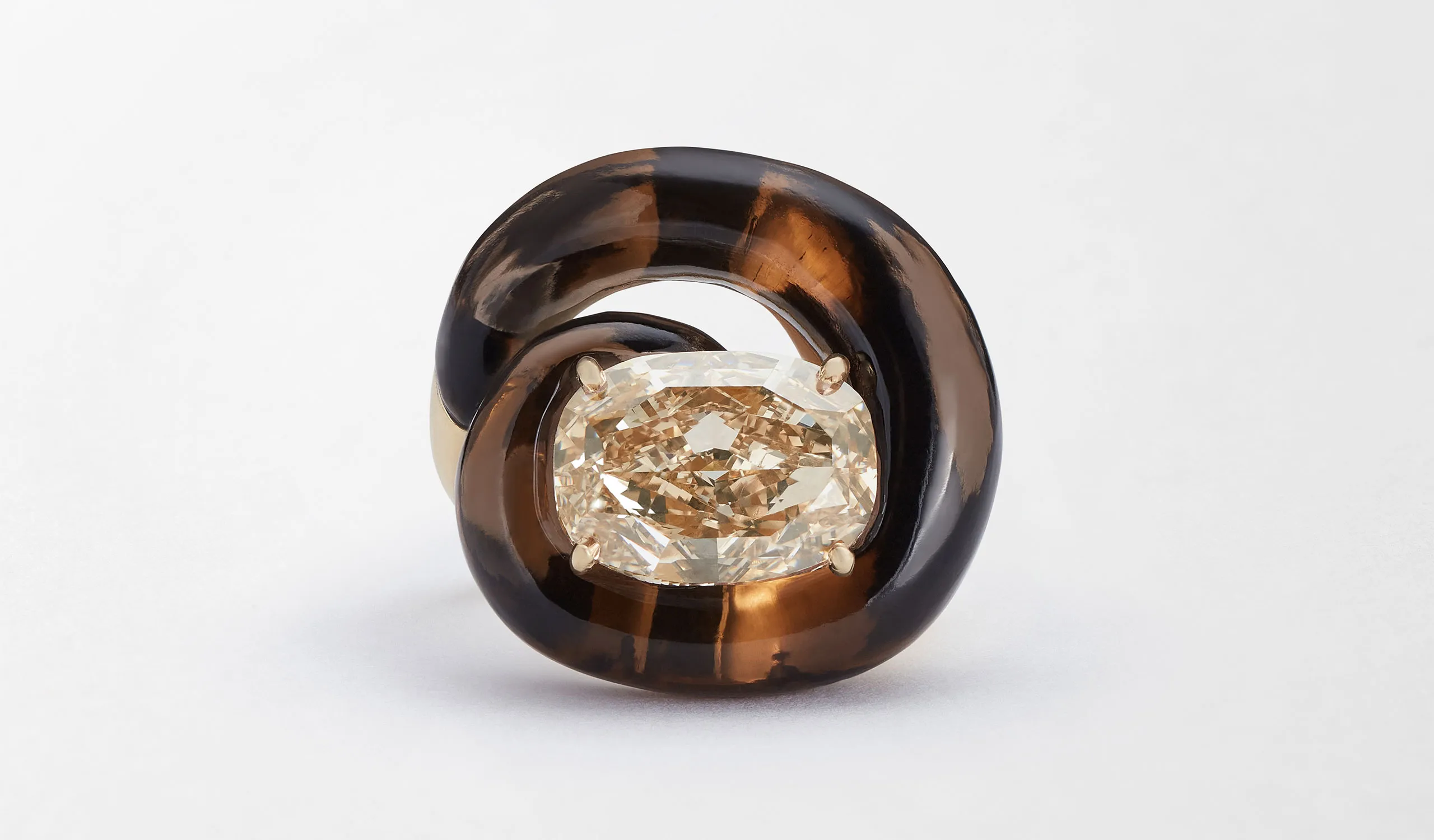
Fernando Jorge High Swirl diamond ring in 18K yellow gold, set with a 7.02ct Fancy Light Yellow-Brown diamond and smoky quartz
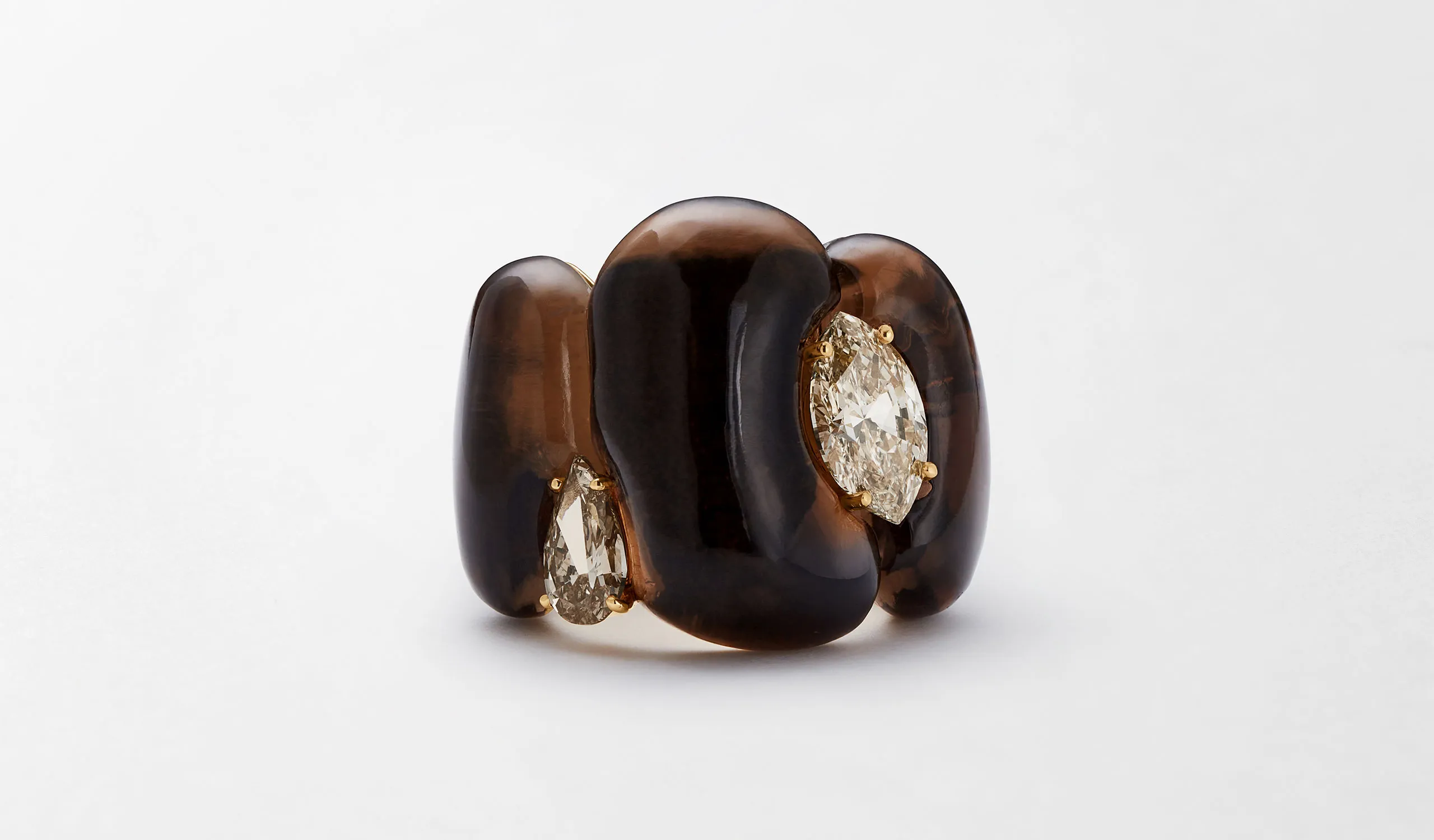
Fernando Jorge High Fluid ring in 18K yellow gold, set with brown diamonds and smoky quartz
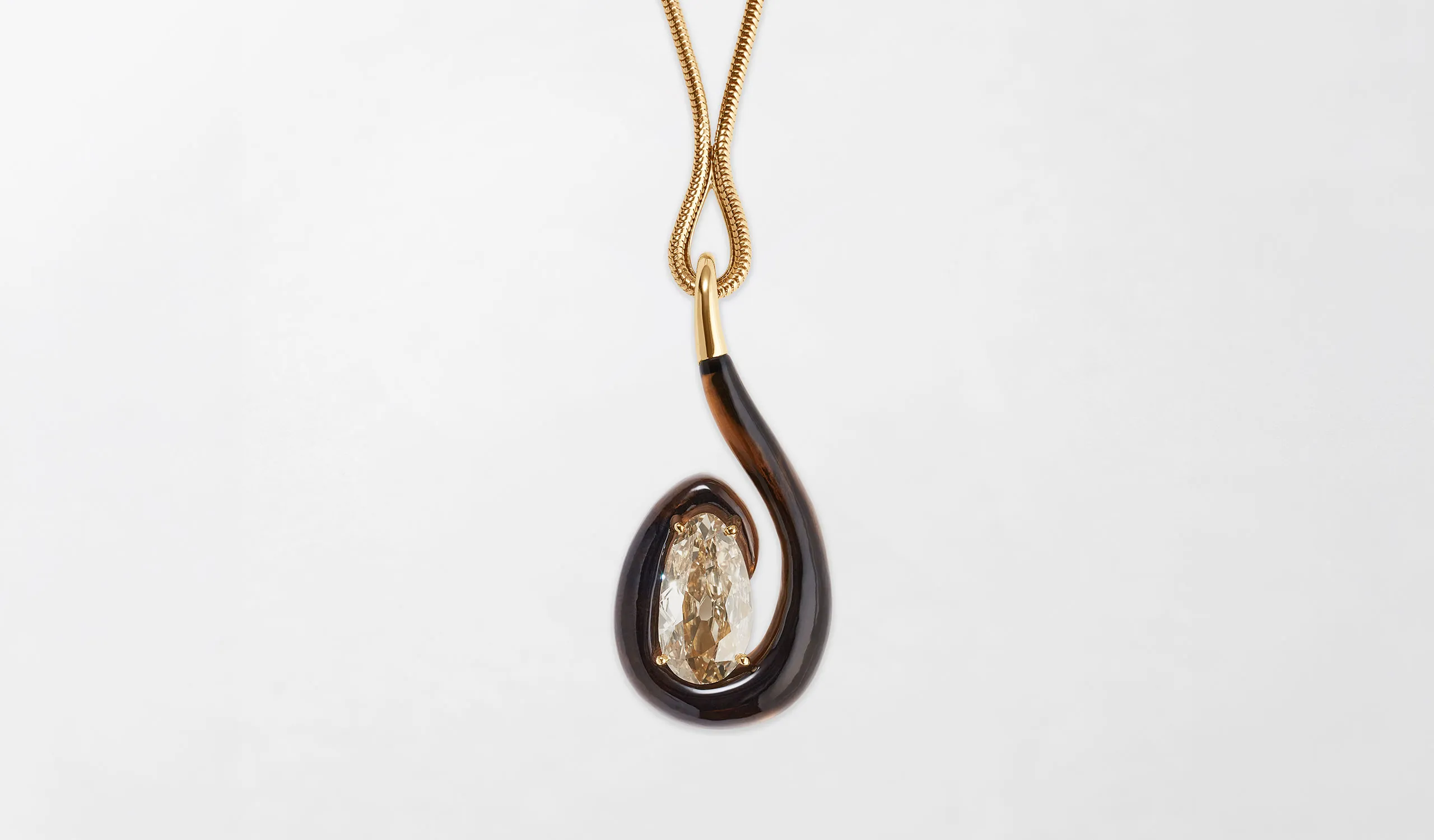
Fernando Jorge High Swirl diamond pendant in 18K yellow gold, set with a 7.08ct Old Mine-cut Fancy Yellow-Brown diamond and smoky quartz
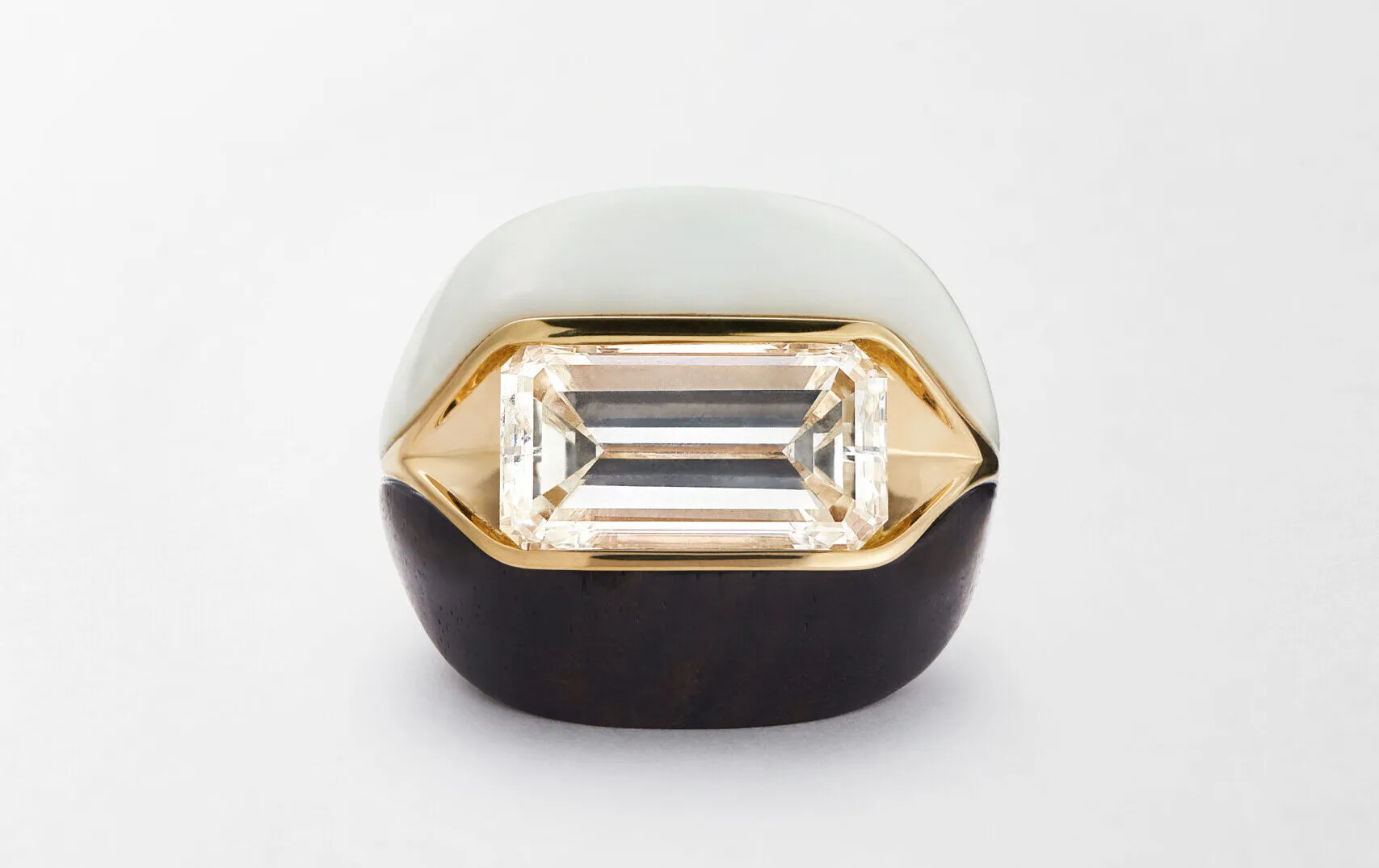
Fernando Jorge High Armour ring in 18K yellow gold, set with an elongated emerald-cut diamond of approximately 7ct, white opal and ebony
Dries Criel approaches movement differently. Rooted in a background in dance, his work translates the discipline of the body into structure. In the Hestia bracelet, a central diamond is held in equilibrium between opposing gold volumes, their engraved surfaces and traced edges creating a controlled interaction of contrast and balance. Here, movement is not released, but held, each element calibrated in relation with the body.
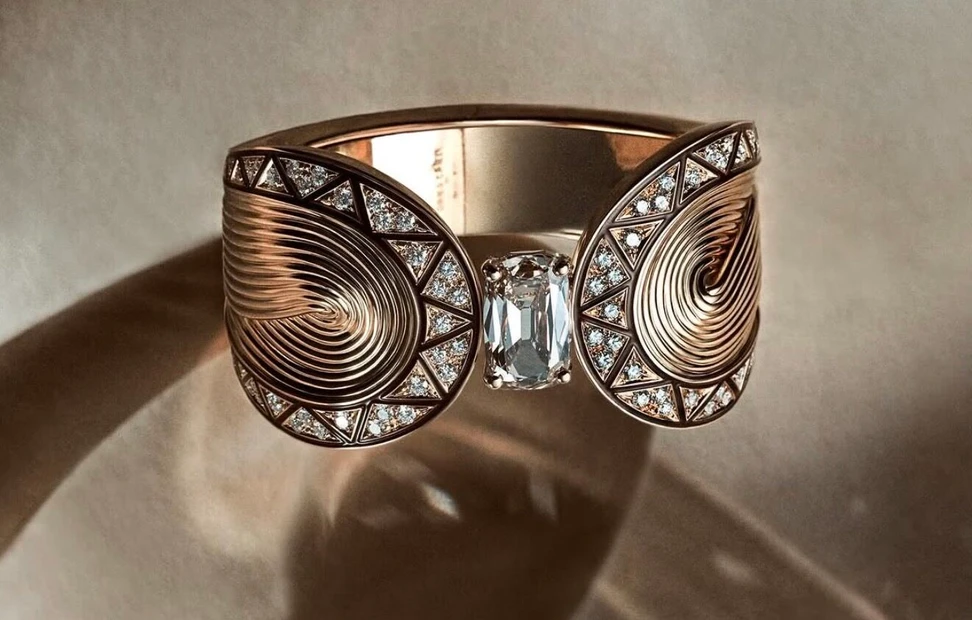
Dries Criel Hestia bracelet in 18K gold, set with a 10ct old mine cut diamond, natural diamonds and enamel
At this level, jewellery asks to be explored rather than simply seen. It can be read like a painting or understood like a building, through layers of structure, light and form. This way of looking became clear across the fair. Each piece holds its own logic, revealing itself differently depending on how it is approached. That is where its power lies, in the way it can be interpreted and felt in more than one way.
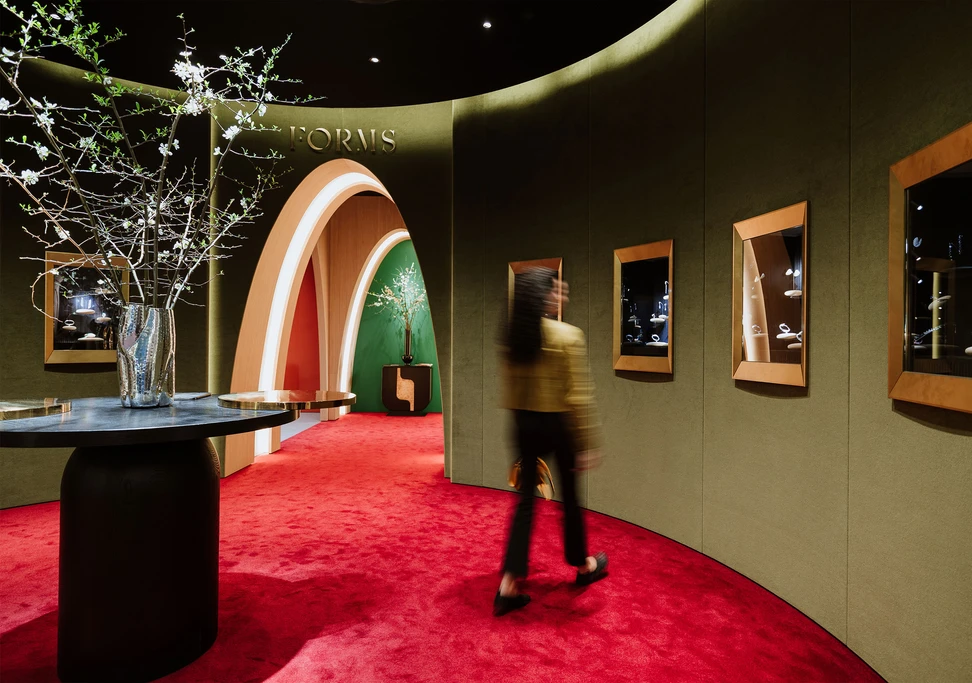
FORMS Jewelelry at TEFAF Maastricht 2026 Courtesy of TEFAF
This dialogue will continue at TEFAF New York, taking place at Park Avenue Armory from May 15-19. Returning exhibitors including Hemmerle and FORMS Jewellery extend their respective approaches to material and structure, while new voices emerge through Didier Ltd, presenting Gold in the Hands of Artists, a sculptural jewellery collection informed by the visual language of artists such as Leonor Fini and Wifredo Lam. Alongside this, Anna Khouri returns, continuing to situate her work between jewellery and contemporary sculpture.


WORDS
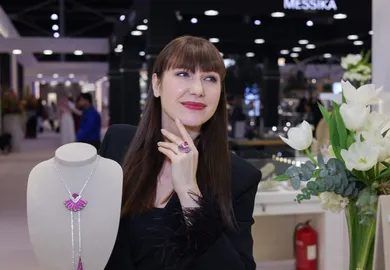
Bianca Blanari approaches jewellery as architecture in miniature, where form, structure, balance and elevation are distilled into objects of intimate scale. Bianca joined Katerina Perez as Club Editor and contributing writer in March.
RelatedArticles
Discover the brand: the story from various angles.