
Revolutionary Radiance: Inside Pomellato’s Debut Paris Exhibition
The Italian jewellery house Pomellato has arrived in Paris for its debut exhibition in the French capital, marking the occasion with a star-studded gala to launch its latest range of high jewellery. Here’s what unfolded.
It’s been nearly 60 years since the late Pino Rabolini founded Pomellato and the Milanese house has spent every single one of them rewriting what jewellery should look and feel like. Last week, the brand brought its bold design and glamorous heritage to Paris, opening its first-ever exhibition in the French capital at the Palais de Tokyo, a sprawling contemporary art gallery.
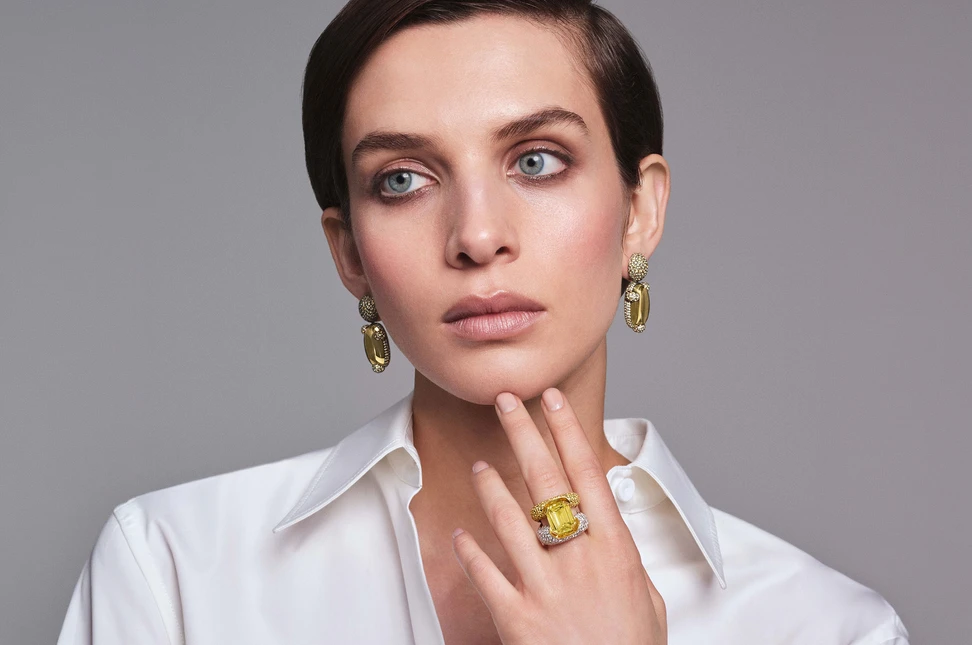
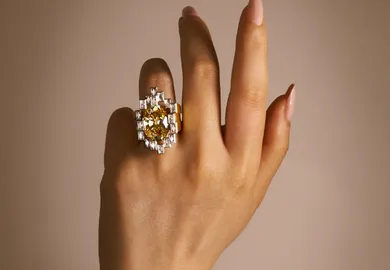
A model wears Pomellato Stile Libero Ray of Light ring in yellow gold with 1 octagonal-cut yellow sapphire, 206 yellow sapphires and 244 diamonds and Marvelous Griffe earrings in rose gold with 2 oval cabochon-cut heliodors and 572 yellow sapphires
I, alongside a mix of international press, got an exclusive first look at the exhibition as well as an invite to a star-studded gala dinner, hosted in celebration of the brand’s latest high jewellery launch. And boy were the glitterati in full attendance, with the likes of actors Philippine Leroy-Beaulieu, Kerry Washington and Hande Erçel mingling with blinged-out clients, while model Amelia Gray (who appeared effortlessly cool, might I add, despite the sweltering 35°C heat) was seated close by me at the table.
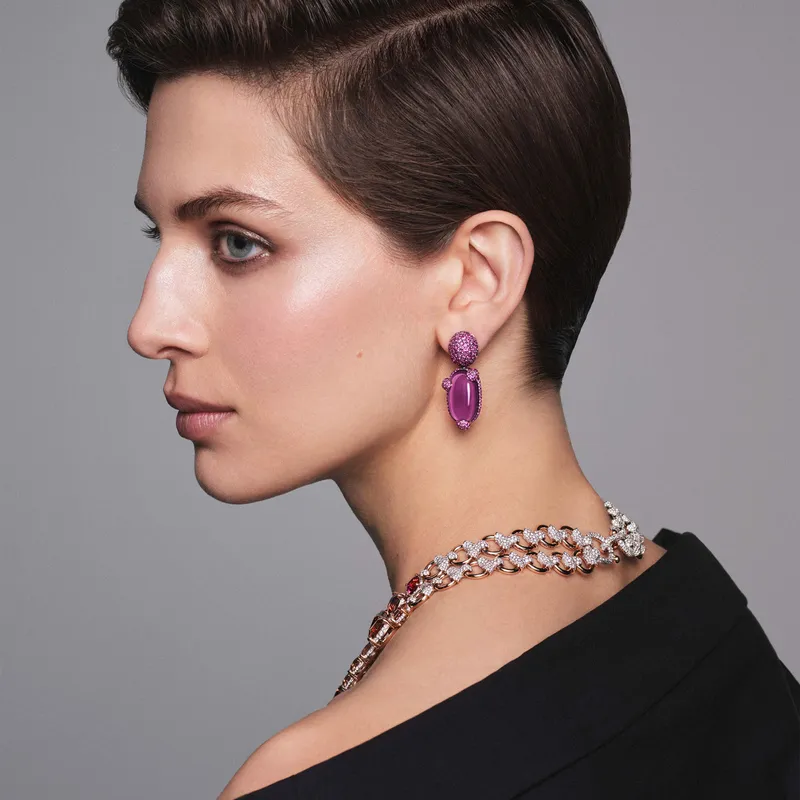
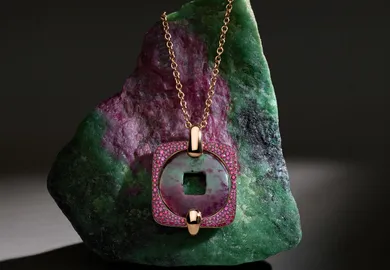
A model wears Pomellato Stile Libero Sakura Bloom necklace in rose gold with 41 octagonal-cut colourless, pink, brownish pink and purple, transparent tourmalines and 2,692 diamonds and Marvelous Griffe earrings in rose gold with 2 oval cabochon-cut rubellites and 572 pink sapphires
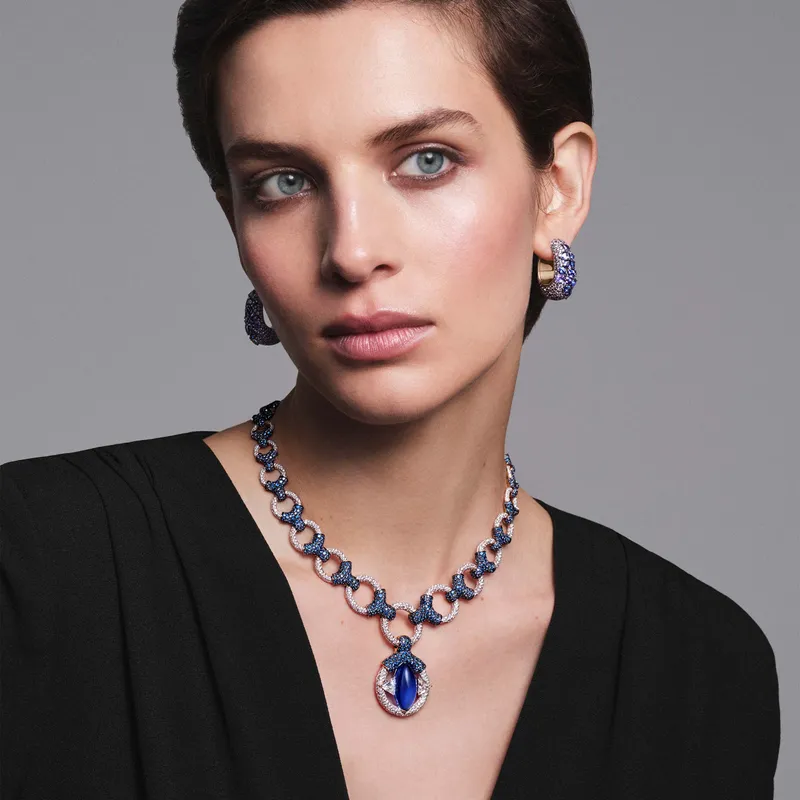
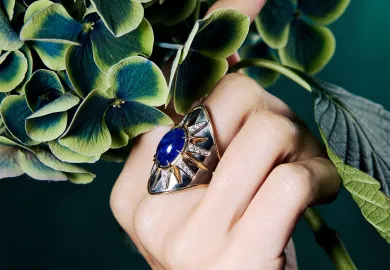
A model wears Pomellato Stile Libero Eye of Tanzanite necklace in rose gold with 1 cabochon marquise-cut tanzanite, 2 trillion-cut diamonds, 1,320 sapphires and 1,951 diamonds and Serti Libre earrings in rose gold with 26 pear-cut purple sapphires, 208 purple sapphires and 208 tanzanites
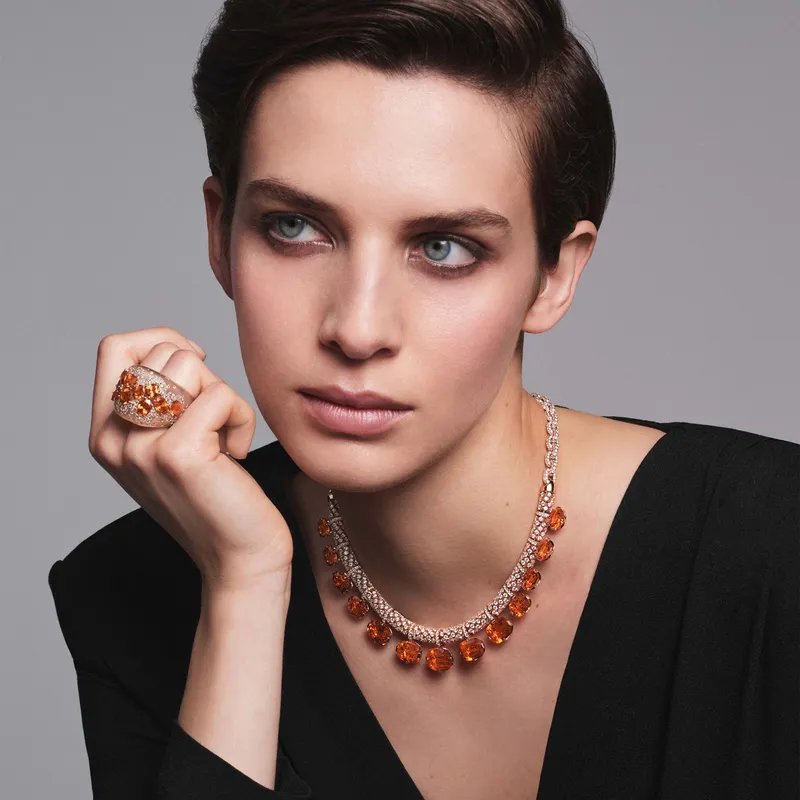
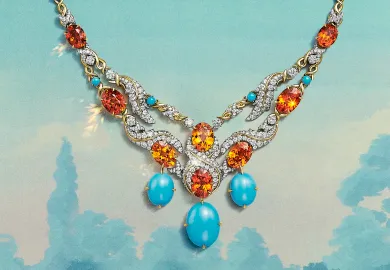
A model wears Pomellato Stile Libero Mandarine Mirage necklace in rose gold with 13 cushion-cut Mandarin garnets and 2,358 diamonds and Serti Libre ring in rose gold with 11 fancy-cut Mandarin garnets, 217 brown diamonds
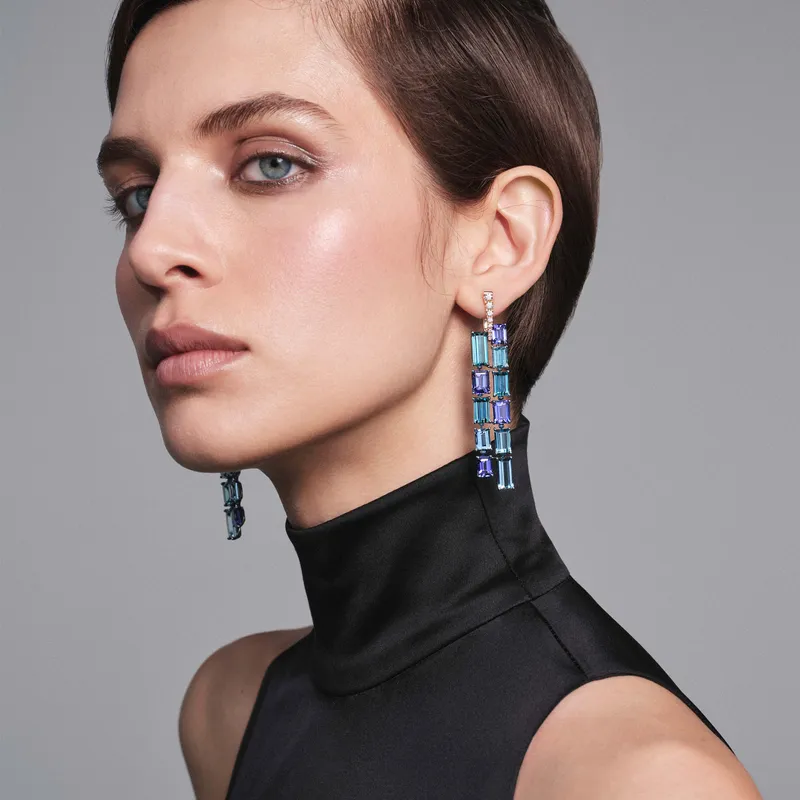
A model wears Pomellato Stile Libero Mosaic Cascade earrings in rose gold and blue titanium with 8 rectangular-cut tanzanites, 8 rectangular-cut zircons, 6 rectangular-cut aquamarines and 16 diamonds
Stile Libero, the house’s new high jewellery collection, is a celebration of femininity and colour in all its vibrant glory, spanning 65 creations across three chapters – Visionary Colors, Magnetic Gold and Hypnotic Shadows. Standout jewels include the Mandala Chromia medallion necklace, centred on a hand-pierced openwork motif set with 99 multi-coloured sapphires; the Drops of Paraíba choker with 21 pear-shaped Paraíba tourmalines totalling 20.15 carats, set using the maison’s serti libre technique that lets stones sit in loose, irregular formations rather than rigid settings; and the Arabesque necklace in rose gold with a lace-like structure that required a staggering 1,450 hours of workmanship.
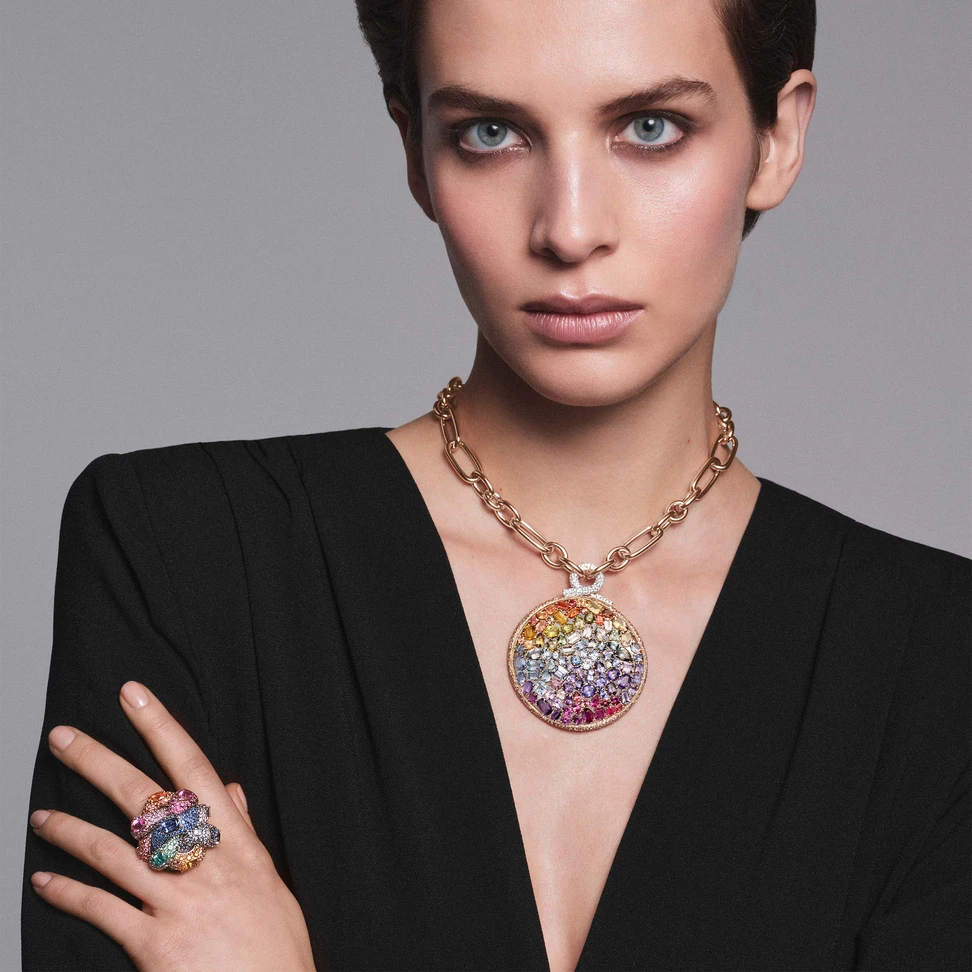
A model wears Pomellato Stile Libero Mandala Chromia necklace in rose gold with 99 fancy-cut multicolor sapphires, 528 brown diamonds and 231 white diamonds and Intreccio ring in rose gold with 8 fancy-cut multicolor sapphires, 1 pear-cut ruby, 675 purple, pink, orange treated, blue, light blue, lavender, pastel and grey sapphires and 83 rubies
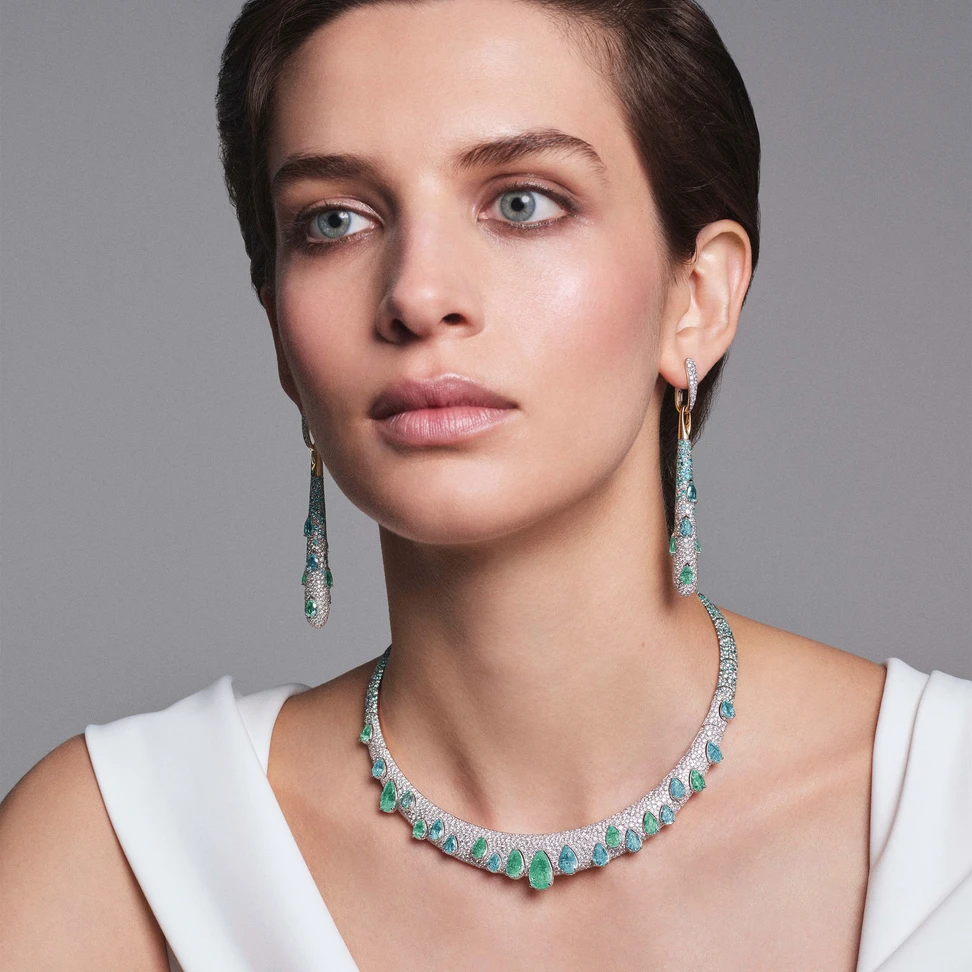
A model wears Pomellato Stile Libero Drops of Parabia earrings in rose gold with 14 pear-cut Paraiba tourmalines, 310 Paraiba tourmalines and 636 diamonds and Drops of Paraiba necklace in rose gold with 21 pear-cut Paraiba tourmalines, 579 Paraiba tourmalines and 1,092 diamonds
The following morning, we all gathered back at the Palais de Tokyo for a press conference with a panel that included curator and head of jewellery design at Politecnico di Milano, Milan’s leading design university, Alba Cappellieri; the director of the Helmut Newton Foundation, Dr. Matthias Harder; Vincenzo Castaldo, Pomellato’s creative director; and Pomellato CEO Sabina Belli, who opened proceedings with an anecdote from the evening before. Among the dinner guests was Catherine Deneuve, the legendary French actress, looking immaculate, as I could see for myself from my seat directly opposite. As an icebreaker, Belli asked, “Aren’t you too hot?”, to which Deneuve replied: “Oh, my, my, my love. We’re not going to talk about the heat. It’s so vulgar.”
The exhibition, titled ‘Pomellato, Le Joaillier Révolutionnaire’, traces what curator Cappellieri describes as five distinct revolutions: of image, craftsmanship, colour, style and women. Rather than a chronological walk through the archives, each section is anchored in the creative codes that have shaped Pomellato since its founding by Rabolini, a man who named the company after a dappled horse, following his father’s advice to bet on the winning one.
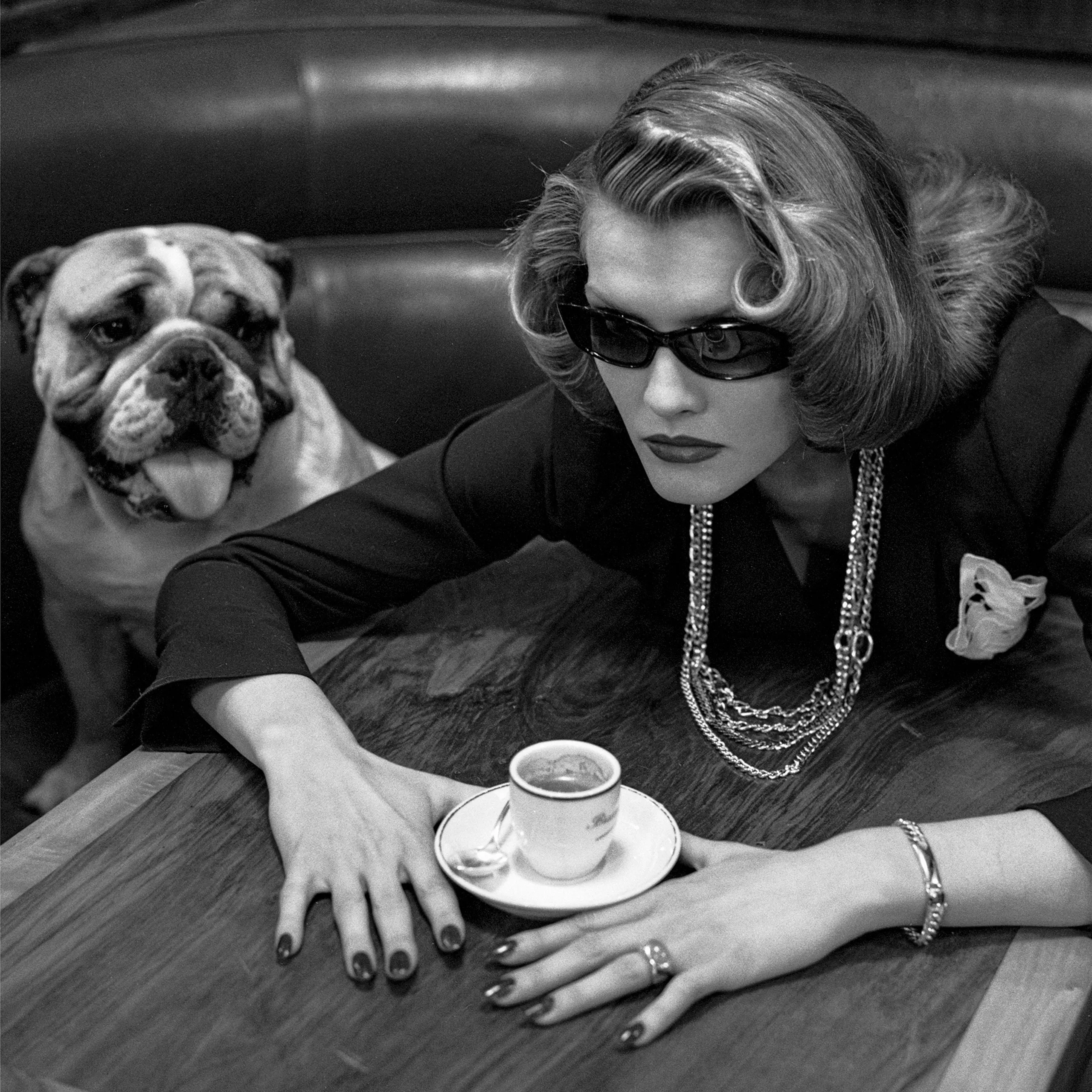
Photo by Helmut Newton, Pomellato, Paris, 1982. Copyright Helmut Newton Foundation / Trunk Archive
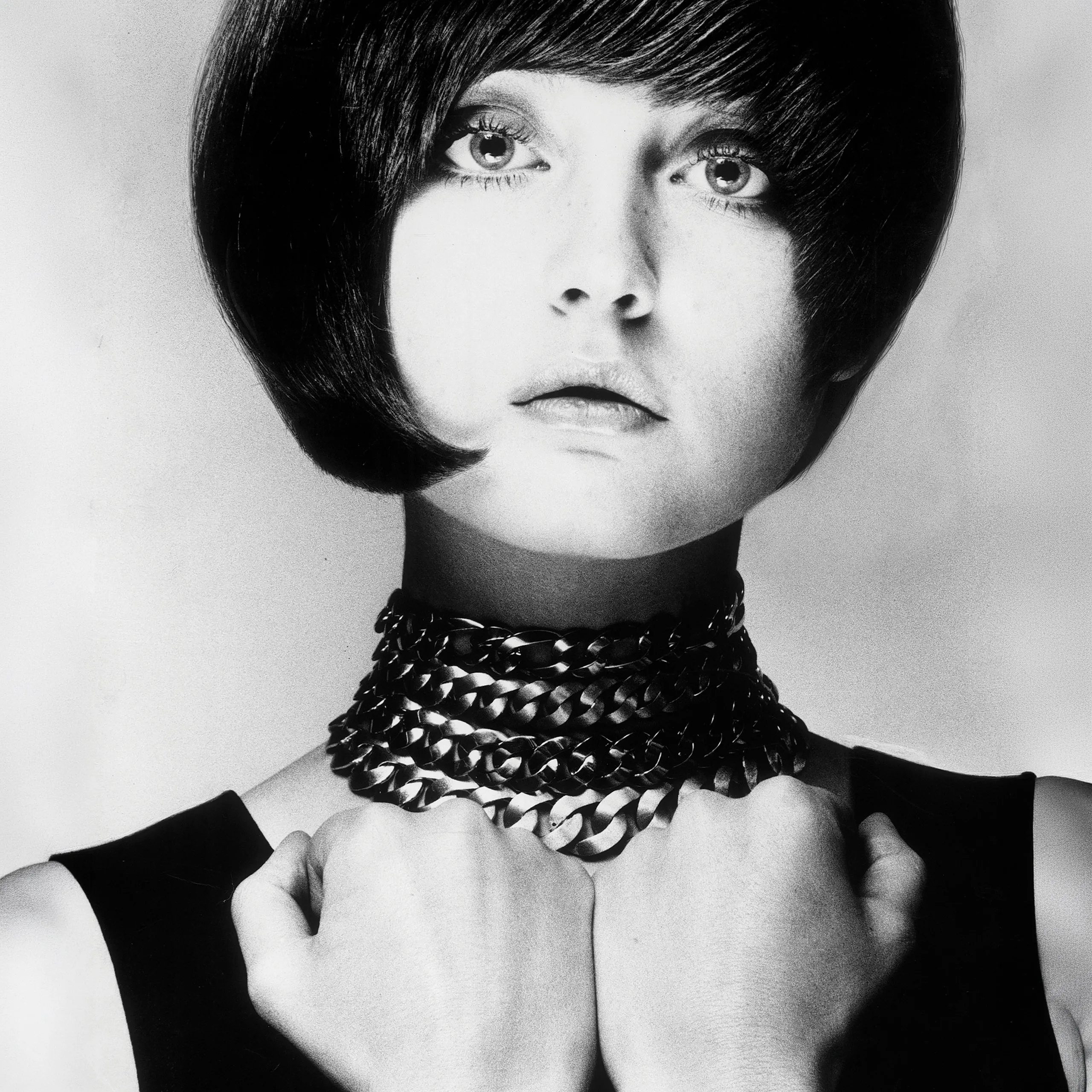
1970, Pomellato Archive
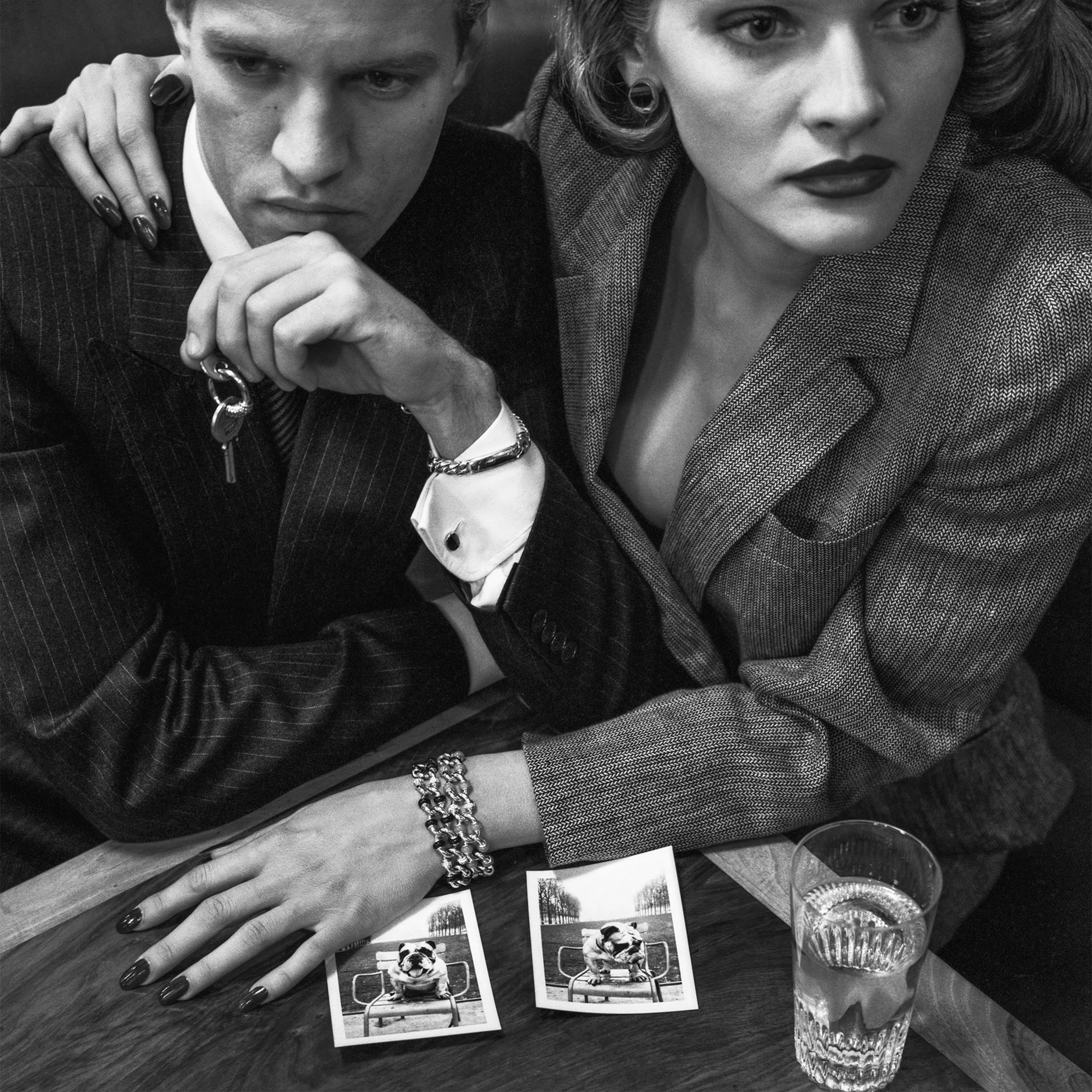
Helmut Newton for Pomellato, 1982
Belli explained that Rabolini was responding to a new generation of women emerging in the early 1970s. “Those girls were definitely not going to wear the platinum and diamonds and pearls safely in the vaults at the bank,” she says, “but rather look for something much more daily, easy to wear, the best accessory for a much more casual life.” Rabolini saw this revolution and decided to speak for them. The result was what Belli calls the prêt-à-porter of jewellery. “Jewels that are intelligent, free and autonomous, and that women would wear as a personal statement.”
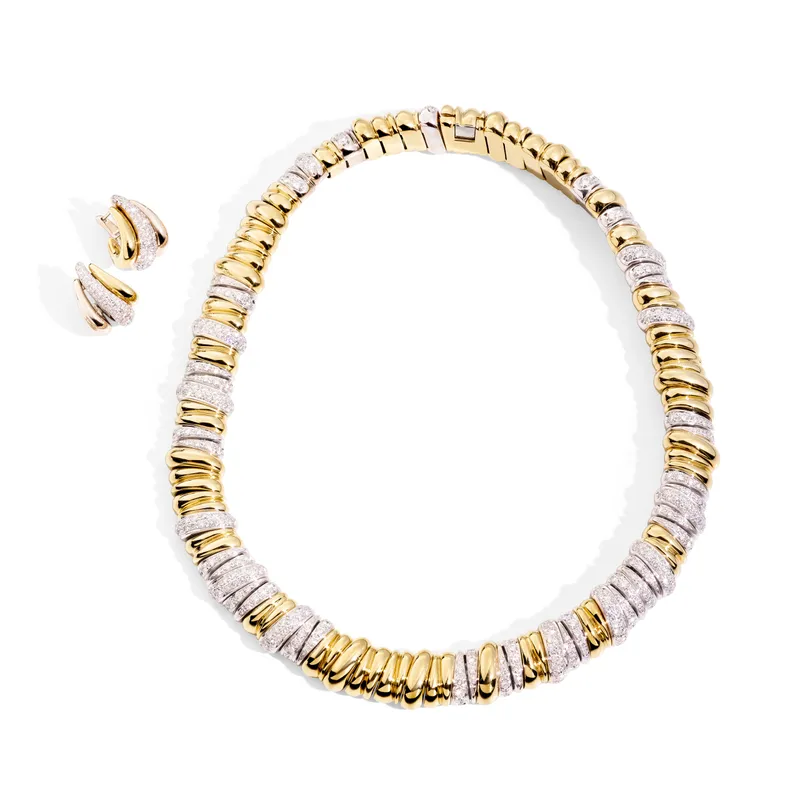
Pomellato Tubolare earrings and necklace, 1999
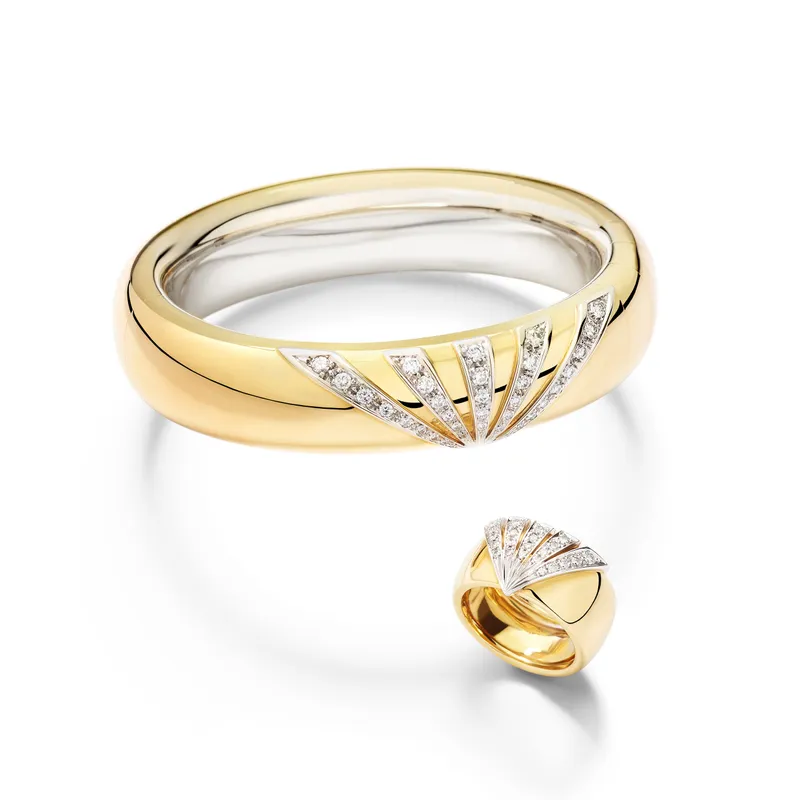
Pomellato Ventaglio bracelet and ring, 1981
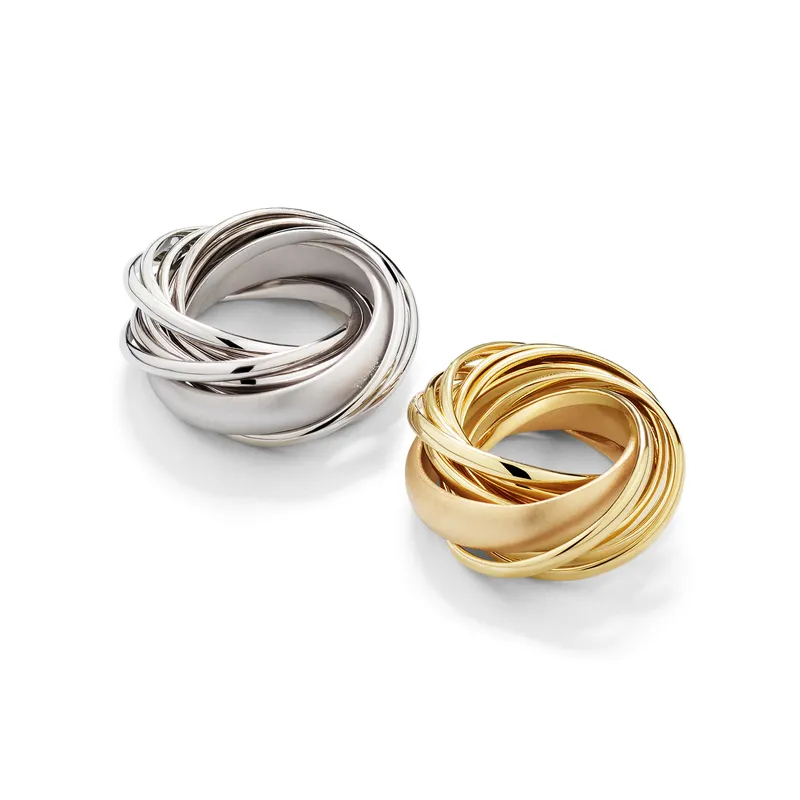
Pomellato Millefedi rings, 1996
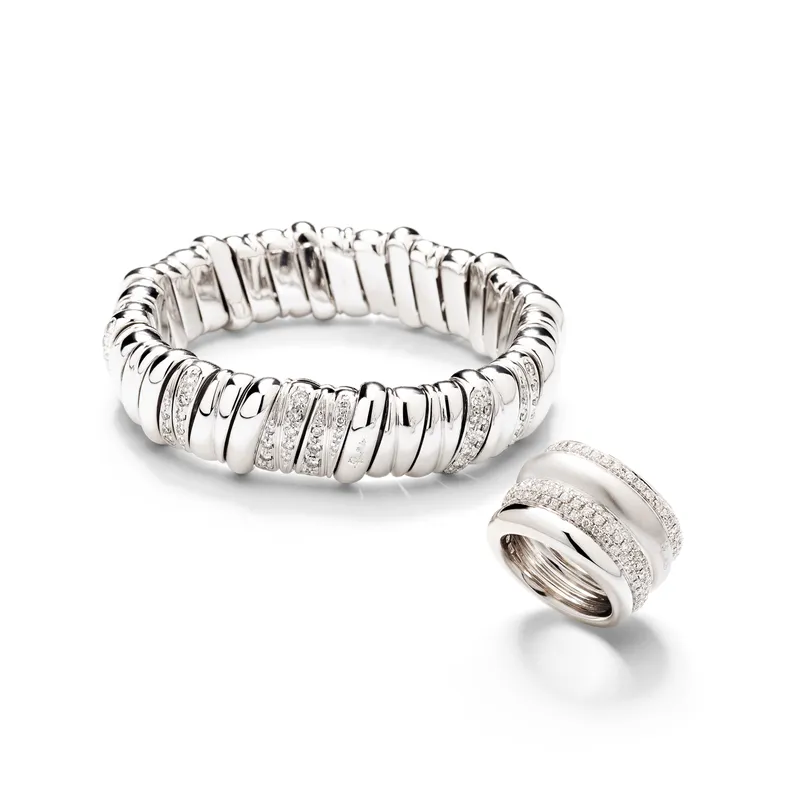
Pomellato Tubolare bracelet and ring, 1999
The Revolution of Image was, for me, the most beautifully curated portion of the exhibition. With Pomellato being among the first jewellery houses to entrust its campaigns to the great masters of photography, the walls were lined with oversized prints by Gian Paolo Barbieri, Helmut Newton, Albert Watson, Horst P. Horst, Snowdon, Javier Vallhonrat and Michel Comte, with images by Herb Ritts appearing on display for the first time.
As Belli points out, none of these are commercial images in the conventional sense as the jewellery is often barely visible. In one Newton campaign, a woman wears a bracelet on her ankle, half-hidden from view. Newton shot three campaigns for the brand in the early 1980s, at the peak of his fame, and his women are clearly in charge. This non-commercial approach would be near-impossible today, she argues, as the demands of return on investment mean every image must showcase the product clearly.
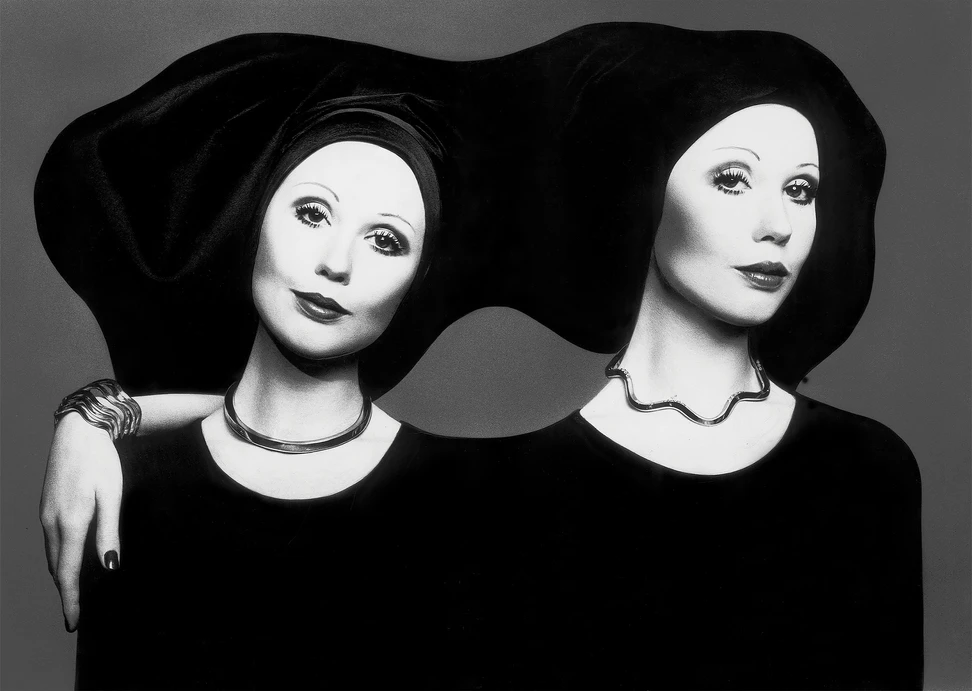
A 1971 Pomellato advertisement photograph by Gian Paolo Barbieri
Following this, the exhibition takes on chains as its subject, a signature motif of the house, spanning styles from the Gourmette and Boule to later interpretations such as Catene and Iconica. Made by hand using the same techniques as the hardware world, Pomellato’s chains are among some of the most technically complex jewellery to produce.
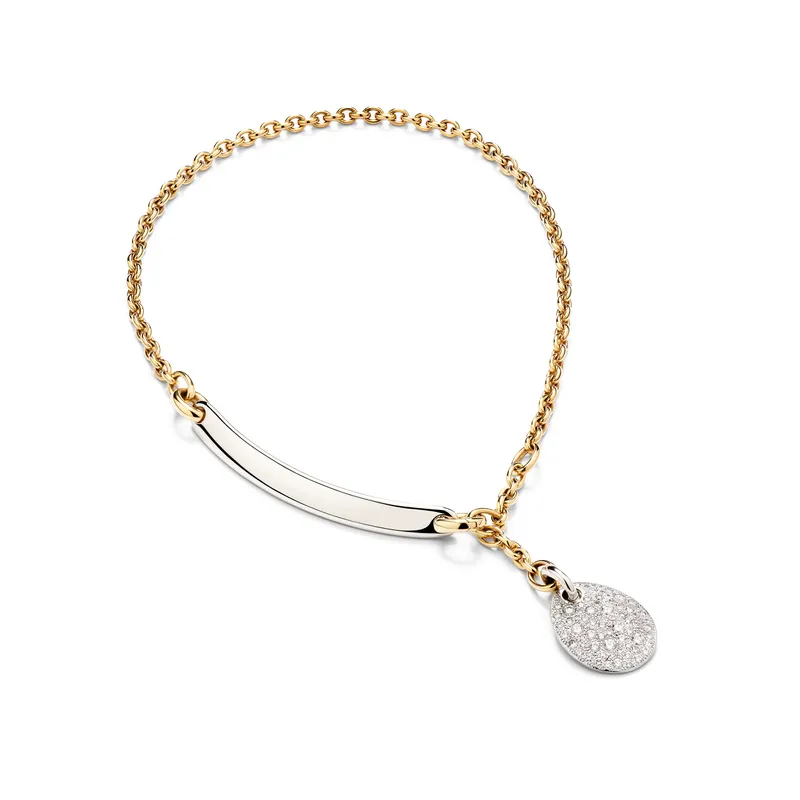
Pomellato Pixel necklace, 2002
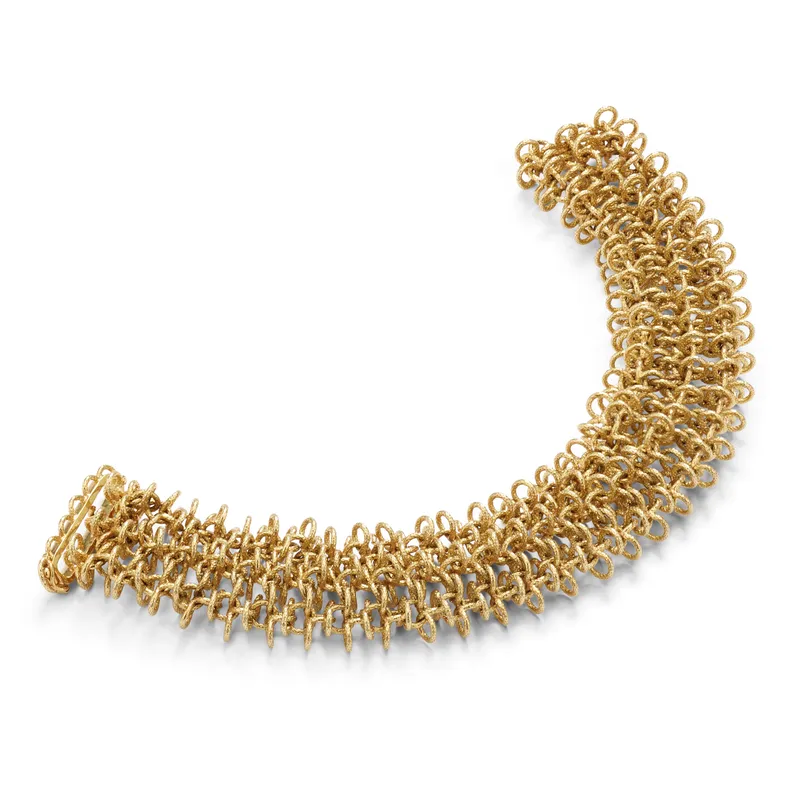
Pomellato Ricciolo bracelet, 1968
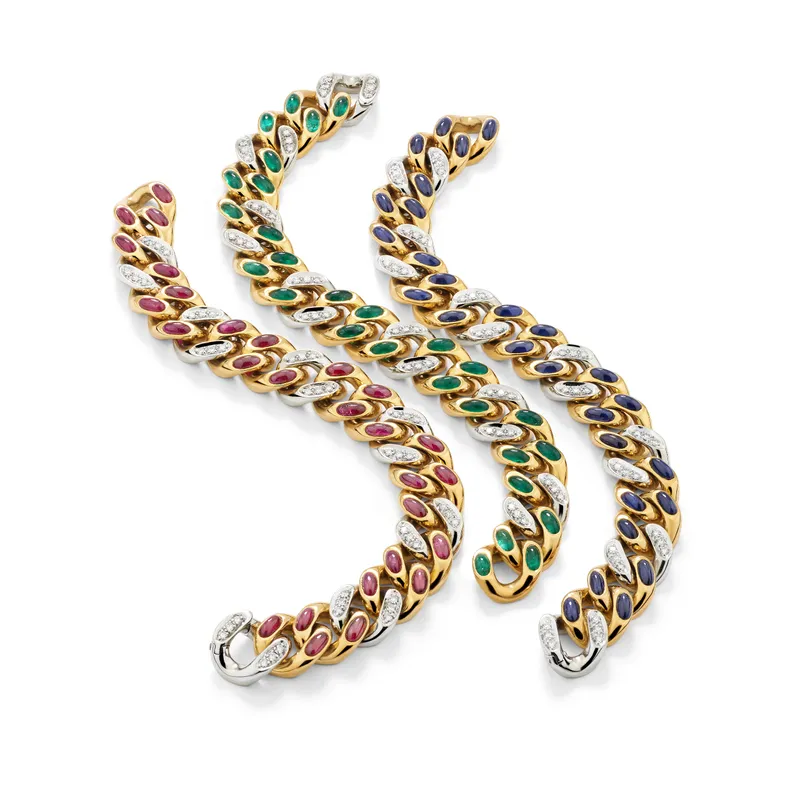
Pomellato Gourmette bracelets, 1981
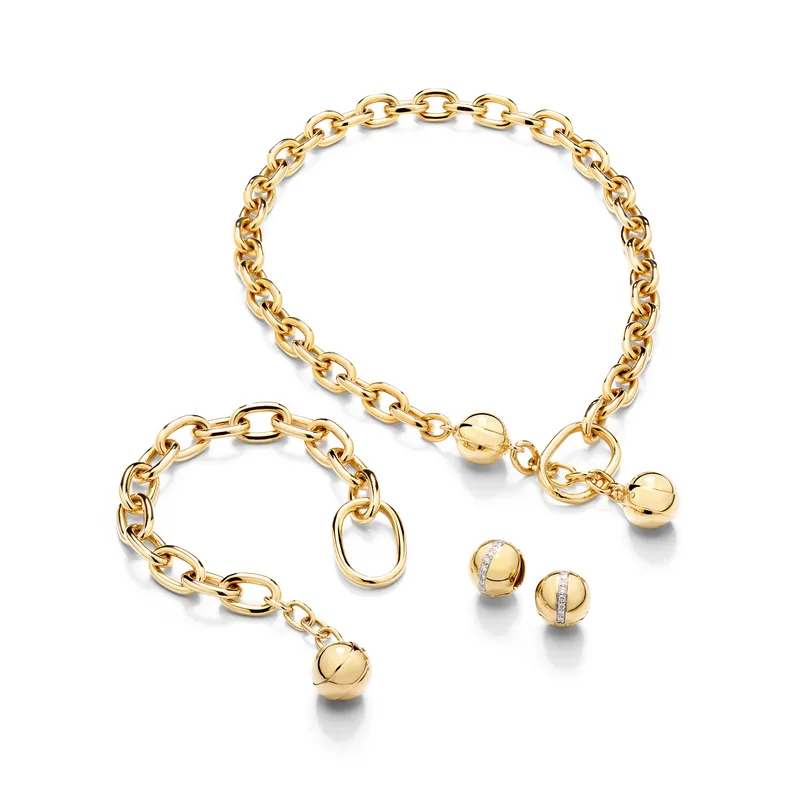
Pomellato Boule earrings, bracelet and necklace, 1977-1979
The Revolution of Colour traces Pomellato’s favouring of juicy, saturated gemstones, a passion that runs from the house’s earliest pieces through to its new high jewellery. As you make your way through the next few rooms, displays spotlight the architectural shapes of Pomellato jewellery, culminating in a signature Pomellato bracelet enlarged into a giant sculpture for the exhibition.
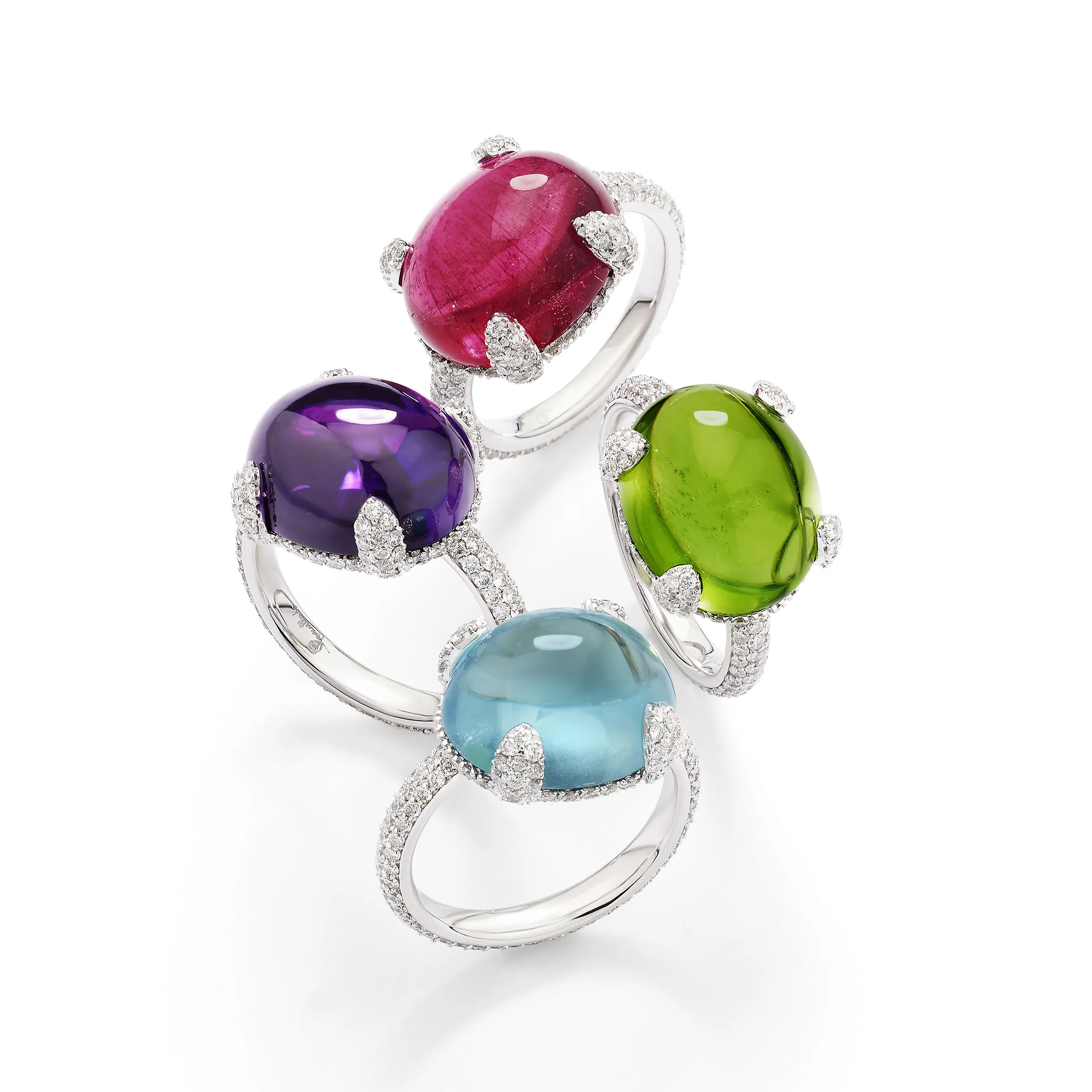
Pomellato Caramelle rings, 2004
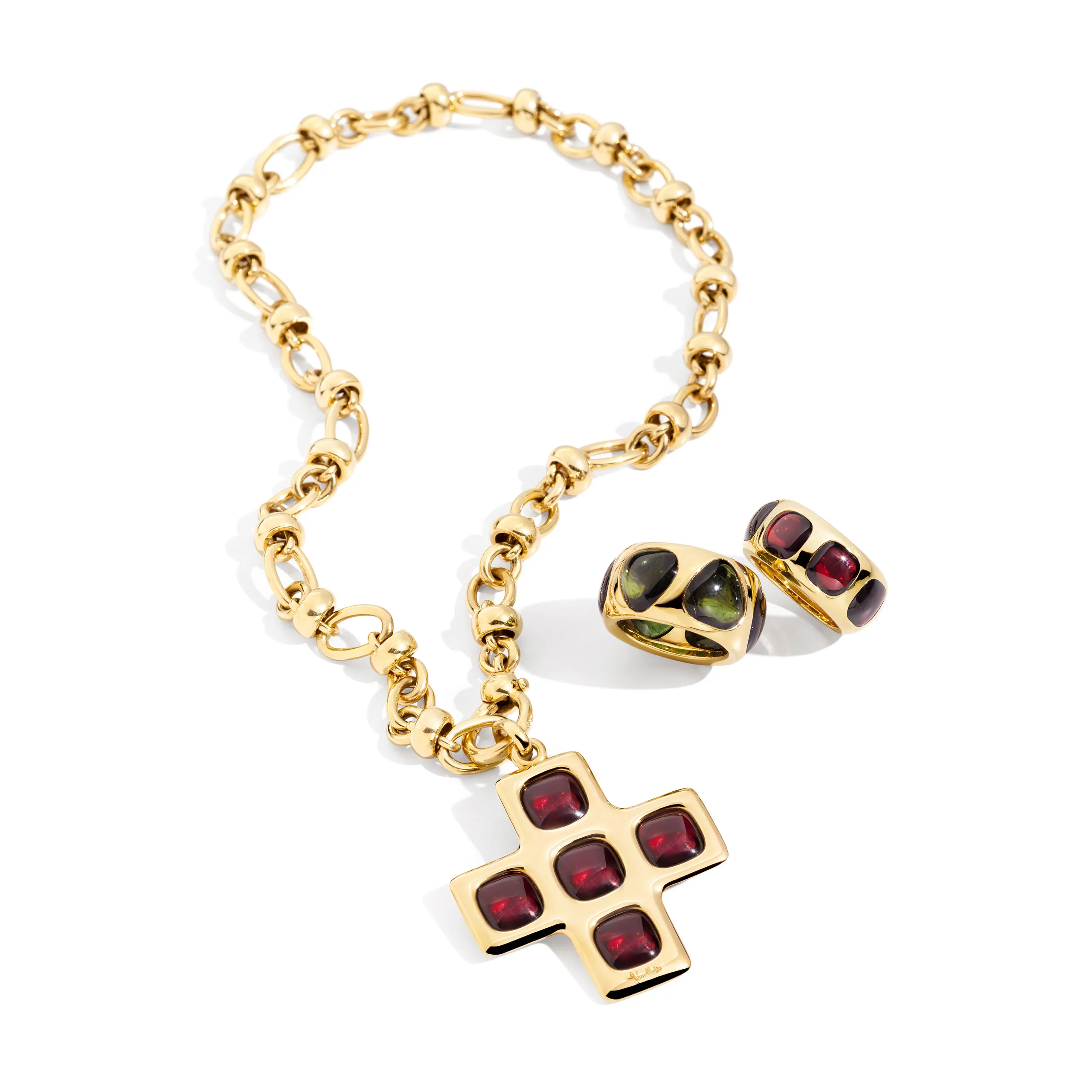
Pomellato Bisanzio cross pendant and rings, 1993-1995
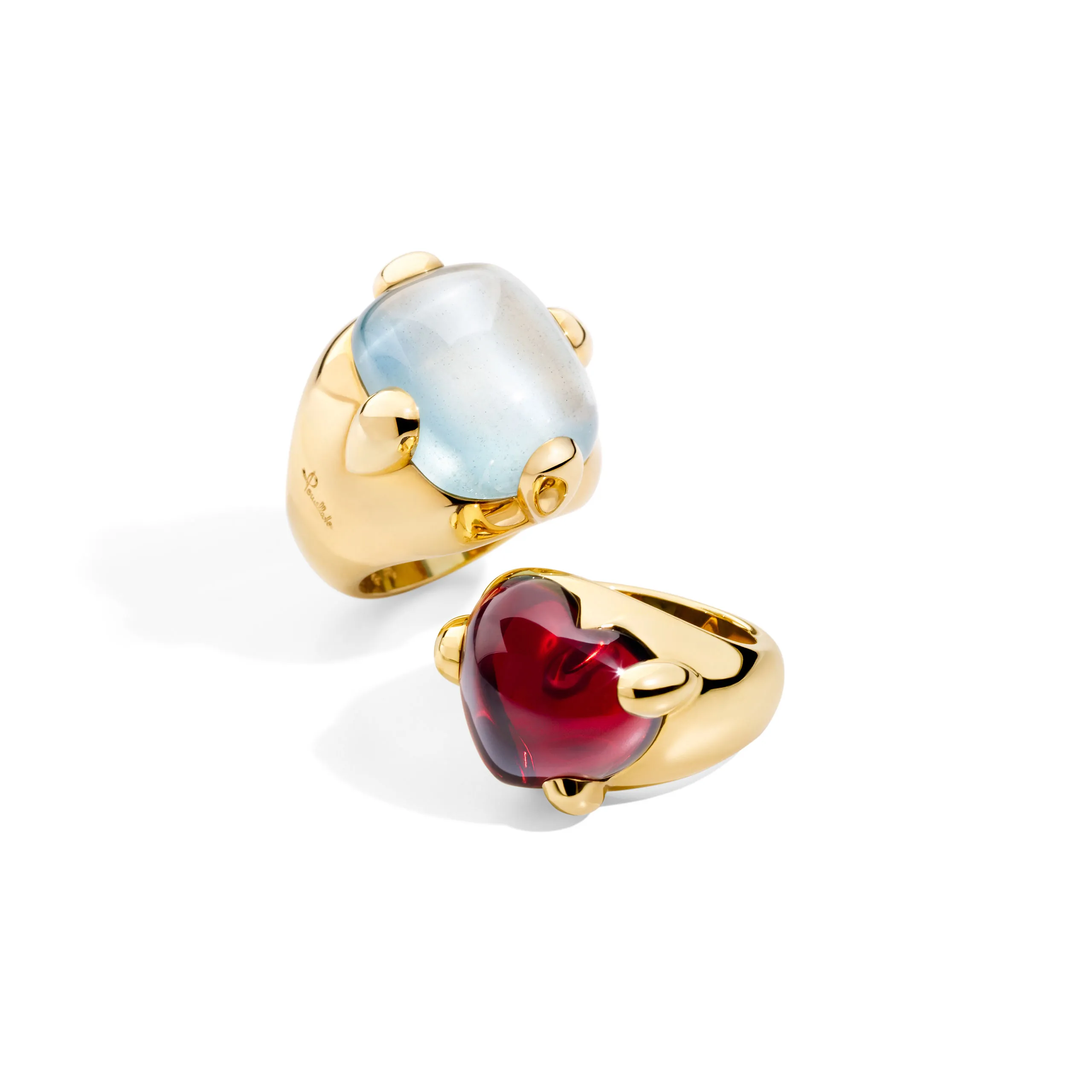
Pomellato Griffe rings, 1995-1996
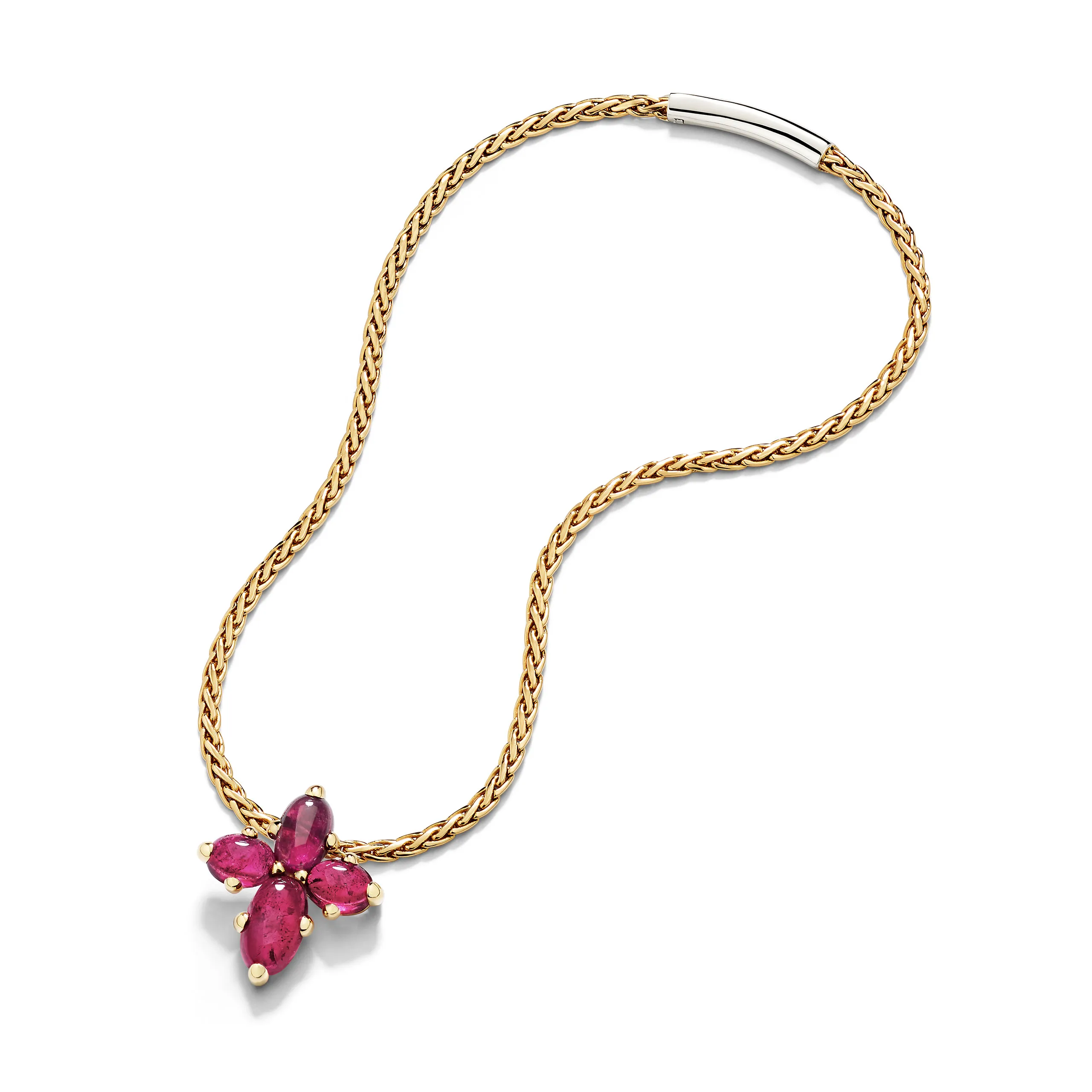
Pomellato Griffe pendant, 1995
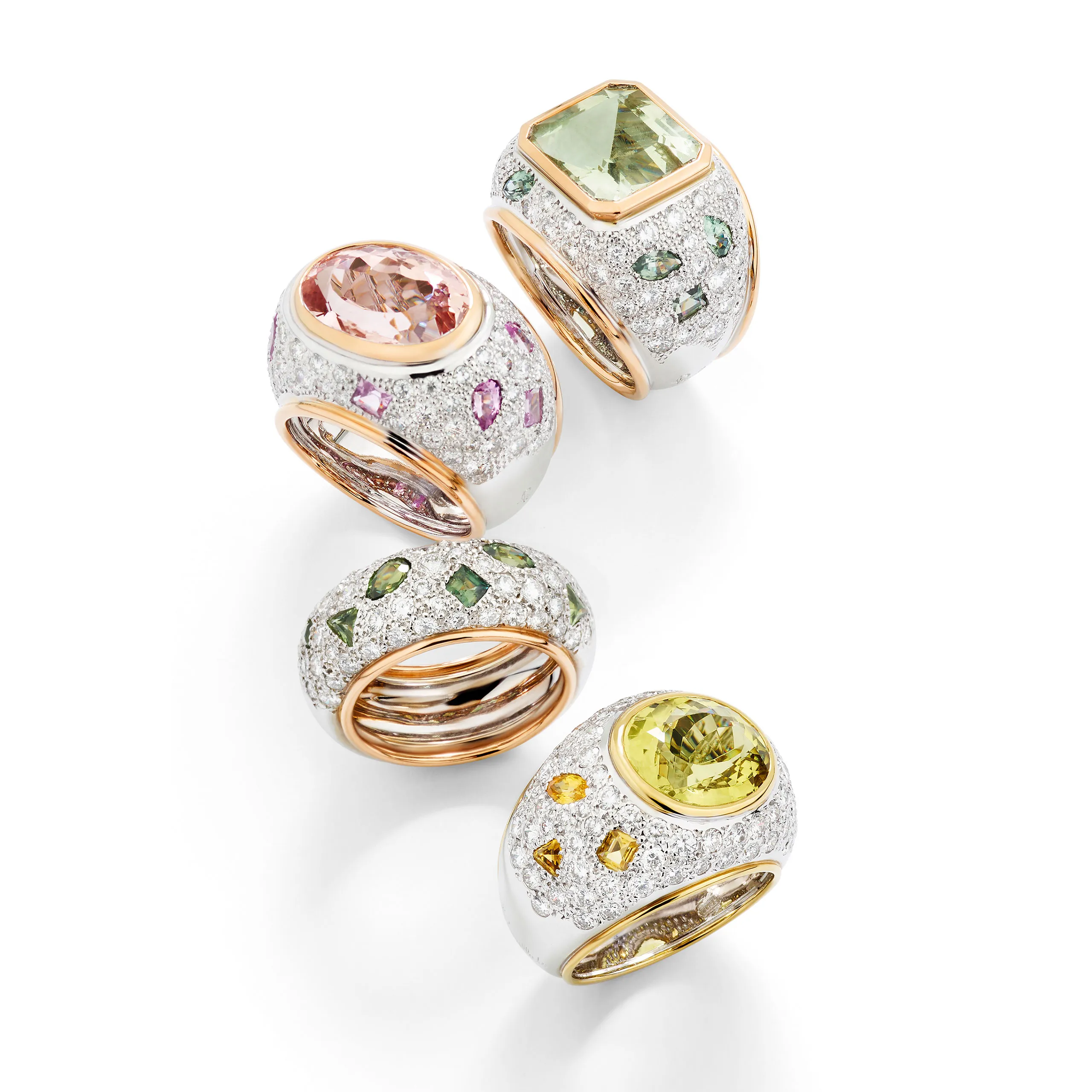
Pomellato Starlight rings, 1996
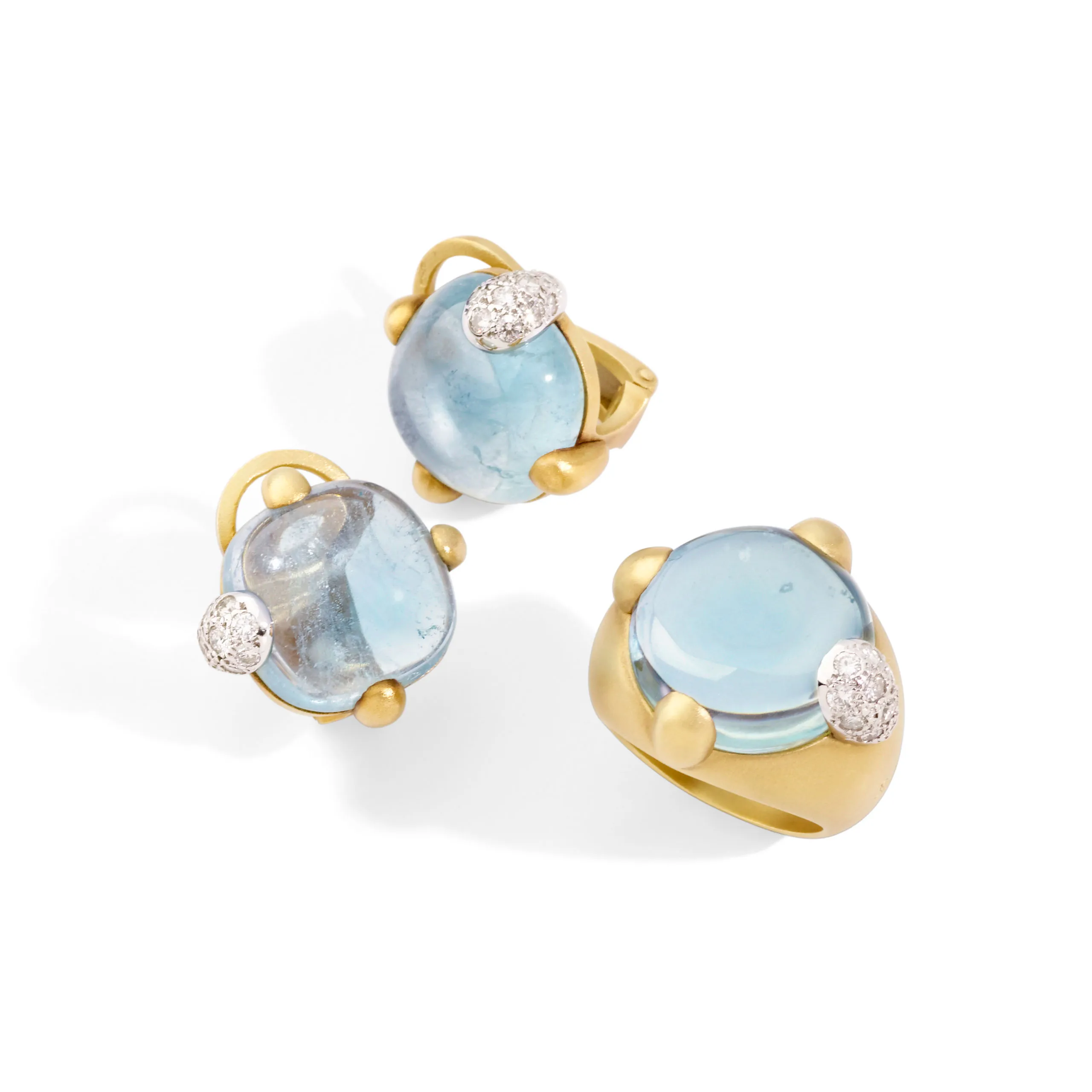
Pomellato Griffe earrings and ring, 1996
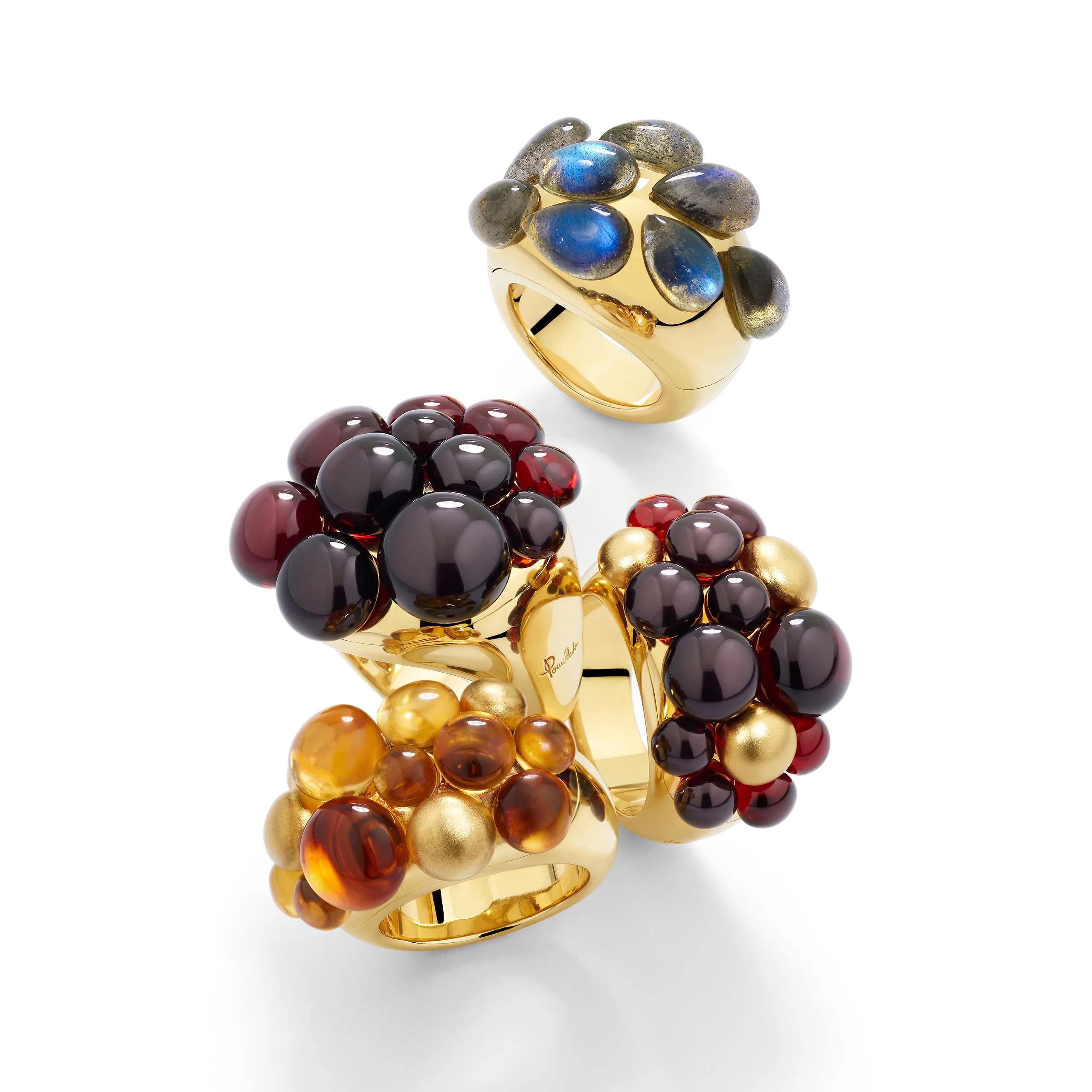
Pomellato Mora rings and Rugiada ring, 1996
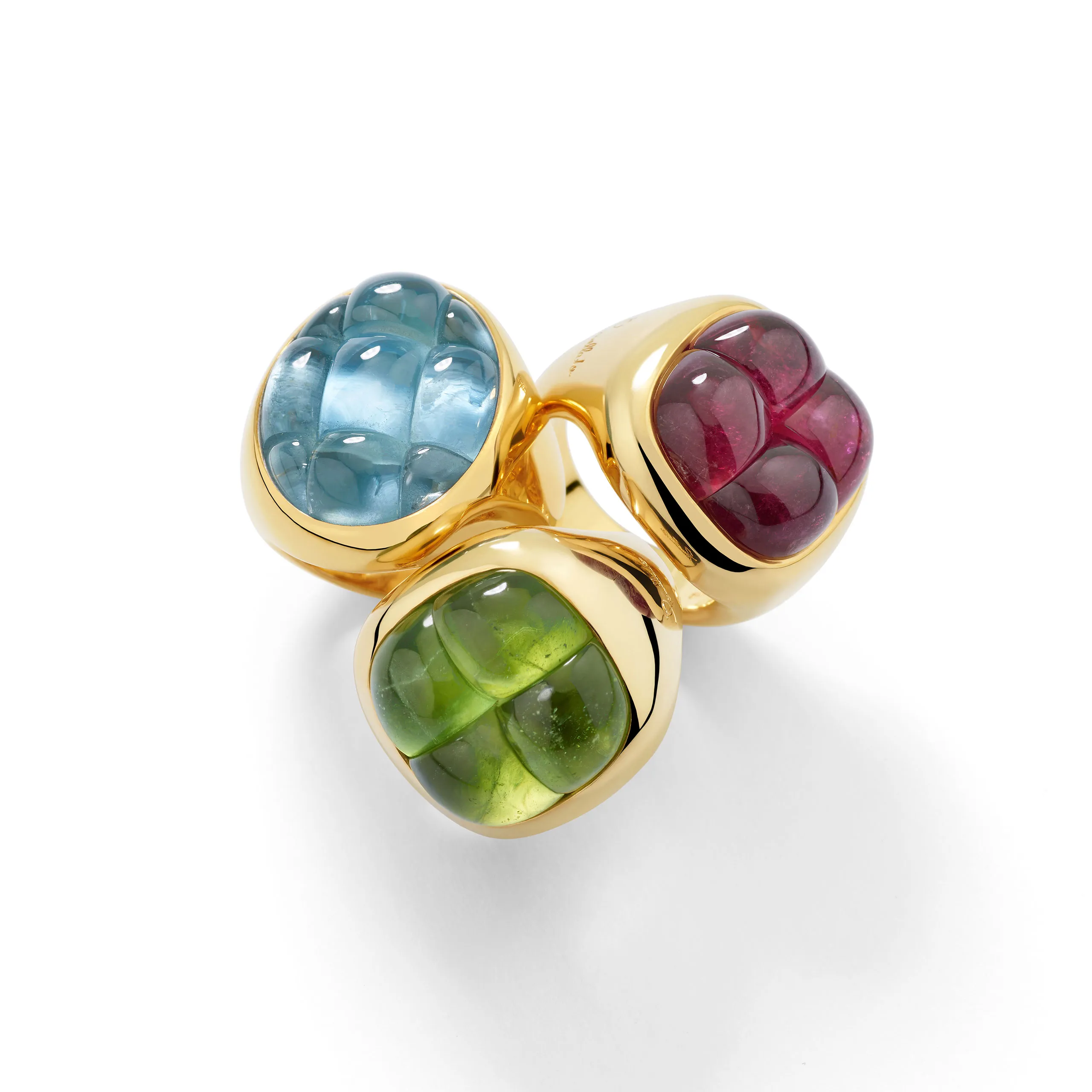
Pomellato Mosaico rings, 1997-1999
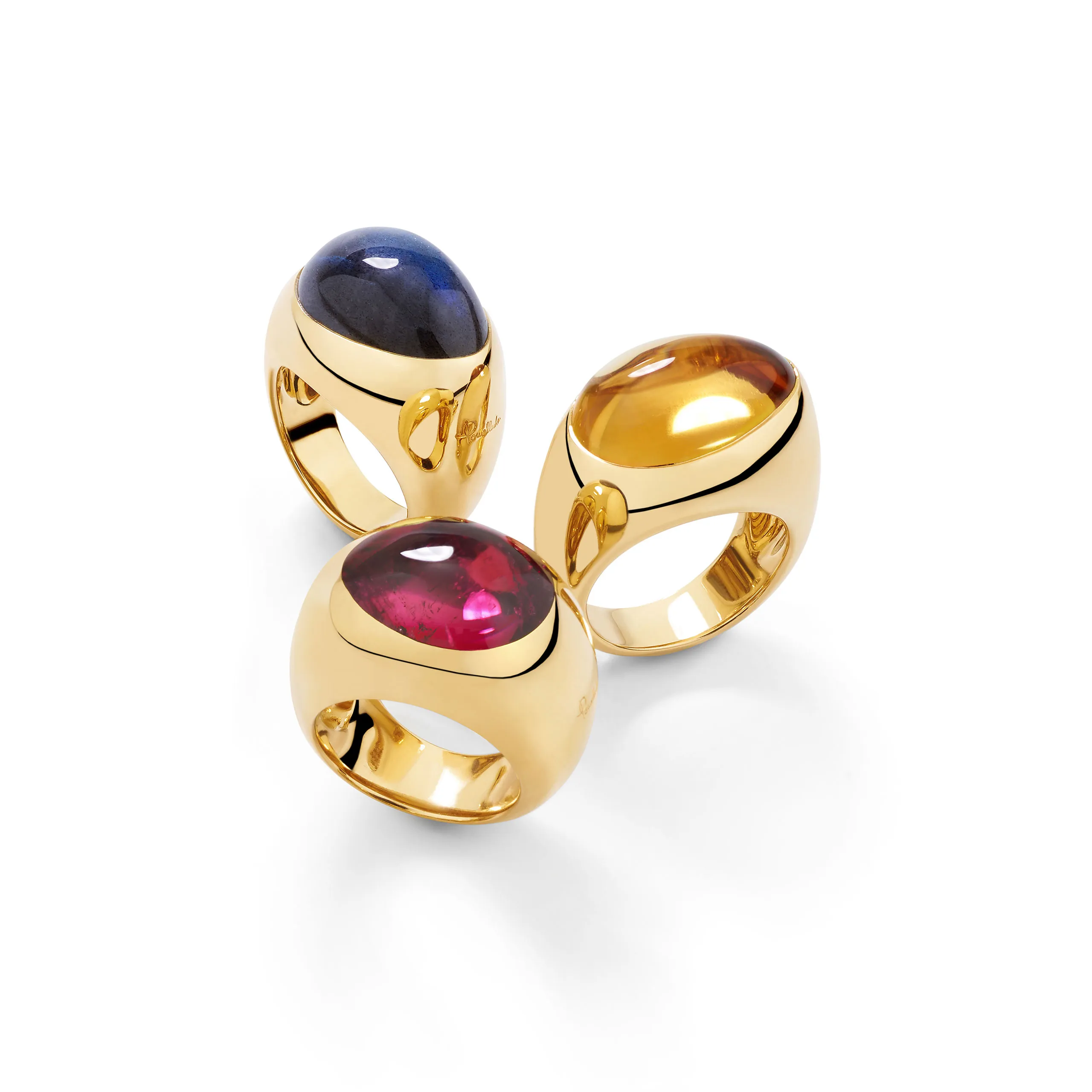
Pomellato Goccia rings, 1999-2000
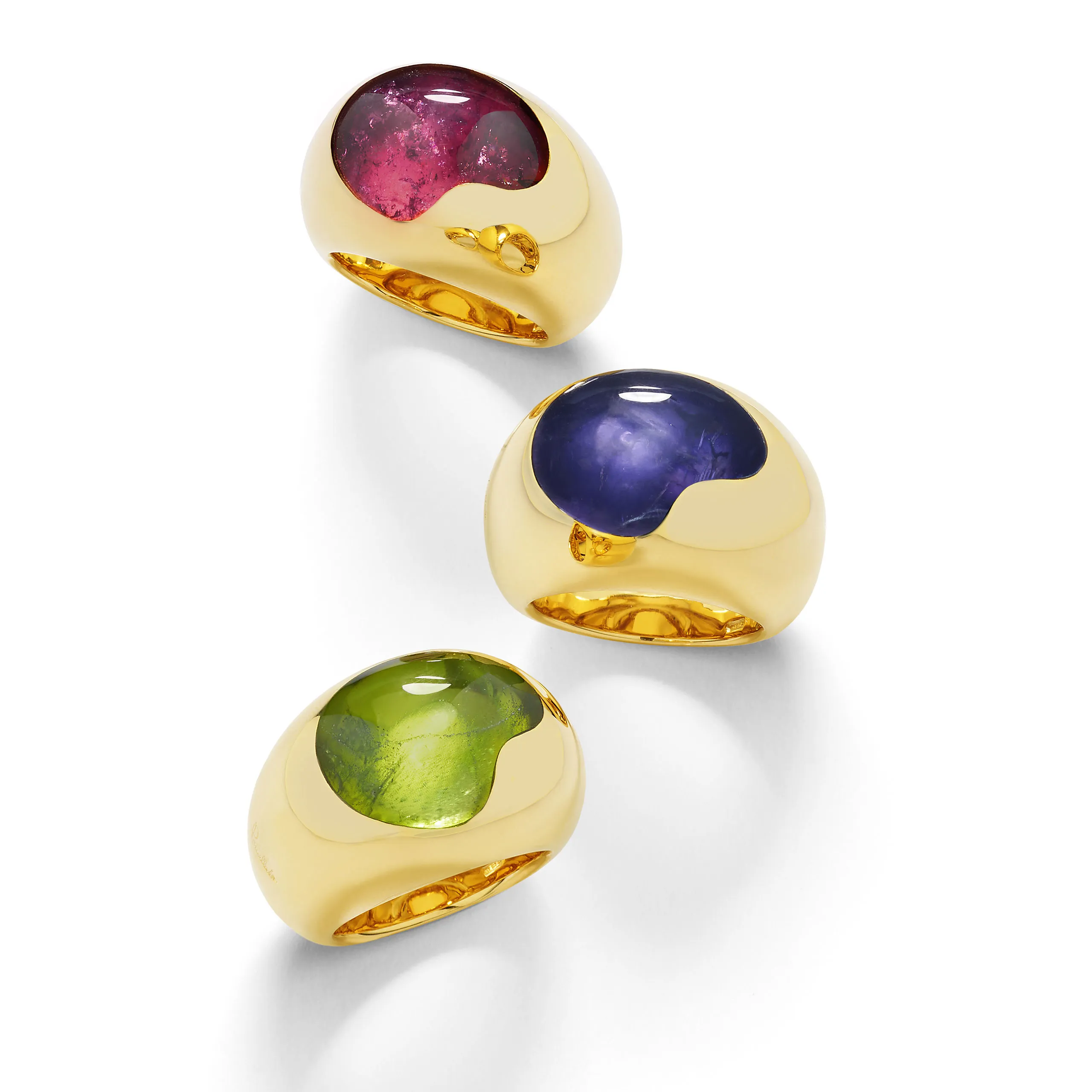
Pomellato Lago rings, 2001
The show concludes with a section dedicated to Pomellato’s relationship with women, a founding principle of the house and one that continues today through Pomellato for Women, the maison’s advocacy platform founded in 2017 for its 50th anniversary dedicated to gender equality and female empowerment. For a brand built around women from the very beginning, it feels like a fitting place to end.
Open free to the public, Pomellato, Le Joaillier Révolutionnaire is available to view at the Palais de Tokyo until 20th July.


WORDS
Joshua Hendren is a London-based journalist specialising in jewellery, watches, luxury and lifestyle. As a freelance writer, his work has featured across a variety of media, including the Financial Times, Vanity Fair, The Telegraph and The New York Times.
RelatedArticles
Discover the brand: the story from various angles.