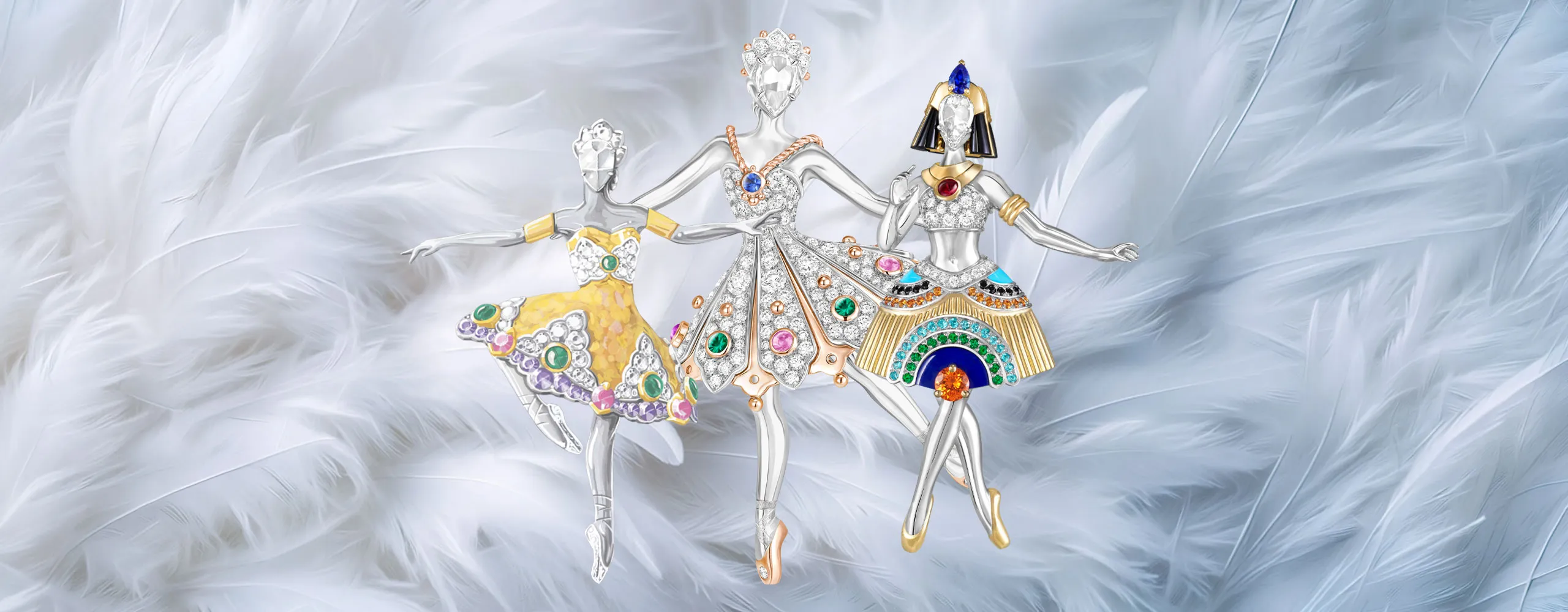
Movement in Miniature: Van Cleef & Arpels Debuts New Ballet Précieux Ballerinas
When Van Cleef & Arpels introduced the Ballet Précieux High Jewellery collection in 2007, it offered a new stage for one of the Maison’s most recognisable motifs: the ballerina. Nearly two decades later, the story continues with 12 new clips for 2026, each inspired by characters and scenes from the classical ballet repertoire.
Van Cleef & Arpels’ relationship with dance dates back to the 1920s, when Louis Arpels, a member of the founding family, was a devoted visitor to the Opéra Garnier in Paris, just a short walk from the Maison’s Place Vendôme boutique. That fascination soon found its way into jewellery. By the early 1940s, Van Cleef & Arpels had introduced its first ballerina clips, capturing dancers in gold, diamonds and coloured gemstones. Over the following decades, these expressive figures became a signature of the Maison.
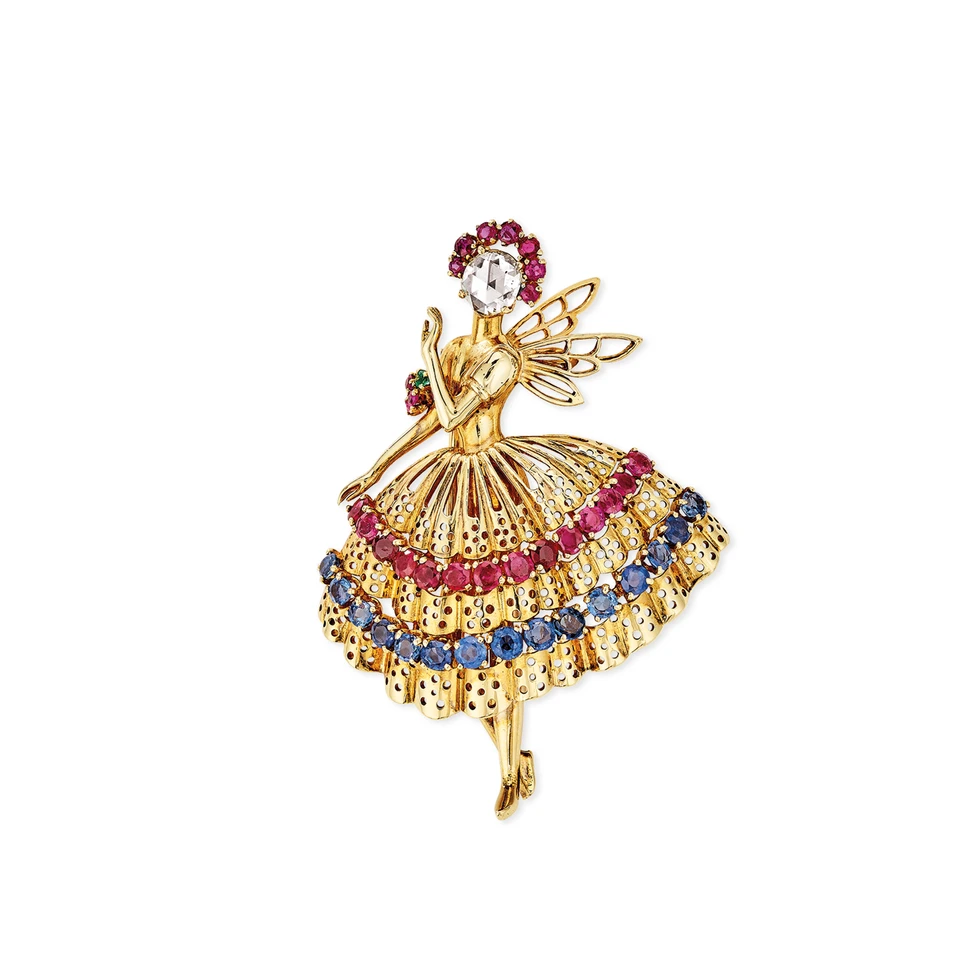
From the archives: a diamond, ruby and sapphire Ballerina clip by Van Cleef & Arpels from 1947
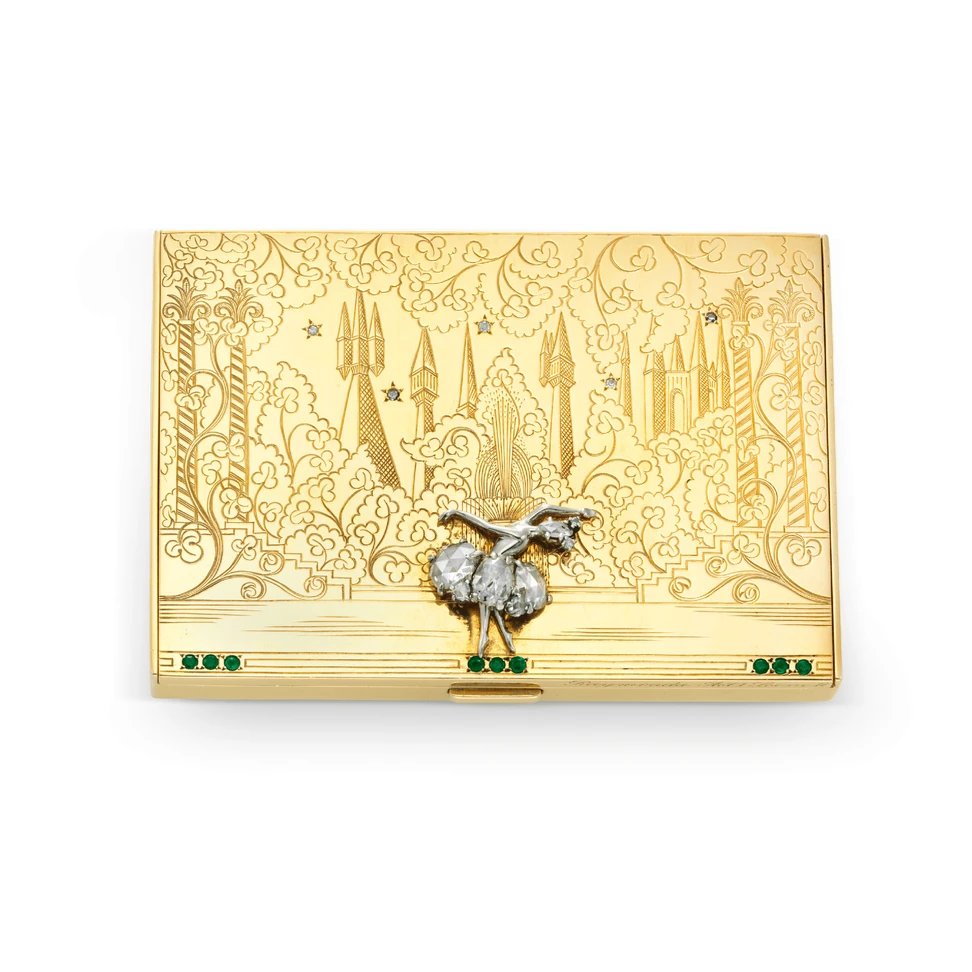
Van Cleef & Arpels Raymonda powder compact from 1945 in yellow gold, platinum and emeralds
The new Ballet Précieux collection builds on this legacy. Each figure begins as a hand-sculpted model in green wax, allowing the jeweller to refine the dancer’s posture and the movement of her costume in three dimensions. Once cast in gold and polished, the dancer is brought to life through intricate gem setting, engraving and other decorative techniques, with diamonds, coloured gemstones, hardstones and lacquer recreating the textures and ornamentation of stage costumes.
The 12 new dancers are inspired by famous ballets and operas, their costumes adorned with wings, fans, flounced skirts and elaborate headdresses that instantly belong to the world of the stage.
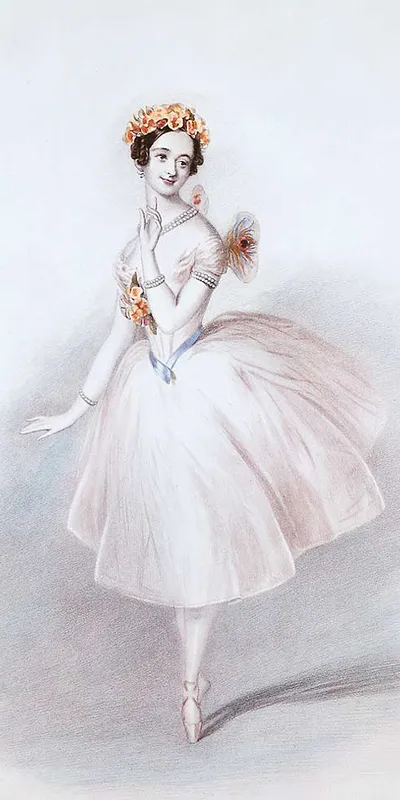
A drawing of Marie Taglioni as The Sylph in La Sylphide, the role that gave rise to the L’Esprit de la forêt clip
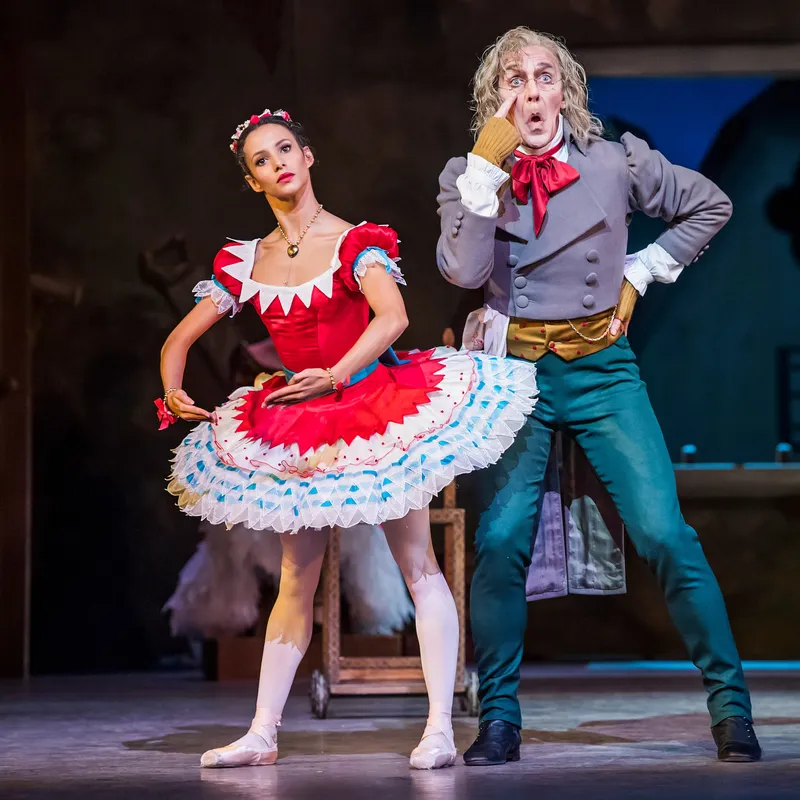
Francesca Hayward as Swanilda) in Coppélia, the inspiration behind the Rêverie de Coppelius clip
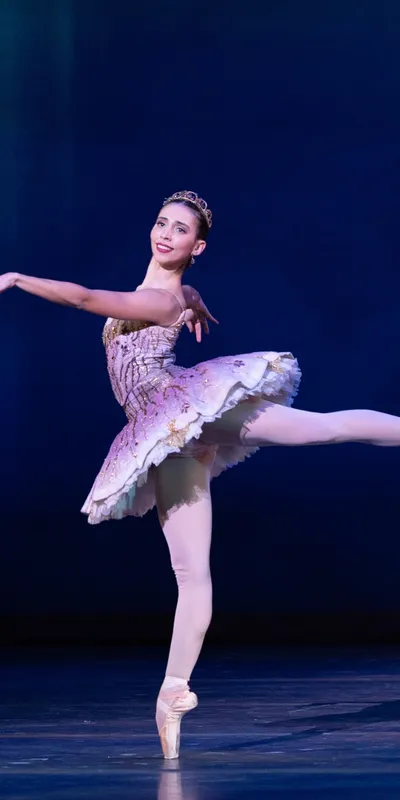
The Sugar Plum Fairy in the Nutcracker, one of the most beloved narrative ballets in the classical repertoire, performed by Ballet Arizona
Poetic Spirits
One of the most ethereal of Van Cleef & Arpels’ new ballerinas is L’Esprit de la forêt, inspired by the title role of La Sylphide, first performed by Marie Taglioni in 1832. Taglioni appeared in a light tulle skirt with delicate wings and flowers woven into her hair, a look that became closely associated with Romantic ballet. In Van Cleef’s jewelled interpretation, gold wings frame the dancer’s shoulders, a floral headpiece crowns the figure and a skirt set with diamonds, sapphires, tsavorites and rubies captures the airy delicacy of the sylph’s costume.

The Perséide clip takes on a celestial character, inspired by Ode, the ballet-oratorio choreographed by Léonide Massine for Serge Diaghilev’s Ballets Russes in 1928. Across the dancer’s skirt, sapphires are linked by fine lines of white gold that resemble constellations, while her raised arm holds a diamond aloft, as if she is reaching for the stars.


Other ballerinas explore similarly whimsical themes. Rêverie de Coppelius is inspired by the ballet Coppélia, in which the eccentric inventor Dr Coppélius dreams of creating a mechanical doll that can come to life. Unlike many of the other ballerinas in the collection, the figure stands almost motionless, like an automaton. The costume adds playful colour, with green lacquer sleeves, a rose gold bow in the dancer’s hair and a skirt decorated with violet sapphires and rubies.


Inspired by Raymonda, the ballet composed by Alexandre Glazunov and choreographed by Marius Petipa, Belle de Songe shows the dancer in a classic ballet pose, balanced en pointe with arms outstretched. Her skirt is crafted in hammered yellow gold, its textured surface animating the fabric. Diamond-set panels and cabochon emeralds decorate the bodice and hem, while pink and mauve sapphires add touches of colour along the edge of the skirt.

Fairy Tale Ballets
Two dancers take their inspiration from The Nutcracker, one of the most beloved narrative ballets in the classical repertoire. Masha (or Clara), the young heroine of Tchaikovsky’s festive ballet, is depicted as she transforms into a princess. Guilloché engraving across her skirt mimics the pleats of a tutu, giving the gold the appearance of finely gathered fabric. A border of diamond pavé outlines the hem, while pear-shaped diamonds, sapphires and blue tourmalines are scattered across the skirt like jewelled embellishments.

The Sugar Plum Fairy appears in Fée Dragée, a dancer inspired by the magical final act of The Nutcracker. Her costume is rendered in bright, confection-like tones, with layers of pink sapphires, spessartite garnets and diamonds arranged across the scalloped gold tutu. A headpiece of spessartite garnets crowns the dancer, forming a vivid orange halo.


Queen of the Nile
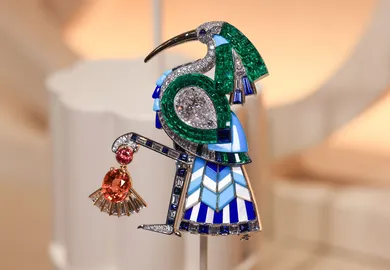
One of the most visually striking dancers in the collection is Cléopâtre, whose costume nods to the splendour of ancient Egypt. The skirt is particularly elaborate, composed of pleated gold that fans out from the waist. Bands of emeralds, spessartite garnets, black spinels and blue tourmalines form vivid arches across the design, inlaid with lapis lazuli and turquoise, creating a bold geometric pattern reminiscent of Egyptian ornament. The dancer wears a gold head ornament set with a pear-shape sapphire, typical of the regal headdresses worn by Queen Cleopatra.


Fantastical Heroines
Elsewhere, the Ballet Précieux collection introduces a series of legendary heroines drawn from the stage. Reine de Shemakhan, inspired by Rimsky-Korsakov’s opera The Golden Cockerel, is dressed in vivid colours, with rose gold, coloured sapphires and lacquer creating a richly detailed costume reminiscent of Persian dance. In Armide, the sorceress of Lully’s 1907 ballet Le Pavillon d’Armide appears in an ornate costume adorned with coloured sapphires, blue tourmalines and diamonds, while Rose de Bengale features a skirt composed of petal-shaped panels of diamond pavé, set with cabochon pink and mauve sapphires and layered over yellow gold.


Spanish Fire
The final dancers take their inspiration from the Spanish scenes of the ballet Don Quixote. In Danse de Séville, the ballerina holds her arms softly curved before her while one leg lifts behind, her tiered skirt and ruffled neckline forming the iconic silhouette of a flamenco dress. Castilla captures a more animated moment of the dance, the ballerina raising a fan above her head as bands of sapphires and diamonds sweep across the skirt.


More than eight decades after the first ballerina clips appeared, Van Cleef & Arpels continues to maintain ties with the world of dance through artistic collaborations, including its global Dance Reflections initiative in support of contemporary dance.
This latest chapter of Ballet Précieux is a miniature production in its own right, bringing together characters from across the ballet repertoire, from sylphs and sugar plum fairies to queens and flamenco dancers. Together, they demonstrate the Maison’s remarkable ability to translate human gesture, character and movement into gold and gemstones. It is this quality that has made each of Van Cleef & Arpels’ ballerinas a jewellery icon.


Curious to learn more? Explore the history of Van Cleef & Arpels’ ballerina brooches.

WORDS
Claire Roberts has been writing about jewellery and watches for more than 20 years. She is a seasoned journalist who joined the team 5 years ago as a contributing writer and a newsletter editor.
RelatedArticles
Discover the brand: the story from various angles.