
Sylva & Cie: Sylva Yepremian on Reclaimed Diamonds and the Art of Reworking the Past
Sylva Yepremian co-founded Sylva & Cie with her husband Raffi in 2007, and I first discovered her work at the Couture Show over 10 years ago. There are many things I admire about her work, from her use of antique diamonds over shiny new stones to the way she takes historical jewellery references and strips away their formality. So, when Sylva told me she would be in Paris for Fashion Week, I immediately agreed to meet her for an early preview of what she will be bringing to Couture this year.
Meeting her in the city which I call home felt appropriate, as it’s a place Sylva knows well. Born in Lebanon and raised in Paris before moving to Los Angeles with her parents to run the family’s jewellery business, she was trained from a young age at the bench by her father, a master craftsman who created jewellery for some of Europe’s most prestigious maisons. You can still see that Old World tradition in Sylva’s work, through her love of reclaimed stones and the hand-worked techniques she continues to employ in her LA atelier.
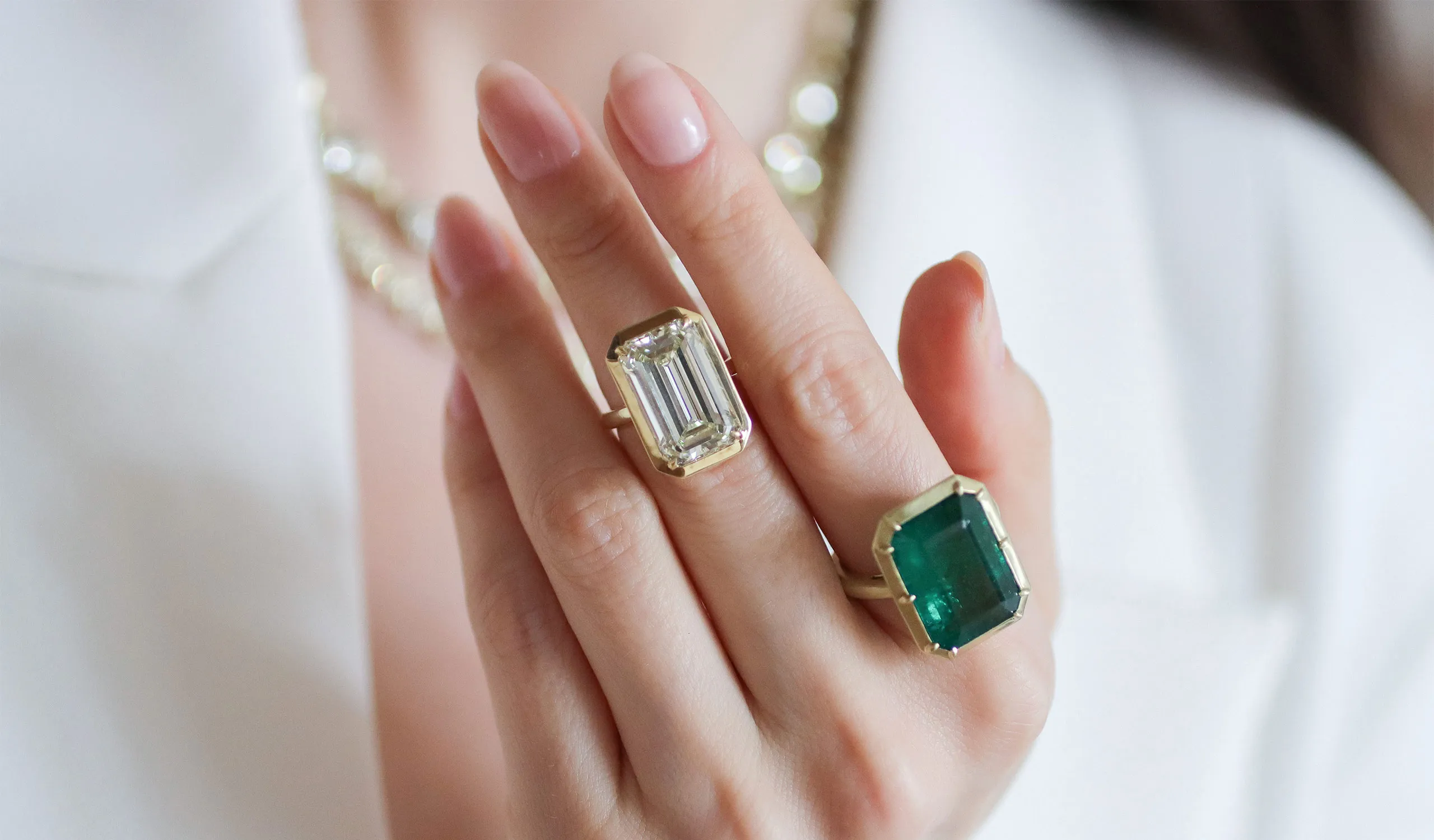
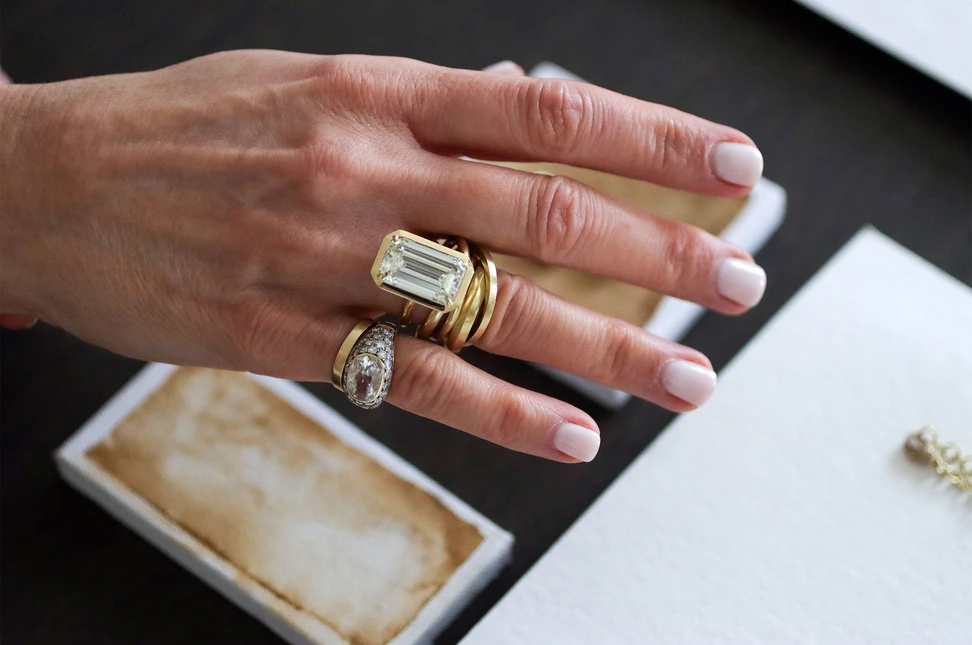
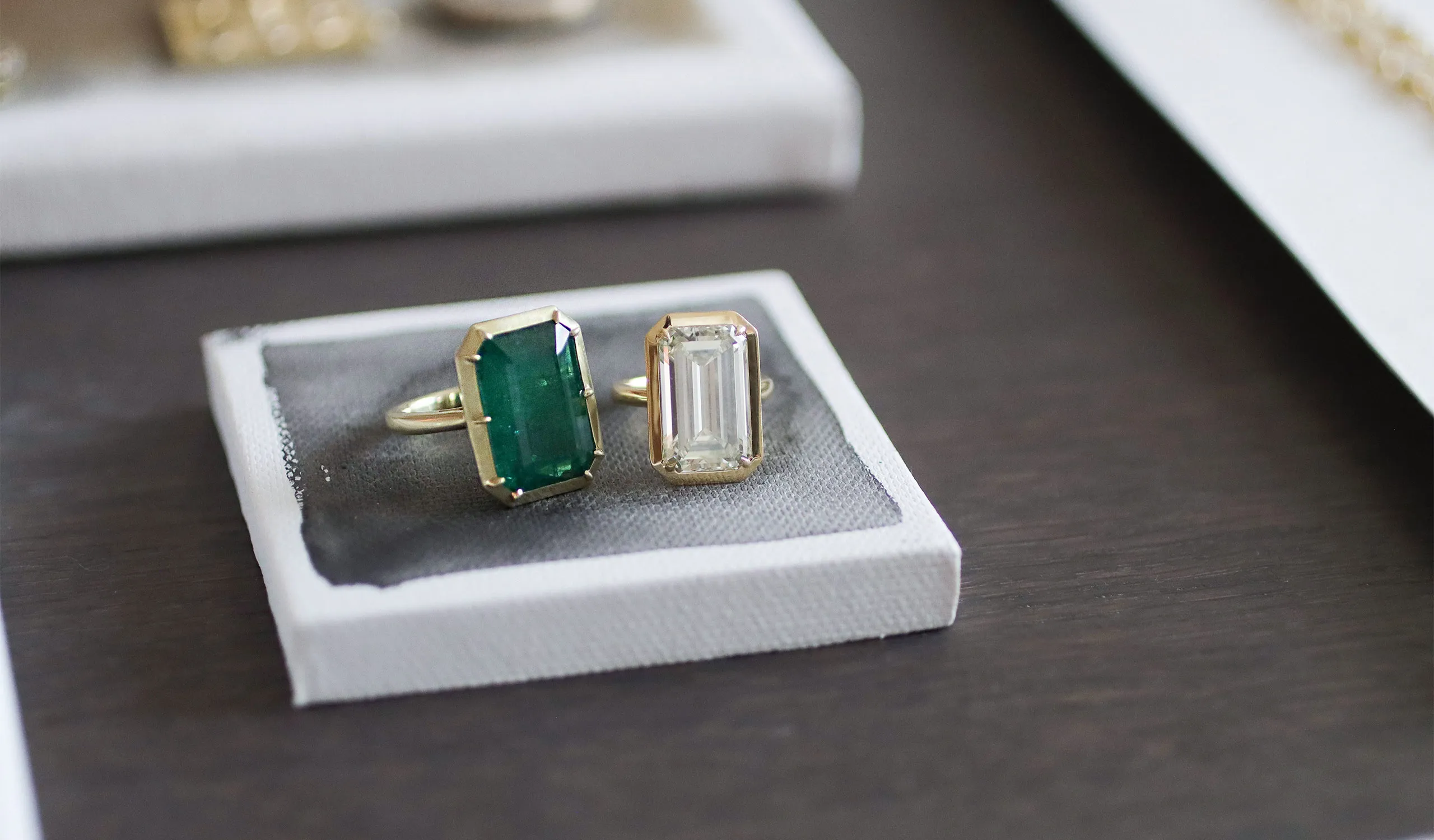
New emerald-cut diamond and emerald rings by Sylva & Cie, showcased in Georgian-inspired collet settings
Founder Sylva Yepremian has a talent for taking historical jewellery references and stripping away their formality
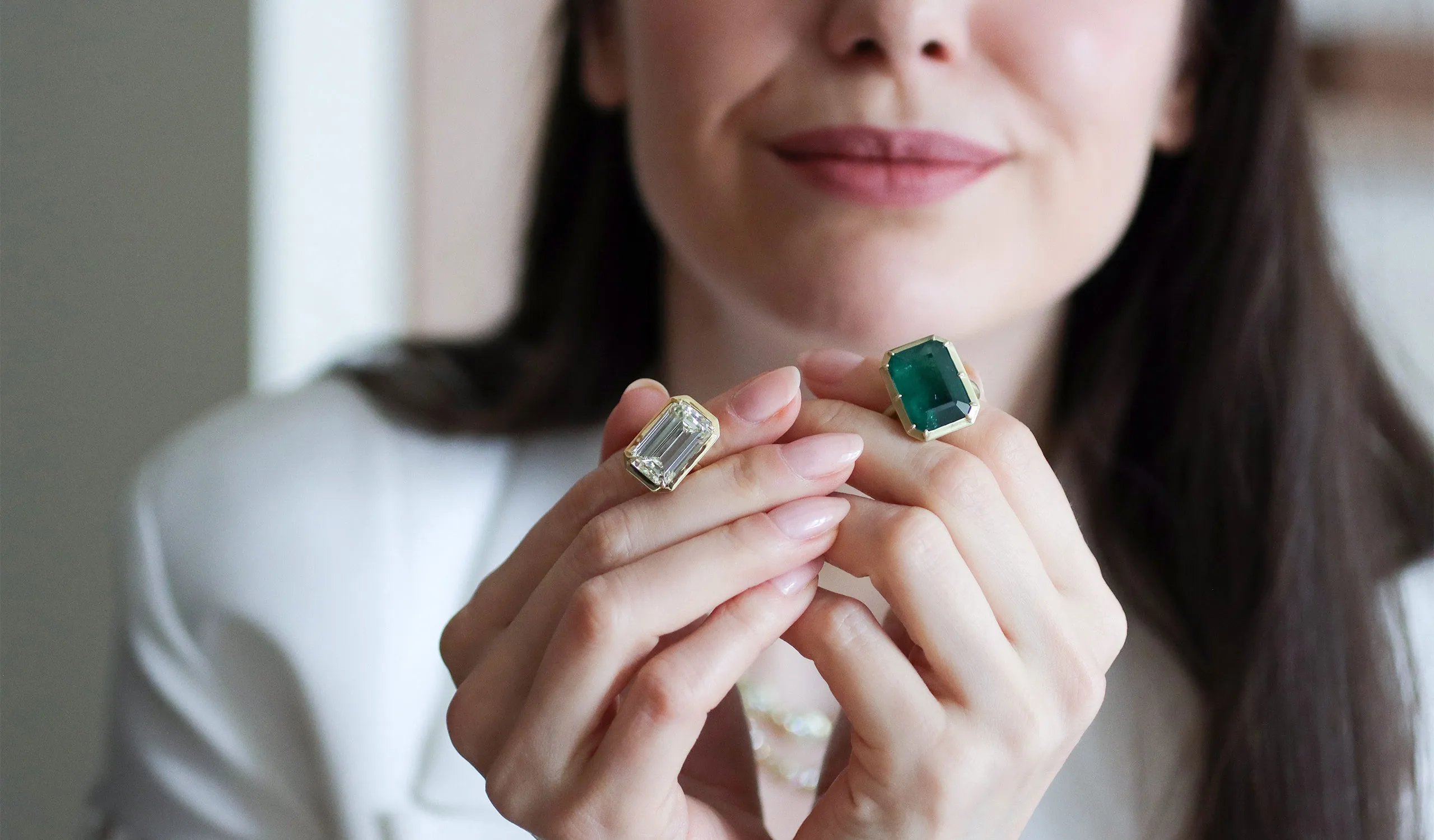
An Old World tradition runs throughout Sylva’s work, through her love of reclaimed stones and her hand-worked techniques
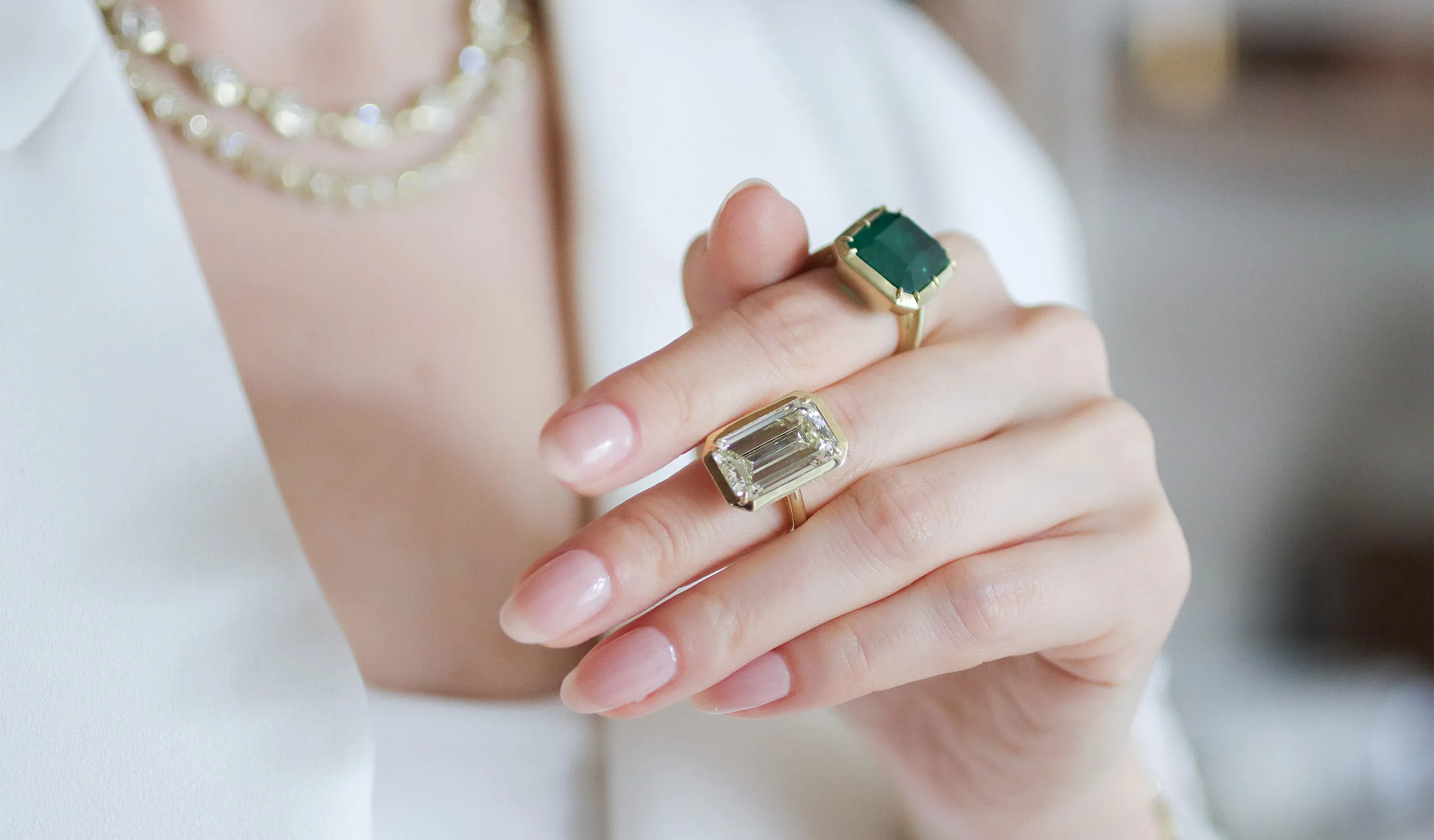
Every Sylva & Cie jewel is hand-worked in her LA atelier
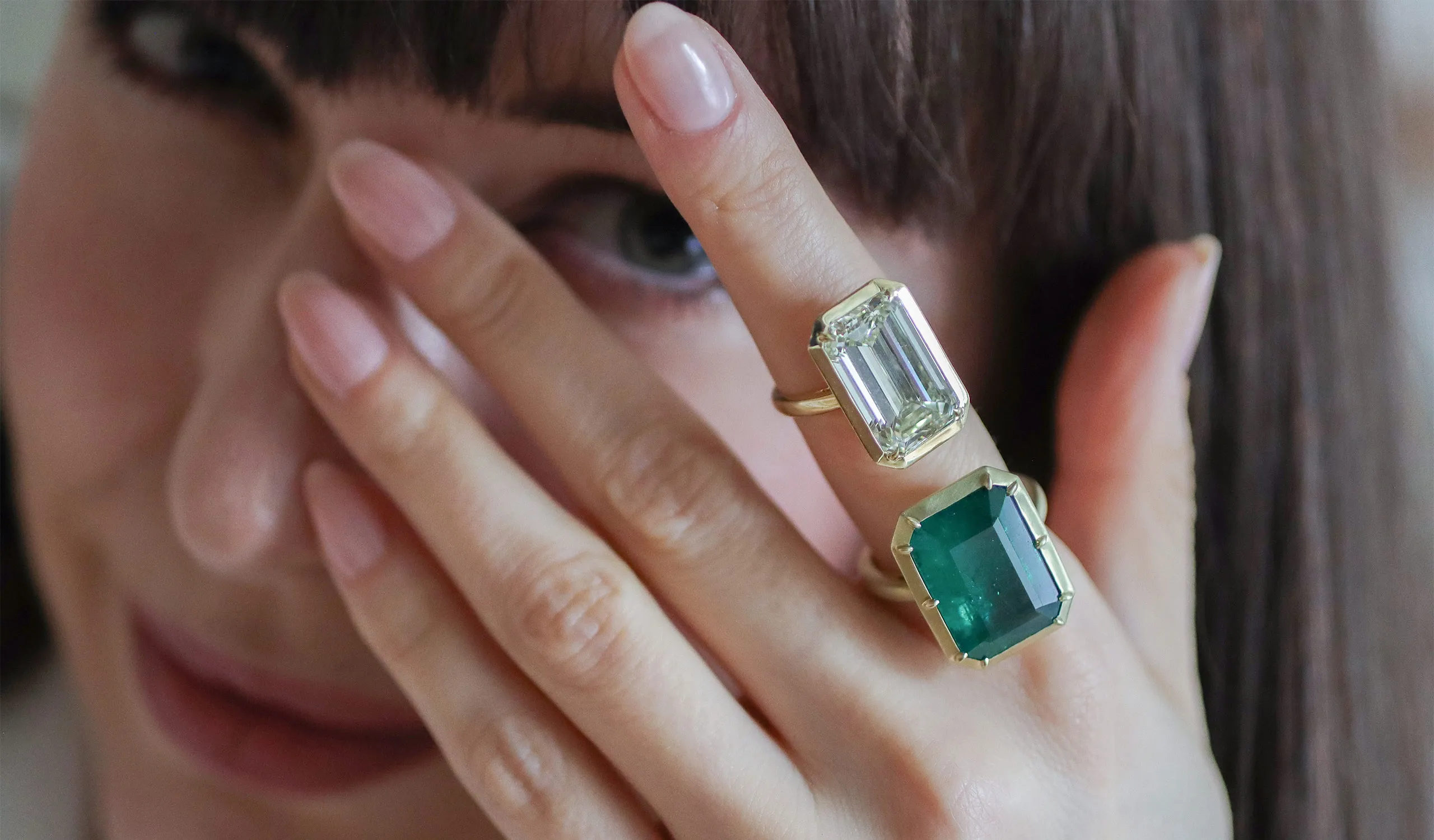
Sylva & Cie has been a fixture at the annual Couture Show at the Wynn in Las Vegas for more than a decade
My client wants to wear her jewellery day in and day out. Even though the materials are important and the sizes are there, there’s something restrained in the way they come together, shares Sylva with us.
When we sat down together, Sylva began walking me through the pieces in front of us, moving between new designs and familiar signatures. Each one came with a story either of a stone discovered, a fragment reclaimed or an idea that had been percolating for a while. It was a fascinating journey – an hour that offered a glimpse into how the brand’s predominantly one-of-a-kind designs come together.
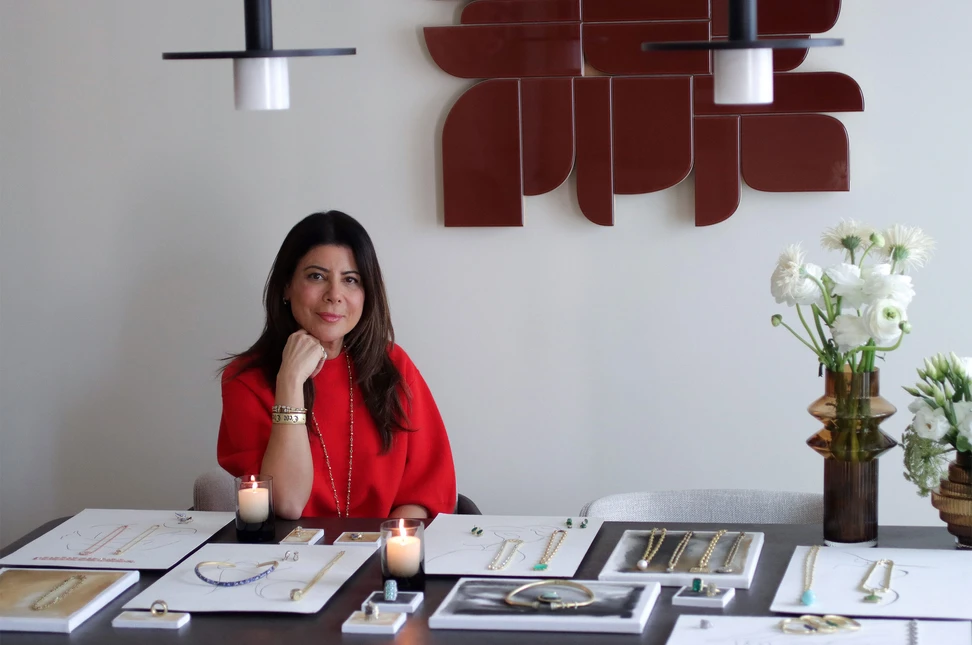
Sylva Yepremian in her studio in Los Angeles. She co-founded Sylva & Cie with her husband Raffi in 2007
A lot of what you’re seeing is really brand new, so this is a little bit of a taste of what’s to come. But there are also pieces that are part of Sylva & Cie’s DNA, the designs that I come back to and reinterpret in different ways, whether that’s through colour, scale or form, says the designer
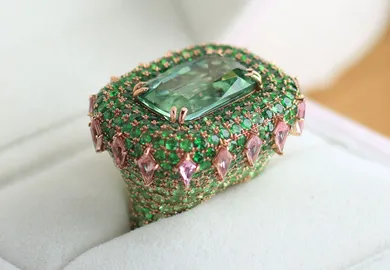
And then I see it, my favourite style that I have been admiring over the years, called ‘The Ten Table ring’. The story behind it is nothing short of playful brilliance. It speaks to the sheer magnetism of these exceptional, one-of-a-kind designs that sparkle so intensely that they catch the eye from ten tables away. Whether in the form of a ring, pendant, or bracelet, each piece from this iconic collection commands attention with an unapologetic presence.
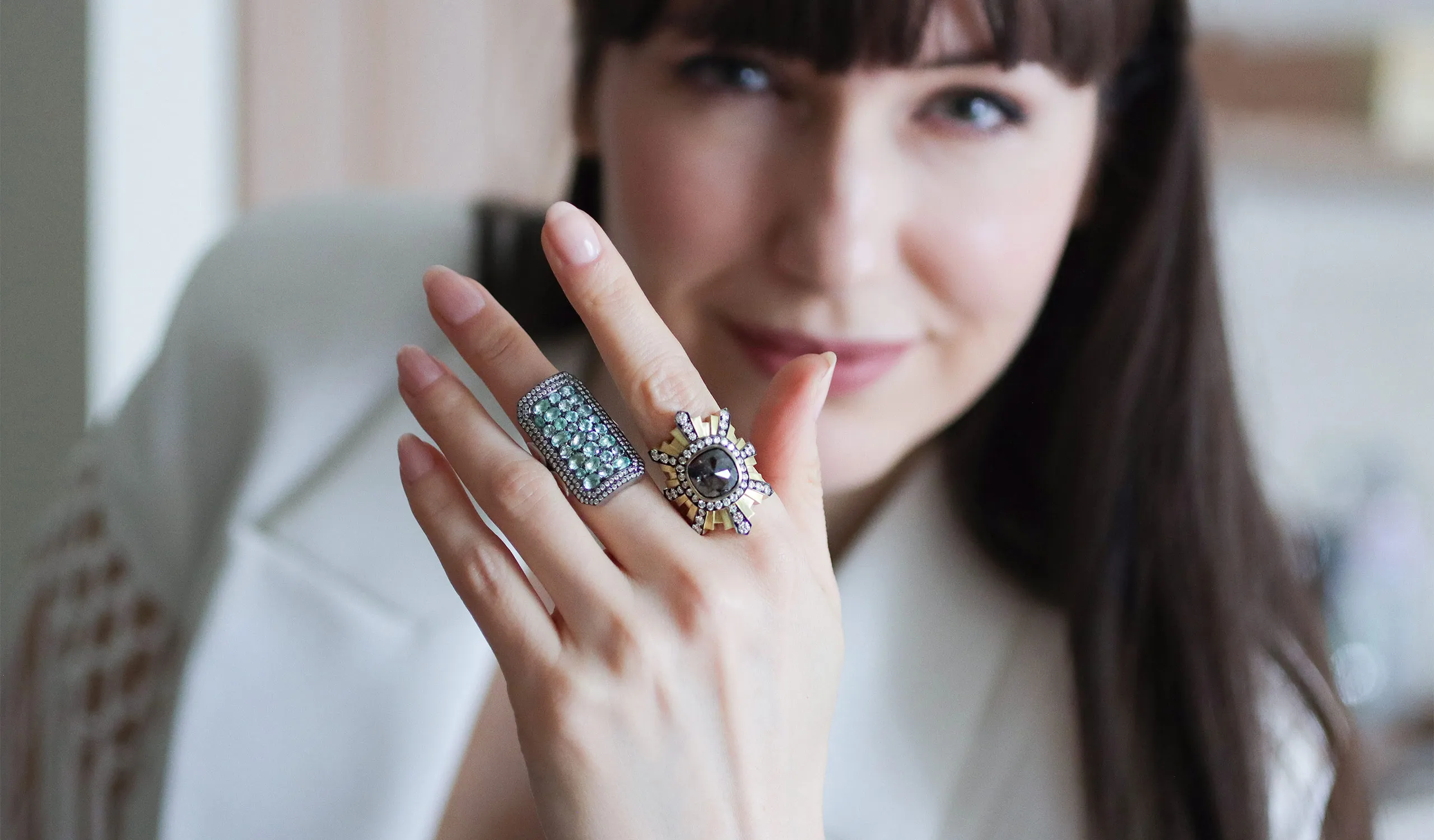
One of Sylva & Cie's best-known designs is the Ten Table ring (left), here set with Paraíba tourmalines
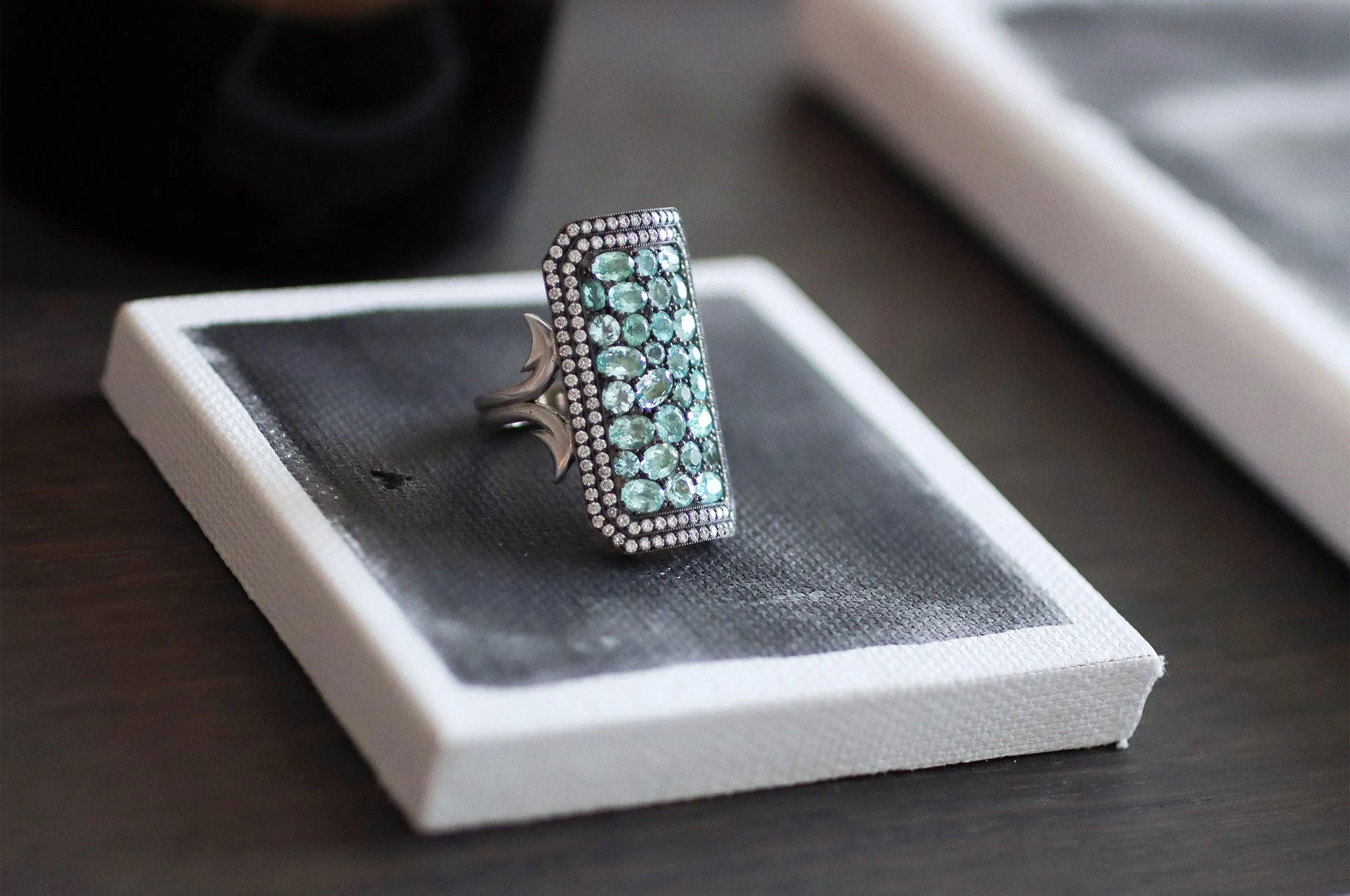
Called the Ten Table because it can be seen from ten tables away, this one-of-a-kind ring is set with oval and round Paraíba tourmalines
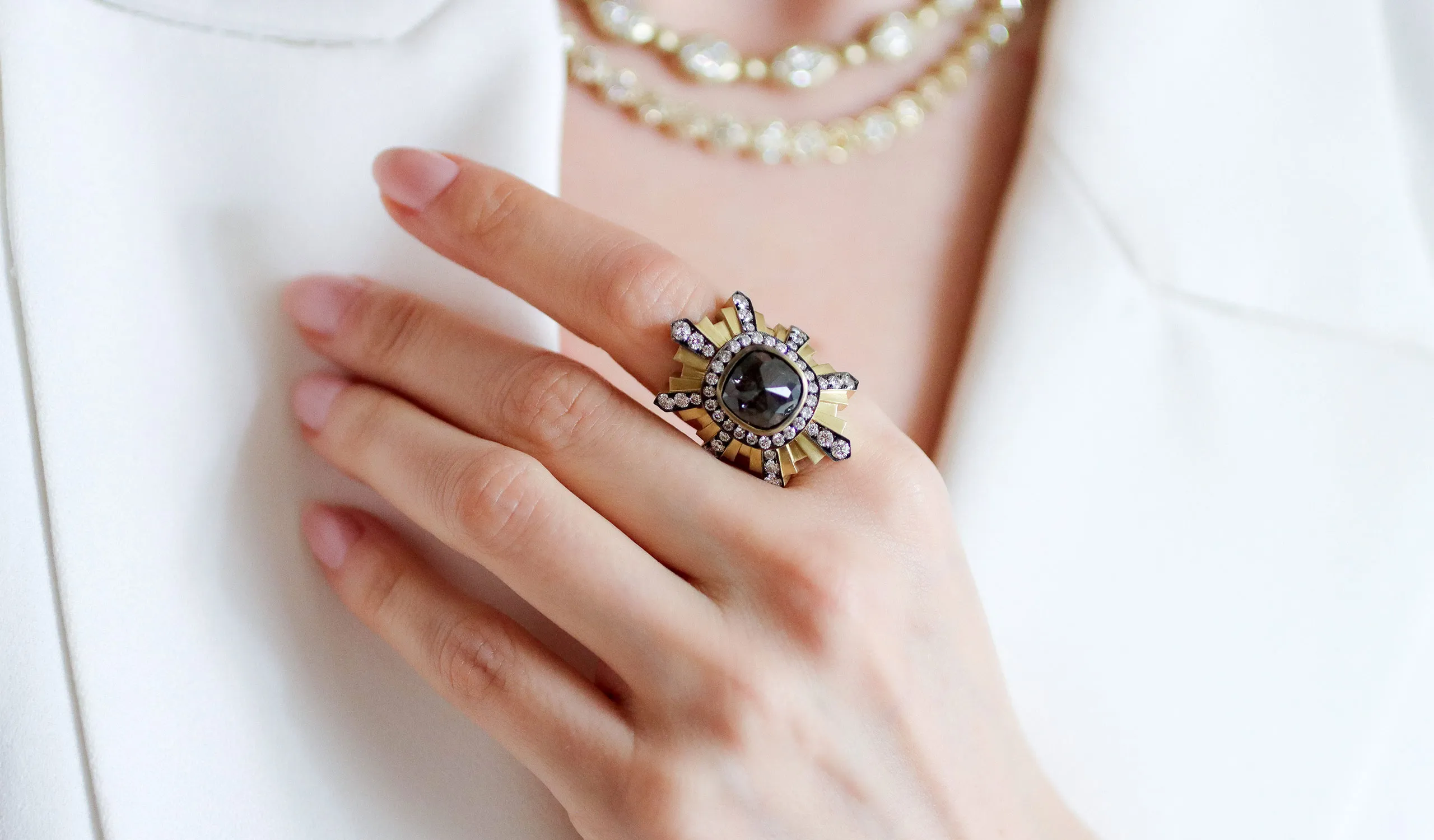
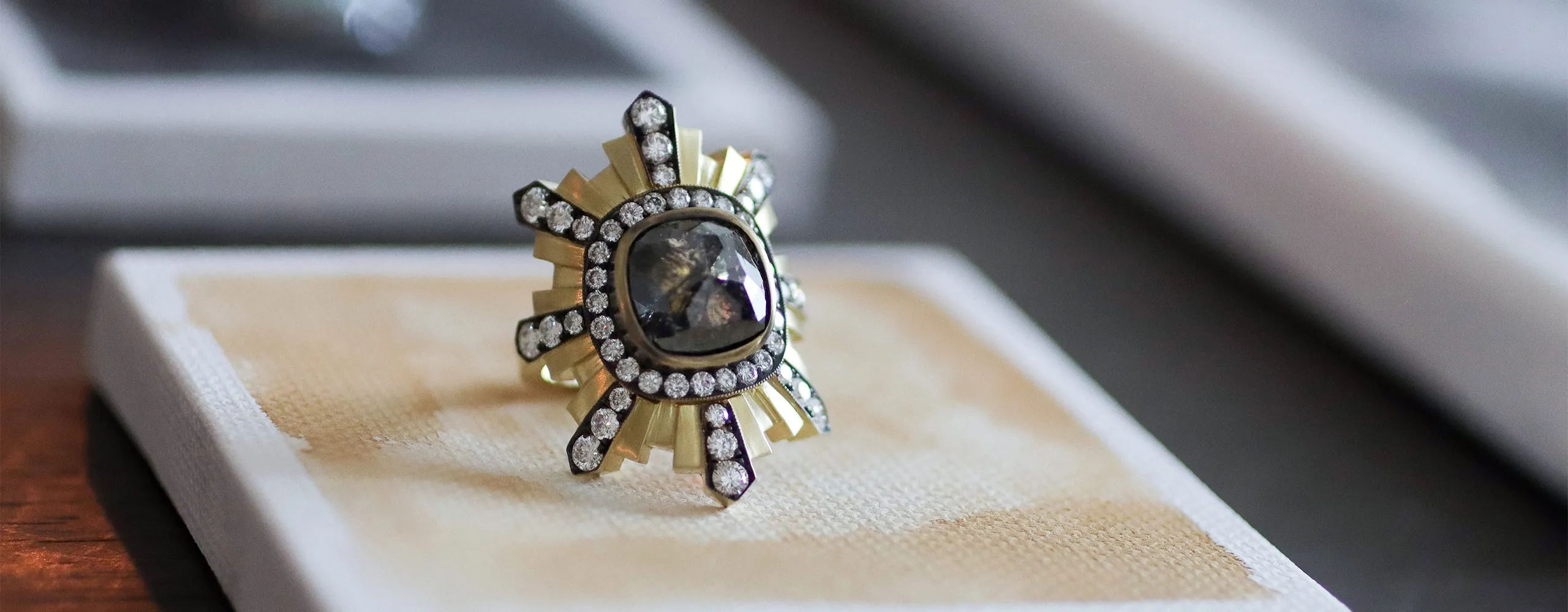
A new Stella ring by Sylva & Cie, set with a central rough cut brown diamond
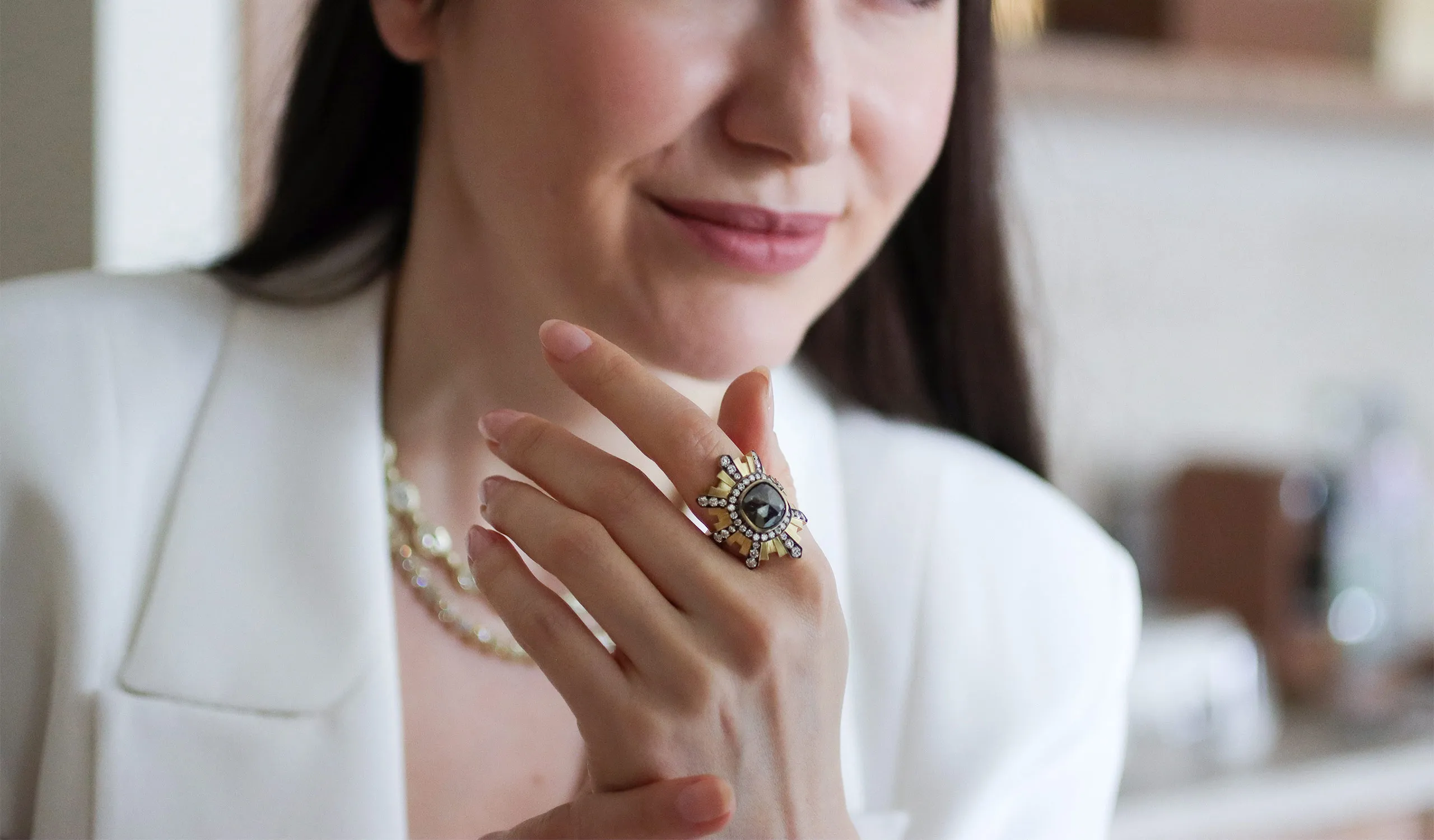
Round brilliant-cut diamonds radiate around the centre stone in a starburst design
Katerina Perez: The Ten Table ring is one of your icons. How did it begin?
SY: I bought a vintage brooch perhaps 20 years ago. it had the same form, but was a mourning brooch from the 1800s. I never wore it until one day I took it out of my box and placed it on my hand and said, “my God, if this was a ring, I would wear it all the time.”
So I took the plate that was set with all the original old rose cuts and framed it into a ring. The scale was slightly different: it was smaller, softer, a little more delicate. The Ten Table was born soon after that, and with time, I developed it into what it is today.
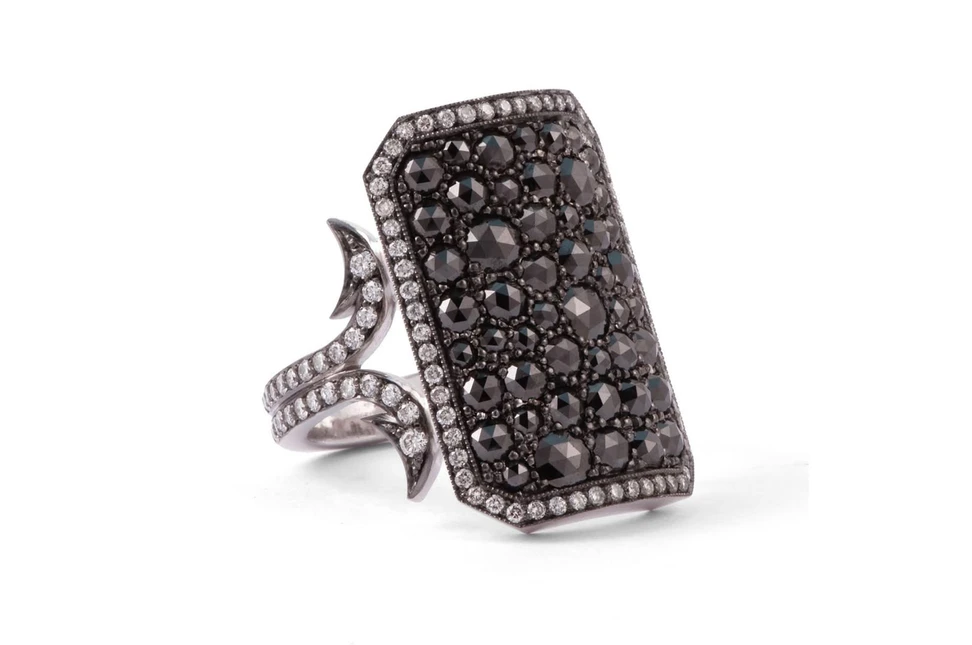
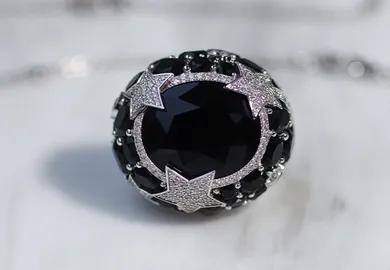
Another Ten Table ring set with rose-cut black diamonds
KP: You’ve explored this design in so many ways. Have you worked with coloured stones as well?
SY: I have – sapphires, rubies, emeralds, really across the full spectrum. For Couture, I have prepared one with Paraiba tourmalines. Now I’m also introducing new versions, like this pinky ring, which is a more understated way of wearing the Ten Table. It is a softer entry point for someone who doesn’t want that full statement.
Sylva & Cie will be debuting a new Ten Table pinky ring at the Couture Show - a more wearable introduction to the collection
KP: Your designs are a ‘library’ of antique diamonds. What draws you to them?
SY: First of all, I just love the way they look. They were meant to be viewed by candlelight, and they were cut by hand, so they’re magical. There is nothing that compares to the twinkle of old reclaimed diamonds. There’s something very ethereal about them. They’re not perfect and a little lumpy and bumpy, they are quieter, more under the radar. If my designs were made with modern, perfectly proportioned diamonds, they would be a little too much, and that’s not my style.
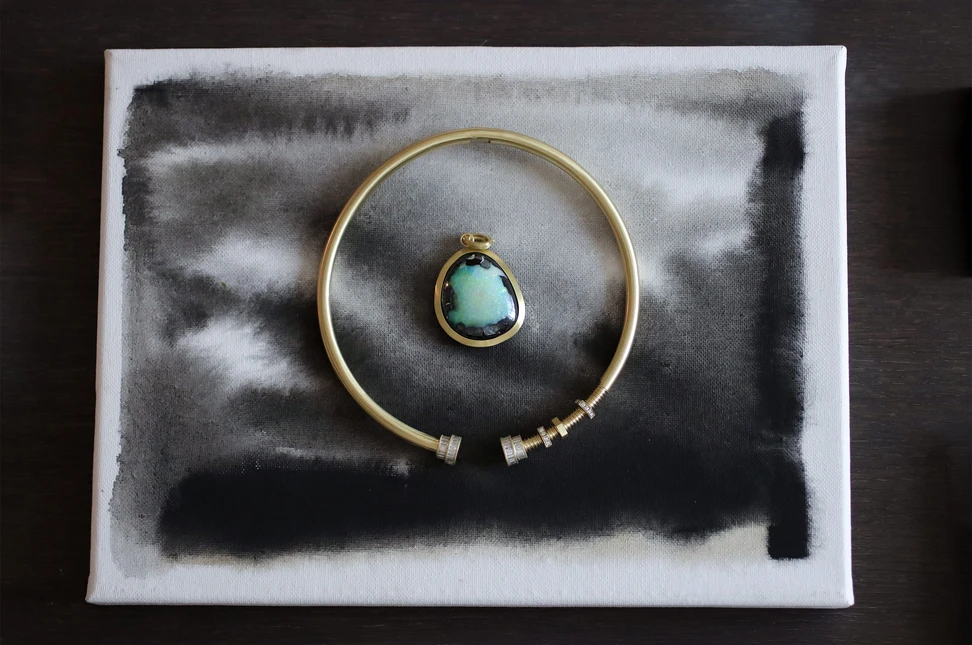
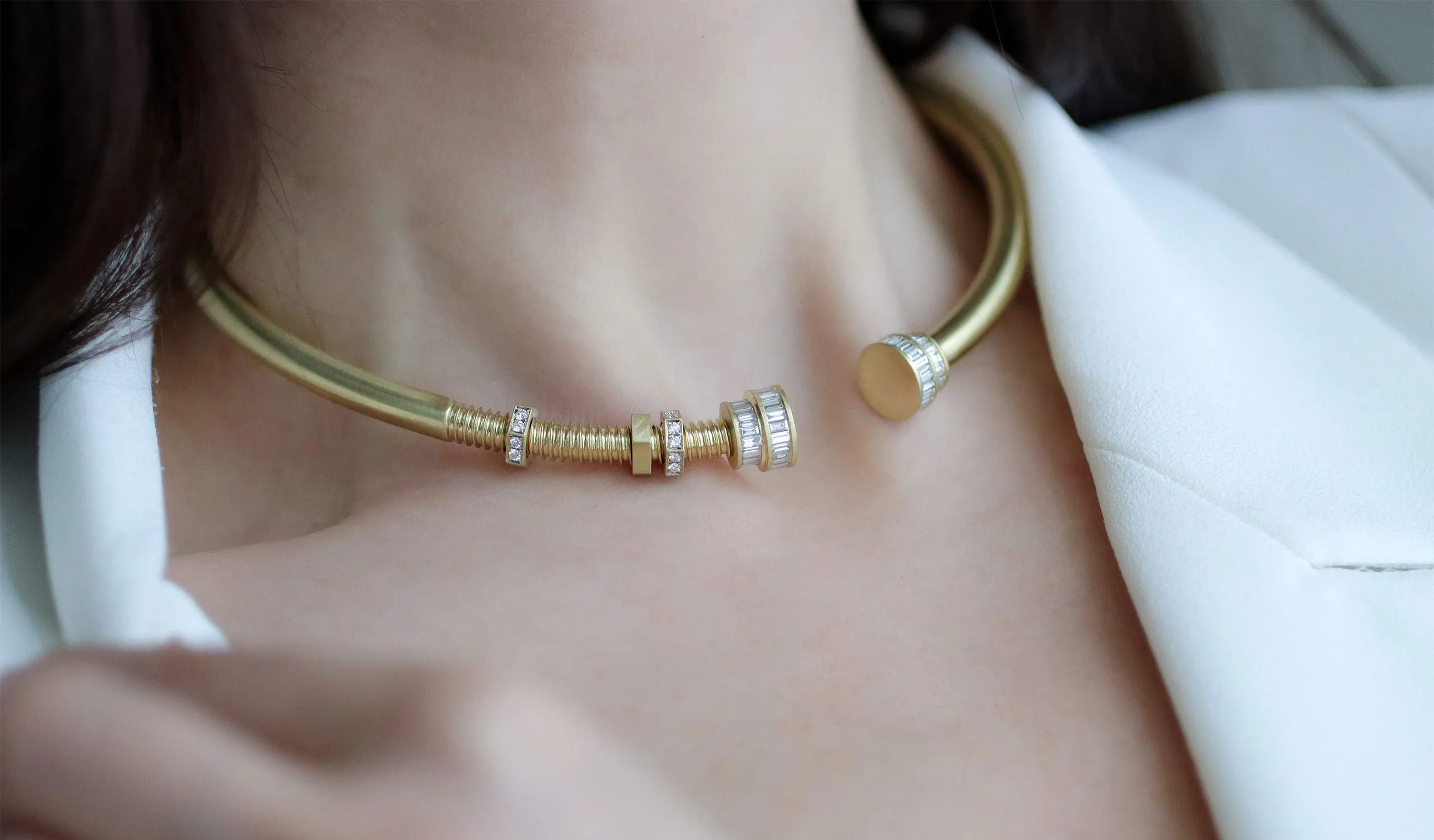
The new Bolt collection by Sylva & Cie will be debuting at the Couture Show. The nut-and-bold design can be unscrewed, allowing the wearer to add and remove elements
KP: How do you find the pieces you reclaim these stones from today?
SY: When I started 20 years ago, it was a lot easier. Now I’ve developed relationships with certain dealers that really get me. So, the minute they have something, I get a call. Someone might say, “I have a partial tiara, the family has pulled it apart over the years,” and I’ll say, “okay, send it.” I’ll reclaim it and turn it into something else. That tiara actually became a rivière that I sold recently, and it was phenomenal – all alluvial diamonds, all cut by the same cutter 200 years ago. That just doesn’t happen every day.
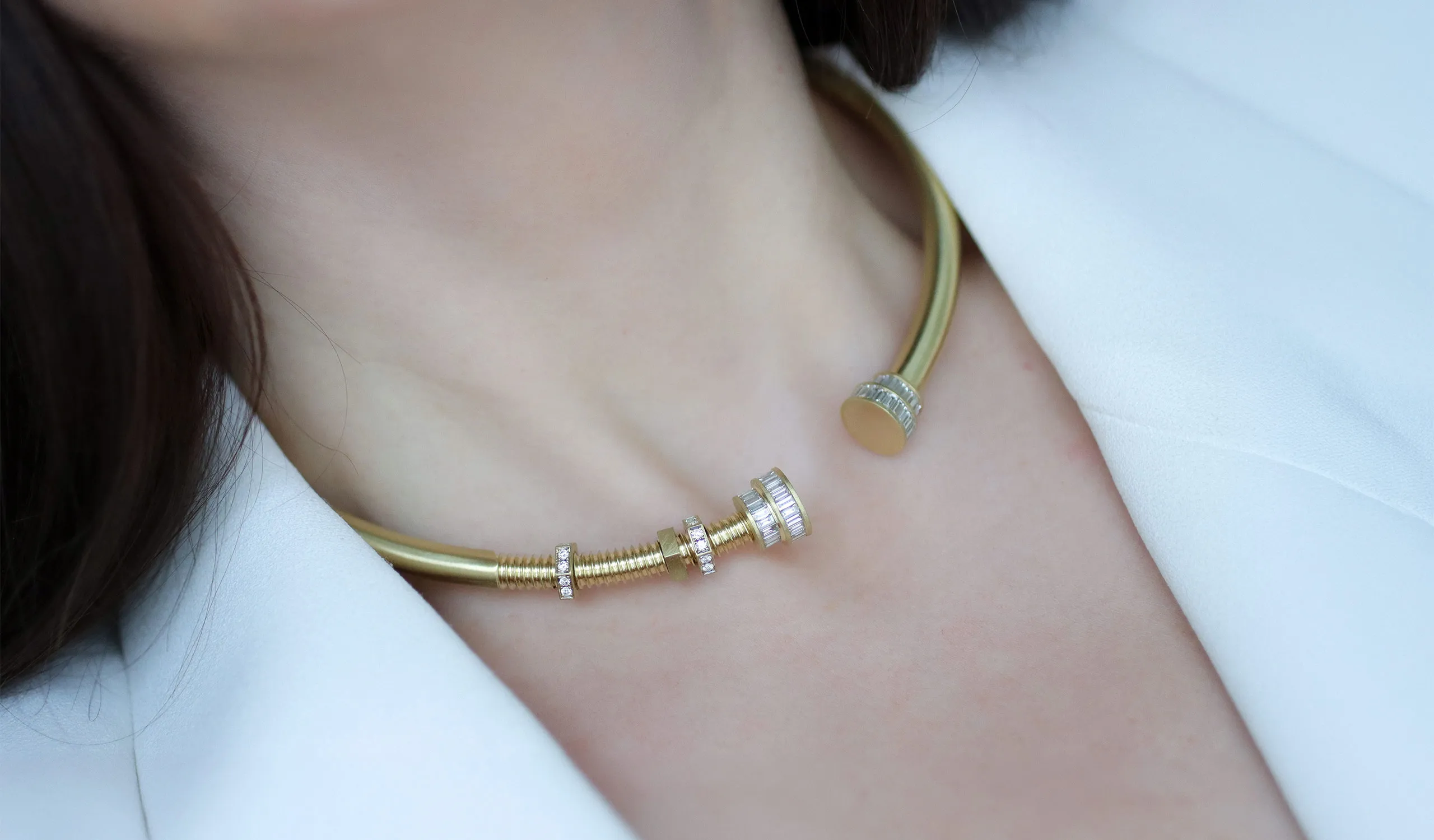
The new Bolt collection features diamond and gold elements that you can screw on and off
One of the ends unscrews, enabling the wearer to add new elements, such as your favourite team colours or your kids' birthstones
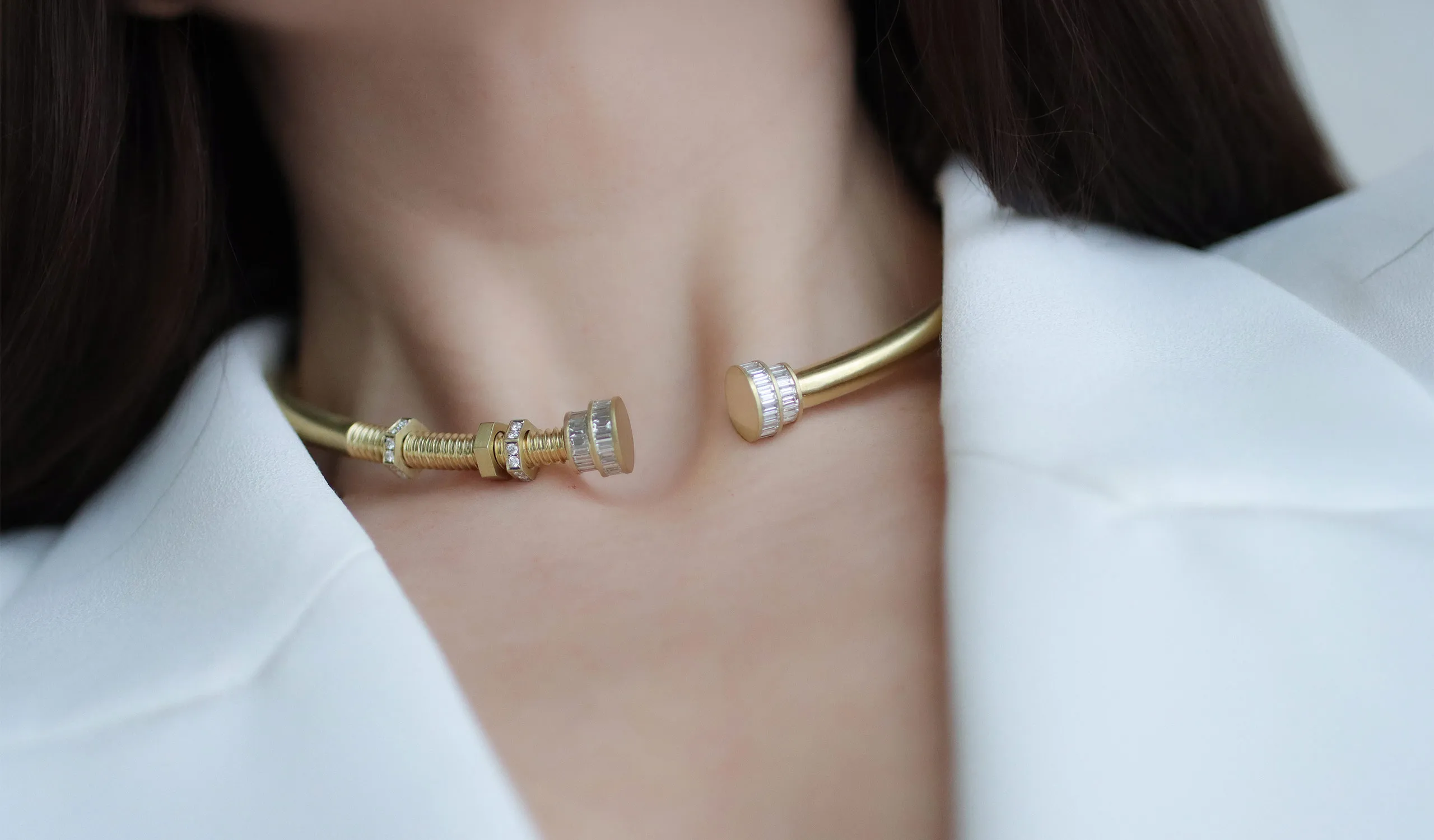
Chic and playful, the design is very much unisex
KP: What’s so beautiful is that those histories aren’t lost once the piece is complete. Do you share the provenance with your clients?
SY: Yes, of course. As much as I can, I want to give them the provenance and the story, so they can take it back into their family and maybe pass it on to a daughter, a granddaughter, whoever ends up with the piece.
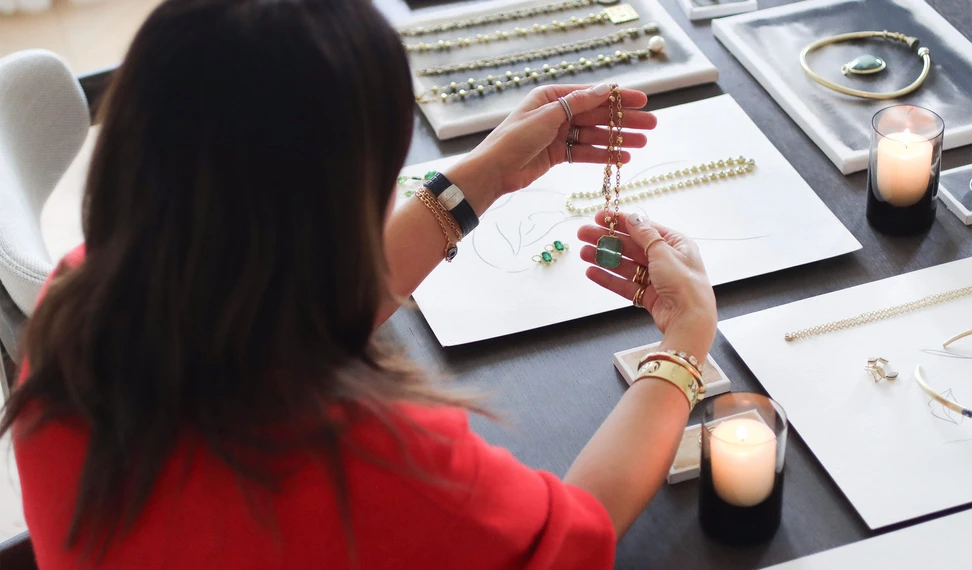
Sylva Yepremian shares a new emerald pendant design
KP: There’s also something very distinctive about the way your jewellery feels.
SY: Yes, it’s all hand-worked. Early on, I developed my own alloy with the help of my father, who is a bench master. We wanted the end product to feel like it had lived. So, we looked at vintage pieces and different alloy combinations, and this one has more silver, so over time it oxidises and takes on a different patina than standard gold.
We handmake everything, even the chains. They’re made using a 200-year-old technique of pulling wire and are assembled completely by hand.
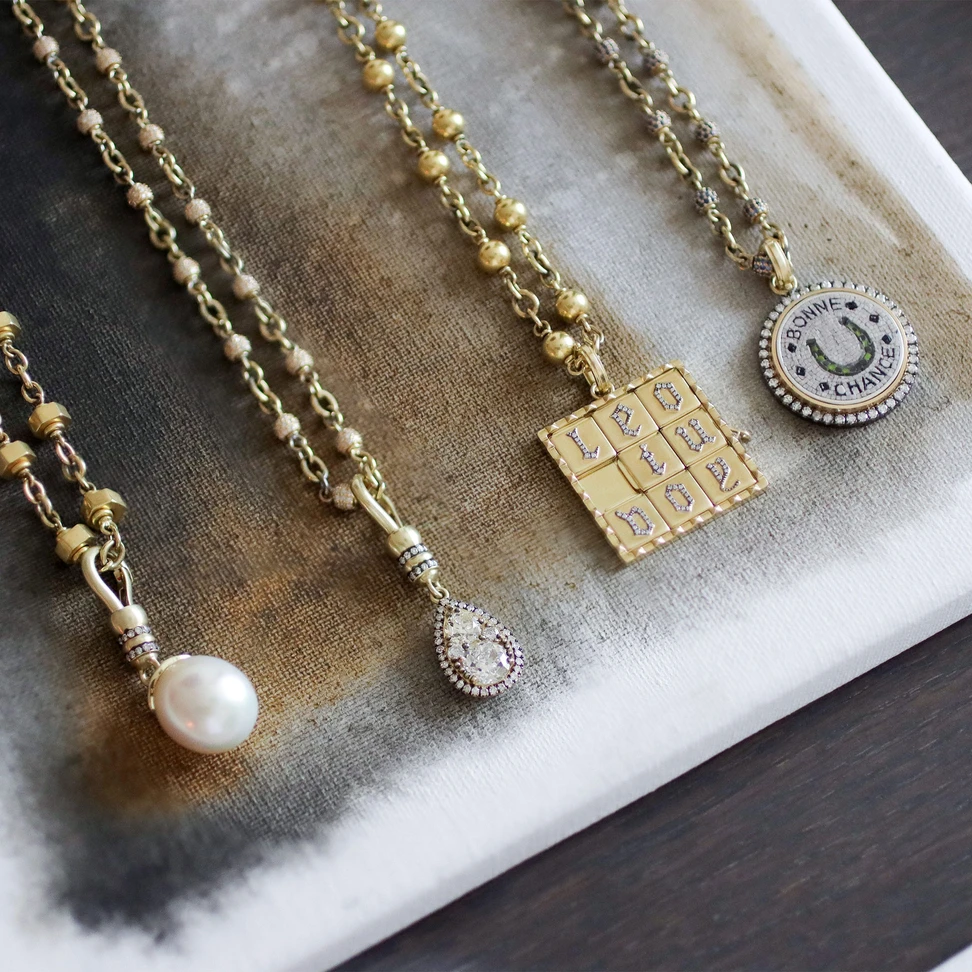
A selection of new Sylva & Cie pendants, including Neo Clasp pearl and diamond designs and a playful pendant with moving gold squares that spell out "love you"
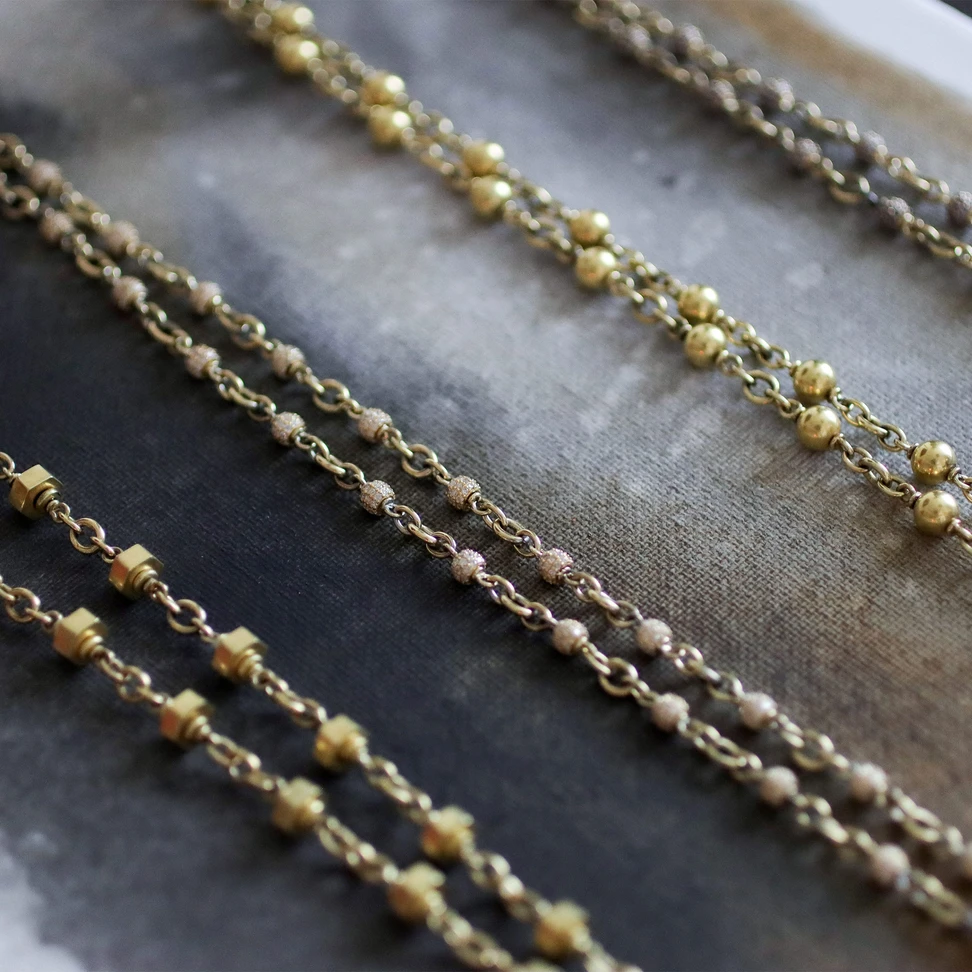
All of Sylva & Cie's chains are handmade using a 2,000-year-old technique of pulling wire
KP: Your jewellery also has a playful side, which isn’t always expected of one-of-a-kind pieces.
SY: Yes, I think that’s part of being in LA. We have our own voice, and we’re more playful with it. Jewellery should be worn and enjoyed. I like pieces that people can interact with – jewellery that moves, that you can change, which you can wear in different ways.
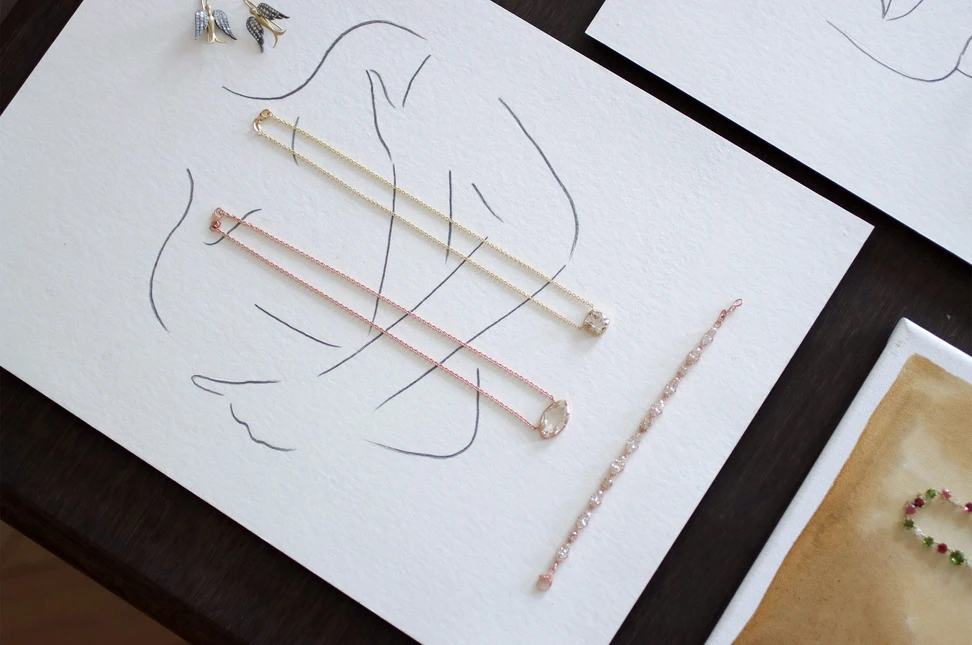
New necklaces in rose and yellow gold, set with antique diamonds. "There is nothing that compares to the twinkle of old reclaimed diamonds – there’s something very ethereal about them," says Sylva Yepremian
KP: How does the process usually begin when you’re working on a new piece?
SY: It’s very instinctive. I’ll see a stone and think, I can’t live without this, then I have to figure out what to do with it. It’s not about designing to fill a collection. It’s much more emotional than that.
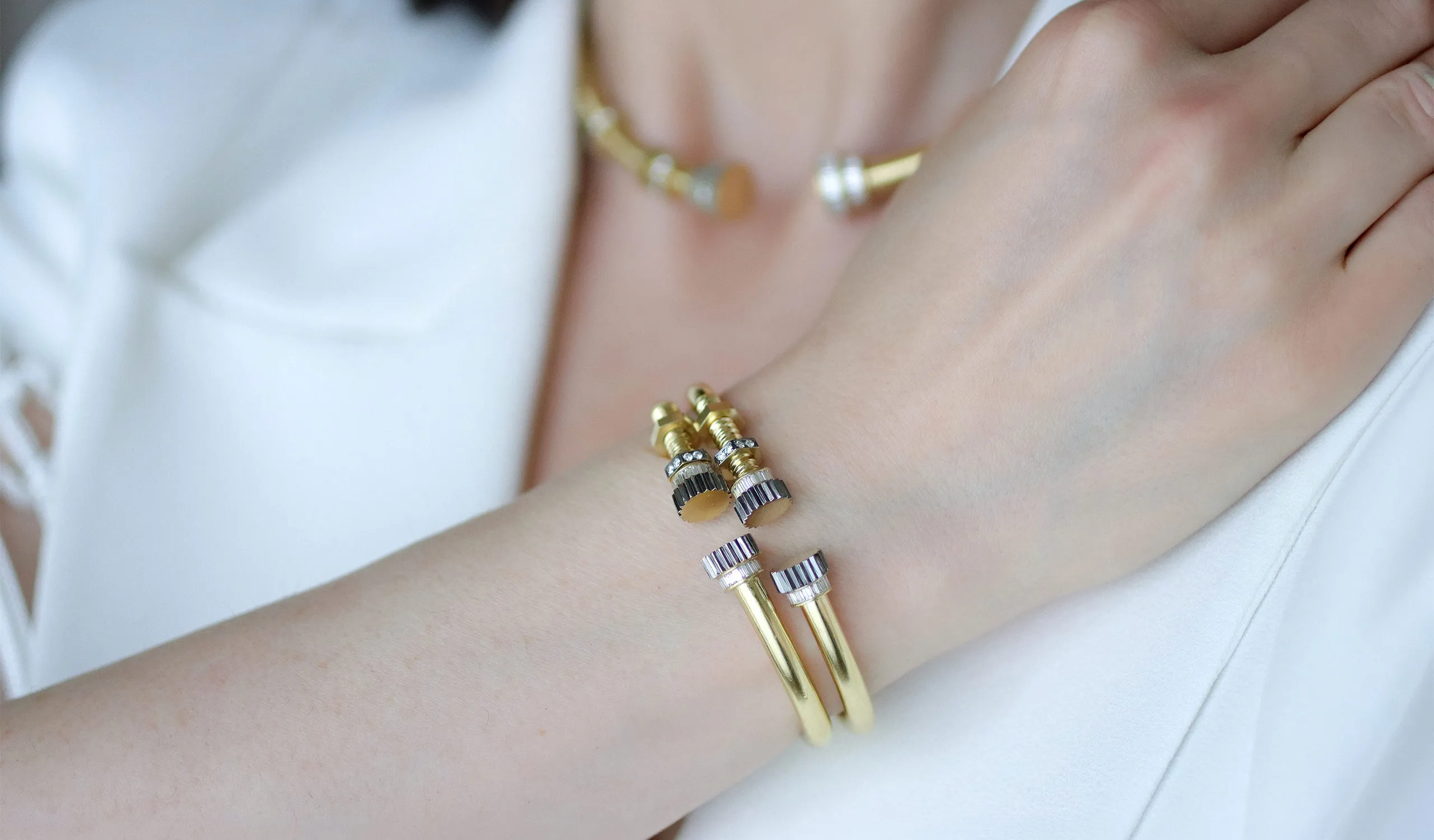
Layered bangles from the new Bolt collection with an ingenious nut-and-bolt style design
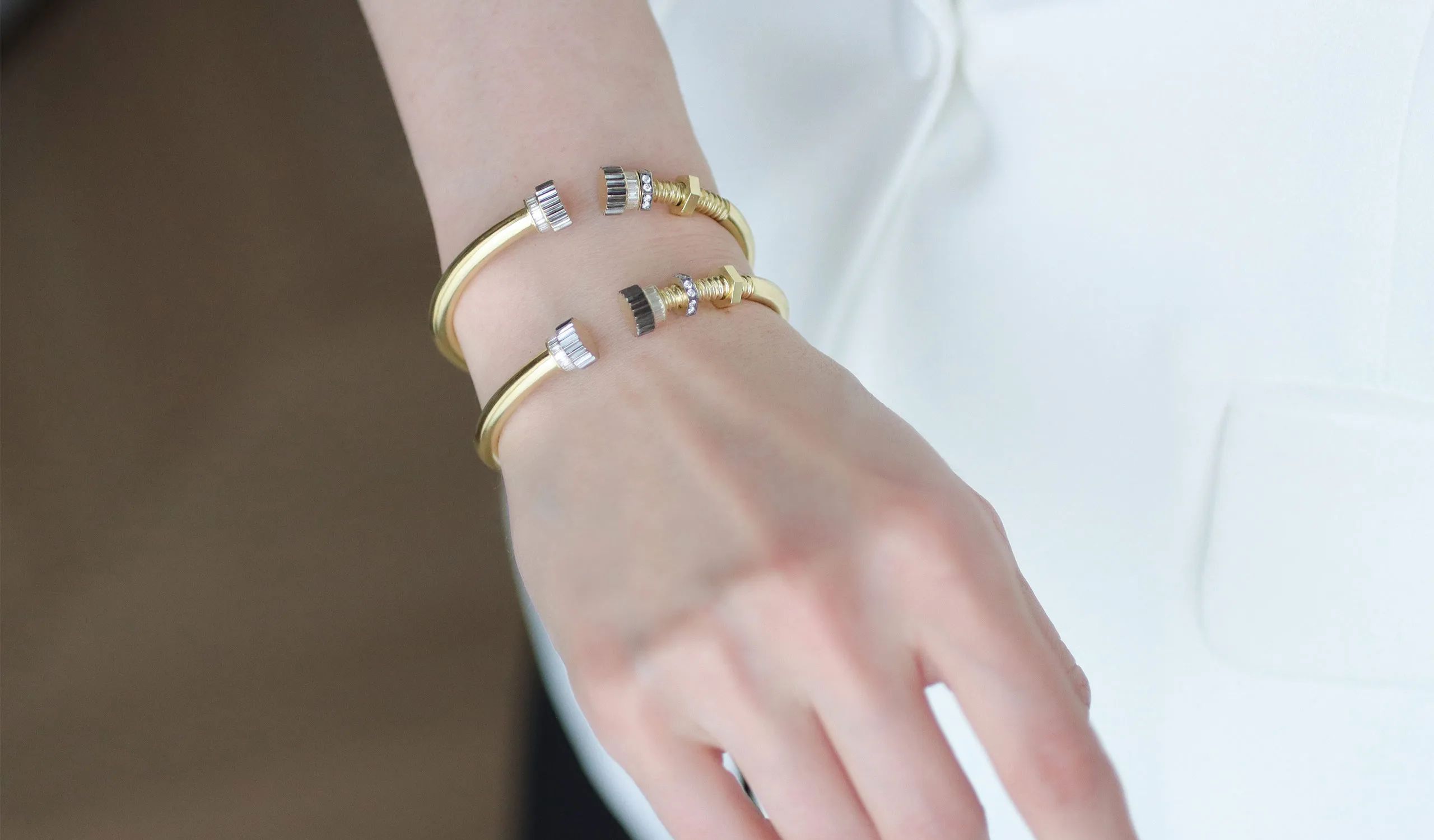
The Bolt collection will be making its debut at the Couture Show 2026
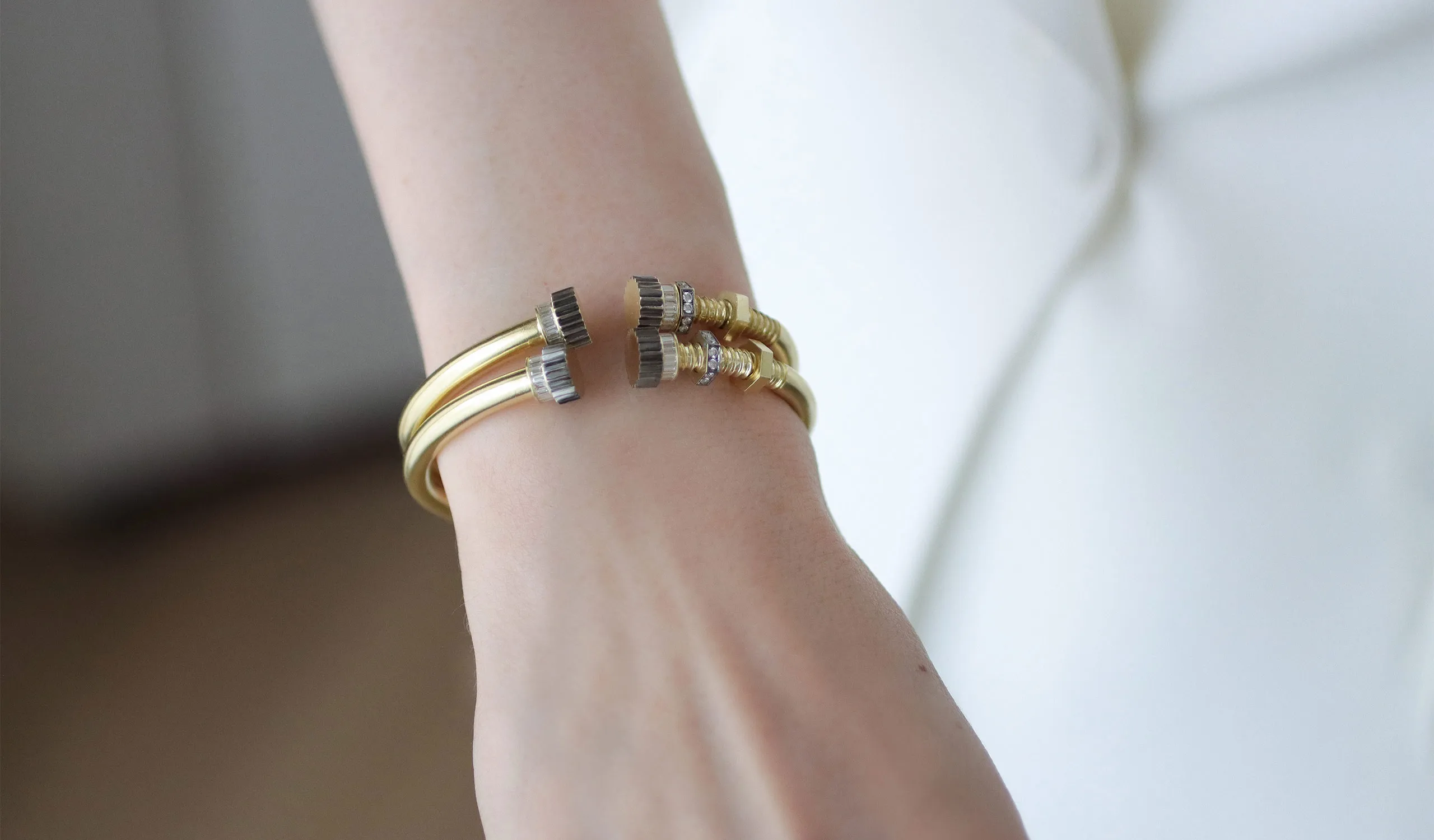
The designs can be customised with the elements of your choice
KP: Has your approach to design changed over the years?
SY: Constantly. I think that’s part of being an artist. You evolve, you see things differently, your personality changes, and your work reflects that. I hope it never stops. That’s my biggest fear, that one day I’ll feel stuck. But I’m very curious, and I think that helps. I always want to make something beautiful.
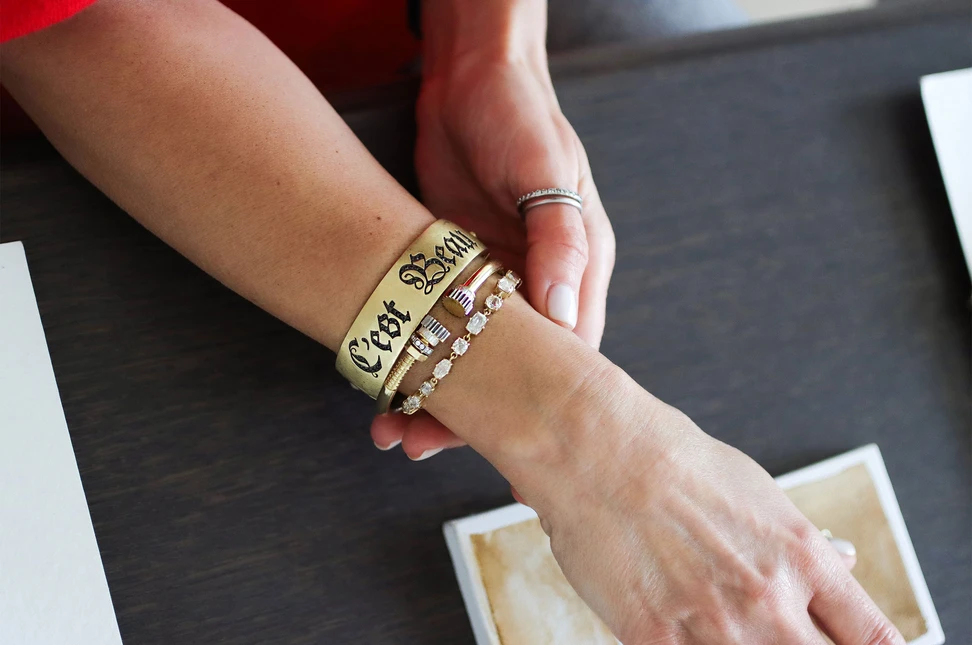
From the C’est Beau, C’est Cher collection, the C’est Beau bangle in brushed yellow gold is a signature Sylva & Cie creation
I put down the C’est Beau bangle in brushed yellow gold, which carries all the hallmarks of a Sylva & Cie piece. From the C’est Beau, C’est Cher collection – a familiar French phrase used to express admiration for a beautiful object – its gothic lettering is set with modern black diamonds, a detail that captures something essential about Sylva’s work.
She isn’t interested in chasing the new. Instead, she draws on the past while remaining firmly in the present, starting with stones that have already lived and guided by an instinct that makes even something as historic as gothic script feel contemporary. It’s what makes her pieces so immediately recognisable, an approach I’m excited to see more of at the Couture Show at the end of May.


WORDS
Katerina Perez Is a jewellery insider, journalist and brand consultant with more than 15 years’ experience in the jewellery sector. Paris-based, Katerina has worked as a freelance journalist and content editor since 2011, writing articles for international publications. To share her jewellery knowledge and expertise, Katerina founded this website and launched her @katerina_perez Instagram in 2013.
RelatedArticles
Discover the brand: the story from various angles.