
The Time is Now: The Rise and Rise of Tanzanite with The Royal Touch Group
For those of us who live and breathe jewellery, tanzanite is just another beautiful gemstone among nature’s palette of colourful minerals. However, for those who aren’t part of this world, familiarity with tanzanite still has a way to go to rival that of ruby, emerald and sapphire. Fortunately, things are changing fast, and the Royal Touch Group is at the forefront of ensuring its hero gemstone gets the attention it deserves. I enjoyed a catch-up with the company earlier this year and took the opportunity to ask Royal Touch Group Principal Ashish Rawat some questions about tanzanite’s trajectory. Here are the highlights from our conversation…
It’s remarkable to think that tanzanite was only discovered in the late 1960s. We tend to think of coloured gemstones as ancient and historic treasures, not simply from a geological perspective but from a cultural one too. After all, we’ve heard stories of Queen Cleopatra’s passion for emeralds, the five ‘Cardinal gems’ of Medieval royalty and clergymen, and the incredible carved rubies, sapphires and emeralds that adorned the Maharajahs of India. Tanzanite doesn’t have centuries of desire and demand to draw from, so its aesthetic, monetary and cultural value is almost being created in real time, right now.
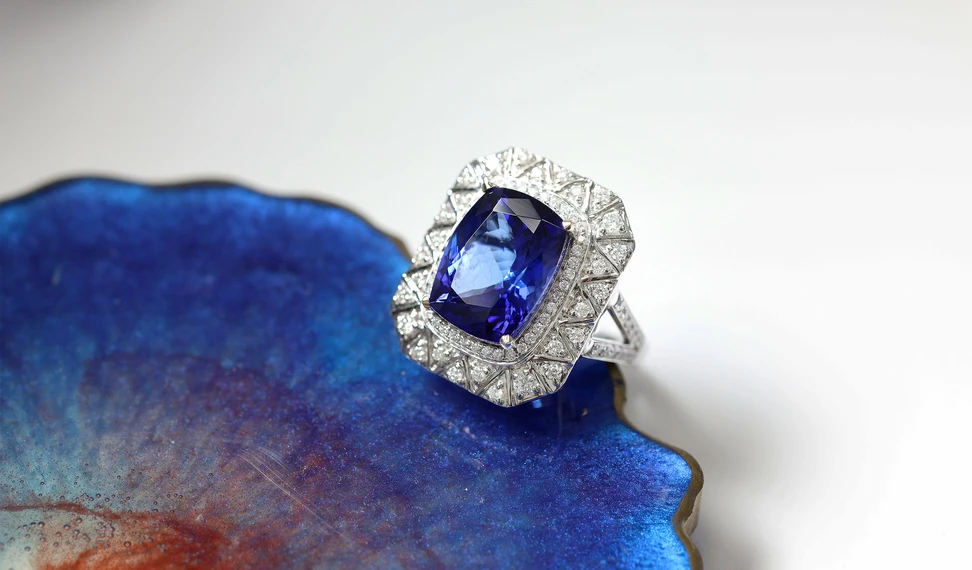
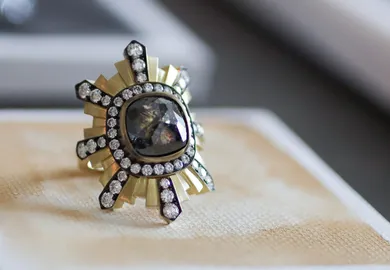
An Art Deco-inspired ring with a central tanzanite surrounded by a geometric layout of white diamonds, crafted by the Royal Touch Group
Of course, it’s been nearly 60 years since its discovery, so awareness has grown substantially during this time. Countless individuals, designers, and large brands have fallen in love with this variety of zoisite, which is prized for its rich blue-to-violet hue that’s quite distinctive when viewed in person. Plus, it appeals to gemmologists thanks to its pleochroic nature, meaning it shows three different colours when viewed from different directions. From the perspective of collectors, I think what really ‘sells’ tanzanite is its scarcity, specifically that it is only commercially mined in one place (the Merelani Hills of Tanzania) and is therefore far rarer than diamonds. We are used to hearing about Kashmir sapphires, Burmese rubies, and Colombian emeralds, but tanzanite has its provenance built into its name… nothing else can quite compare.
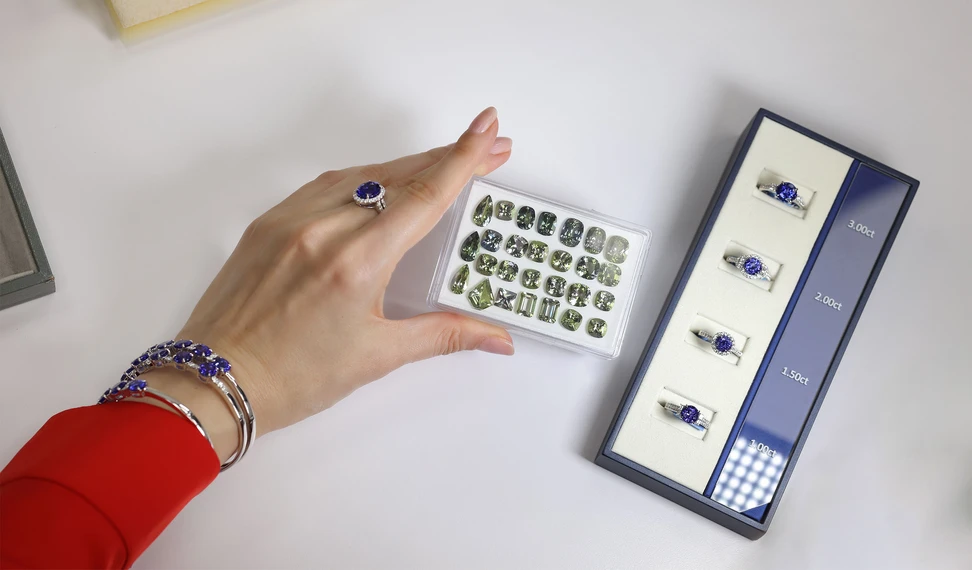
Tanzanites from the Royal Touch Group, including bracelets, rings, and a selection of green zoisites that are mined in the same location in Tanzania
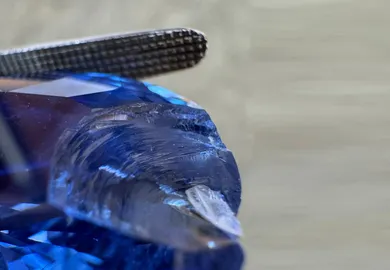
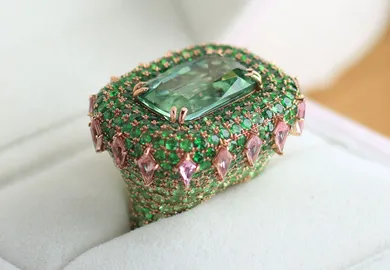
For the Royal Touch Group, tanzanite has become its speciality. Through its New York-based flagship brand, the business creates beautiful tanzanite jewels but also advocates for the gemstone as something to be admired and collected. Ashish Rawat presides over a fully integrated company that encompasses mine-to-market services, including the manufacturing of loose gemstones and finished collections. During our last encounter, I had the pleasure of seeing new tanzanite pieces but also examining the interesting and nuanced colours of green zoisite. Although this is the same mineral from the same mining location, this rarer, unheated version has a palette ranging from light olive green to greyish green with subtle shifts of blue and violet. It would be wonderful to see more pieces crafted from these unusual specimens!
To get to the bottom of this magical gem, I spoke with Ashish and asked him some essential questions about tanzanite, its origins, quality factors, popularity, and potential for high jewellery. Here are the highlights…
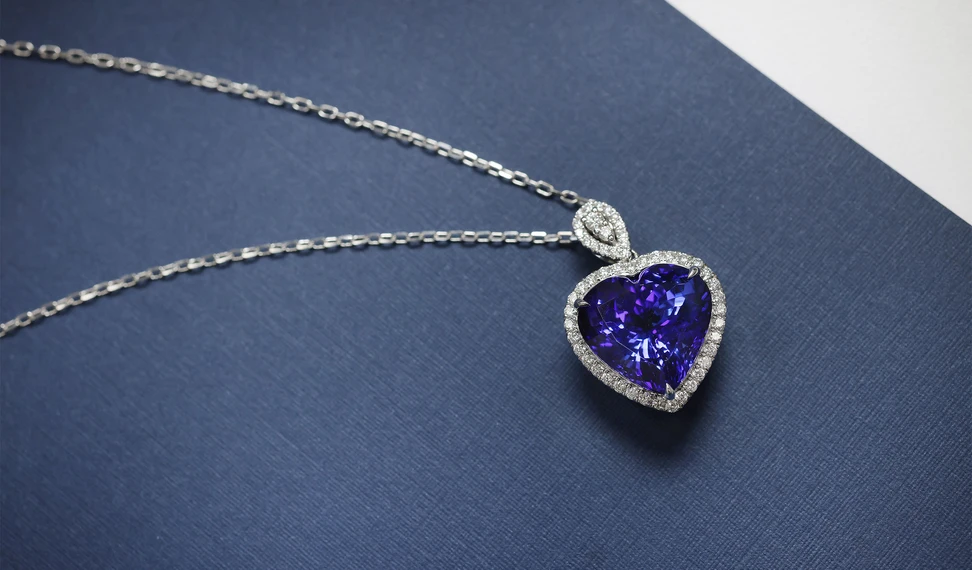
A heart-shaped tanzanite pendant with the gemstone's characteristic blue-violet hue, crafted by the Royal Touch Group
Katerina Perez: There is a misconception that tanzanite is an abundant gemstone. How rare is it in reality?
Ashish Rawat: Tanzanite is mined in only one location on earth – a region of roughly eight square miles, at a current depth of well over one kilometre under the earth. To put that into perspective, the depth of some of the deepest shafts reaches over thrice the height of the Empire State Building. Factoring in the remoteness of the Merelani Hills in which this gem is mined, this makes mining the gem extremely difficult. The combination of trace elements and geological conditions required for the crystallisation of tanzanite is so specific, geologists estimate a one in a million chance of those conditions ever forming again. As a result of these natural limitations, for every thousand carats of diamond mined, there is only a single carat of tanzanite which is mined.
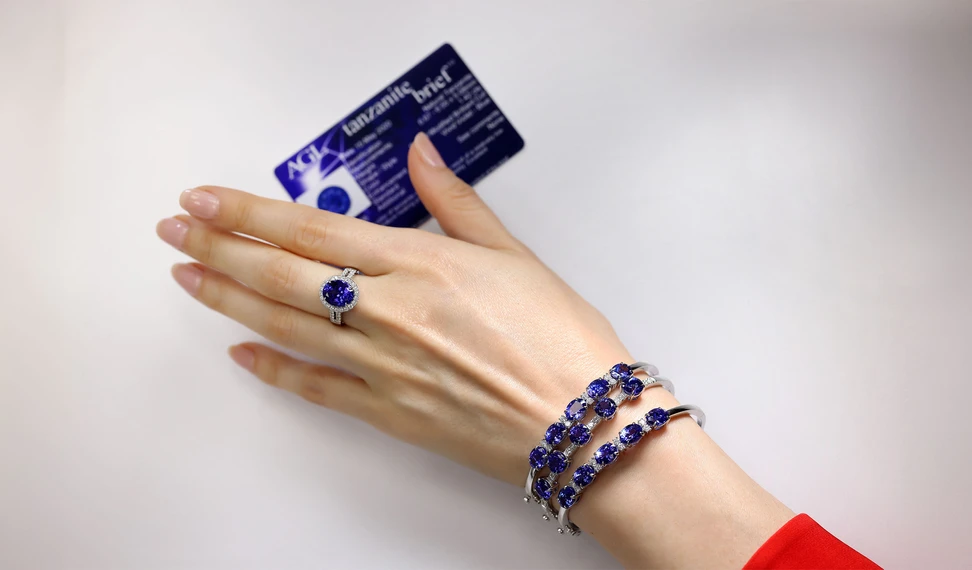
Beautiful tanzanite jewellery crafted by the Royal Touch Group, including a dress ring and a trio of tanzanite and diamond bracelets
KP: Do you think there is growing awareness among jewellery collectors and gem lovers about tanzanite?
AR: There is absolutely more awareness in regard to tanzanite. Its unique beauty and colour make it very popular among design houses and jewellers. No other gemstone has quite the same combination of colours that tanzanite does, and its unique geological story makes it an extremely popular choice amongst consumers. Unlike ruby, sapphire and emeralds, which have all seen dramatic price rises in recent years, tanzanite has proven to be a much more stable gemstone. Tanzanite is a gemstone which is far more reliable than the ‘big 3’ coloured gems when creating a matching set or layout of gems for a necklace, which is very important, especially for the luxury sector.
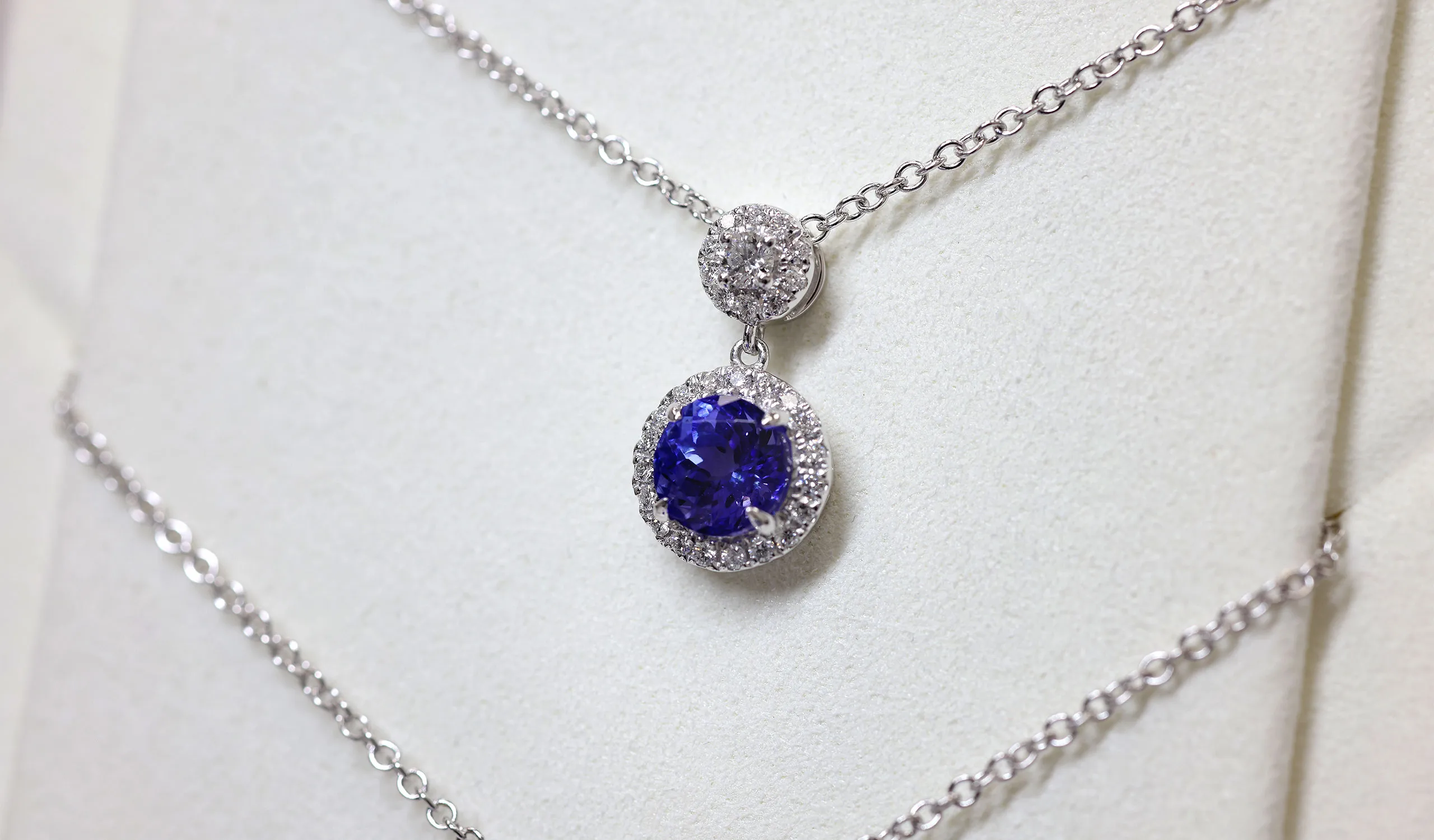
An elegant tanzanite pendant with white diamonds, crafted by the Royal Touch Group
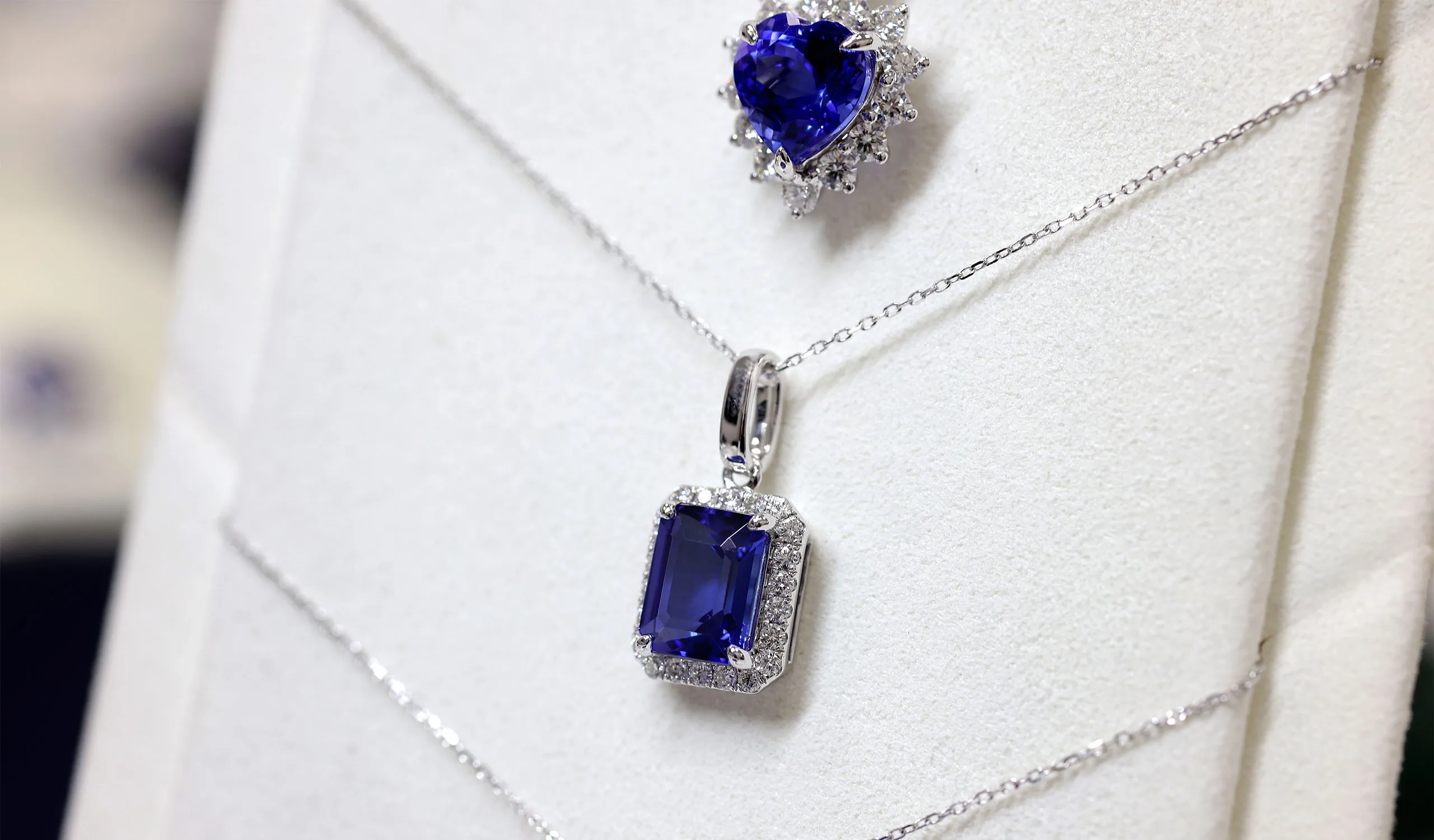
An emerald-cut tanzanite pendant with white diamonds, crafted by the Royal Touch Group
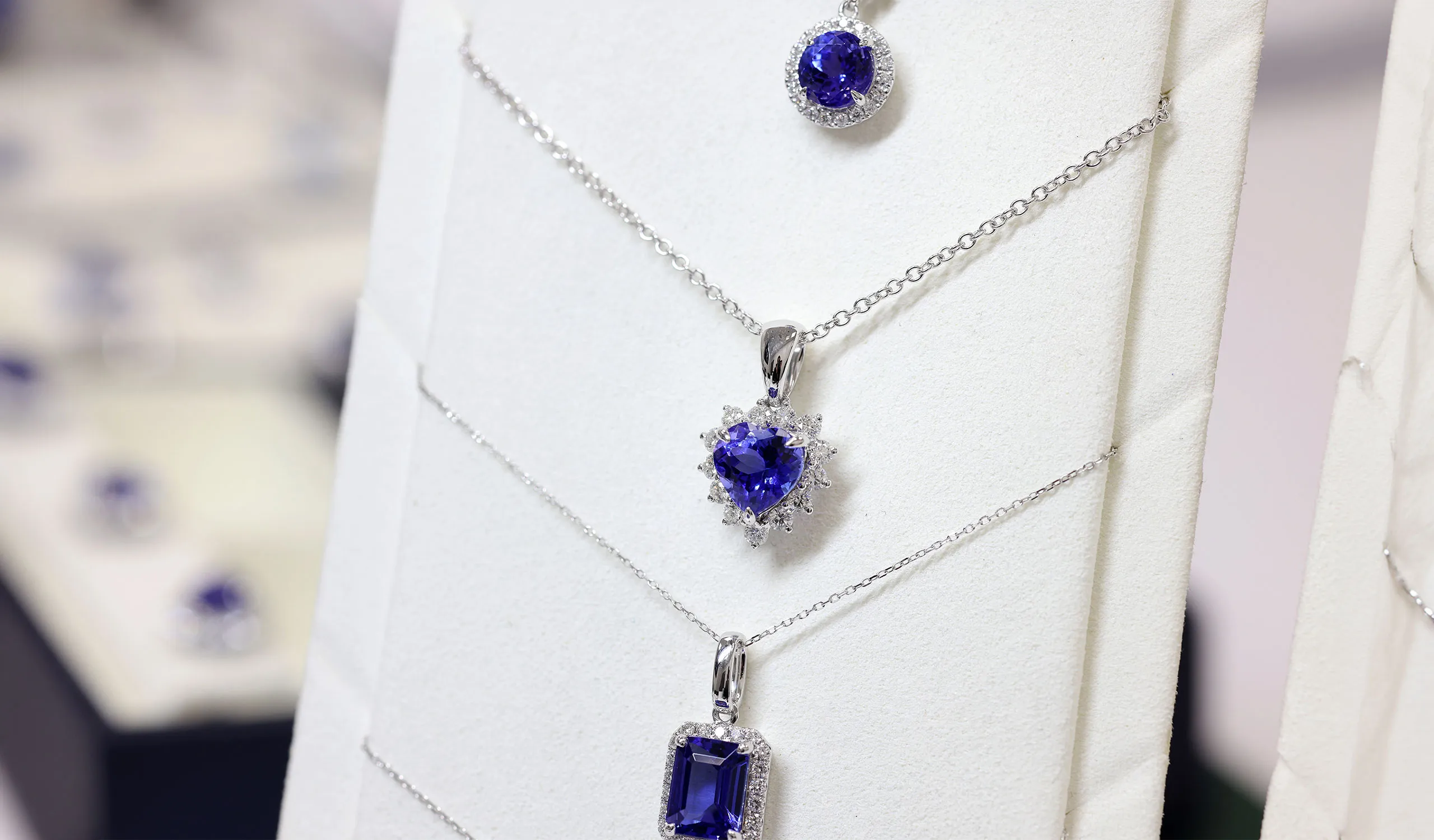
The Royal Touch Group specialises in tanzanite jewellery that showcases the gemstone's exceptional colour and clarity
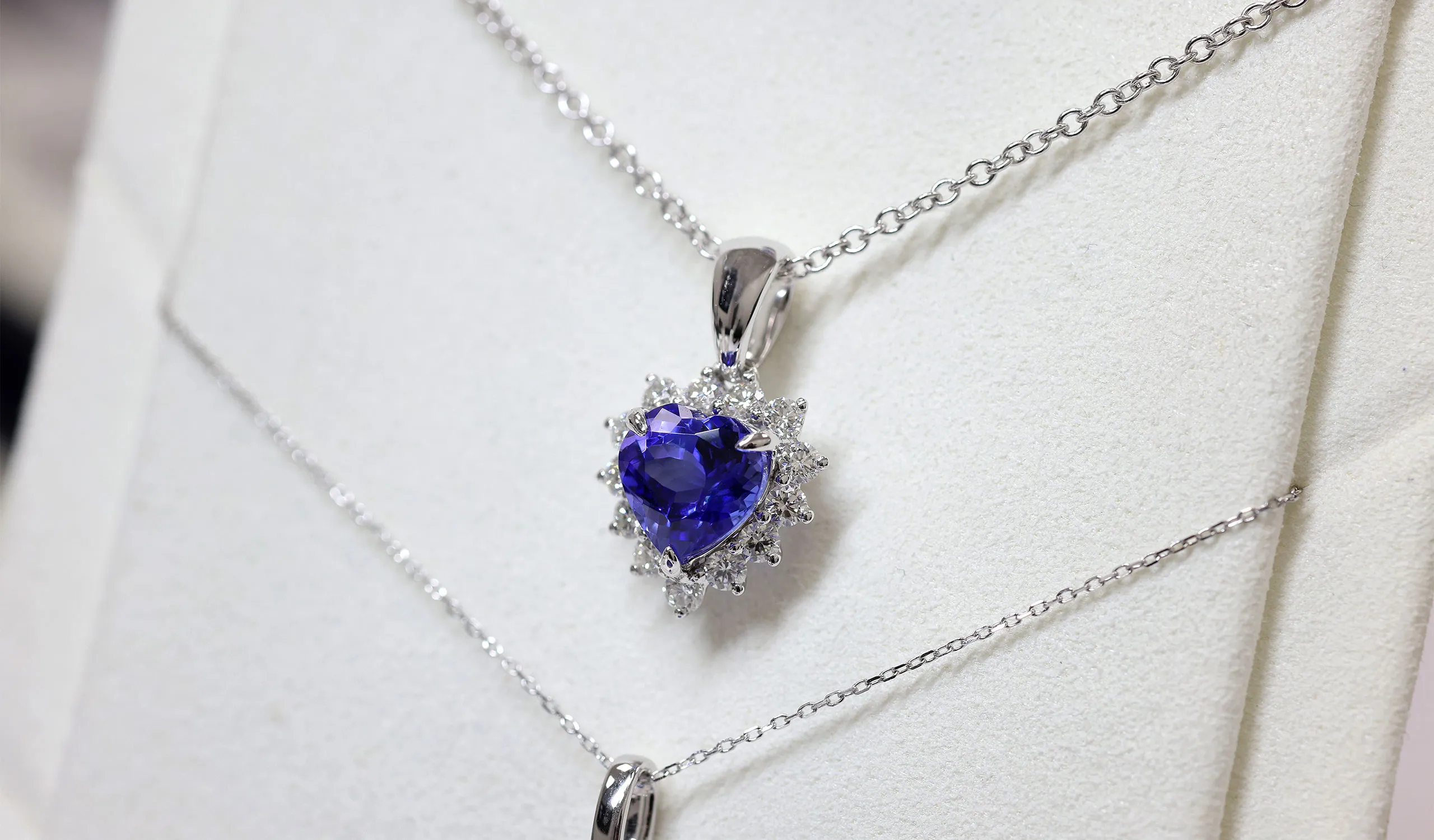
A heart-shaped tanzanite cluster-style pendant, set with white diamonds, crafted by the Royal Touch Group
KP: We’ve seen a big increase in the amount of tanzanite used in high jewellery. How has this evolved in recent years?
AR: Over the past decade, tanzanite has become far more important to the industry in general. Everyone, from top brands to small, cornerstone, brick-and-mortar jewellers, is looking to use tanzanite in their designs, and this is really reflected in the high jewellery designs which we have seen. From Jean Schlumberger's Bird on a Rock to the collections of several notable figures appearing now at auction, tanzanite can be found far more readily in high jewellery now than ever before.
Tanzanite has been one of the cornerstones of Royal Touch's placement in the jewellery industry, and it remains one of our most important gemstones going forward. One of the advantages that Royal Touch has in tanzanite is our ability to customise a stone to a client's demands and our ability to cut with extremely high precision. By leveraging the size of our inventory, we have created the ability to create almost anything possible in tanzanite.
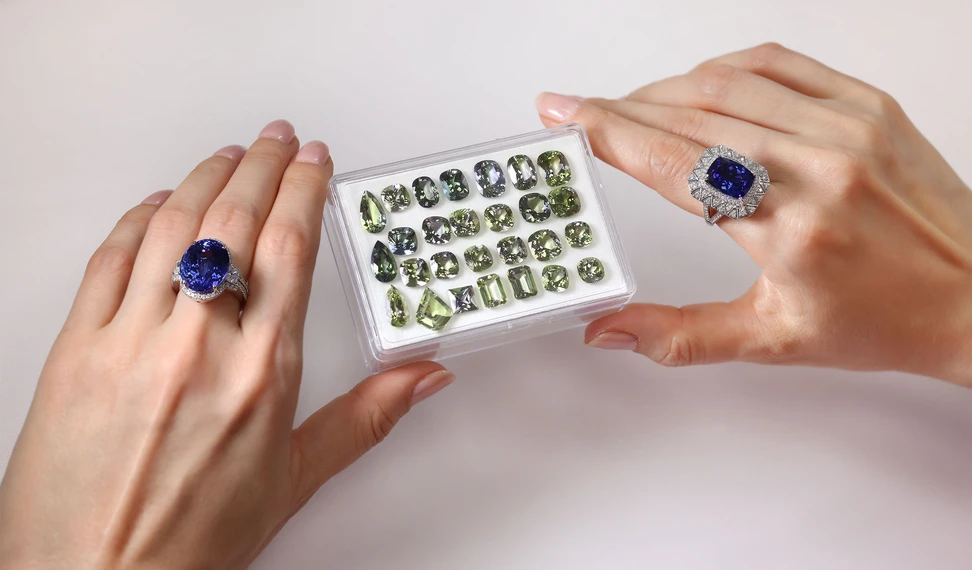
Katerina Perez wears a pair of tanzanite dress rings while examining a selection of green zoisite gemstones from the Royal Touch Group
KP: Finally, can you explain in more detail how tanzanite quality grades work? For example, what does ‘AAAA’ grade mean, and what should we be looking for in the best possible gems?
AR: Like most coloured gemstones, tanzanite does not have a universal grading system. The two things any buyer should look for in a gemstone are hue and saturation. Hue refers to the base colour of the gemstone when viewed face up. As we know, tanzanite is a highly pleochroic gemstone, and each stone shows hints of both blue and violet. Neither hue is more valuable than the other; this is purely a personal preference.
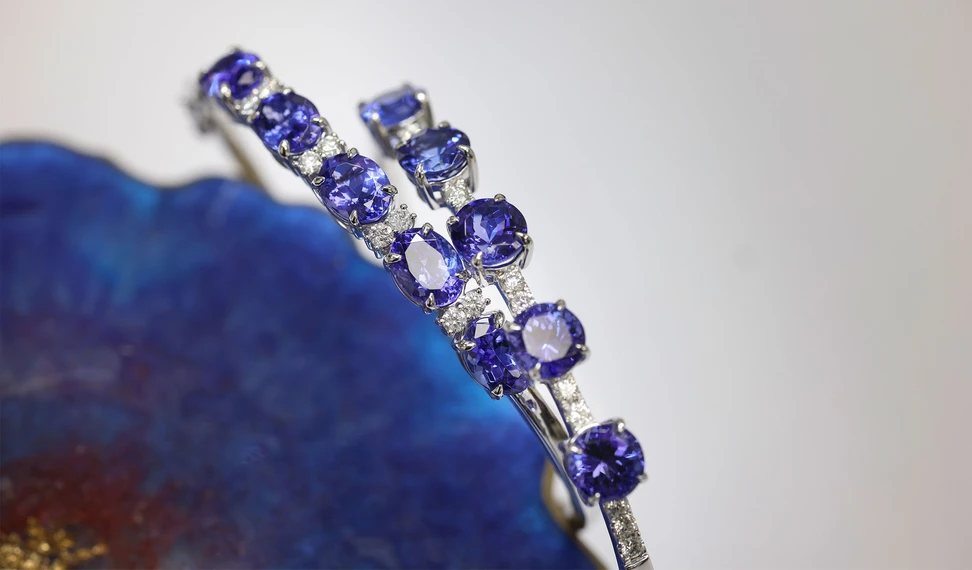
A pair of bracelets by the Royal Touch Group, set with round and oval-shaped tanzanites and diamonds
Saturation in tanzanite refers to the depth of colour in the stone. Unlike many other gemstones, tanzanite saturation is directly linked with its tone, or how dark the piece is. The darker the tone, the greater the saturation of colour. Lighter-toned tanzanites have a completely different appeal to them and are especially popular when contrasted with other gemstone colours.
The A-Scale Grading system is very informally used in the trade to simplify things for final consumers who are much more used to diamond grading. Simply put, 'A Grade' Tanzanite has the lowest saturation and 'AAAA Grade Tanzanite' has the highest saturation. This system doesn't take hue into account due to the fact that hue is a very personal preference.
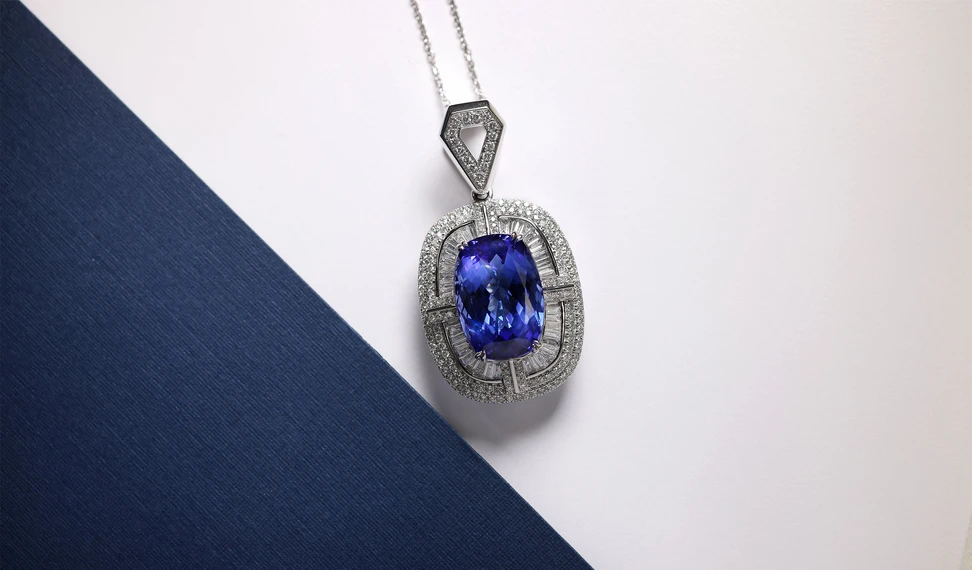
A striking tanzanite pendant by the Royal Touch Group, surrounded by fancy-cut white diamonds with a kite-shaped diamond-set bail
Our conversation ended with Ashish hinting at Royal Touch’s 2026 plans, which include more tanzanites, new cutting styles and an expansion of its collection of unique shapes. Personally, after seeing the Royal Touch Mosaic collection in 2025, I am excited to see the brand play with colour, including African gems like sapphire, tsavorites, Malaya garnets and South African diamonds. As the excitement around tanzanite continues to grow, I hope we begin to see more of this gemstone in all its guises, whether lighter or richer tones, cabochons or fancy shapes, and even mixed with its green zoisite sisters.


WORDS
Katerina Perez Is a jewellery insider, journalist and brand consultant with more than 15 years’ experience in the jewellery sector. Paris-based, Katerina has worked as a freelance journalist and content editor since 2011, writing articles for international publications. To share her jewellery knowledge and expertise, Katerina founded this website and launched her @katerina_perez Instagram in 2013.
RelatedArticles
Discover the brand: the story from various angles.