Jewel Box in Mumbai: Inside the Evolving World of Jaipur Gems
When Siddhartha Sacheti invited me to discover Jaipur Gems' new Mumbai boutique, I didn't need much persuasion. I have followed this Indian house for years, having previously written about its Dubai boutique in 2023 and Abu Dhabi store in 2025. Yet arriving at its latest home in Mumbai, I quickly realised that this was not going to be another interpretation of the same retail formula. In fact, that is precisely the point.
Jaipur Gems does not believe that luxury should be replicated from city to city. Each boutique is conceived individually, much like a piece of high jewellery: responding to its surroundings, its architecture, its clientele and its cultural context while remaining unmistakably part of the same House.
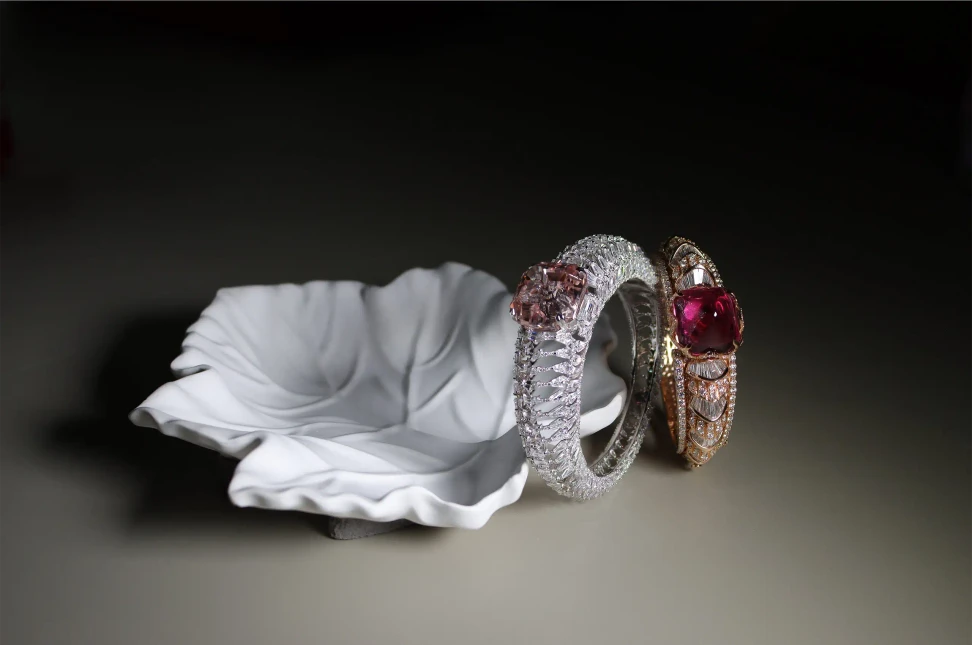
Jaipur Gems’ diamond-set bangles featuring a 36.40-carat morganite (left) and a 28.16-carat rubellite (right), reflecting Siddhartha Sacheti’s love of coloured gemstones
The story of Jaipur Gems spans more than three centuries in the hands of the Sacheti family. Its modern chapter began in 1974, when Siddhartha's father, Padam Sacheti, and his wife Manju moved to Mumbai, initially selling traditional jadau jewellery door-to-door with little more than a suitcase, an extraordinary understanding of jewels and an entrepreneurial dream.
On the very day Padam Sacheti inaugurated the first Jaipur Gems store, his son Siddhartha was born. More than five decades later, Siddhartha Sacheti, sixth-generation jeweller, Creative Director and CEO, leads the House into what is perhaps its most design-focused chapter yet. For Siddhartha, jewellery is increasingly only one part of the creative expression of Jaipur Gems. The gemstones, jewellery, architecture, interiors, furniture, art, lighting, packaging and even the way a client moves through a boutique are all opportunities to communicate the aesthetics of the House.
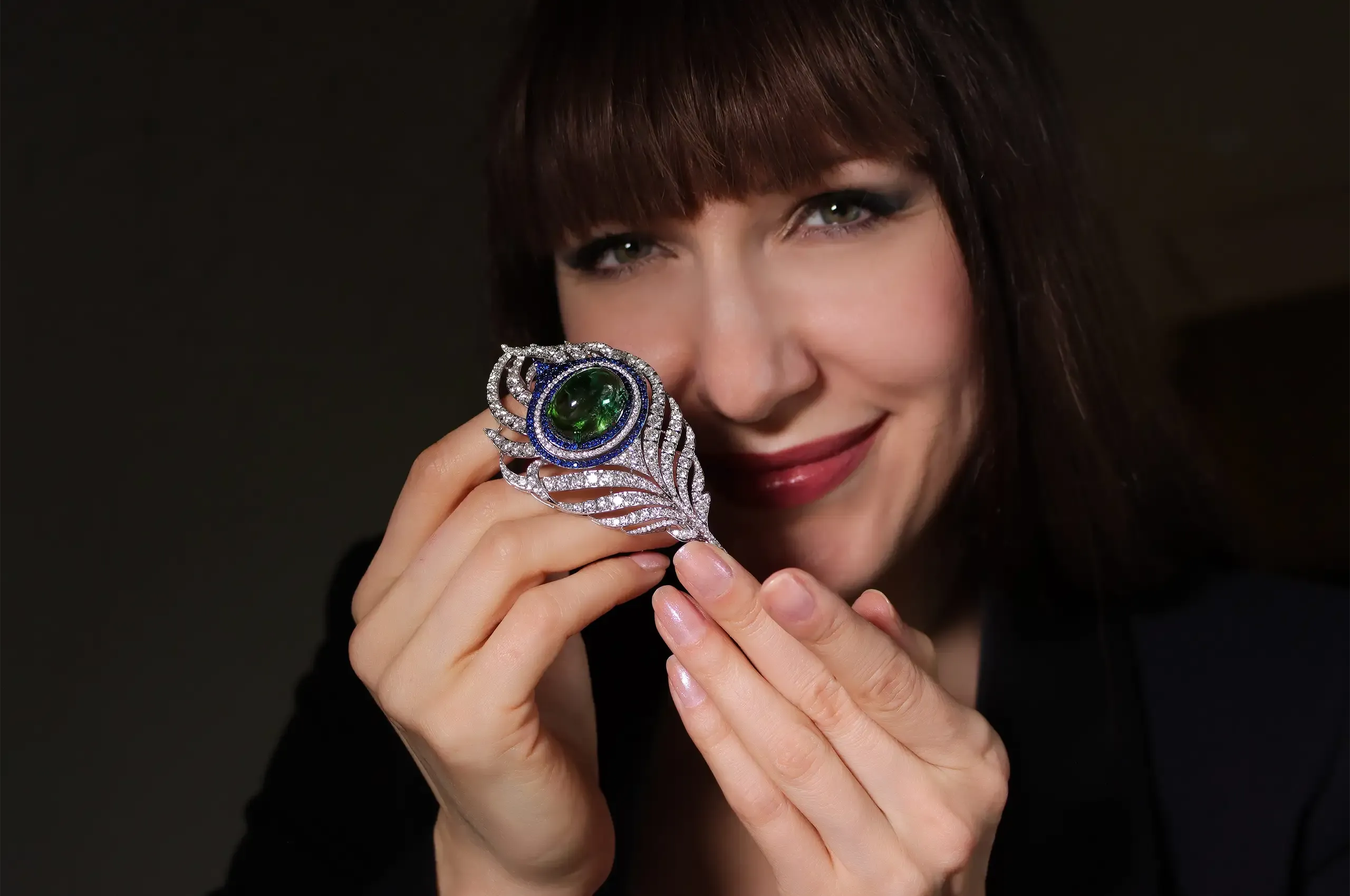
Katerina admires a Jaipur Gems peacock feather brooch set with a cabochon emerald, blue sapphires and diamonds in 18K white gold
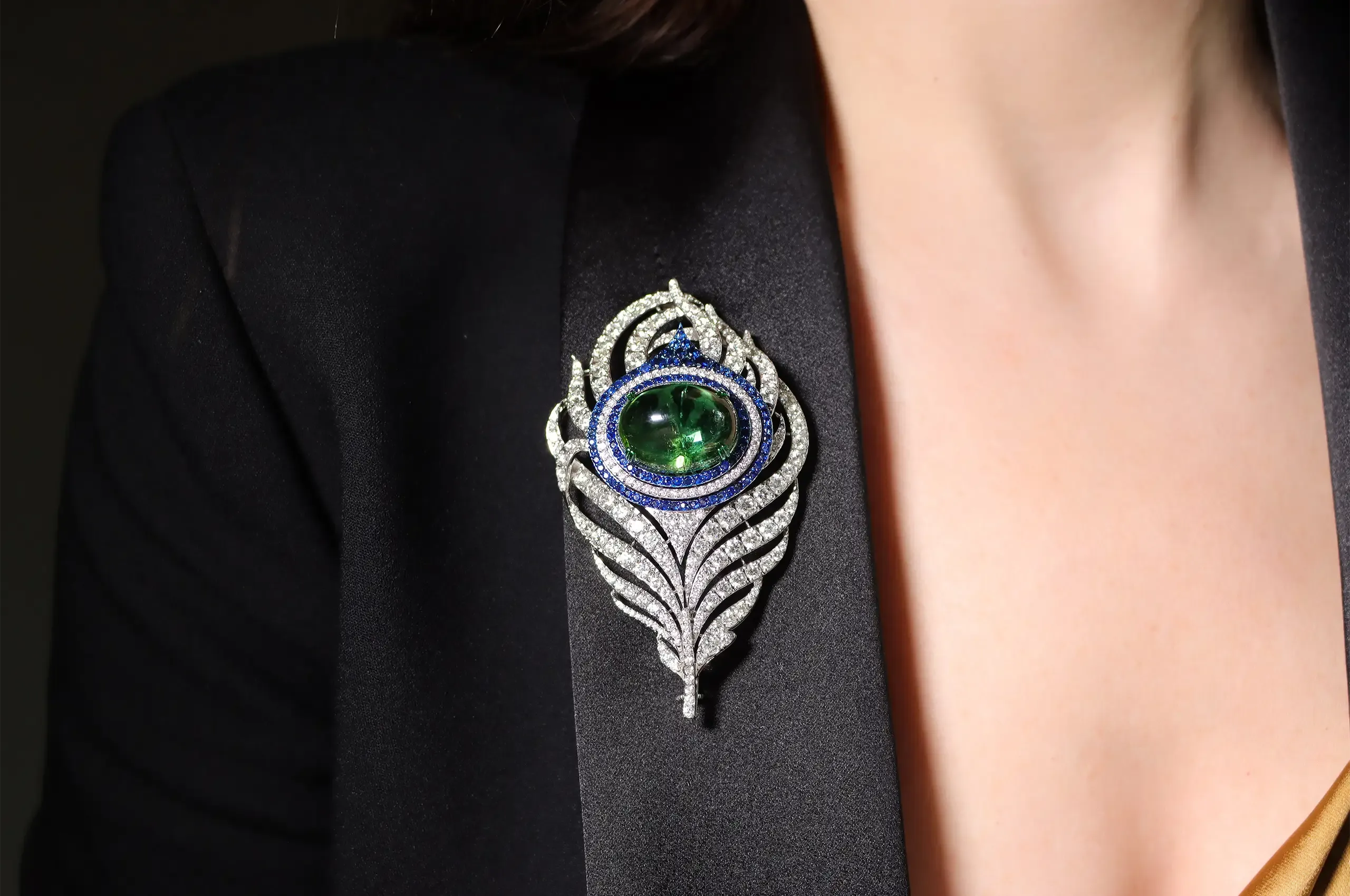
Jaipur Gems' peacock feather brooch, pinned to Katerina's lapel, with its vivid green cabochon emerald framed by concentric rows of blue sapphires and diamonds
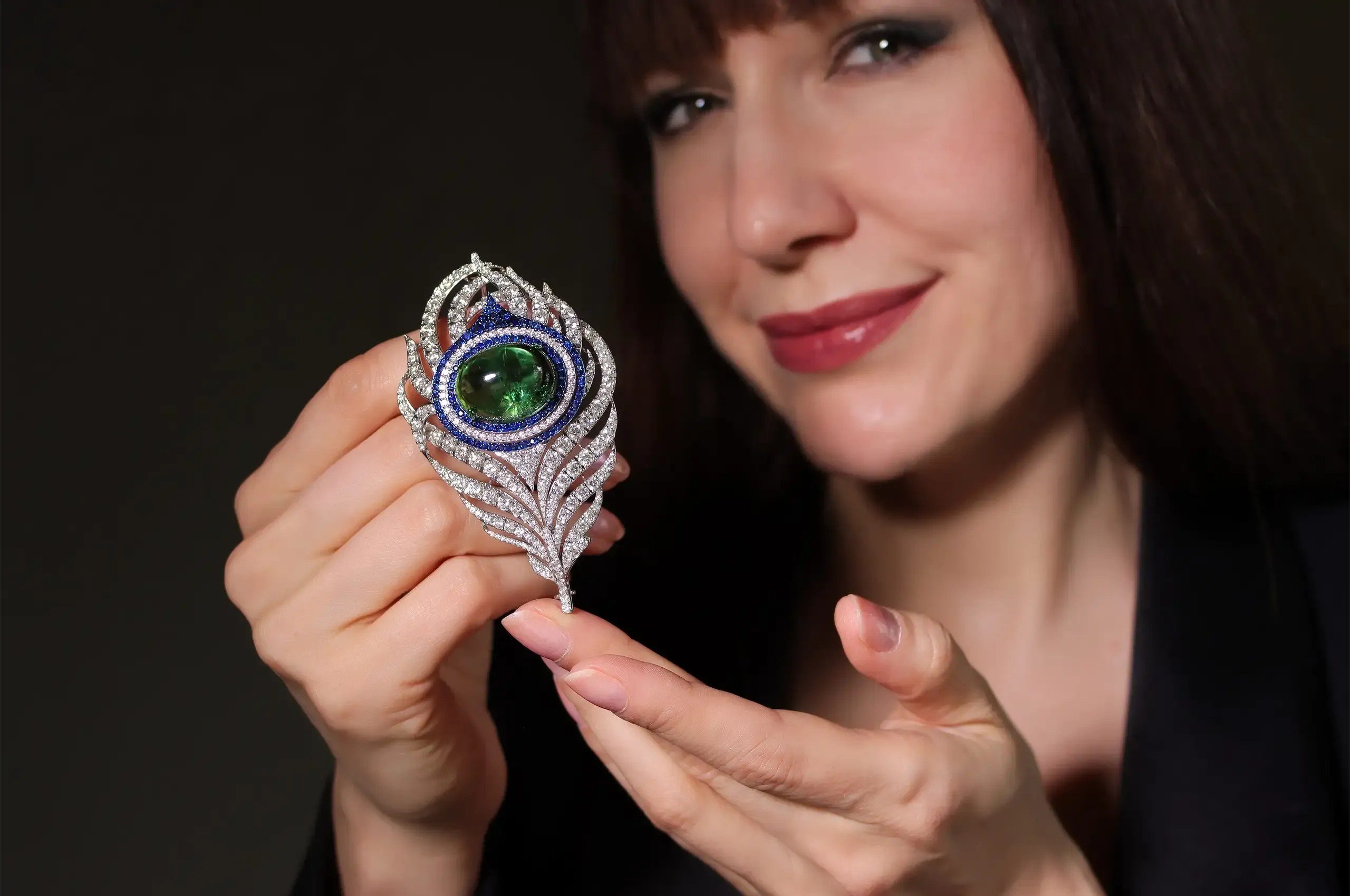
Inspired by the delicate form of a peacock feather, this Jaipur Gems brooch is set with 11.43 carats of diamonds
It is a 360-degree vision of design. Walking into the two-storey Mumbai boutique feels like entering a life-sized jewellery box. Polki necklaces sit alongside enamelled chokers, sculptural diamond jewels and cocktail rings centred on extraordinary kunzites, tourmalines, emeralds and rubellites. But look beyond the showcases and another dimension of Jaipur Gems begins to reveal itself.
To find out more, I sat down with Siddhartha to discuss his creative vision, his ambitions, and his interest in architecture, among other topics. Here are the highlights from that conversation.
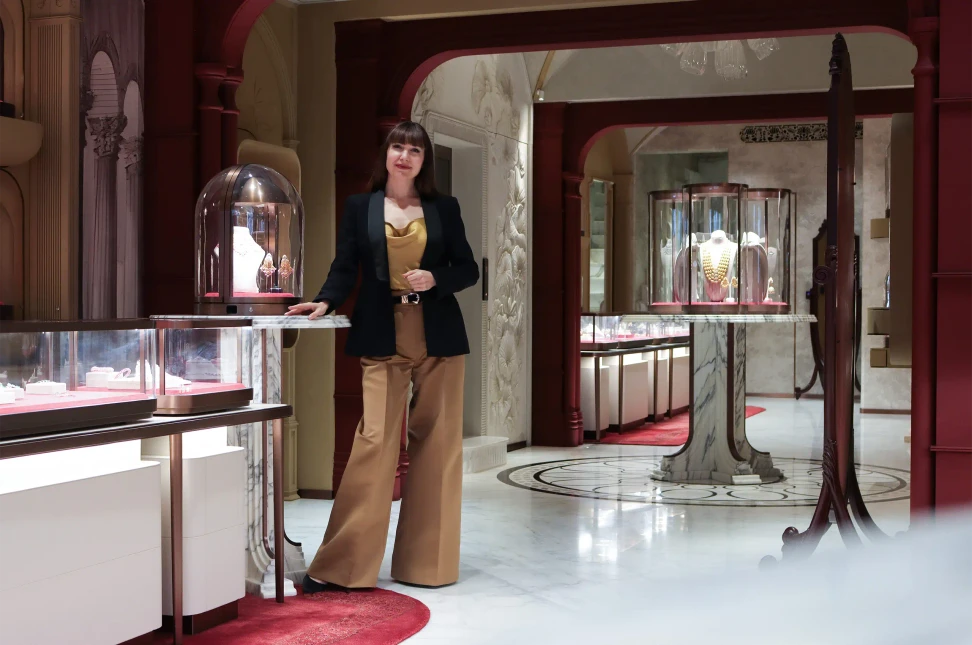
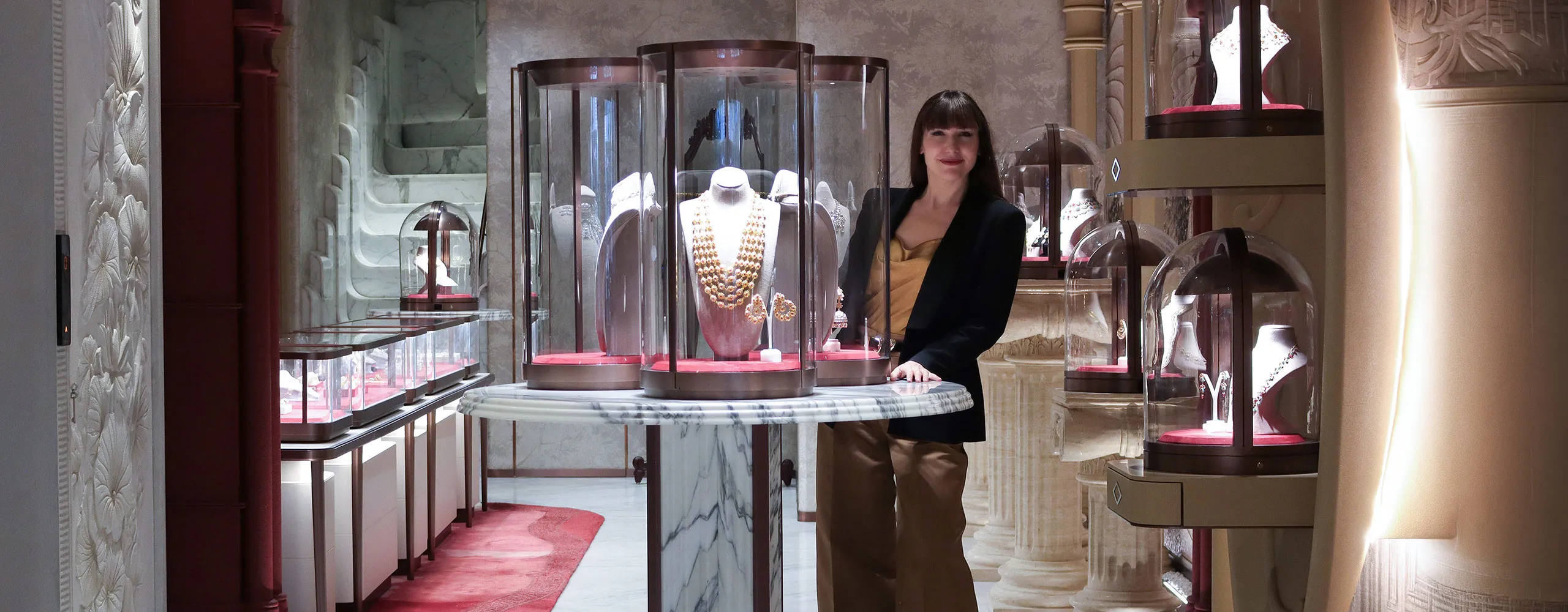
Katerina explores the ground floor of Jaipur Gems’ new boutique on Turner Road in Mumbai, where marble displays, burgundy arches and intricate wall reliefs create the atmosphere of a walk-in jewellery box
Katerina Perez: This new boutique is nothing like the other Jaipur Gems stores I have visited. Why are they all so different?
Siddhartha Sacheti: Because I don't believe a luxury brand needs to repeat the same store everywhere to be recognisable. The design ethos of Jaipur Gems remains consistent whether you are in Mumbai, Dubai, Abu Dhabi or one of our future boutiques, but its physical expression should evolve. Every city has a different energy. Every building has its own architecture. Every client experiences luxury differently. So, each Jaipur Gems boutique becomes an individual creative project. I look at our stores almost in the same way that I look at jewellery design. You begin with an idea, understand the environment around it and then develop proportions, colours, textures, materials and details until everything belongs together. If every Jaipur Gems boutique looked identical, I think we would lose an important part of what makes us a design House.
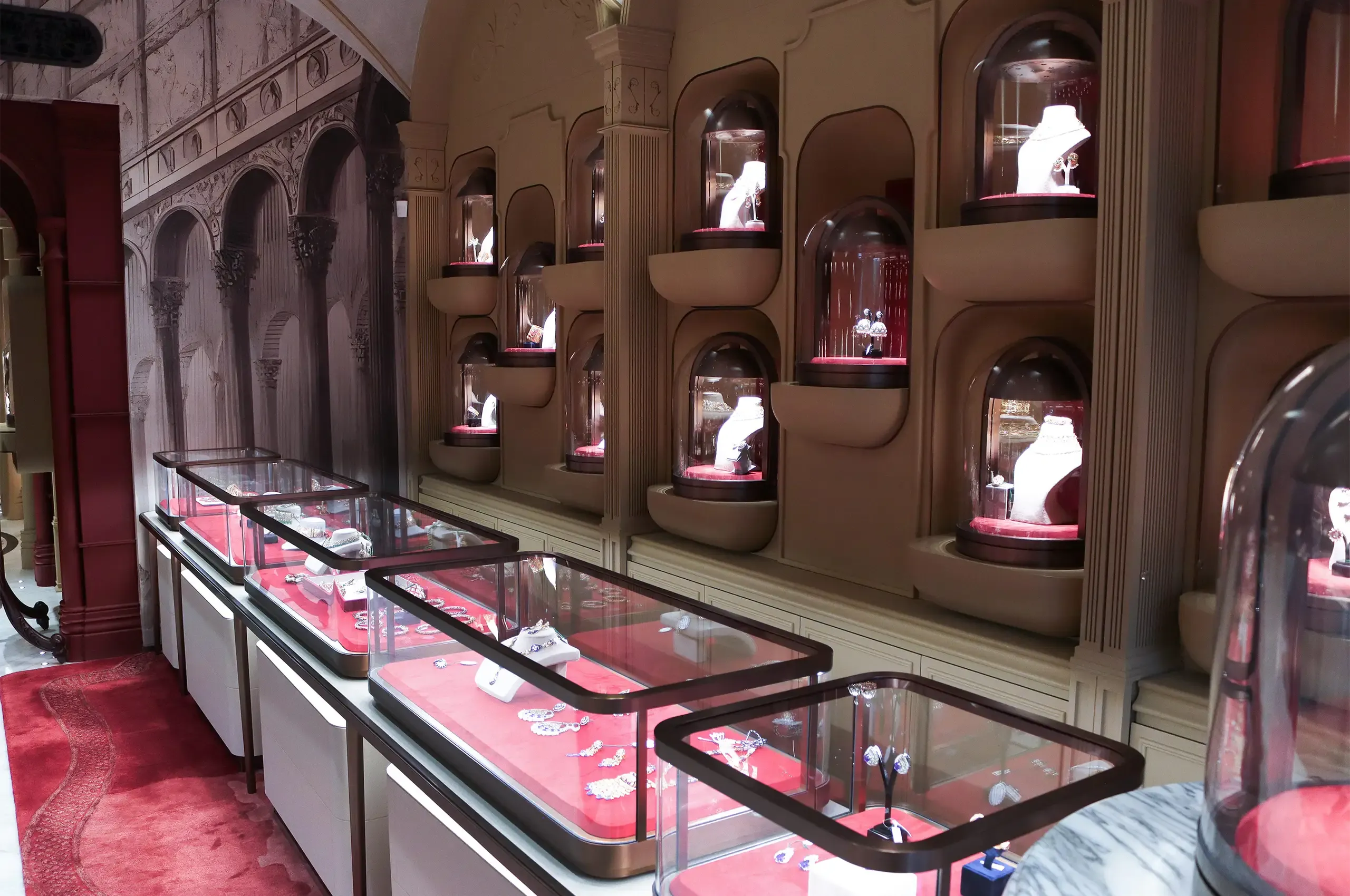
A glimpse inside Jaipur Gems’ new Mumbai boutique, where jewellery is displayed in glass vitrines against a backdrop of Roman-inspired architecture
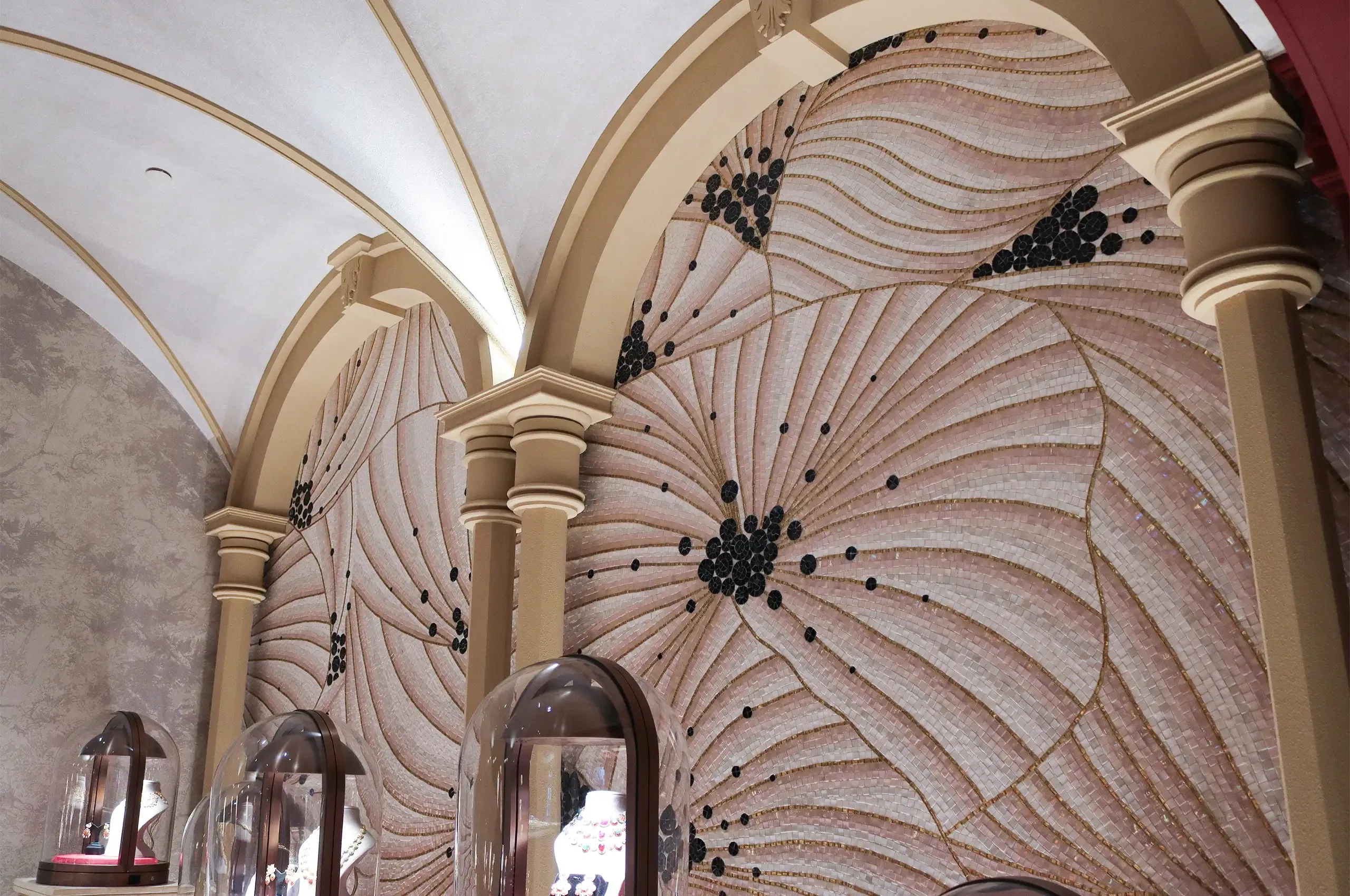
Floral mosaics inspired by rippling water and water lilies decorate the walls of Jaipur Gems’ new Mumbai boutique, referencing the House’s Dal Lake collection and its roots in Rajasthan
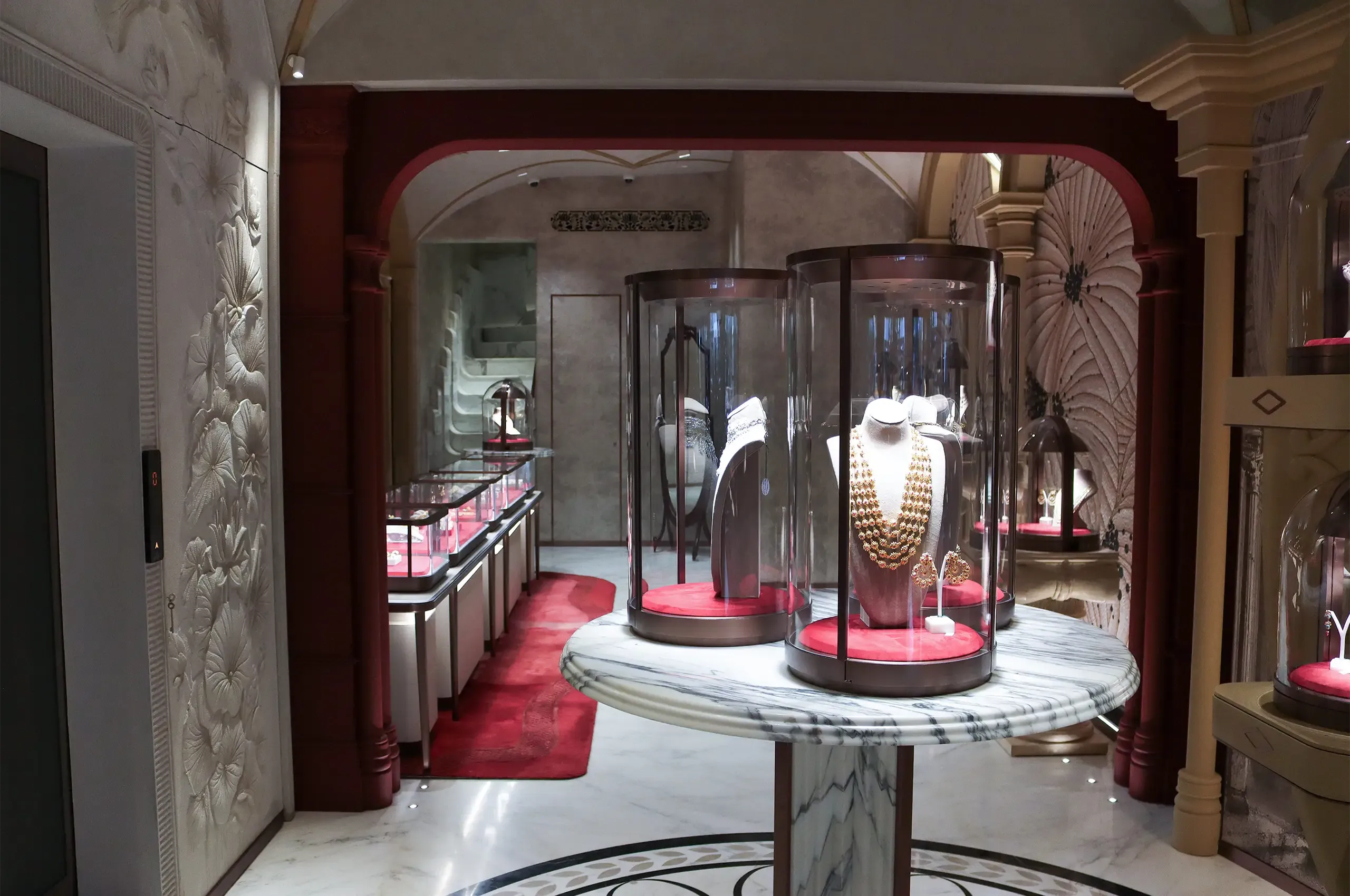
Jewellery is displayed beneath tall glass vitrines on a marble table at the centre of Jaipur Gems’ Mumbai boutique
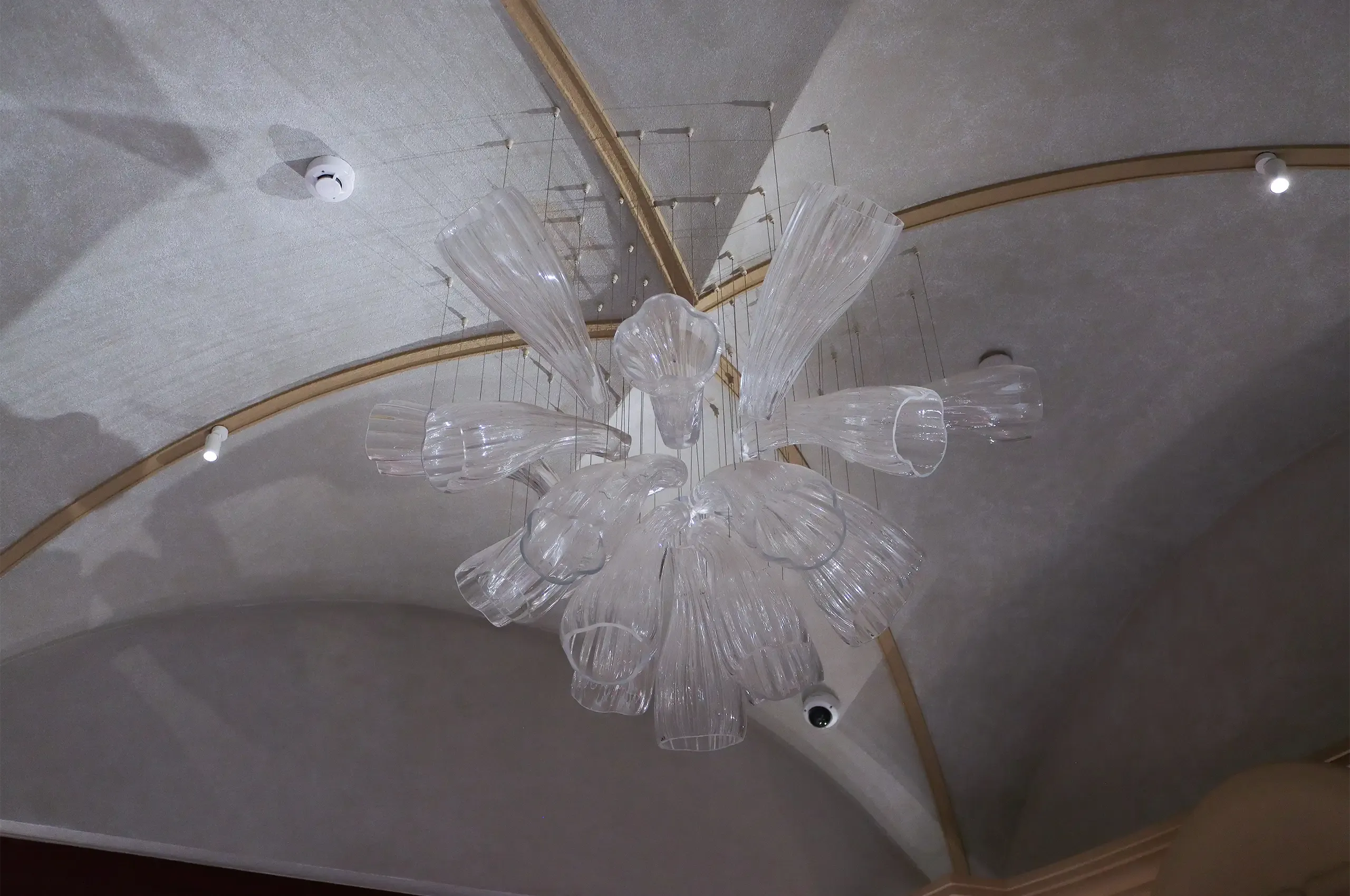
A bespoke chandelier of handblown glass petals echoes the floral mosaics decorating the walls of Jaipur Gems’ new Mumbai boutique
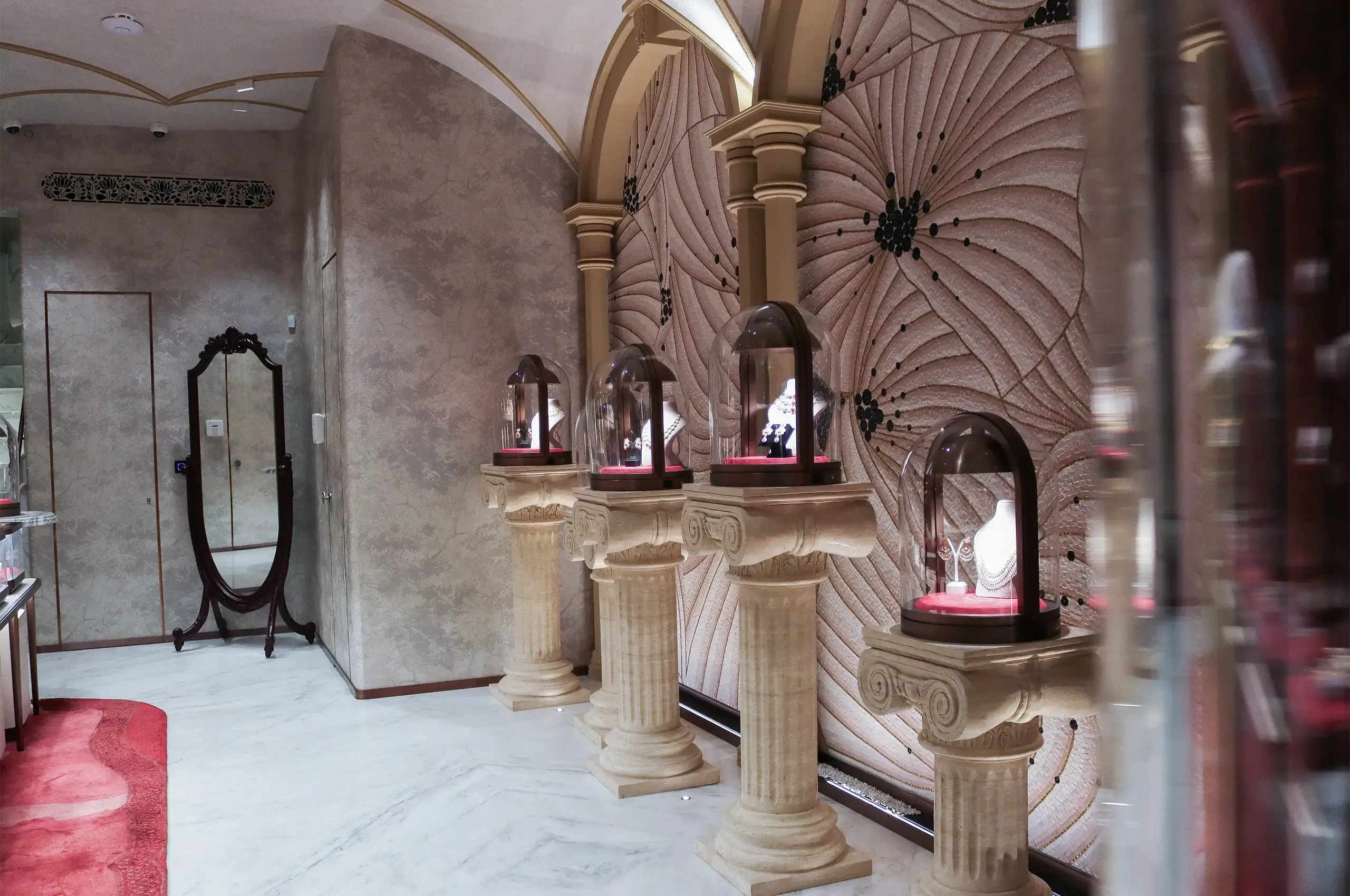
The wall mosaic evokes the delicate forms of water lilies at Jaipur Gems’ new Mumbai boutique
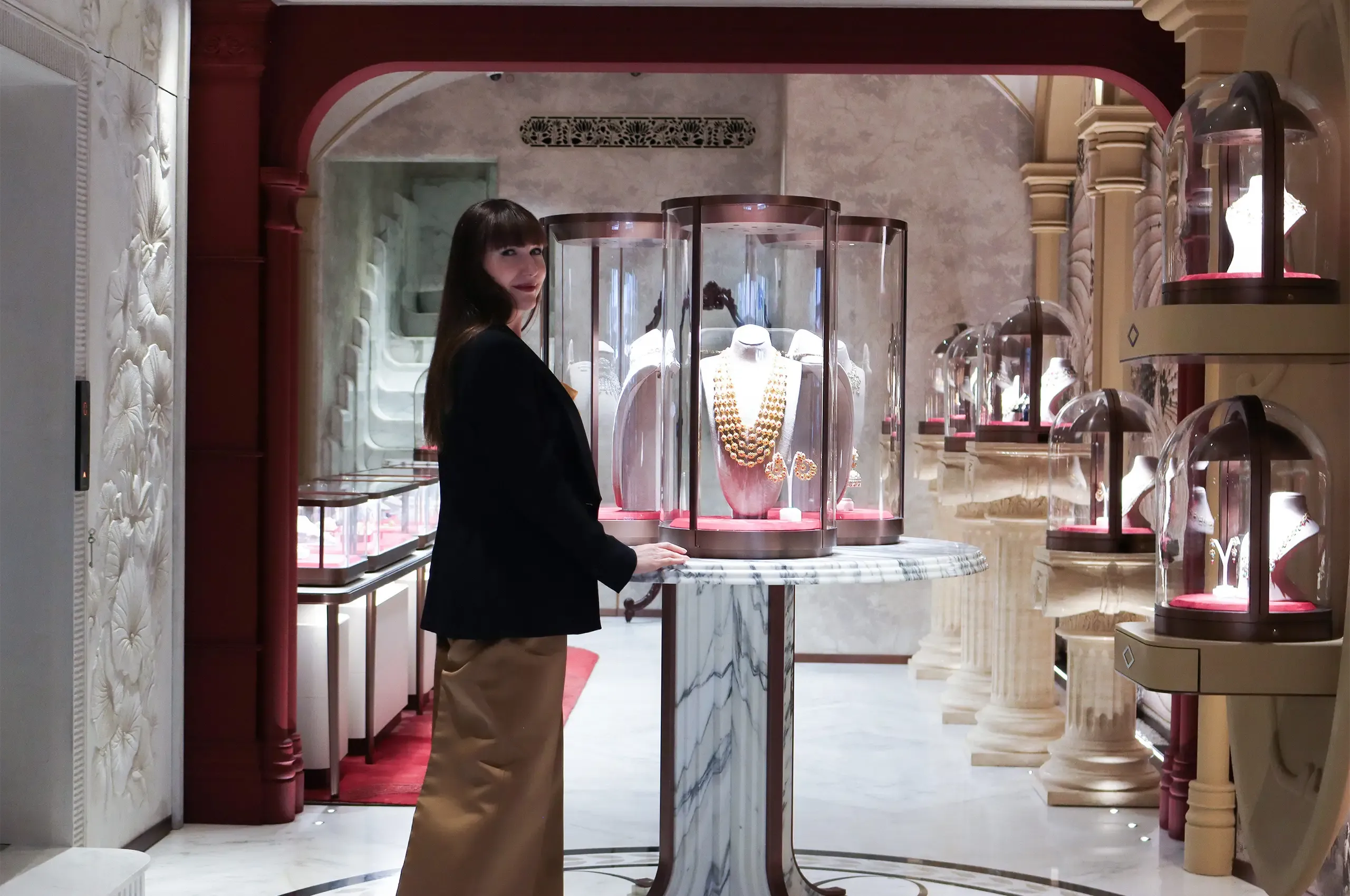
Katerina discovers why Siddhartha Sacheti describes Jaipur Gems’ new Mumbai boutique as a huge jewellery box you can walk inside
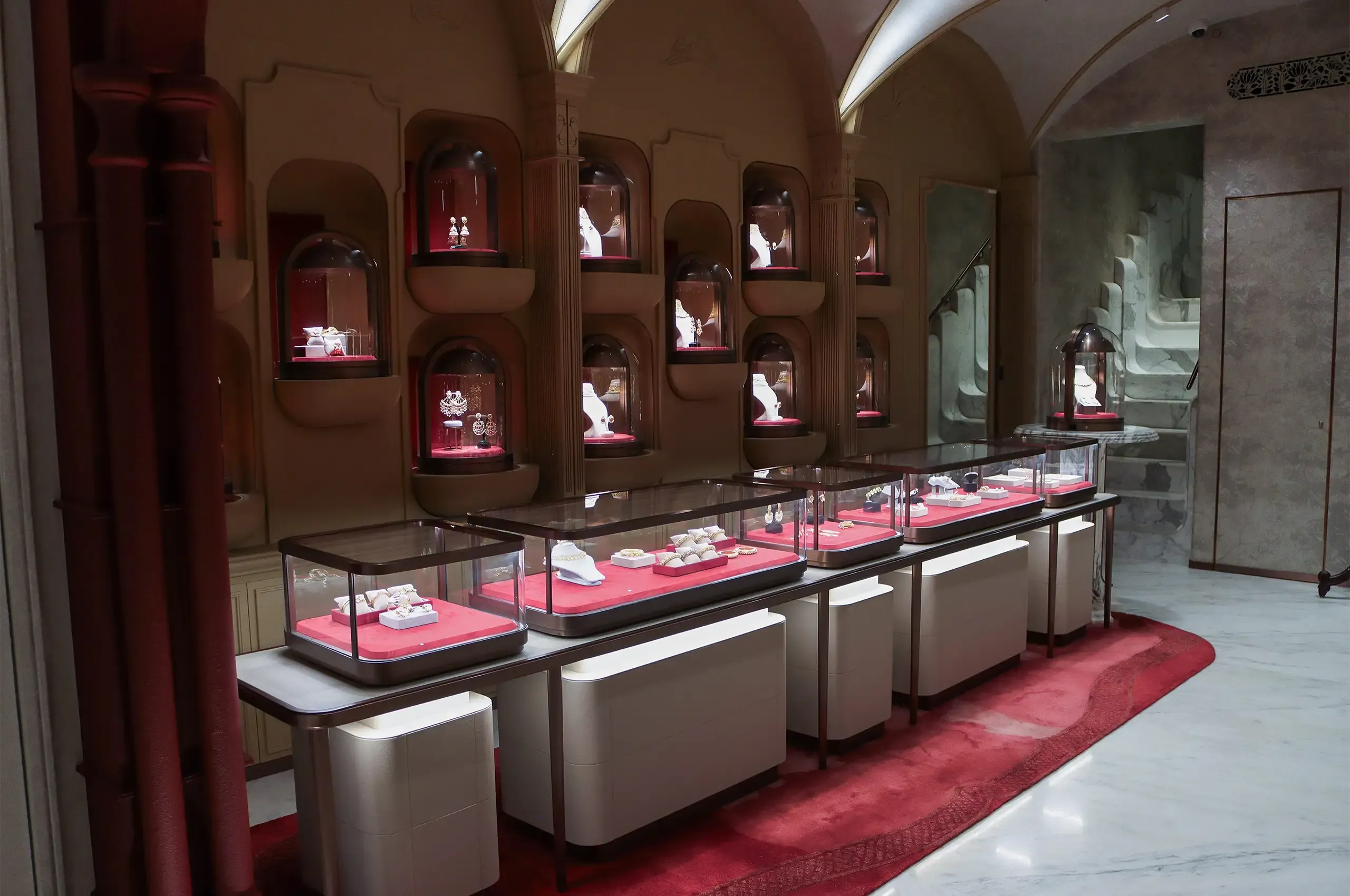
Jewellery displays line the ground floor of Jaipur Gems’ new Mumbai boutique, offering everything from traditional Indian bridal jewels to contemporary designs
KP: So, the architecture and interiors are actually an extension of the jewellery?
SS: Absolutely. Today, I see Jaipur Gems as much more than a company that designs jewellery. We are building a design-led luxury House. Jewellery is obviously at the heart of Jaipur Gems, and gemstones will always be one of our greatest passions. But design does not stop at the jewel. It continues into the showcase that holds it, the chair in which you sit while discovering it, the material on the walls, the artwork surrounding you, the lighting on the gemstone and even the way you move from one room into another. When someone enters Jaipur Gems, I want them to understand our aesthetic before anyone has even shown them a piece of jewellery. That is what I mean by creating Jaipur Gems in 360 degrees.
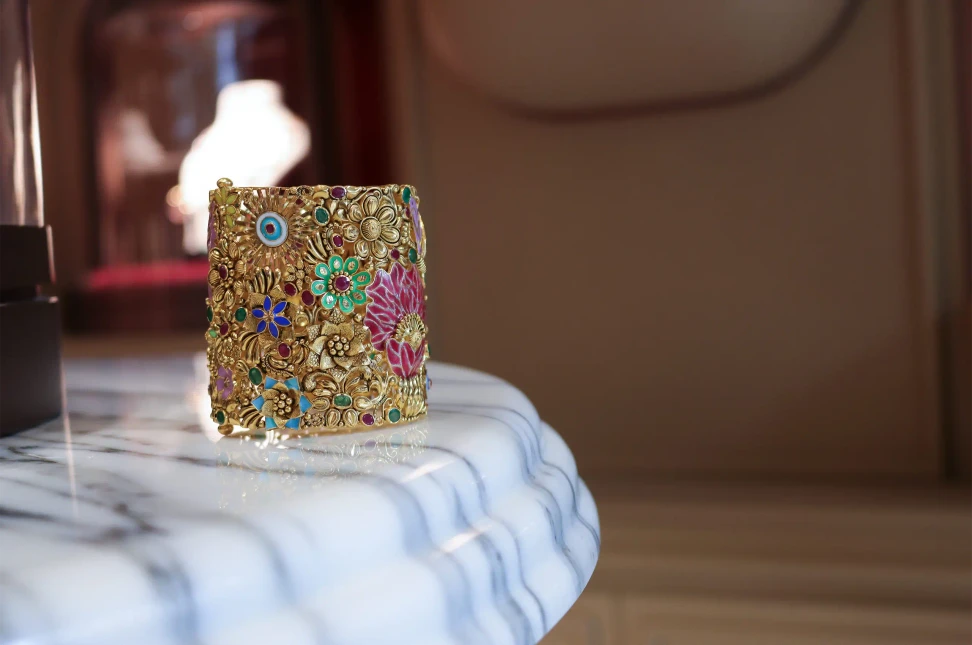
A vibrant Jaipur Gems cuff bangle in 22K yellow gold, decorated with colourful floral enamel motifs and set with emeralds and rubies totalling 11.85 carats
KP: What is the idea behind the Mumbai boutique?
SS: Here, we developed a water-lily theme that is very close to our hearts. It connects Rajasthan, where our family comes from, with our Lake Collection, which we created many years ago to pay homage to the Dal Lake in Kashmir. This beautiful freshwater lake has water lilies and leaves lazily floating around, and this design language is transiently present all around the store. We took this idea of water lilies floating on water and transformed them into three-dimensional plaster wall sculptures created especially for the boutique.
But I didn't want the reference to become literal. That is also very much how I approach jewellery. I may be inspired by a lake, a flower, architecture or a landscape, but the finished piece should not simply reproduce the object. It should capture its rhythm, geometry, movement or emotion. The store works in exactly the same way
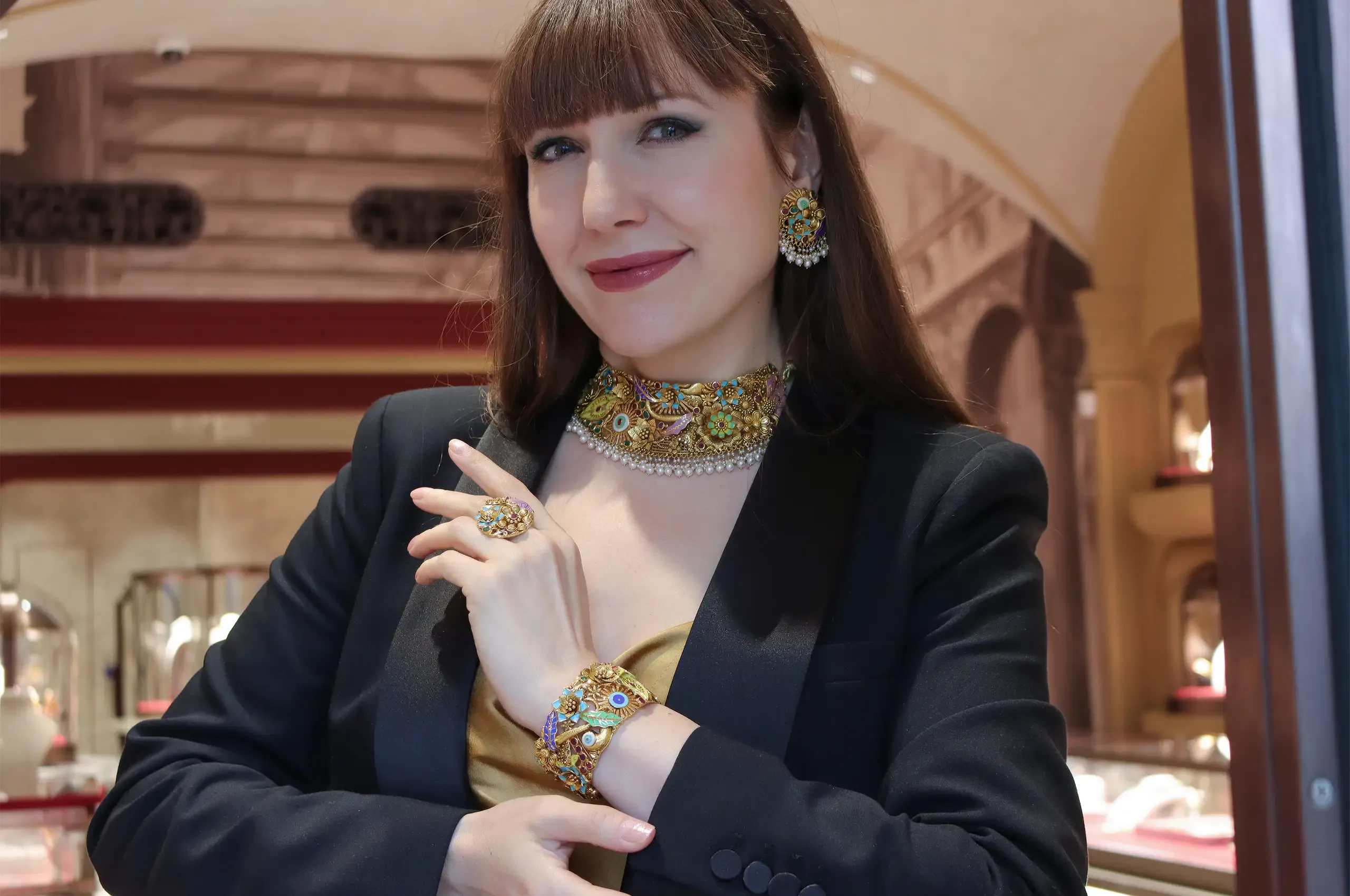
Katerina wears a selection of Jaipur Gems’ Bauhaus-inspired creations – a contemporary interpretation of traditional Indian jewellery
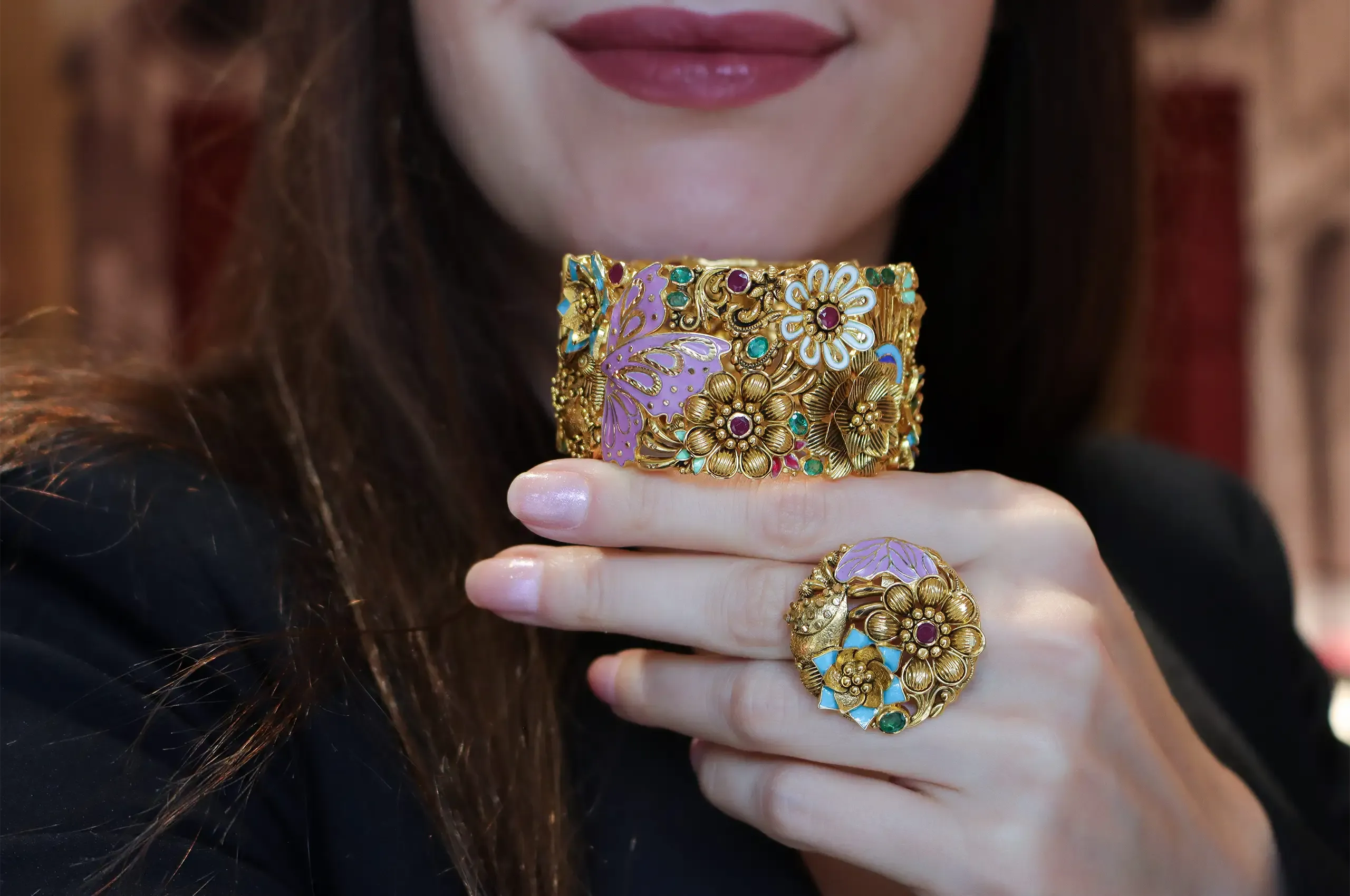
A closer look at Jaipur Gems’ Bauhaus-inspired cuff and cocktail ring, with colourful enamel and emeralds and rubies set in 22K yellow gold
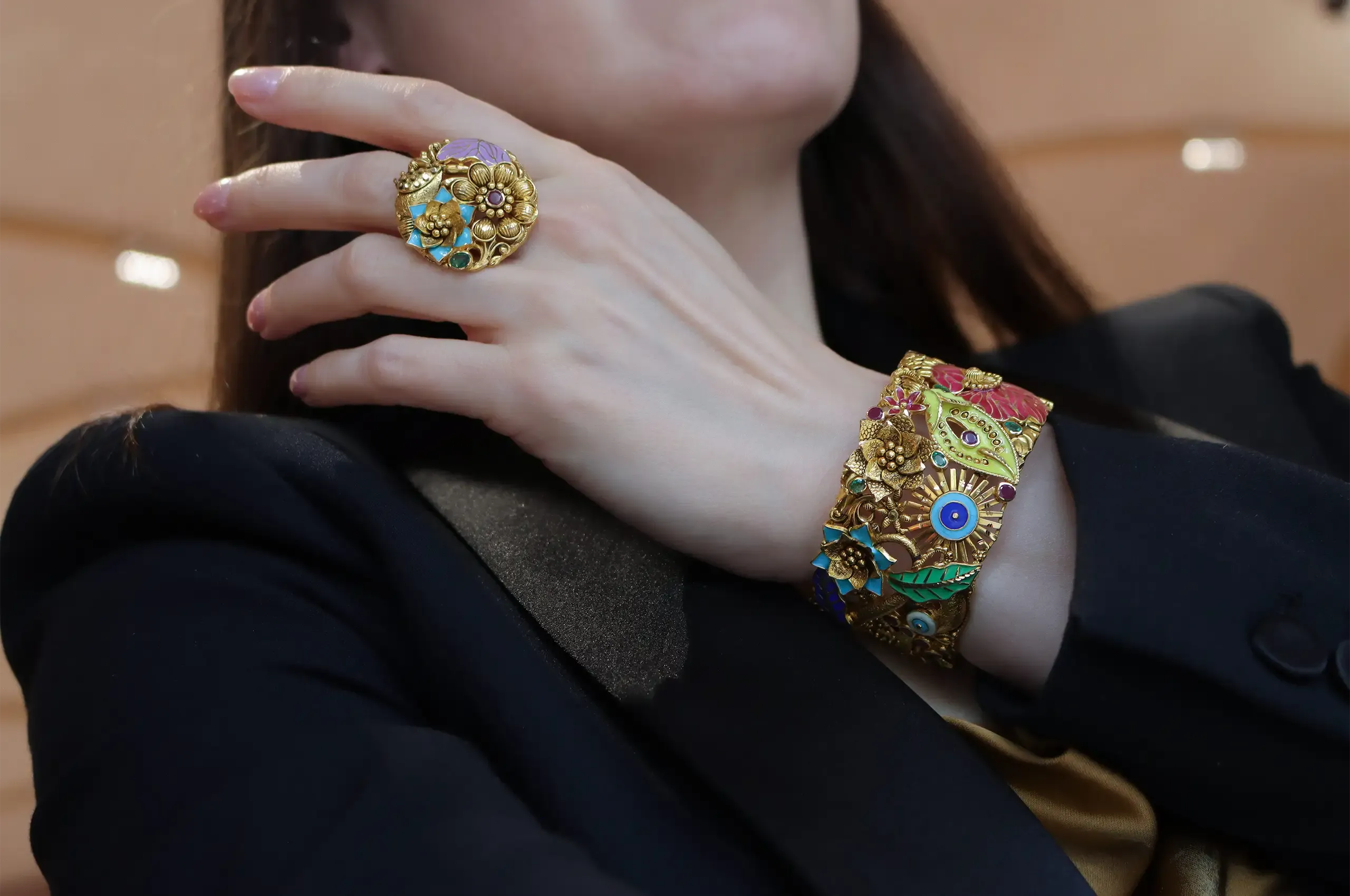
Jaipur Gems’ 22k gold cocktail ring and cuff feature a mix of floral motifs, emeralds, rubies and brightly coloured enamel
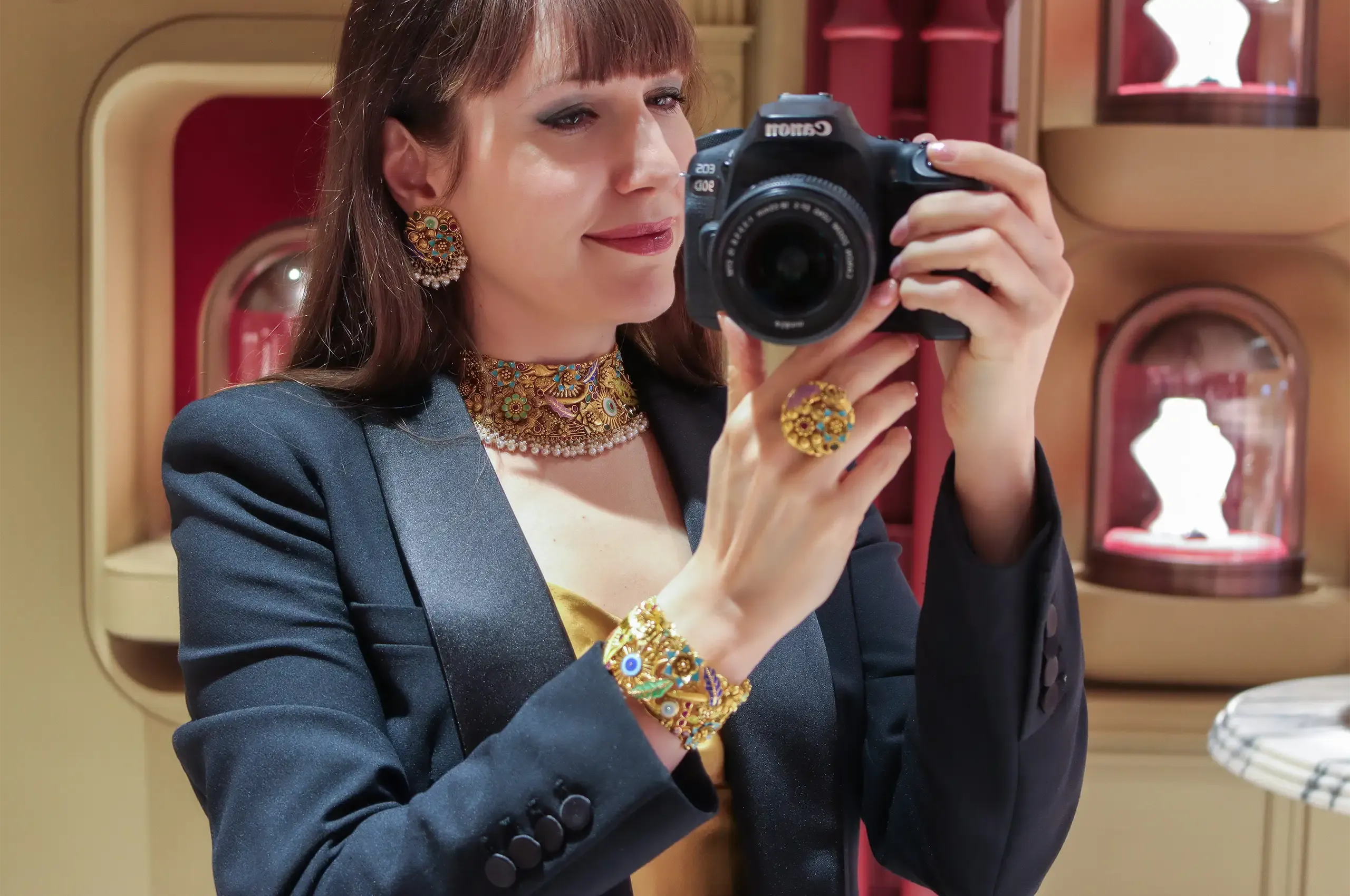
Katerina captures a moment from her visit to Jaipur Gems, wearing a 22K gold enamel choker with emeralds, rubies and pearls, complemented by matching earrings, a cocktail ring and cuff
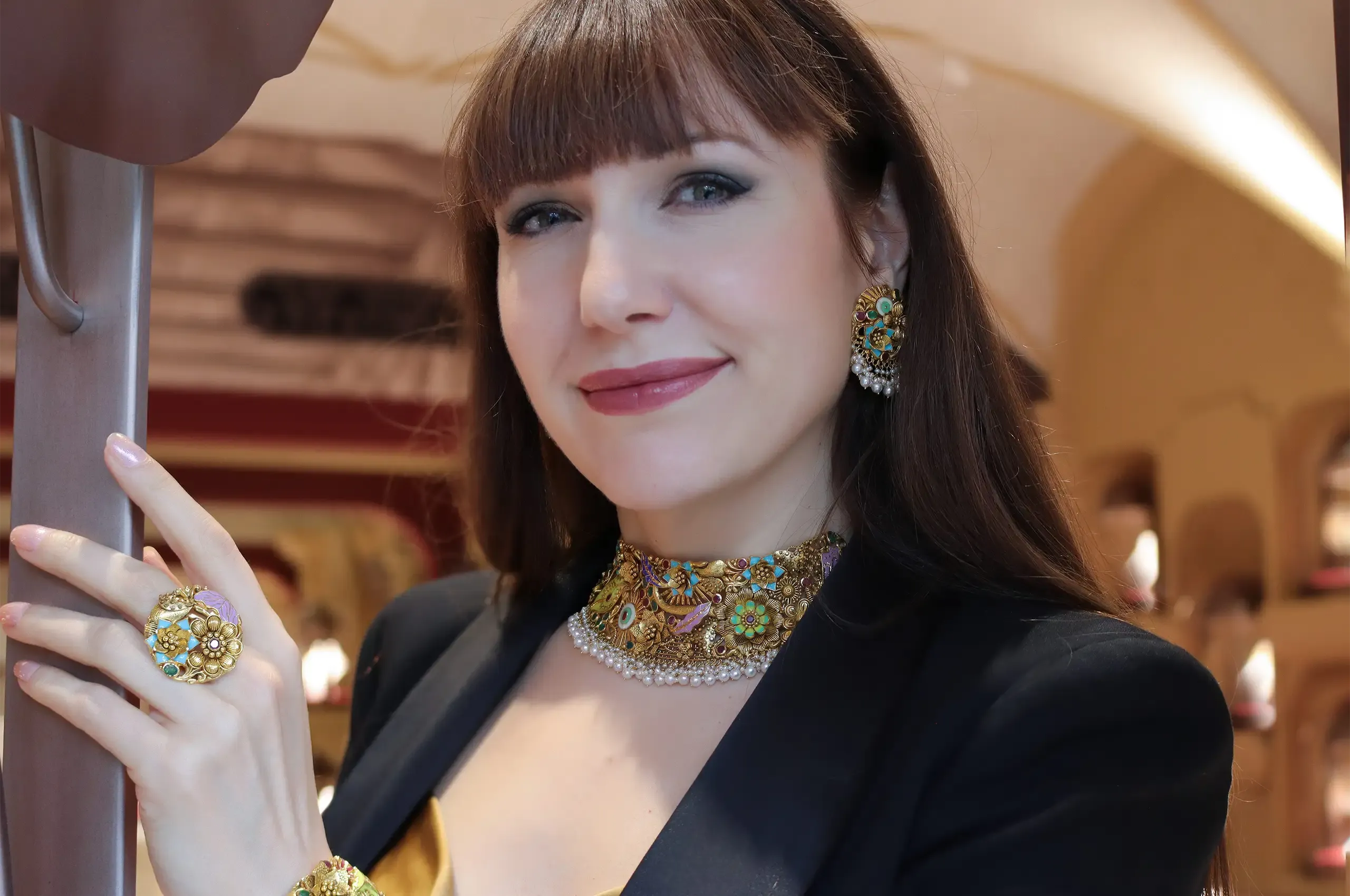
Jaipur Gems’ enamelled choker in 22K yellow gold, set with emeralds and rubies totalling 37.40 carats and finished with a fringe of pearls
KP: And then suddenly there is Roman architecture.
SS: Yes. We depicted the Pantheon and introduced burgundy references inspired by Imperial Rome. Some people might ask what Rome has to do with Rajasthan, but that juxtaposition is very Jaipur Gems. My design vocabulary has never been limited geographically. India gives us an extraordinary foundation of craftsmanship, colour, gemstones and culture. But we are equally fascinated by Italian architecture, European decorative arts, contemporary design and modern art. What interests me is bringing those worlds together in a way that feels sophisticated rather than thematic. You move from one room to another and discover something unexpected.
I often say: imagine your jewellery box became enormous, and you could actually walk inside it. That is the experience we wanted to create, Siddhartha Sacheti.
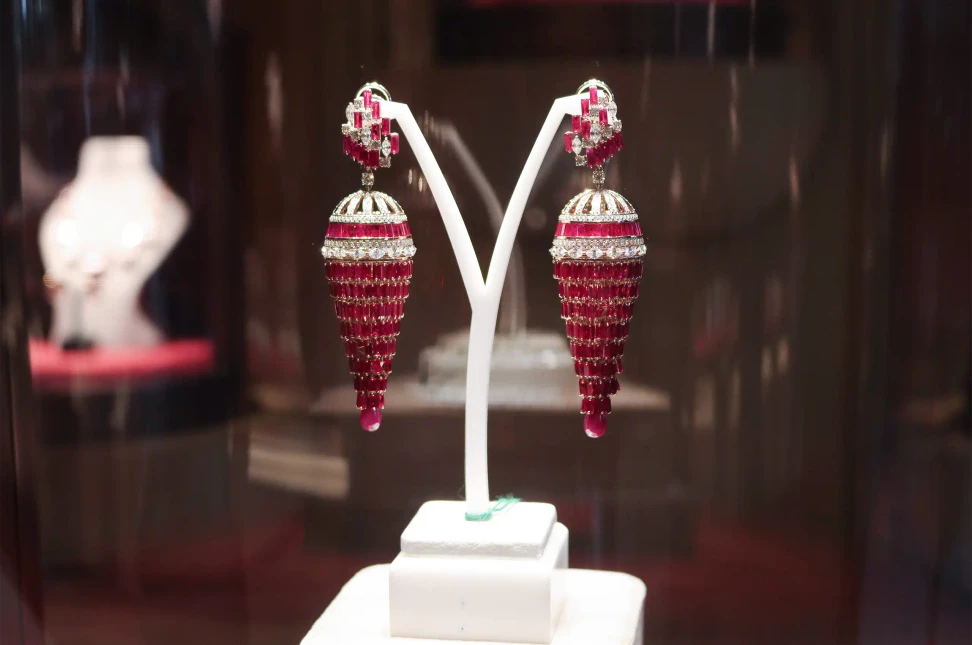
Jaipur Gems chandelier earrings, featuring 87.36 carats of rubies and 9.81 carats of diamonds set in 18K gold, with cascading tiers of rubies forming an elongated, inverted teardrop silhouette
KP: The lighting is also surprisingly restrained for a jewellery boutique.
SS: Deliberately. Luxury jewellery stores can sometimes become too much about illumination and showcases. Everything is brightly lit and immediately presented to you. We wanted something slower. We keep the ambient lighting subtle and allow the jewellery itself to become the focus. You have to walk through the boutique. You come closer to the showcases. You discover details. There is intimacy in that process. It connects to something I have been talking about for some time: slow luxury. True luxury should give you time to appreciate what you are looking at.
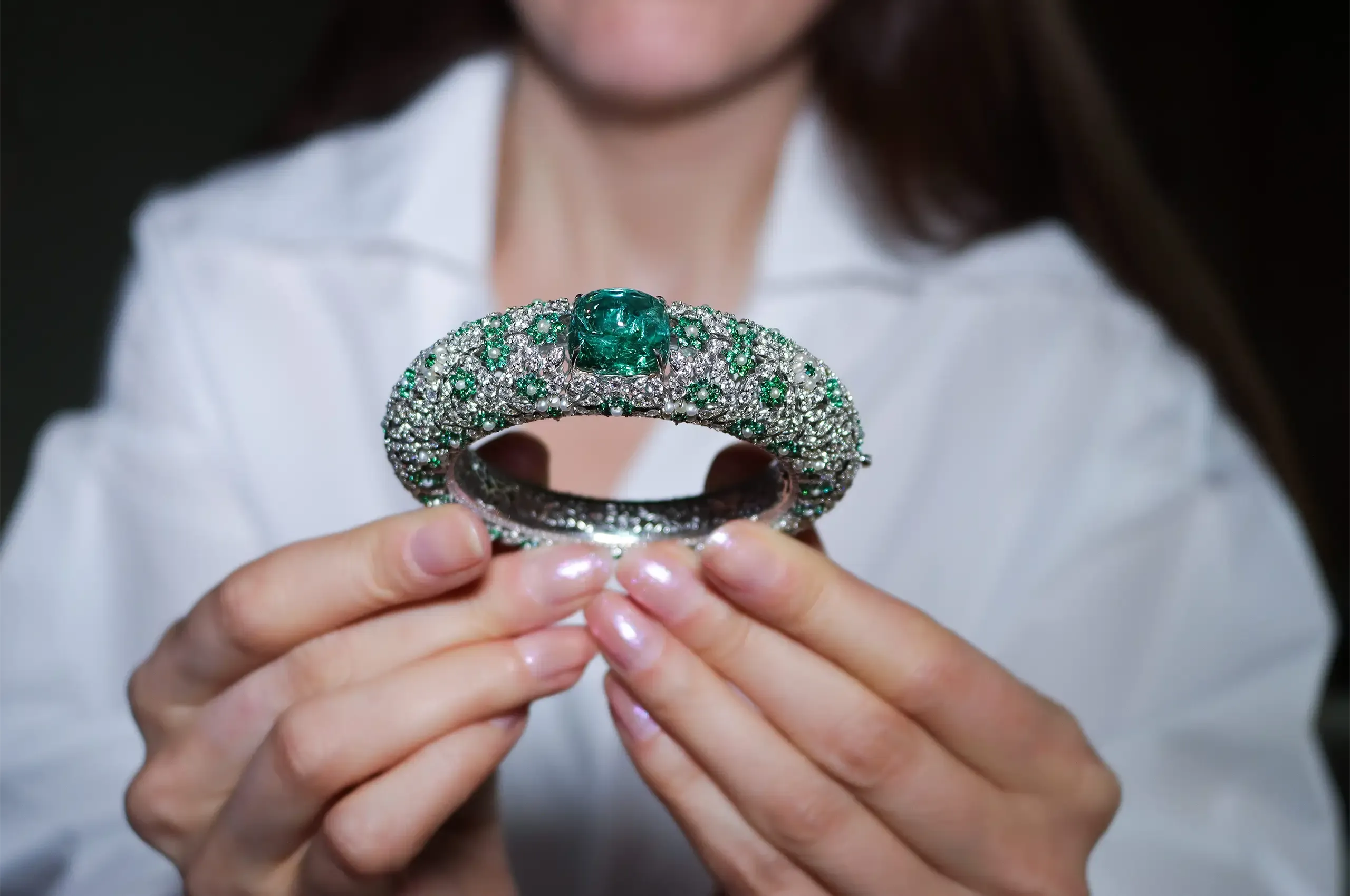
Jaipur Gems’ richly embellished bangle, set with a large green tourmaline, diamonds, topaz and pearls
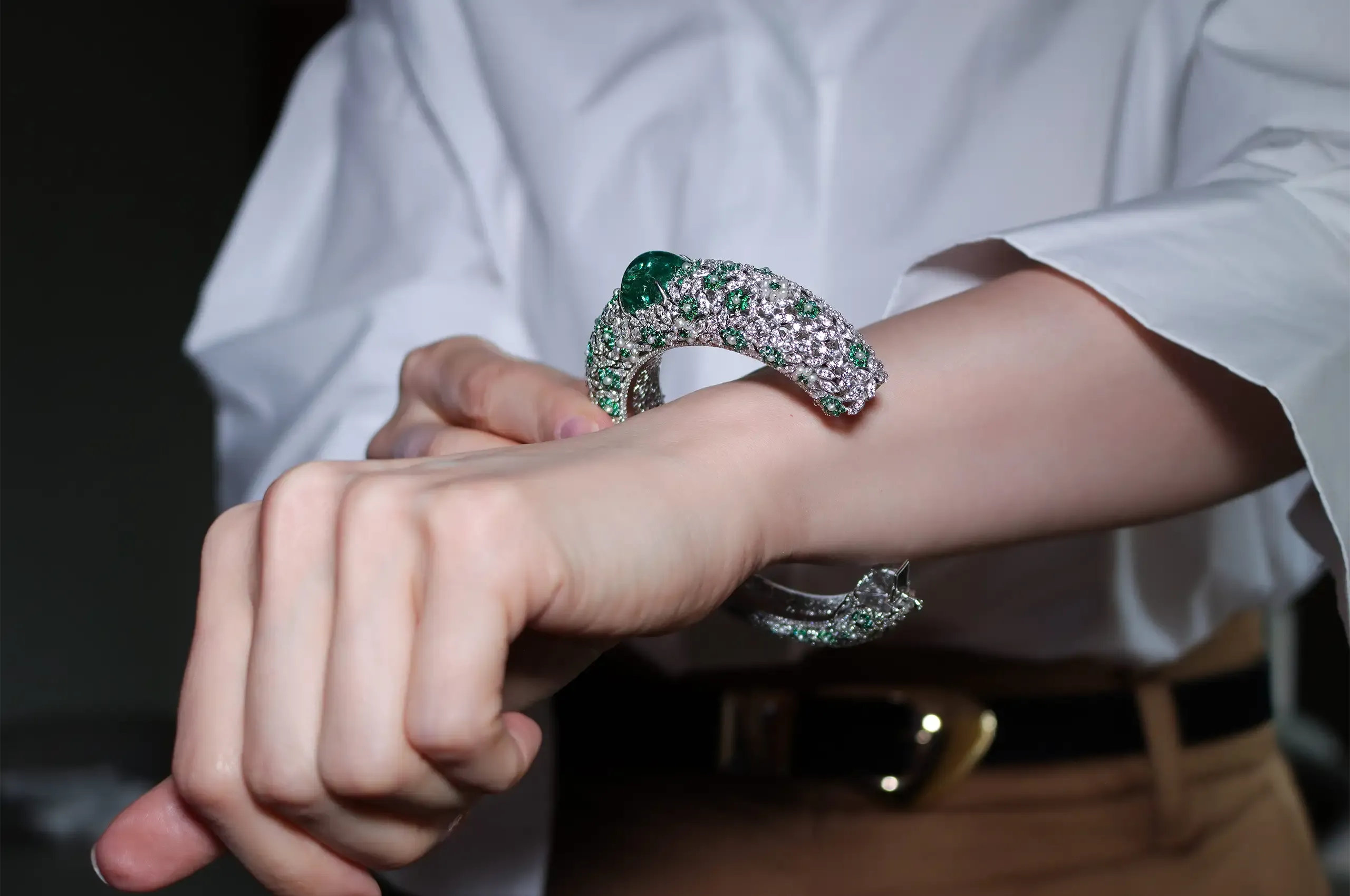
Katerina tries on the bangle
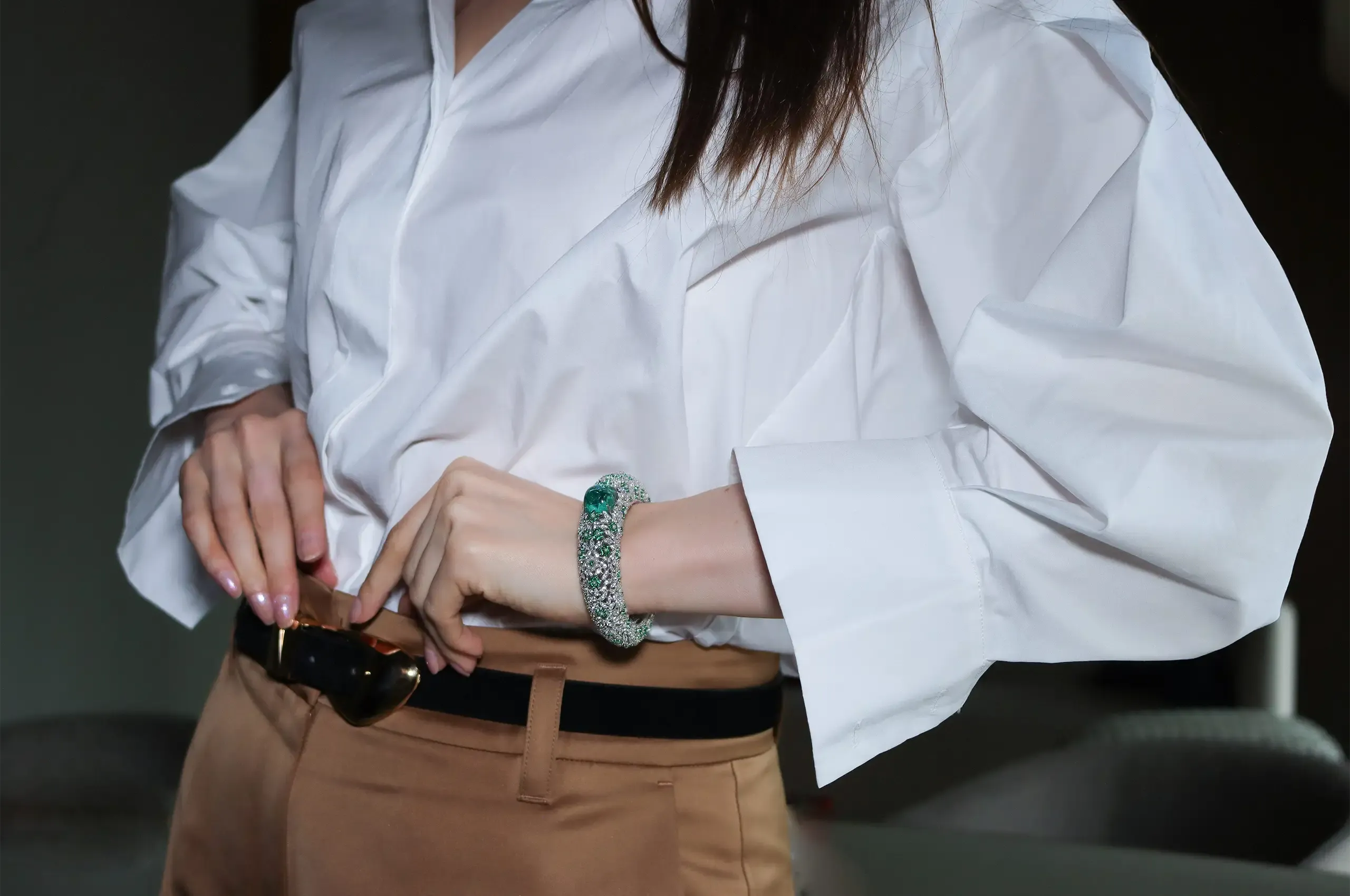
The bangle is set with 14 carats of diamonds and more than 37 carats of green tourmaline, topaz and pearls
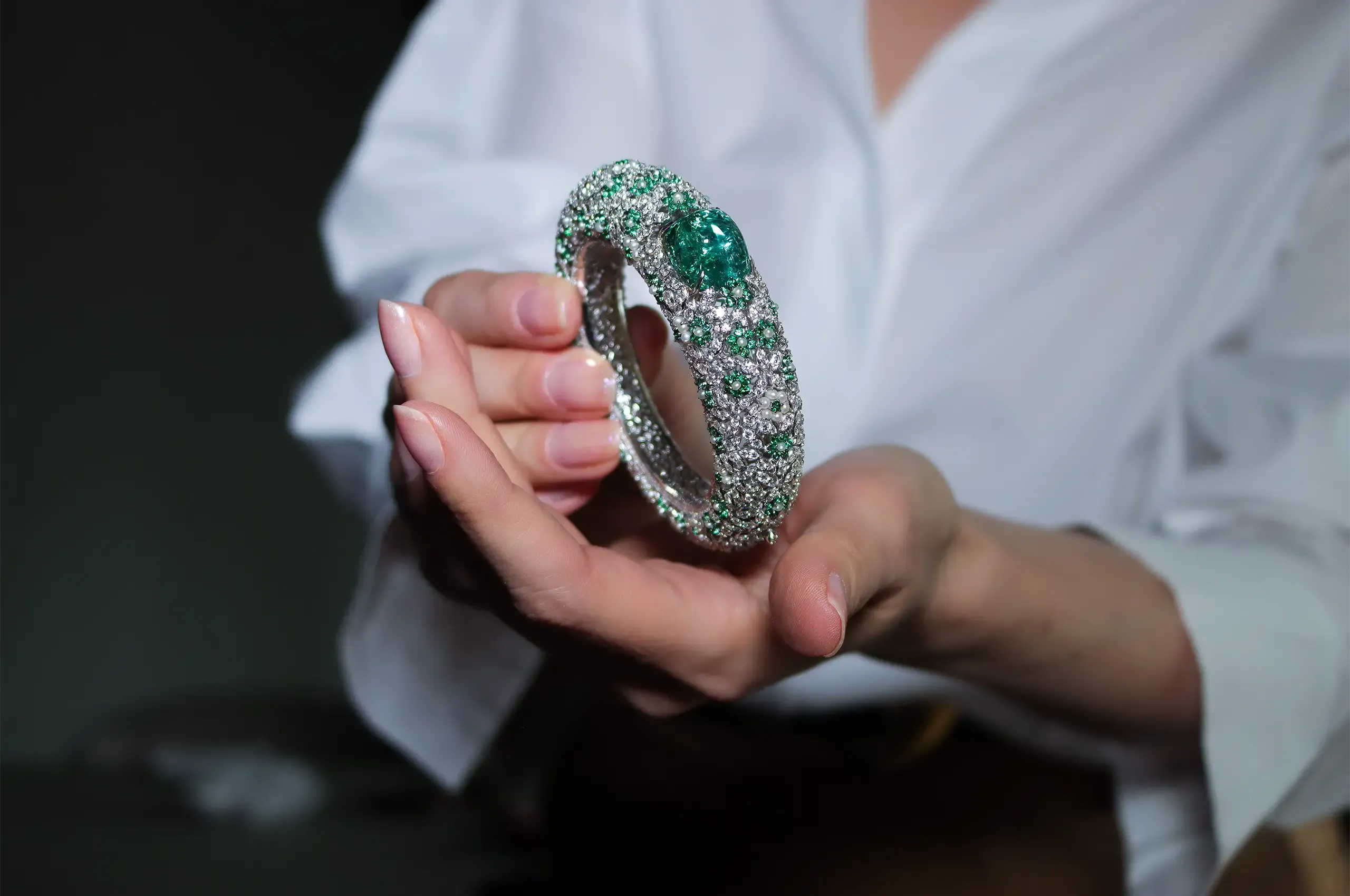
A closer look at the sugarloaf cabochon-cut green tourmaline
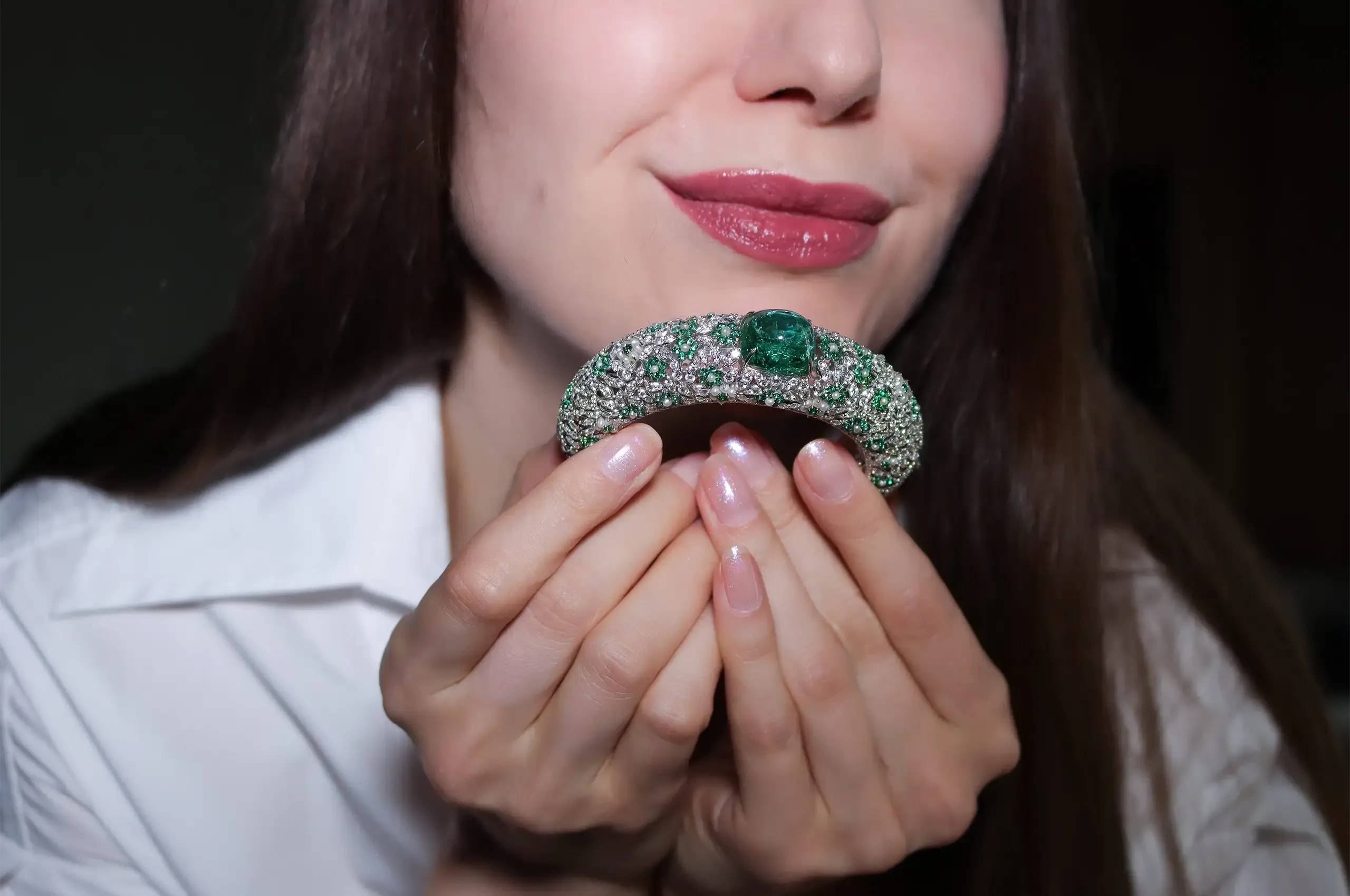
Diamonds, green tourmalines, topaz and tiny pearls embellish every curve of the 18K white gold bangle
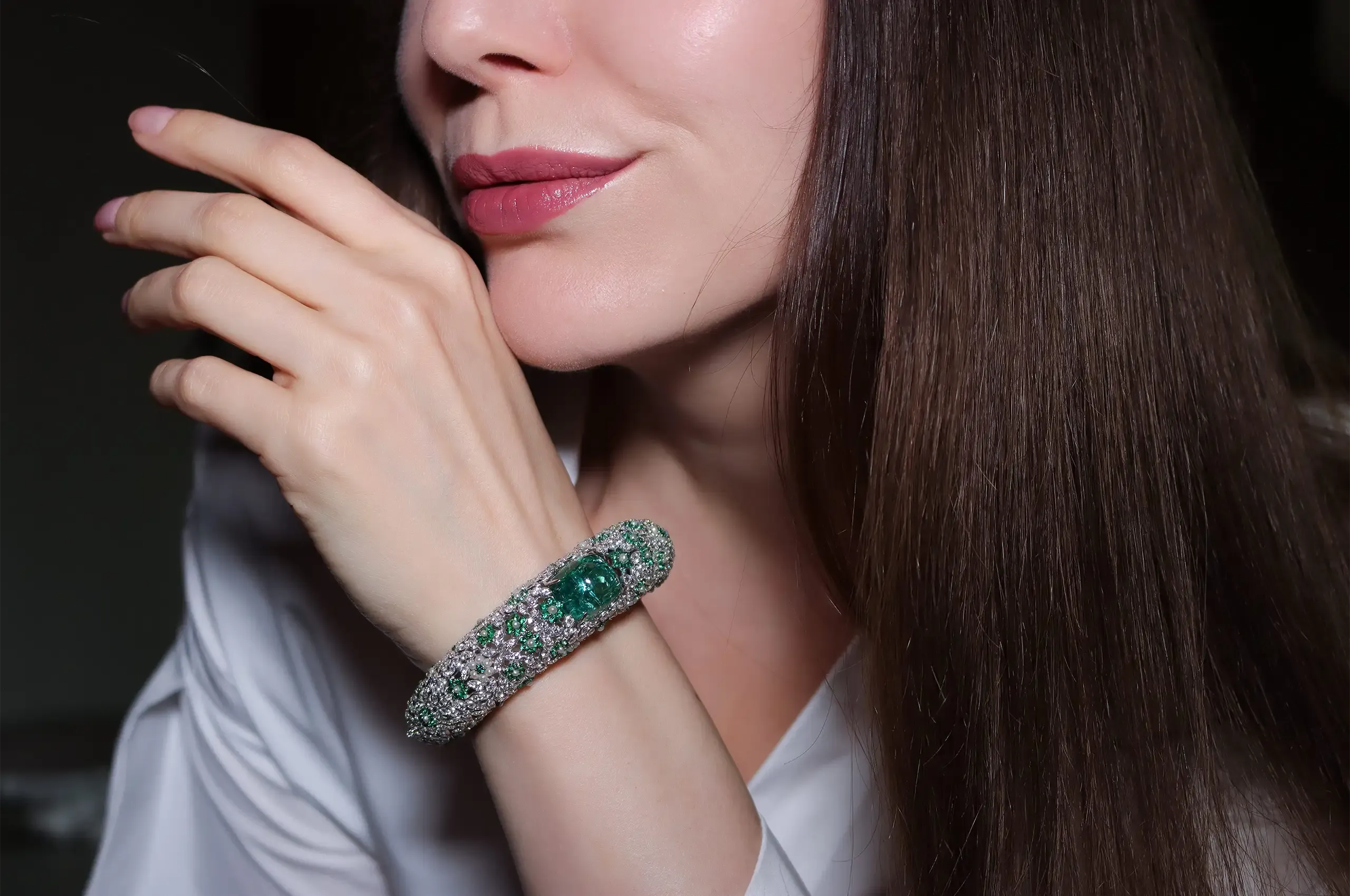
A final look at the bangle on the wrist, revealing its rounded profile and intricate detailing
KP: That sense of discovery continues in the jewellery. I've seen tanzanites, unheated yellow sapphires, green tourmalines, rubellites and several different types of emeralds.
SS: Coloured gemstones are fundamental to Jaipur Gems. We have access to an extraordinary palette, and I want our collectors to understand the differences. A Colombian emerald is different from a Panjshir emerald from Afghanistan. A rubellite can have extraordinary transparency. A tourmaline can offer colours that simply don't exist in the traditional precious-stone vocabulary. Part of our responsibility is education. Sometimes we will put different stones next to each other and explain their origins, colour characteristics, inclusions, rarity and value. Quite often we cut gemstones specifically for a design. That creates additional work, because traditionally jewellery is designed around available calibrated stones. We sometimes reverse that process. If the design requires a particular proportion, curve or geometry, we will cut the gemstone for the jewel. That is what being design-led means.
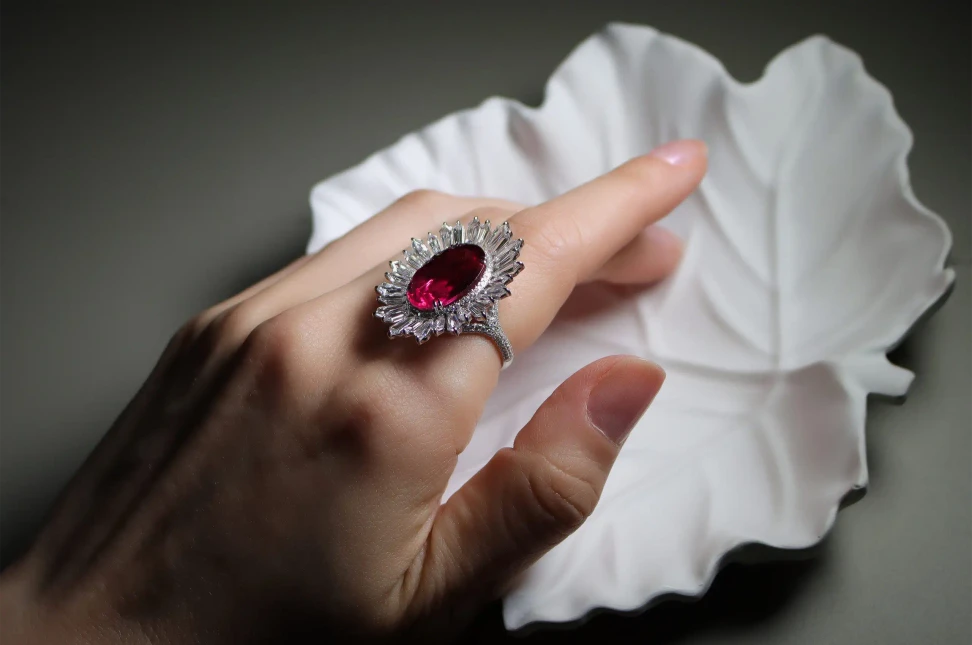
A magnificent 9.36-carat oval ruby is encircled by a radiating halo of 3.94 carats of diamonds in this 18K white gold ring by Jaipur Gems
KP: You mentioned rubellites. I have always noticed that Jaipur Gems has a particular affection for them.
SS: I simply love red. Rubellite has this wonderful combination of richness and transparency. Ruby can have extraordinary colour, of course, but rubellite allows you to create a very different visual experience, particularly when you find exceptional material in significant sizes. I like introducing collectors to gemstones they may not originally have walked into the store intending to buy. Discovery is an important part of Jaipur Gems.
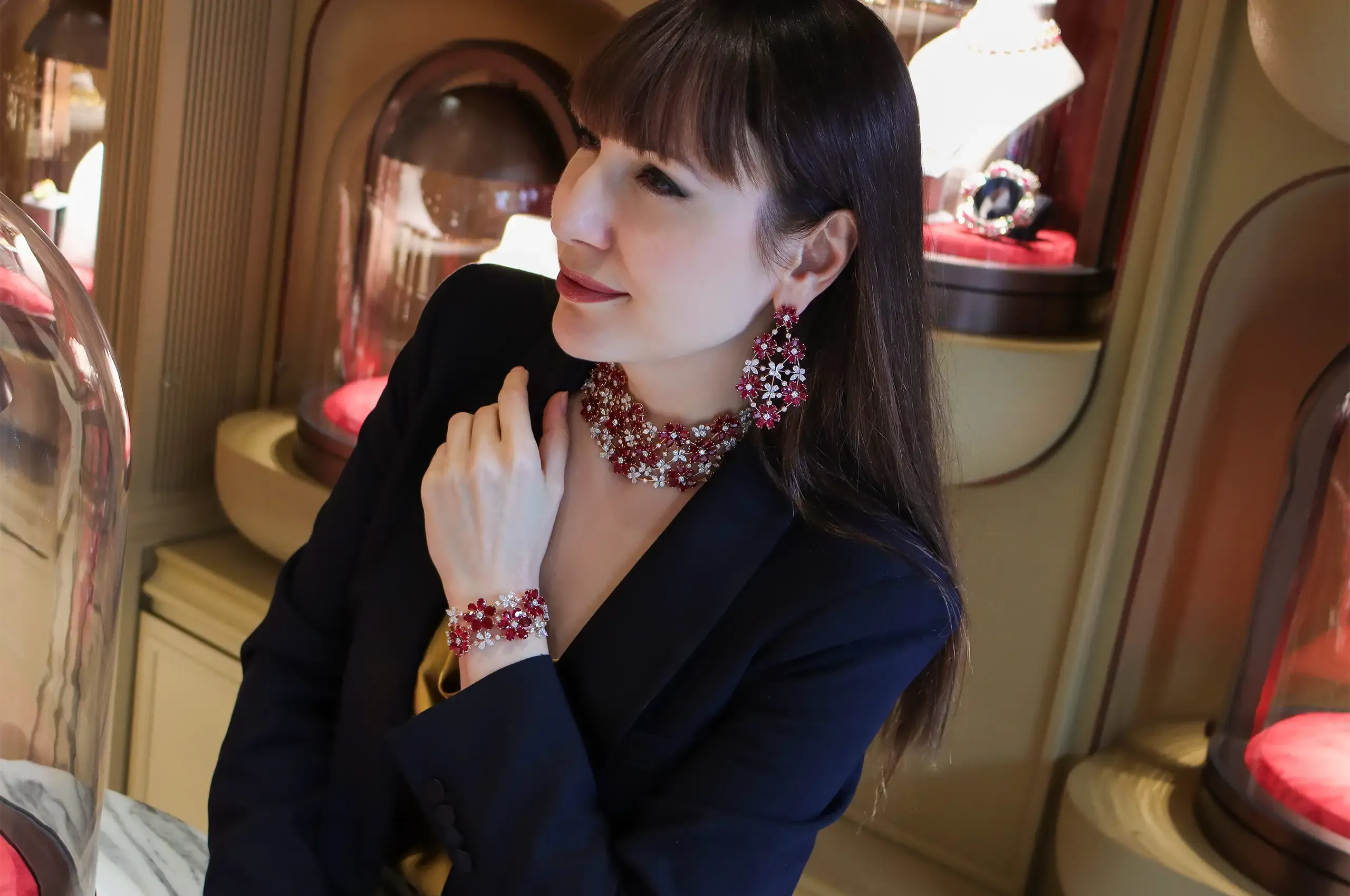
Katerina wears a floral suite by Jaipur Gems, featuring rubies and diamonds arranged into delicate flowers across a matching necklace, earrings and bracelet
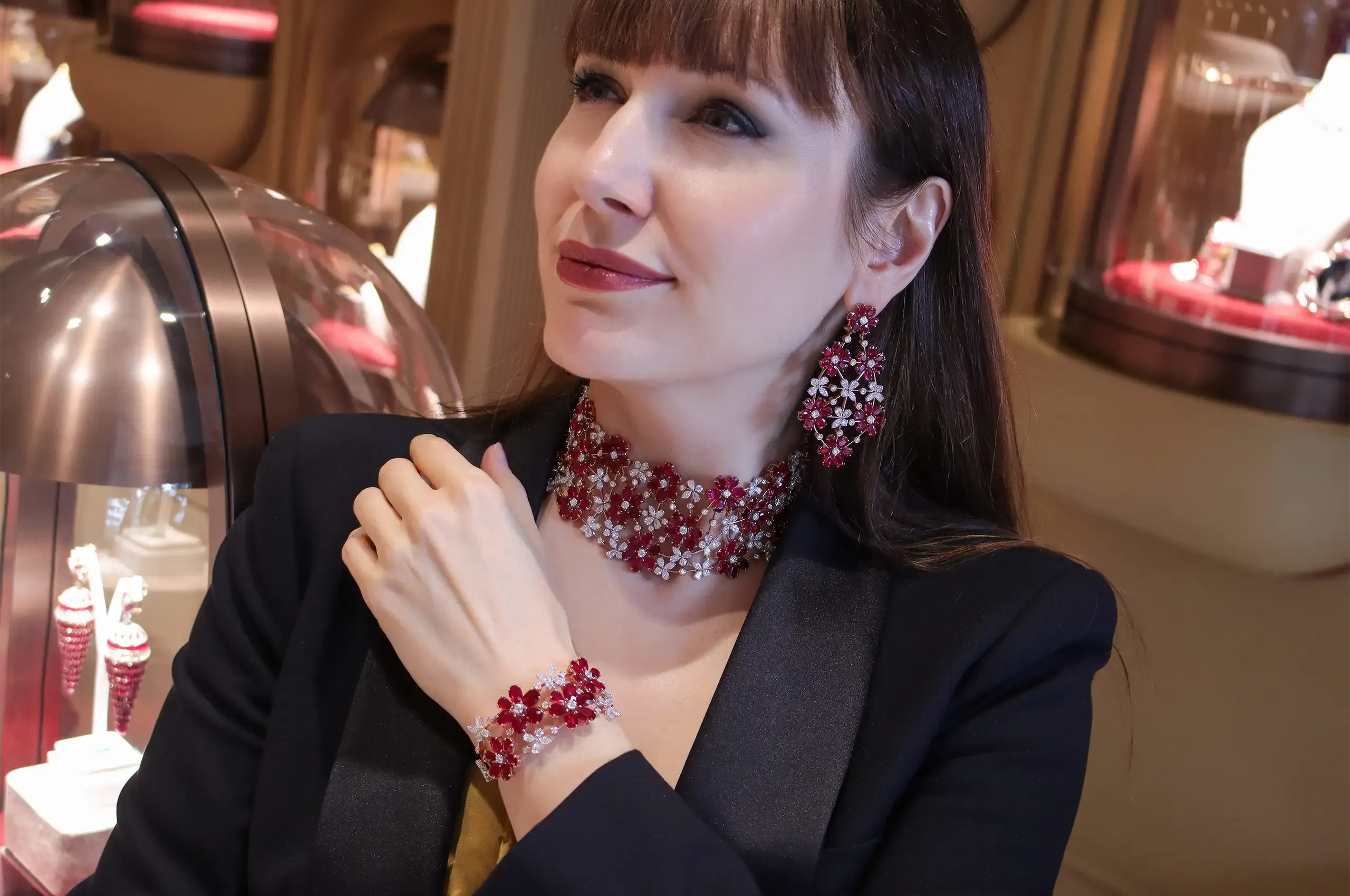
The Jaipur Gems necklace features 93.20 carats of rubies and 25.79 carats of diamonds, arranged in an intricate lattice of ruby and diamond flowers set in 18K gold
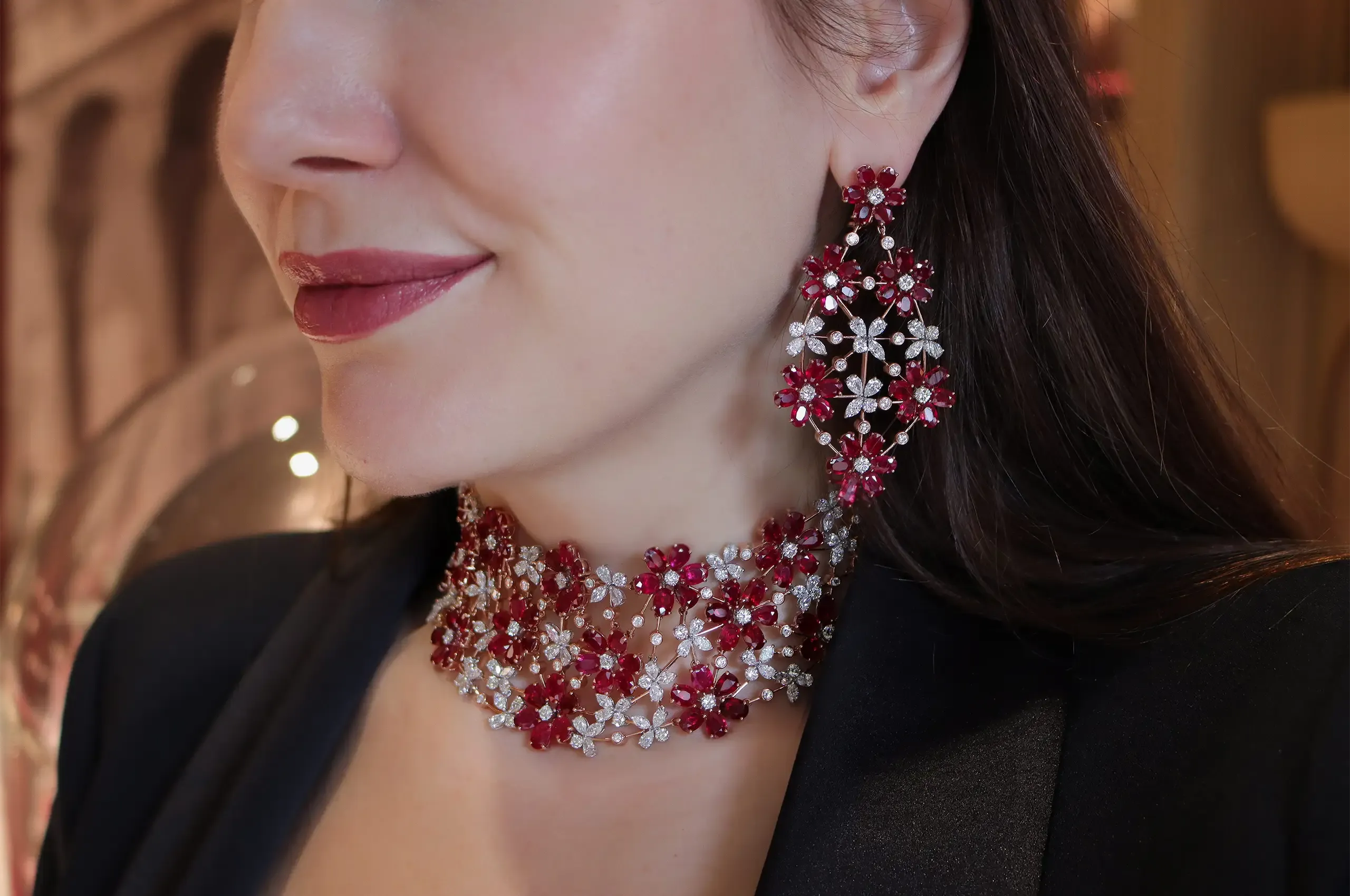
Ruby petals form delicate flowers in these Jaipur Gems chandelier earrings, featuring 33.85 carats of rubies and 7.91 carats of diamonds set in 18K gold
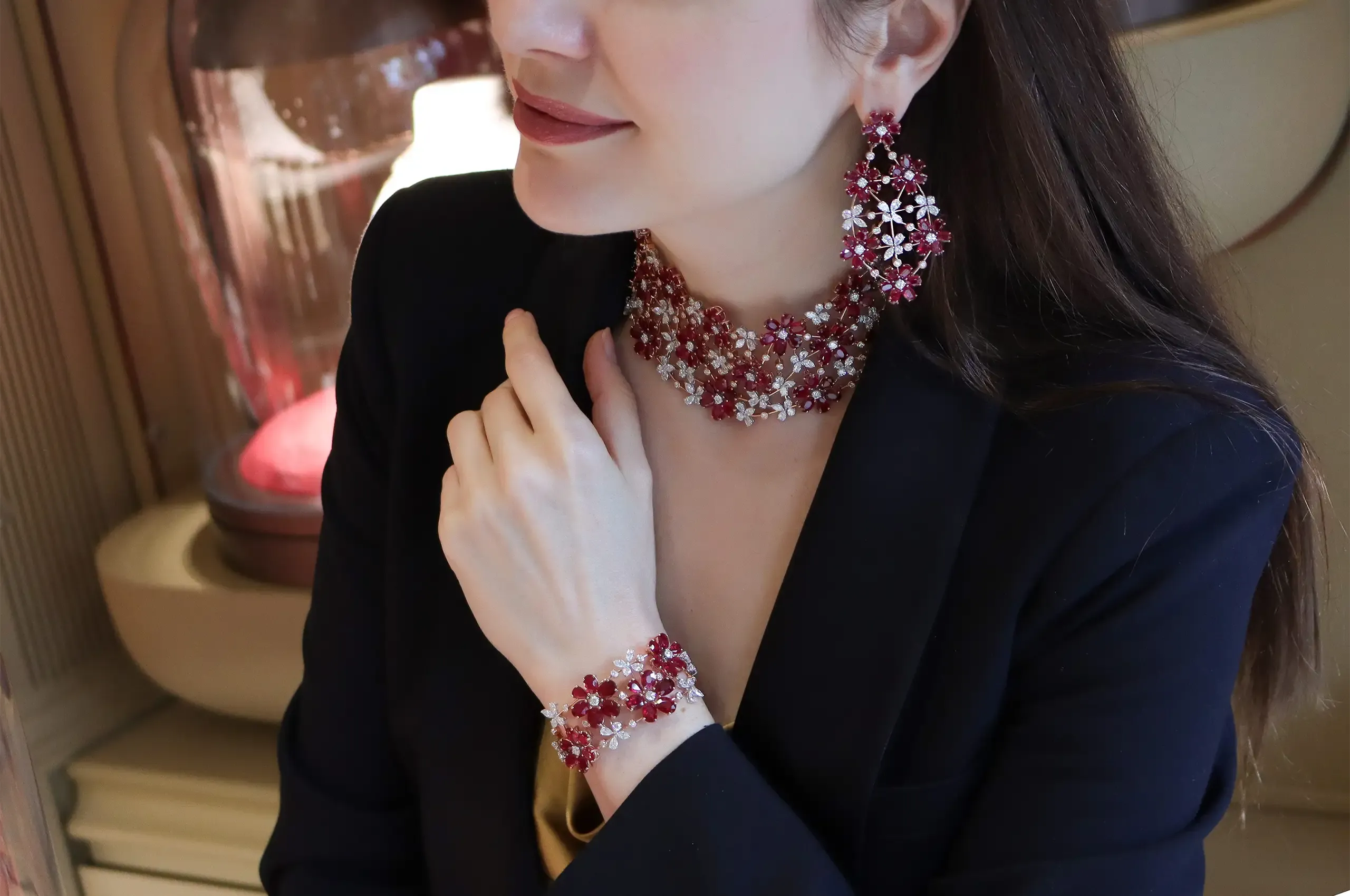
The matching Jaipur Gems floral bracelet features 27.15 carats of rubies and 5.37 carats of diamonds, completing the ruby and diamond suite
KP: Your bridal jewellery also feels noticeably more contemporary than traditional Indian bridal jewellery.
SS: Because the Indian woman has changed. Jewellery cannot only be designed for the wedding day anymore. Our bridal jewels tend to be lighter and more versatile, while still retaining the craftsmanship and cultural codes of Indian jewellery. We may use enamel on the reverse, for example, which preserves that beautiful Indian tradition of creating jewellery that is finished on both sides. But the woman buying the necklace today should be able to wear it again - to a cocktail evening, a birthday, an anniversary or an important dinner. There is also much more self-purchasing today. Women are building jewellery wardrobes for themselves. That changes the way we design.
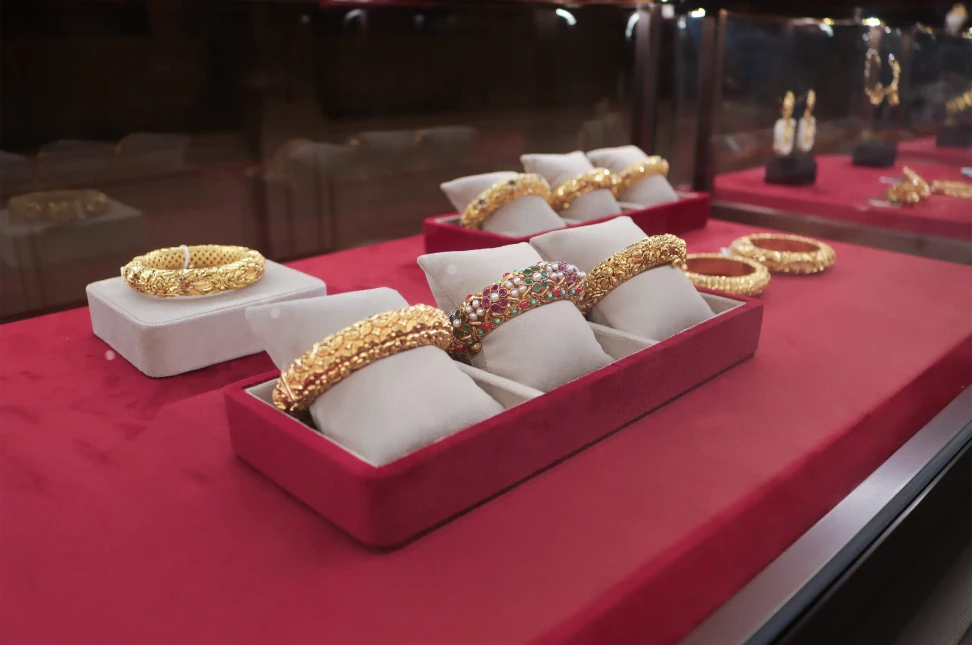
A selection of 22K yellow gold bangles at Jaipur Gems’ new Mumbai boutique, featuring intricate goldwork and colourful gemstone embellishments
KP: Perhaps that explains why there are relatively few conventional matching sets.
SS: Exactly. I don't think jewellery needs to be prescribed. You might buy an extraordinary choker from Jaipur Gems and already own earrings that work beautifully with it. Or perhaps you combine a contemporary diamond earring with an Indian necklace. That personal interpretation is much more interesting to me. We design individual pieces that can speak to one another without necessarily matching. The collector becomes part of the creative process.
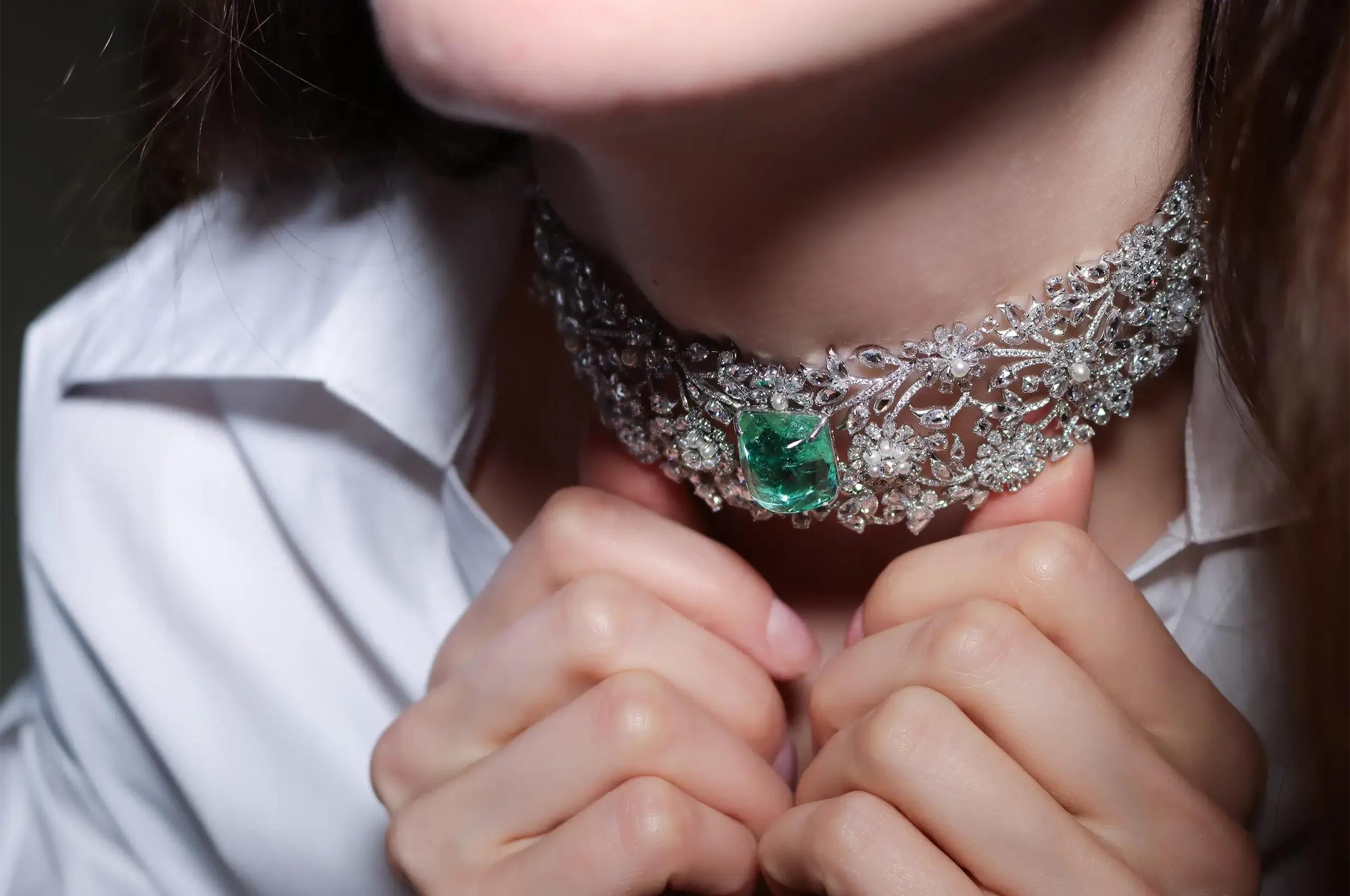
Jaipur Gems’ diamond and pearl floral choker, featuring a magnificent green tourmaline at its centre
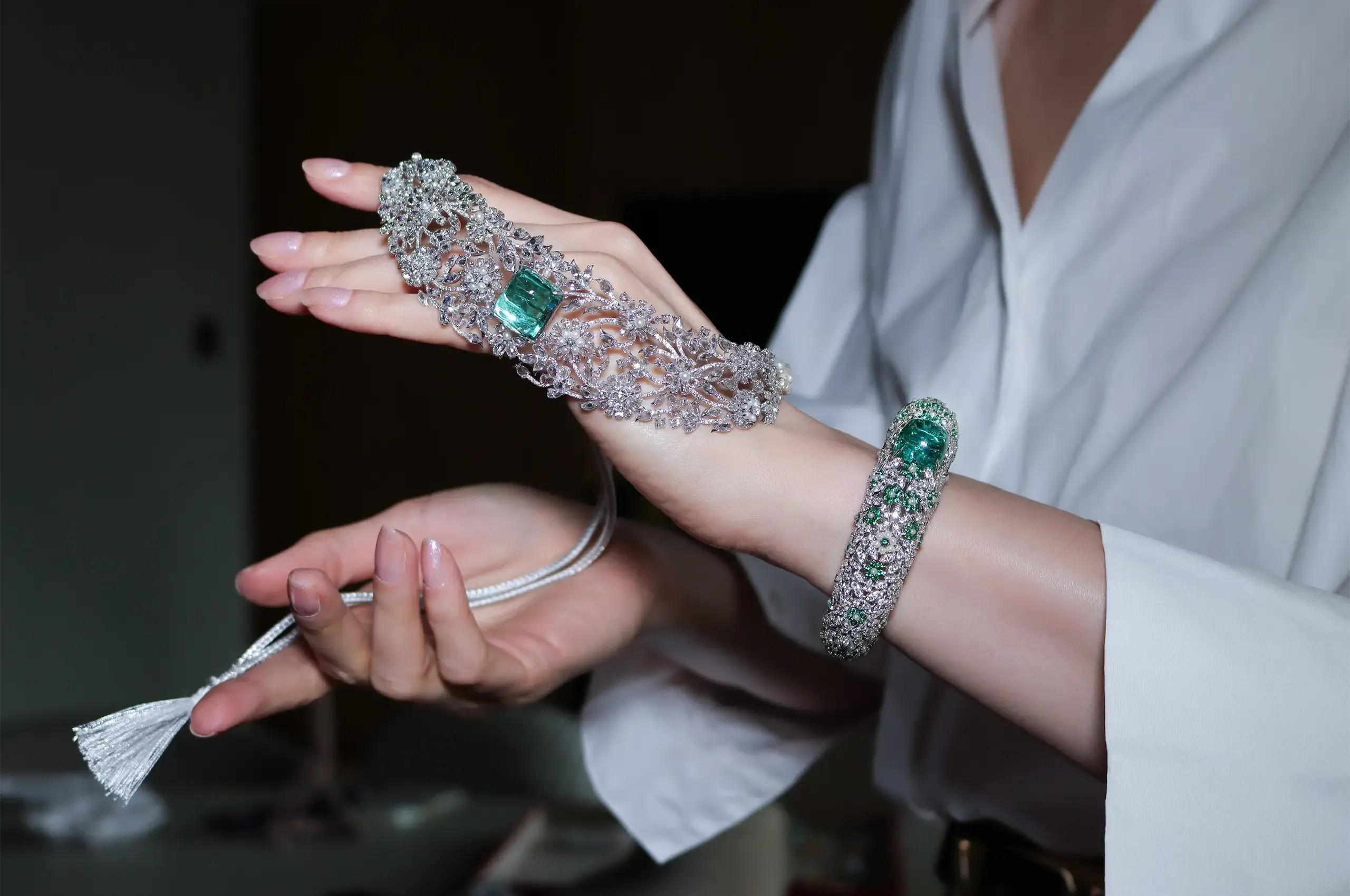
Two Jaipur Gems creations together: a floral diamond and green tourmaline choker and a green tourmaline, diamond, topaz and pearl bangle
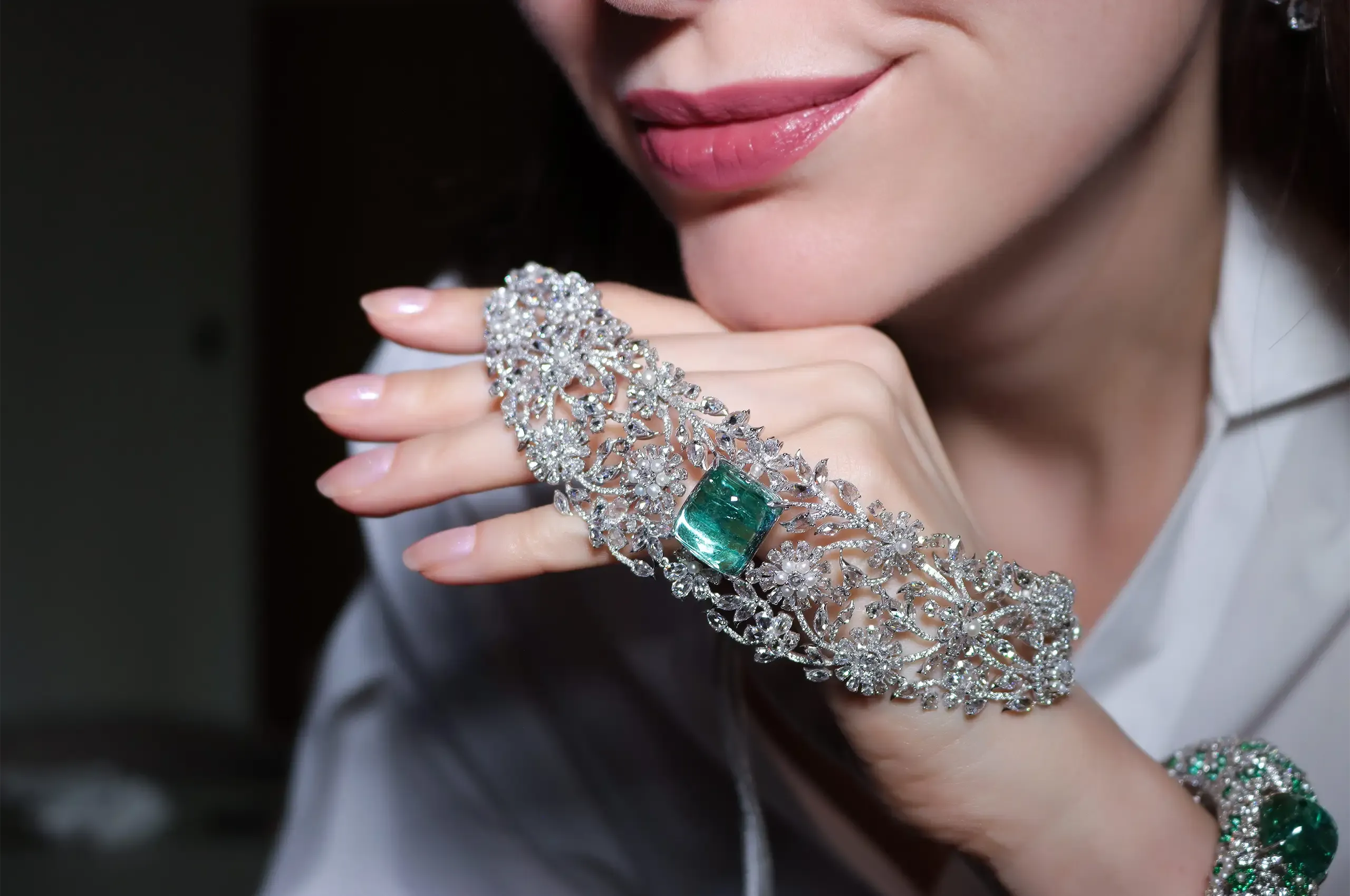
Delicate diamond-set flowers extend across the neckline in this Jaipur Gems choker, punctuated by a large green tourmaline
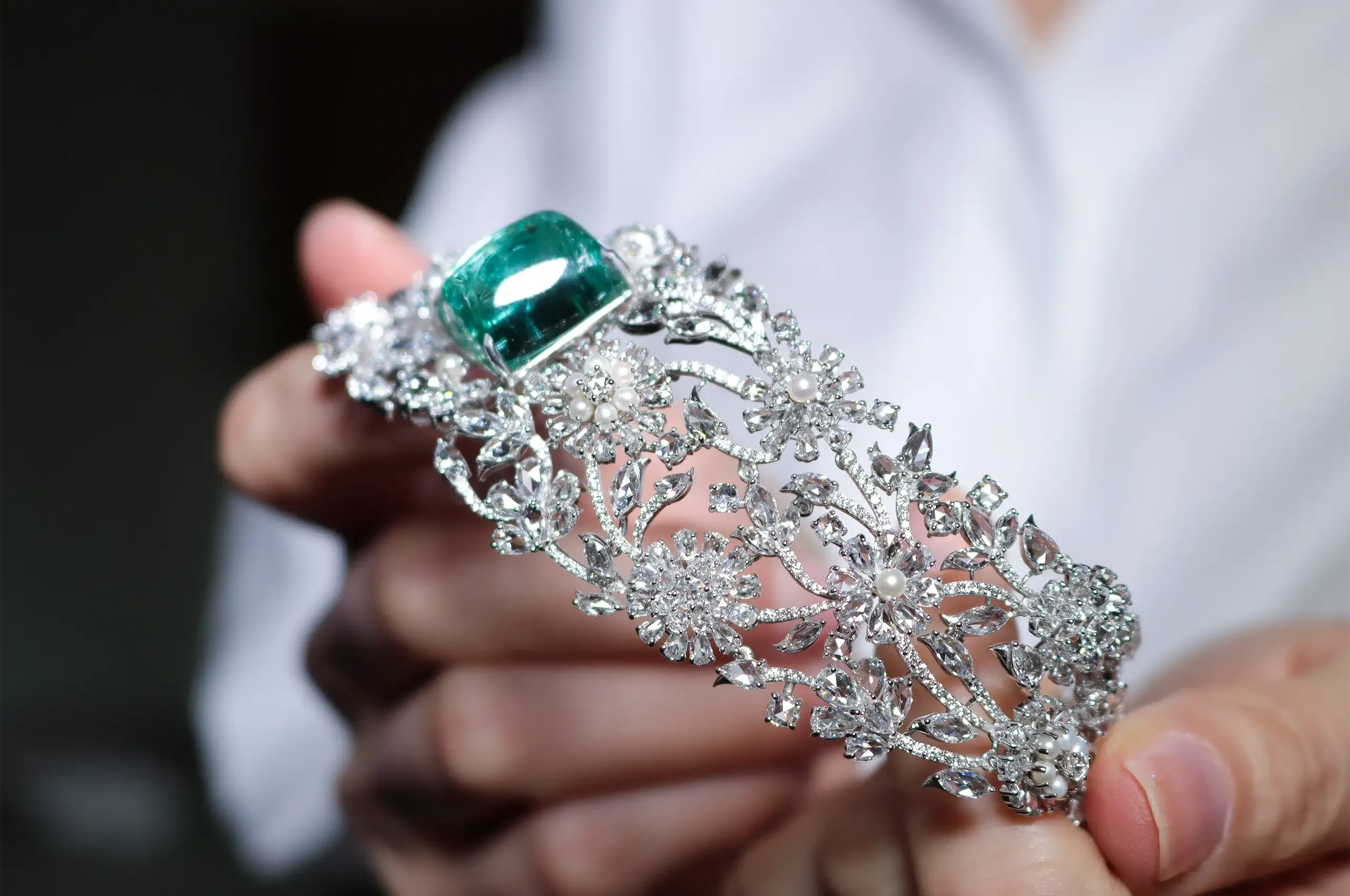
A close-up reveals the openwork floral design, with diamond-set leaves, tiny pearl accents and a vivid green tourmaline
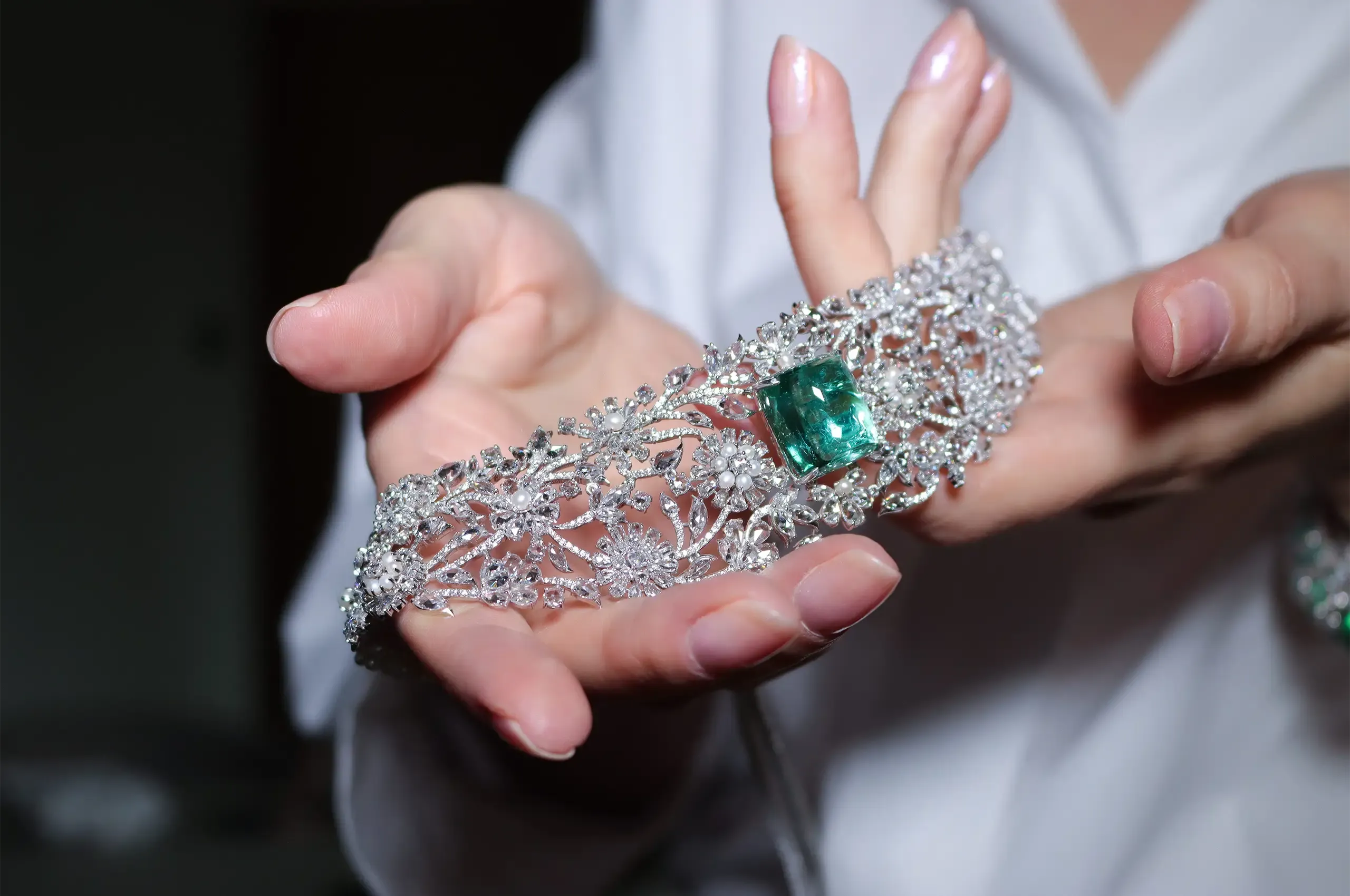
The diamond-set goldwork frames a beautiful green tourmaline
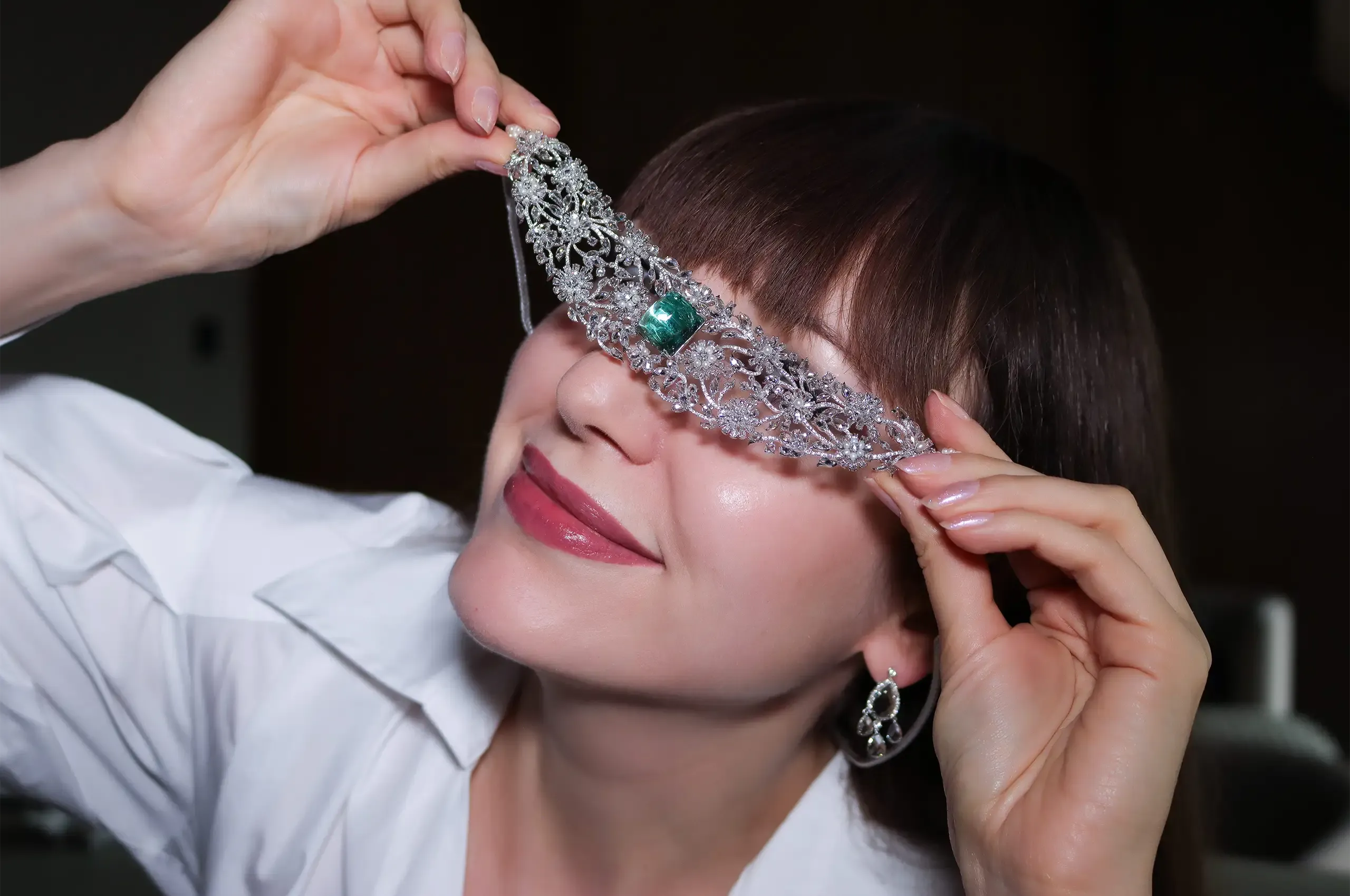
The central green tourmaline creates a striking focal point
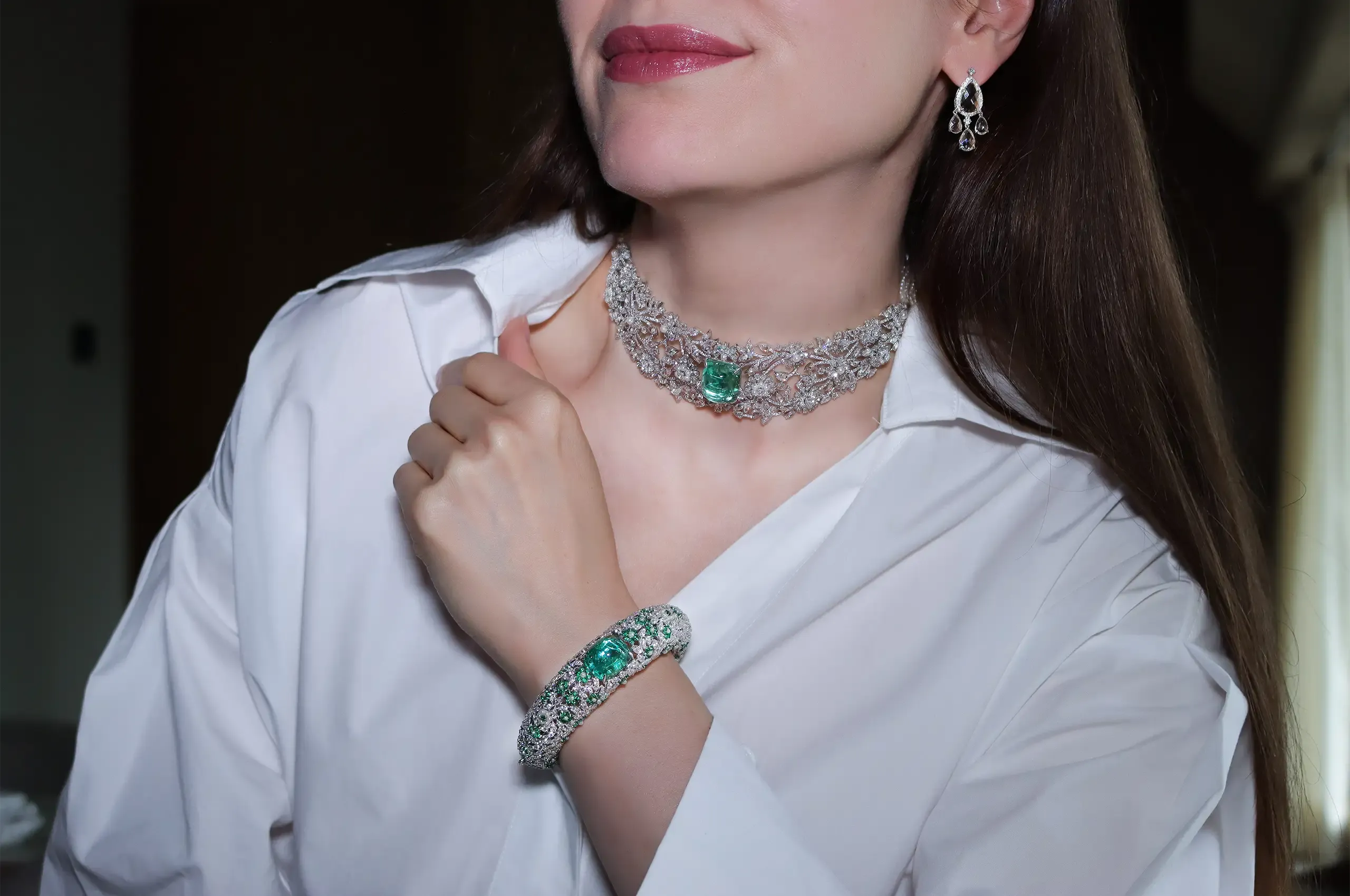
A final look at the Jaipur Gems green tourmaline choker, paired with a diamond bangle featuring 14 carats of diamonds and 37.27 carats of gemstones, including tourmaline and topaz, alongside pearls
KP: You keep returning to the word 'design.' Is that where you see the future of Jaipur Gems?
SS: Very much so. The next chapter of Jaipur Gems is about establishing the House as one of India's important design-led luxury brands. Our heritage gives us extraordinary credibility, but heritage by itself is not enough. You have to create something relevant for today and, more importantly, something that will still feel relevant decades from now. For me, that means continually developing our own design language. It means extraordinary gemstones, uncompromising craftsmanship and jewellery with a recognisable point of view. But increasingly it also means architecture, interiors, visual merchandising, objects, hospitality and experiences. I want someone to walk into a Jaipur Gems space anywhere in the world and recognise our sensibility - not because every store has the same marble or the same furniture, but because the thinking behind the design is recognisable. That distinction is very important to me.
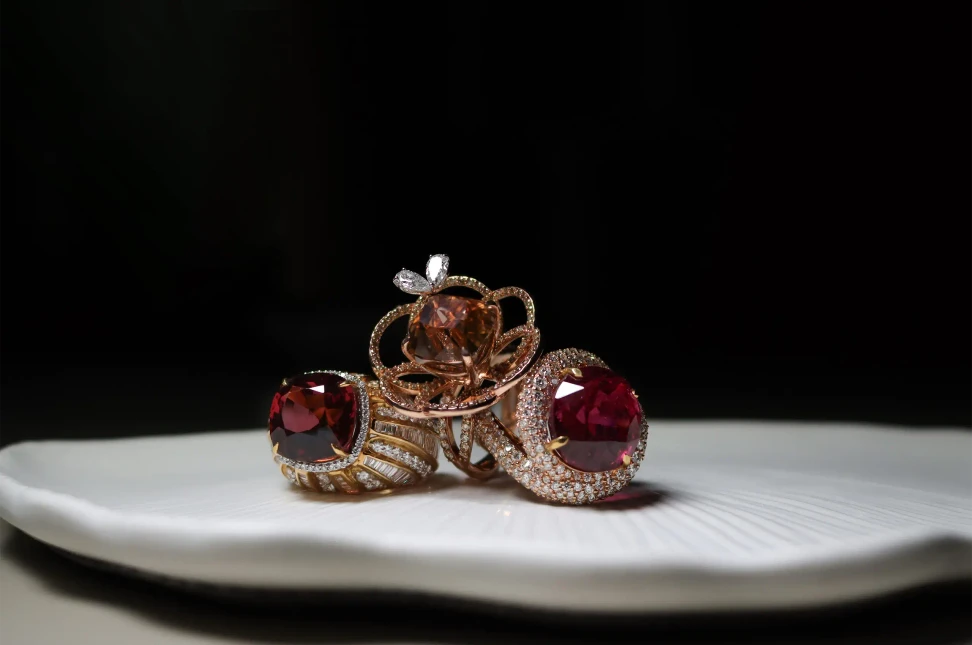
Three statement cocktail rings by Jaipur Gems, set with a 10.42-carat pink tourmaline, an 11.99-carat tourmaline and a 15.90-carat rubellite
KP: So, consistency for Jaipur Gems is not about replication?
SS: Precisely. For many brands, consistency means reproducing the same visual environment internationally. Our approach is almost the opposite. Consistency lies in the philosophy, not in repetition. Every boutique should have its own personality. Mumbai should feel like Mumbai. Dubai should have its own energy. Abu Dhabi should have another interpretation. Bangalore should evolve again. But underneath all of them you should recognise the same obsession with proportion, materials, craftsmanship, art, detail and discovery. That is our visual DNA.
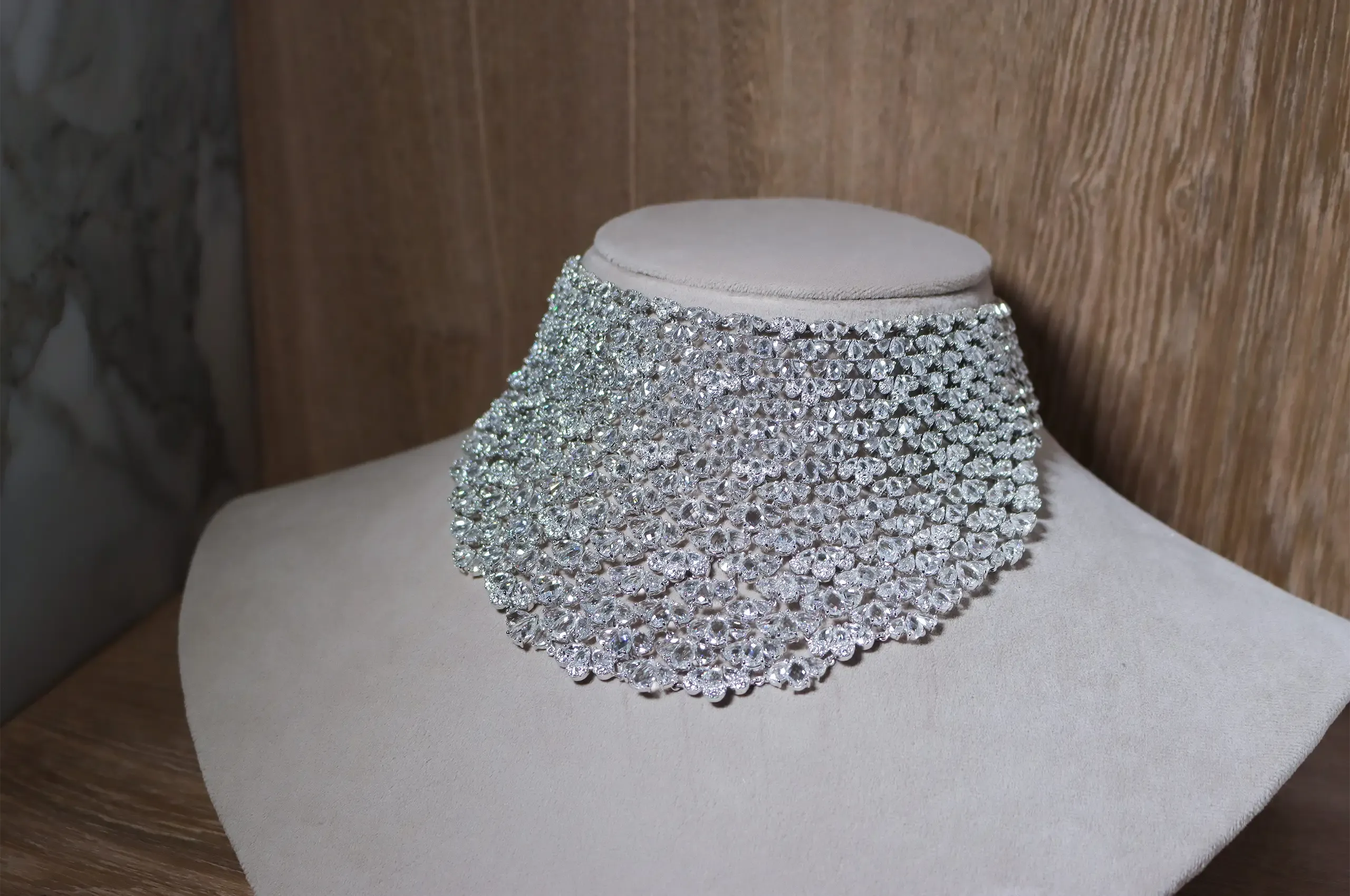
A spectacular diamond collar necklace by Jaipur Gems, featuring 1,002 diamonds totalling 87.85 carats
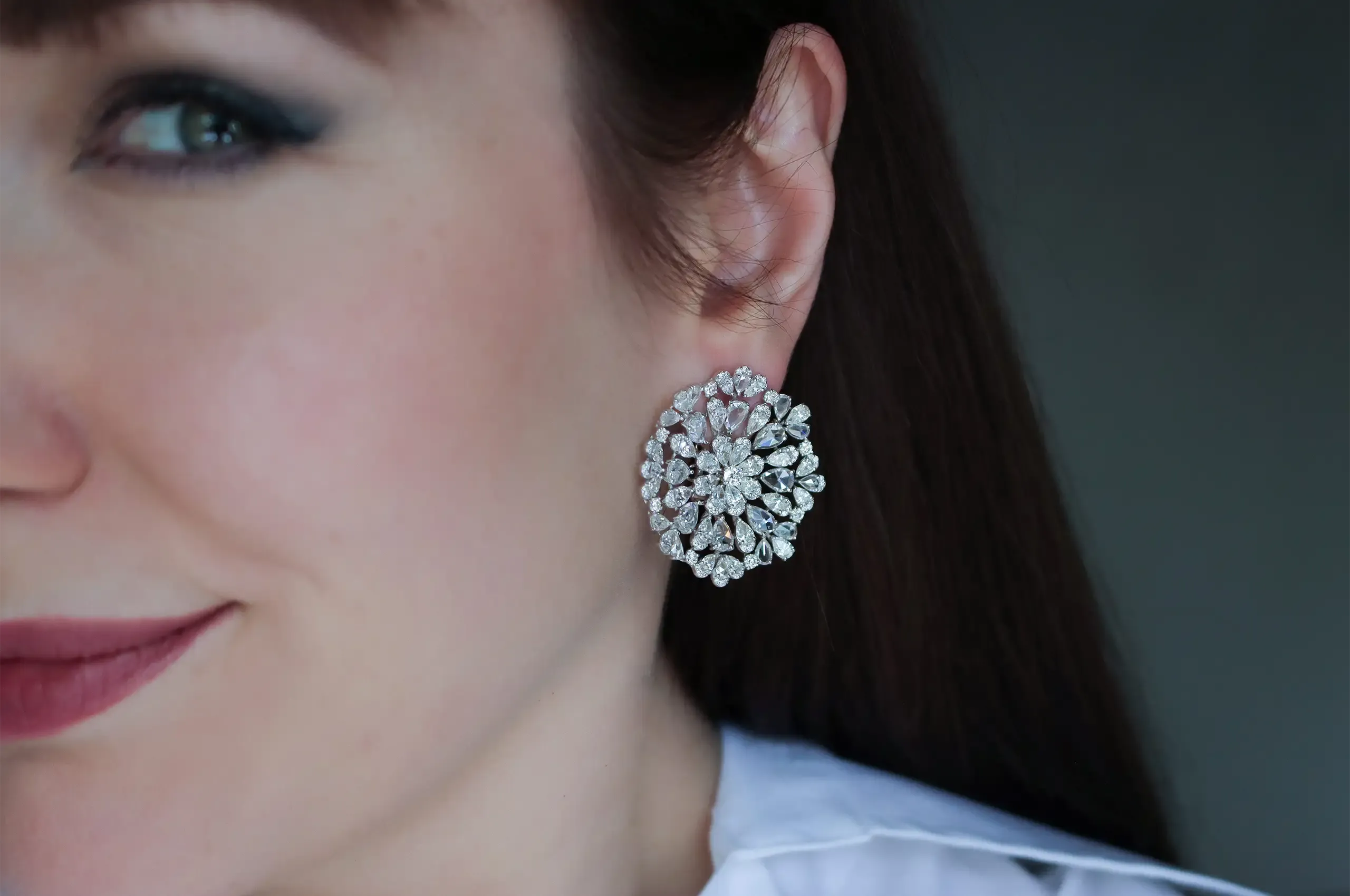
Jaipur Gems’ floral earrings feature 282 diamonds totalling 15.85 carats, arranged in an intricate circular design
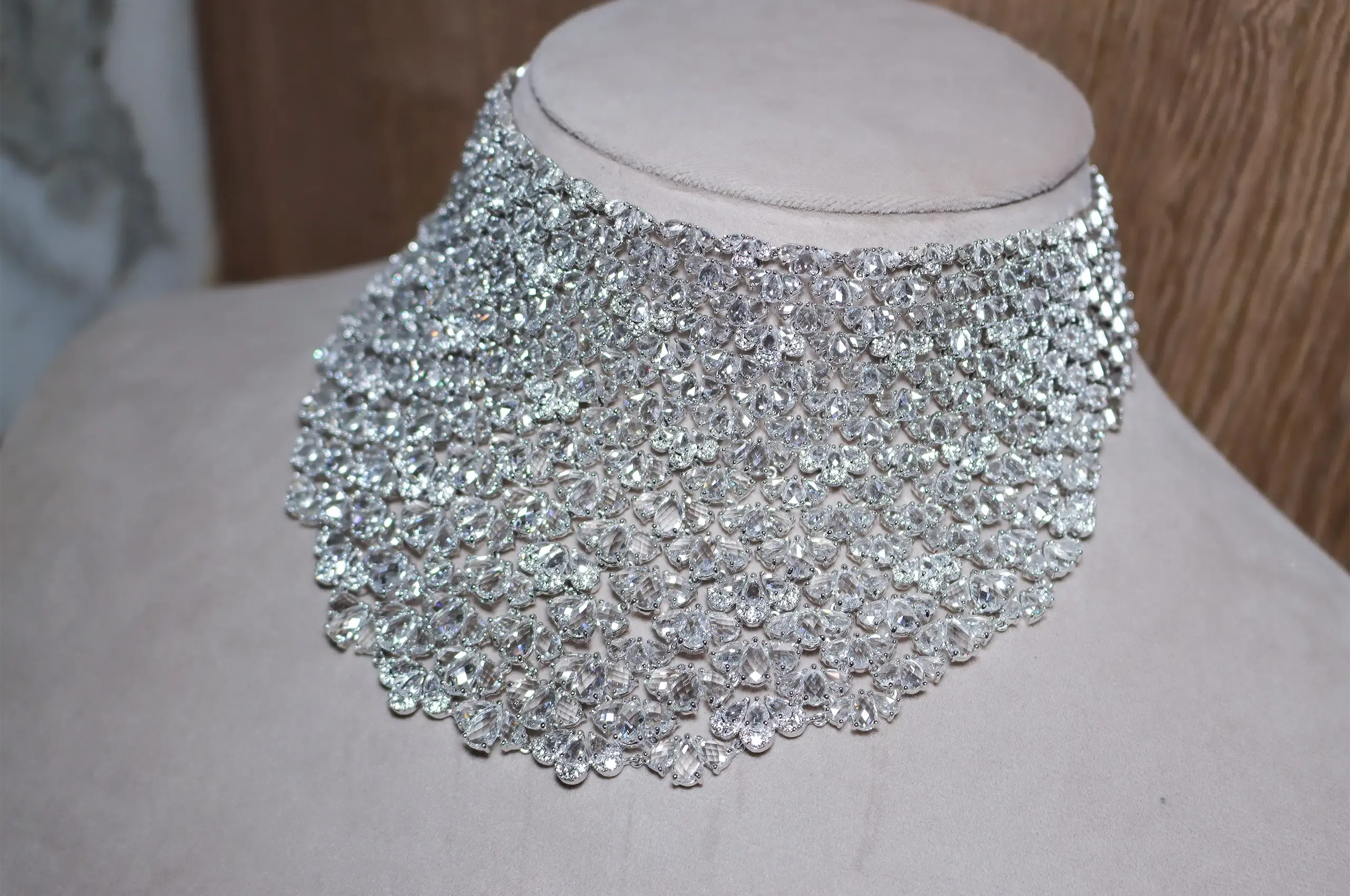
A closer look at the diamond collar necklace, with its diamonds forming an intricate, mosaic-like pattern
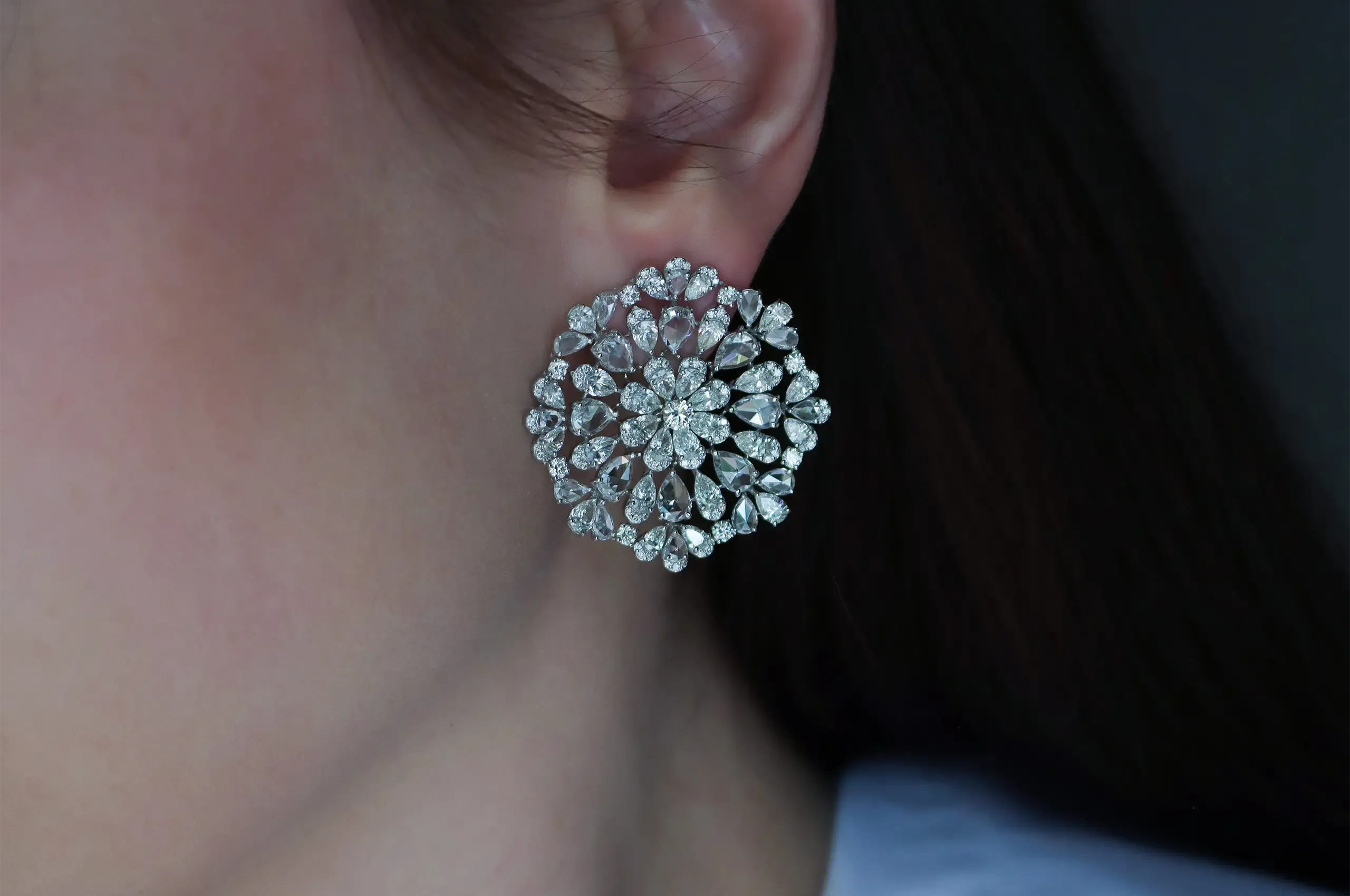
Brilliant-cut and rose-cut diamonds form delicate floral motifs in these Jaipur Gems earrings
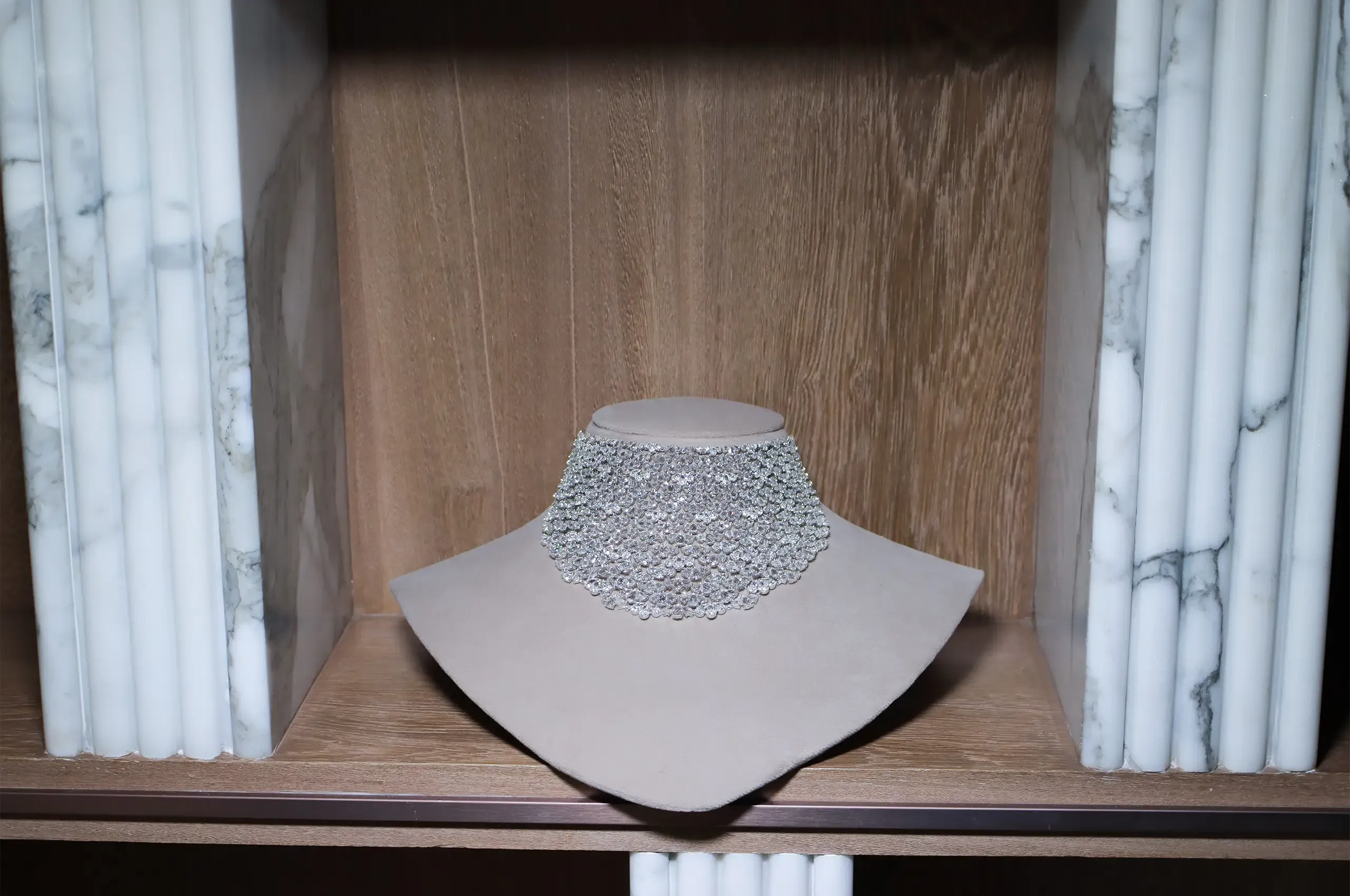
The 87.85-carat diamond collar necklace on display at Jaipur Gems’ new Mumbai boutique
KP: How does that philosophy influence your upcoming stores?
SS: Our upcoming three-storey Bangalore boutique is a good example of where Jaipur Gems is heading. It is not simply going to be three floors of jewellery showcases. We are thinking about the complete experience of spending time with the House. There will be different environments for discovering jewellery, more private spaces, a museum dimension, areas for special showcases and cultural programming, a piano and entertainment, and a garden cafe at the top. Why shouldn't a jewellery boutique also be somewhere you want to spend an afternoon? Luxury retail is changing. For the next generation of collectors, the relationship with a House cannot simply be transactional. It must be cultural, educational, social and emotional.
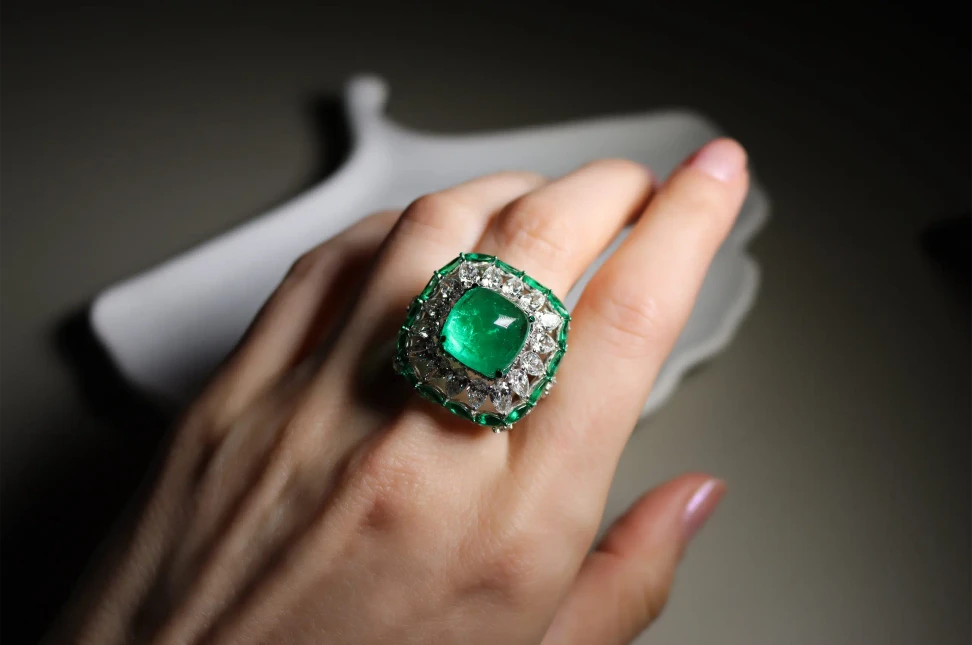
A statement cocktail ring by Jaipur Gems, set with a sugarloaf cabochon emerald from Afghanistan’s Panjshir Valley
KP: Does this mean Jaipur Gems is moving towards becoming a lifestyle brand?
SS: I would describe it slightly differently. I want Jaipur Gems to become a House of design. Jewellery remains our core expertise and will always be our most important expression. But our ability to design should be visible everywhere. When we create a boutique, I want people to notice the architecture. I want them to notice the furniture. I want them to remember a wall, a staircase, an artwork, a garden, a material or the way a room made them feel. The same creative discipline that goes into designing an exceptional jewel should go into designing the world surrounding that jewel. Ultimately, the store itself becomes a piece of Jaipur Gems design.

Katerina trying on Jaipur Gems’ rose-cut diamond earrings, featuring delicate pear-shaped drops
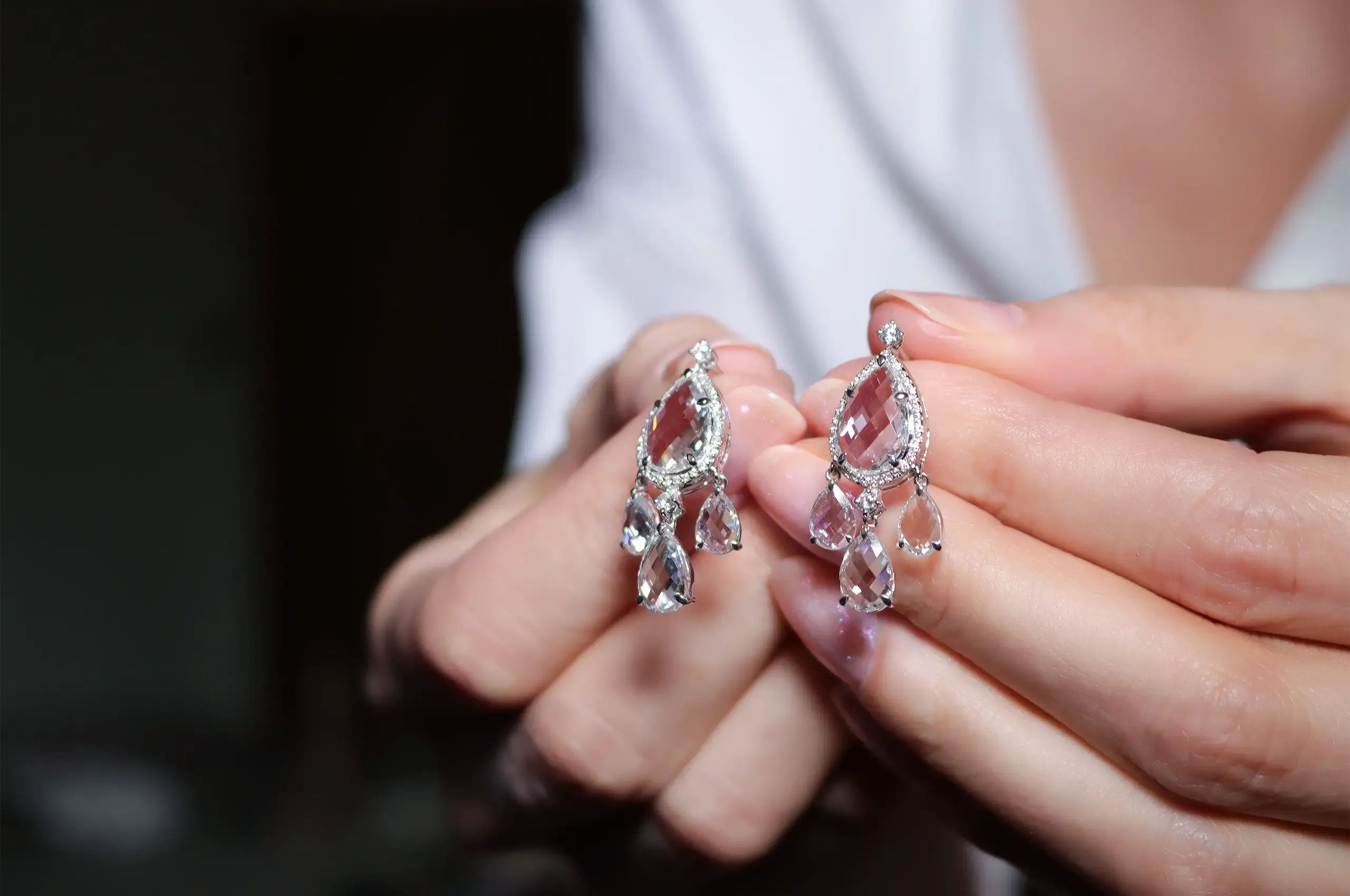
Jaipur Gems drop earrings, set with rose-cut diamonds surrounded by brilliant cuts totalling 7.29 carats

Katerina wearing Jaipur Gems’ diamond earrings, with their teardrop design and trio of dangling rose-cut diamonds
KP: And what remains unchanged as Jaipur Gems evolves?
SS: Authenticity. We will continue using exceptional natural gemstones. I personally remain deeply involved in selecting them. We will continue working with excellent diamonds and uncompromising craftsmanship. And we will continue making jewellery slowly and thoughtfully. We are not trying to become a mass luxury brand. I would rather make fewer extraordinary things for collectors who understand them. Our ambition is not simply to become bigger. Our ambition is to become more distinctive.
By the end of my visit, the reason Jaipur Gems refuses to create identical boutiques becomes clear. Siddhartha Sacheti is not treating retail architecture as packaging for jewellery. He sees architecture, jewellery, gemstones, interiors, art and hospitality as different expressions of the same creative philosophy.
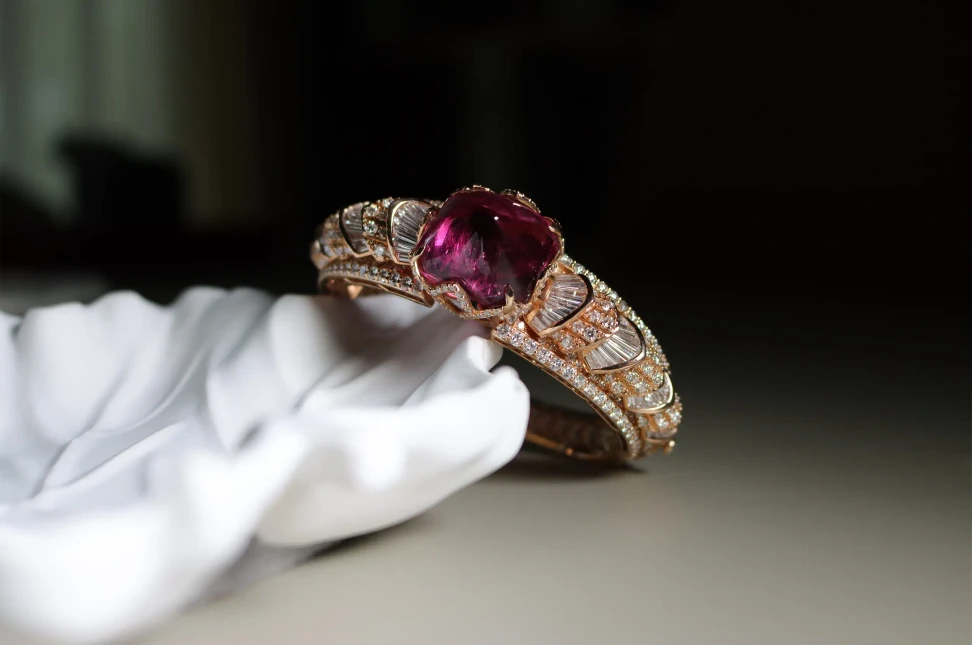
Jaipur Gems bangle featuring a 28.16-carat sugarloaf cabochon rubellite, framed by baguette-cut and brilliant-cut diamonds totalling 8.98 carats, set in 18K gold
A Jaipur Gems boutique therefore does not need to resemble another Jaipur Gems boutique. Its identity comes from something deeper. Each space begins with a different story, but the vocabulary remains consistent: exceptional materials, craftsmanship, curiosity, cultural references, unexpected juxtapositions and an almost obsessive attention to detail. The result is a luxury House increasingly defining itself not simply through the jewels it creates, but through the world it creates around them.
The jewel is no longer simply the object inside the showcase. The jewel, the showcase, the room, the architecture and the experience are becoming one continuous act of design.


WORDS
Katerina Perez Is a jewellery insider, journalist and brand consultant with more than 15 years’ experience in the jewellery sector. Paris-based, Katerina has worked as a freelance journalist and content editor since 2011, writing articles for international publications. To share her jewellery knowledge and expertise, Katerina founded this website and launched her @katerina_perez Instagram in 2013.
RelatedArticles
Discover the brand: the story from various angles.