GemGenève 2026: Extraordinary Statement Gems & Giant Stones
In the time I have been writing about jewellery, I have held stones that made me gasp. I must say, there is something humbling about standing in front of a gemstone so large that it rewires your understanding of what nature can produce. At this edition of GemGenève, I found myself repeatedly silenced, and not by one gem, but by a whole array of them that I want to tell you more about in this article.
The GemGenève fair usually opens with a VIP day and this year I arrived just on time to start my discoveries before the general public had access to the exhibition’s treasures. Right off the train from Paris, I made my way to the fair to immerse myself in the world of fine jewellery and precious gemstones selected for their beauty and uniqueness. Last year, I spotted a trend for statement gems, and it made me wonder if I would see a continuation of it this year.
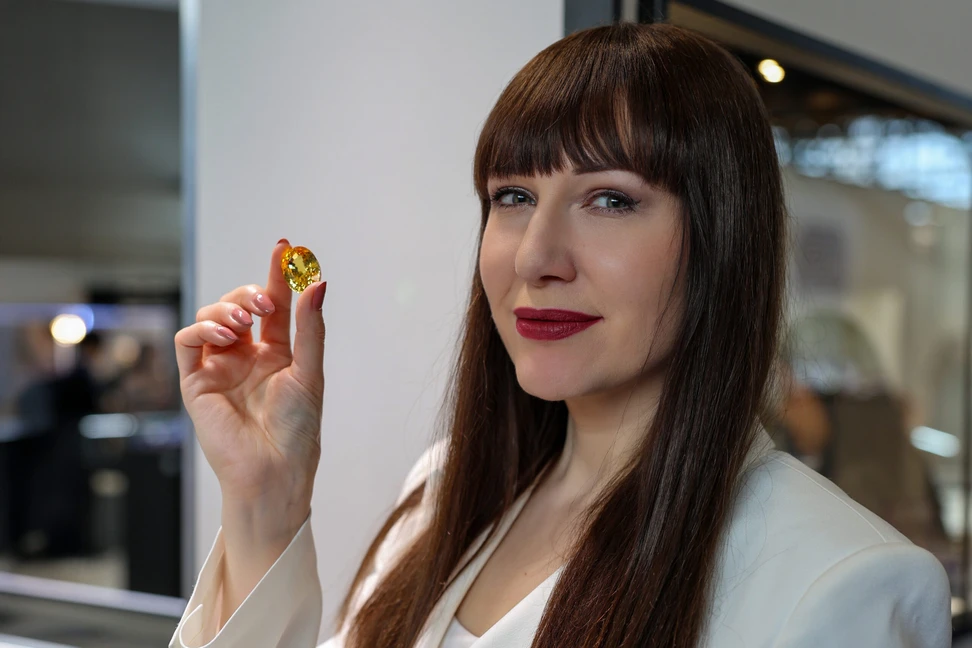
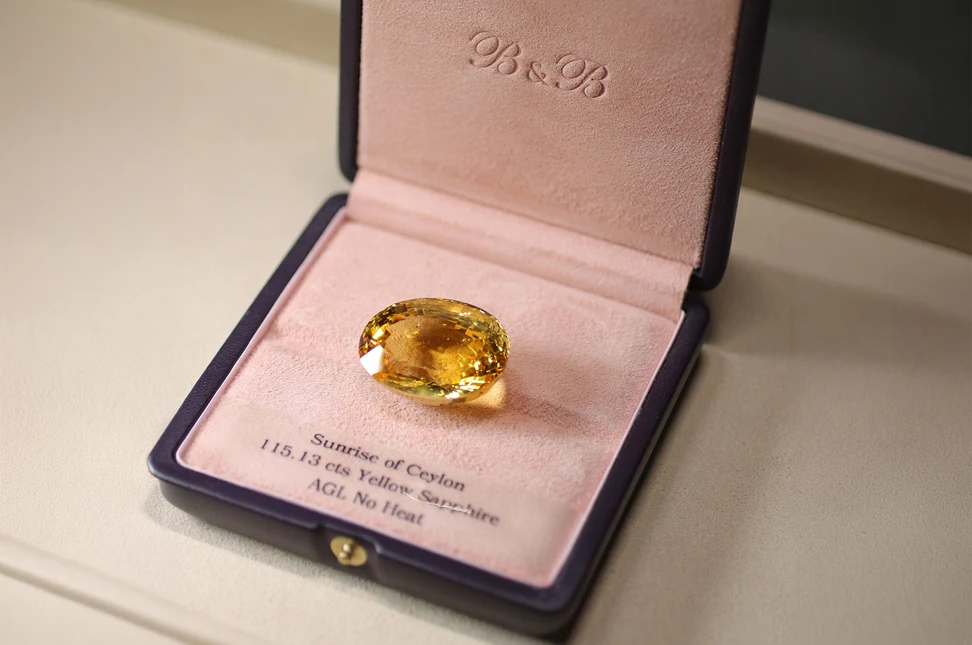
The 115.13ct Sunrise of Ceylon at B&B Gems - one of the supersized gems that Katerina encountered at GemGenève
What I ended up discovering is not gemstones that one would simply set in a cocktail ring, but the ones that anchor collections, fill museums, and remind us why size, in certain cases, is its own category of rarity. Can you imagine my excitement when, almost as soon as I entered the main hall of GemGenève, I saw a magnificent layout of statement gemstones, each over 100 carats, arranged as a necklace at Filippo G&G. Let’s start my review with them.
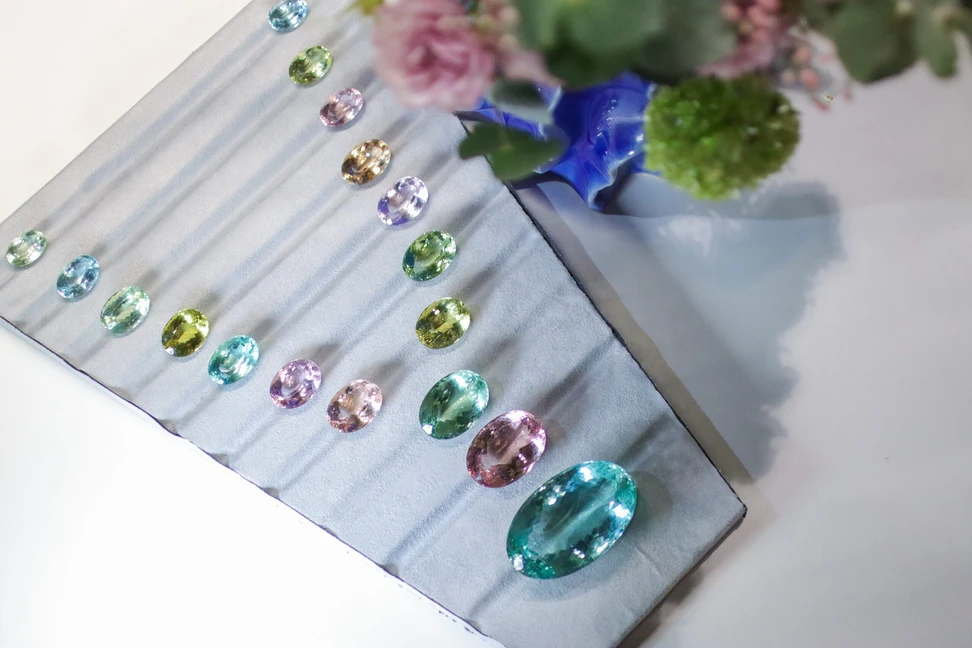
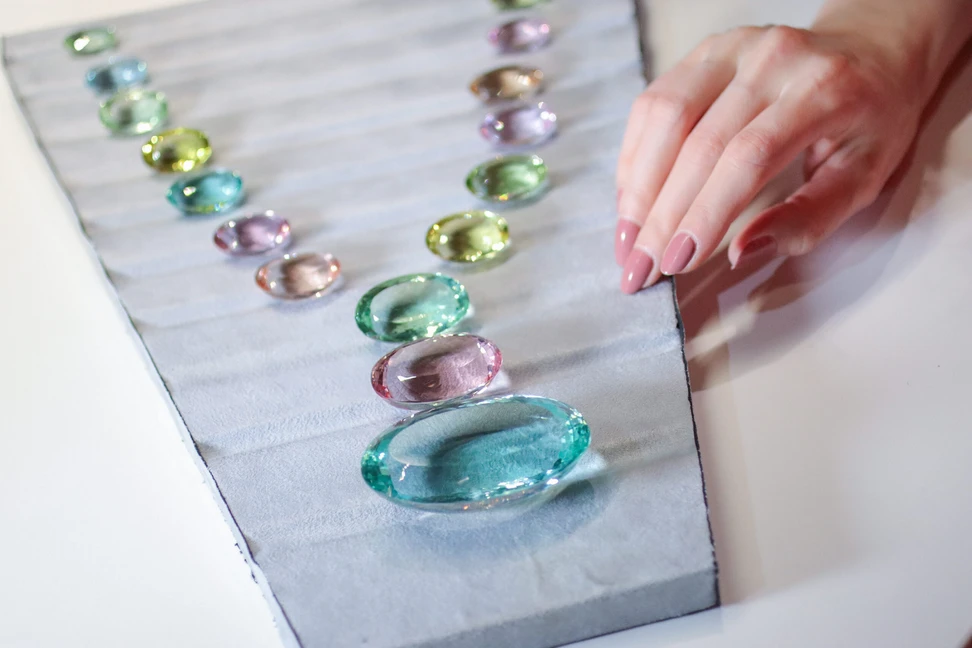
17 oval beryls at the Filippo Gay booth – aquamarines, morganites, heliodors and green beryls – totalling an incredible 1,590ct
A Beryl Suite That Plays Like a Symphony
At the booth of Filippo Gay, 17 oval beryls from Brazil were laid out like a pastel rainbow. Almost every colour that exists in the beryl family was gathered as a single artistic arrangement: aquamarines, morganites, heliodors and green beryls. Now, you have to sit down because I am ready to reveal their total weight… an incredible 1,590 carats!
Let me be clear: this is not a parcel of commercial stones that you can find at various exhibitions. This is a carefully curated suite that took 5 years to put together, making it a collector's vision made real. Each beryl on its own would be notable, but 17 of them, matched in cut, arranged by colour, the centre stone weighing 611.62 carats alone? This is not a display; it is an installation made by Mother Nature and refined by a human hand.
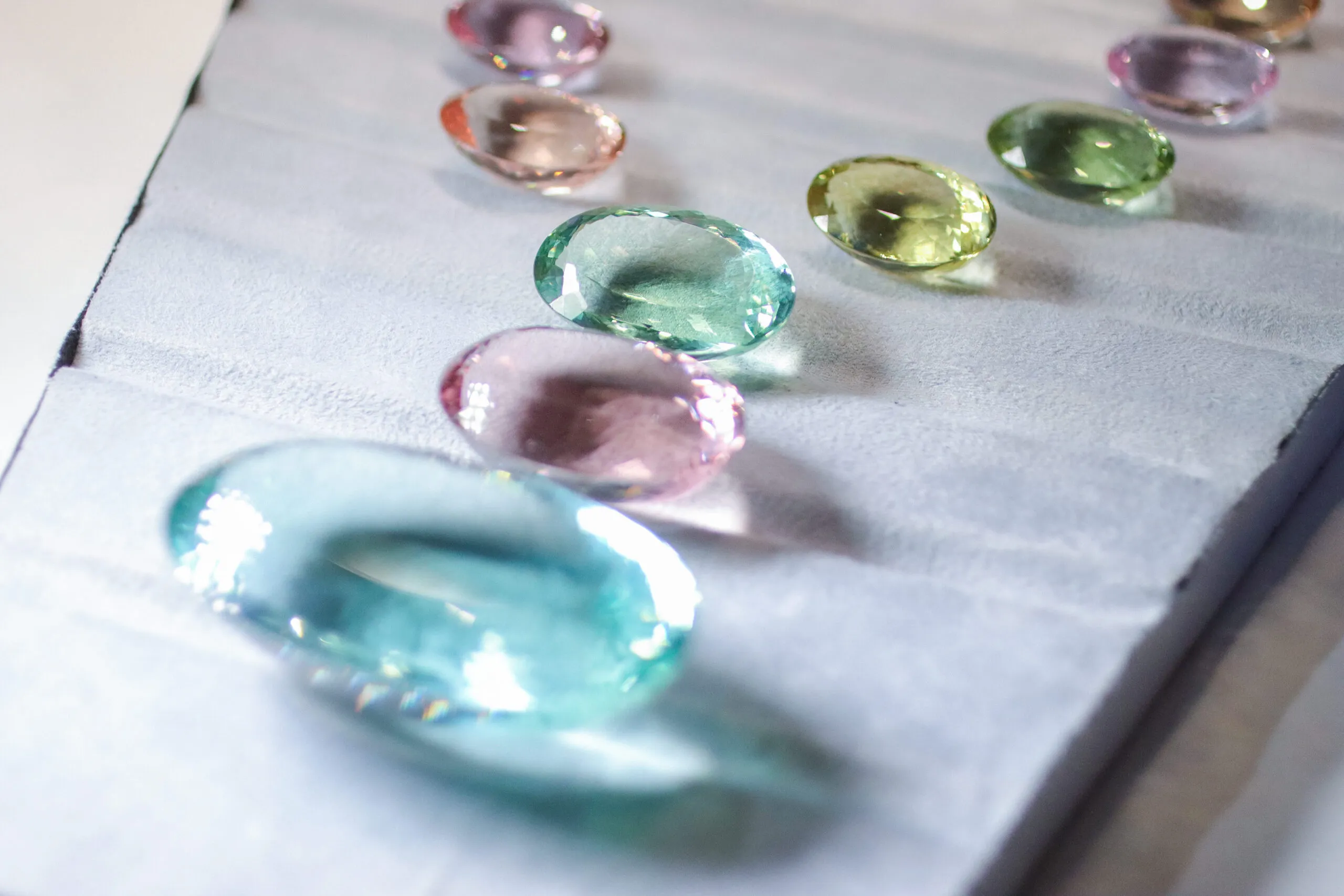
The centre aquamarine alone weighed 611.62ct
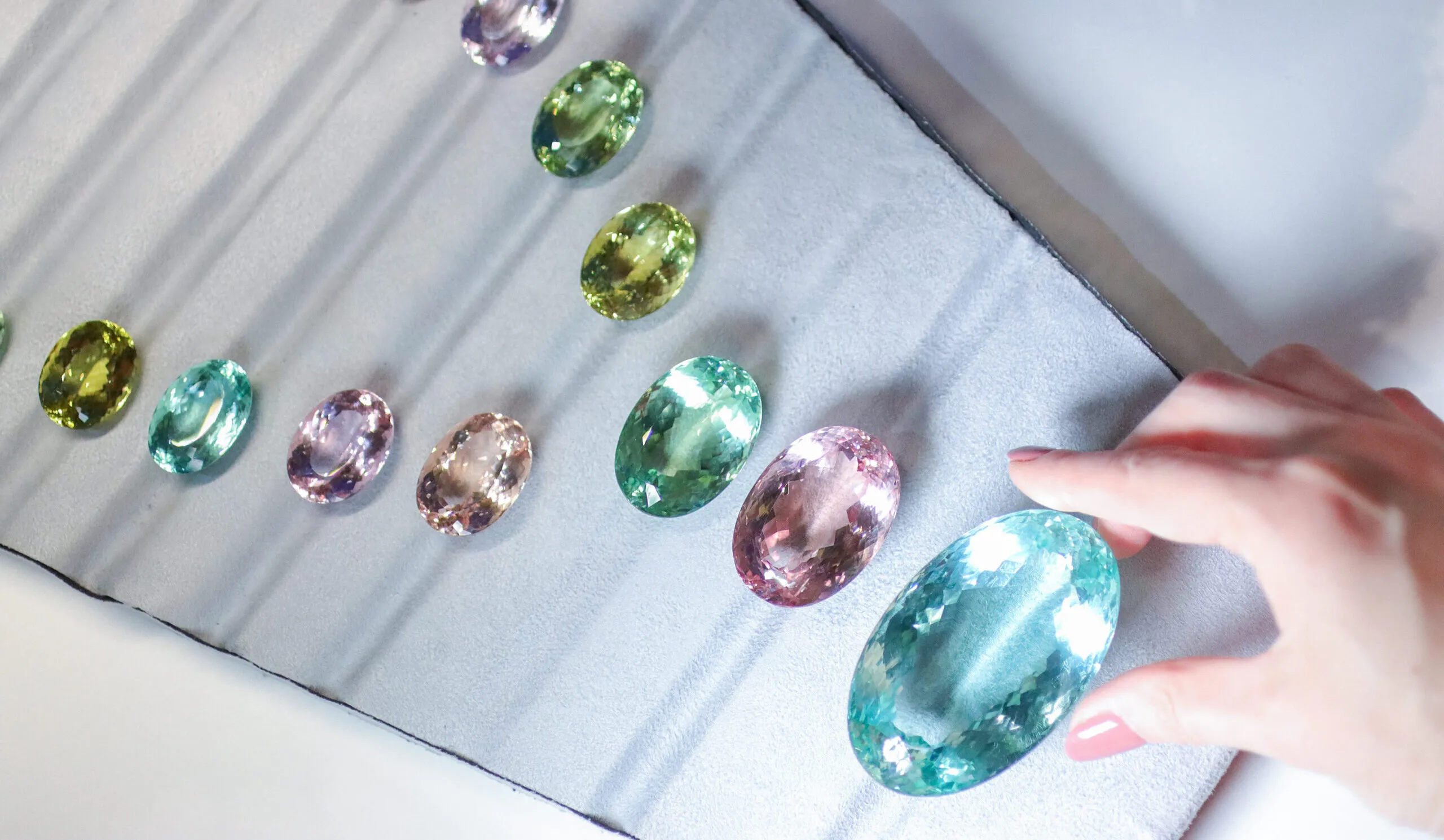
At the booth of Filippo Gay, 17 oval stones from the beryl family – aquamarines, morganites, heliodors and green beryls – were laid out like a pastel rainbow
Filippo G&G's founder is known for having statement tourmalines and beryls in his collection, but here he has surpassed himself. He understood something important: sometimes the statement is not about the single stone, but about the chorus. And this chorus of beryls, singing in pastel harmonies, was one of the most unforgettable sights at GemGenève.
Filippo G&G's founder is known for having statement tourmalines and beryls in his collection, and here he has surpassed himself
Three Morganites That Redefine ‘Large’
My love affair with large beryls continued at RMC Gems, which is known for having a wide selection of gemstones with impressive carat weight: rubellites, tanzanites, aquamarines and many others. It was hard to choose what gemstone to share with you, until my eyes met morganites that stood out for their saturation of colour.
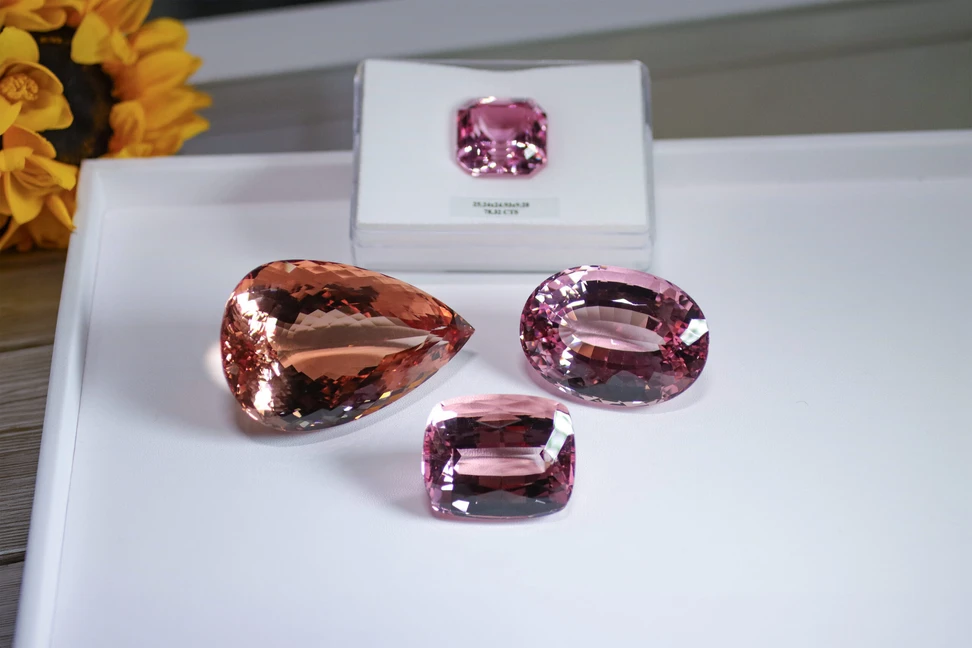
Usually, most large morganites turn pale as light has to travel through so much material that the colour often sacrifices itself for size. These three stones: a pear-shaped morganite, weighing 513.75 carats, an oval of 302.92 carats and the most ‘modest’ cushion-cut morganite weighing 278.28 carats, refused that compromise. The peach was real, present, and the pinks were consistent, too.
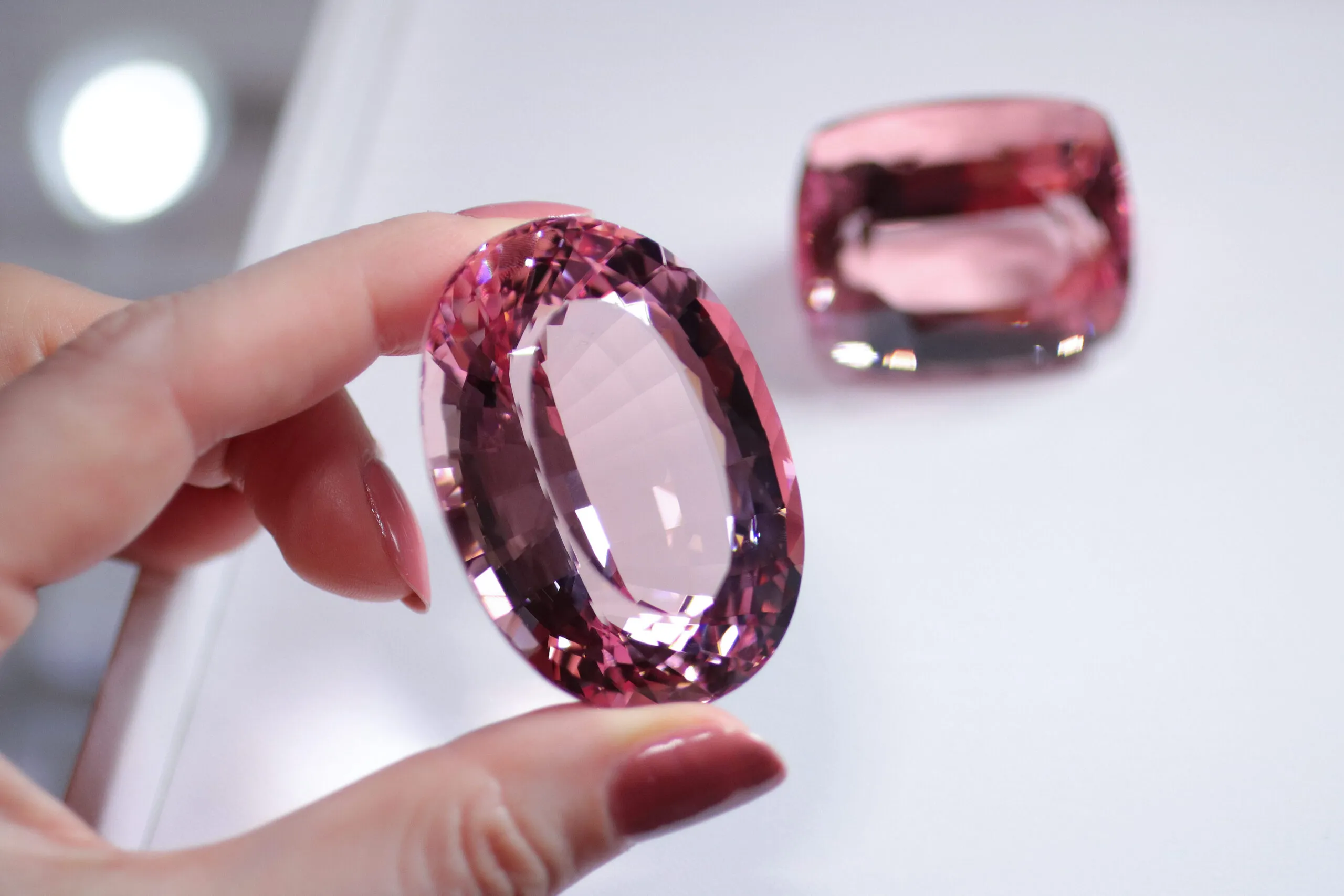
An oval morganite of 302.92ct from Madagascar at RMC Gems
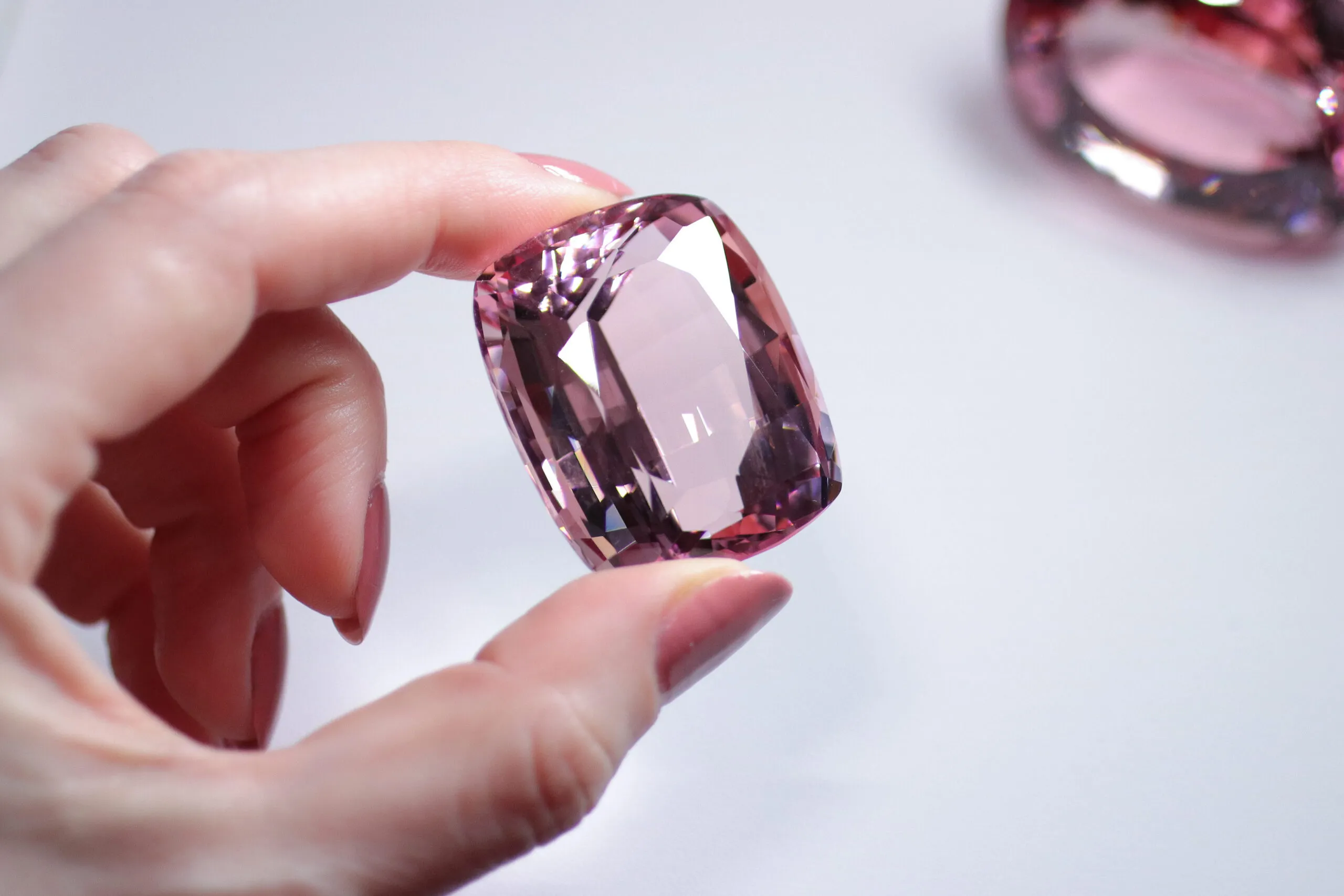
A 278.28ct cushion-cut morganite from Madagascar at RMC Gems. The classic source for fine morganites, any specimen over 200 carats with good colour is considered exceptional
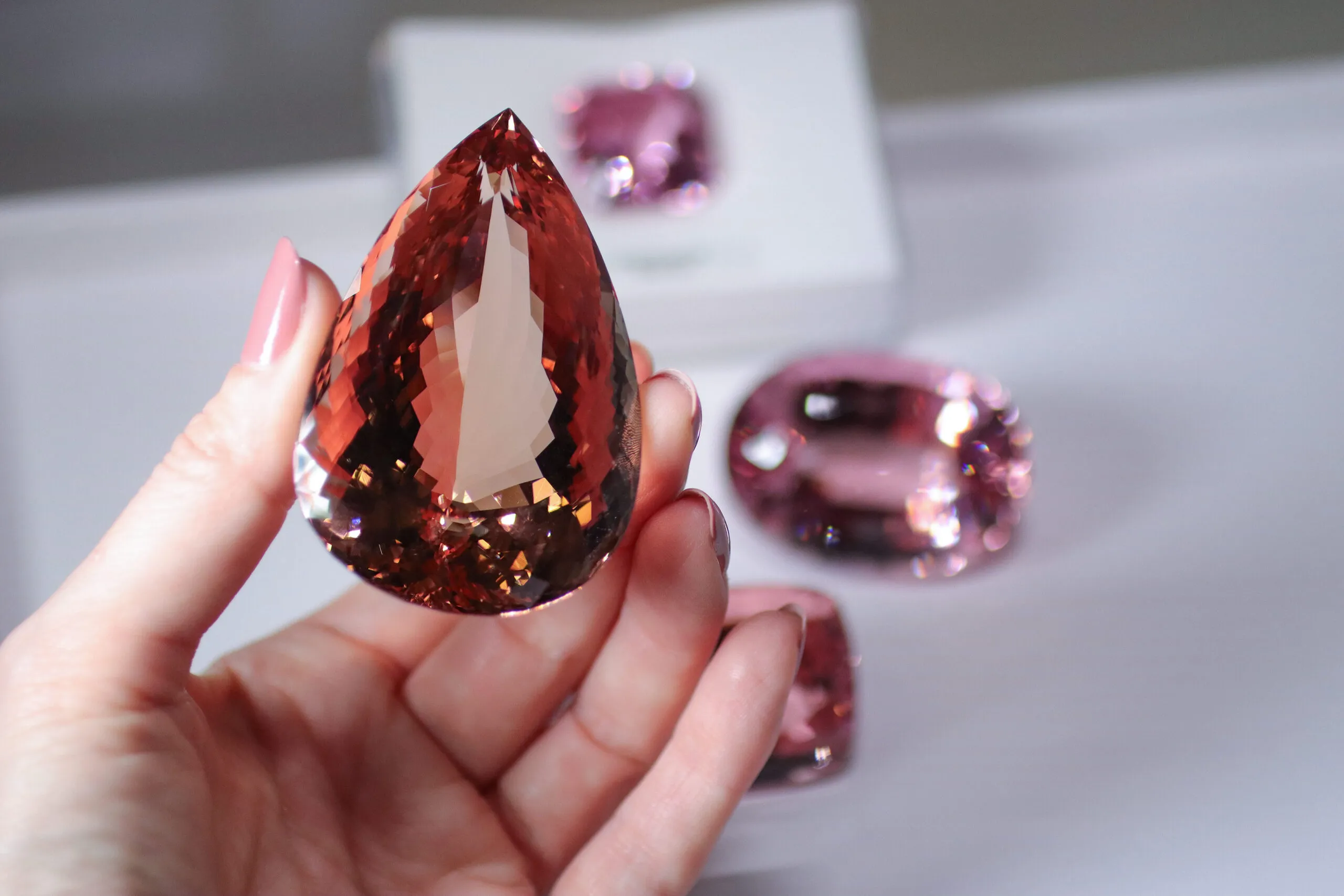
Completing the trio, RMC Gems' 302.92ct pear-shaped morganite
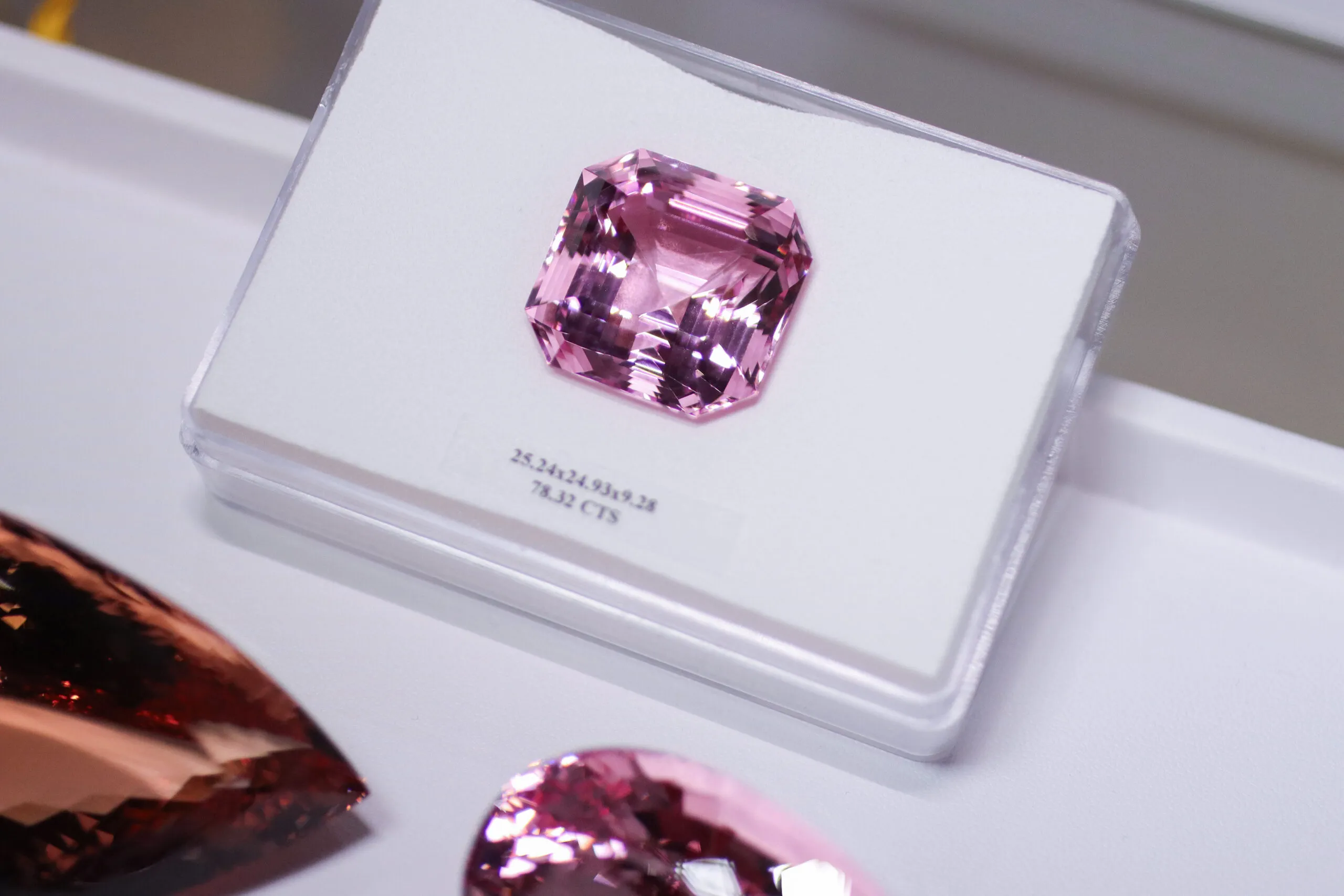
Another Madagascan morganite, this one emerald cut and weighing 78.32ct
Each gem came from Madagascar, which is the classic source for fine morganites. However, even from that source, it is rather rare to find a rough that will produce over 100 carats after cutting. Any specimen over 200 carats with good colour is considered exceptional. And over 500 carats? With this level of saturation, this is the kind of gem you tell people about years later, and they do not quite believe you.
The fact that RMC Gems brought all three to GemGenève is a real statement.
The 100-Year-Old Amethyst That Cannot Be Bought
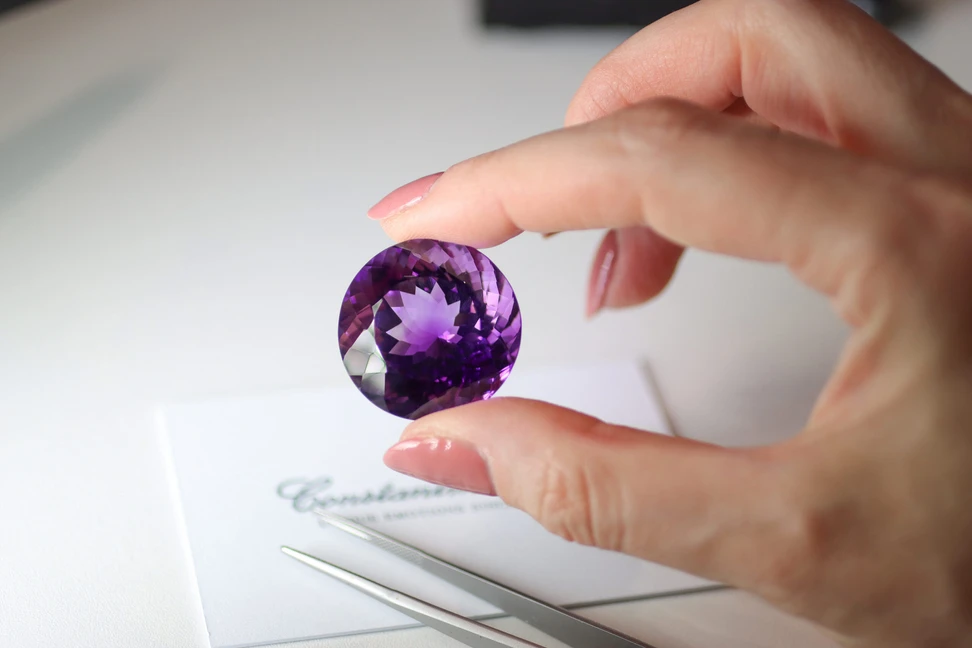
I continued my tour of the big gems by stopping by my friend of many years, Constantin Wild. He ‘introduced’ me to his family heirloom that was not for sale: a 76-carat round Russian amethyst which was over 100 years old. Constantin shared that it was passed down from his great-grandfather and has stayed in the family ever since.
Many of you might think: Ah, it’s just an amethyst, but I would remove the word ‘just’. Every stone category has more rare or common specimens, and this one is inimitable thanks to a combination of colour and carat weight.
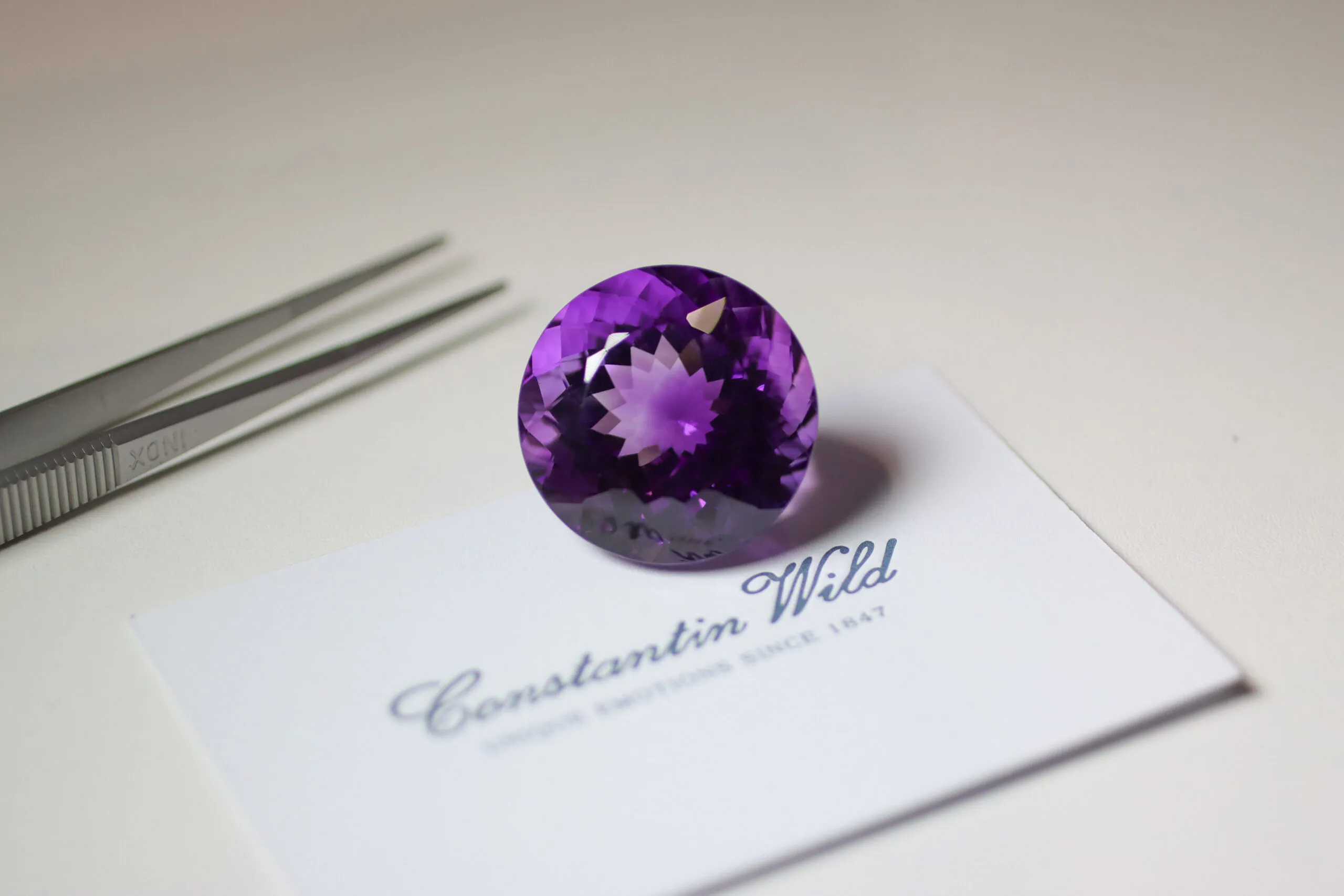
Constantin Wild ‘introduced’ Katerina to his family heirloom that was not for sale: a 76ct Russian amethyst that was over 100 years old
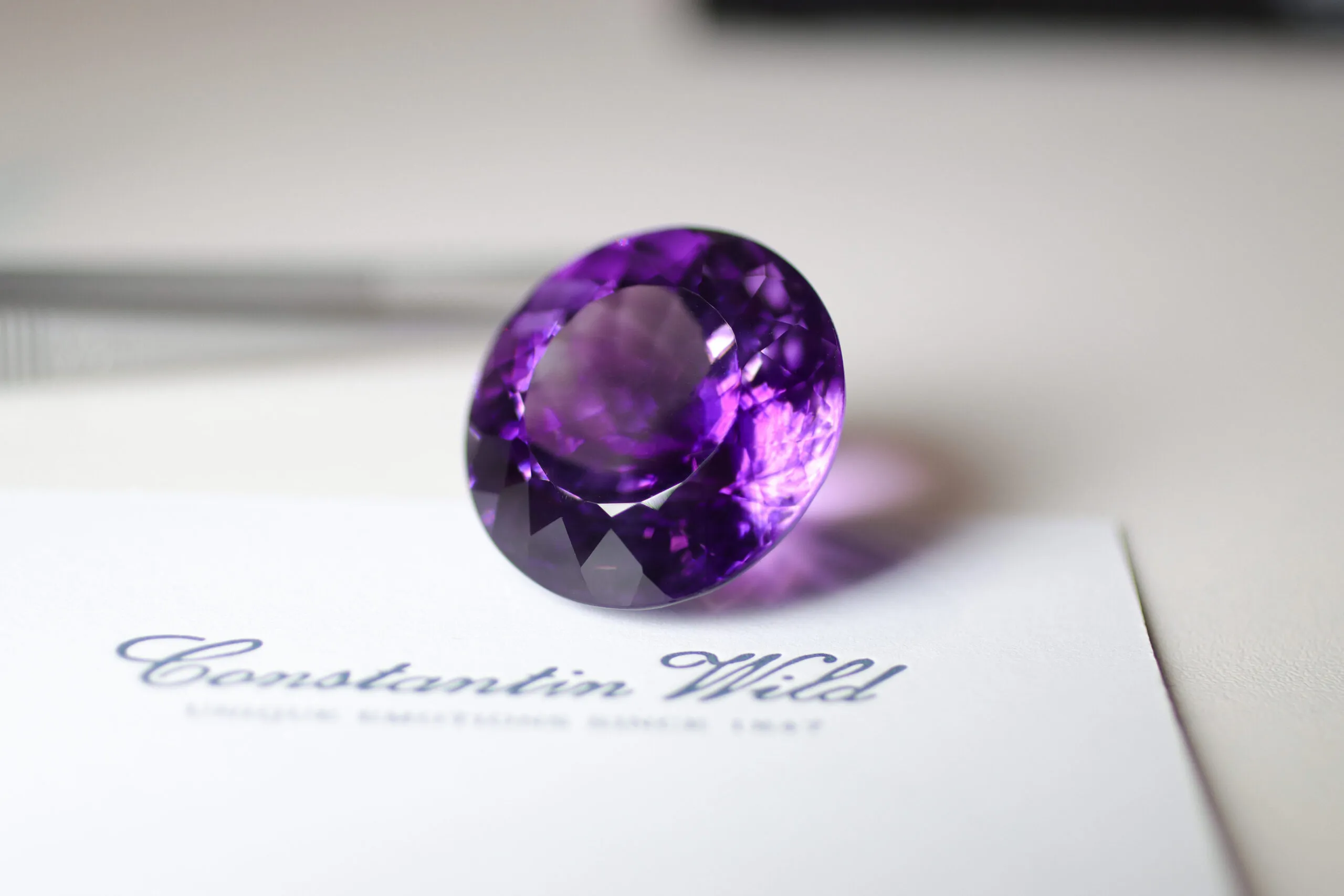
The amethyst was passed down from Constantin's great-grandfather and has stayed in the family ever since
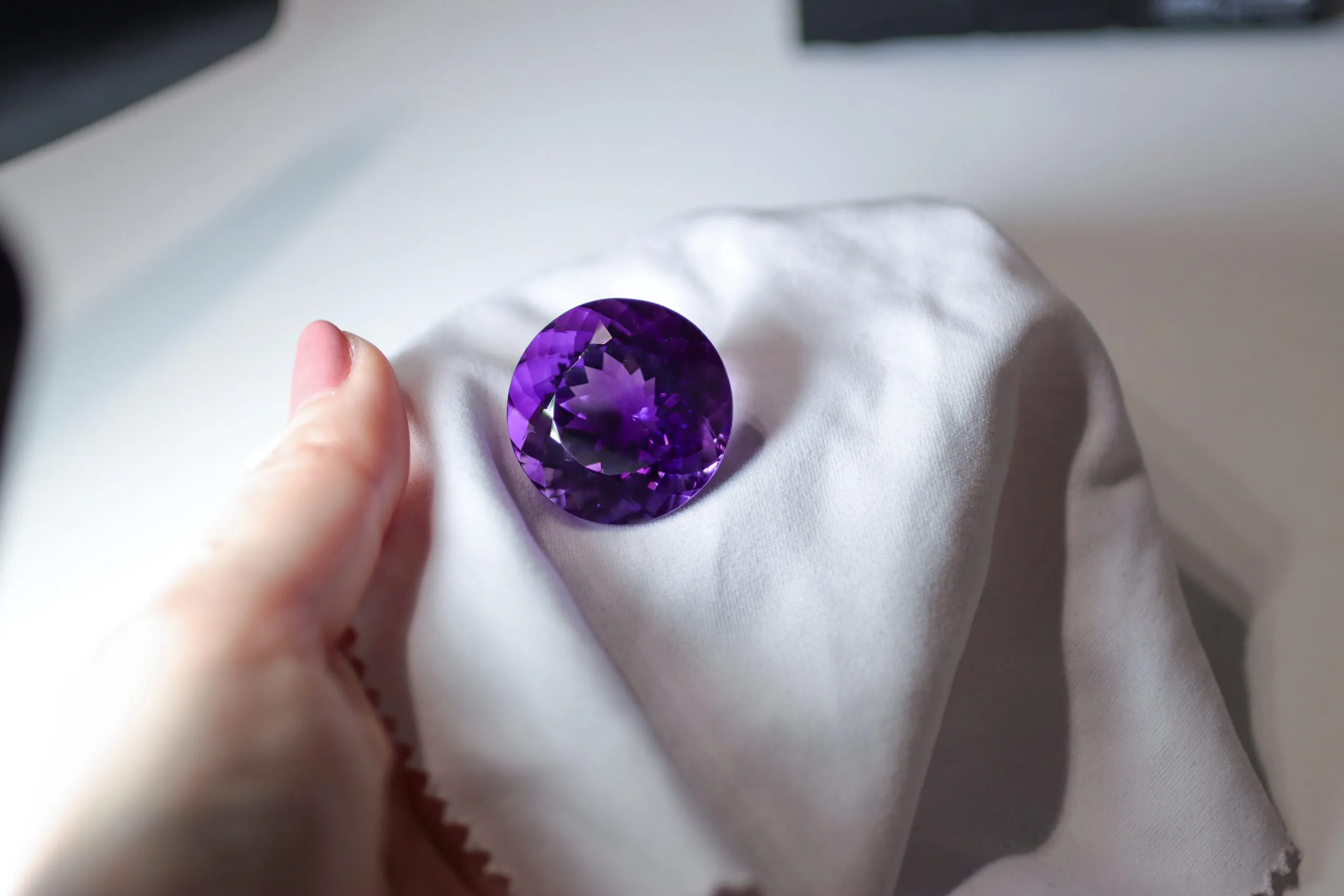
Over 100 years old, this 76ct Russian amethyst was on show at Constantin Wild. It was passed down from his great-grandfather and has stayed in the family ever since
It is not the deep purple you know from modern Brazil or Zambia; it has this mysterious touch of pink among the purple that is softer and more complex. I would say the hue feels like twilight in St. Petersburg rather than a colour from a commercial chart. Old Russian amethyst genuinely looks different, and once you have seen it, you will never forget it.
Constantin Wild brought this stone to GemGenève not to sell it, but to remind us that gems are not just assets or adornments; they are memories and statements of continuity. In a hall full of "what will you pay," this amethyst quietly asked a different question: "What will you remember?" Because not every big gem needs a price tag, some are priceless by intention.
The Aquamarine That Holds the Sky
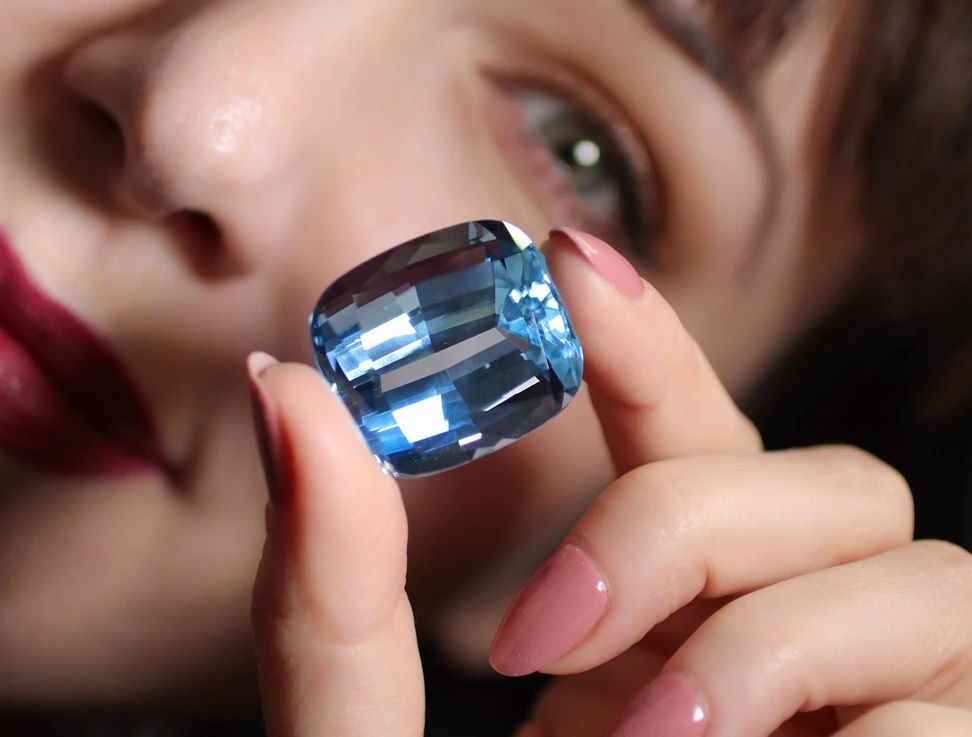
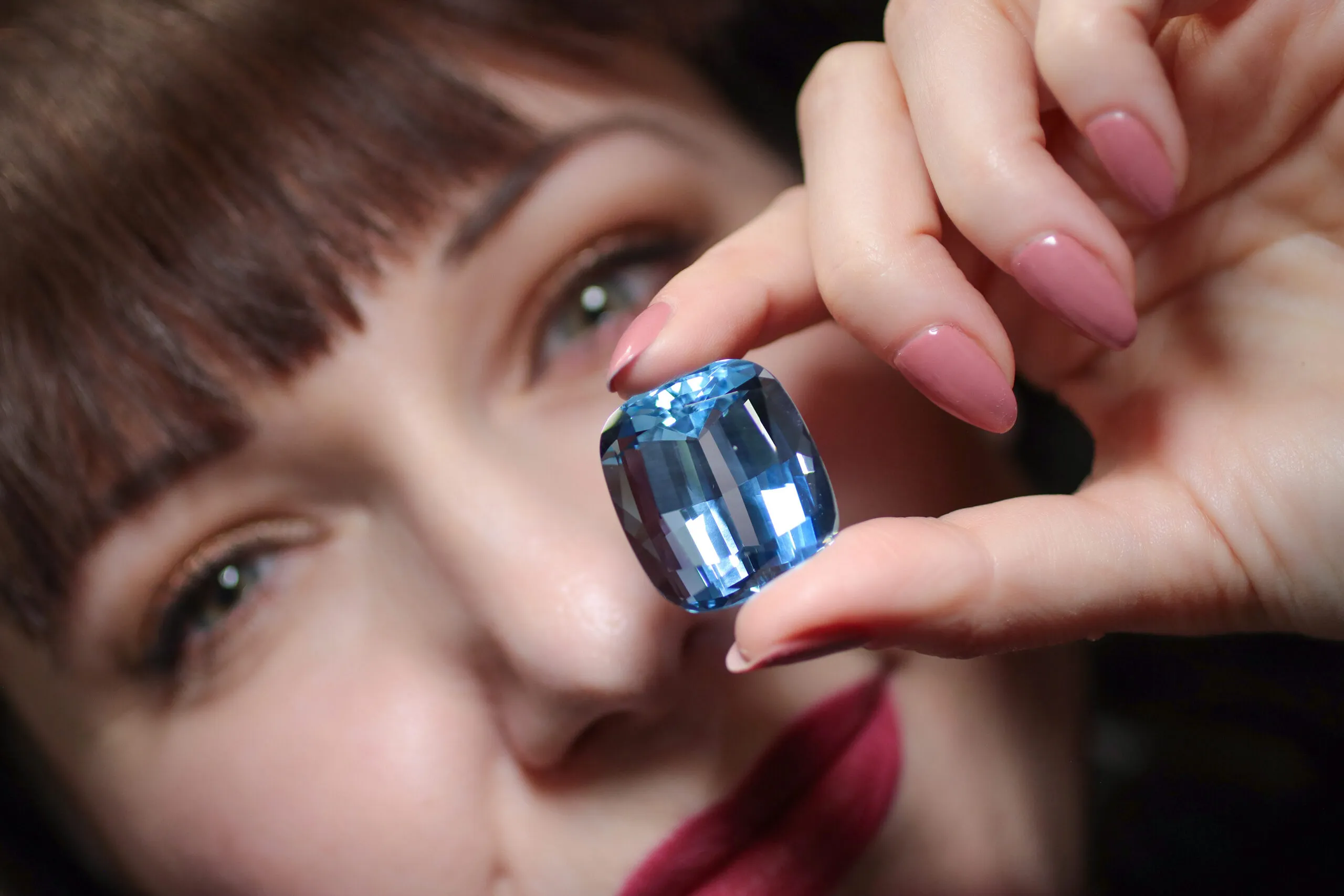
HC Arnoldi is a company that many associate with fine aquamarines, and the gemstone I am going to show you is a wonderful example of a perfect colour paired with a large carat weight. Let’s feast our eyes on an 81.58 carat aquamarine from Mozambique with the iconic Santa Maria colour.
Let me explain what that means for those who do not spend their days dreaming about beryls. Santa Maria is the gold standard of aquamarine colour. It is an intense, saturated, slightly neon blue that looks nothing like the pale, watery stones you see in commercial jewellery. It is the colour that made the original Santa Maria de Itabira mine in Brazil famous, and it is vanishingly rare at any size, let alone at 81.58 carats.
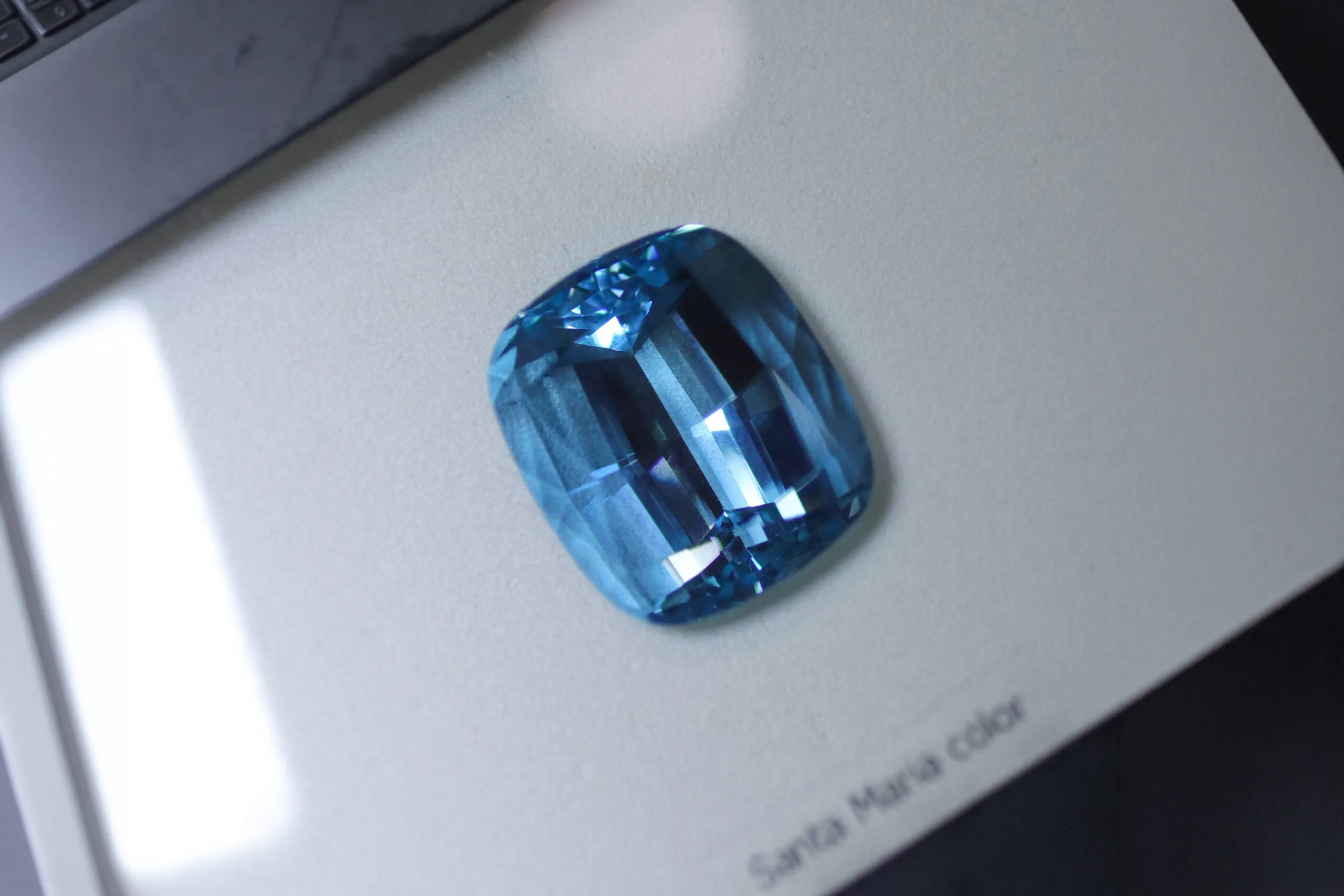
An 81.58ct aquamarine from Mozambique displaying the iconic Santa Maria colour at HC Arnoldi
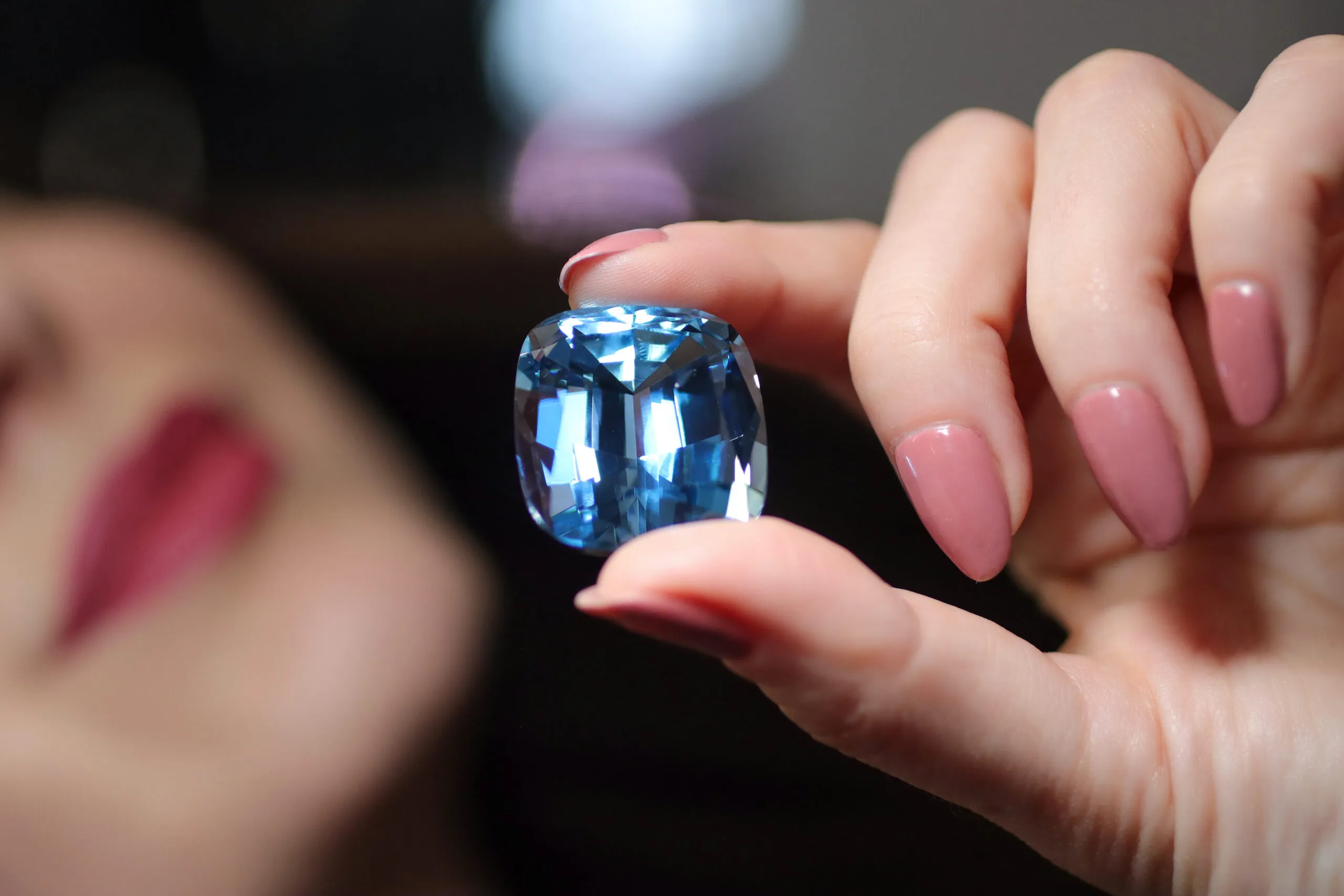
Santa Maria is the gold standard aquamarine colour
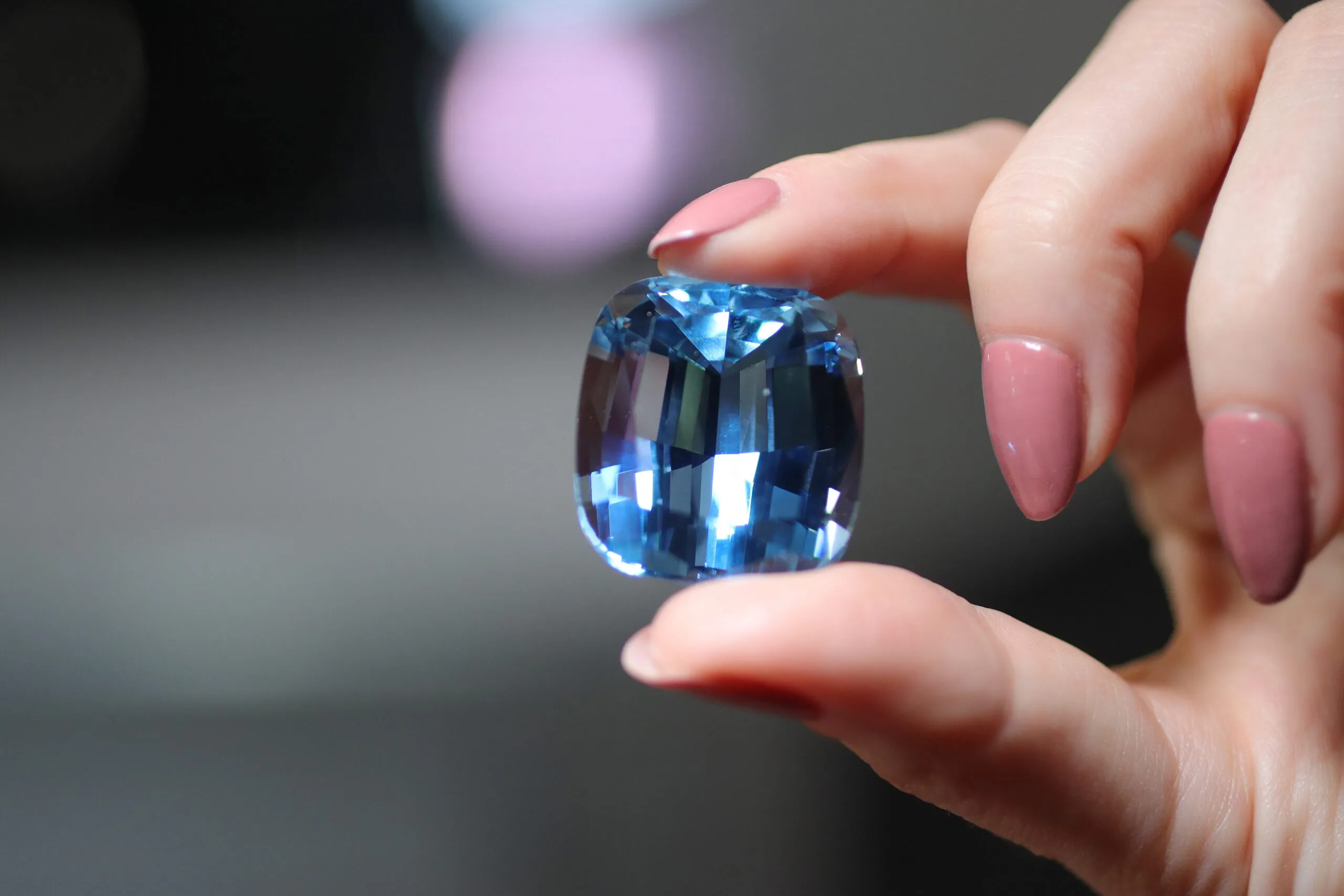
An 81.5ct aquamarine from Mozambique with the iconic Santa Maria colour at HC Arnoldi
Most large aquamarines, like large morganites, trade intensity for size, meaning that the larger they grow, the paler they become. Every collector would agree with me that a soft blue is still pretty but not so powerful. But the cushion-cut gem at HC Arnoldi was something else, boasting a sky-blue colour without pale shoulders or dead zones. Just clean, consistent, saturated colour from one facet to the other.
I held it up to the light and understood immediately why HC Arnoldi chose to bring this stone to GemGenève. Not because aquamarine is rare, but because an aquamarine of this size with true Santa Maria colour is something you might see once a decade.
The 81.58ct cushion-cut Santa Maria aquamarine at HC Arnoldi boasted a clean, saturated sky-blue hue from one facet to the other
The Mozambican Paraíba That Belongs in a Vault
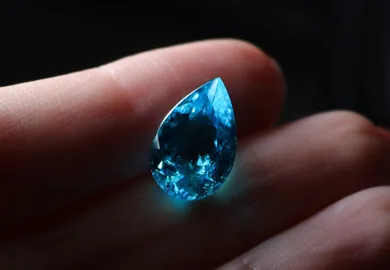
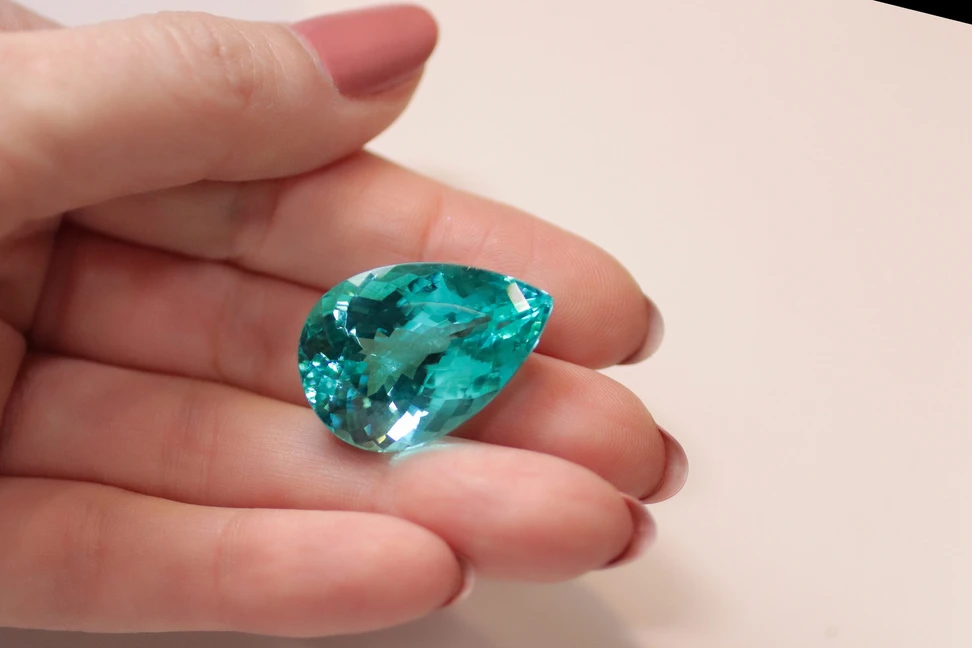
From one blue to another, I walked to BGC Brazil and found myself with my Paraiba book co-author, Kevin Ferreira. He looked excited, and I knew he wanted to show me a treasure of a gem, but I was guessing if it would be something impressive because of the origin, colour or carats. He took something out from the display, and the next second, I was silently admiring a 36.88 carat loupe clean Mozambique Paraíba. Let me say that again: thirty-six point eight eight carats. Flawless. Loupe clean.
Most clean Paraíba, whether Brazilian or Mozambican, do not exceed five or six carats after being cut, and in reality, a clean five-carat stone is a collector's item. This stone is nearly seven times that weight, and you cannot find a flaw without a loupe.
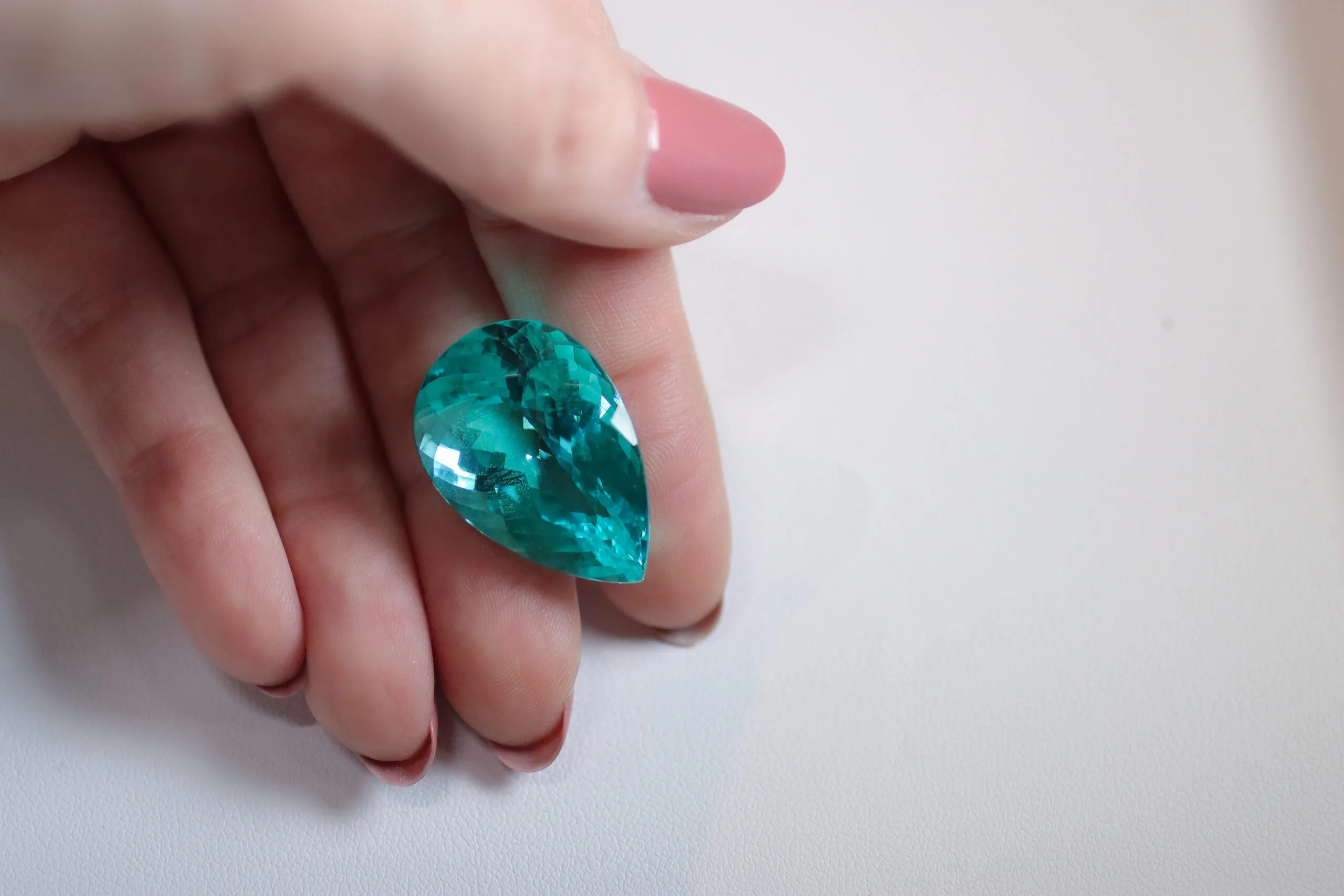
At BGC Brazil, another wonder awaited: a 36.88 carat loupe clean Mozambique Paraíba tourmaline
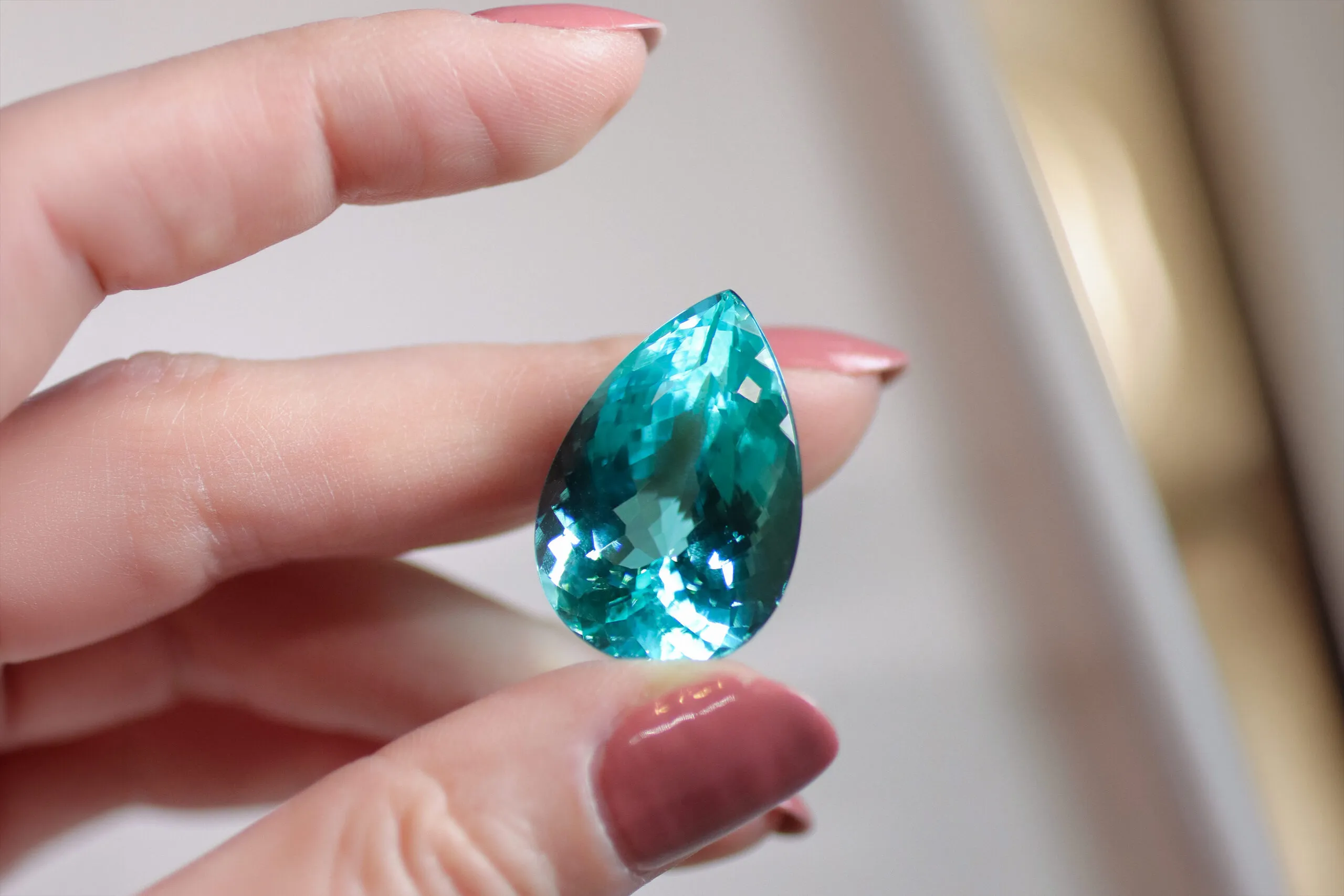
Most clean Paraíba, whether Brazilian or Mozambican, do not exceed 5 or 6 carats after being cut
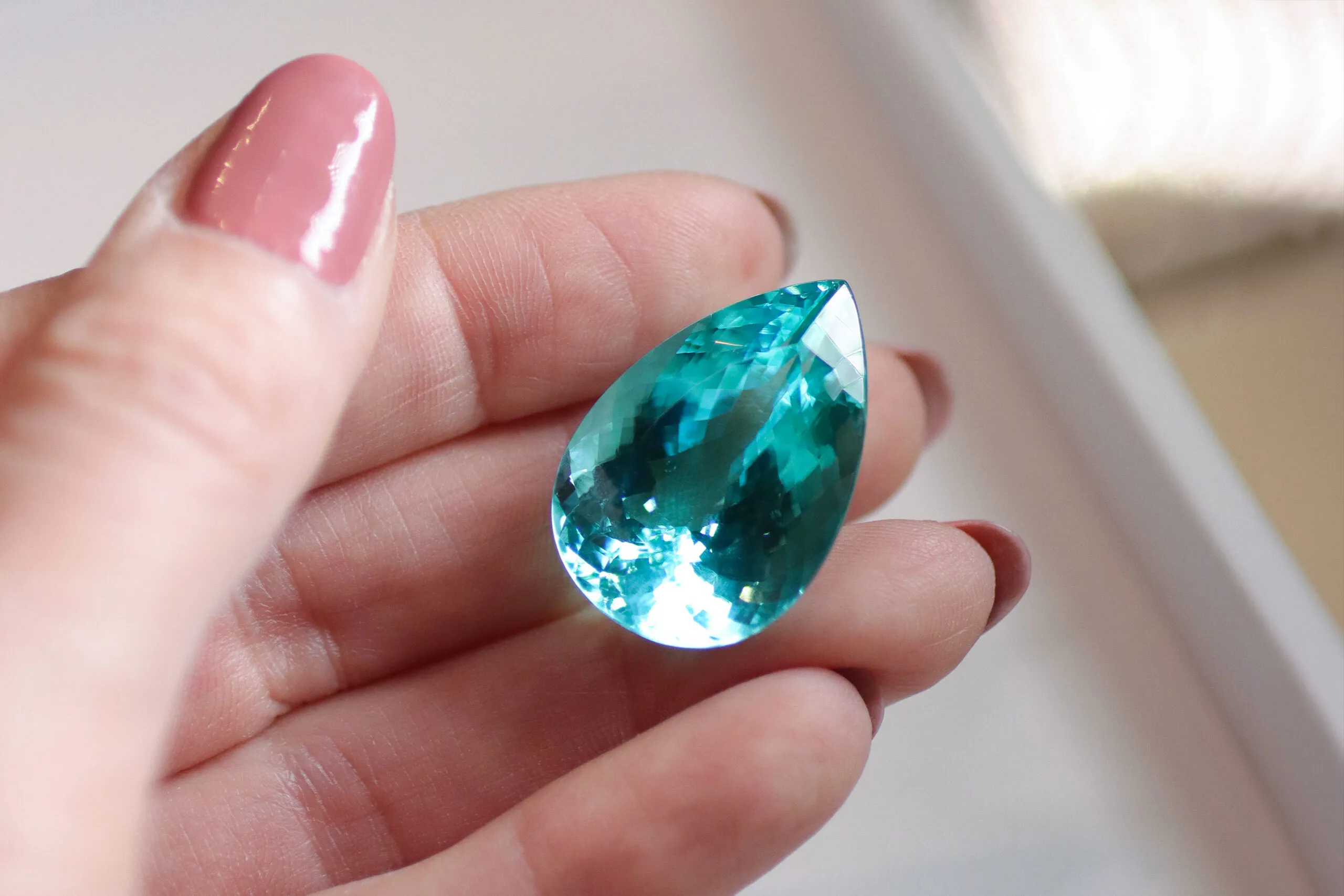
This Paraíba touramine is nearly seven times that weight, and you cannot find a flaw without a loupe
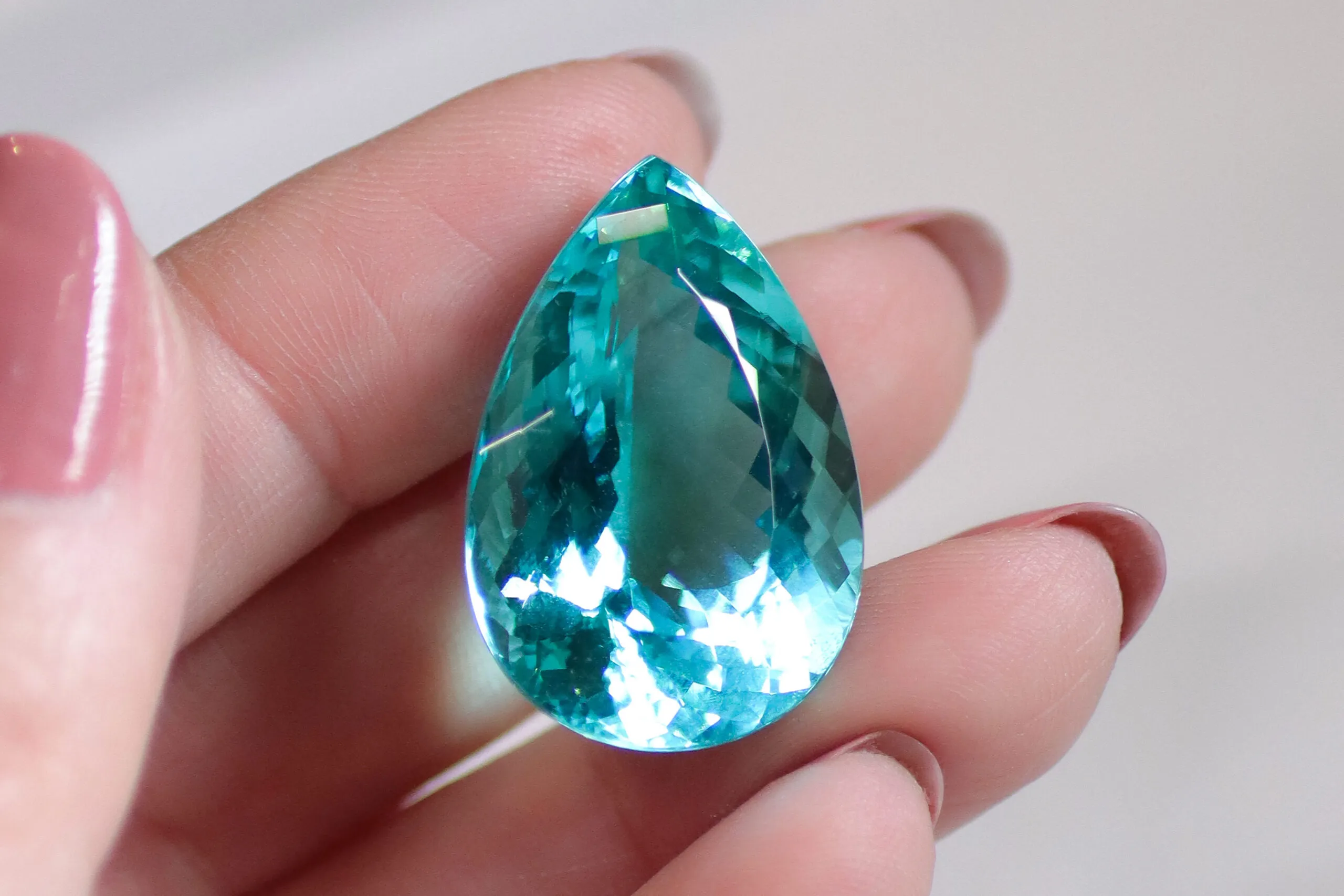
Its colour, the azul piscina, is the classic swimming-pool blue that made the Mavuco mine in Mozambique legendary when rough started emerging from it in the early 2000s
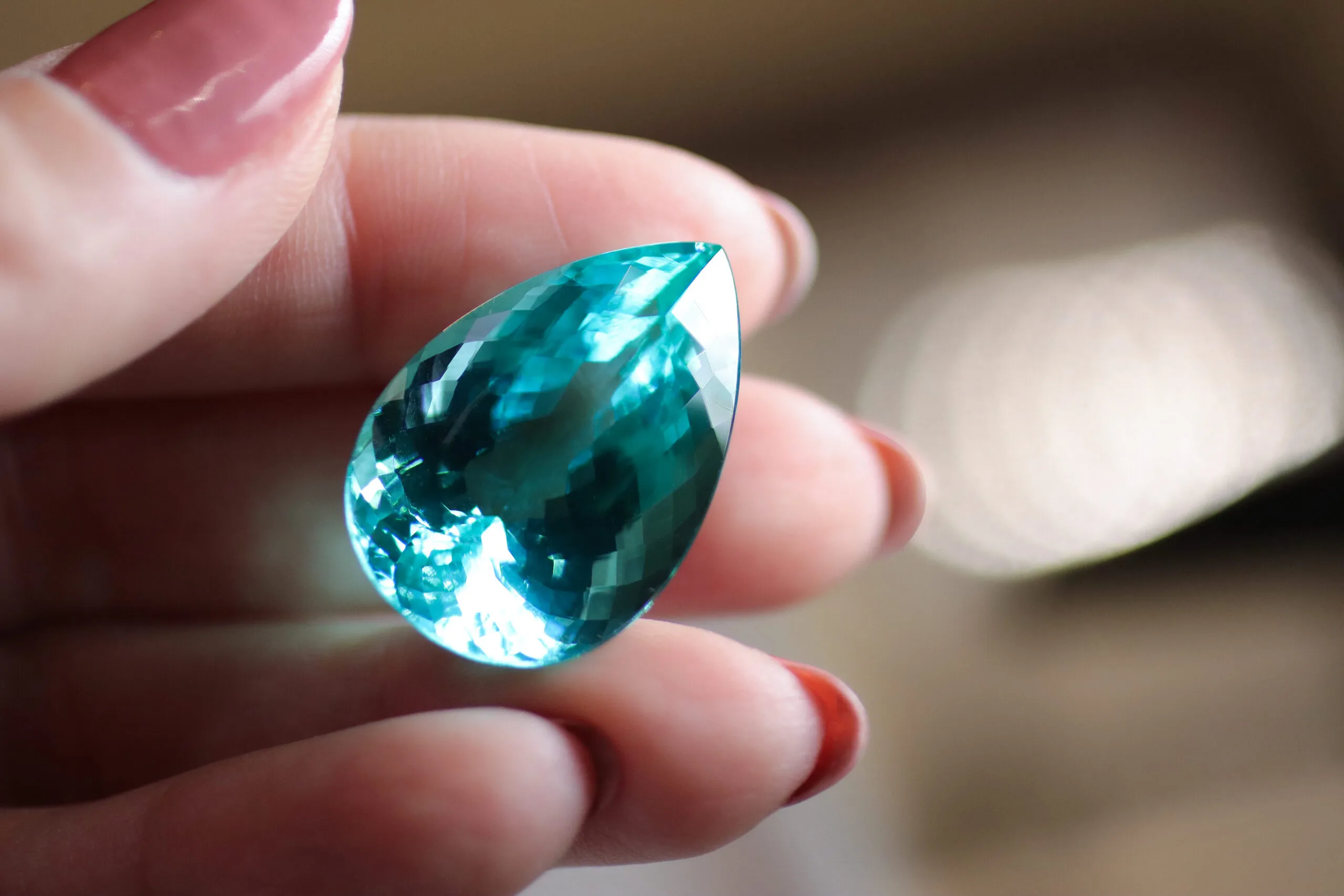
Cut from an old rough gem, this particular Paraíba came from the mine's original yield
And then its colour, the azul piscina, that classic swimming-pool blue that made the Mavuco mine legendary when its rough first emerged in the early 2000s. The gem has been heated, which is standard for Mozambican material and helps release that famous colour, so this is not a flaw but an asset. This particular stone comes from the original production, and it was cut from an old rough gem. Kevin shared with me that the stone was previously set in a piece of jewellery before being liberated to find a new story.
At nearly 37 carats and with hardly any inclusions, this Paraíba is not competing with other stones. It is competing with nothing but itself.
At nearly 37 carats and with hardly any inclusions, it's a phenomenal example of one of the world's rarest gems
The Alexandrite Cat's Eye That Defies Logic
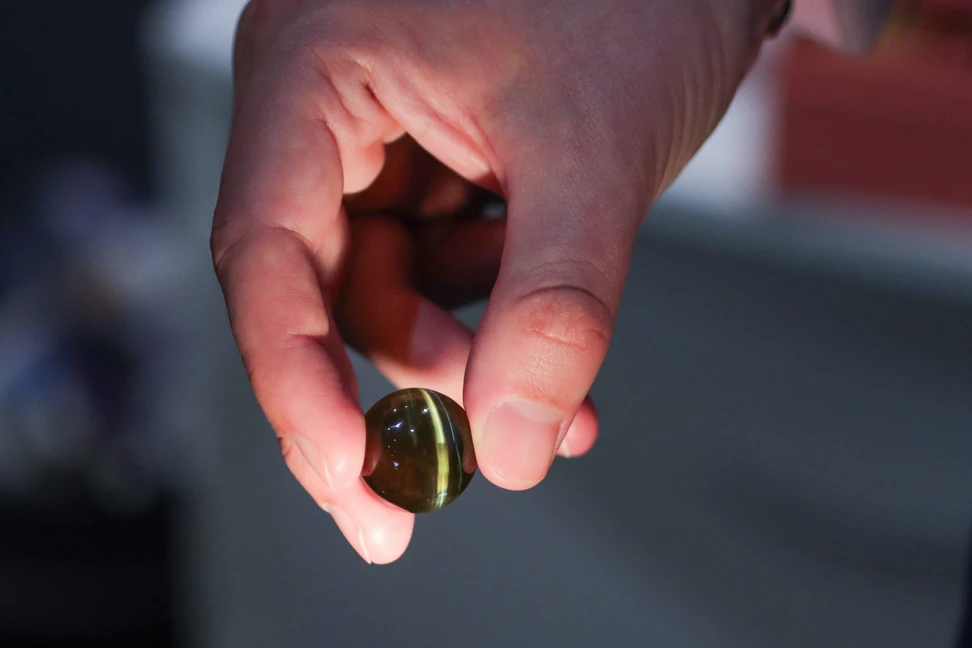
Now I have seen cat’s eye alexandrites from Sri Lanka, but never a 90.24 carat one, unheated and displaying a chatoyant band so sharp and continuous that it ran across the entire domed surface without fading or breaking.
Most alexandrite cat's eyes on the market are a little modest in size, reaching five carats for serious stones, 15 carats for exceptional ones, 30 carats for the kind of piece you read about in auction retrospectives, but ninety carats? It does not fit on that scale and abandons it entirely!
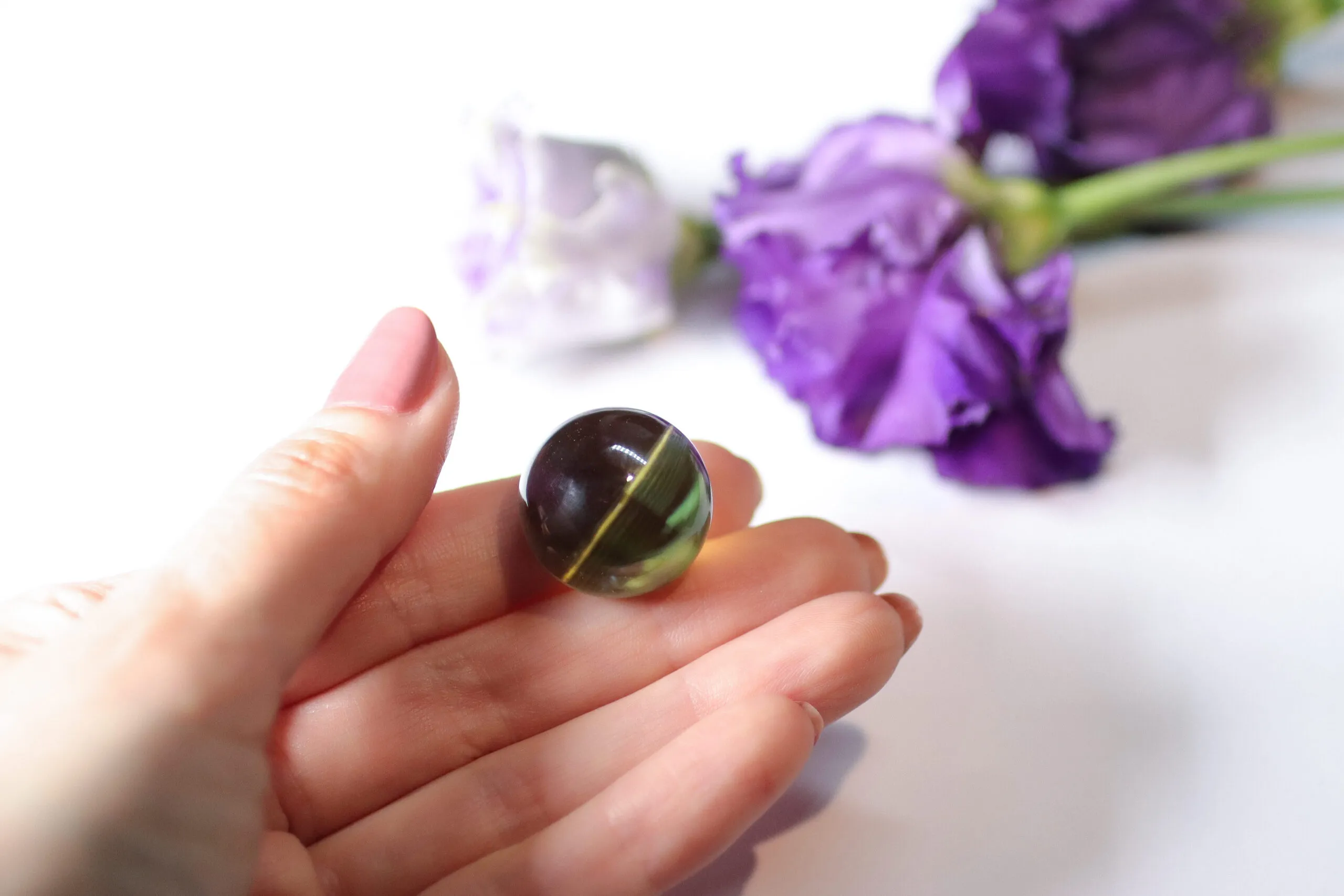
A 90.24ct unheated cat’s eye alexandrite at Wilds Company Limited
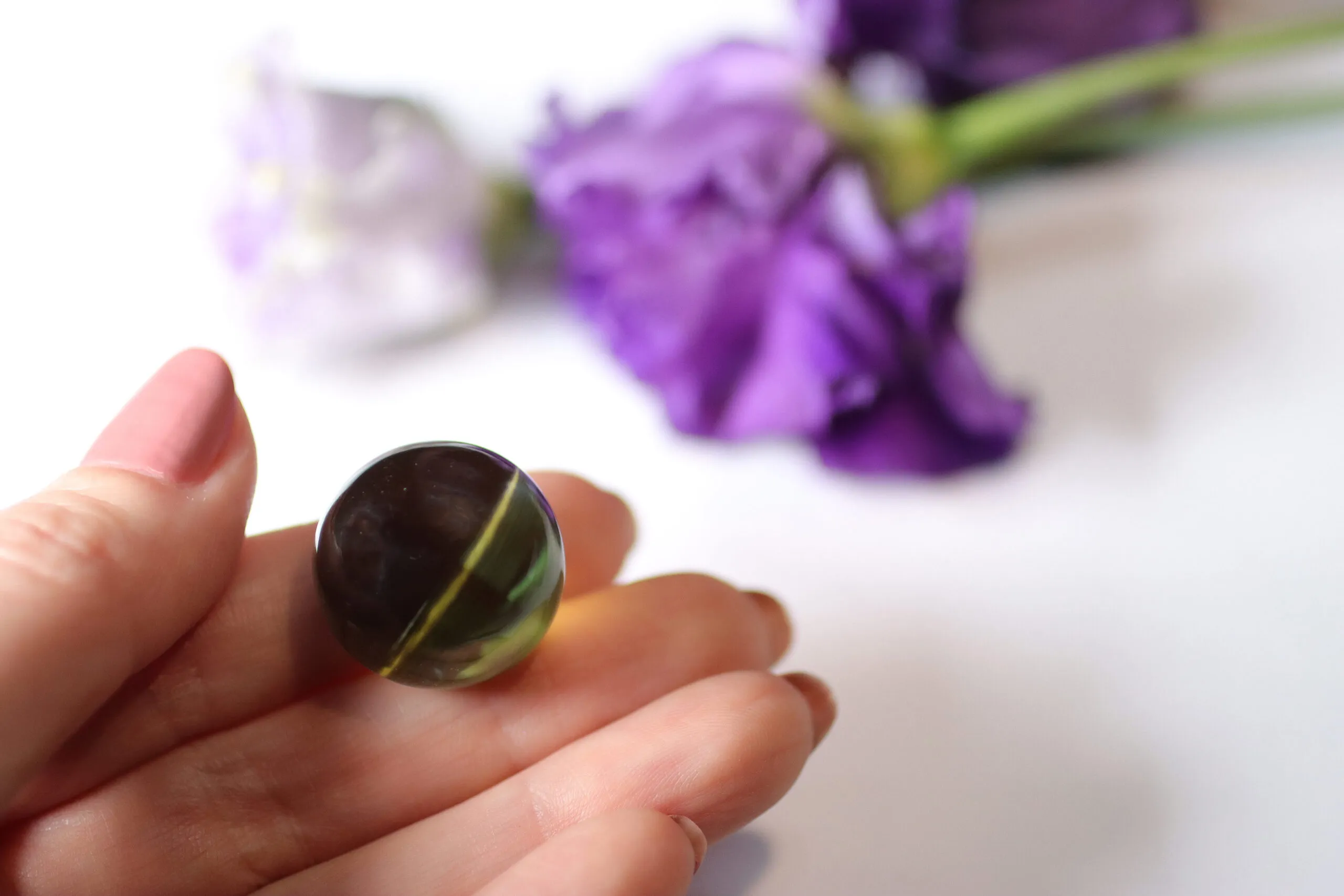
The chatoyant band was so sharp and continuous that it ran across the entire domed surface without fading or breaking
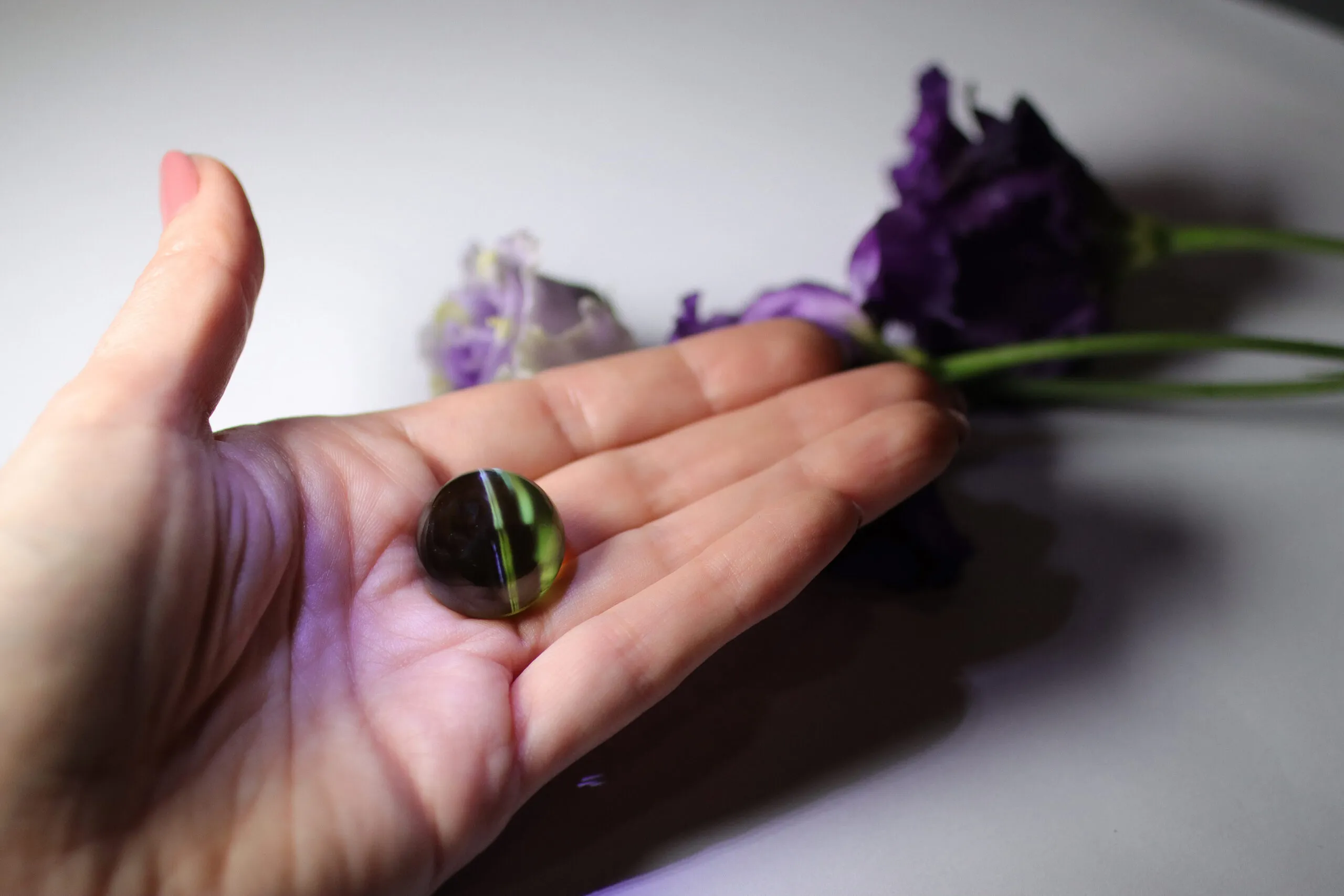
Alexandrites are known for their change of colour, and it was present here too, but subtly: a yellow-green shifting to a touch of red
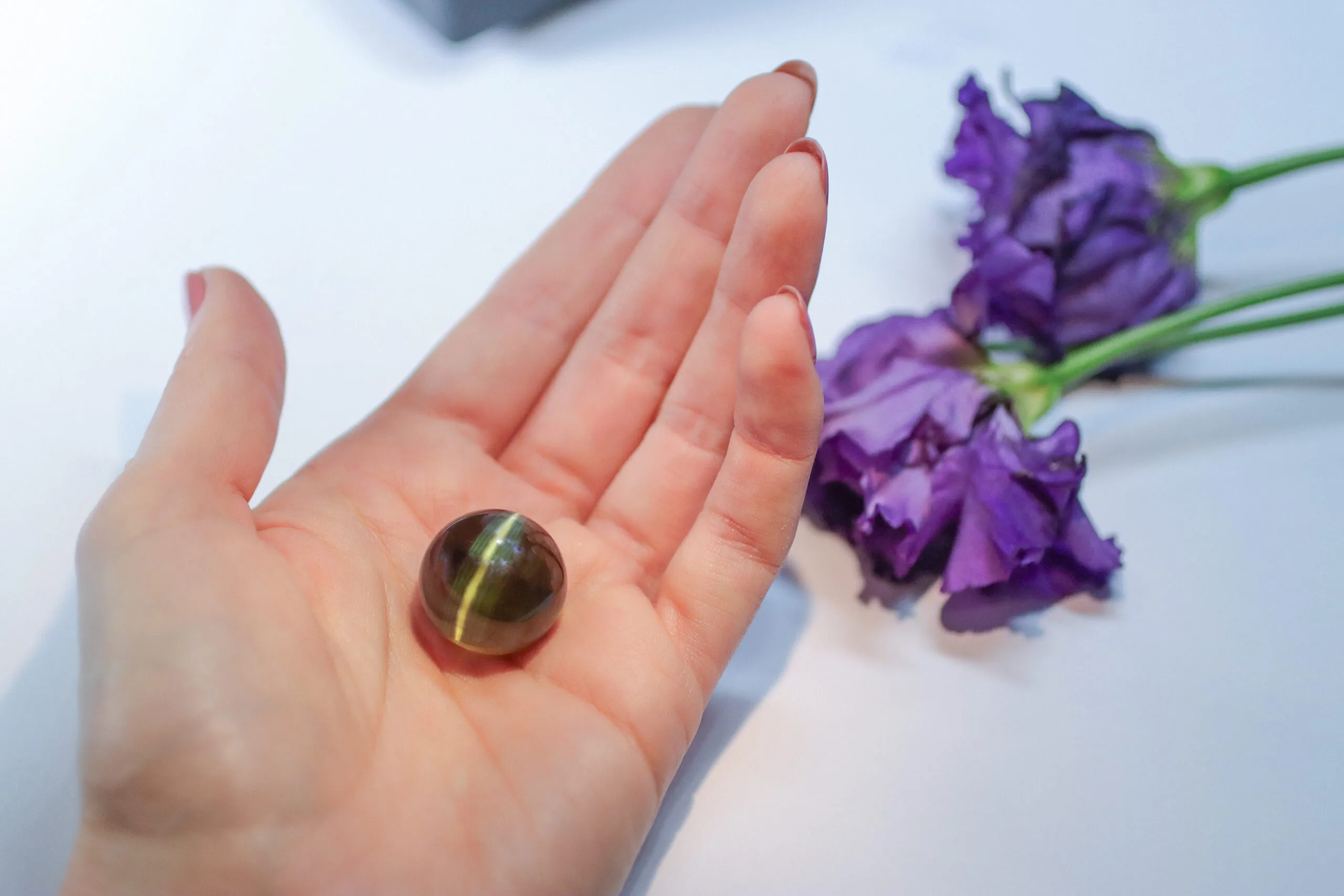
This gemstone was cut approximately two years ago from recently discovered rough – a reminder that there are still new treasures waiting to be discovered
Usually, alexandrites are known for their change of colour, and it was present here too, but subtly: a yellow-green shifting to a touch of red, not the dramatic green-to-ruby of Russian alexandrite. What this stone from Wilds Company Limited offers instead is a phenomenon and mass as well as a complete cat’s eye running across the dome.
This gemstone was cut approximately two years ago from recently discovered rough. It is not an heirloom dragged from a forgotten safe, but a new giant that made me feel that even after 15 years in the industry, there are still treasures I have never seen waiting to be discovered.
The Yellow Sapphire That Almost Wasn't
I close this journey at B&B Gems with a stone that carries a story within a story; it is a true marvel, totalling 115.13 carats. It is a yellow sapphire from Sri Lanka with a natural, intense yellow colour that is simply unbelievable. Dave Bindra of B&B Gems even gave it a beautiful name - Sunrise of Ceylon. Yes, some names can be simply a marketing stunt, but I felt that this one was very accurate, adding to the rarity factor of the gem.
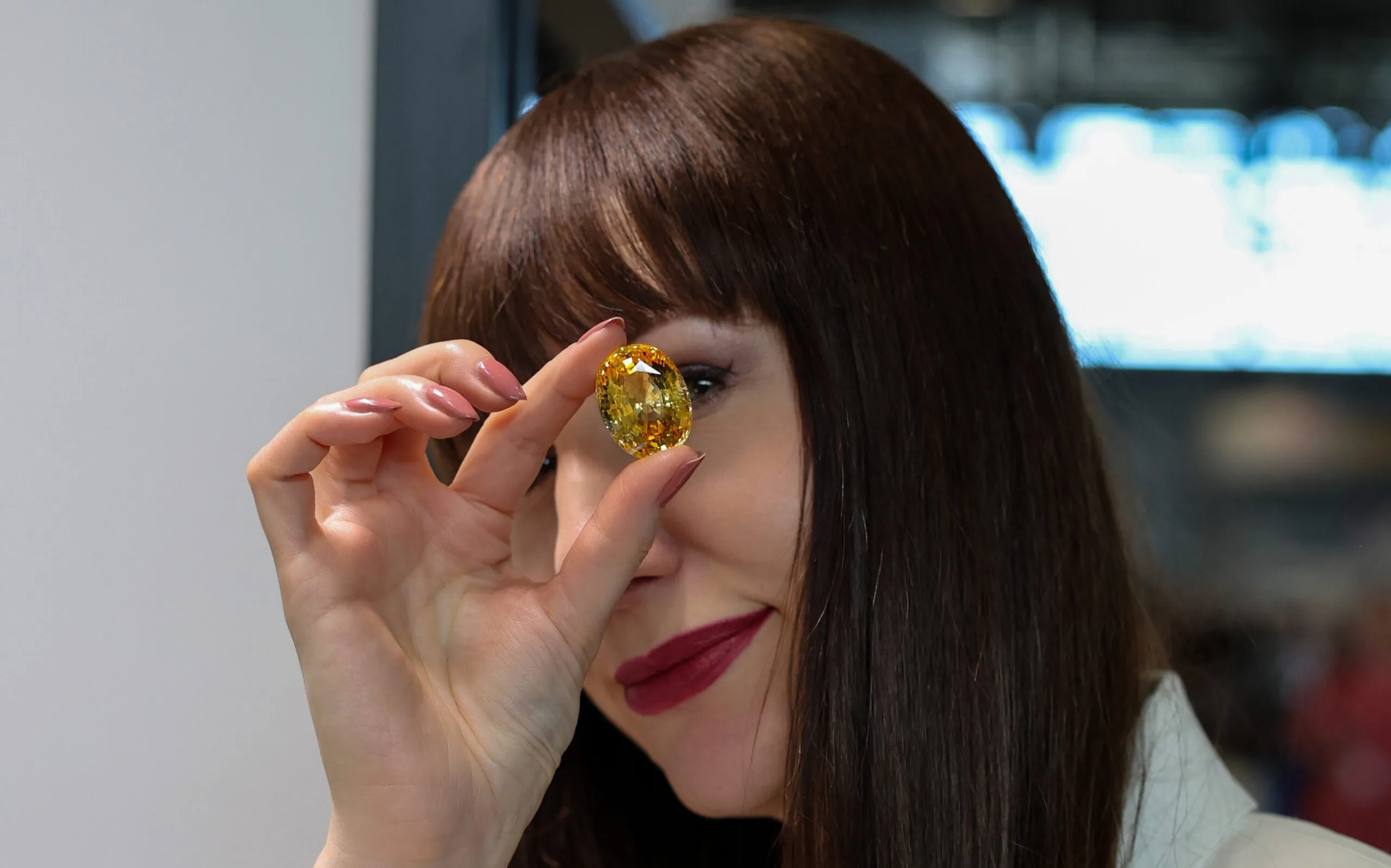
An oval yellow sapphire from Sri Lanka at totalling 115.13 carats at B&B Gems
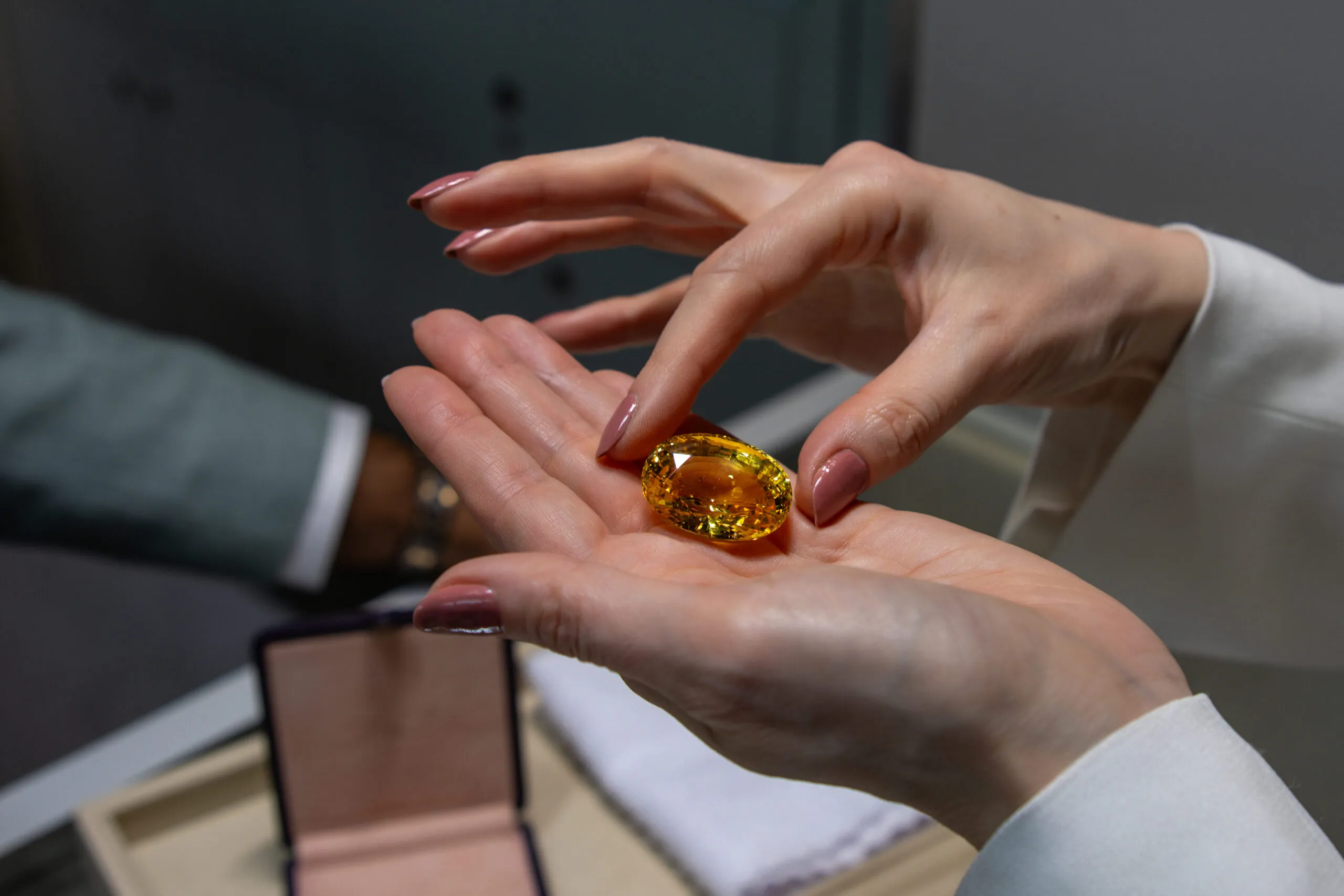
Its intense yellow colour is entirely natural
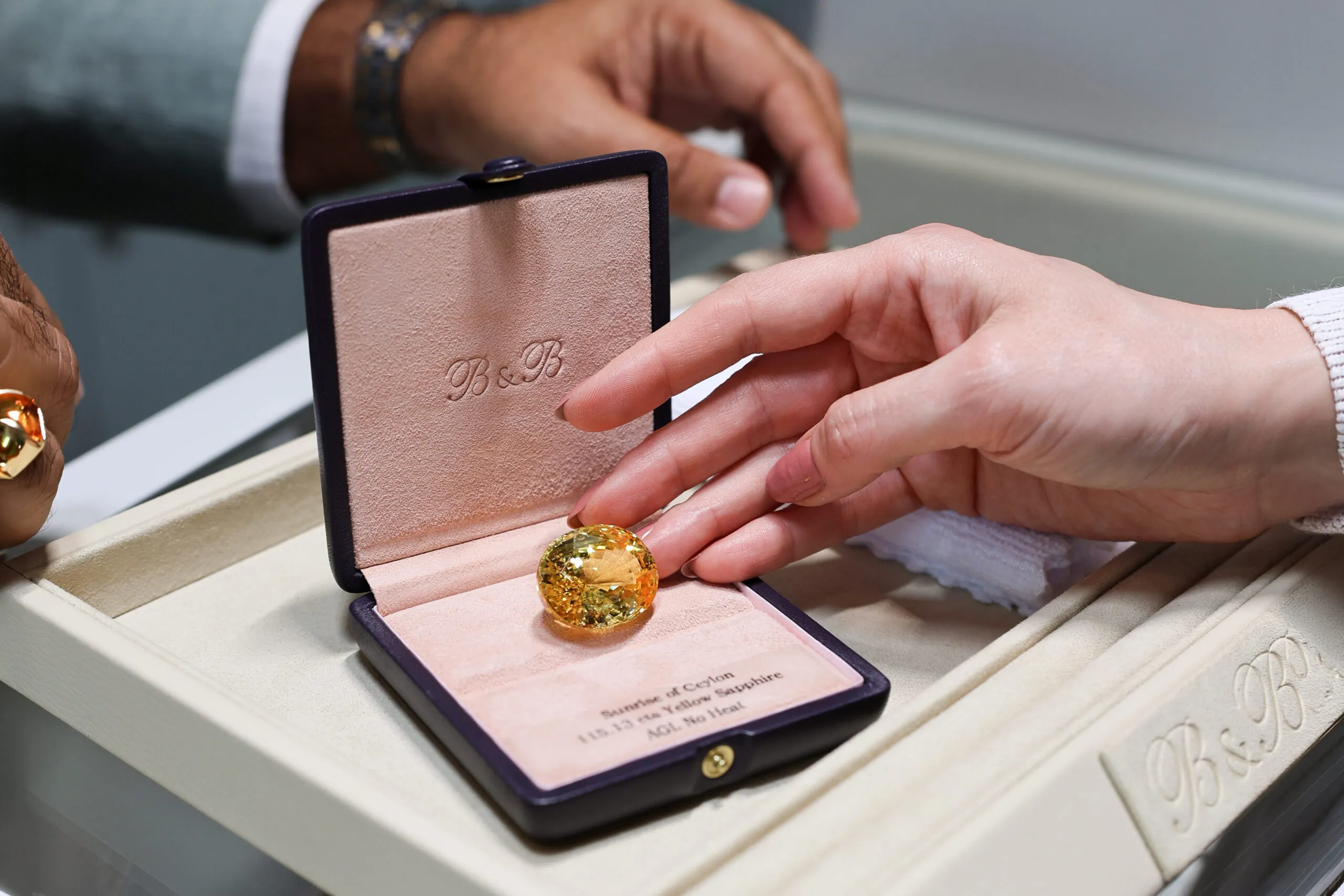
So special is the stone, Dave Bindra of B&B Gems gave it a beautiful name: Sunrise of Ceylon
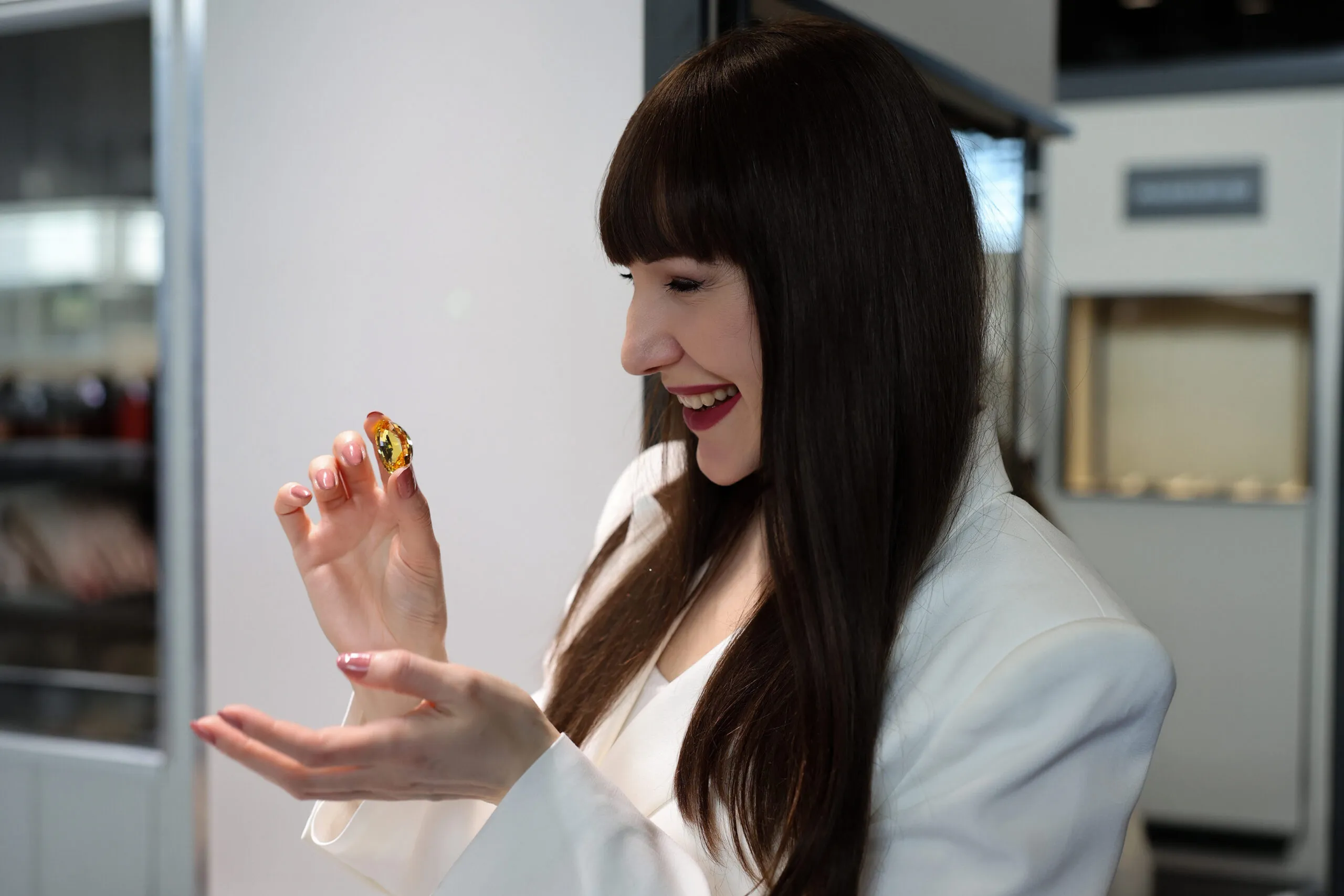
Taken from a ring that Dave acquired, the old stone had a magnificent colour, but it did not reach its full potential because the cut, and specifically its symmetry, needed to be improved
Now, let’s dive into what makes this stone different. As Dave shared, it was not taken out of a dealer's safe but from a ring that Dave acquired. An old stone had a magnificent colour, but it did not reach its full potential because the cut, and specifically its symmetry, needed to be improved. He sent it to Los Angeles to be recut, not to maximise carat weight, but to honour the material, and as a result, 12 carats were lost in the process. Most dealers would cry over 12 carats of unheated Sri Lankan yellow sapphire sacrificed for perfection, but knowing Dave, he called it an investment in a masterpiece.
Walking GemGenève this year, I realised something. We spend so much time talking about colour, about origin, about treatment, about lab reports, and of course, all that matters. But sometimes, just sometimes, size is its own category of wonder. The stones I saw at Wilds Company Limited, BGC Brazil, RMC Gems, Filippo G&G, HC Arnoldi and B&B Gems do not need to compete on colour saturation or provenance alone. They win on mass, presence and the simple, undeniable fact that they should not exist at this scale. And yet, here they are, waiting for collectors who understand that when it comes to gemstones, the bigger, in some cases, is genuinely better.


WORDS
Katerina Perez Is a jewellery insider, journalist and brand consultant with more than 15 years’ experience in the jewellery sector. Paris-based, Katerina has worked as a freelance journalist and content editor since 2011, writing articles for international publications. To share her jewellery knowledge and expertise, Katerina founded this website and launched her @katerina_perez Instagram in 2013.
RelatedArticles
Discover the brand: the story from various angles.