GemGenève 2026: Hunting Out the Most Collectable Gems
Across more than a decade, I have held emeralds that made me forget to blink, sapphires that looked like liquid sky, and rubies that glowed as if lit from within. But at the 2026 edition of GemGenève, I realised something: the stones that stay in my memory aren’t necessarily the largest, although I have dedicated a special article to these gems. Instead, I most fondly recall the rarest specimens, often not exceeding five carats, with the most amazing display of colours. The gemstones I have selected for this article exist outside normal parameters… they feel almost impossible to discover, and yet I was lucky enough to hold each of them in my hands. Let’s explore together.
Personally, I feel that GemGenève is the best platform for seeking the extraordinary, and this exhibition features a parade of top mineral marvels from around the world. Many collectors gather in Geneva from all over the world seeking something that they have not seen before. Connoisseurs don’t ask “How many carats does this gem have?” instead, they lead with “What makes this gemstone special?” If this sounds like your approach to choosing special stones, here is my edit of the finest picks GemGenève 2026.
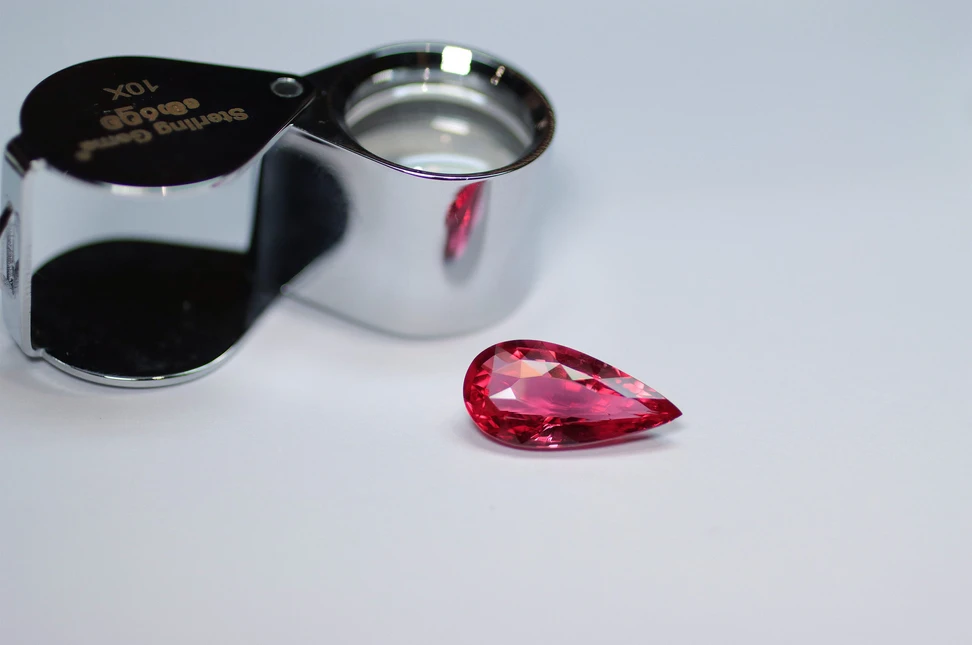
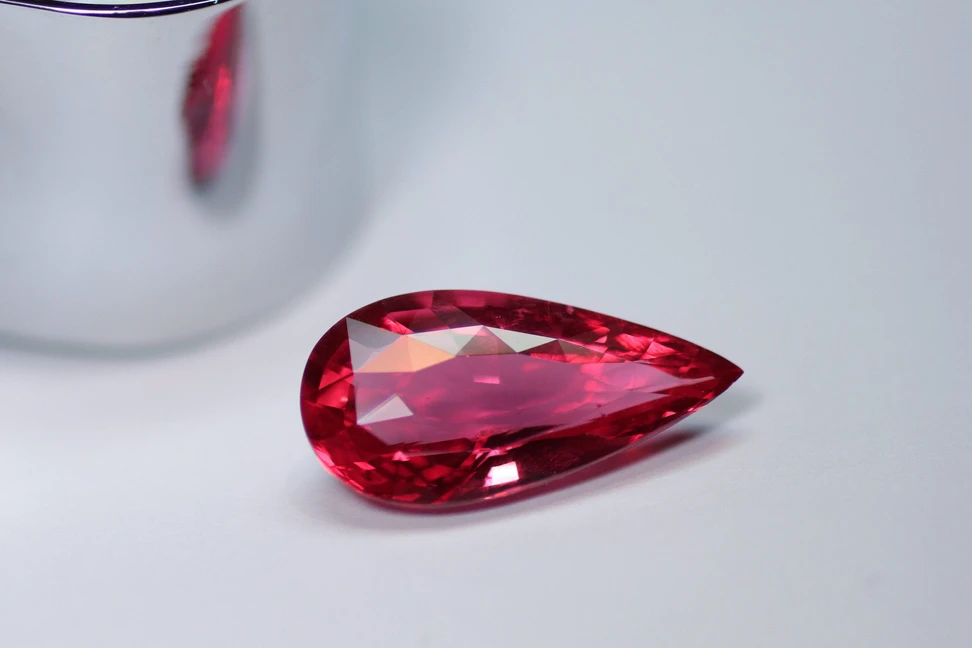
A 10ct pear-shaped Jedi spinel from Mahenge in Tanzania at Avani Gems
A Glowing Mahenge Spinel
I began my discovery at Avani Gems, where a 10-carat Mahenge spinel was waiting on a simple grey tray without fanfare or dramatic lighting. Just the unique gemstone, my loupe, and Avani Gems founder Milan Pomweera, with his wealth of knowledge about spinels, tsavorites, and a few other gems the company specialises in.
The first thing that Milan pointed out is the rich colour that made the stone almost glow from within – this is the magic of Jedi spinels. This term refers to a specific pure pinkish-red colour with absolutely no dark undertones. There was no brown or grey visible in any light, just fuchsia fire that this gem is celebrated for.
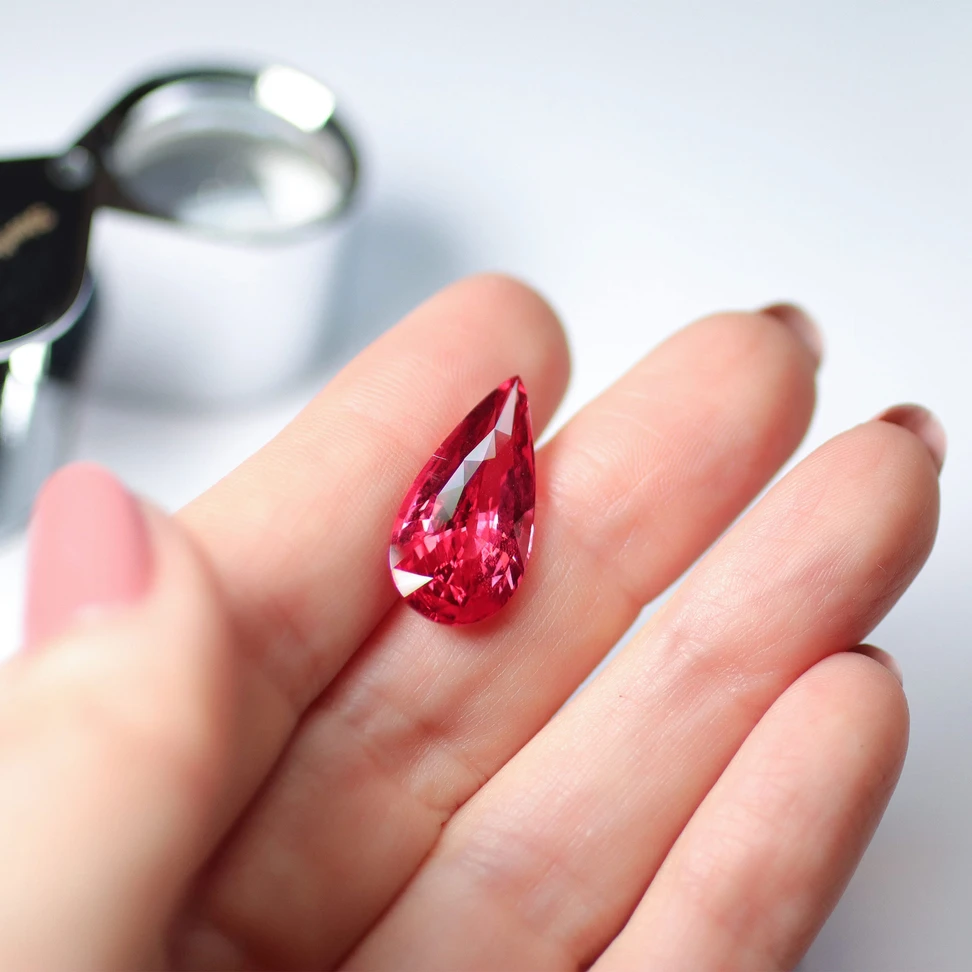
The term Jedi spinel refers to a specific pure pinkish-red colour with absolutely no dark undertones
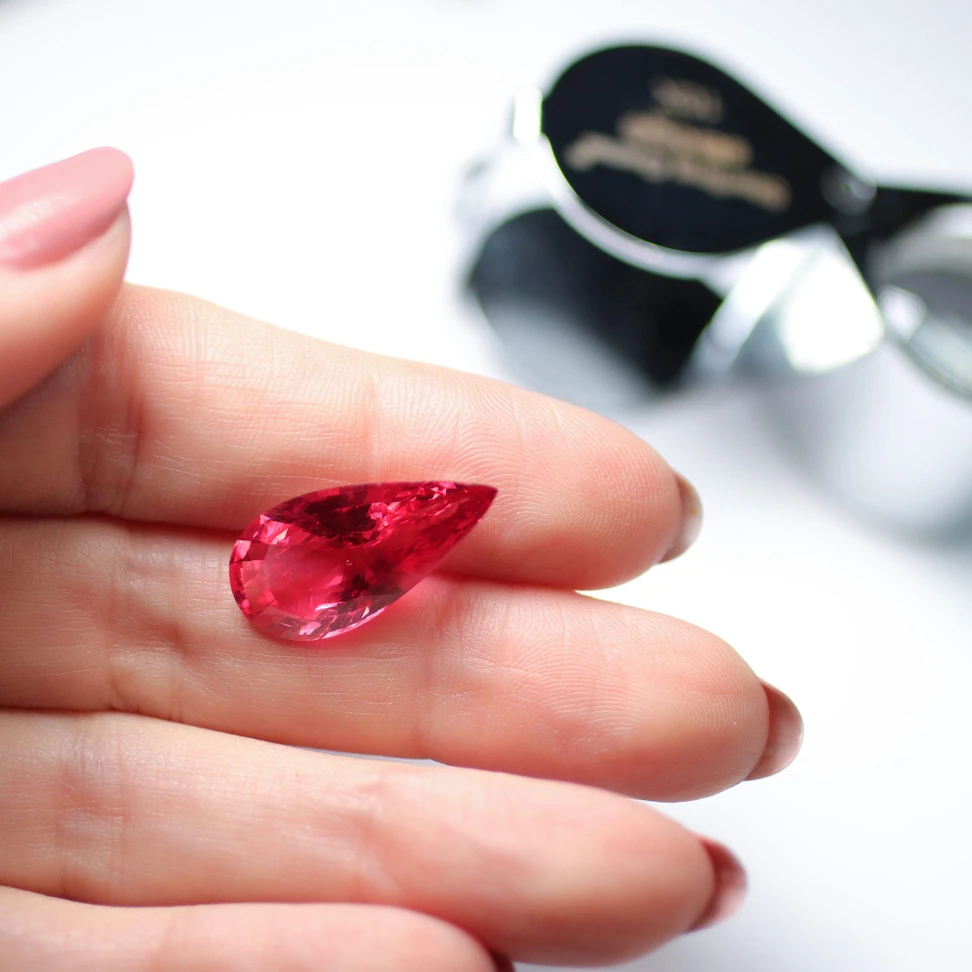
The stone almost glows from within – this is the magic of Jedi spinels
This stone was from Mahenge, Tanzania, the region that sets the benchmark for this material. And here is the detail that made me pause - it was old mine material from the original production, before the Mahenge deposits became heavily commercialised. The colour you see is the original, the real pinkish-red that made Mahenge famous before the market knew what it had.
The 10 carats that you see now were once a 20-carat rough. The cutter ‘lost’ 50% of the crystal to show respect for the material rather than greedily preserve the weight. And of course, I studied the stone under the loupe to check its clarity, which was impressive too. My verdict is that at 10 carats, with such gorgeous colour, wonderful clarity and its provenance, that is not just a gem – this is a collector's cornerstone.
The 10ct Jedi spinel was once a 20ct rough. The cutter ‘lost’ 50% of the crystal to show respect for the material rather than greedily preserve the weight
A Burmese Ruby with Maximum Potential
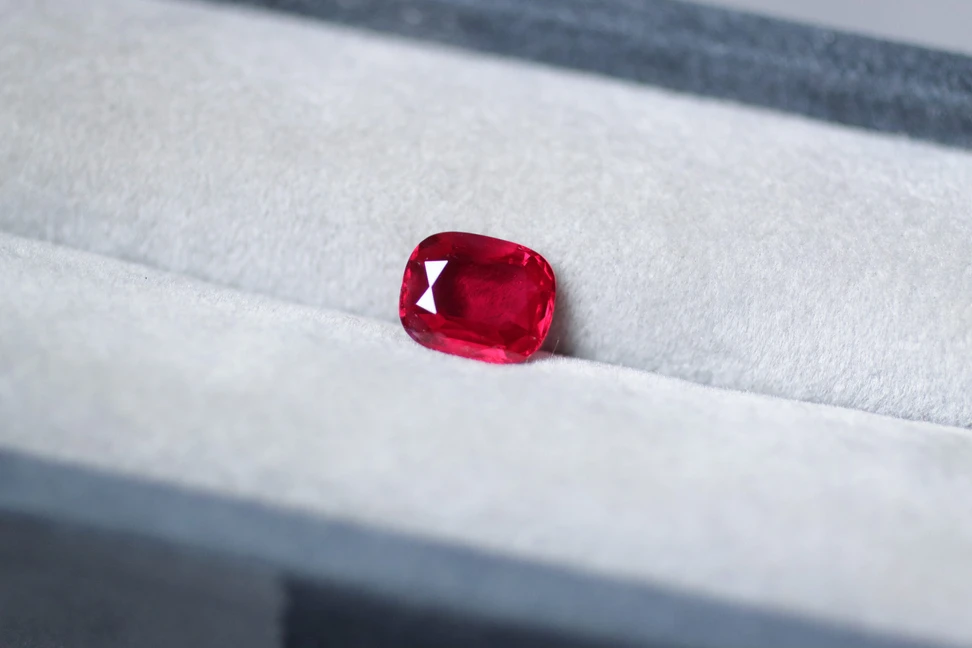
At Karl Faller, I held my breath when I saw an unheated Pigeon’s Blood red Burmese ruby from Mogok. Its weight reached 2.26 carats, but you would never guess that looking at it, because the cut was flat. The gem has a broad, shallow table designed to maximise its face-up appearance due to an inclusion that needed to be avoided in the rough crystal.
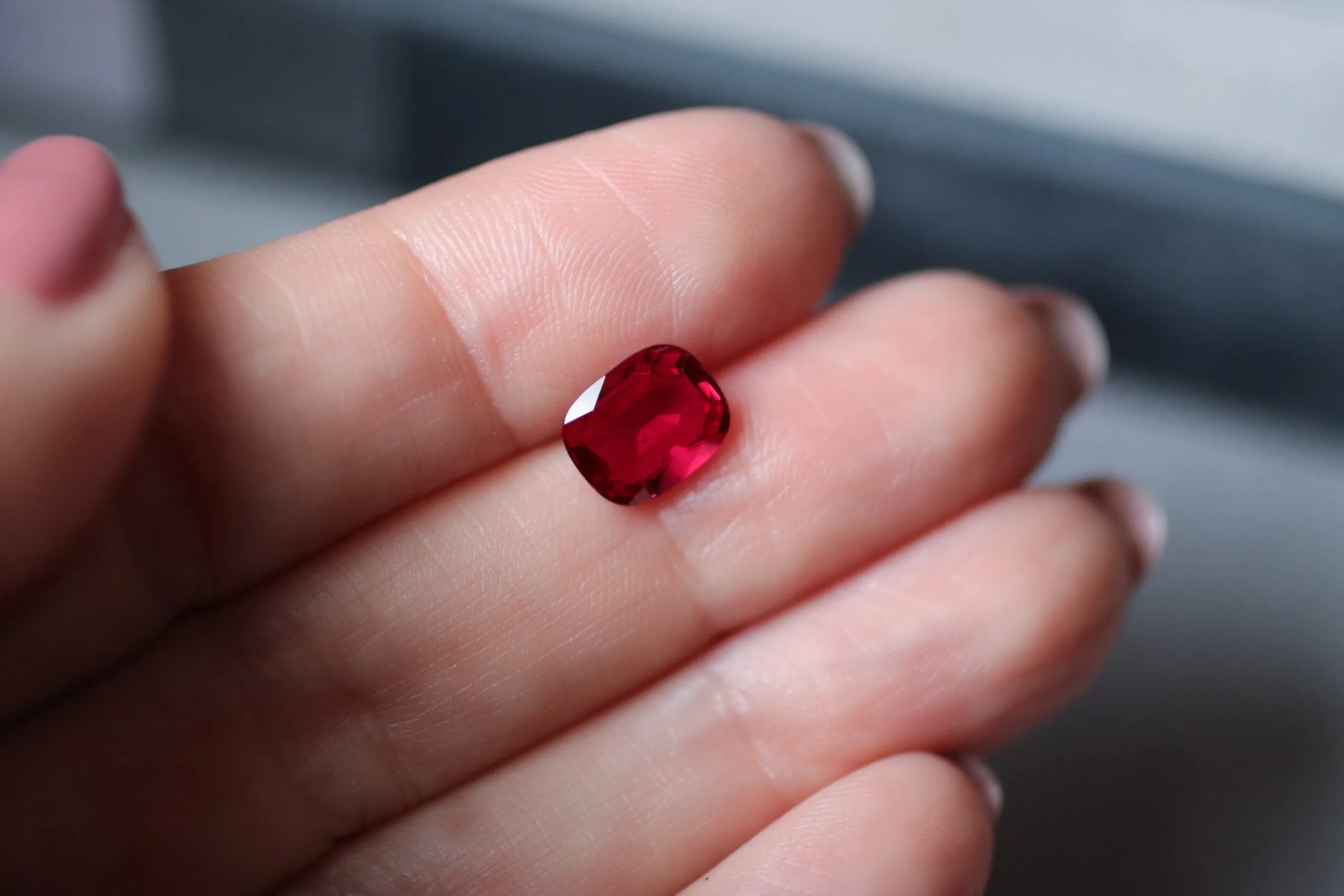
A 2.26ct cushion-cut unheated Pigeon’s Blood red Burmese ruby from Mogok at Karl Faller
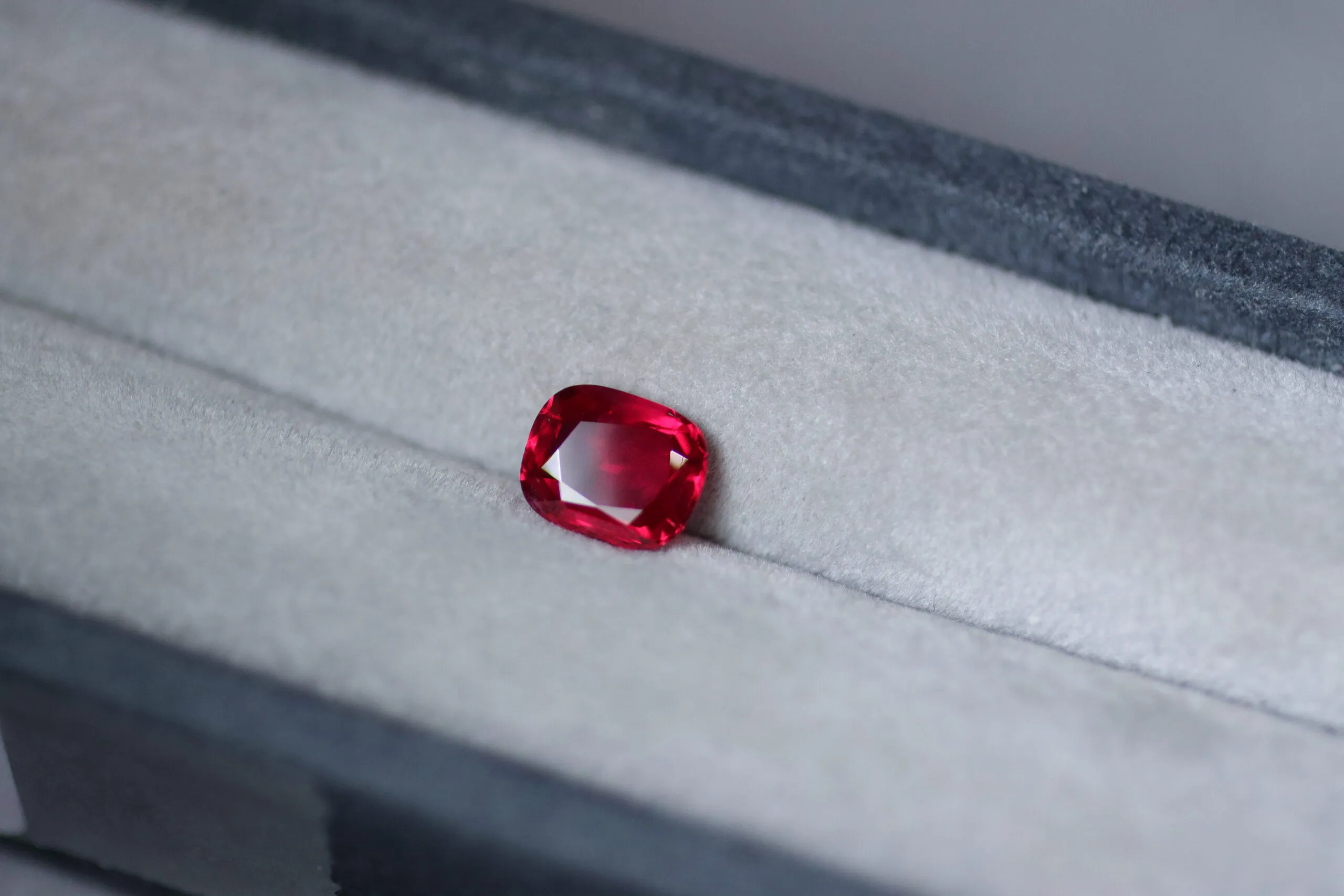
The 2.26ct Burmese ruby has a broad, shallow table designed to maximise its face-up appearance, making it look like a 3.50ct stone
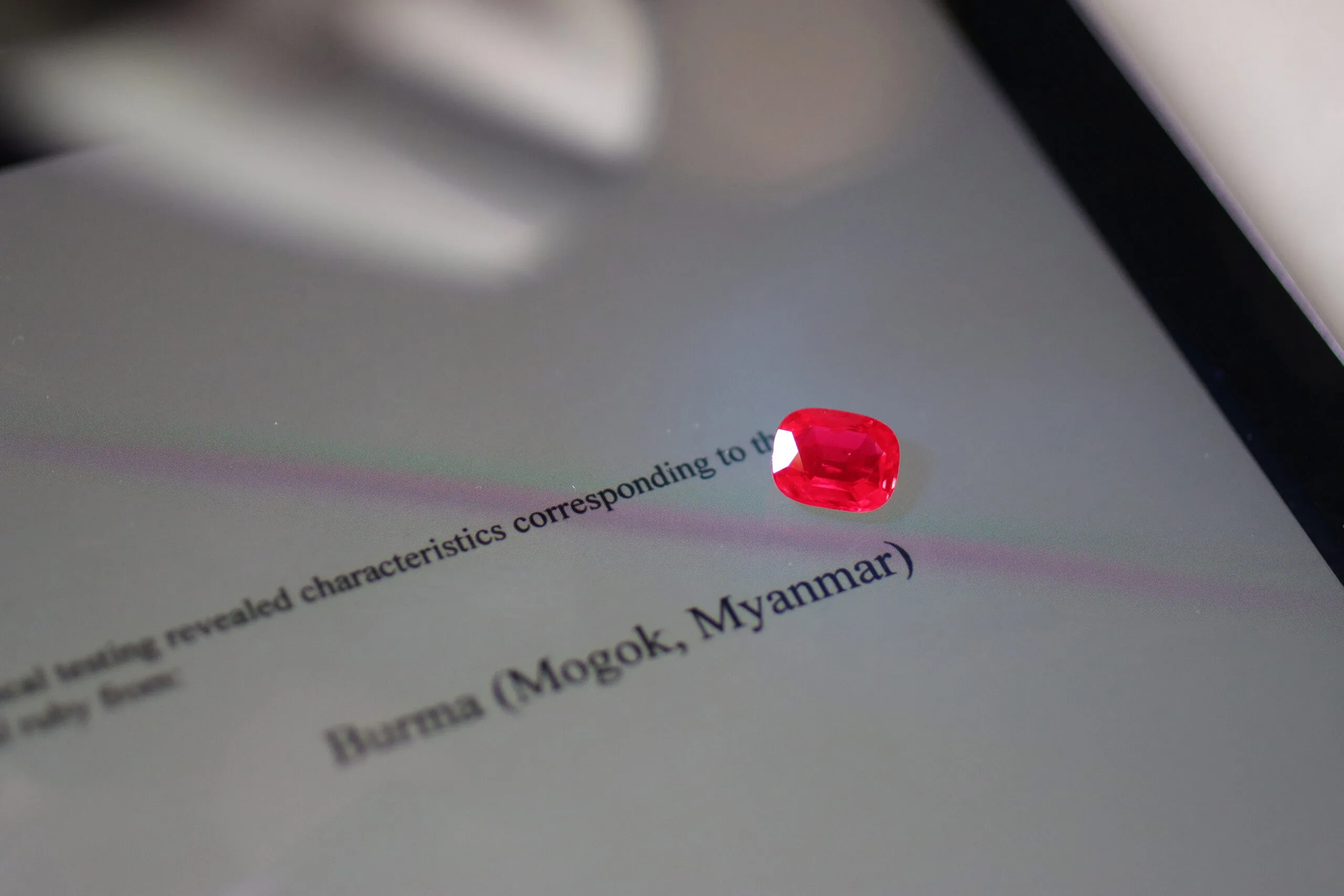
If this stone were truly 3.50ct carats, the price would jump by approximately 25% per carat
Michelle from Karl Faller explained the trade-off openly: a shallower stone that presents like 3.5 carats with the colour saturated enough to exhibit the iconic pigeon’s blood red is a good contender for a special collection because of its attractive price. If this stone were truly 3 carats, the price would jump by approximately 25% per carat. So, what you have here is a stone that looks larger than it weighs, priced at a level that reflects its actual weight, not its face-up size.
My verdict is that for the collector who understands Mogok, who knows that unheated Burmese rubies of this colour are rarely offered at any price, this is not an expense, it is an opportunity.
What you have is a stone that looks larger than it weighs, priced at a level that reflects its actual weight, not its face-up size
The Brazilian Paraíba That Should Not Exist
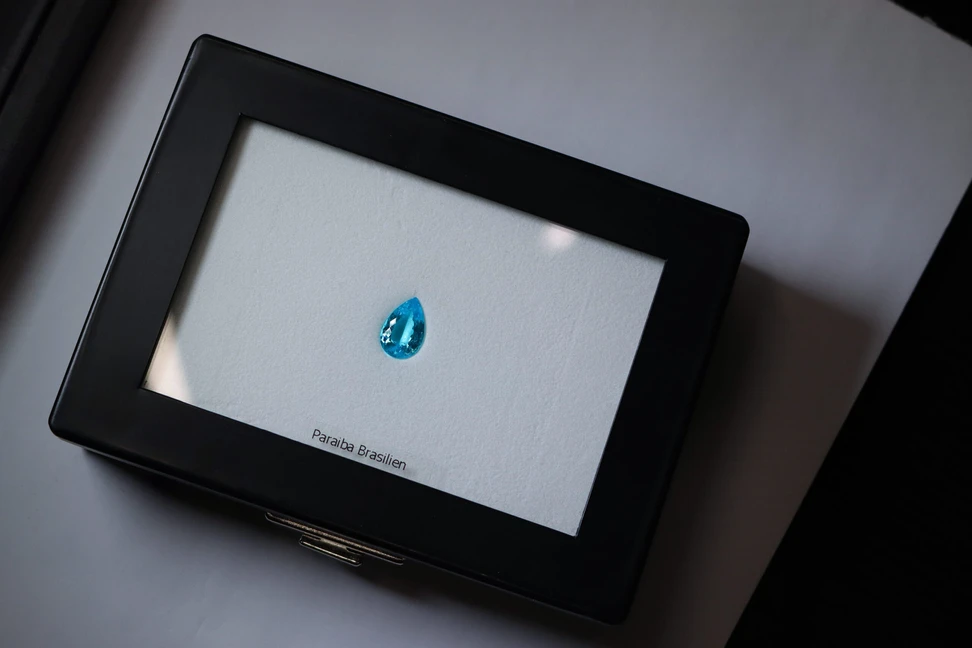
HC Arnoldi showed me something I am still processing: a one-of-a-kind 5.34 carat Brazilian Paraíba with a fantastic neon colour (blue-dominant, almost no green) and high clarity.
Let me be direct about the statistics. Most Brazilian Paraíba travels the world under one carat. A few brave souls make it to three. A five-carat faceted gem is not just a rare find; it is an exceptional one. And exceptional clarity elevates this specimen even further. Naturally, nearly all Brazilian Paraíba carries inclusions because the copper that gives the stone its signature glow is rarely polite about staying hidden. But this gem was so clean!
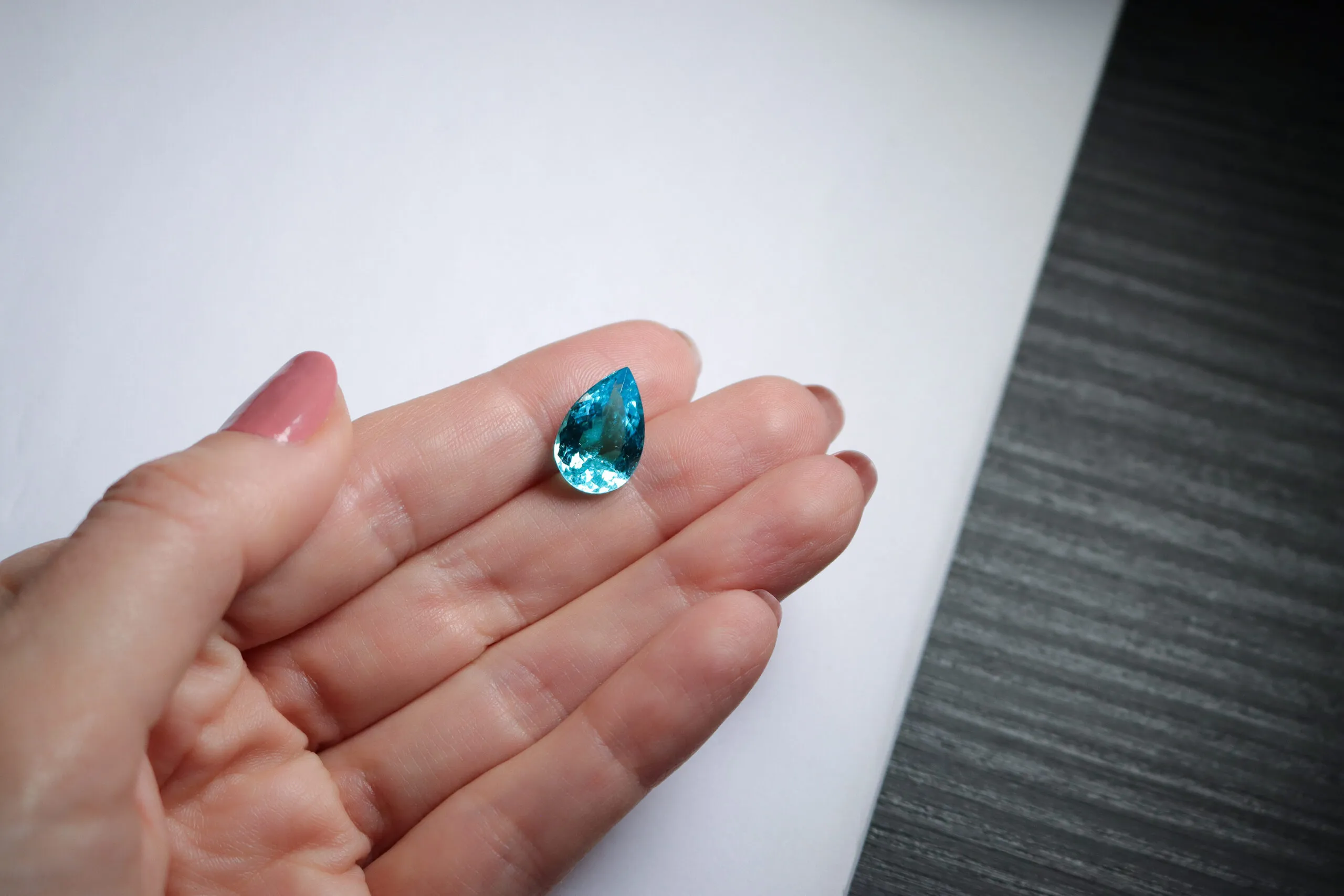
A 5.34ct pear-shaped Brazilian Paraíba tourmaline at HC Arnoldi
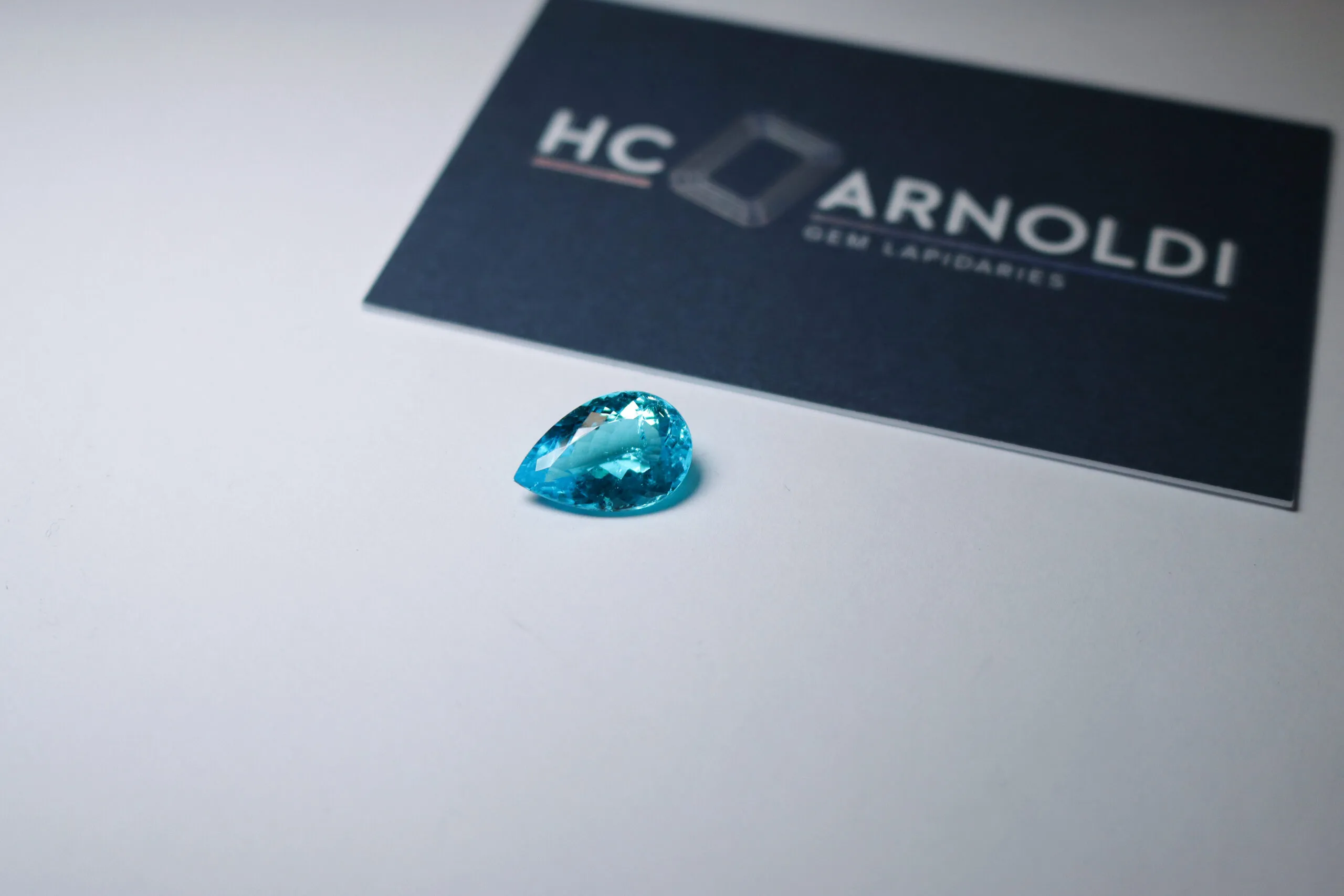
It has a fantastic neon colour (blue-dominant, almost no green) and high clarity
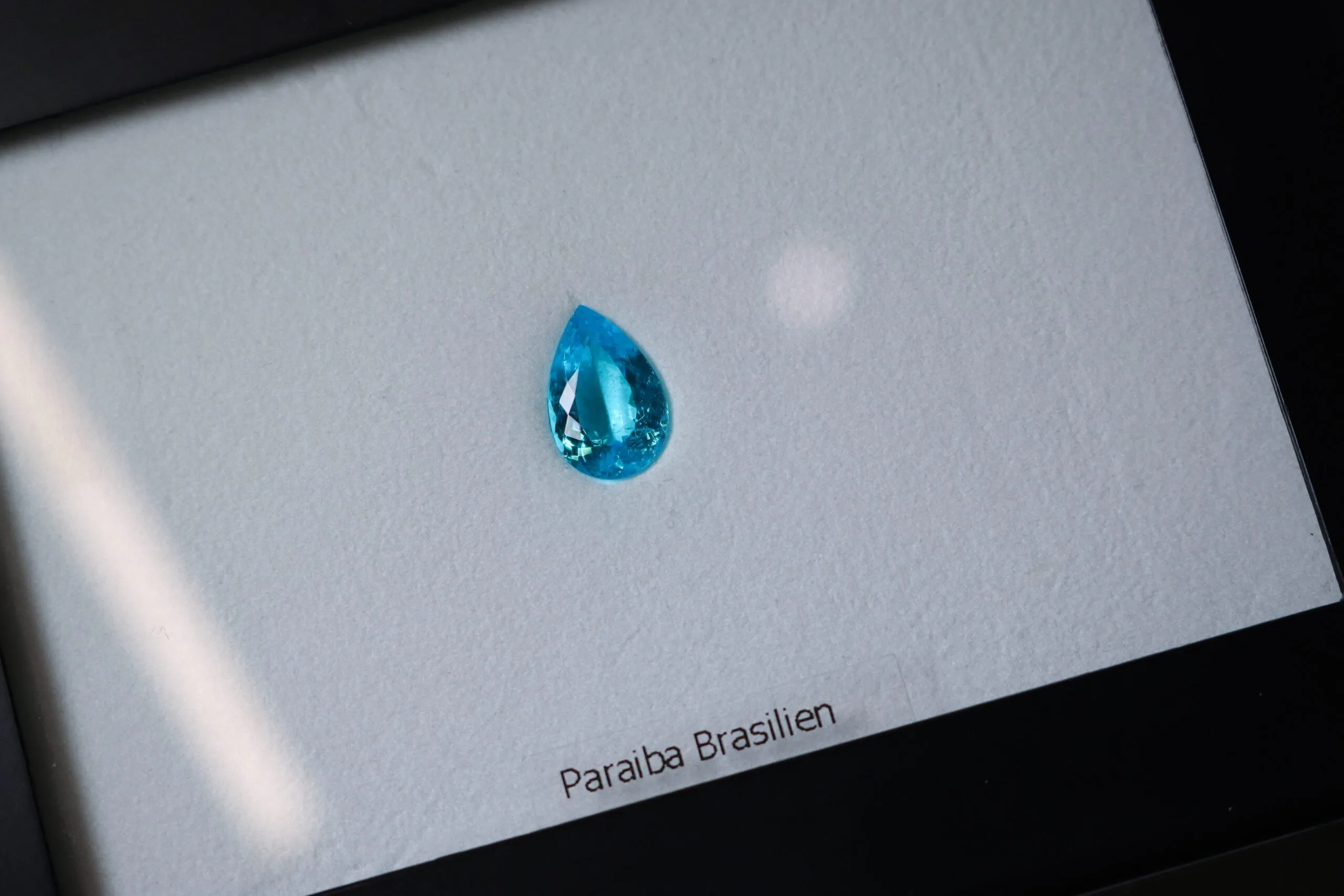
Most Brazilian Paraíbas are under 1ct, making a 5ct faceted gem a truly exceptional find
Carl Philippe Arnoldi shared that this stone comes with two lab reports, one of which is GRS. My verdict is that for the collector who already has a Paraíba tourmaline from Mozambique, this is the Brazilian cousin that belongs in the same collection.
Padparadscha That Glows Like the Sunset
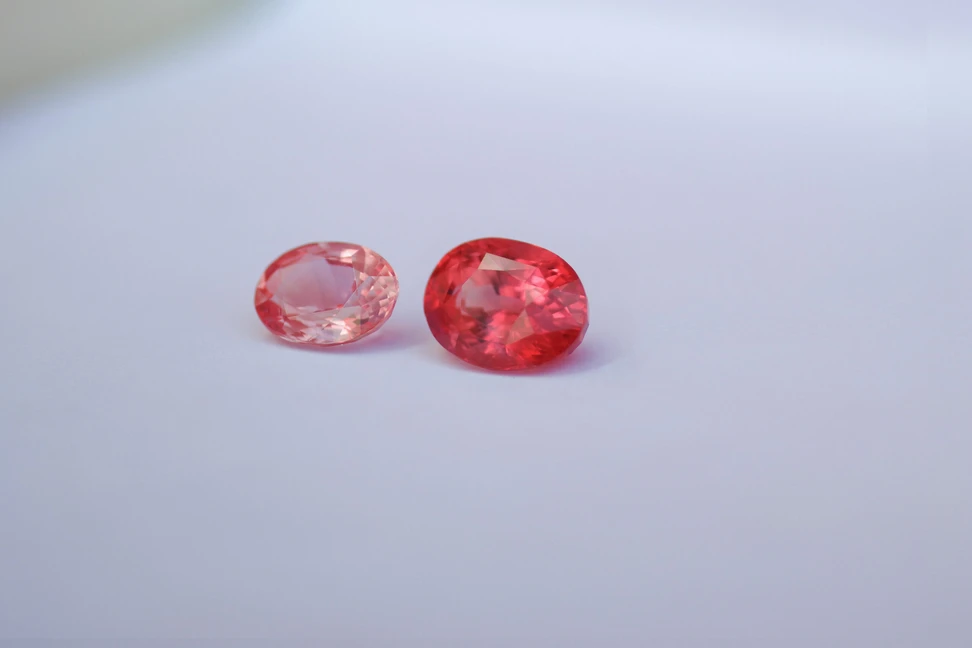
Vlad Yavorskyy has been collecting gems for several decades, and he never ceases to amaze with unique examples of gems that we all know, so his booth was the one I did not want to miss. When I stopped by, I got instantly drawn to a 15-carat padparadscha from Ratnapura, Sri Lanka, ‘winking’ at me from the display. It displayed the classic glowing sunset hue that makes padparadscha impossible to confuse with any other gem.
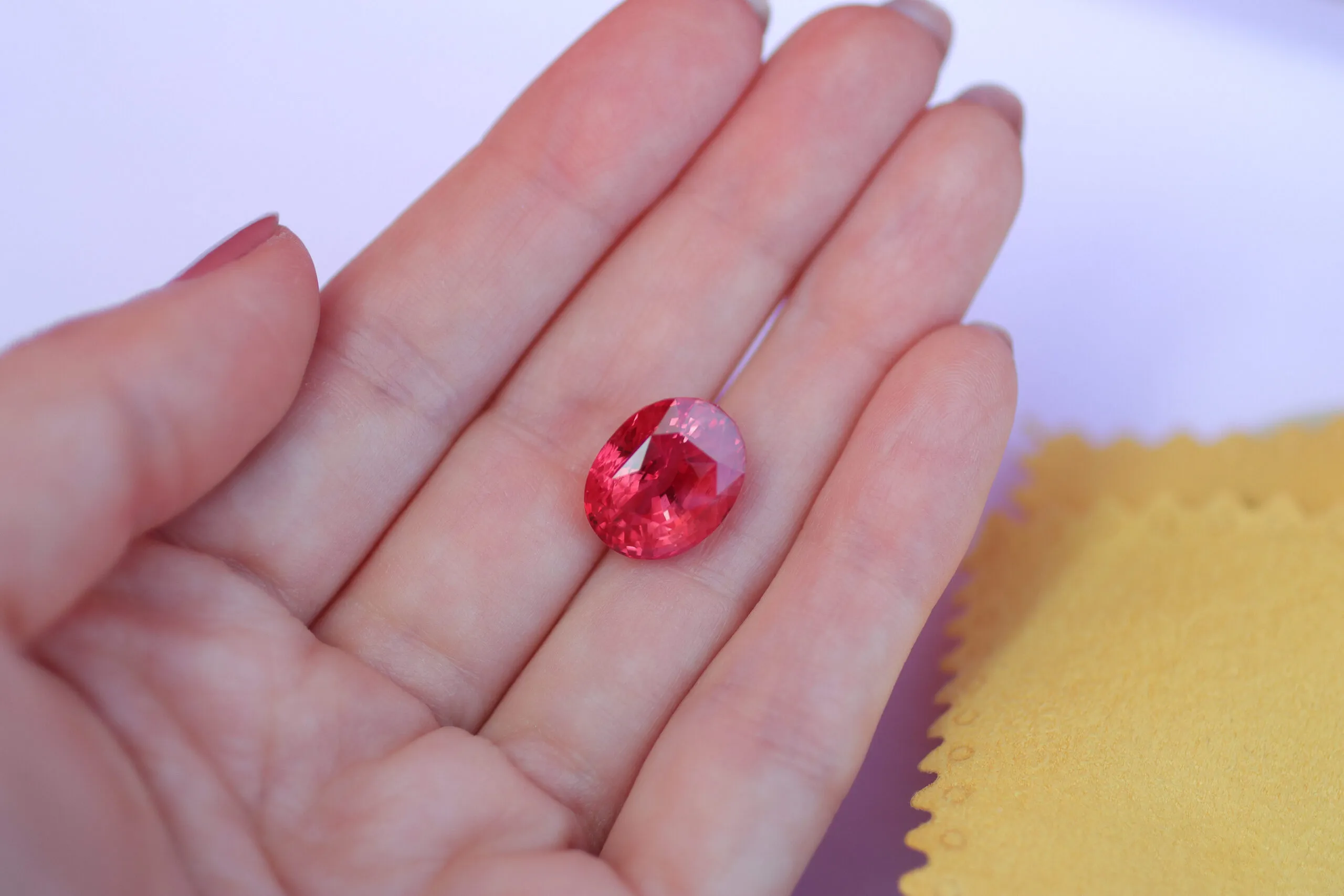
Vlad Yavorskyy brought a 15ct Padparadscha originating from Ratnapura in Sri Lanka to GemGenève
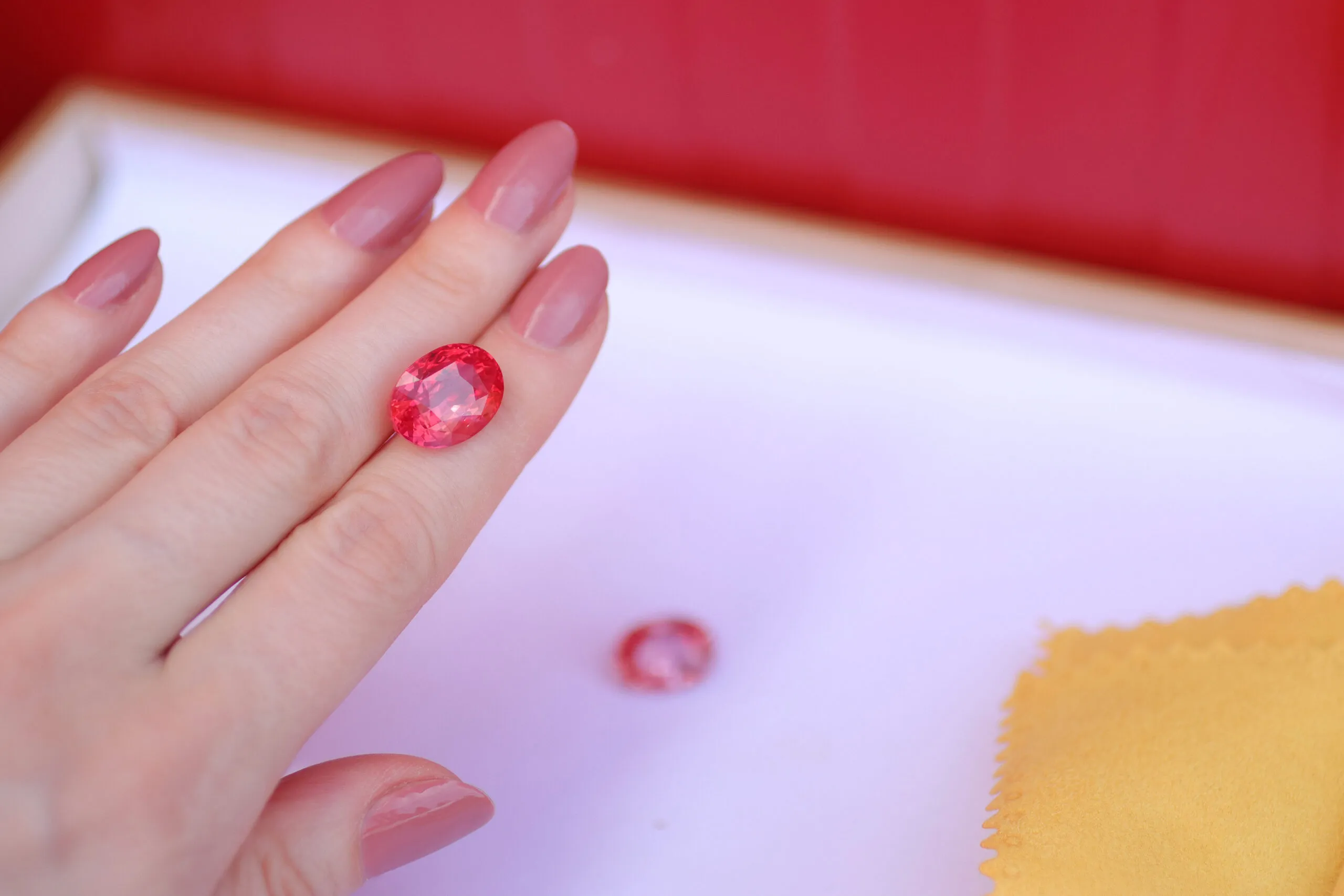
It displayed the classic glowing sunset hue that makes padparadscha impossible to confuse with any other gem
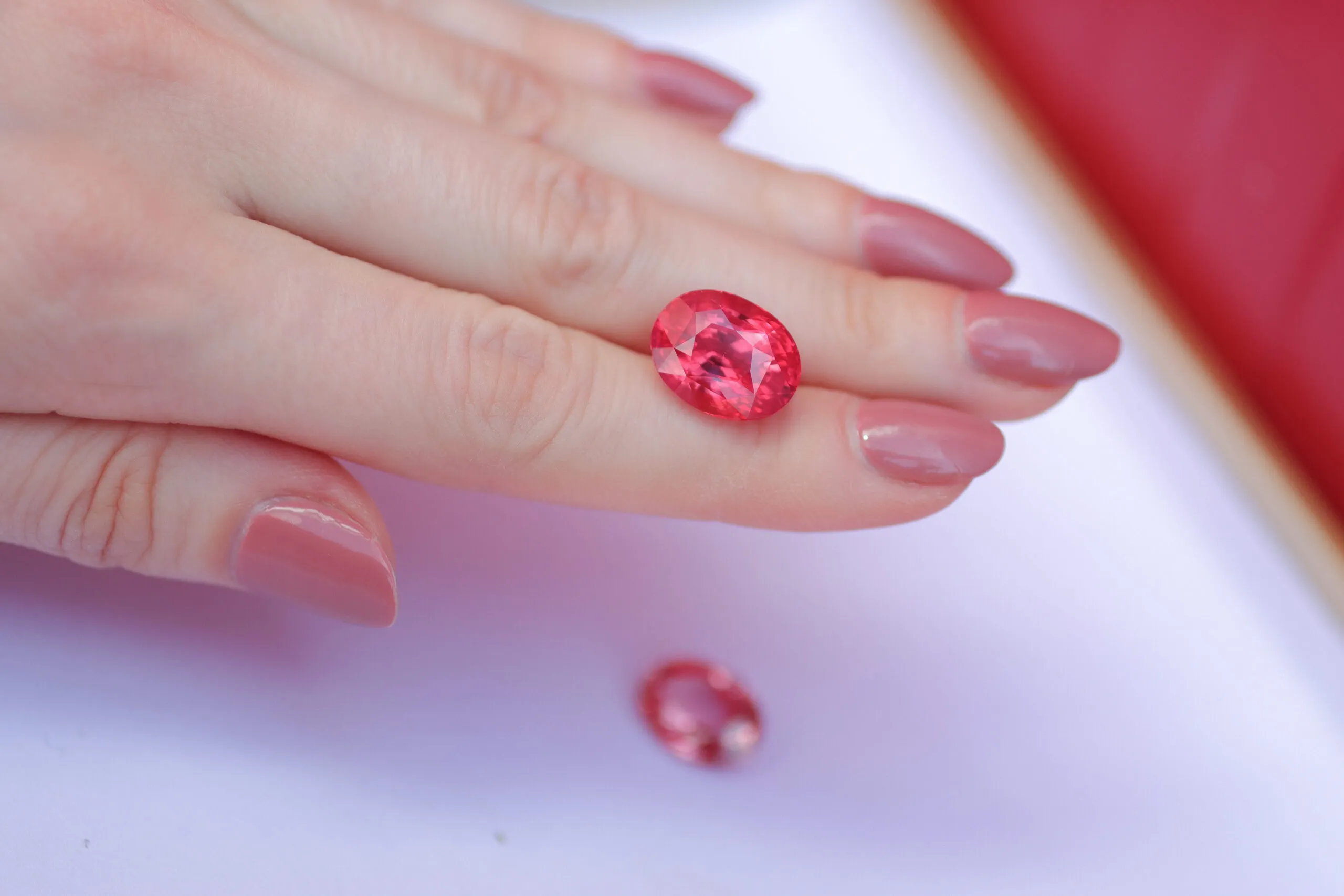
The padparadscha's colour was extraordinarily saturated
Now I have seen many padparadschas and many of them are quite ‘modest’ in their colour saturation. But this one? The colour was not delicate, it was extraordinarily saturated - a confident pink orange that announces itself without shouting. What was even more impressive was that it was the gem’s natural colour; no heat has been applied it in its lifetime.
My verdict is that this padparadscha is for the collector who understands timing, that provenance is not just romantic, it is practical. This is a rare gem, fairly positioned, waiting for someone who knows what they are looking at.
This padparadscha is for the collector who understands timing and that provenance is not just romantic, it is practical
A Grandidierite with an Exceptional Certificate
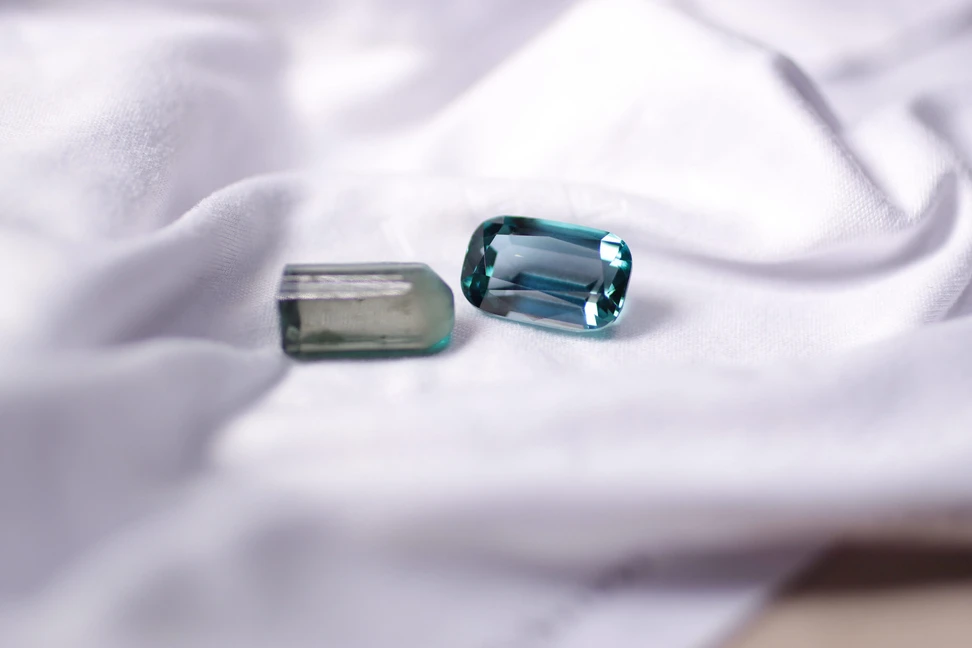
I saved the rarest for last to surprise you with a gem so scarce that there are not enough specimens for even 20 collectors in the world. Renowned gem connoisseur Jochen Leën presented a superb 9.32 carat grandidierite with extraordinary clarity.
Most gem lovers have never even heard of this gem, and most dealers have never held a clean one in their hands. Grandidierite is one of the rarest gem minerals on earth, and it is found in only one place - Madagascar. It is almost always heavily included, and in most cases, it is even opaque. Transparent grandidierite is really what we see in academic papers or museum collections. This one is very clean, which already elevates it to the rank of ‘superior’.
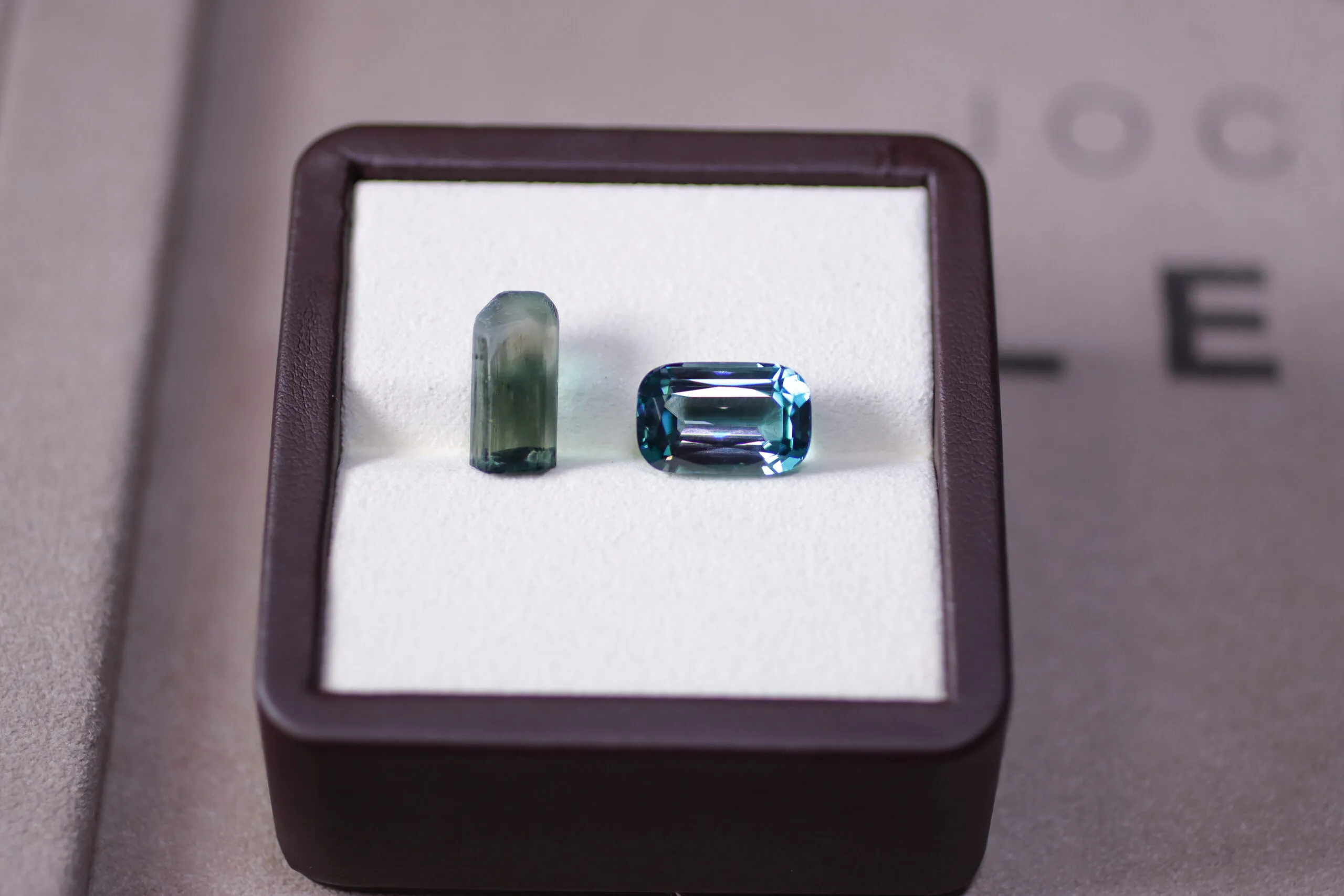
Grandidierite is so scarce that there are not enough specimens for even 20 collectors in the world
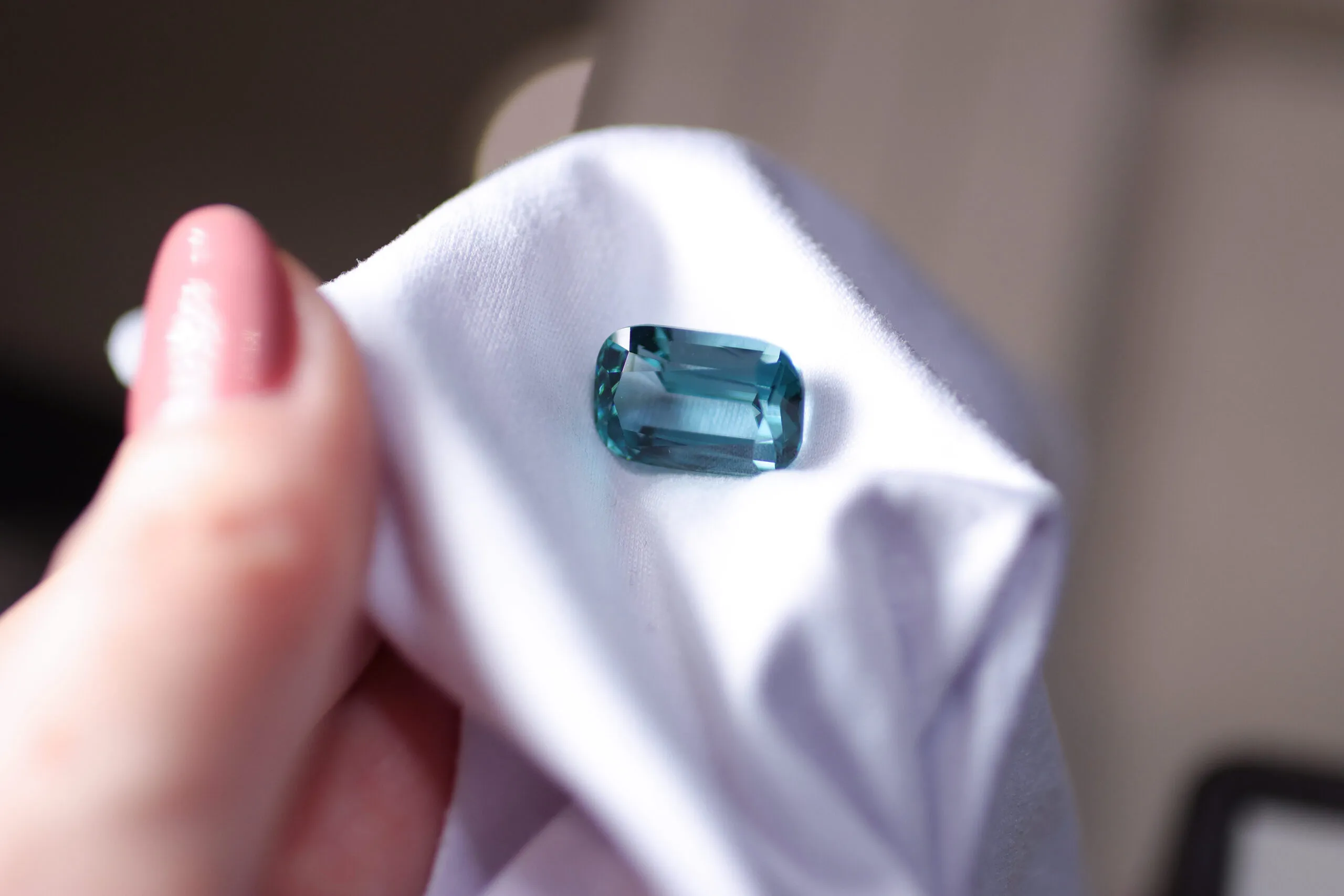
The most common variety of grandidierite is greenish, but this 9.31ct gem has an obvious bluish tone, which is more sought-after by serious collectors
And the colour? The most common variety of grandidierite is greenish. However, this 9.31 carat gem had an obvious bluish tone, which is more sought-after by serious collectors. While laboratories almost never volunteer an opinion on quality, this certificate arrived with a special note which said in pure writing that "the quality needs to be considered exceptional." Think about that. A laboratory, which is an institution built on neutrality and measurement, decided that standard language was insufficient. They wanted the record to show that this stone is not just authentic, it is outstanding!
My verdict is that it would not be possible to find another grandidierite like this one at GemGenève. And judging by the certificate's note, there may not be another one like this anywhere in the world.
While laboratories almost never volunteer an opinion on quality, the certificate for this grandidierite arrived with a special note stating "the quality needs to be considered exceptional"
To the dealers who brought these stones to GemGenève: thank you for trusting me to tell their stories. And to the readers who made it this far: which of these collectable stones would you want to see in person? I would genuinely love to know, and I look forward to your messages. You can write to me by clicking on the dialogue icon in the bottom right corner.


WORDS
Katerina Perez Is a jewellery insider, journalist and brand consultant with more than 15 years’ experience in the jewellery sector. Paris-based, Katerina has worked as a freelance journalist and content editor since 2011, writing articles for international publications. To share her jewellery knowledge and expertise, Katerina founded this website and launched her @katerina_perez Instagram in 2013.
RelatedArticles
Discover the brand: the story from various angles.