This Week in Jewellery: Timely Treasures, Mighty Mascots and Other News You Might Have Missed
New York, Geneva and London are all giving us something worth looking at this week, from a watch hidden inside a lily bud to one of Cartier’s rarest mystery clocks returning to auction. Elsewhere, a celebrated collector opens her jewellery box, while one Copenhagen designer revisits familiar pieces at an entirely different scale.
For more news as it happens, head to the Katerina Perez Club, where you’ll find the latest jewellery launches, exhibitions, appointments and industry news, alongside original stories from our editors, each bringing their own perspective and expertise. Updated daily, it’s your one-stop destination for everything happening in the world of jewellery.
DYNE Hides Time Inside a Lily Bud
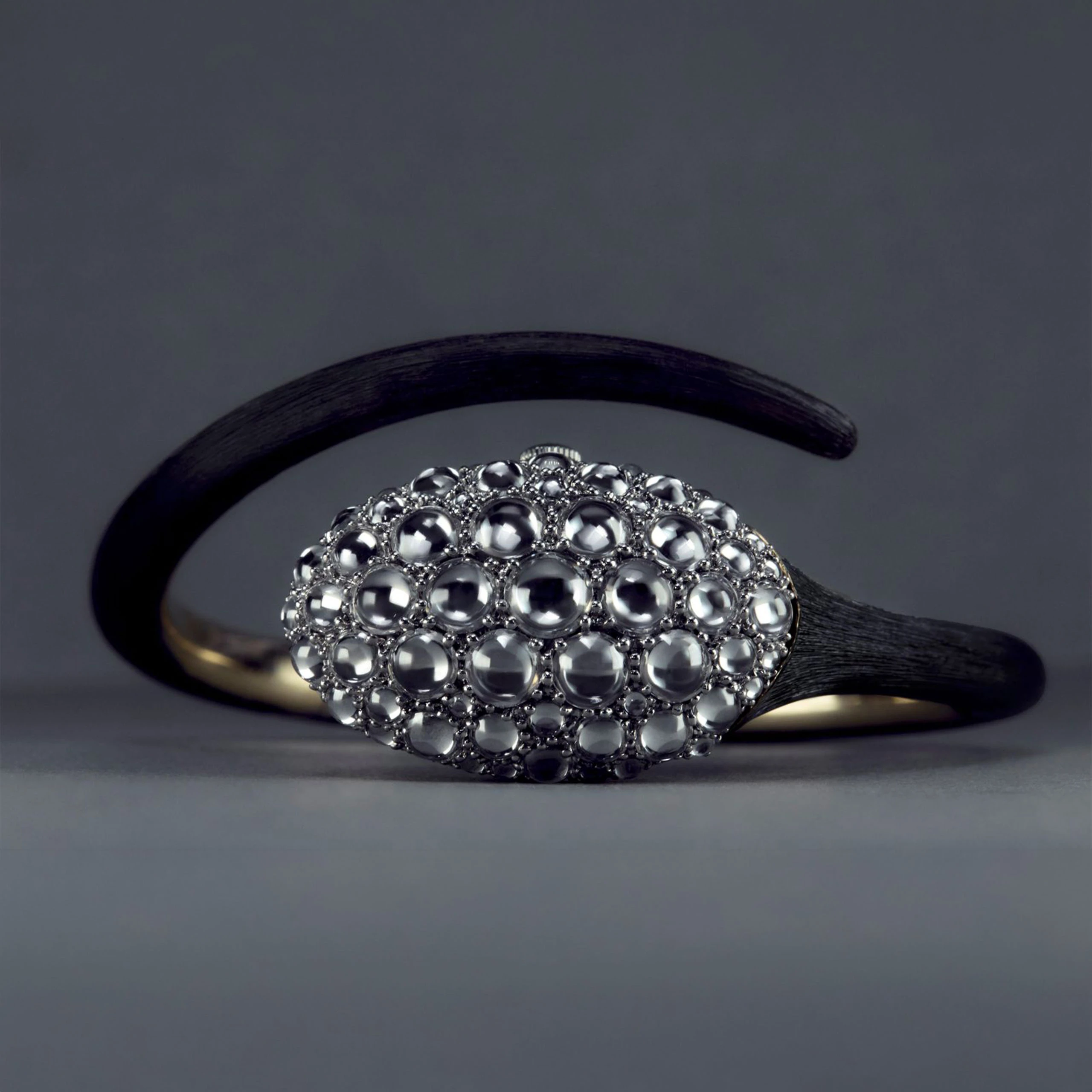
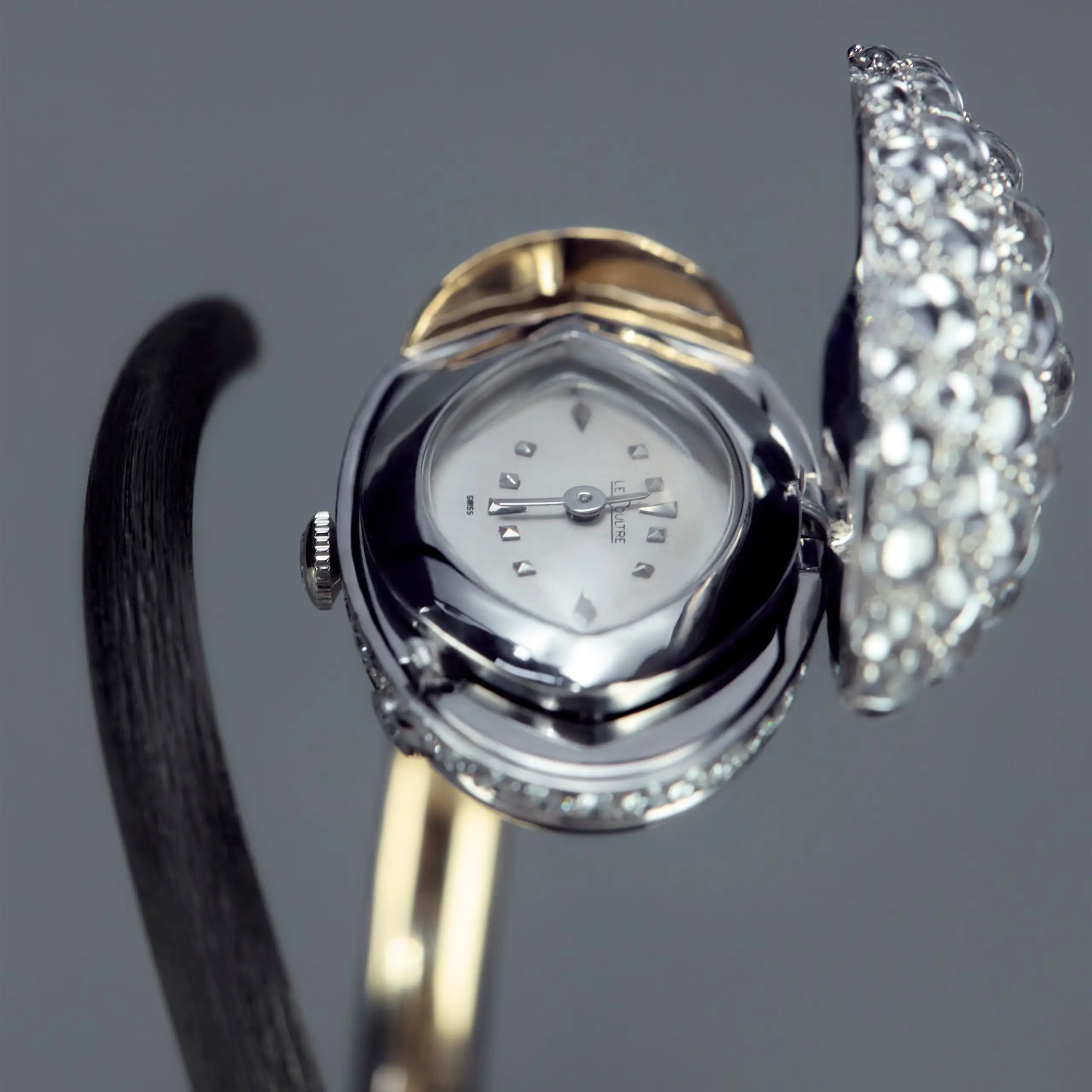
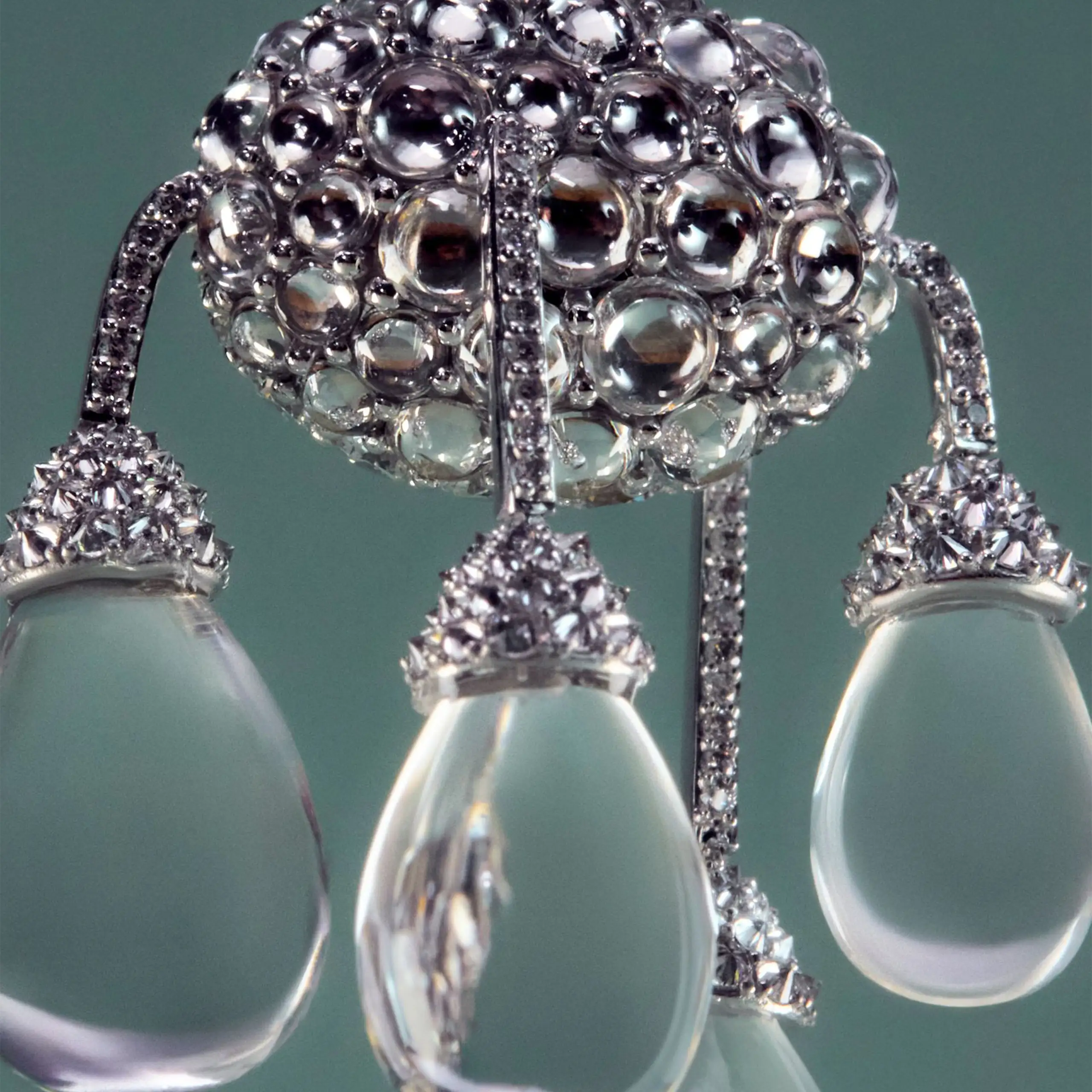
Sarah Ysabel Narici’s first watch for DYNE is one of those objects that asks to be discovered slowly. Unveiled at Salon Art + Design in New York, the miniature dial is concealed beneath a sculpted lily bud, so the watch, which is part of the Protection II collection, initially reads as jewellery.
More than 11 carats of individually hand-carved D to F diamond cabochons cover the flower. Their rounded surfaces give the diamonds a more fluid, tactile presence, particularly against the contrast of yellow gold and blackened gold. Beneath the flower sits a vintage Jaeger-LeCoultre movement, visible through a hand-carved sapphire crystal.
There is history behind the gesture. During the 1920s and 1930s, jewellers including Cartier and Van Cleef & Arpels frequently concealed watch dials inside bracelets, brooches and pendants. The movement existed to serve the jewel, not dominate it. Narici returns to that idea without nostalgia. Her lily bud belongs to a world shaped by Japanese contemporary artist Mariko Mori, Soviet architect Galina Balashova and Narici’s continuing study of protection. The sharp reverse-set diamonds of earlier bud designs have given way to rounded cabochons and a flower beginning to open, with the time still hidden inside.
Pauline Karpidas Brings a Collector’s Eye to Sotheby’s
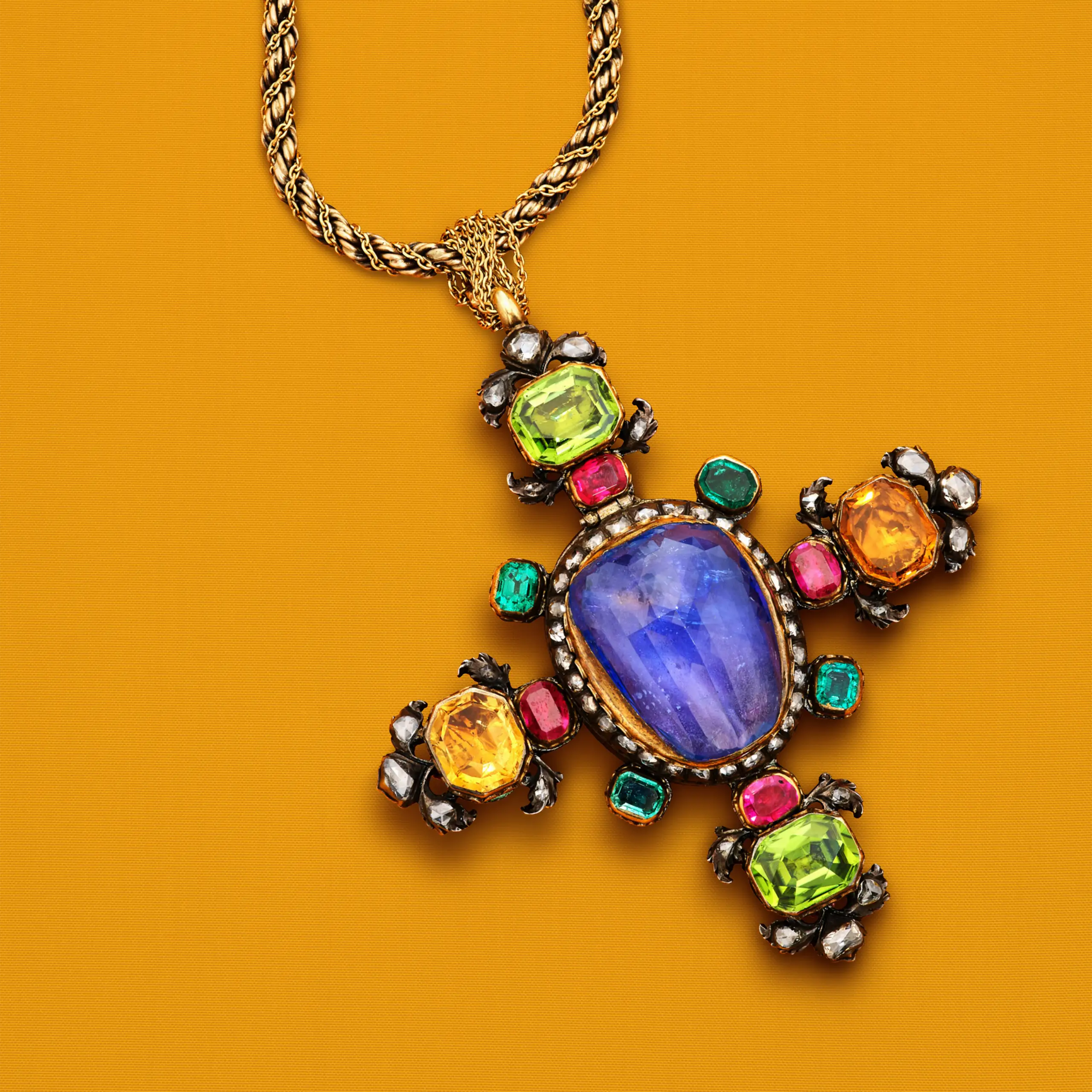
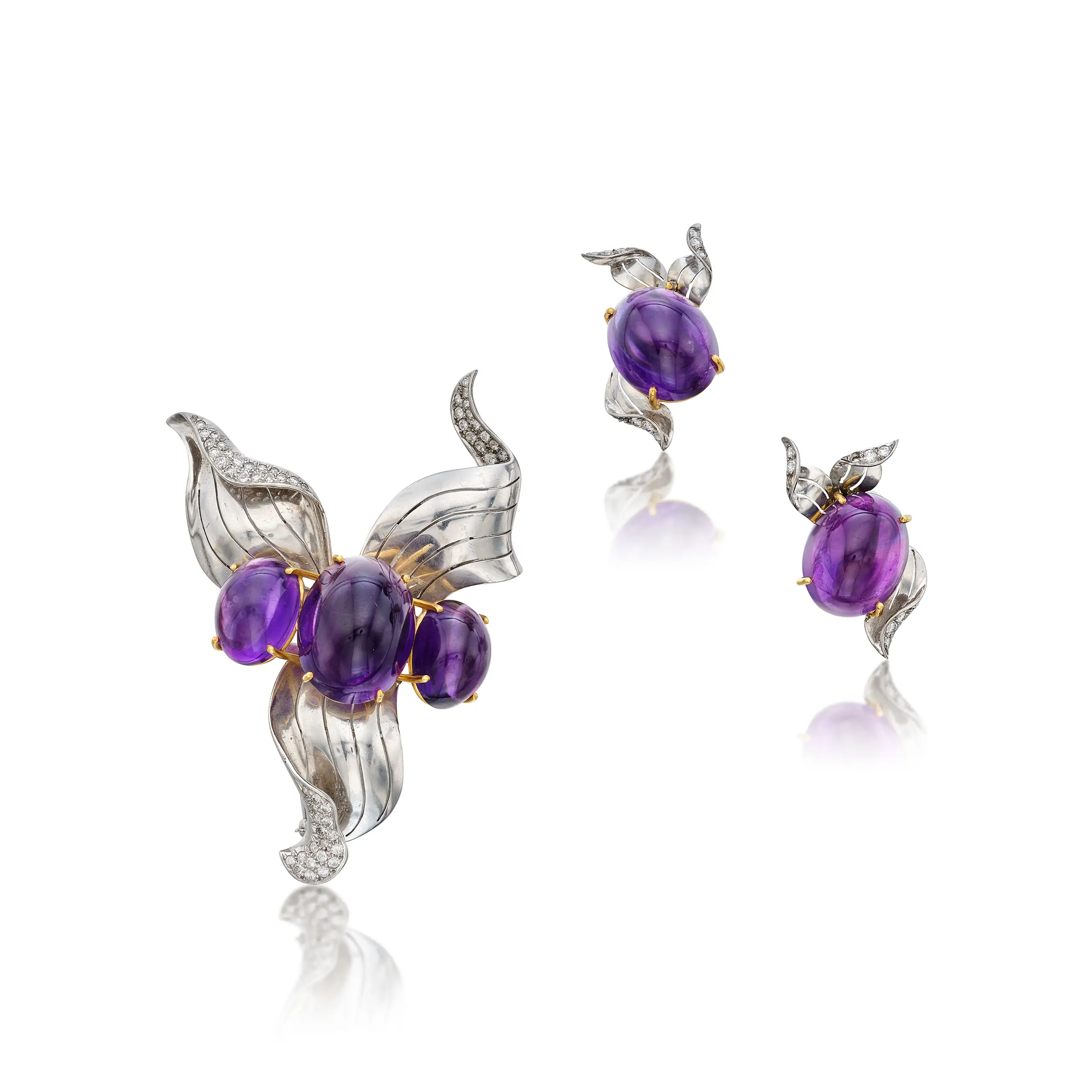
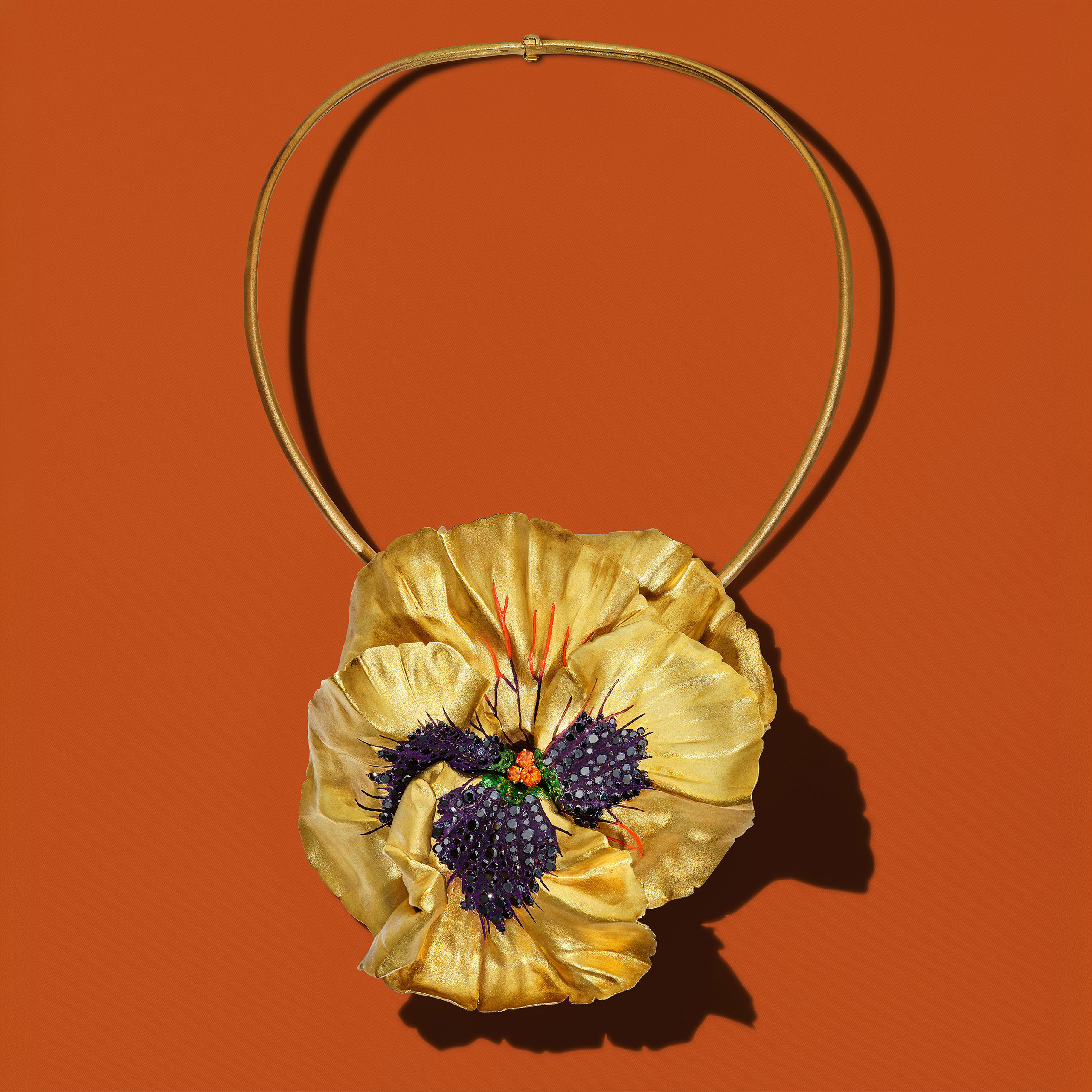
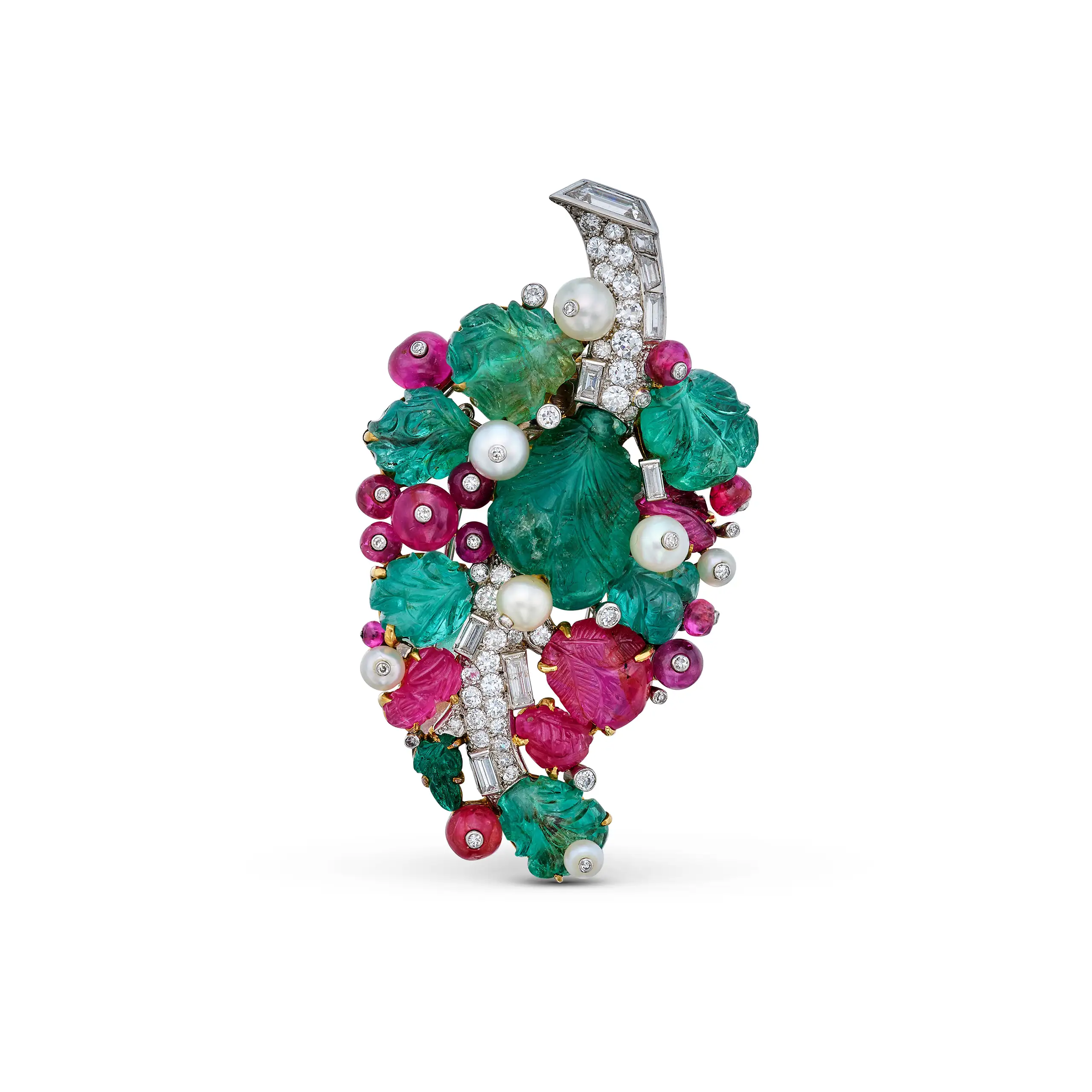
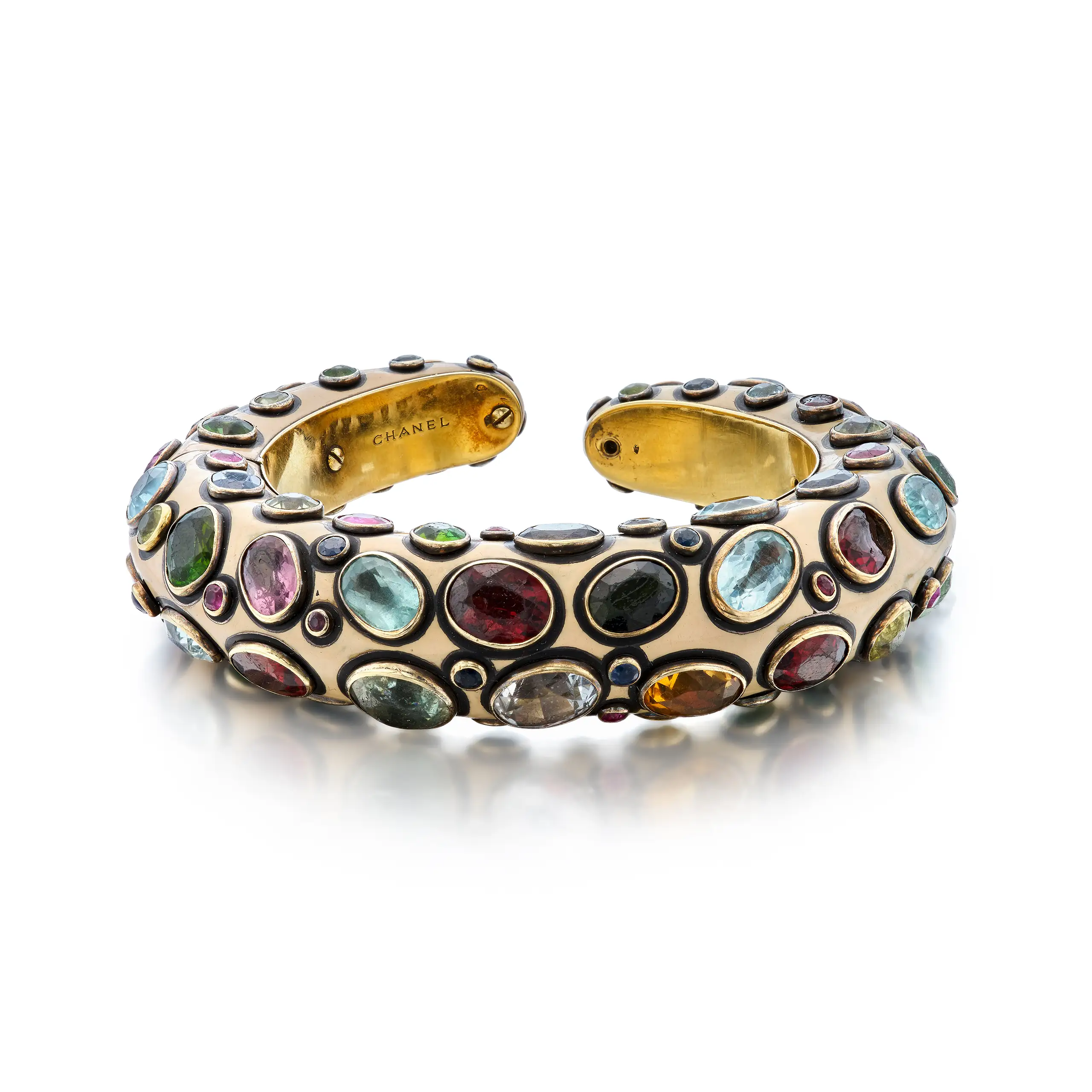
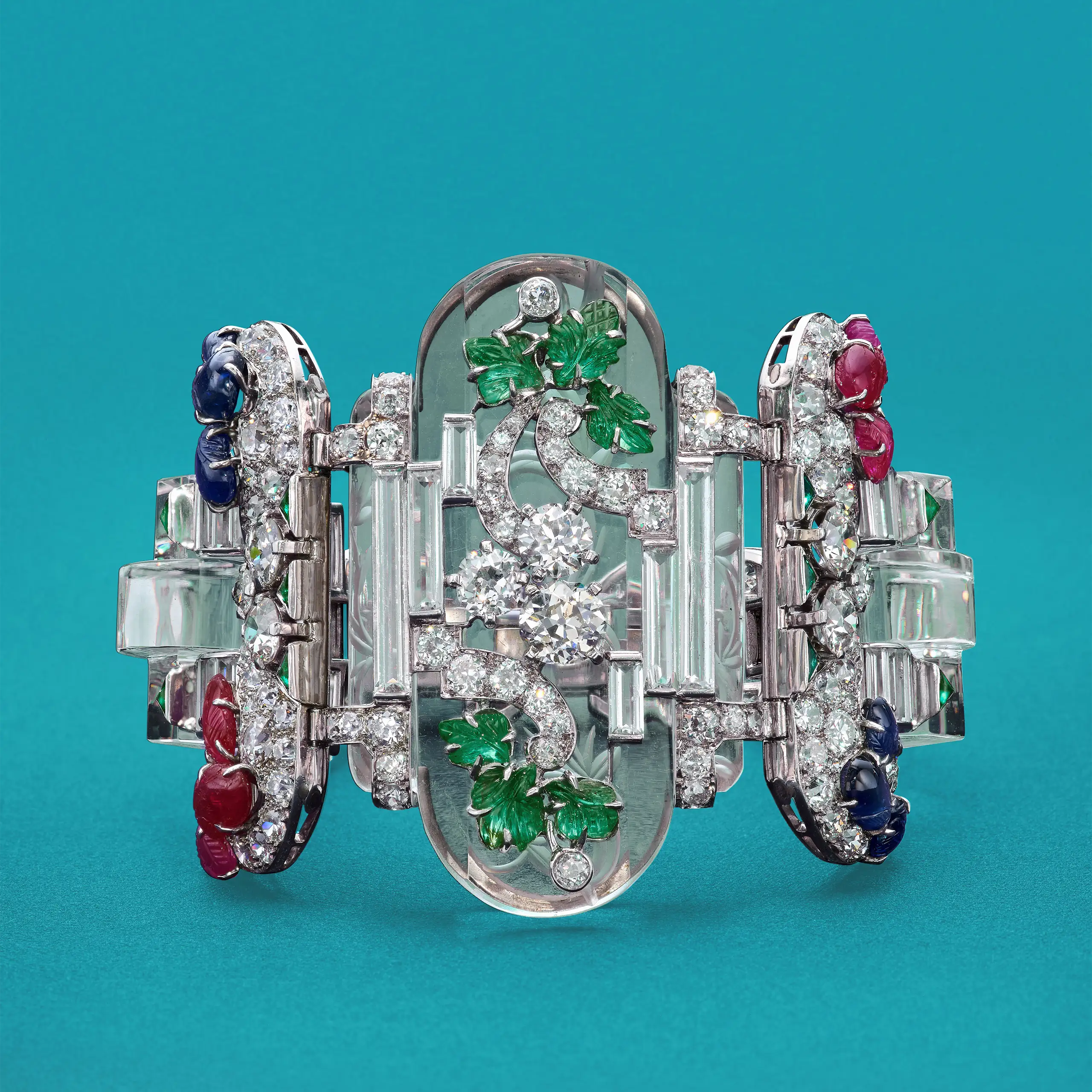
The English contemporary art collector, Pauline Karpidas, has never separated jewellery from art, which makes the forthcoming sale of her personal jewels at Sotheby’s New York particularly compelling. On December 8, 70 works estimated together at around $10 million will come to auction, spanning JAR, Suzanne Belperron, Cartier, Boucheron, Van Cleef & Arpels, Bulgari, Chanel and some of the strongest periods of 20th-century design.
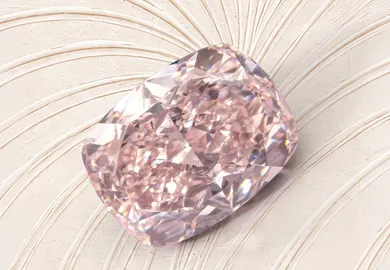
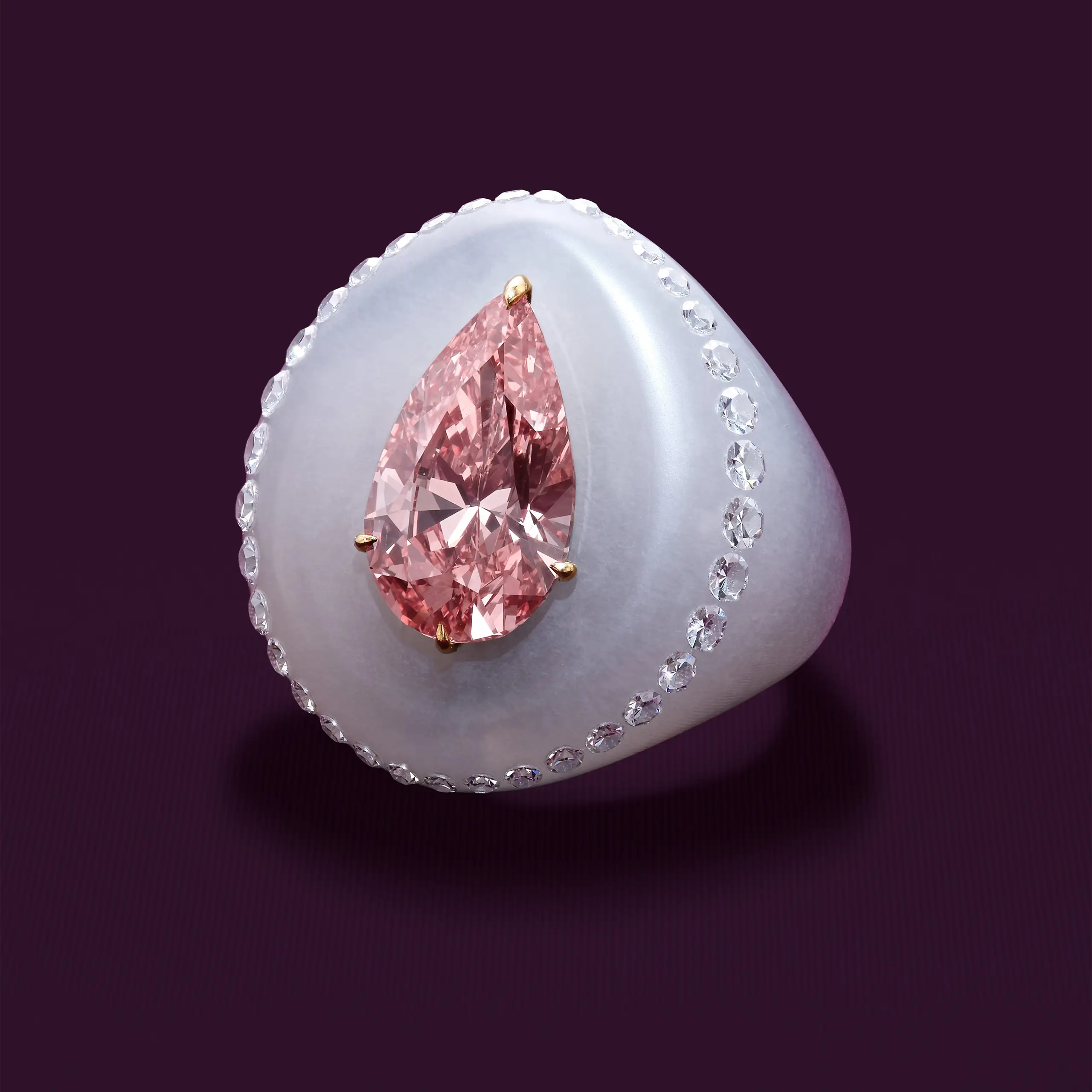
The interest lies in how personally these pieces were chosen. Karpidas collected jewellery with the same appetite for wit, strangeness and strong authorship that shaped her celebrated art collection. A JAR chalcedony ring centres a fancy intense orangy pink diamond inside a pale sculptural surround. Belperron appears through an extraordinary aquamarine and diamond necklace brooch. Other pieces carry histories of their own, including jewels acquired from the Andy Warhol estate and the Duchess of Windsor sale.
This is the jewellery wardrobe of a collector who allowed Surrealism, fashion, design and personal relationships to coexist. The names matter, but so do the juxtapositions, the provenance and the evidence of a woman who collected according to her own eye.
Cartier’s Portico Mystery Clock No. 4 Returns to Geneva
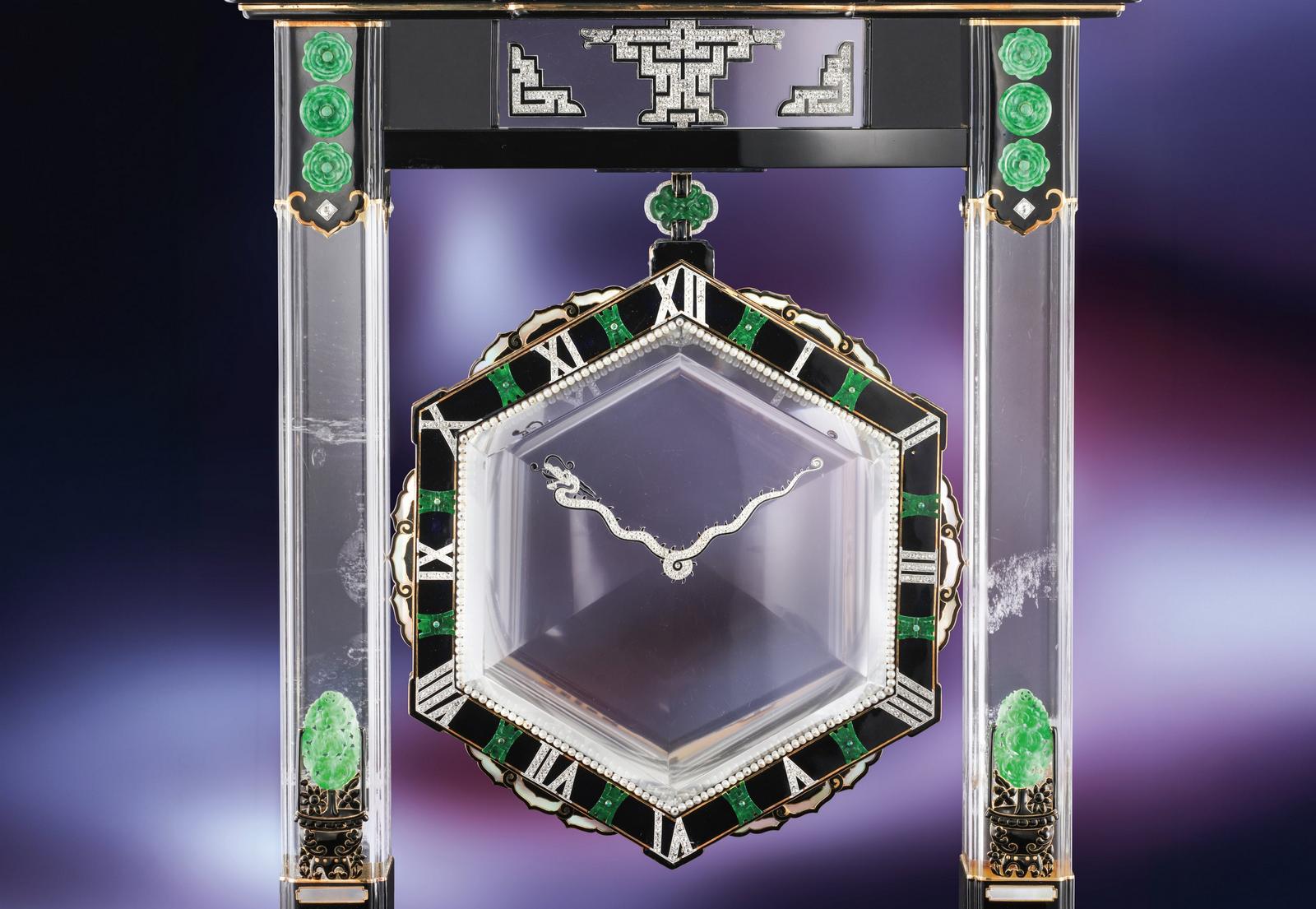
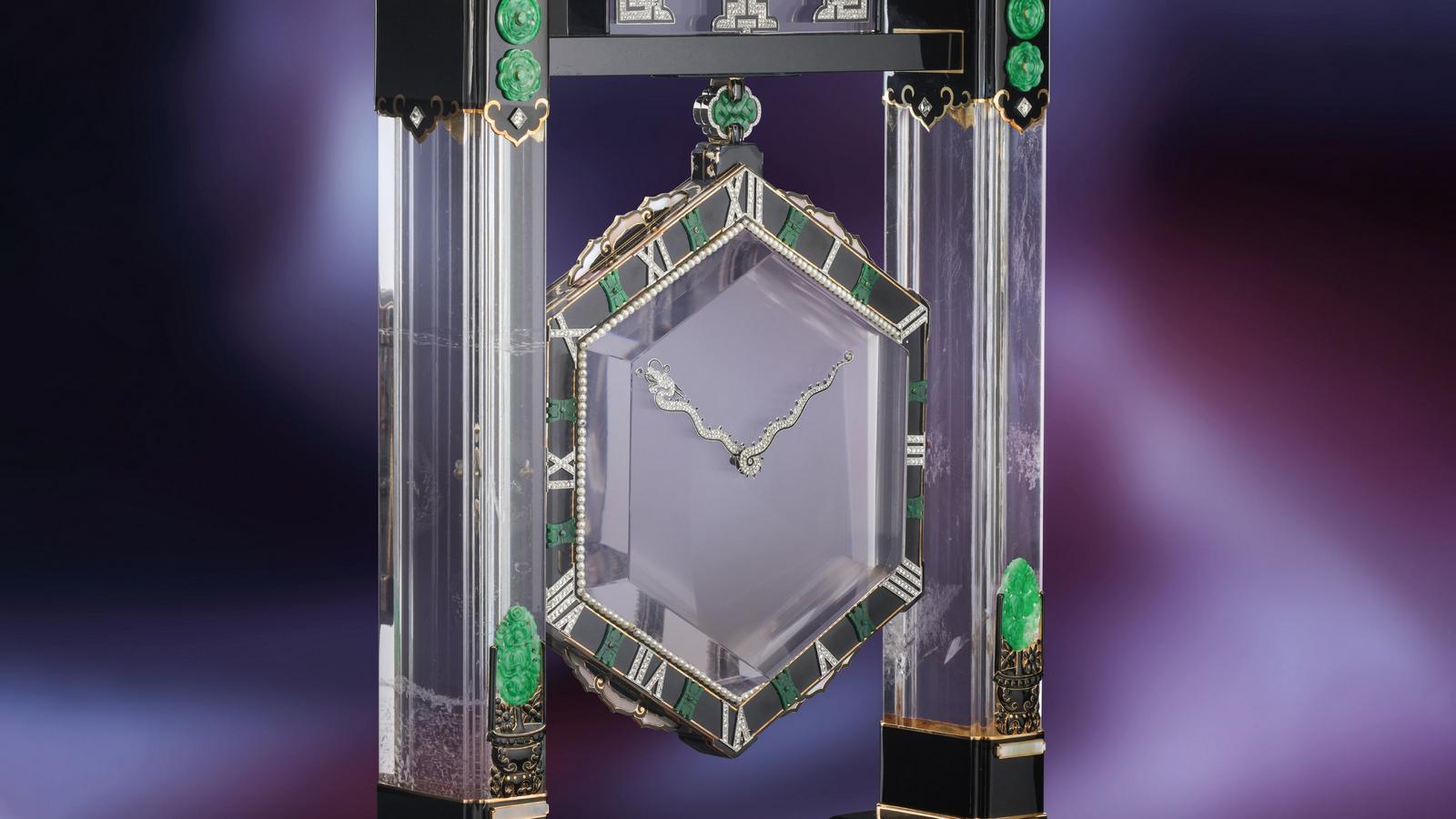
Phillips brought Cartier’s Portico Mystery Clock No. 4 to auction in November, 30 years after its last public sale. Made in 1924, it is one of only six Portico Mystery Clocks created between 1923 and 1925, and the only one with a hexagonal rock crystal dial. Its estimate is CHF 1.8 to 3.2 million.
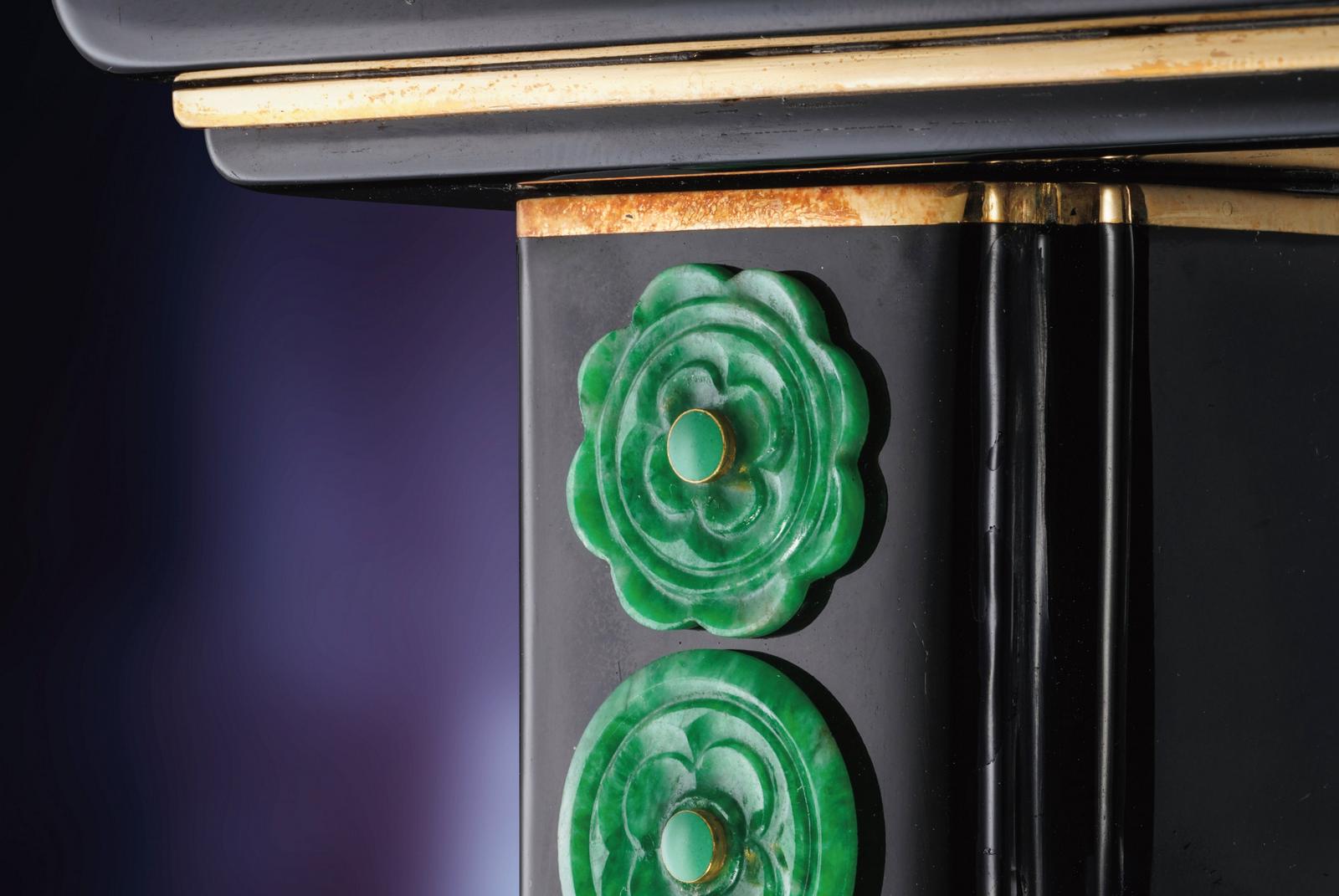
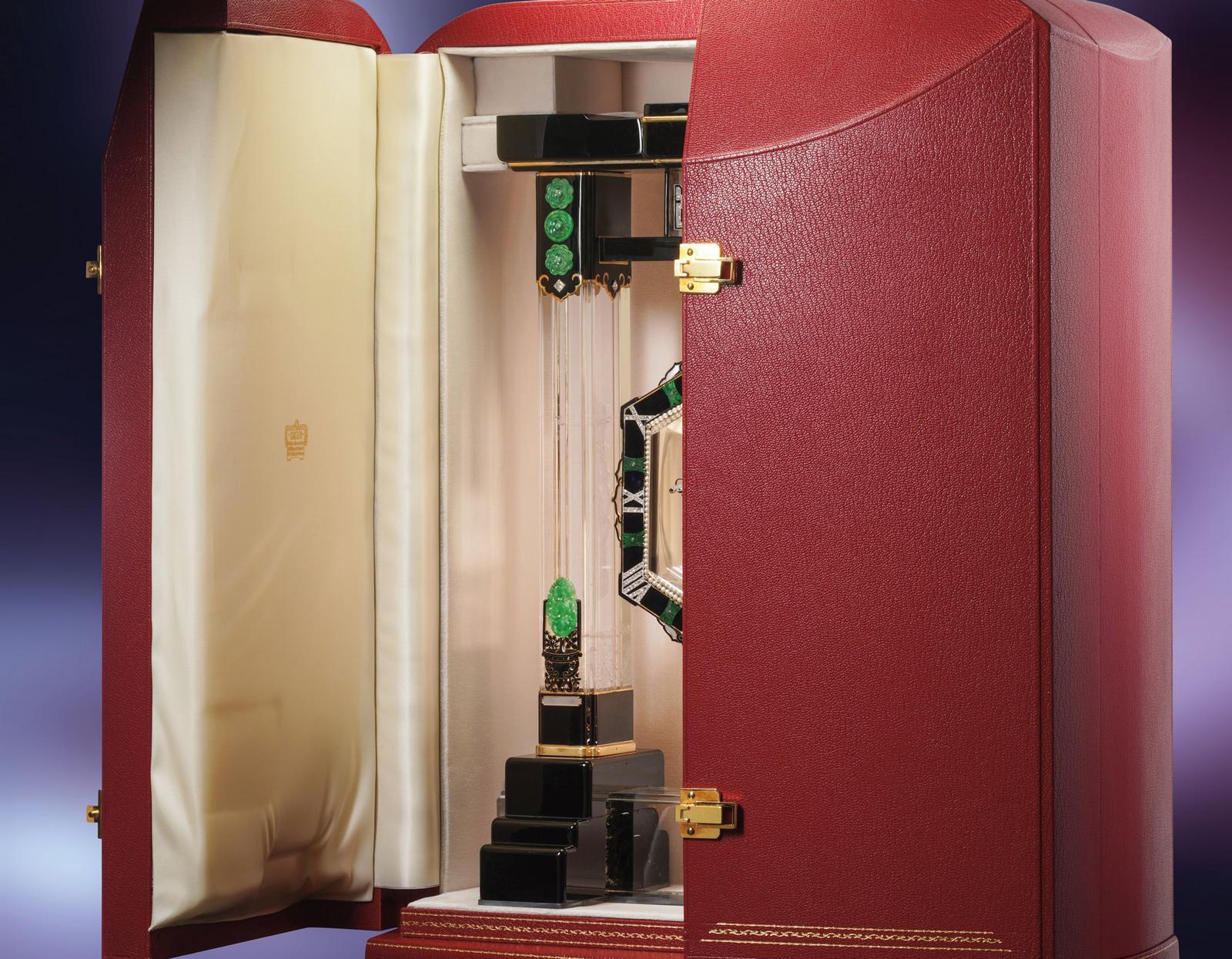
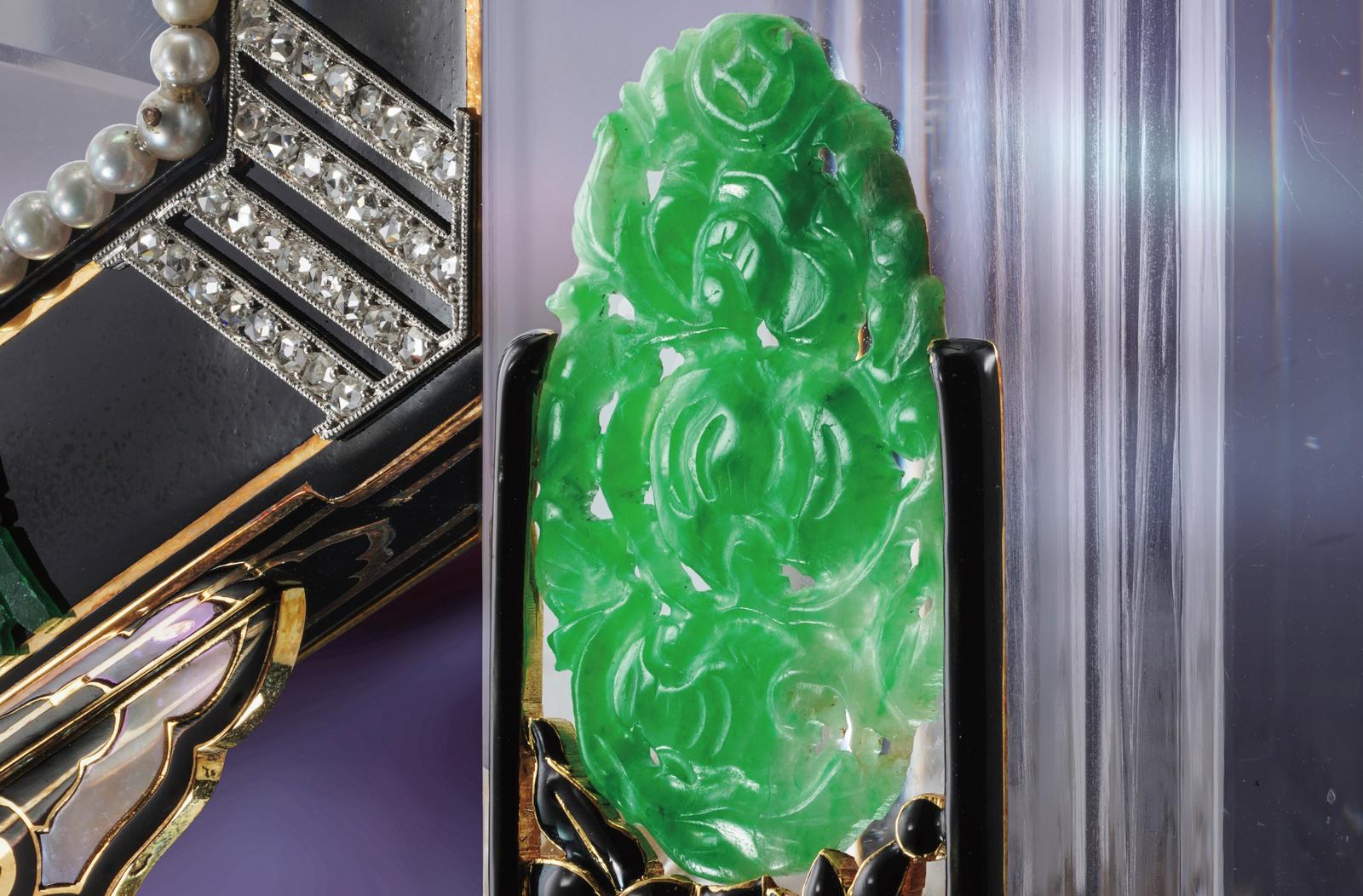
At 38.5 centimetres high, the clock has the presence of a small architectural object. Two square rock crystal columns support its suspended dial, while jade, onyx, enamel, mother-of-pearl, seed pearls, diamonds, gold and platinum create a dense decorative framework. The hands, set with rose-cut diamonds, form a dragon, while the manually wound movement is hidden in the arch above.
No. 4 was formerly owned by Alain Cartier and is reputed to have once belonged to the Maharajah of Nawanagar. Of the six Portico Mystery Clocks, it is the only one with a hexagonal dial. Jade trees flank the rock crystal columns; black enamel frames the diamond-set Roman numerals and the rose-cut diamond hands form a dragon across the dial. Even within this tiny group of six clocks, No. 4 stands apart.
KINRADEN Redraws Its Jewellery in Miniature
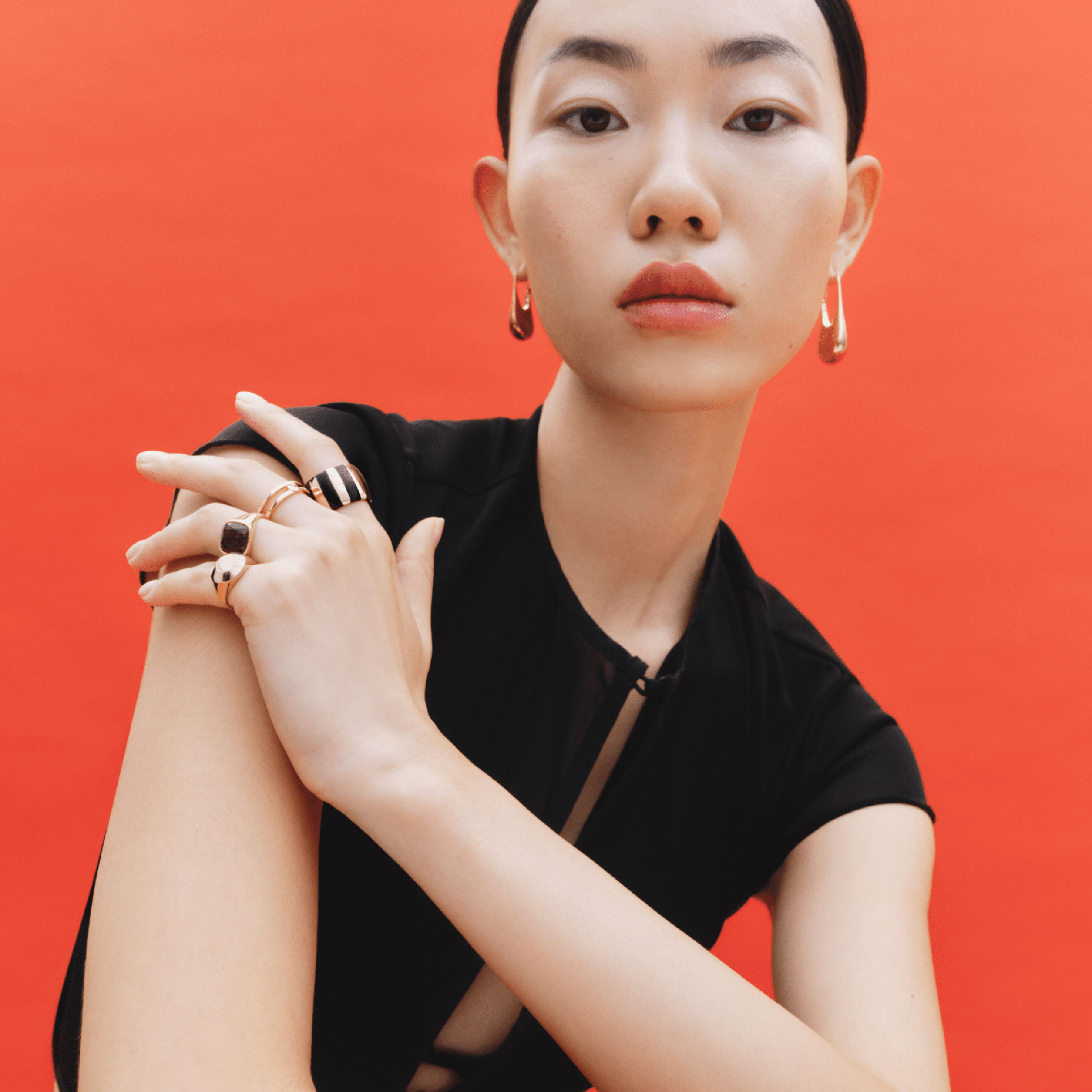
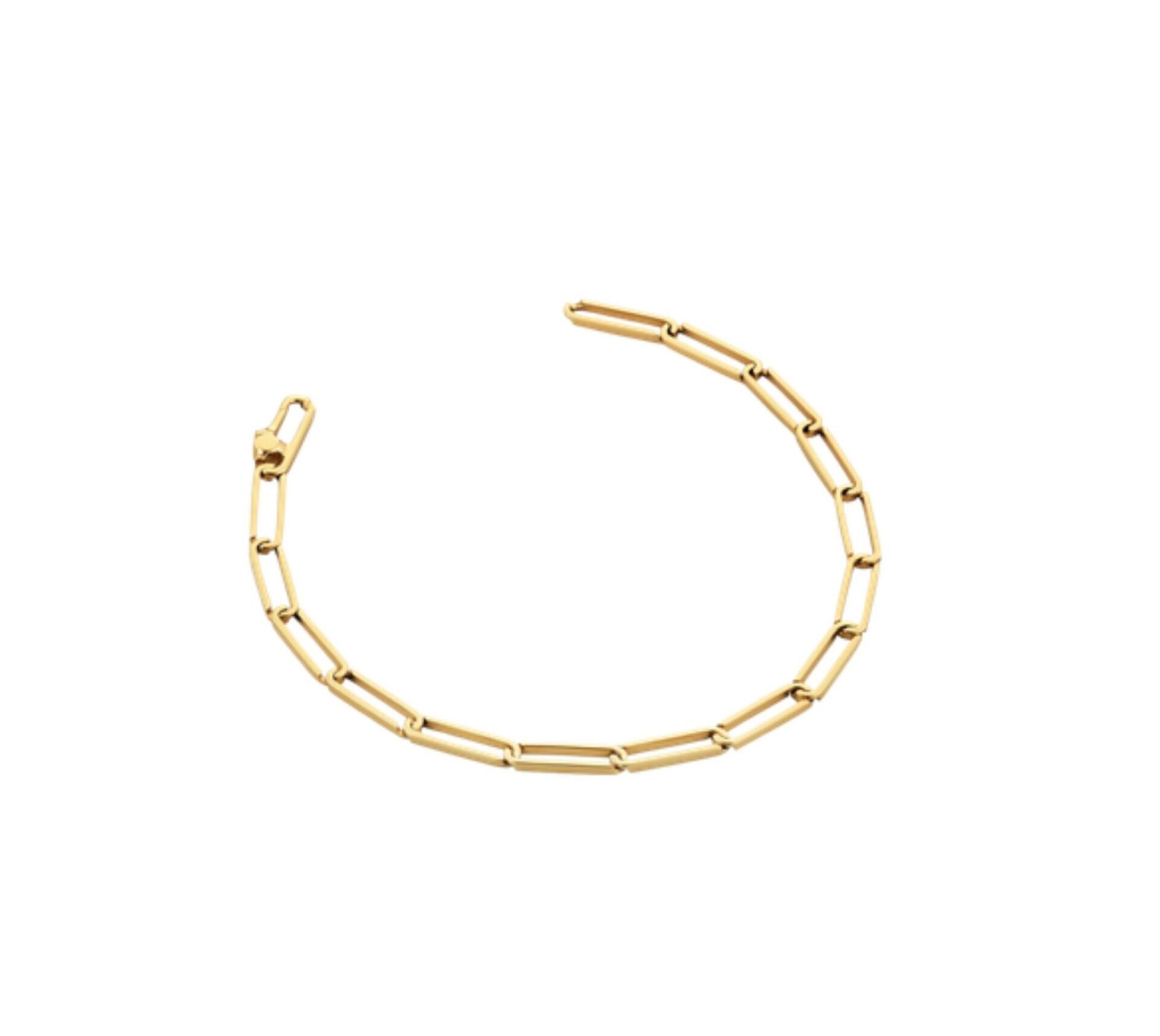
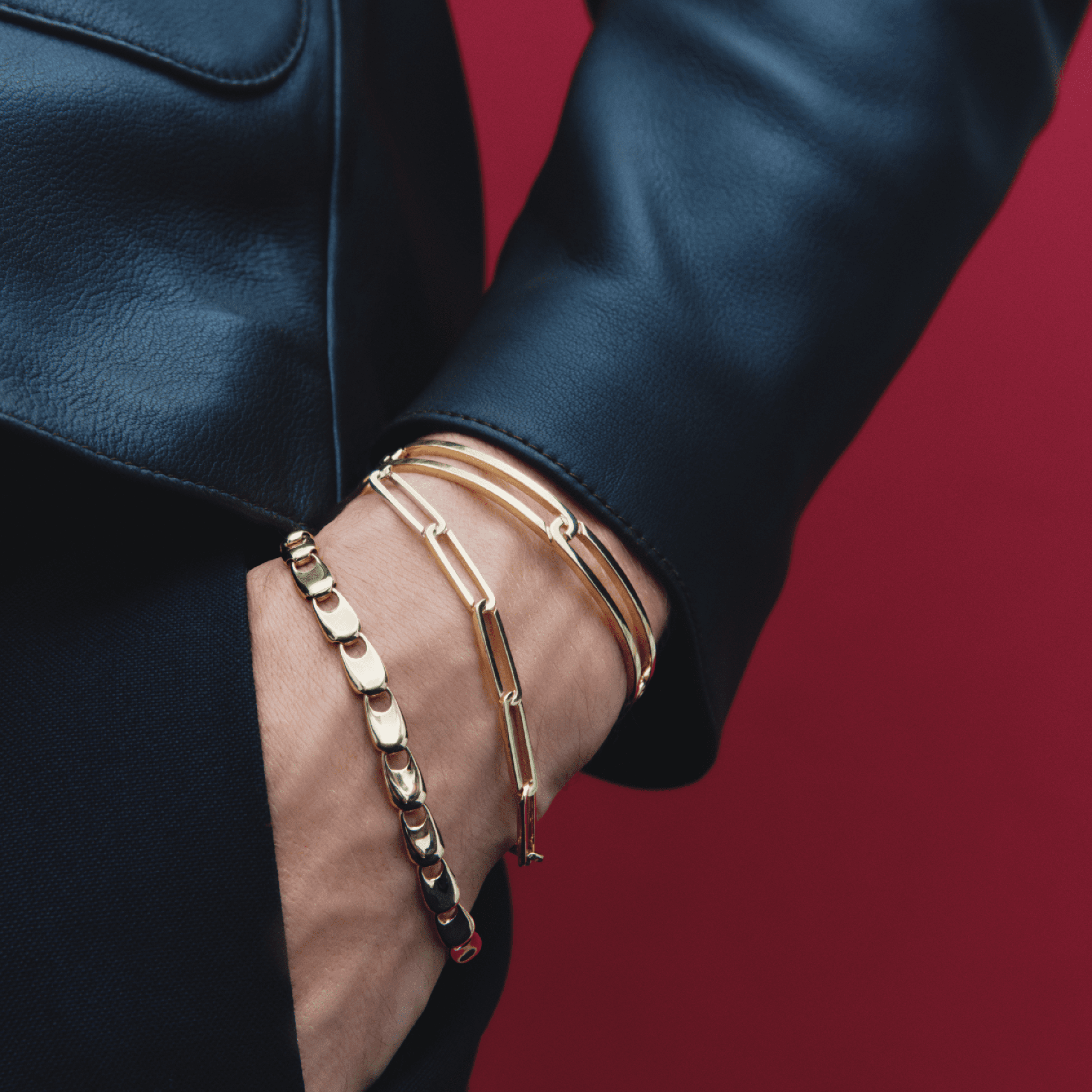
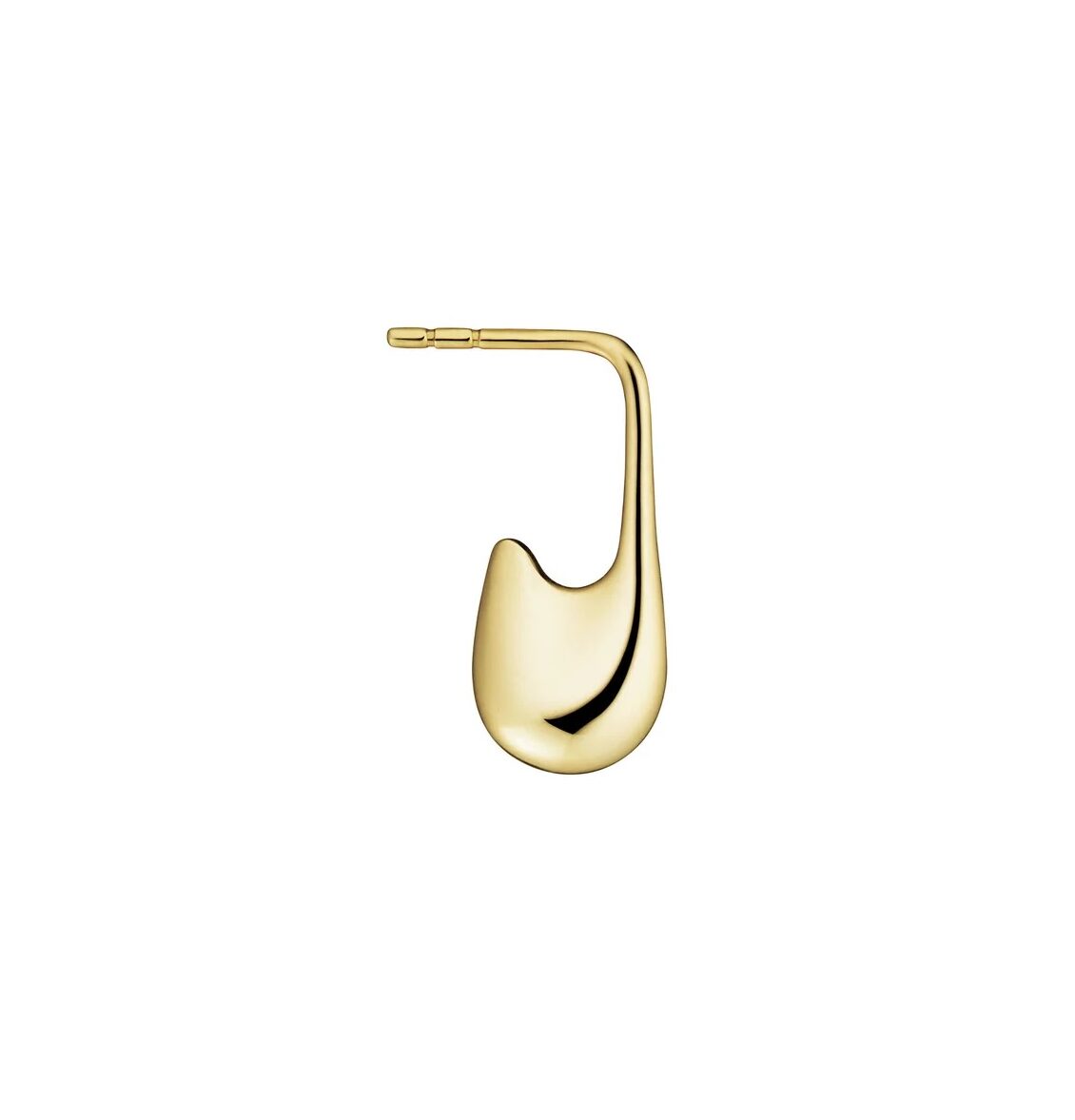
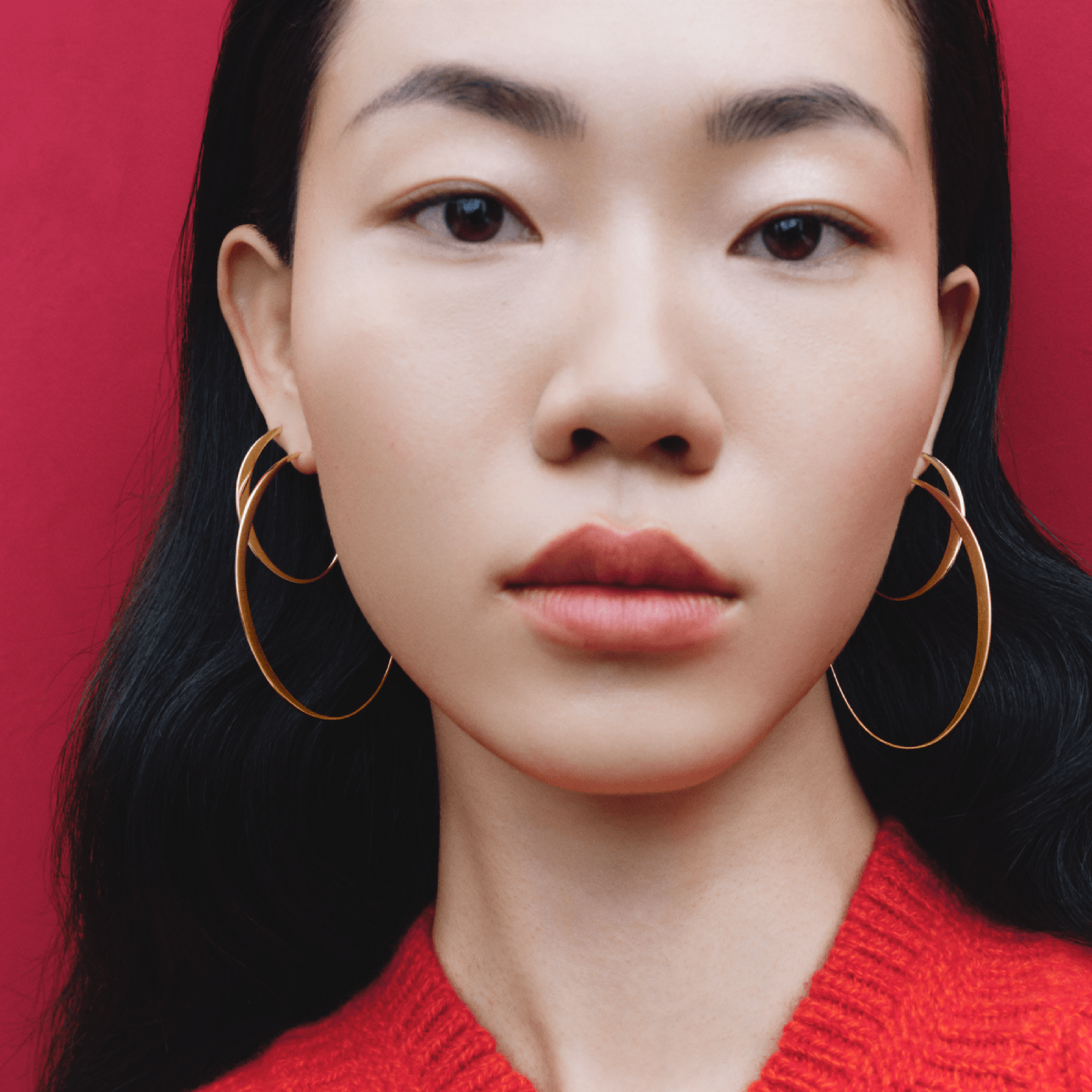
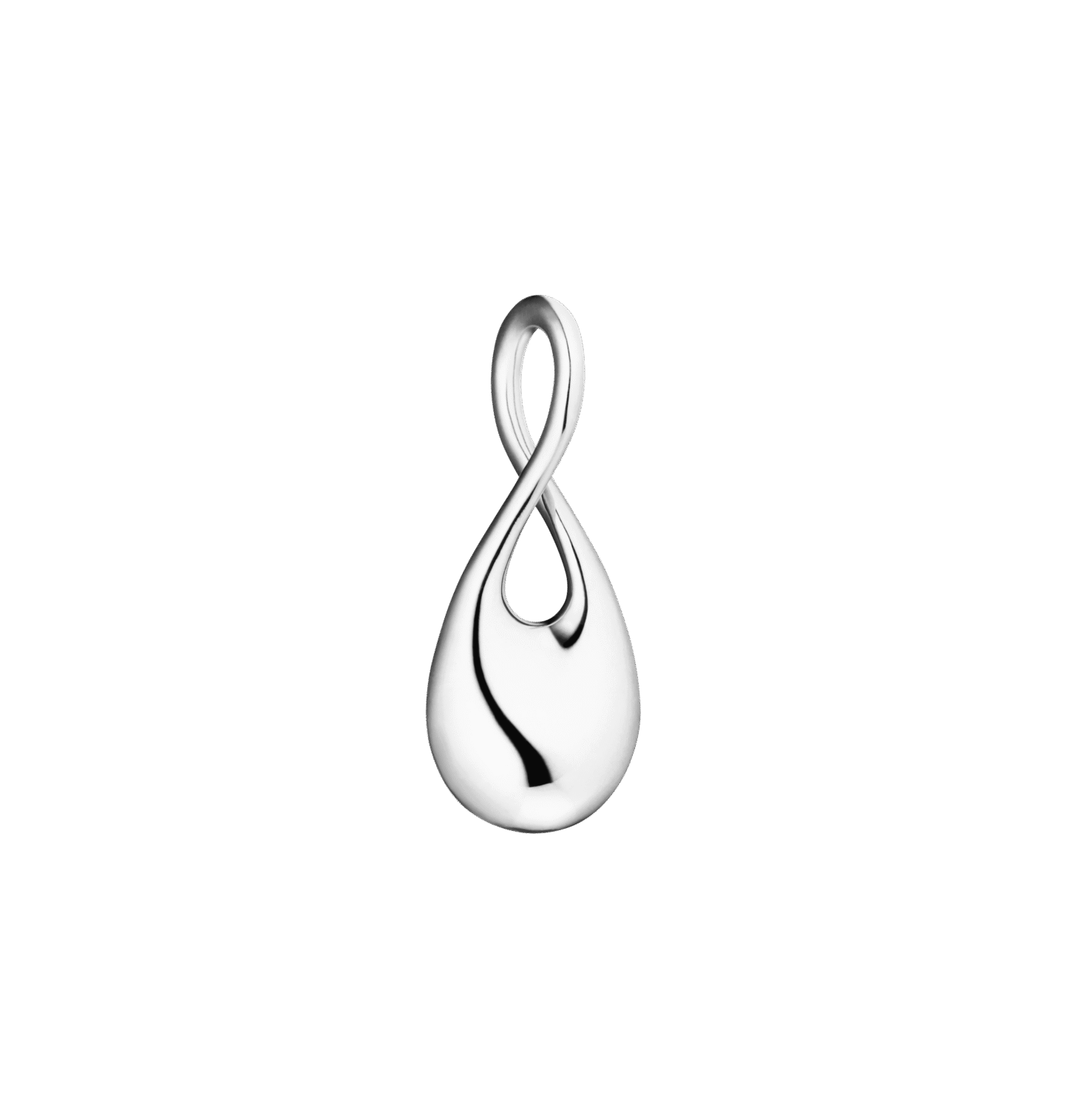
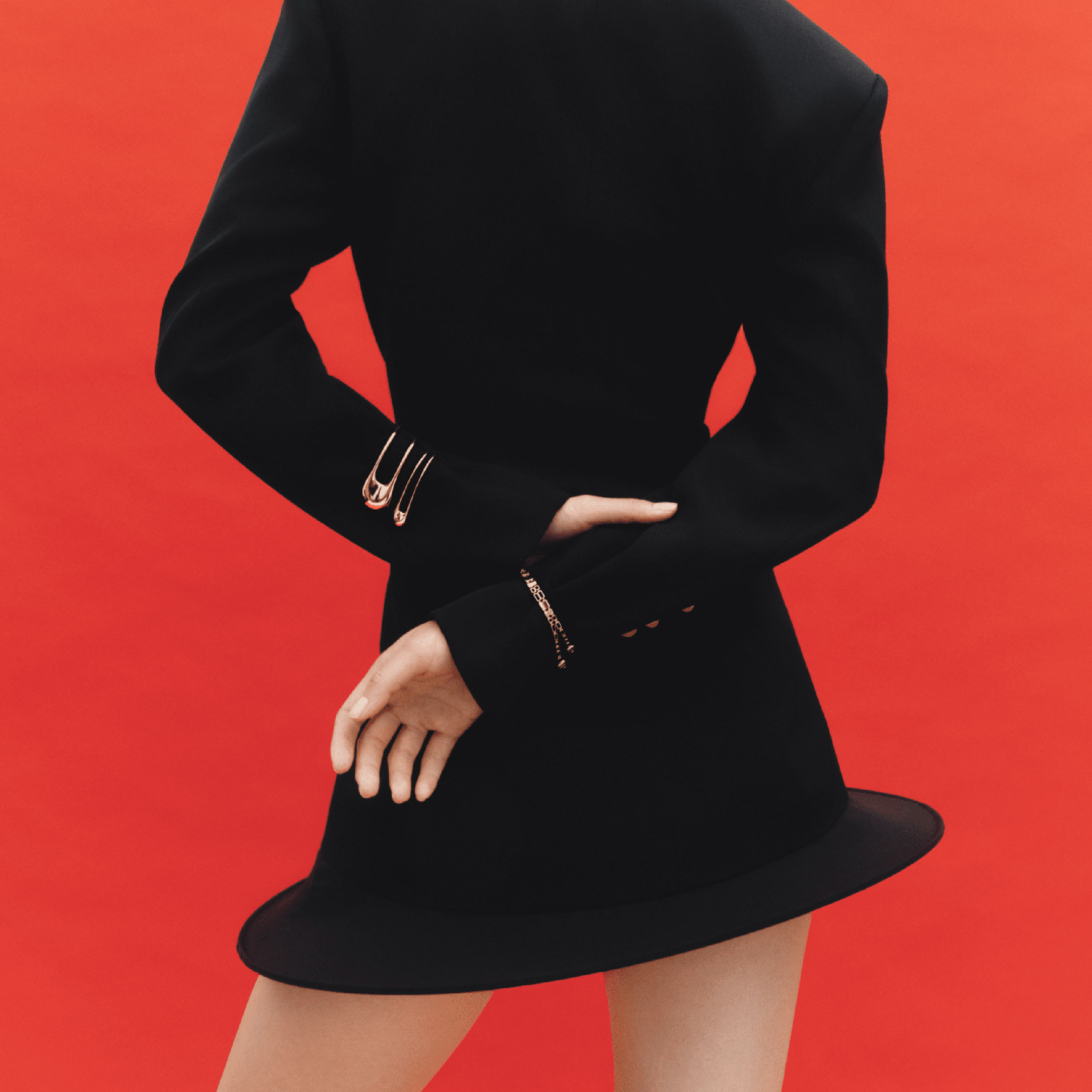
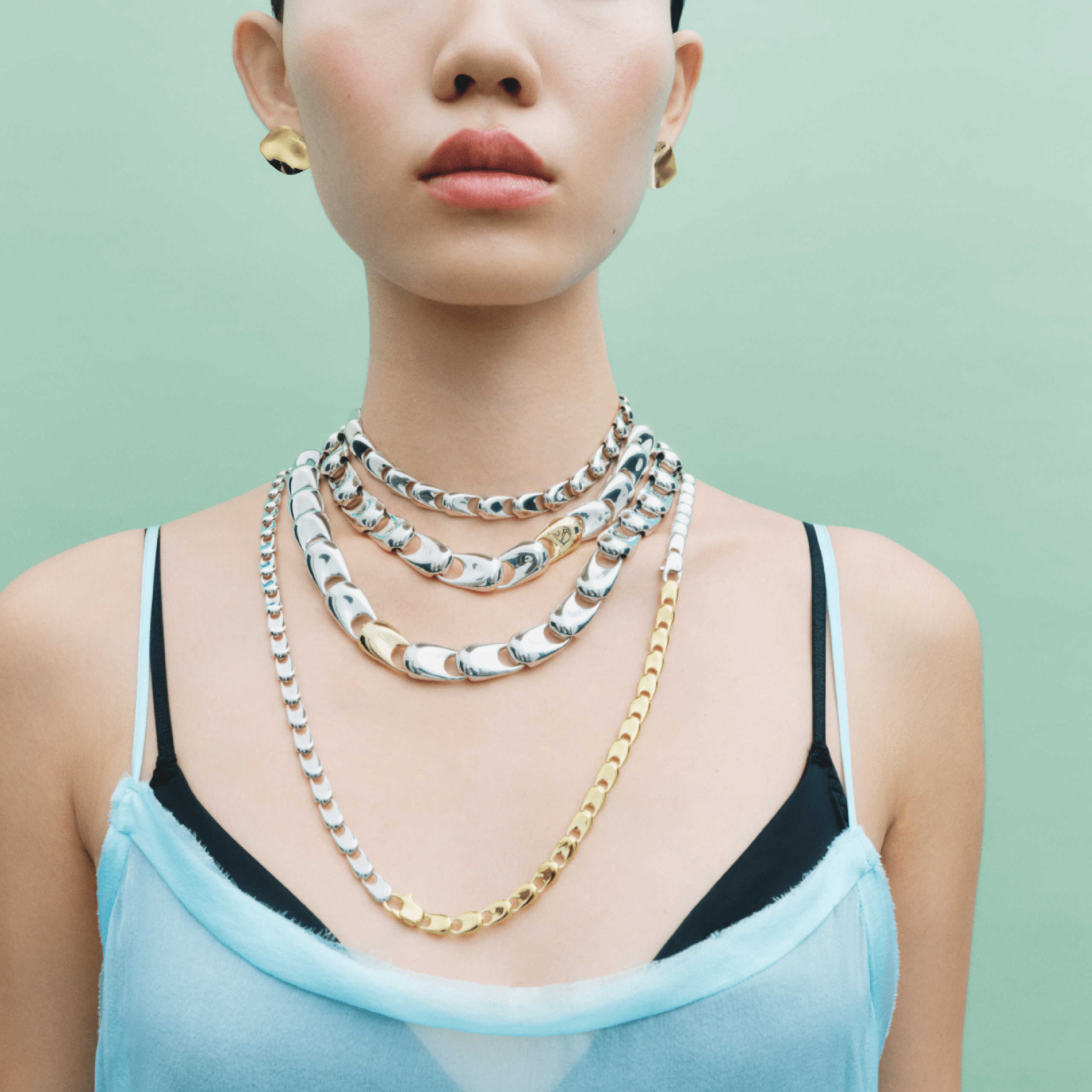
Before jewellery became her full-time focus, Sarah Emilie Müllertz was an architect, eventually becoming Partner and Global Head of Design at Henning Larsen Architects. She founded KINRADEN in Copenhagen in 2014, initially alongside her architectural career, before turning to the brand completely in 2019. That background makes All Things Tiny particularly interesting: instead of creating an entirely new collection, Müllertz has gone back to some of KINRADEN’s existing designs and reconsidered them at a smaller scale.
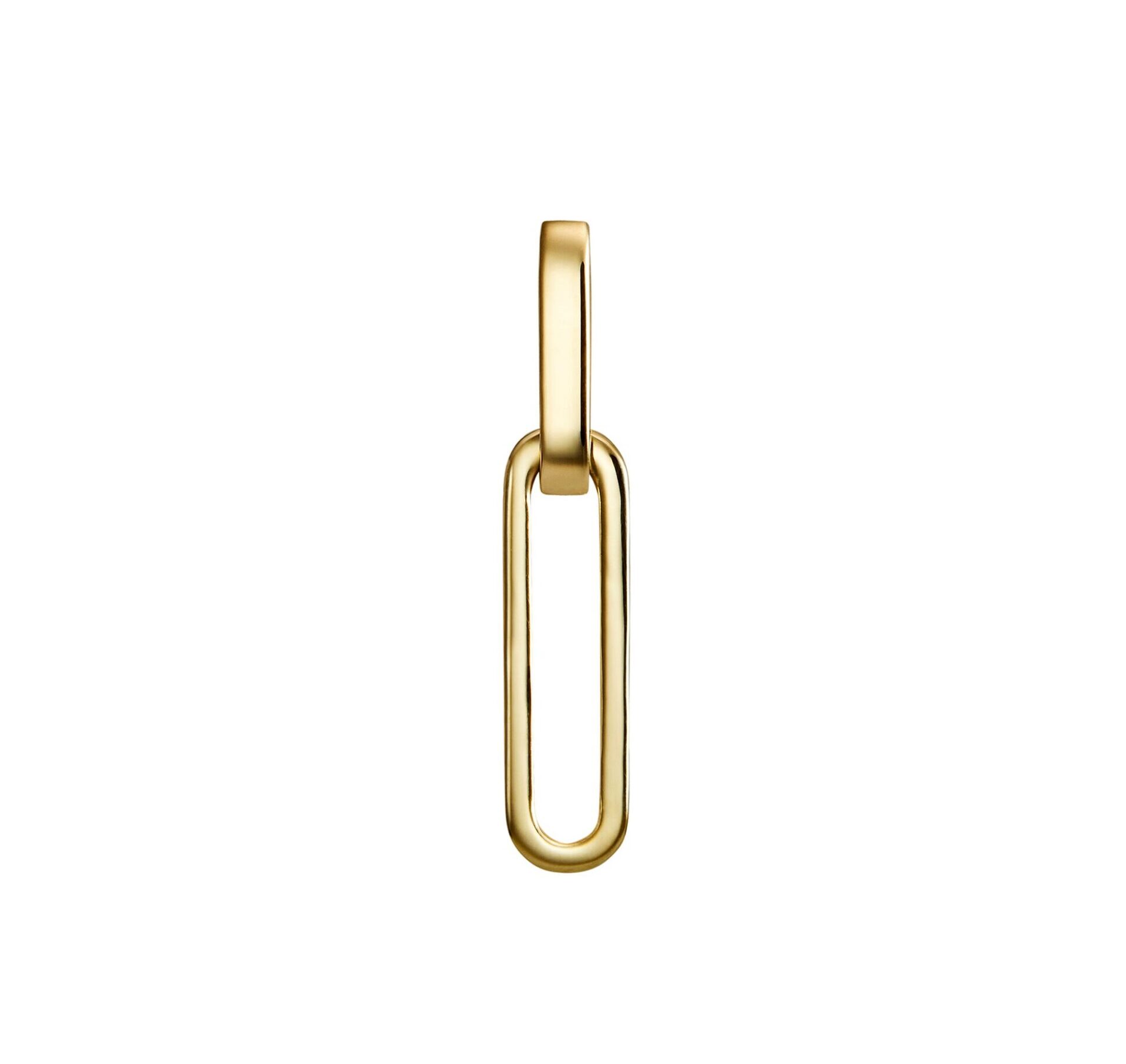
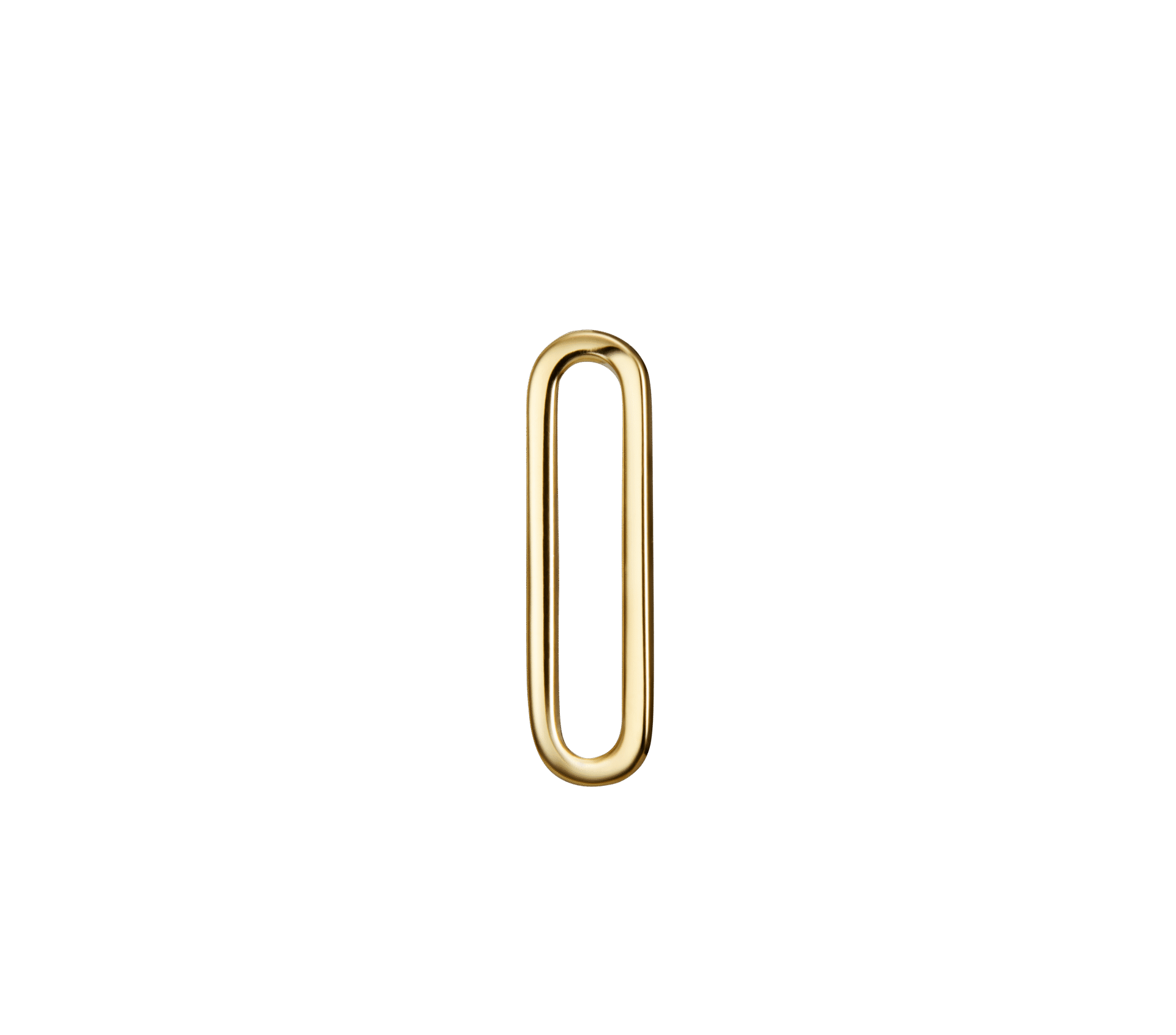
Pieces from Stilos, Levitas and Oxygen have been reworked by adjusting thickness, proportions, connections and the way they sit against the body. The Pause pendant, formed from two interlocking links, and the Rush III earrings are among the pieces given this lighter treatment. In the campaign, fine earrings hang like drawn lines beside the face, polished loops sit closely against the ear, and necklaces fall in smooth, controlled curves. The smaller scale brings a new delicacy to the jewellery without losing the clean proportions and graphic quality of Müllertz’s original designs.
Louis Vuitton Gives Vivienne a More Precious Identity
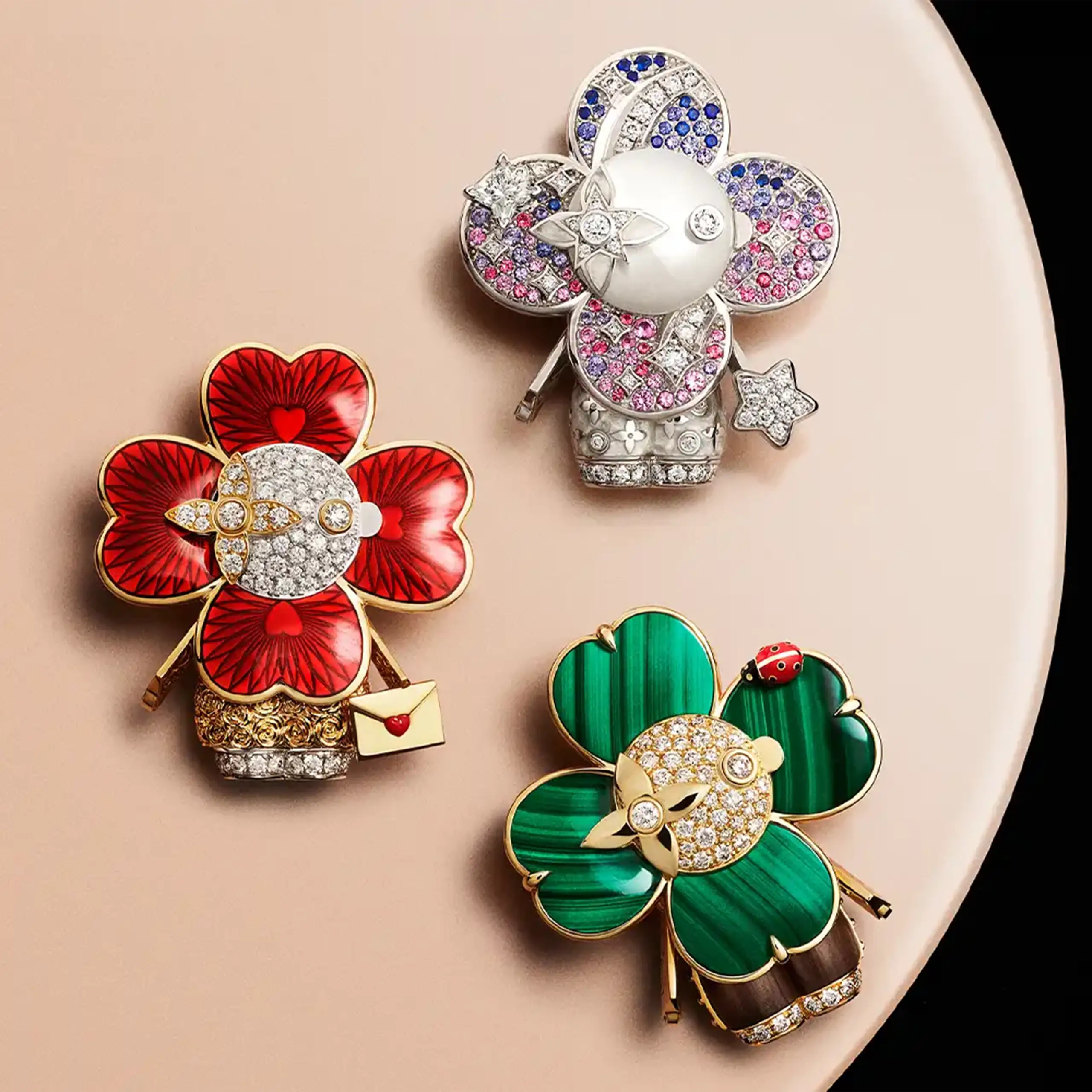
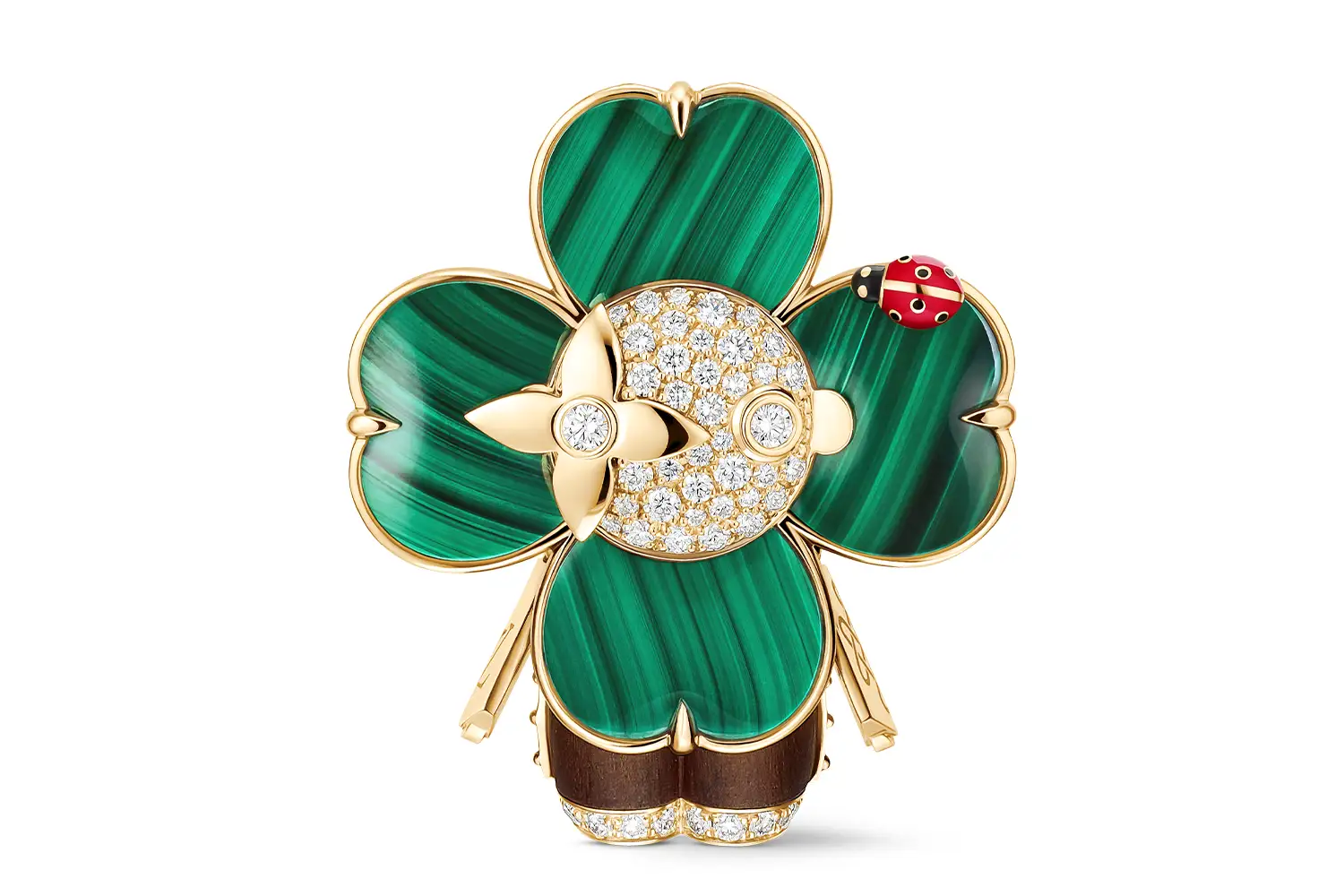
Louis Vuitton introduced Vivienne as a decorative object in 2017, before turning the character into jewellery three years later. The latest trio pushes the familiar mascot further into fine jewellery, using ornamental stones, lacquer, enamel and diamonds to give each figure a distinct identity.
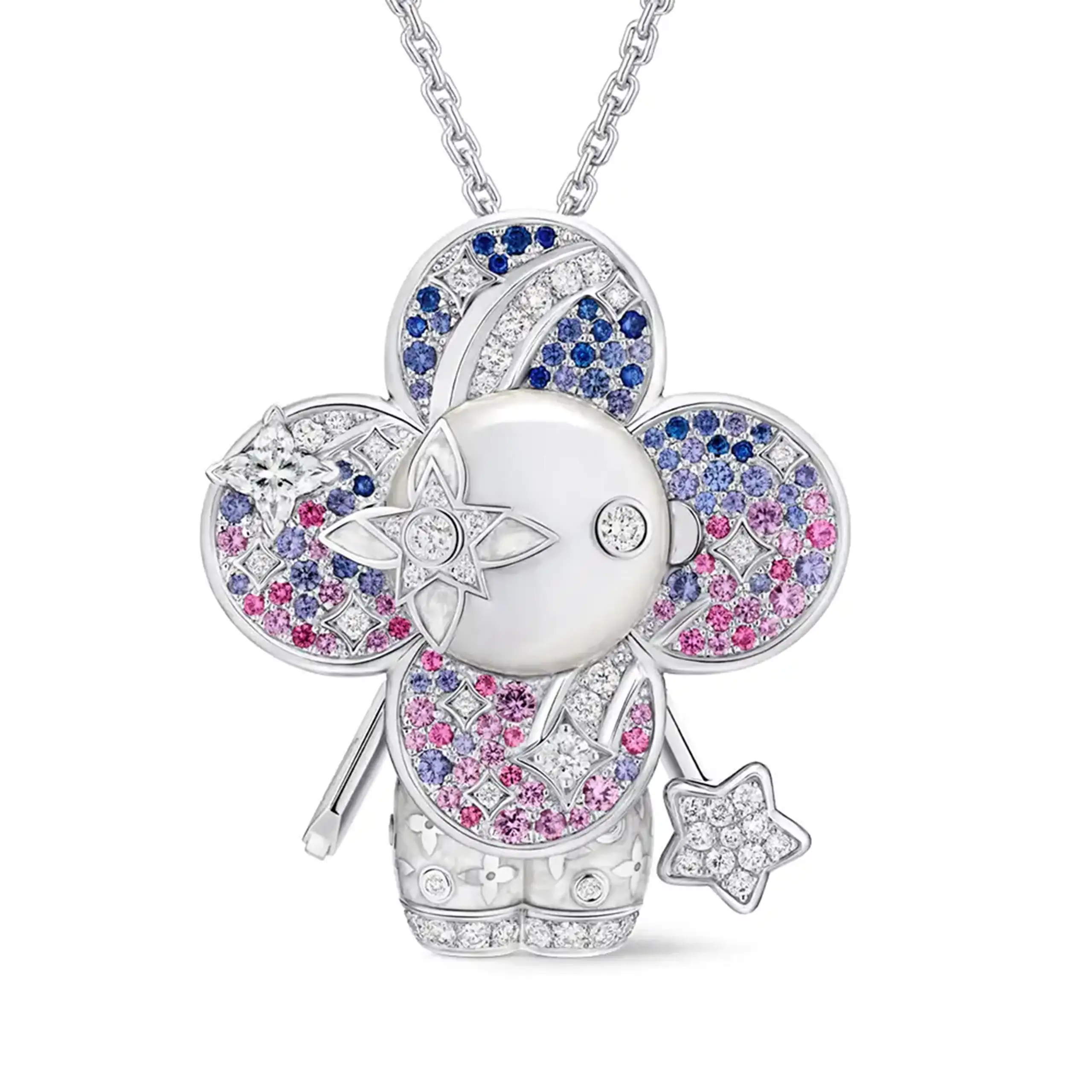
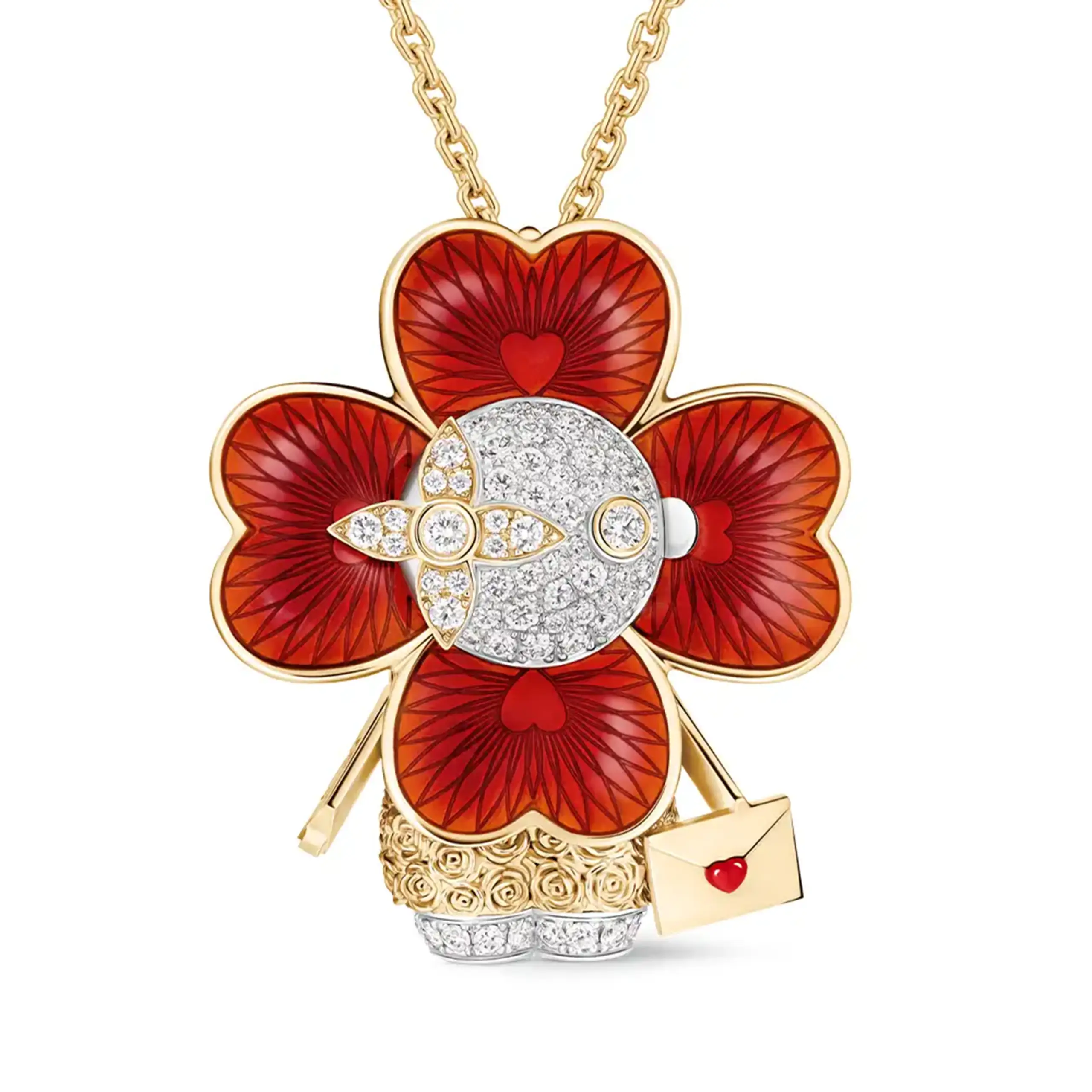
Vivienne Four Leaf appears in yellow gold, malachite, lacquer and diamonds, with the Monogram flower reworked as a four-leaf motif. Vivienne Heart combines white and yellow gold with enamel, lacquer and diamonds, while Vivienne Stars brings together moonstone, sapphires and spinels around an LV Monogram Star-cut diamond.
The materials change the mood of each piece. Malachite gives Four Leaf its bold green pattern, while moonstone and blue sapphires make Vivienne Stars cooler and more celestial. Produced as pendants and brooches, the figures remain playful, but the stone choices, colour and setting place them firmly within Louis Vuitton’s fine jewellery world.
That’s my edit for this week. With November’s auction calendar now underway and plenty more launches and exhibitions still to come, I’ll be back with five more stories next week.


WORDS
Bianca Blanari approaches jewellery as architecture in miniature, where form, structure, balance and elevation are distilled into objects of intimate scale. Bianca joined Katerina Perez as Club Editor and contributing writer in March.
RelatedArticles
Discover the brand: the story from various angles.