
24 Hours in Melbourne: My Journey to See the Masterpiece CARTIER Exhibition at the National Gallery of Victoria
I have crossed oceans for jewellery before, but travelling to Melbourne for just 24 hours to see an exhibition was a first. When I heard that the National Gallery of Victoria was hosting the largest Cartier exhibition ever staged in Australia, I knew I had to be there, especially since I had missed the exhibition in London. Nearly 400 jewels, timepieces and precious objects had been brought together under one roof, close to 300 of them appearing in Australia for the first time, and I had only a few hours to see them.
Over the course of my jewellery career, I have discovered many historic masterpieces through books and catalogues that I have long wished to see in person. Many of them were created by Cartier, and this was my chance to finally stand in front of them. Designed by Rotterdam-based Studio Sabine Marcelis and Cloud, the exhibition takes visitors on a journey through eight different rooms, each wrapped in a rich monochrome palette inspired by precious gemstones.
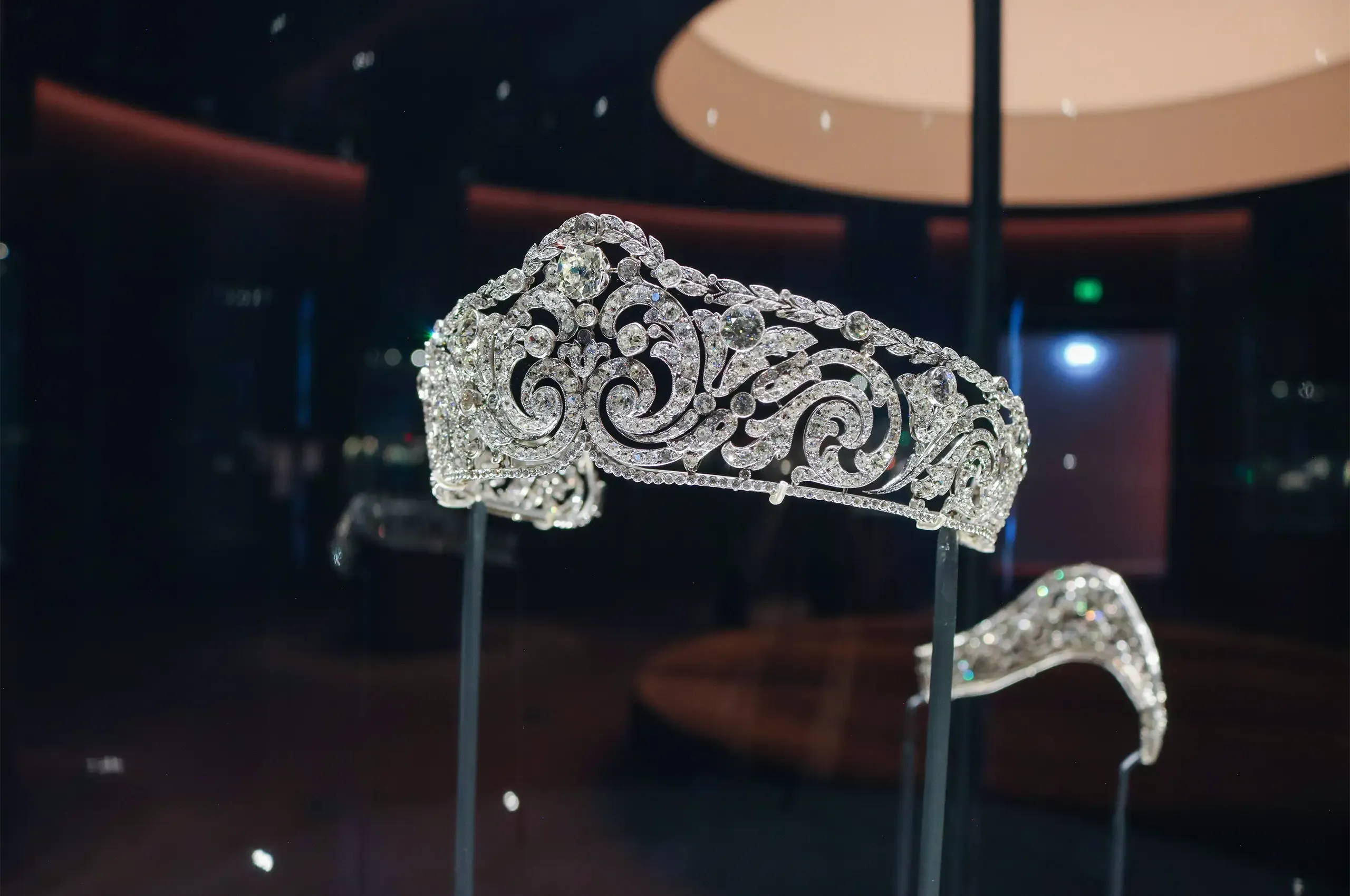
Cartier Scroll tiara, 1910, in platinum and diamonds, its symmetrical scrolling motifs culminating in a cushion-shaped diamond. Cartier Collection
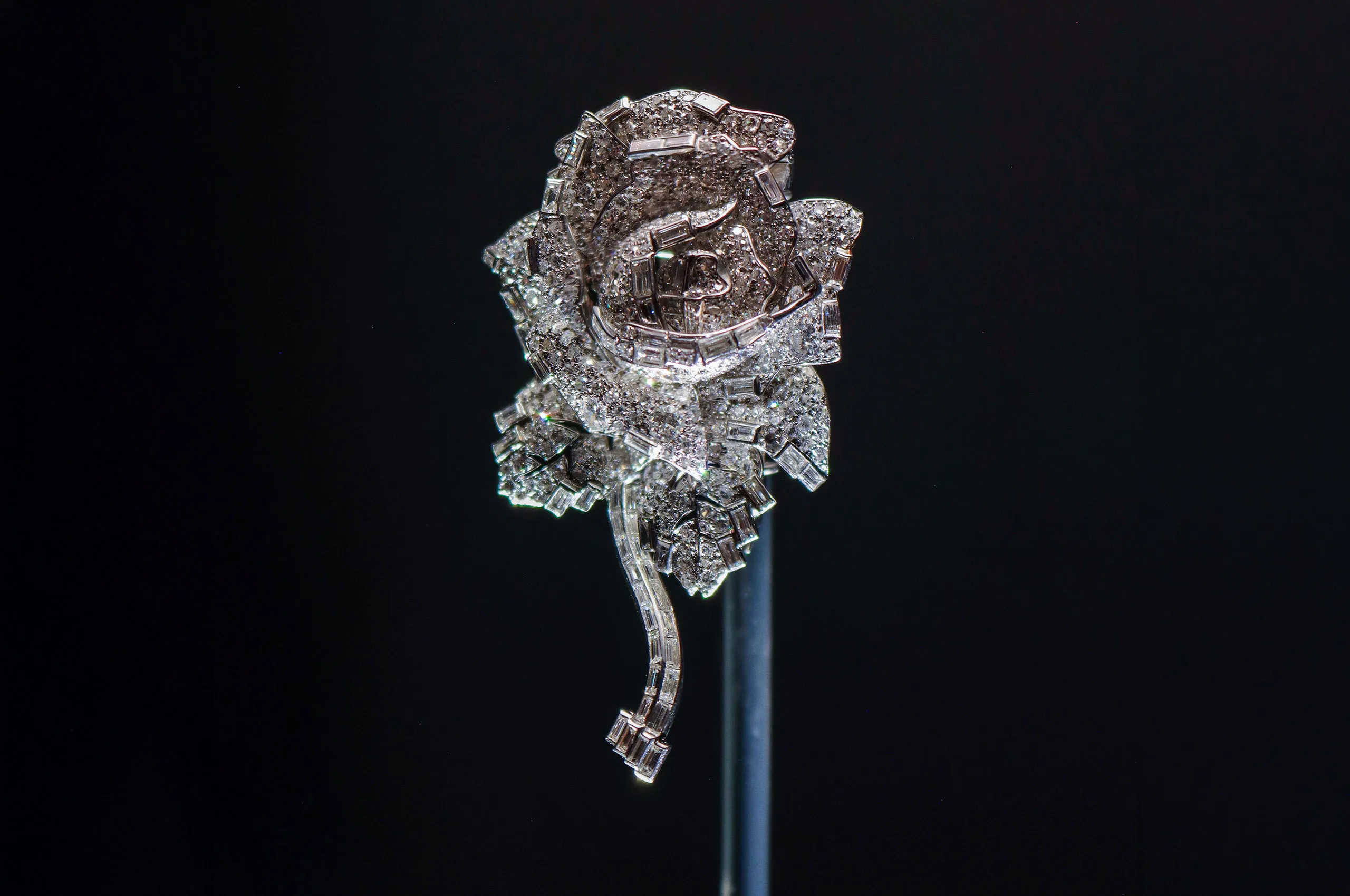
Cartier ‘Rose’ clip brooch, 1938, a three-dimensional composition of old-, baguette- and single-cut round diamonds that combines geometric structure with naturalistic form. Cartier Collection
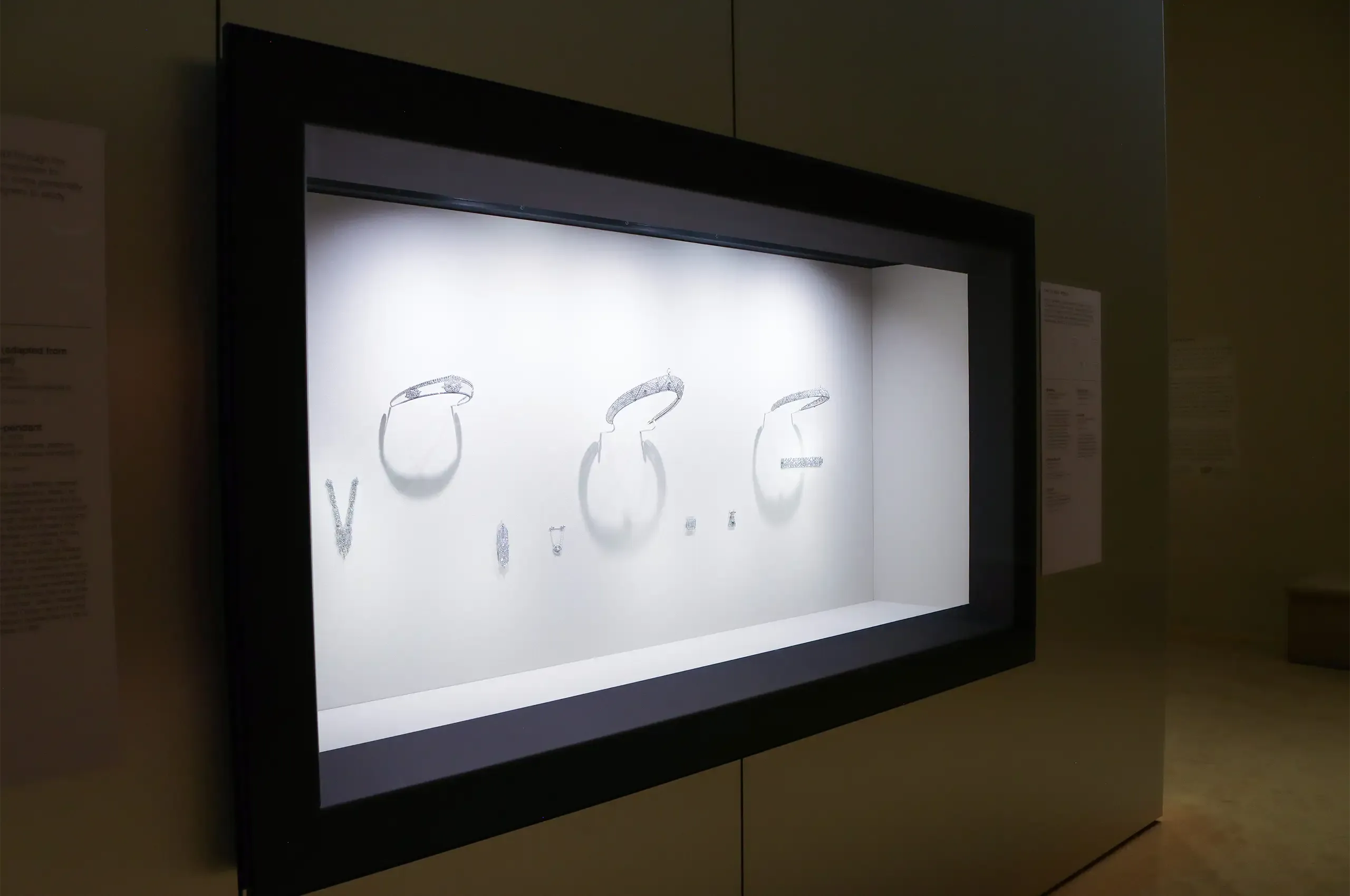
A selection of diamond diadems and jewels from the Cartier Collection, on display as part of the 'CARTIER' exhibition at the NCV in Melbourne
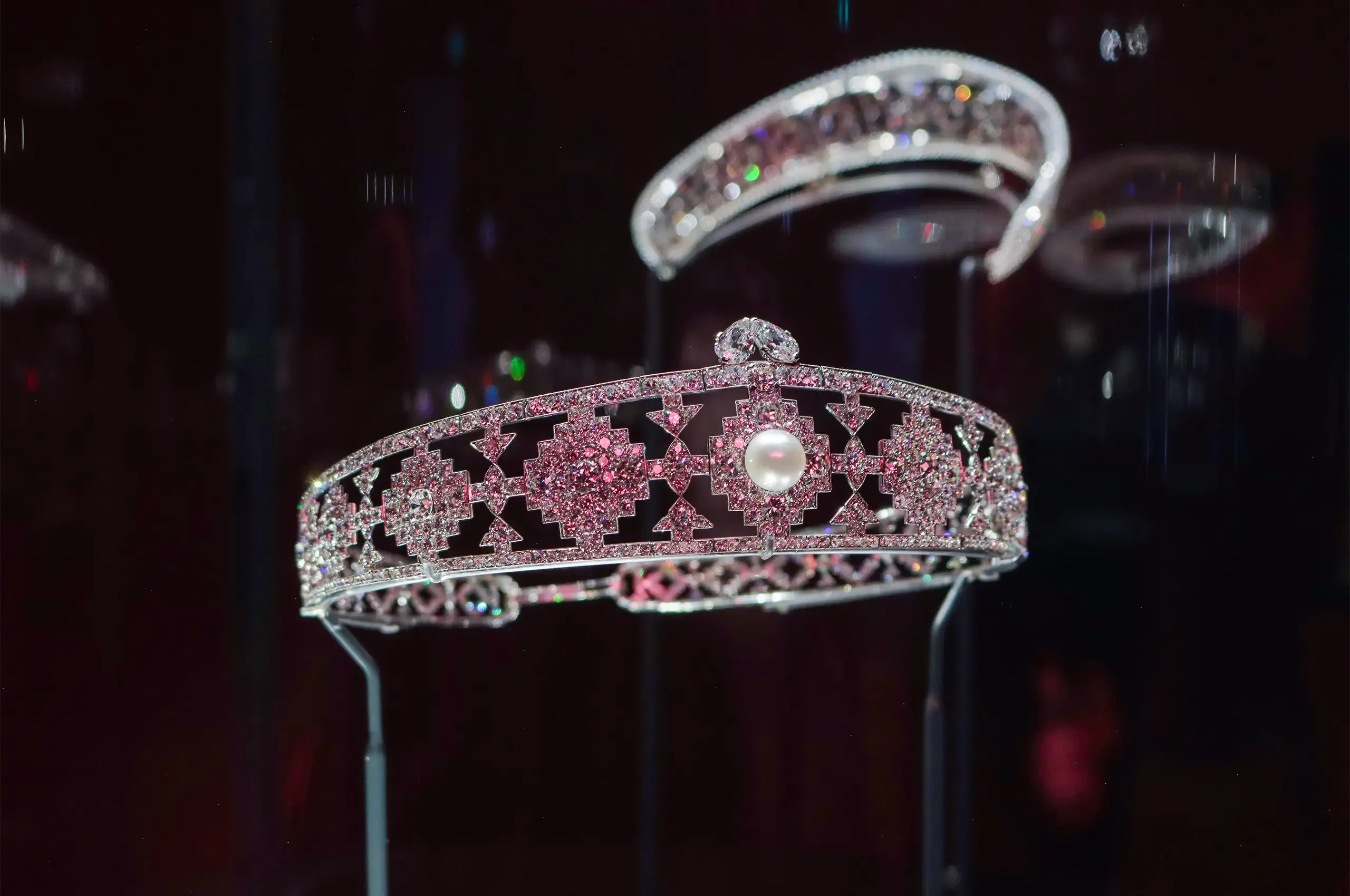
Cartier bandeau, 1924, in platinum, diamonds and a natural pearl, created as a special order for Nanaline Duke and later owned by her daughter, Doris Duke. Cartier Collection
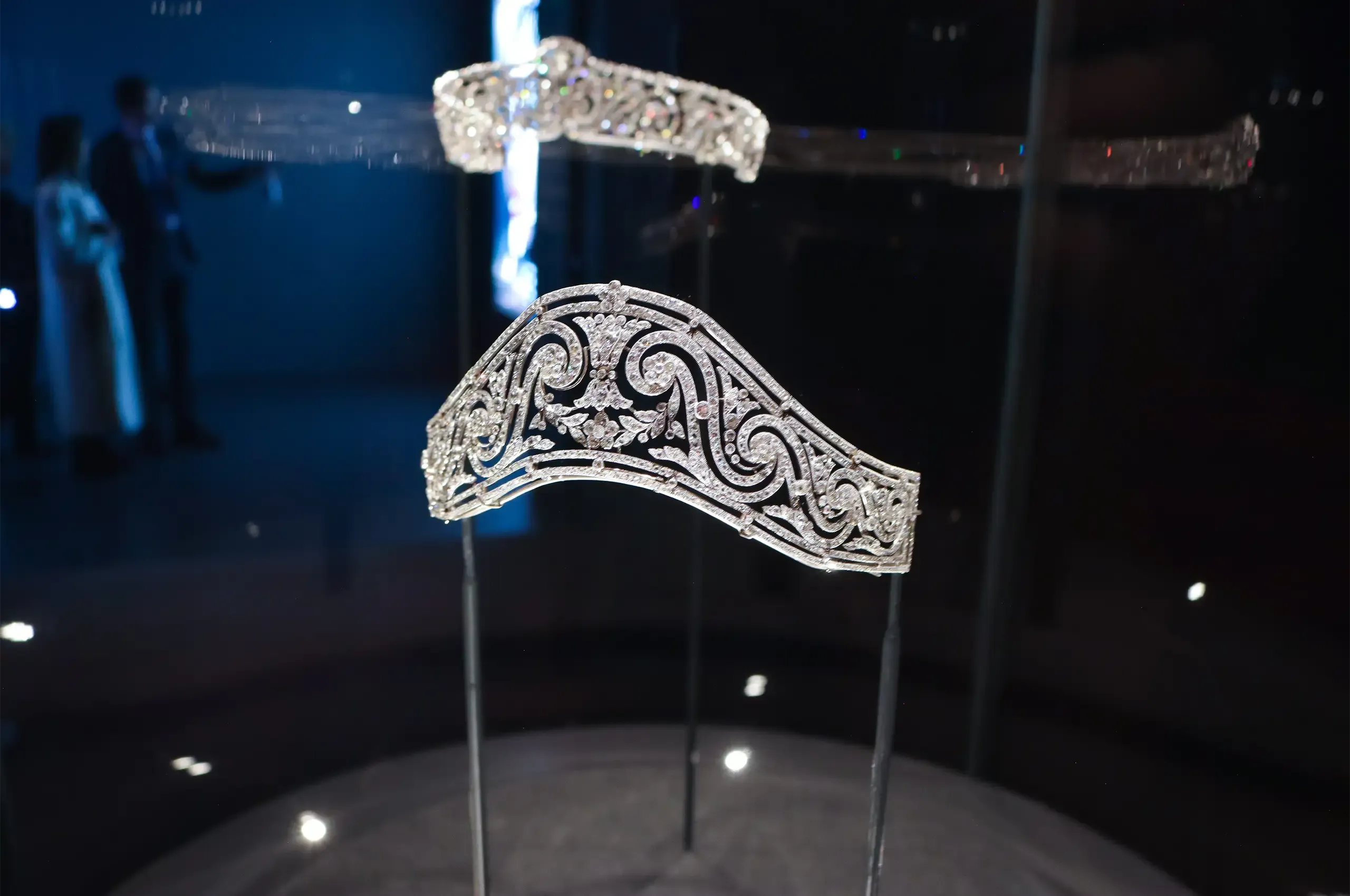
Cartier tiara, 1911, in platinum and diamonds, its interlocking scrolls and floral motifs inspired by 18th-century Parisian ironwork. Cartier Collection
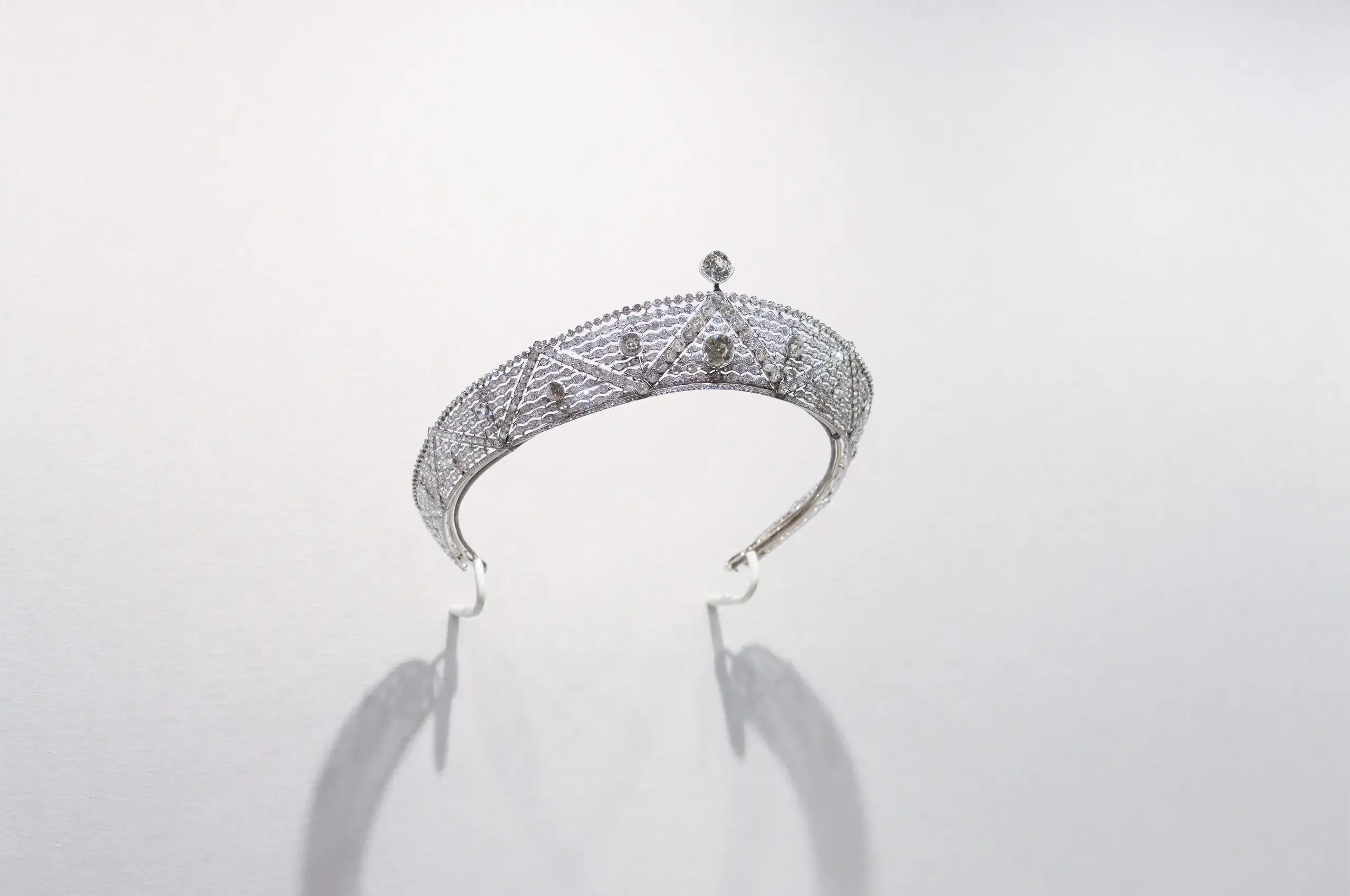
Cartier ‘Oriental’ bandeau, 1911, in platinum and diamonds, its openwork geometric design inspired by Islamic art and architecture. Cartier Collection
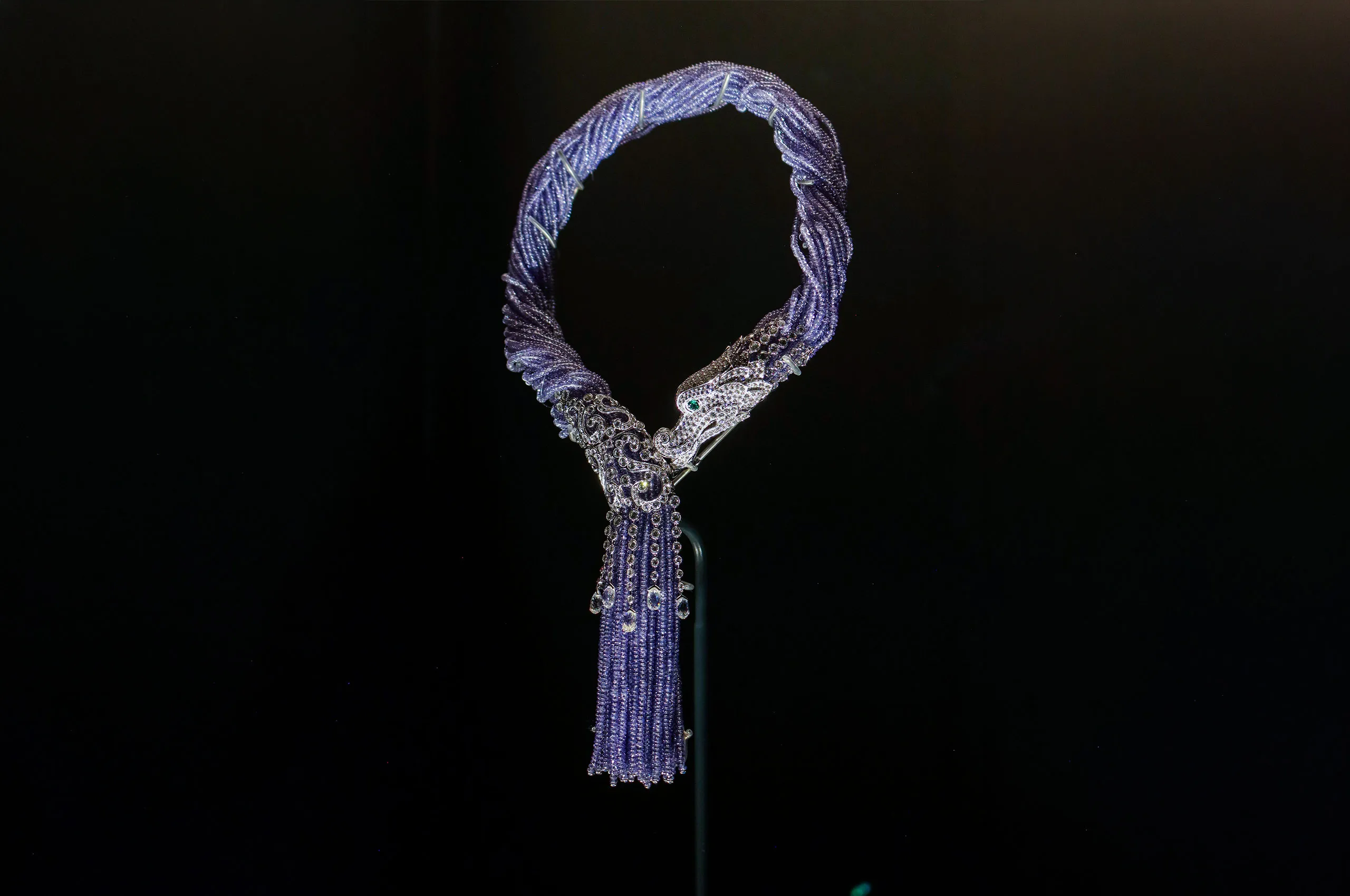
Cartier ‘Falkor’ necklace, 2008. The twisted strands of tanzanite beads evoke the elongated body of a Chinese dragon
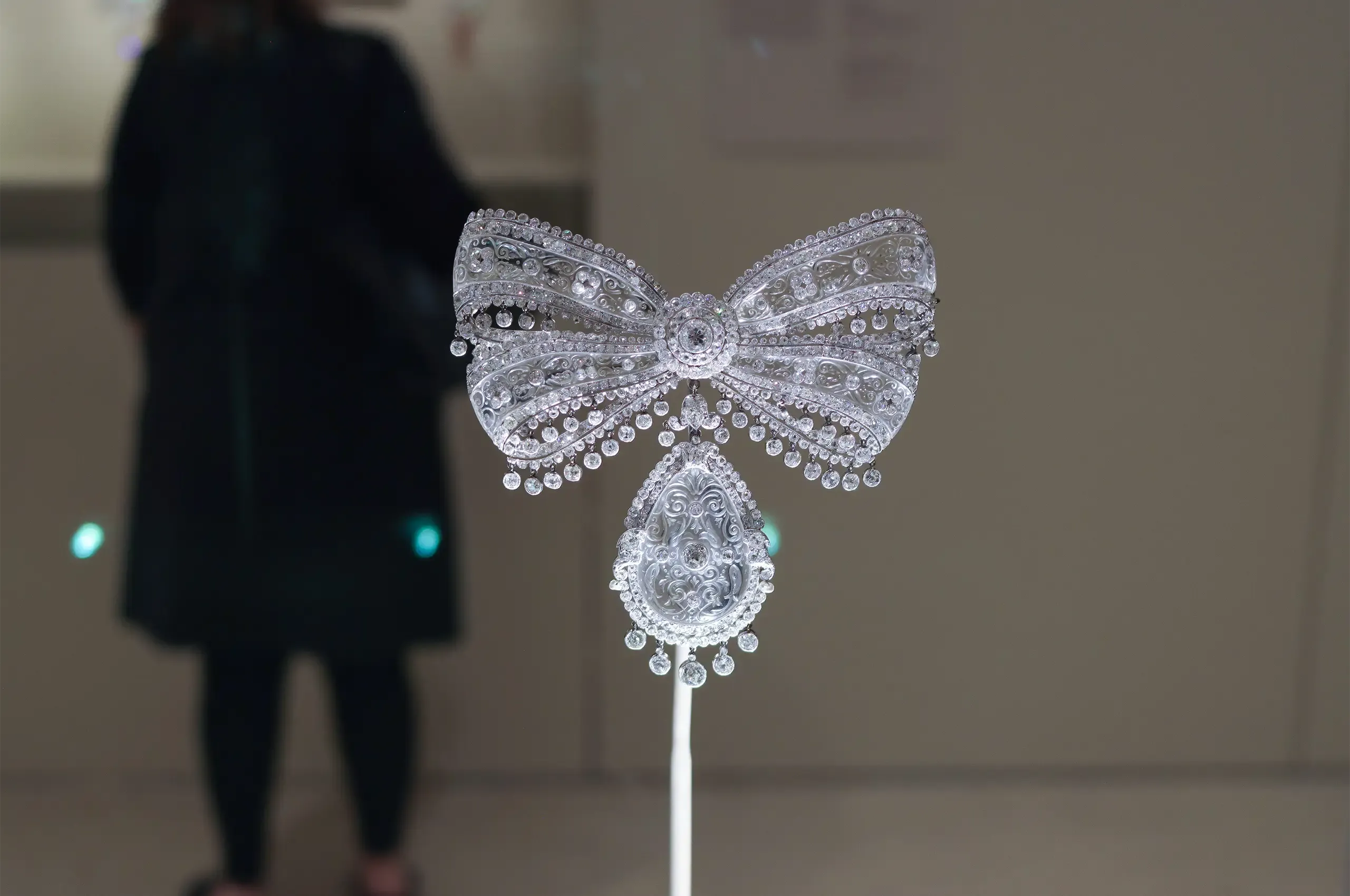
Cartier stomacher brooch, 1913, a special order in carved rock crystal, diamonds and platinum, with a detachable pear-shaped pendant. Cartier Collection
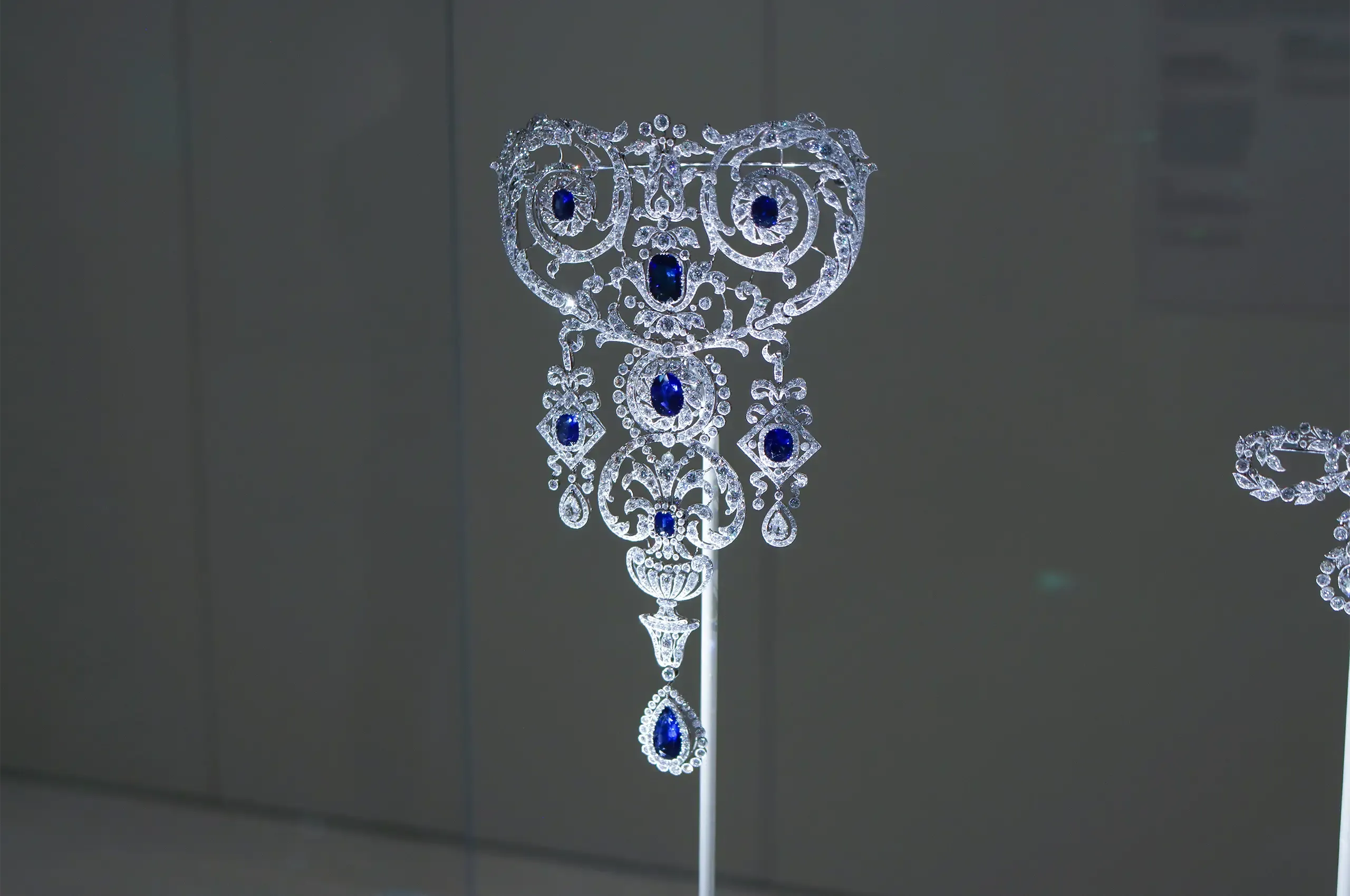
Cartier stomacher brooch, 1907, a special order set with eight sapphires amid an elaborate arrangement of old- and rose-cut diamonds in platinum. Cartier Collection.
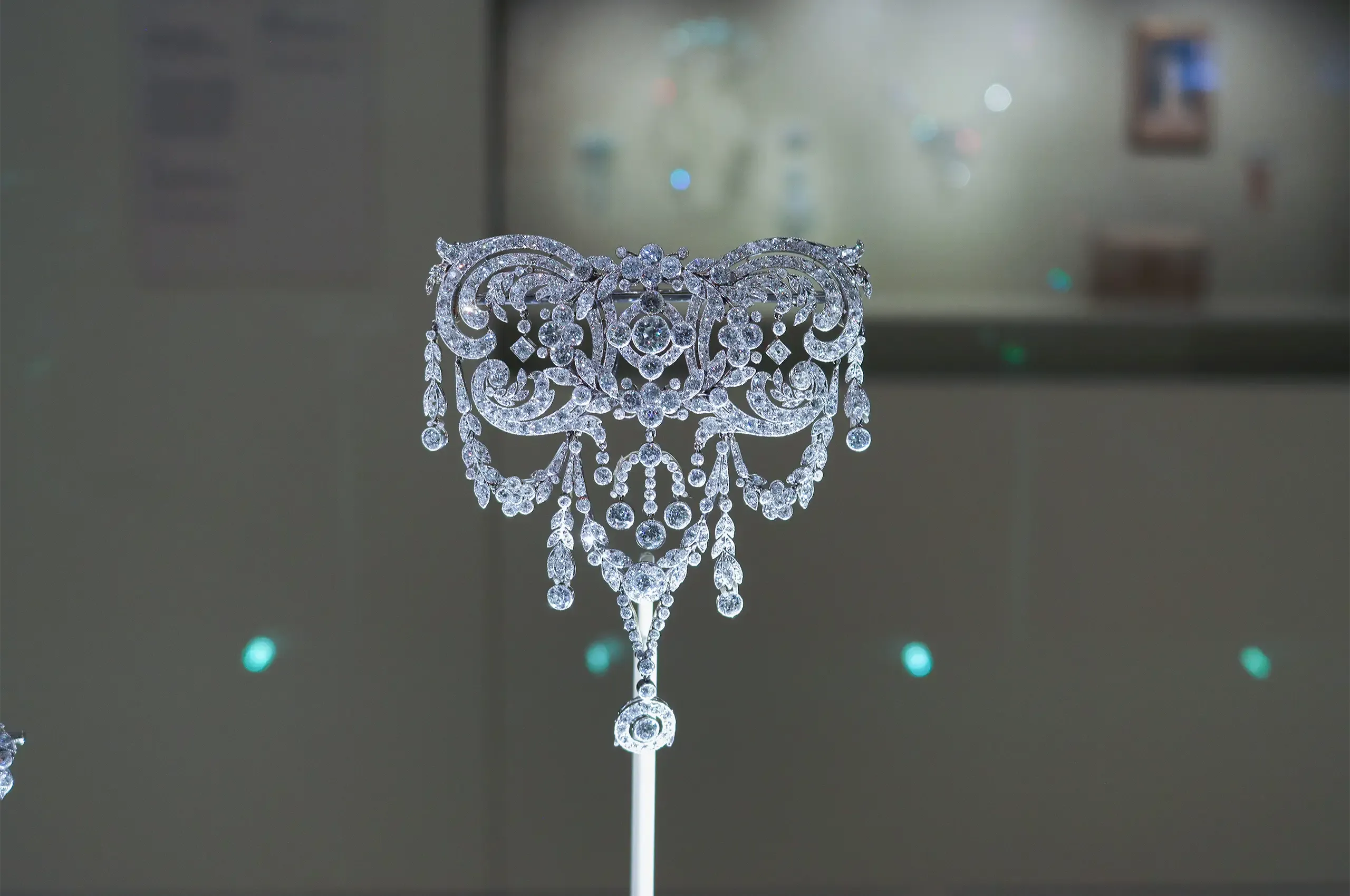
Cartier stomacher brooch, 1909, a special order in platinum and diamonds, designed as an elaborate arrangement of scrolling foliage, flowers, garlands and pendant drops. Cartier Collection.
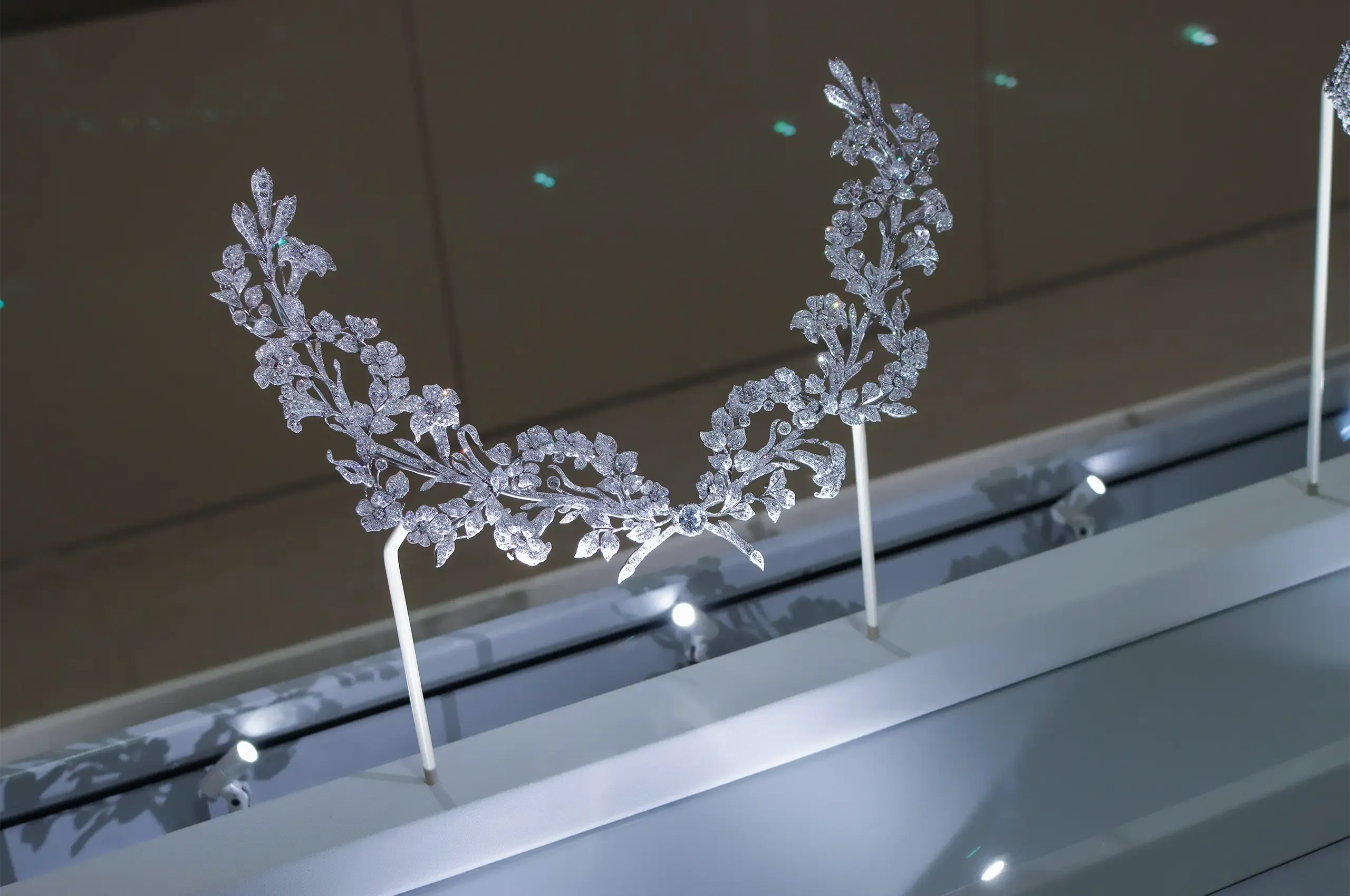
Cartier Wisteria brooches, 1903, in platinum and diamonds, displayed together as a tiara. Cartier Collection
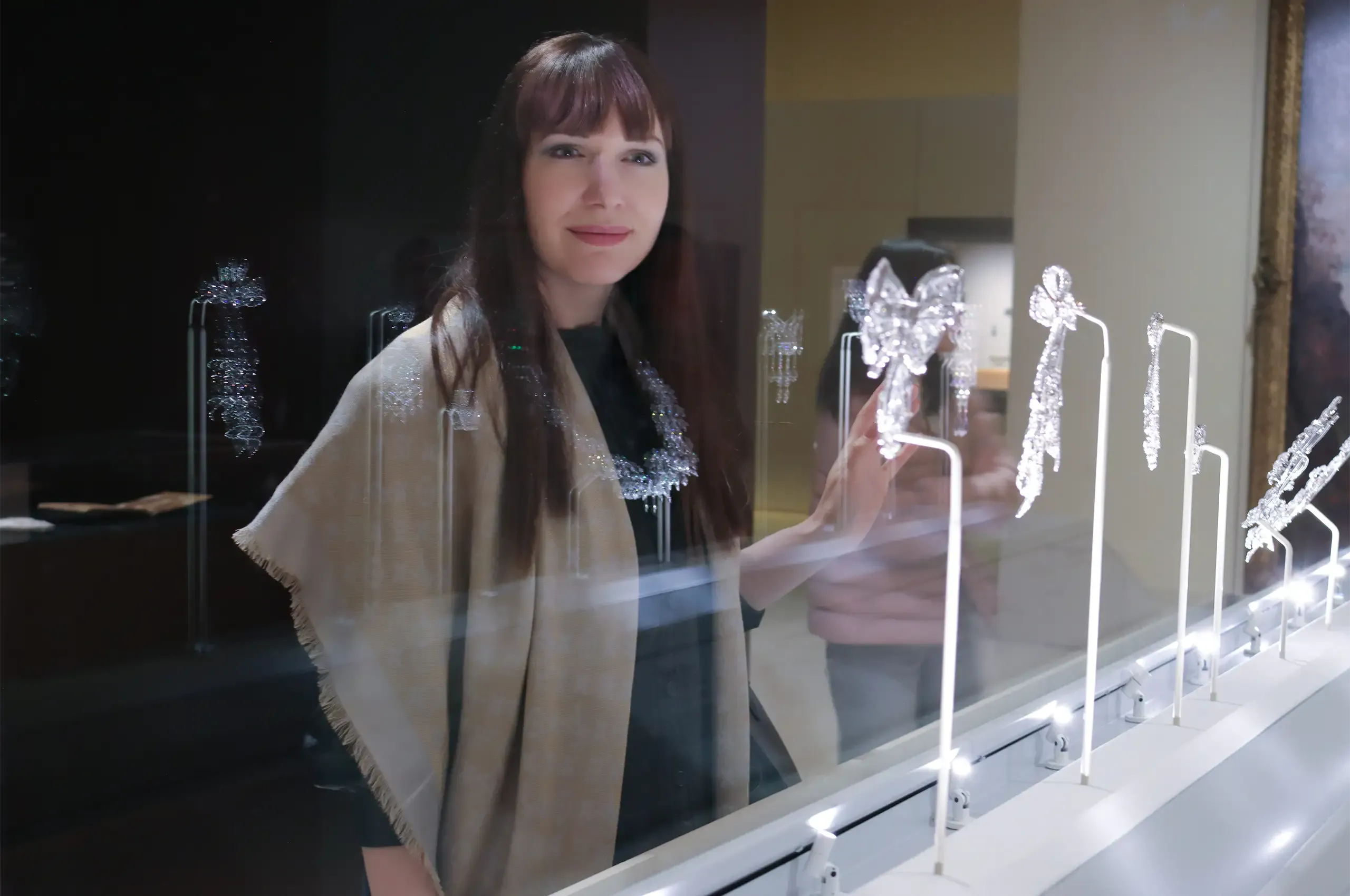
Katerina discovers Cartier’s historic jewels at the NGV in Melbourne
Stepping inside the CARTIER exhibition felt like entering a giant jewellery box. At the entrance, a 27-metre-long mirrored glass installation greets visitors, shifting from yellow through pink to deep red, introducing the colour story that runs throughout the exhibition. From there, the rooms trace Cartier’s evolution: first, a vivid yellow space exploring the global influences of the Cartier brothers, followed by an emerald-green room dedicated to Art Deco, a period that produced some of Cartier’s most celebrated geometric designs. In the “Obsession with Stones” room, light glows around the edges to create the sensation of being inside a gemstone, before the metallic-grey Watches and Clocks room acts as a palate cleanser. Then comes a jolt of green in the Film and Celebrity room, home to jewels associated with Elizabeth Taylor and María Félix. Moving from one saturated colour to the next makes it feel as though you are floating through a dream.
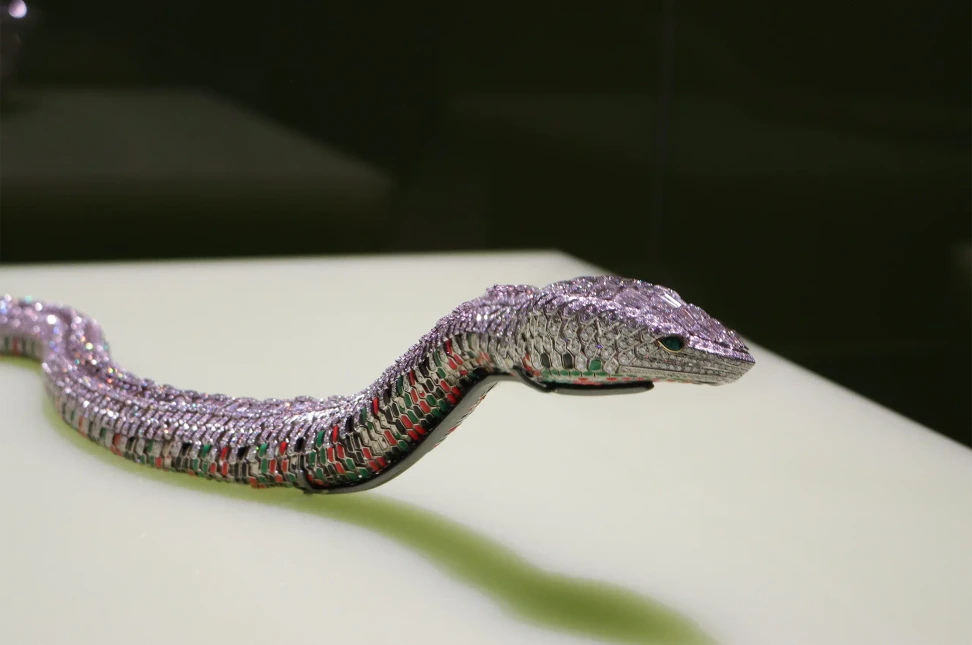
Cartier Snake necklace, 1968, commissioned by María Félix, with 2,473 diamonds, emerald eyes and enamelled scales in the colours of the Mexican flag. Cartier Collection
Luckily for me, the exhibition was a little quieter towards the end of the day, giving me easy access to the displays. At busier times, visitors may have to queue for a closer look at the tiaras, necklaces, bracelets, brooches, precious objects and clocks. With only an hour to immerse myself in the world of Cartier, I set myself a mission: to seek out the 10 exhibits that made my whirlwind journey to Melbourne worthwhile.
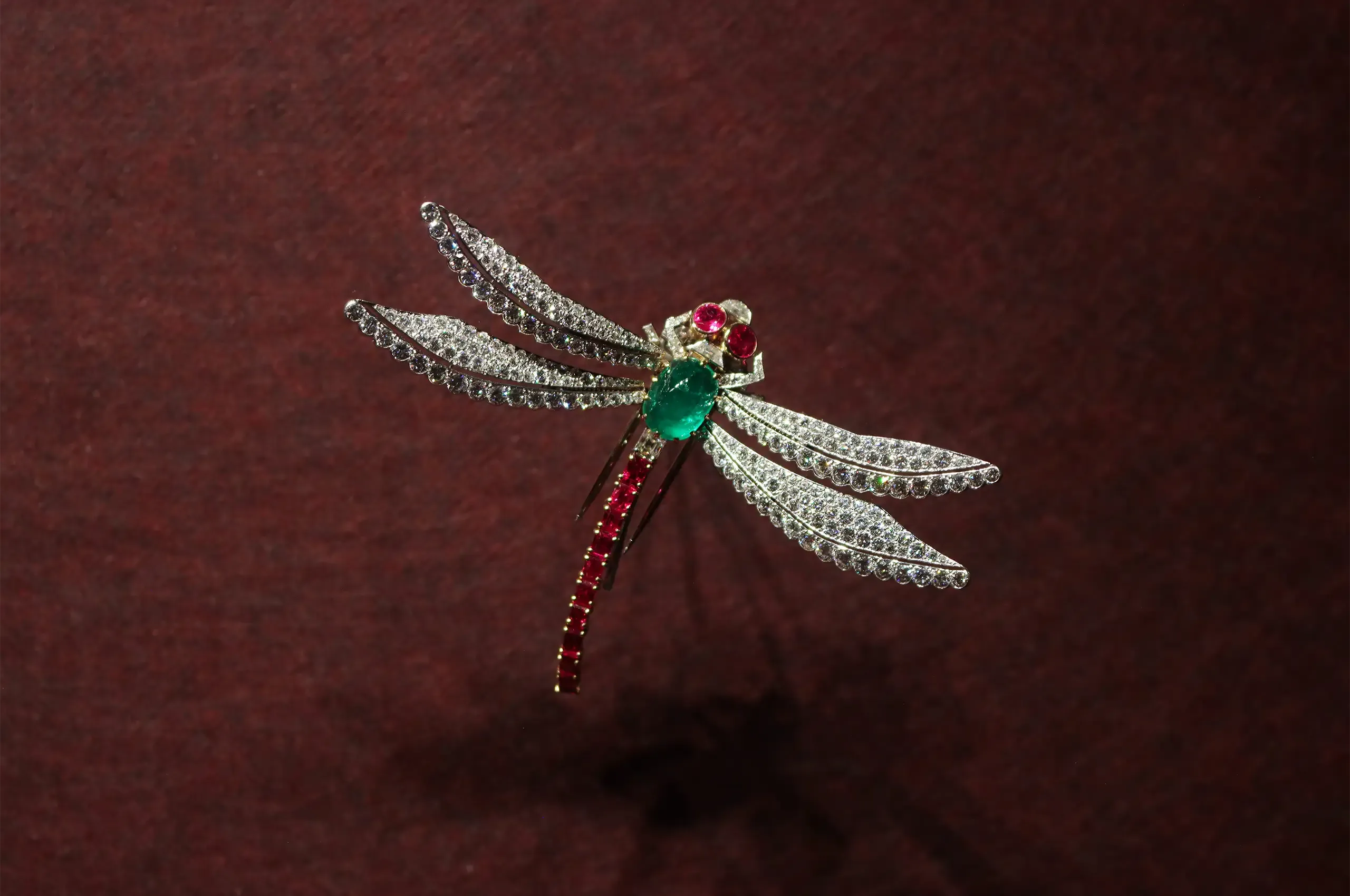
Cartier Dragonfly clip brooch, 1953, in platinum and gold, set with an emerald, rubies and diamonds, with spring-mounted wings designed to flutter with movement. Cartier Collection
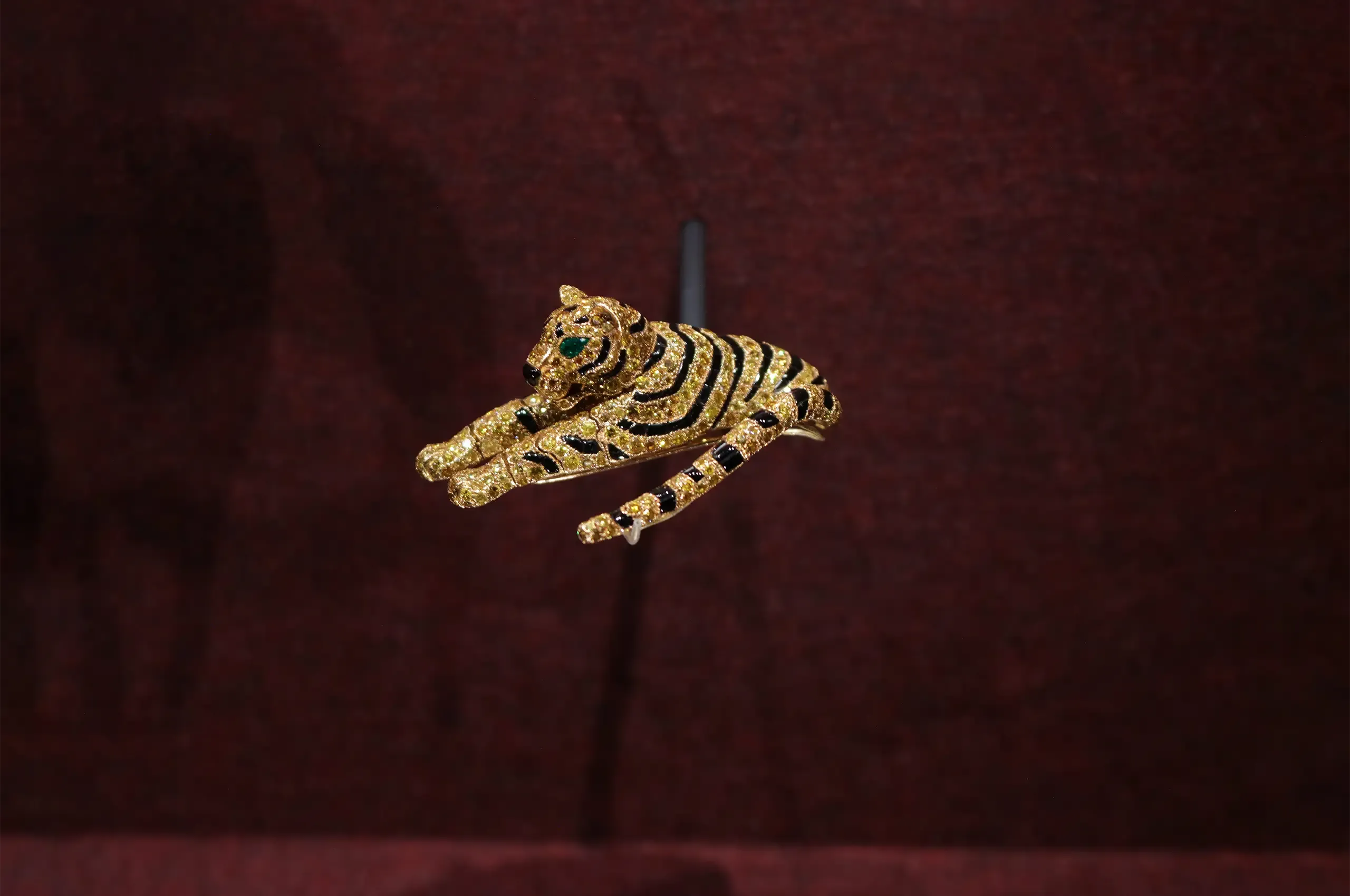
Cartier Tiger clip brooch, 1959, formerly owned by the Duchess of Windsor, set with yellow and colourless diamonds, onyx and emeralds
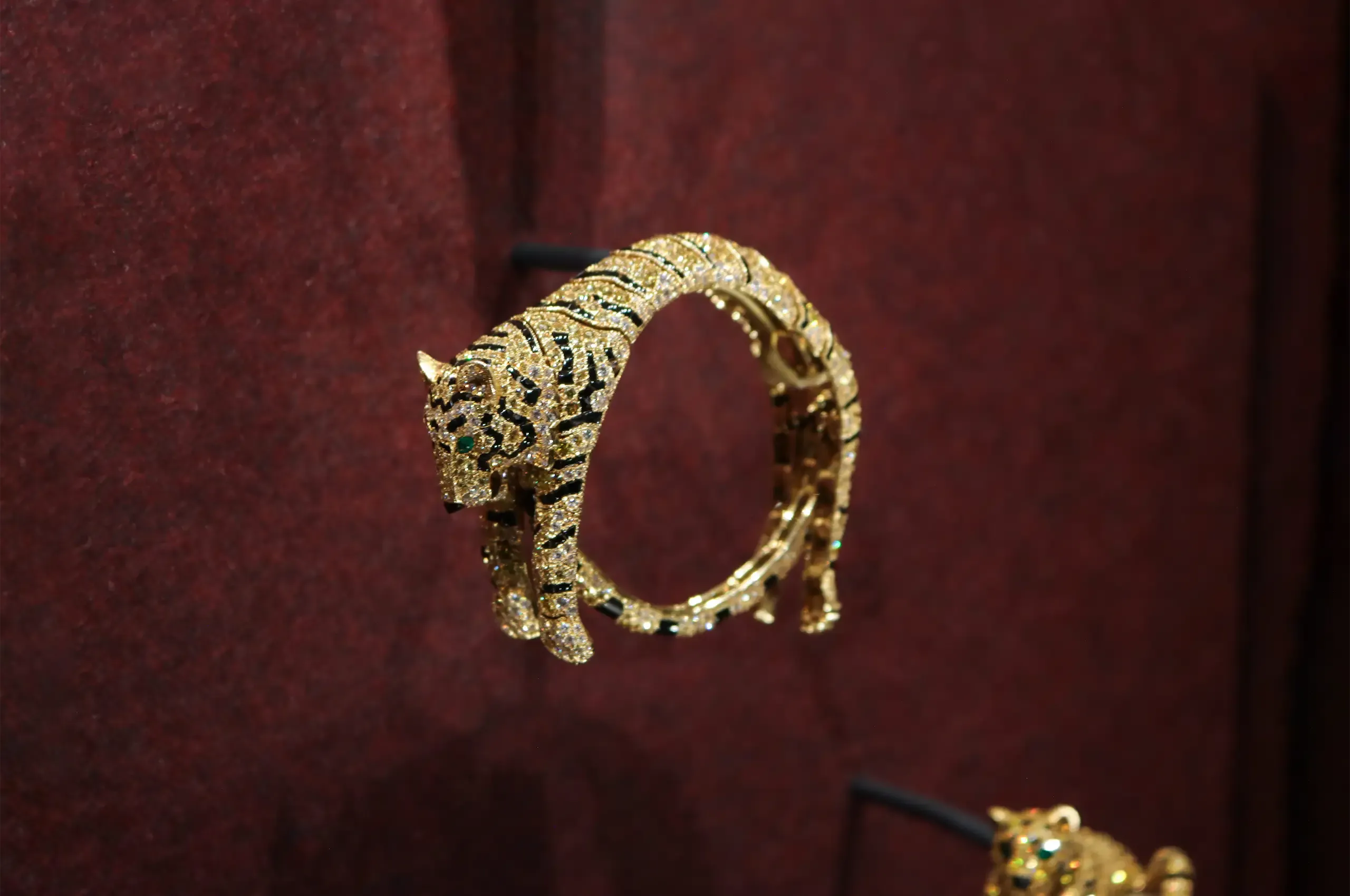
Cartier Tiger bracelet, 1956, created for the Duchess of Windsor, with an articulated body set with yellow and colourless diamonds, onyx stripes and emerald eyes
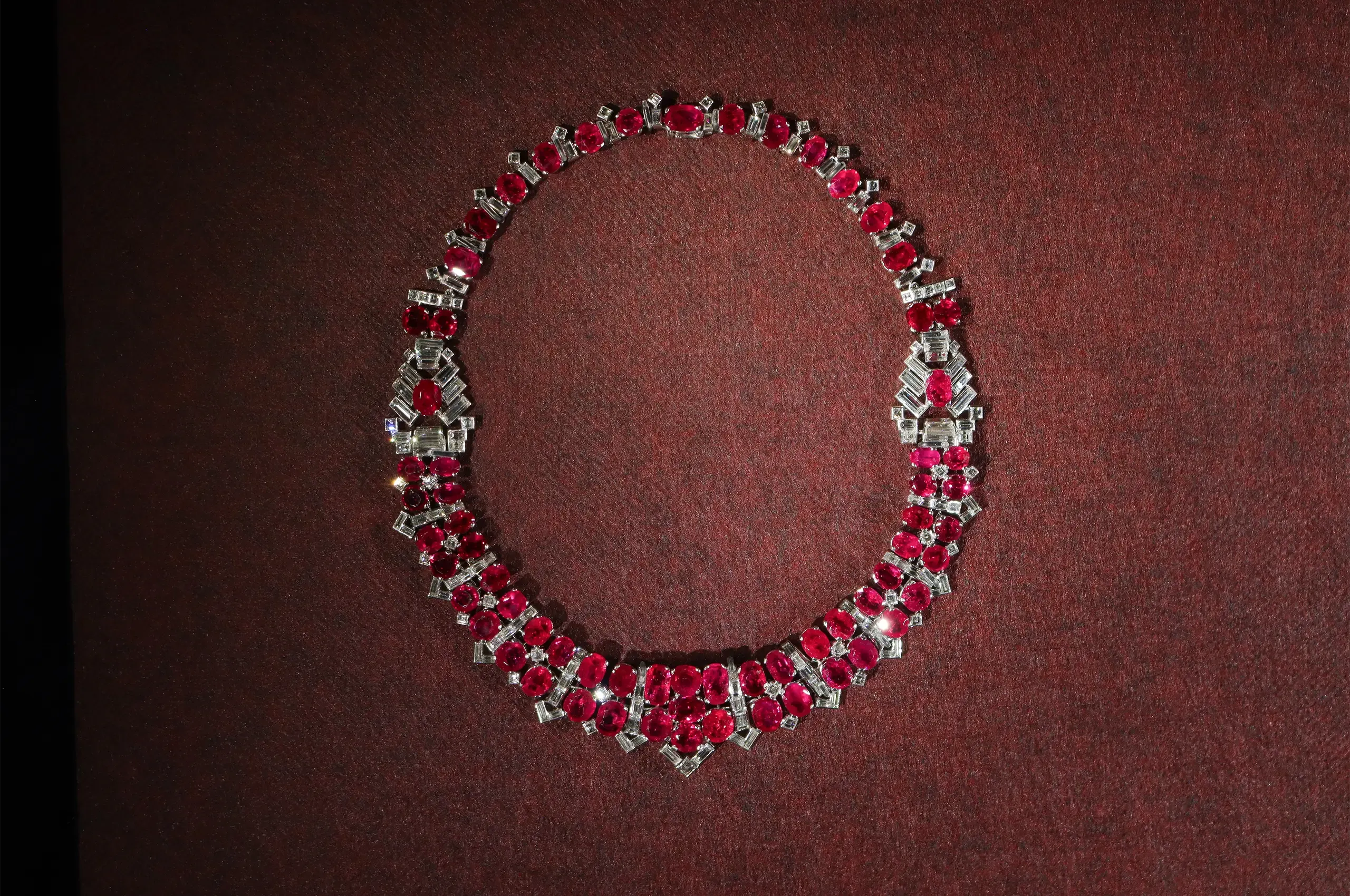
Cartier necklace, 1951, a special order set with Burmese rubies and diamonds, with five detachable motifs that can be worn as brooches. Cartier Collection
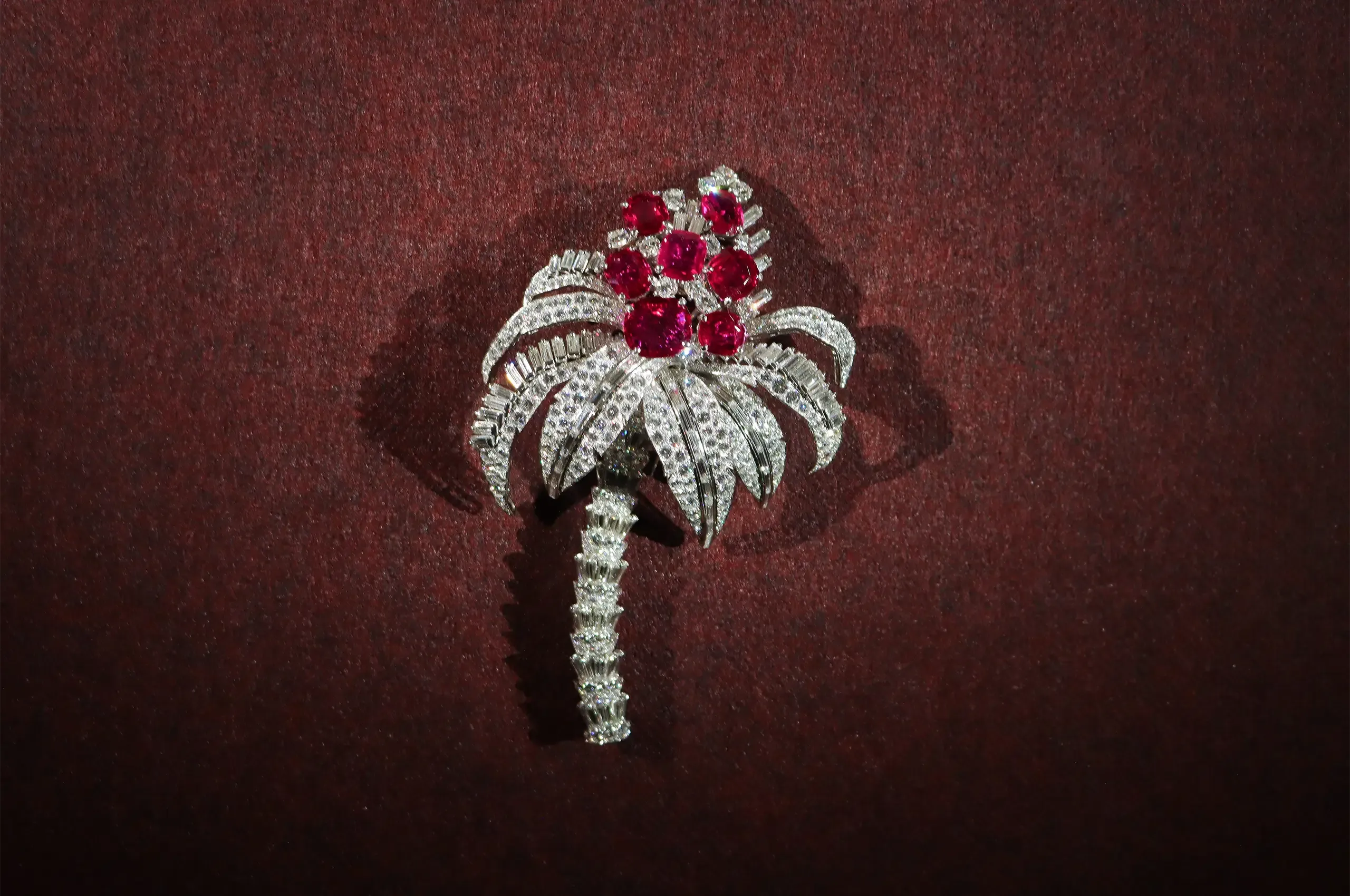
Cartier Palm Tree clip brooch, 1957, a special order set with seven Burmese rubies totalling 23.10 carats and diamonds, with an articulated diamond-set trunk. Cartier Collection
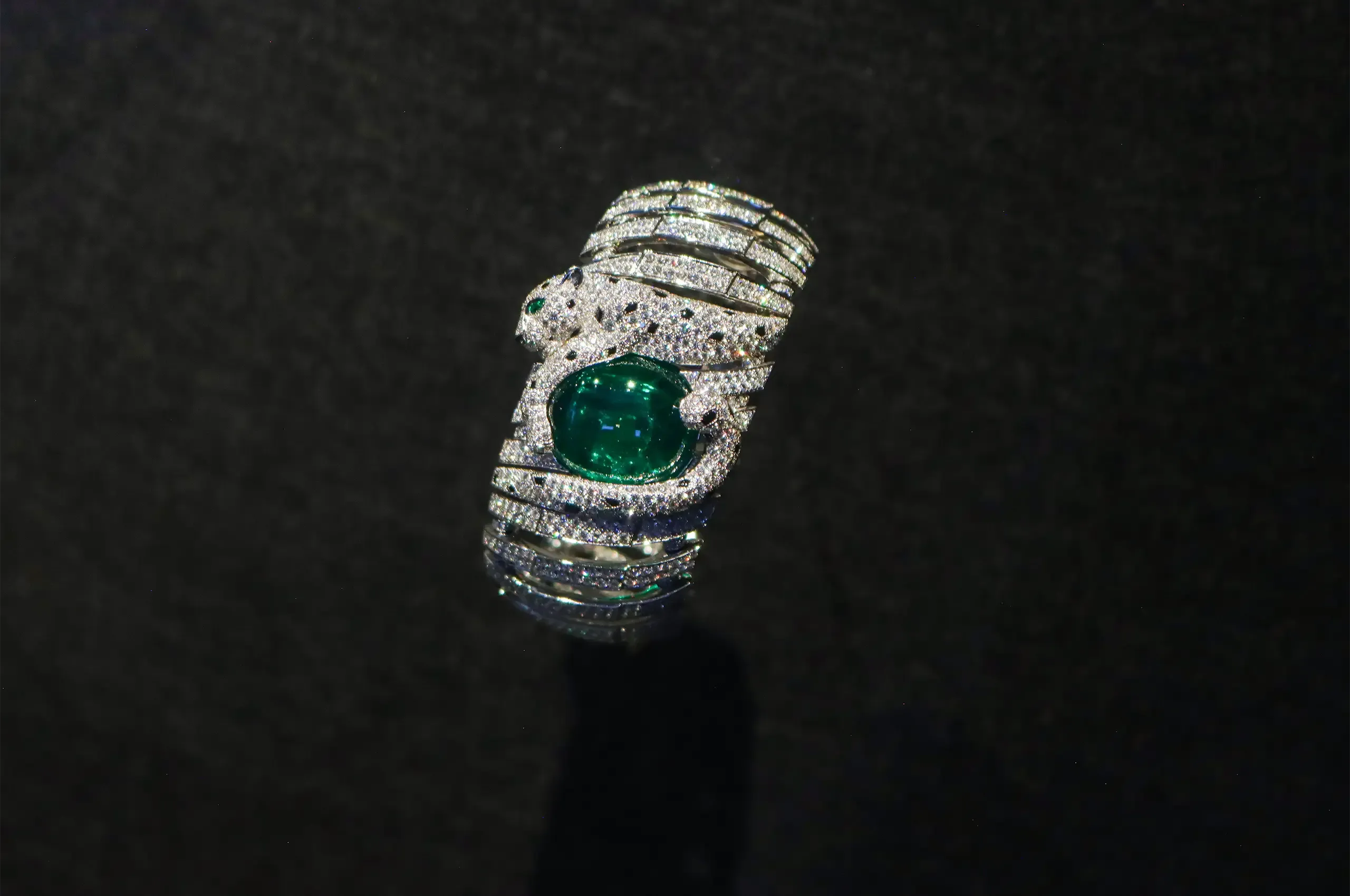
Cartier Panthère bracelet, with a diamond-set panther curled around a large cabochon emerald, accented with onyx and an emerald eye
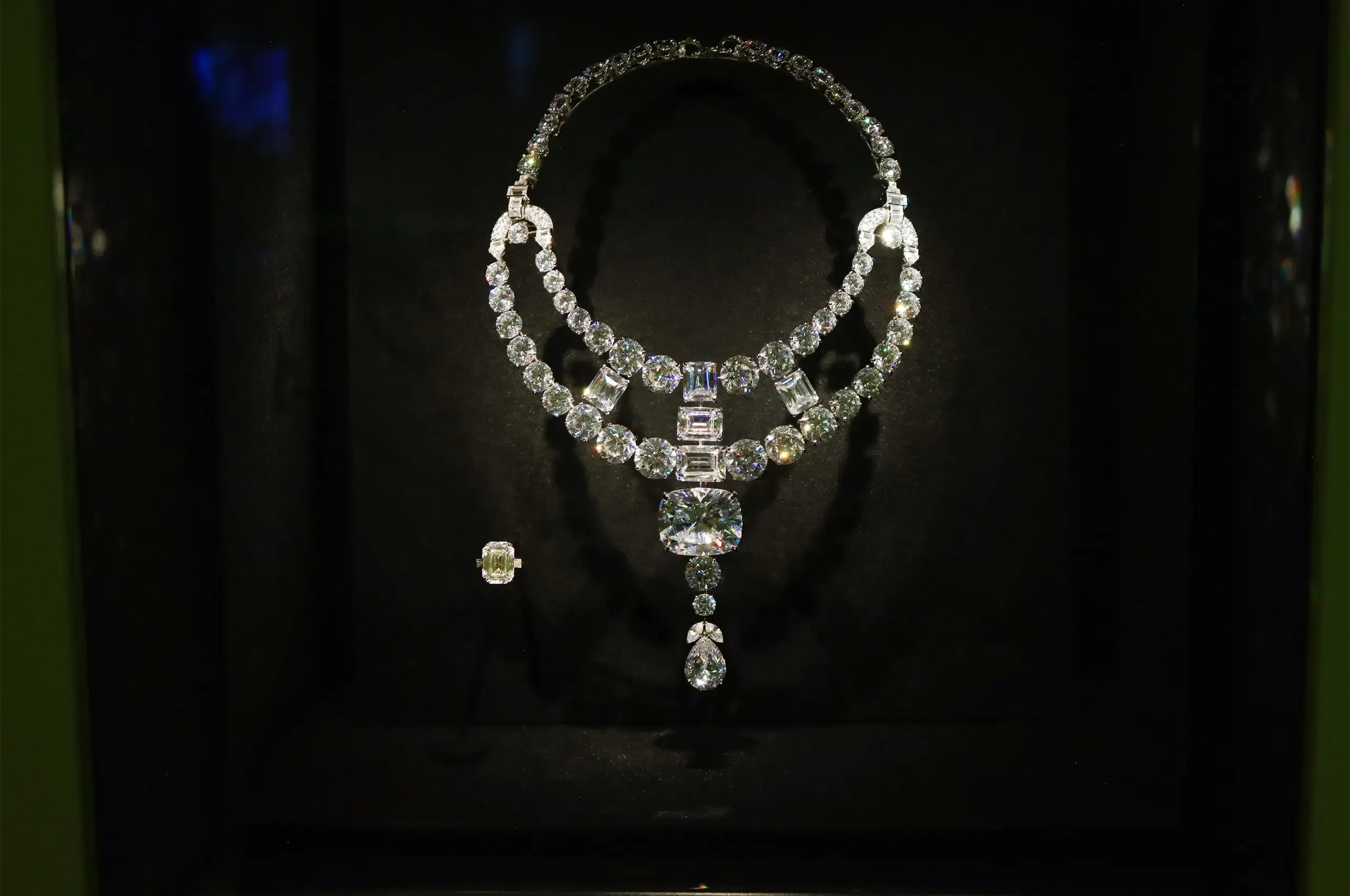
Cartier Nizam of Hyderabad necklace, 1935, in platinum and approximately 300 diamonds, chosen by Princess Elizabeth as a wedding gift from the Nizam of Hyderabad in 1947. Royal Collection
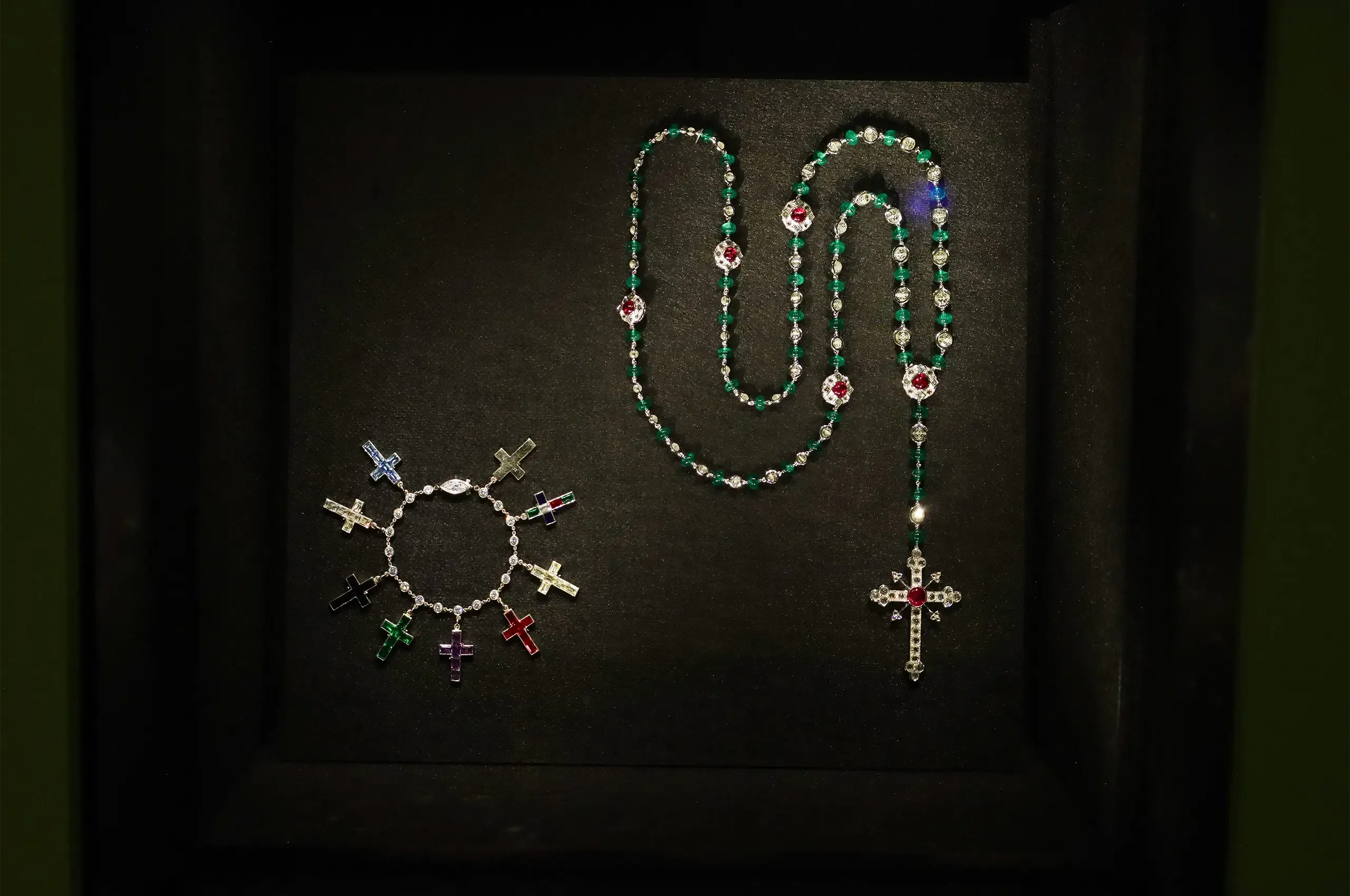
Cartier jewels created for film: a 2024 rosary for Wes Anderson’s The Phoenician Scheme and a replica of the Duchess of Windsor’s cross bracelet for W.E. (2011)
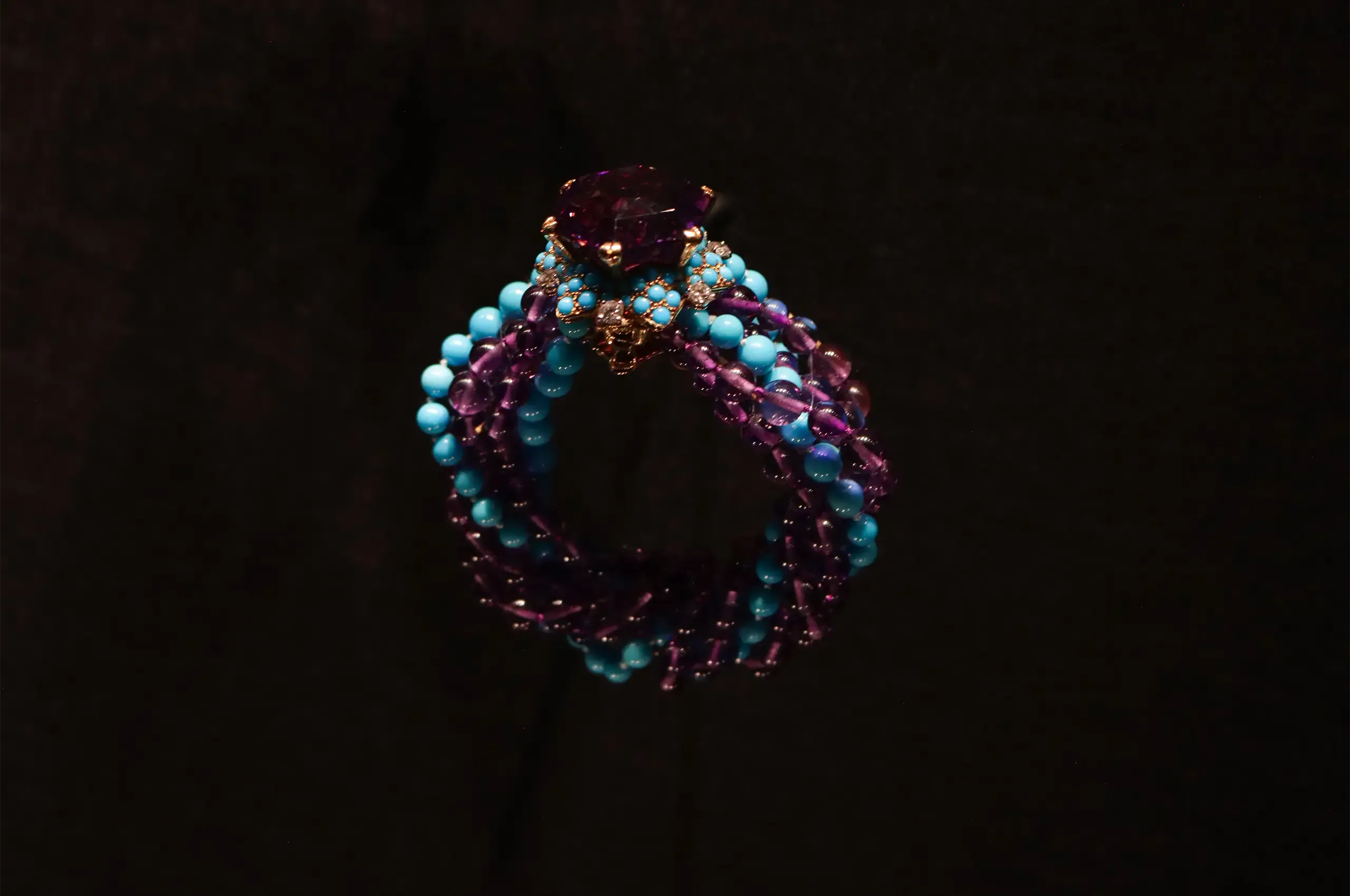
Cartier bracelet, 1954, created for the Duchess of Windsor, with a 45.98-carat amethyst, turquoise and diamonds. Cartier Collection
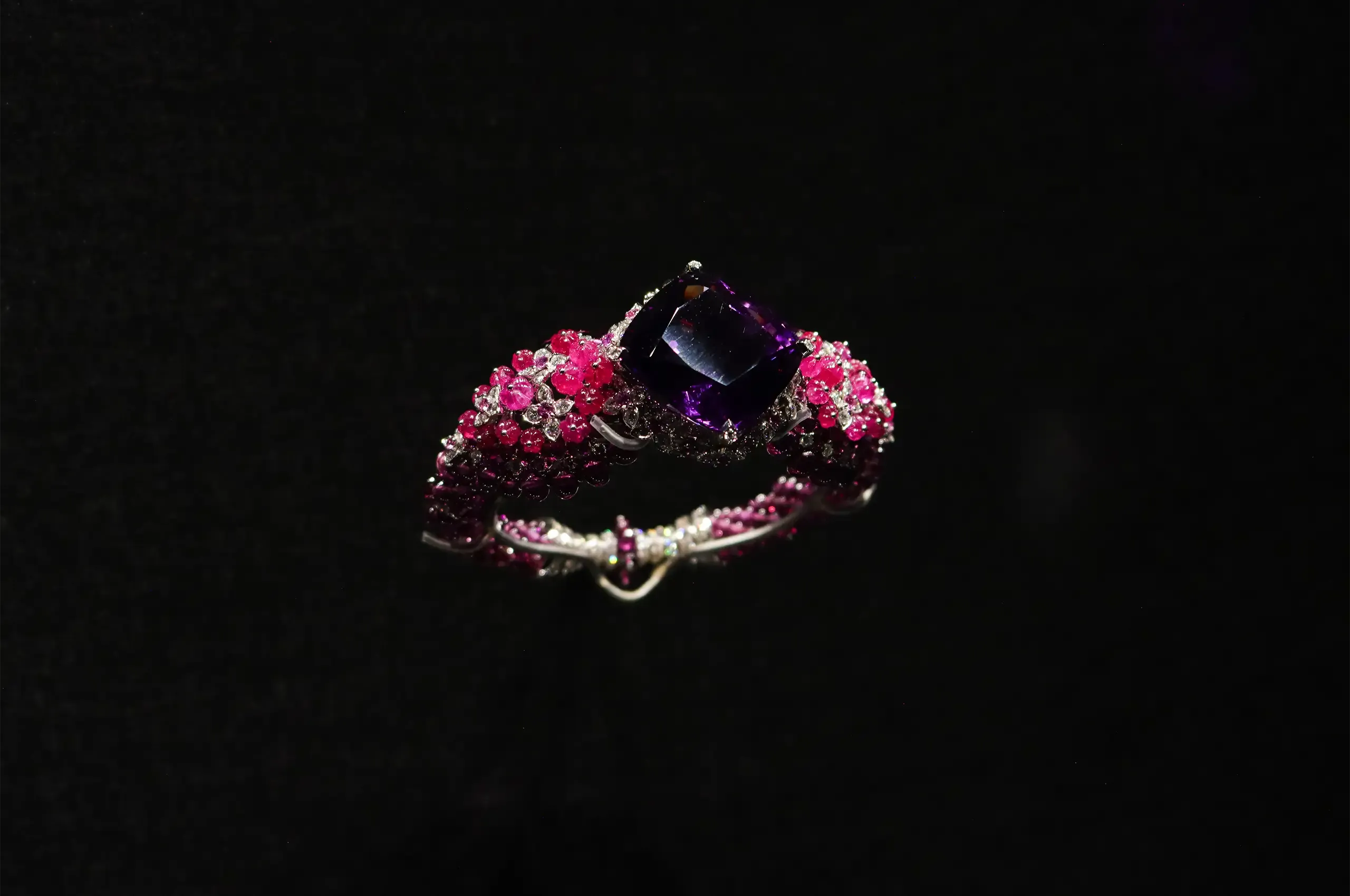
Cartier bracelet, set with a 58.21-carat amethyst, with purple garnets, carved rubies, pink sapphires and diamonds
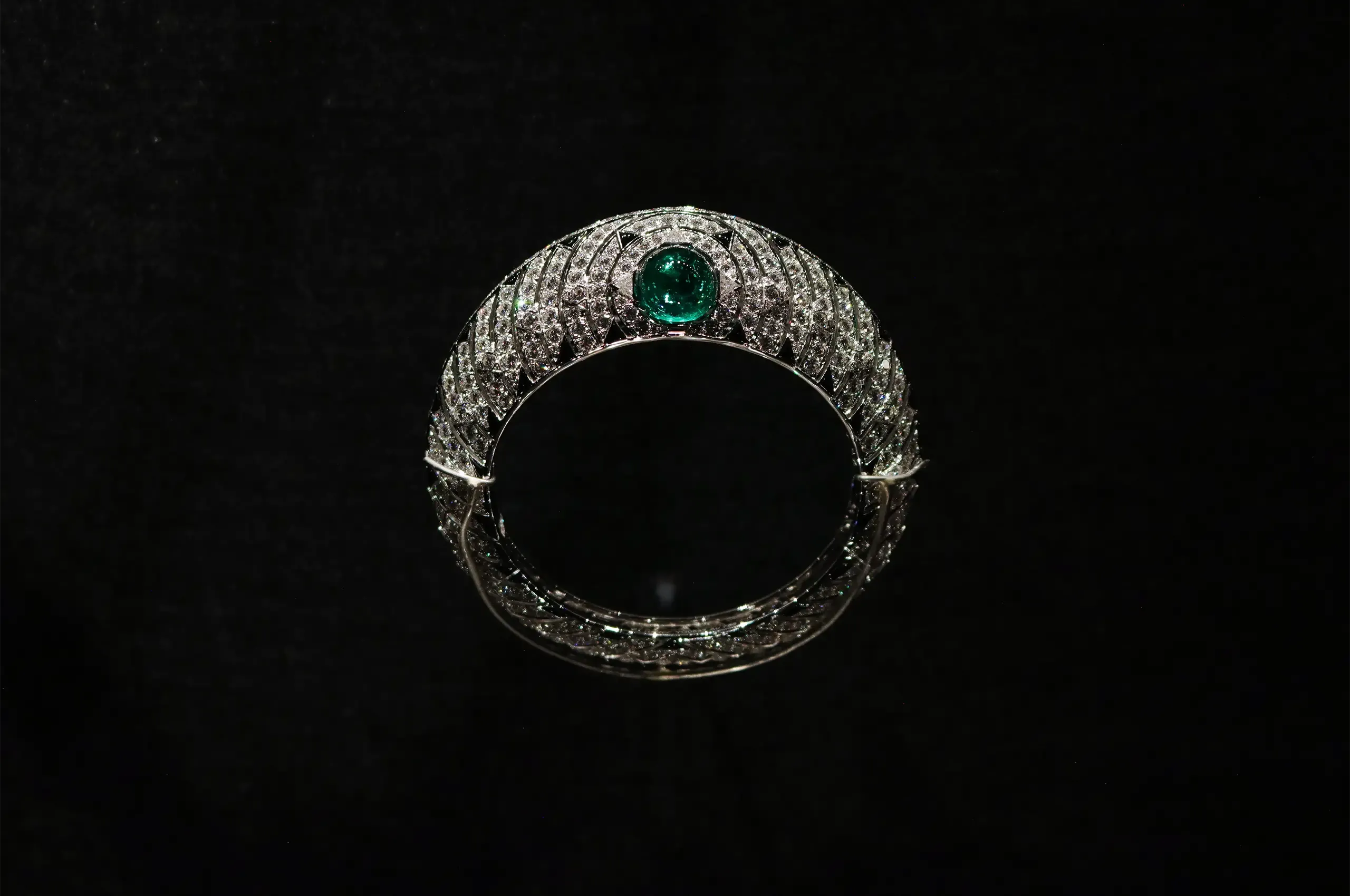
Cartier bracelet, 2014, set with a 53.78-carat emerald and diamonds in platinum. Cartier Collection
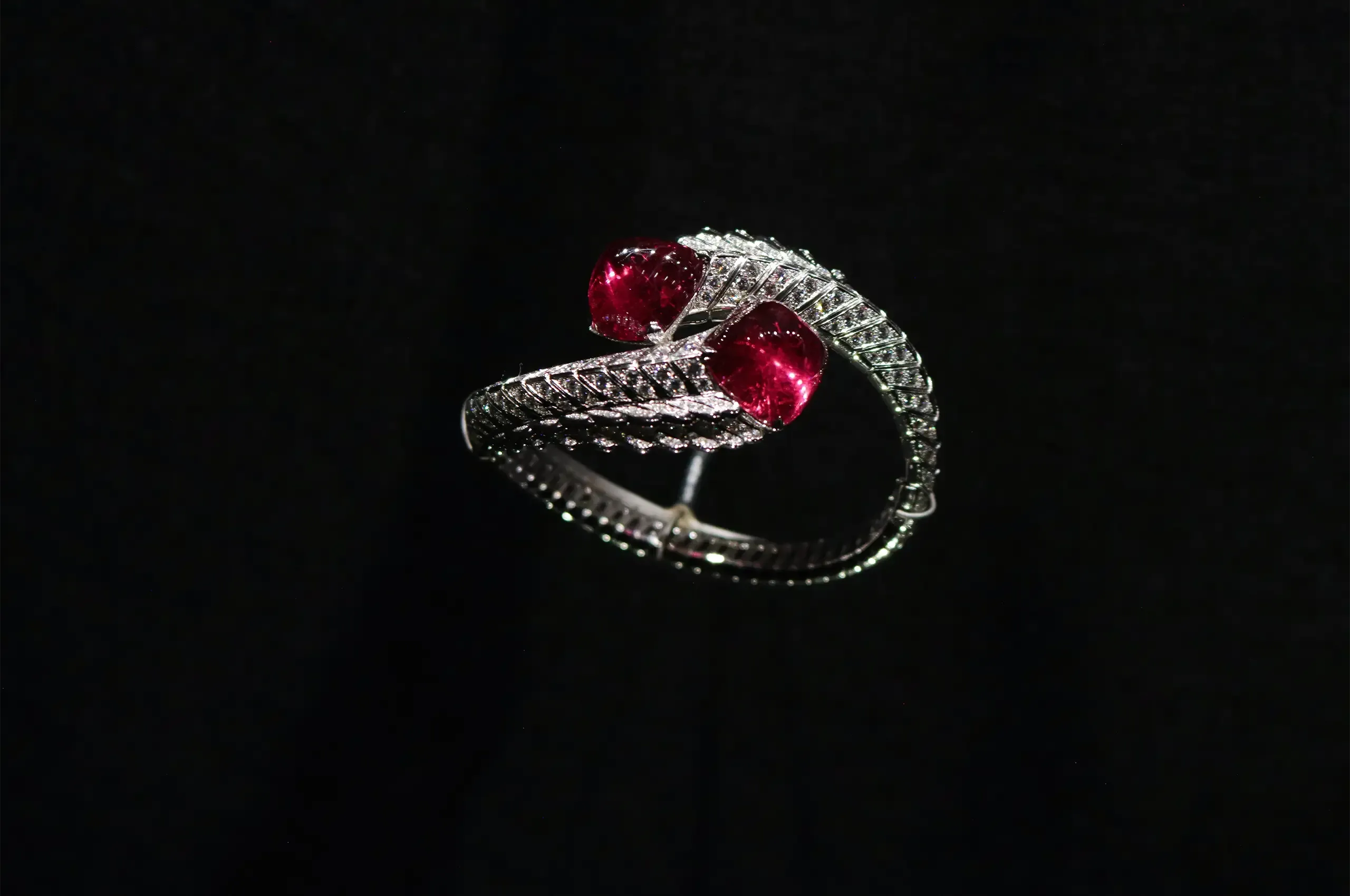
Cartier Quetzal bracelet, 2016, with two sugarloaf rubellites totalling 41.09 carats, black lacquer and diamonds
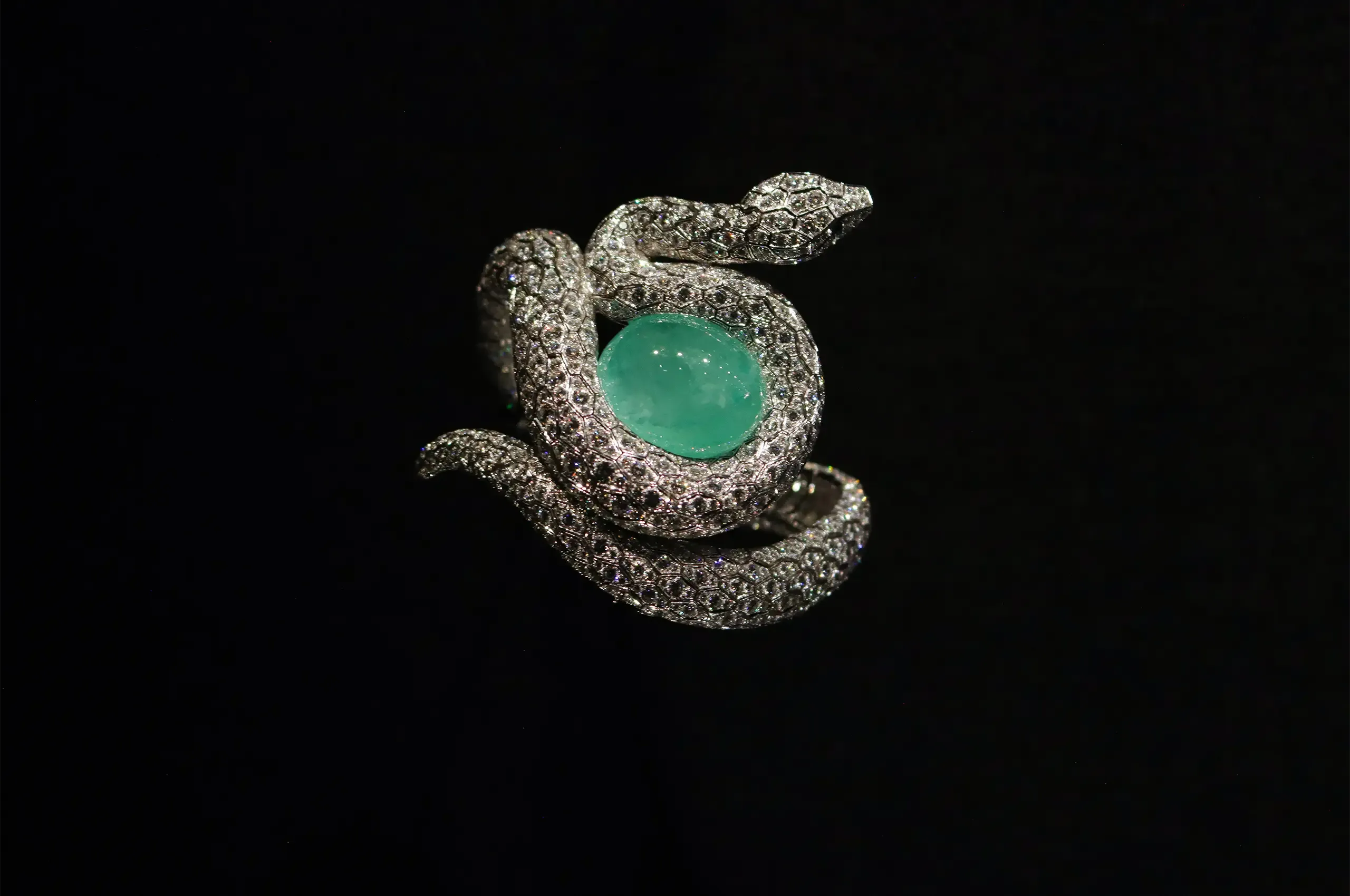
Cartier Snake bracelet, 2014, set with a 53.78-carat cabochon emerald and brilliant-cut diamonds, with an articulated snake’s head. Cartier Collection
1. The Manchester Tiara: An Early Example of Cartier’s Garland Style
Walking into the exhibition, the first jewel to greet me was the Manchester Tiara, displayed alone beneath a spotlight. Created in 1903 for Consuelo Montagu, Dowager Duchess of Manchester, it is an early example of Cartier’s signature Garland style, set with more than 1,500 diamonds in delicate scrolls and floral motifs. Seeing it in isolation gave me the chance to appreciate the intricacy of the design before moving into the exhibition beyond. As an introduction to nearly 400 Cartier creations, it certainly set expectations high.
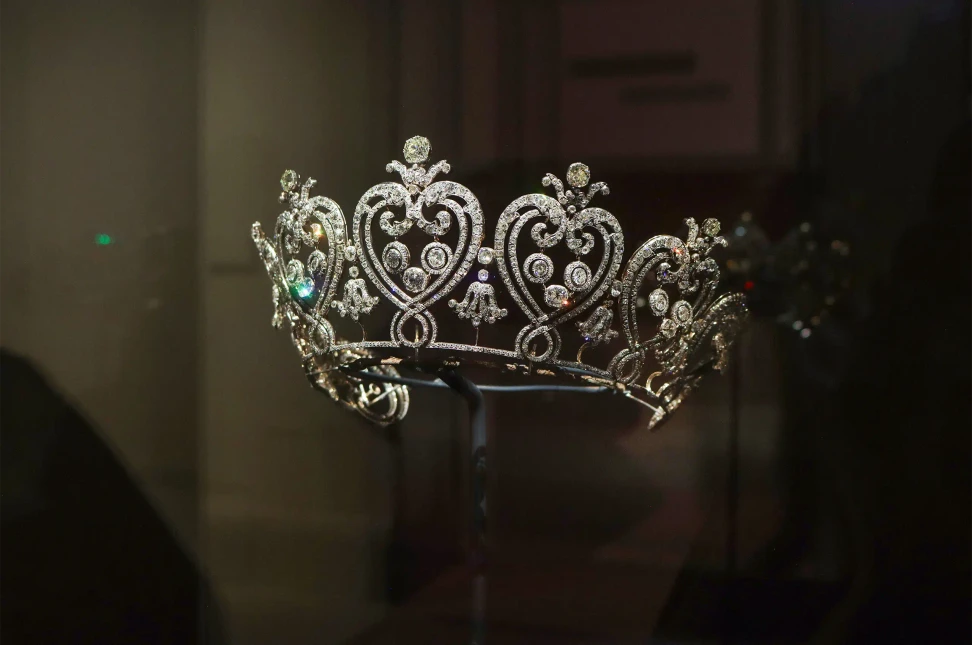
The Manchester Tiara, Cartier, 1903, created for Consuelo, Duchess of Manchester, with more than 1,000 brilliant-cut diamonds arranged in scrolling heart-shaped motifs. Victoria and Albert Museum, London
2. The Scroll Tiara: From a Royal Coronation to Rihanna
Created in 1902, Cartier’s Scroll Tiara has an extraordinary history. Lady Clementine Churchill wore it to the coronation of Queen Elizabeth II in 1953 then more than six decades later, Rihanna wore the same tiara on the cover of Wmagazine in 2016. Seeing it in person, I loved the contrast between those two moments and the fact that a jewel created more than a century ago could look entirely at home in both eras.
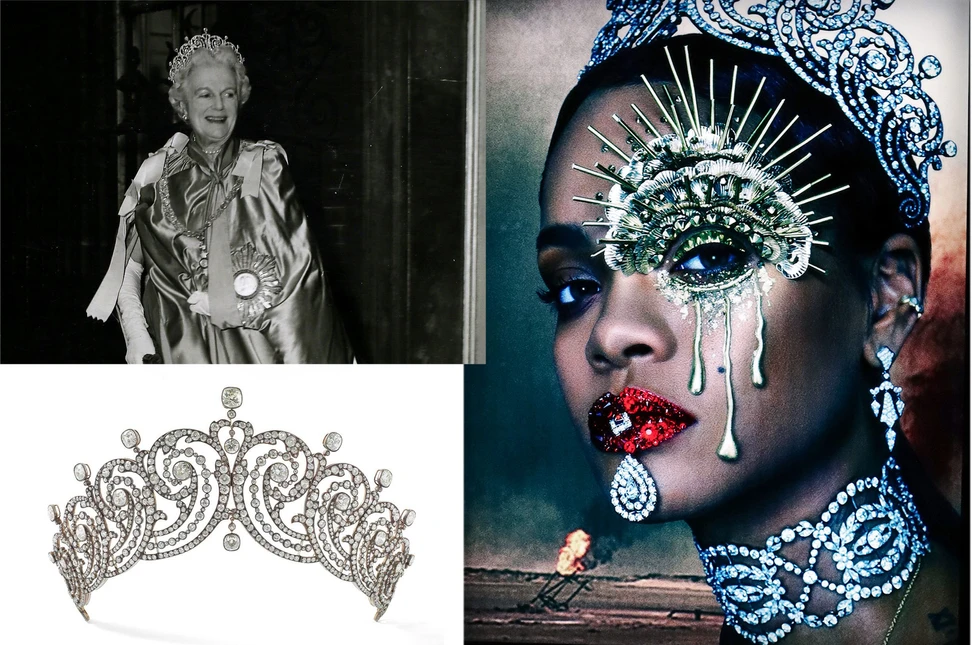
Cartier’s 1902 Scroll Tiara, worn by Lady Clementine Churchill to Queen Elizabeth II’s coronation in 1953 and by Rihanna on the cover of W magazine in 2016
3. The Patiala Necklace: Lost, Recovered and Restored
Commissioned in 1928 for the Maharaja of Patiala, the Patiala Necklace originally contained 2,930 diamonds, including the 234.65-carat yellow De Beers diamond at its centre. The necklace later disappeared from public view and was rediscovered in 1998, by which point many of its most important stones had been removed. Cartier subsequently restored it, using replicas in place of the missing gems. Even without many of its original stones, the scale is remarkable. Standing in front of it, I tried to imagine what it must have looked – and felt – like when complete, laden with thousands of diamonds and worn by the Maharaja nearly a century ago.
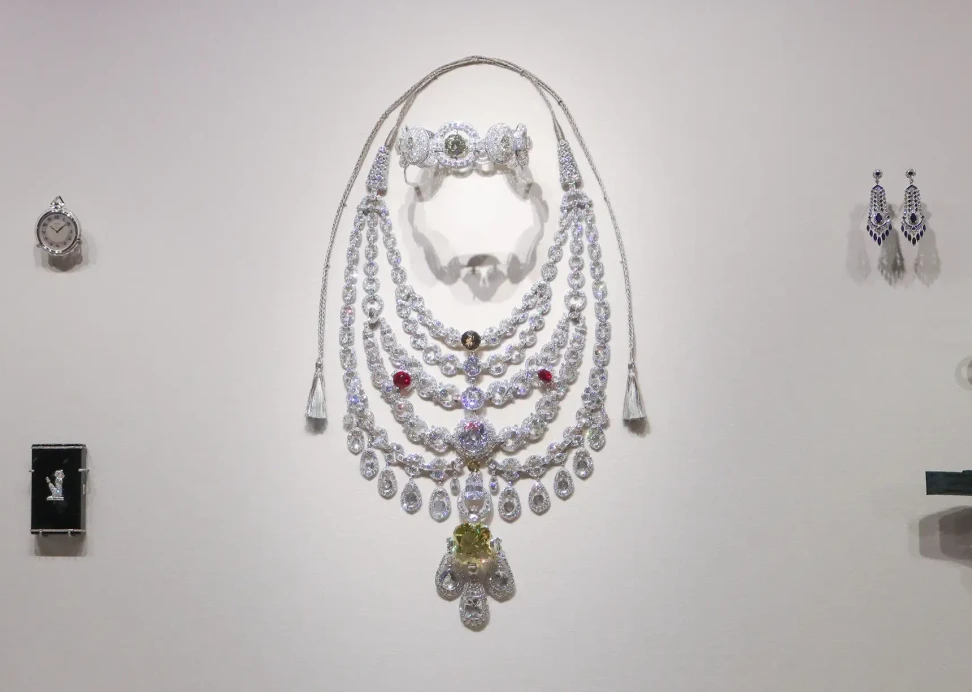
Cartier’s Patiala Necklace, commissioned in 1928 by the Maharaja of Patiala and originally set with 2,930 diamonds, including the 234.65-carat De Beers diamond
4. The Duchess of Windsor's Panther Brooch: A Cartier Icon
Jeanne Toussaint, Cartier’s creative director from 1933 to 1970, transformed the panther into one of the Maison’s most famous motifs. Created in 1949 for Wallis Simpson, Duchess of Windsor, this clip brooch is among its best-known expressions: a platinum and diamond panther with emerald eyes, perched on a 152.35-carat cabochon Kashmir sapphire. I have admired this jewel for years, both for the beauty of the design and everything the panther came to represent under Toussaint. Seeing it in person was something I had long wanted to do – and I left with the next best thing, a hardback notebook featuring the brooch on its cover.
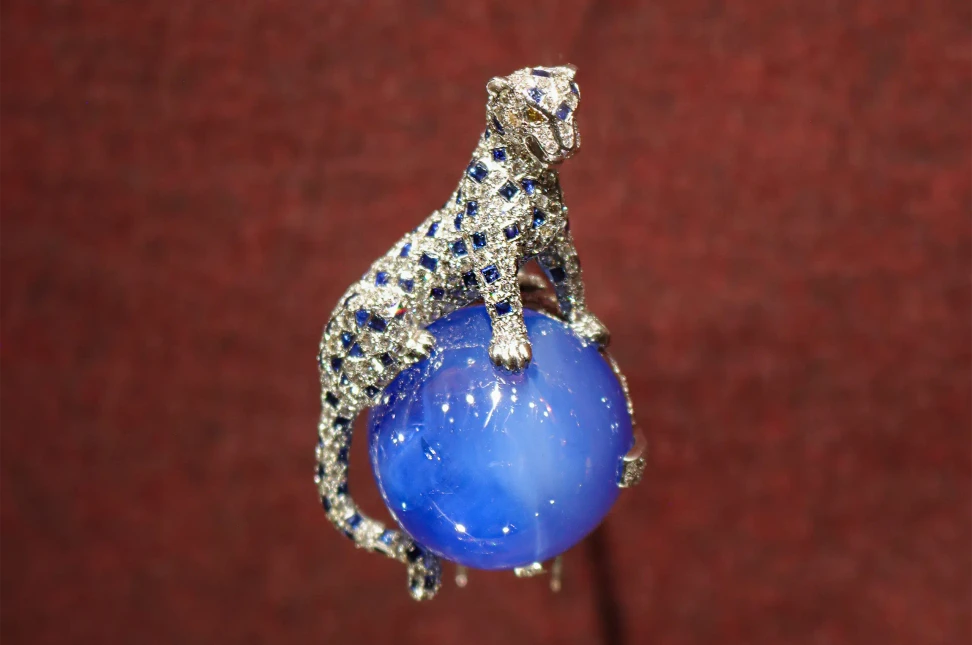
Cartier Panthère clip brooch, 1949, created for the Duchess of Windsor, with a diamond and sapphire panther perched on a 152.35-carat Kashmir sapphire cabochon
5. The Duchess of Windsor's Amethyst Bib Necklace: A Versailles Showstopper
Wallis Simpson makes another appearance on my list, and for good reason. Created in 1947, her sculptural bib necklace brings together 27 step-cut amethysts, including a large heart-shaped stone, with turquoise cabochons, brilliant-cut diamonds and a substantial gold rope chain. The Duchess wore it to a gala at Versailles in 1953, pairing the Indian-inspired necklace with a strapless embellished gown and lilac wrap that echoed the colour of the amethysts.
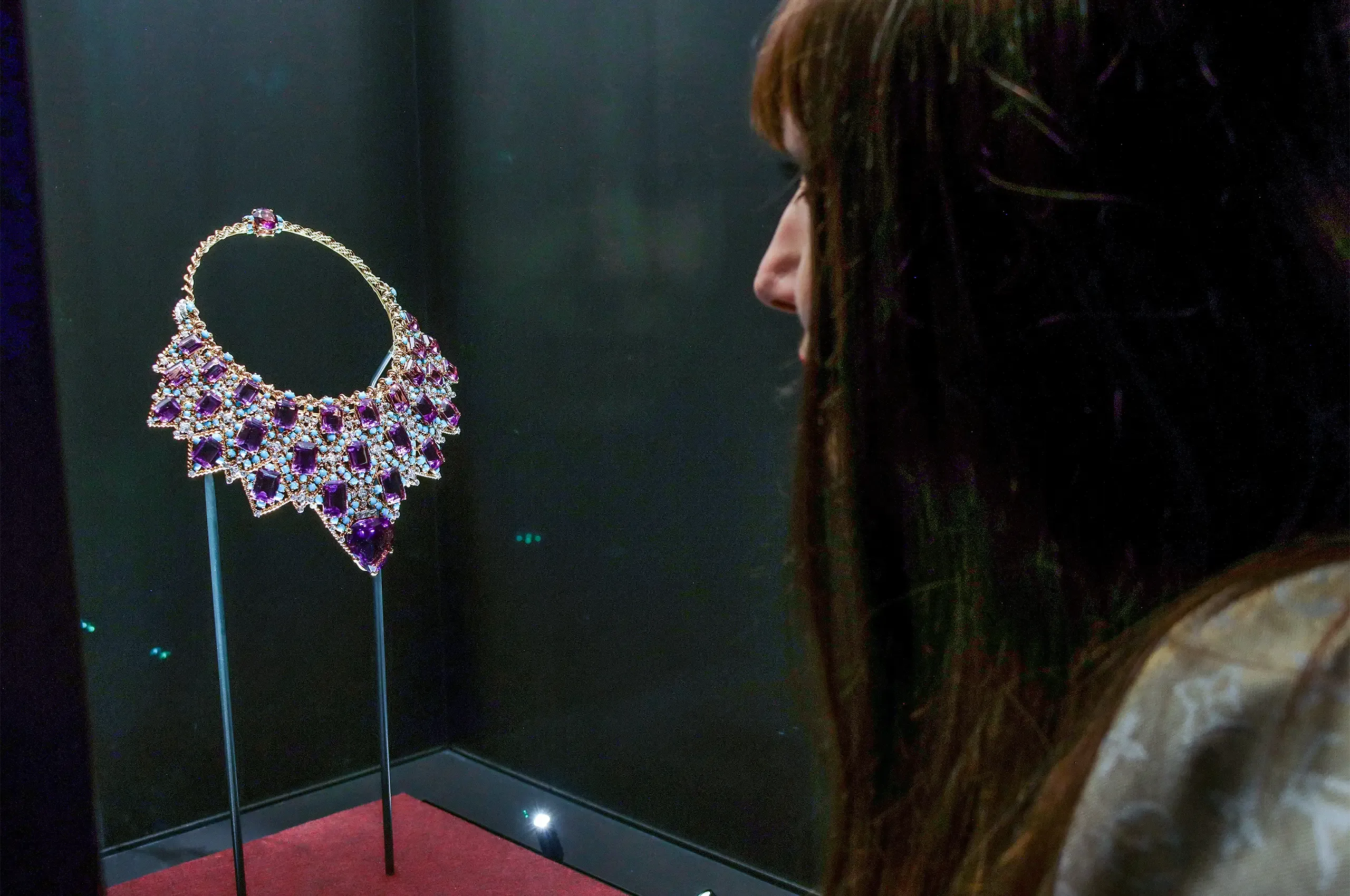
Katerina views the Duchess of Windsor’s spectacular amethyst, turquoise and diamond bib necklace, created by Cartier in 1947
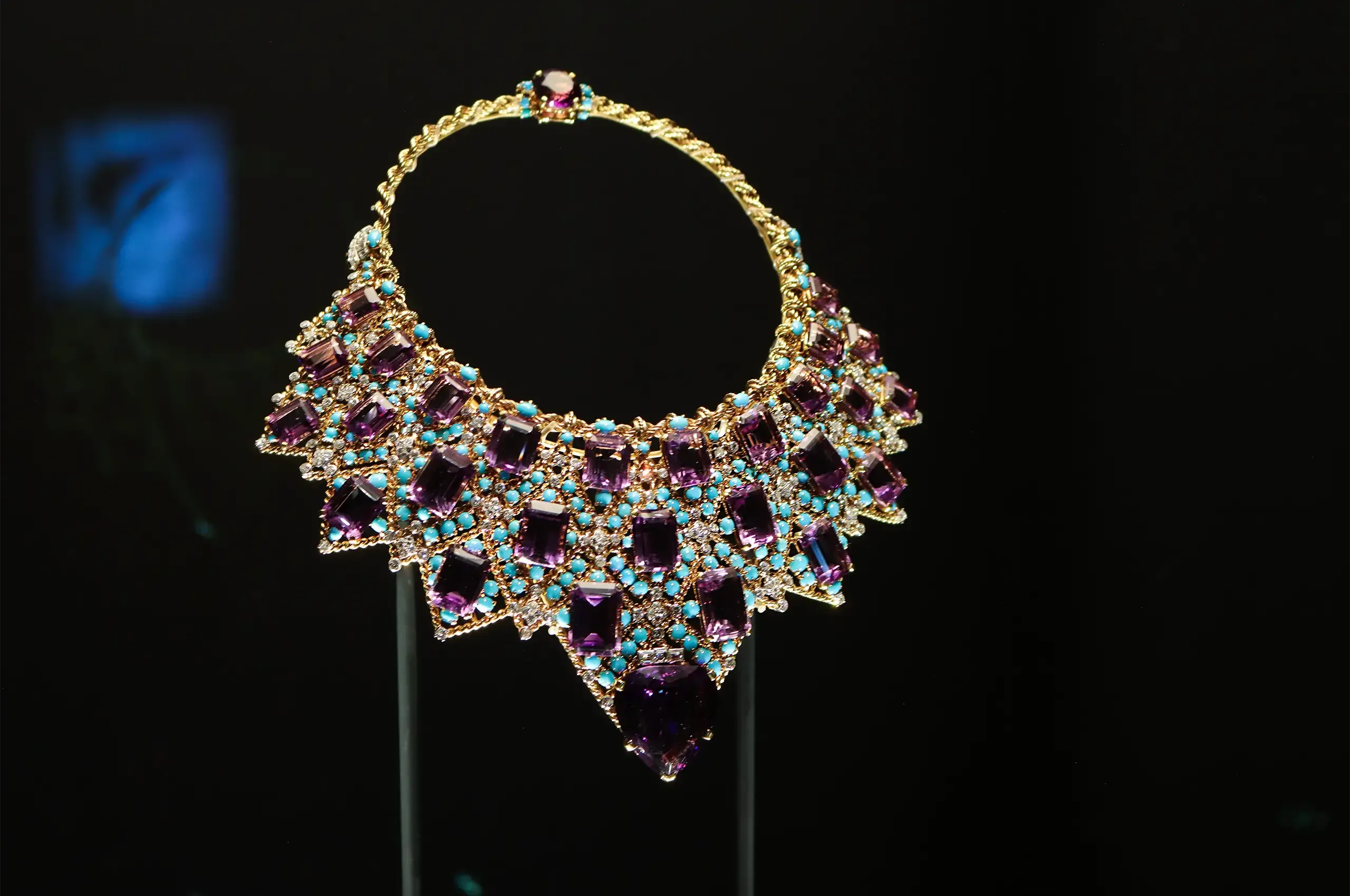
Cartier’s 1947 bib necklace for the Duchess of Windsor, combining 27 step-cut amethysts with turquoise cabochons and diamonds
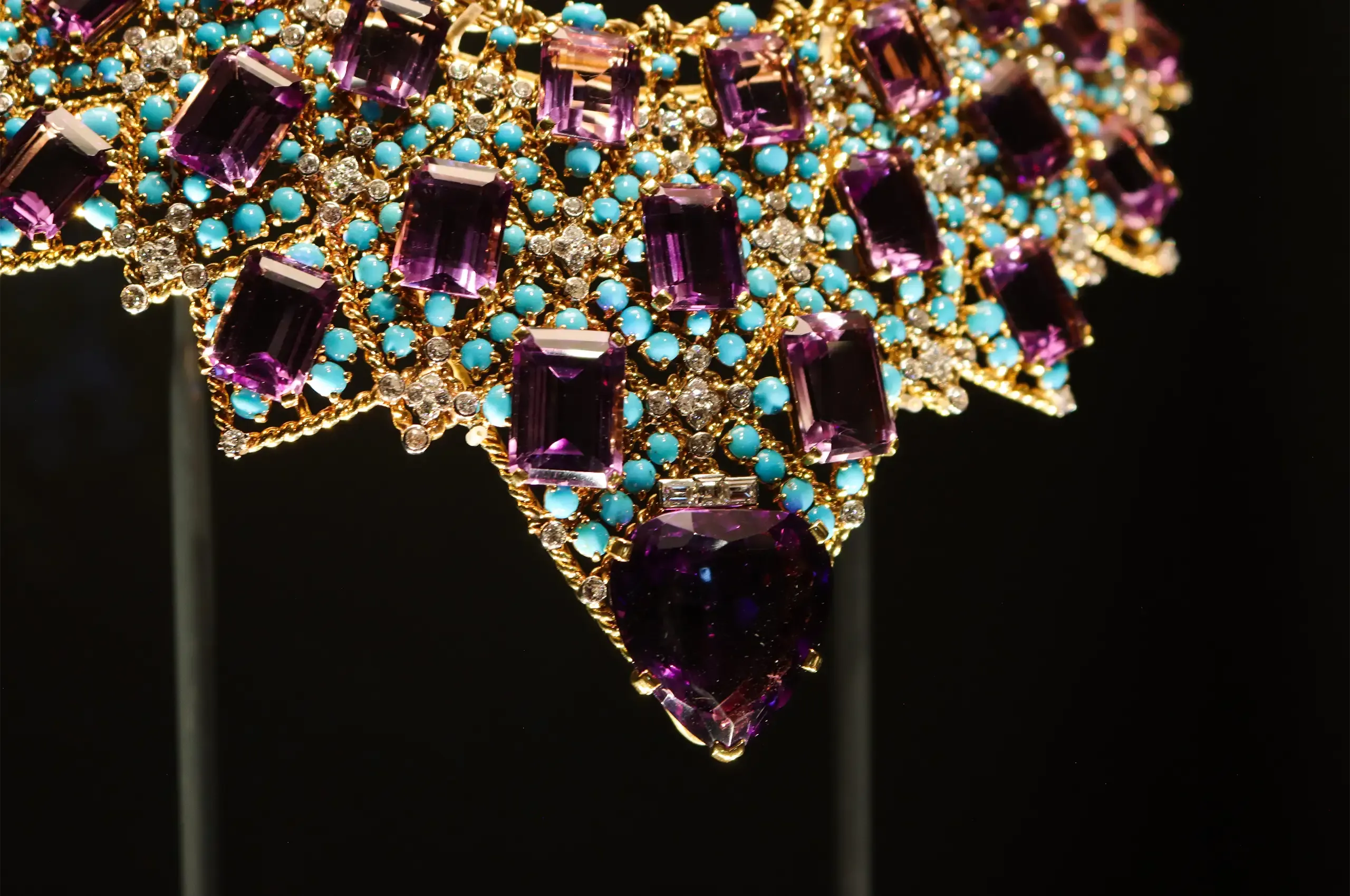
A closer look at the necklace’s amethysts, turquoise cabochons and brilliant-cut diamonds
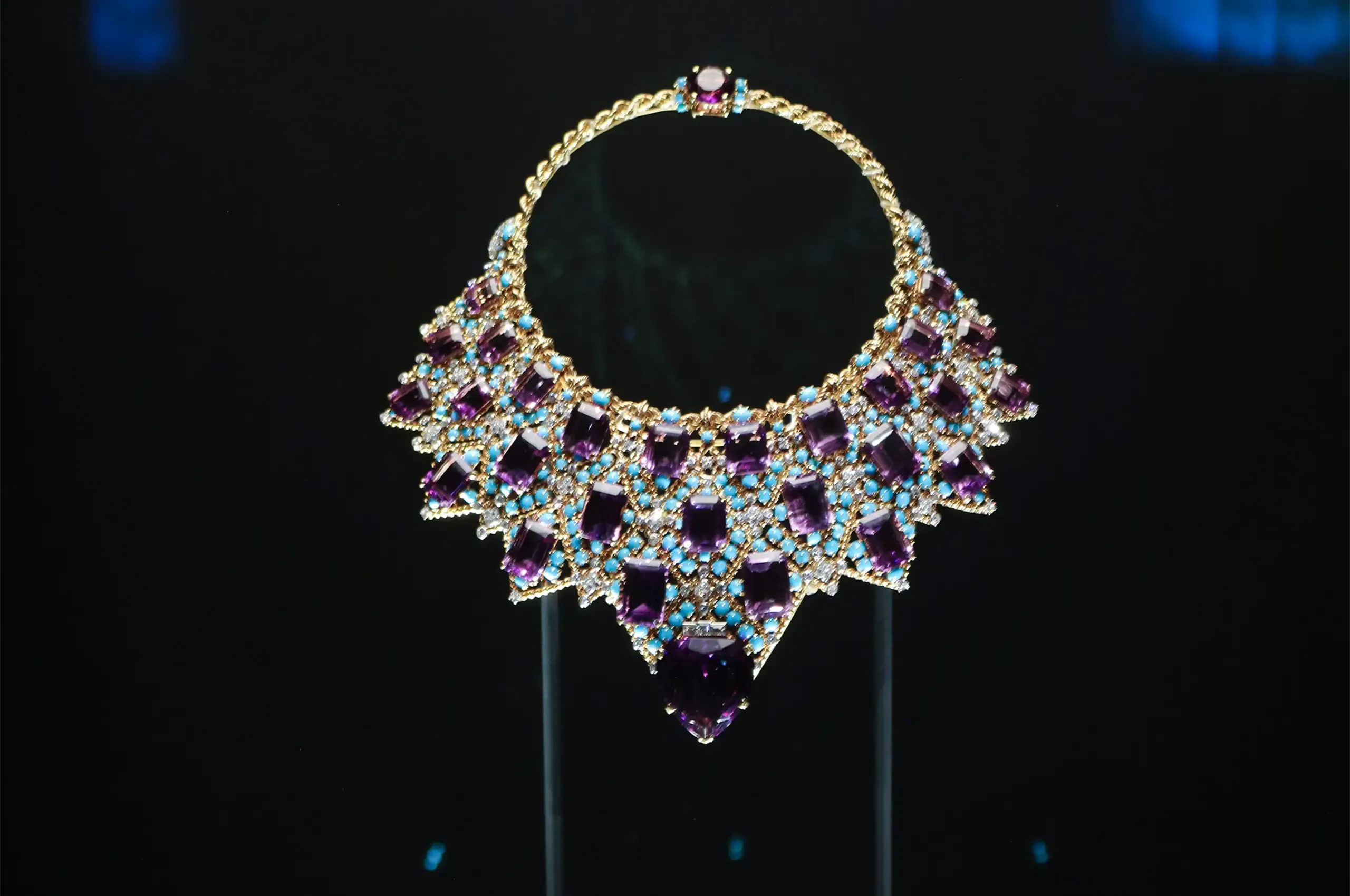
The Duchess of Windsor’s Cartier bib necklace, its cascade of amethysts culminating in a large heart-shaped stone
6. Elizabeth Taylor's Ruby and Diamond Necklace: “Lit Up and Made of Red Fire”
Elizabeth Taylor described this ruby and diamond necklace as “like the sun – lit up and made of red fire”. Created by Cartier in 1951, it was given to her by her third husband, Mike Todd, while the couple were on holiday on the French Riviera in 1957. Seven Burmese rubies are set within a geometric lattice of diamonds, introducing the flashes of “red fire” that Taylor described. Todd died in a plane crash the following year, giving a jewel associated with such a happy period of Taylor’s life an added poignancy.
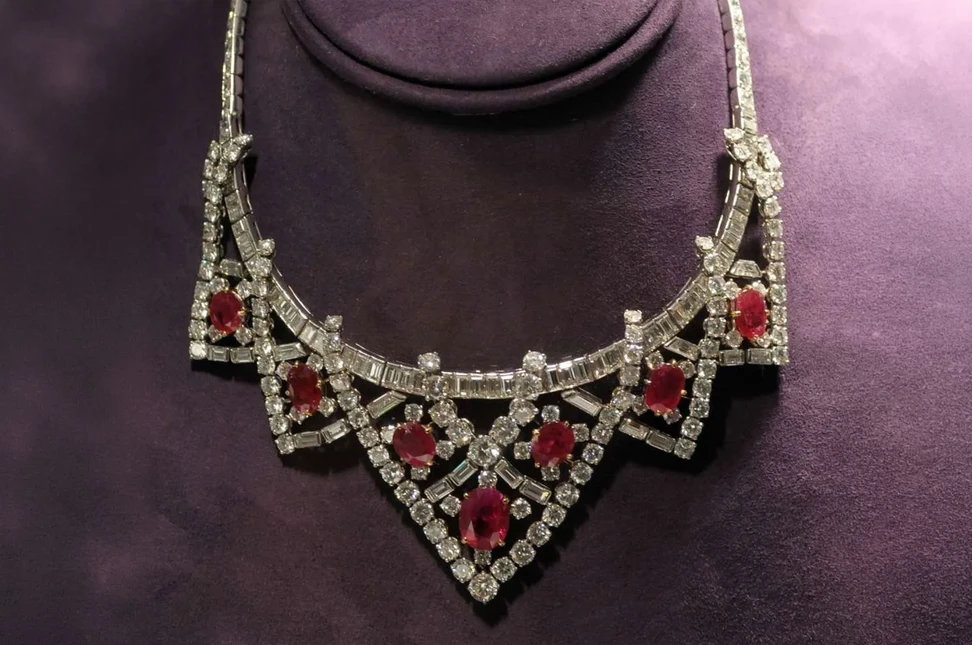
Elizabeth Taylor’s Cartier ruby and diamond necklace, created in 1951 and given to her by Mike Todd in 1957
7. The Hindu Necklace: The Colours of Tutti Frutti
Commissioned by socialite and jewellery collector Daisy Fellowes in 1936, the Hindu Necklace dates from a period when India was a major source of inspiration for Cartier. Carved rubies, emeralds and sapphires are combined with diamonds in the colourful style that became known as Tutti Frutti. Pascale Lepeu, director of the Cartier Collection, summed up its originality perfectly: “It was neither Indian nor Parisian. It simply did not exist before and we made something entirely new.”
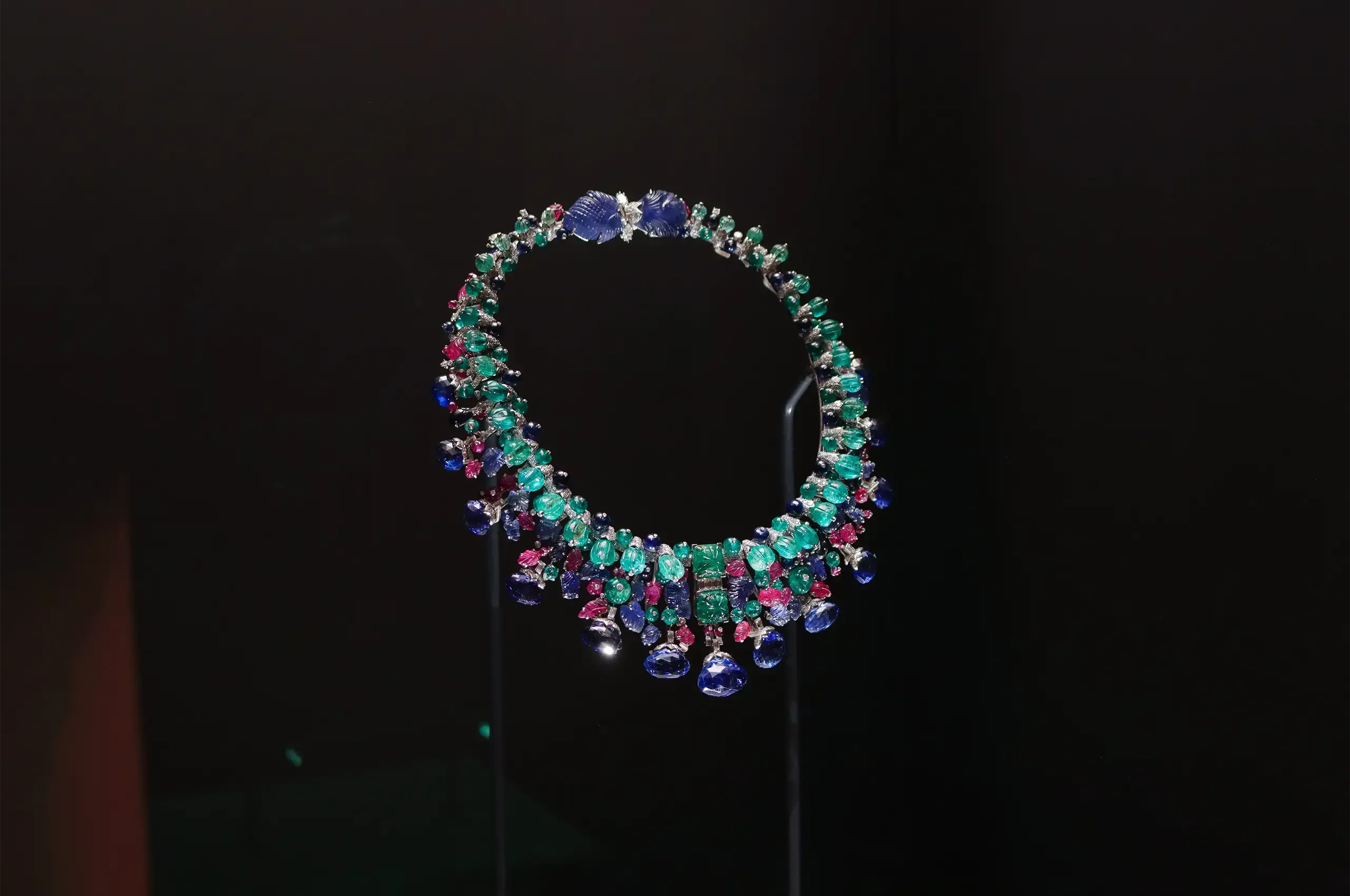
Cartier’s Hindu Necklace, commissioned by Daisy Fellowes in 1936, combining carved emeralds, rubies and sapphires with diamonds
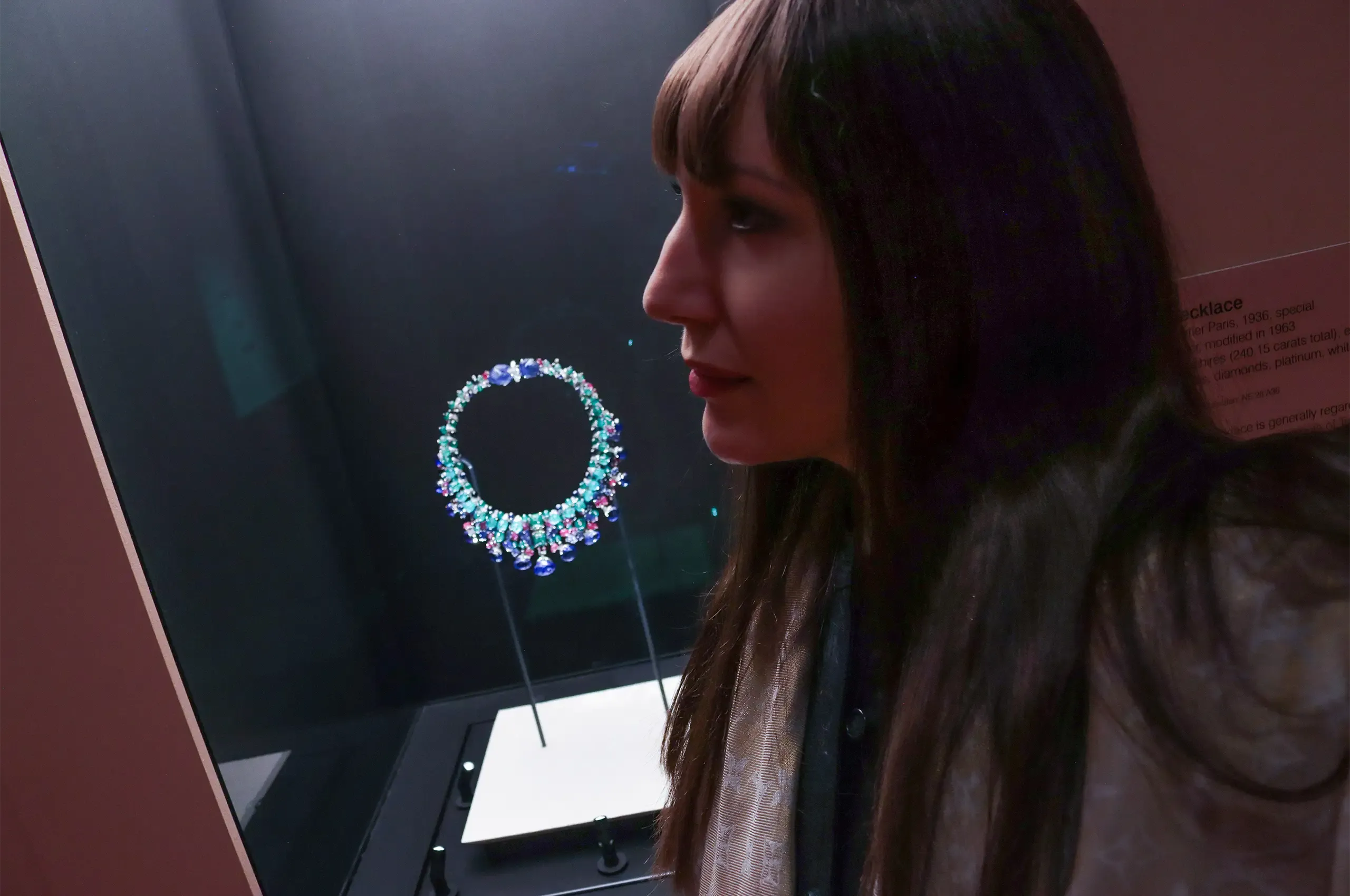
Katerina with Cartier’s colourful Hindu Necklace
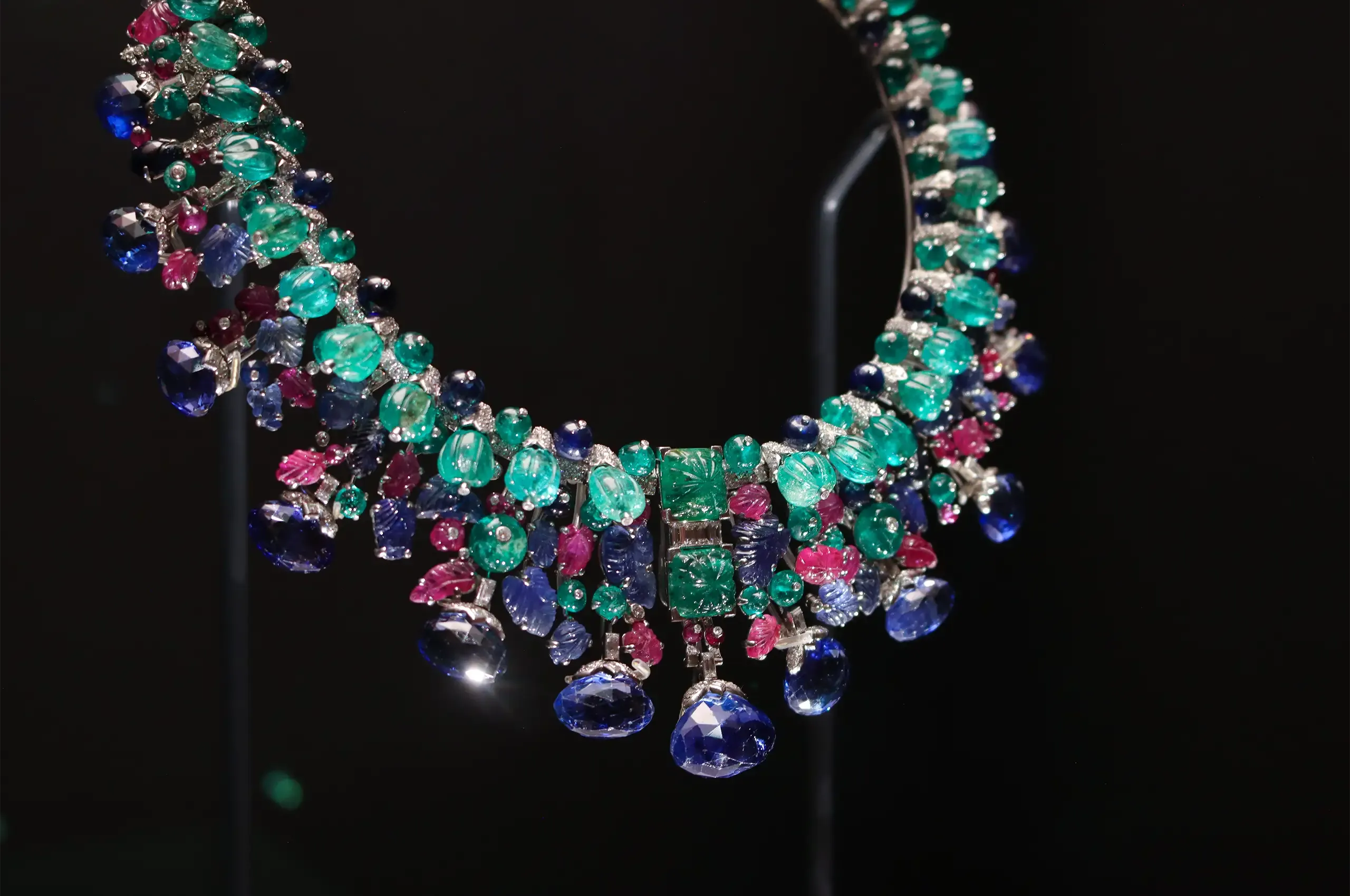
A closer look at the carved emeralds, rubies and sapphires of Cartier’s 1936 Hindu Necklace, an exceptional example of the style later known as Tutti Frutti
8. The Maria Félix Crocodile Necklace: Cartier’s Wildest Commission?
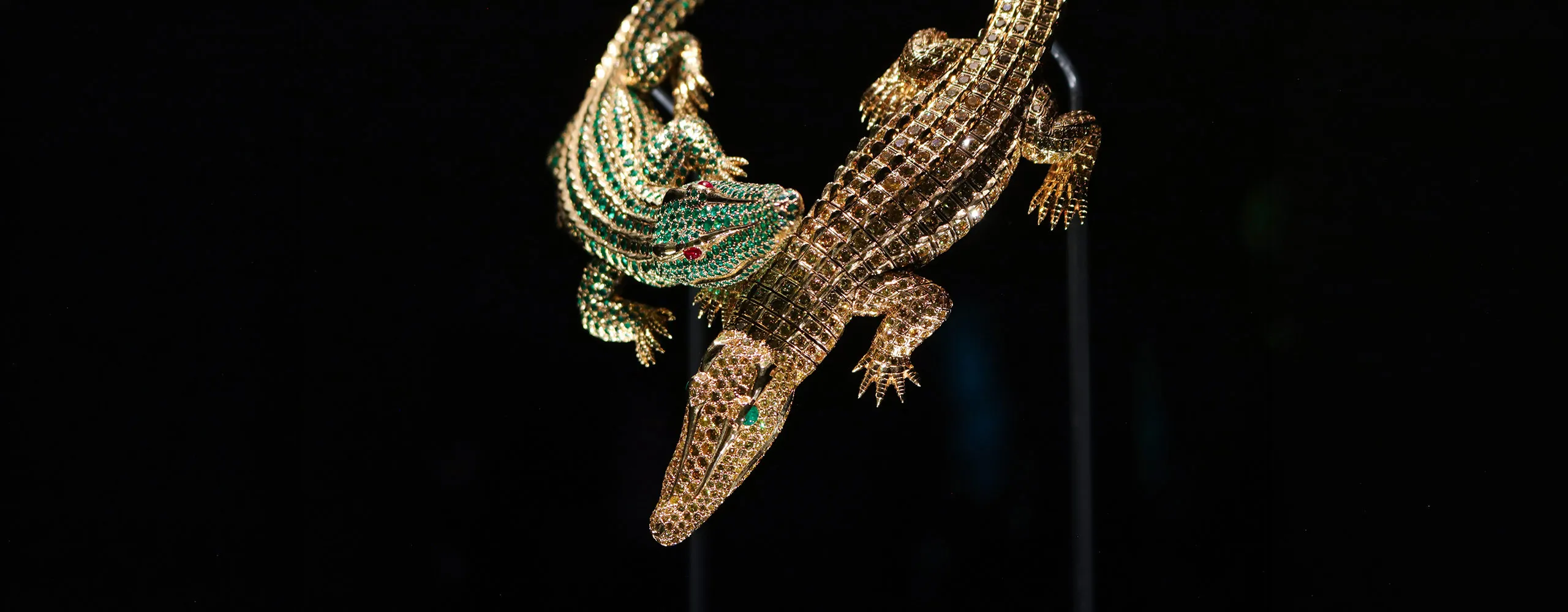
In 1975, Mexican film star Maria Félix is said to have arrived at Cartier with two baby crocodiles and asked the Maison to recreate them in precious stones. Cartier responded with two fully articulated crocodiles, one set with fancy yellow diamonds and the other with emeralds, which can be worn together as a necklace or separately as brooches. It is outrageous, technically brilliant and, seeing it in person, I couldn’t help but smile at the audacity of it.
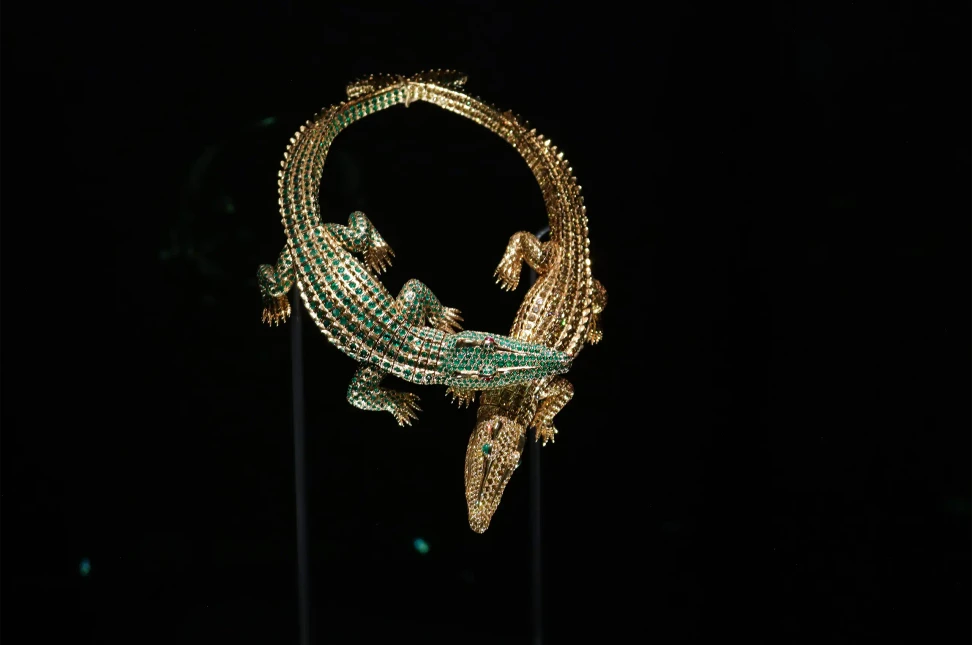
Cartier’s Crocodile necklace, commissioned by María Félix in 1975, comprising two articulated crocodiles set with emeralds and fancy yellow diamonds that can also be worn separately as brooches
9. The Countess of Granard’s Diamond and Emerald Necklace: Glamour of a Grand Scale
To me, this necklace is the epitome of the Cartier style. Commissioned in 1932 by Lady Beatrice Forbes, Countess of Granard, one of Cartier London’s most important aristocratic clients, it contains more than 2,000 diamonds and an extraordinary rectangular emerald weighing 143.13 carats. That such a lavish commission was placed during the depths of the Great Depression says something about both the Countess and the world she inhabited. By the celebrations for the coronation of George VI in 1937, she was reportedly so heavily adorned that she “could scarcely walk for jewels”.
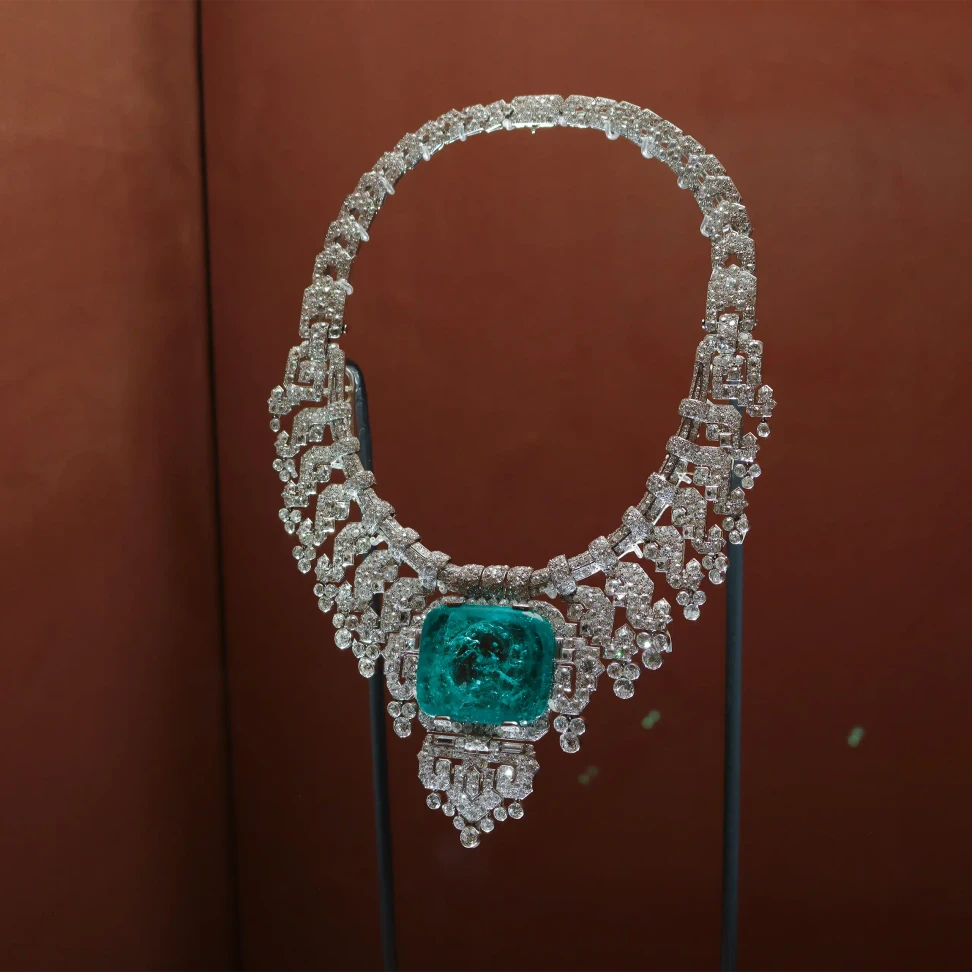
Cartier’s diamond and emerald necklace, commissioned in 1932 by Lady Beatrice Forbes, Countess of Granard
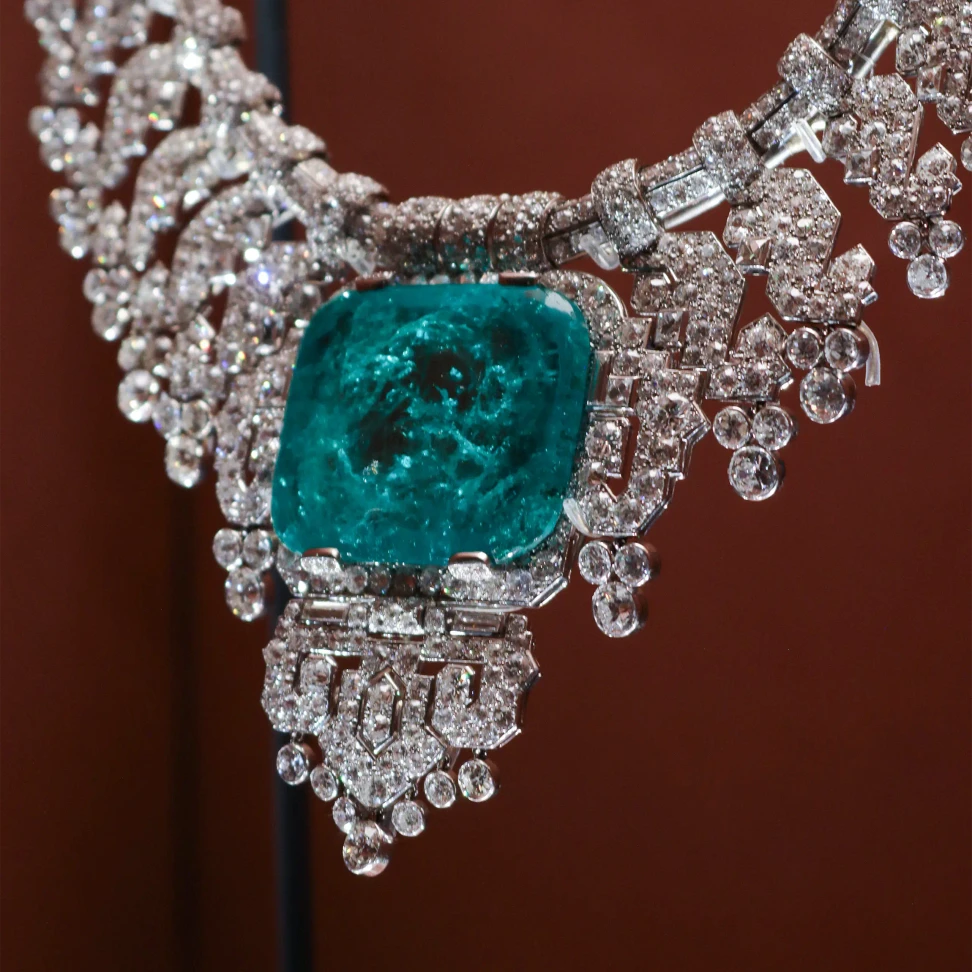
A closer look at the extraordinary 143.13-carat emerald at the centre of the Countess of Granard’s 1932 Cartier necklace
10. The Final Room: 24 Tiaras and Five Minutes to See Them
The exhibition culminates in a rotunda filled with 24 tiaras, including two turquoise and diamond headpieces worn by sisters Lady Nancy Astor and Lady Phyllis Brand, reunited here for the first time in decades. Another highlight is an aquamarine, diamond and platinum tiara from 1937 that seems to float above its wearer’s head. I wanted to circle the rotunda slowly and take in every one, but by this point I had just five minutes until the exhibition closed, security were ready to go home and I had a flight back to Sydney to catch. I could easily have spent an hour in this room alone, so my advice is to leave yourself far more time than I did.
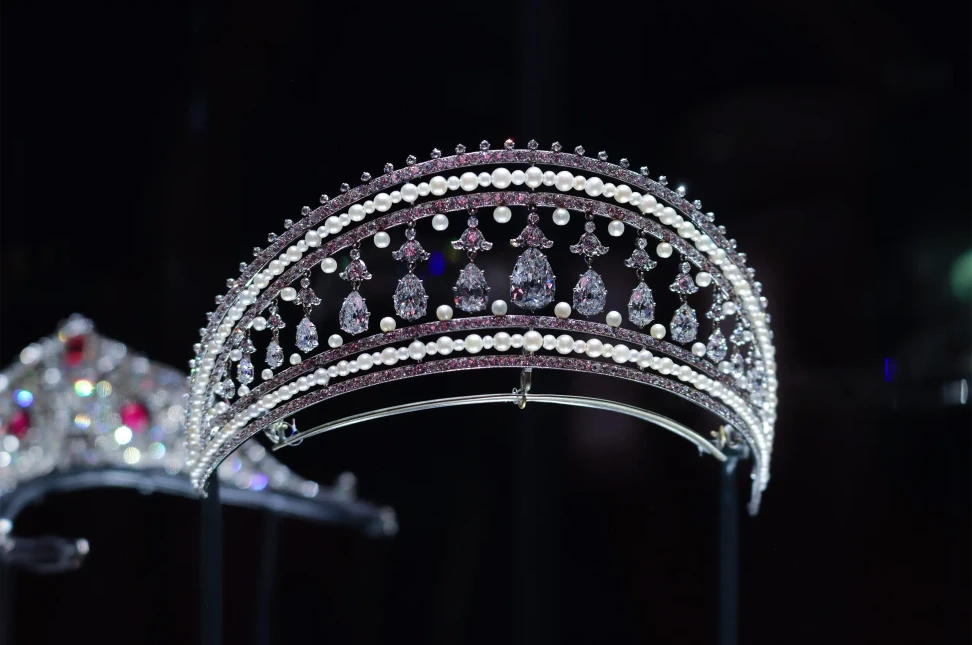
Cartier ‘Russian’ diadem, 1908, in platinum, diamonds and natural pearls, with 15 pear-shaped diamonds suspended from muguet motifs. Cartier Collection
I flew back to Sydney that evening exhilarated by just how much I had managed to see in a single hour. From historic royal commissions to the jewels of Elizabeth Taylor, Wallis Simpson and Maria Félix, there was something remarkable around every corner. My whirlwind visit to the NGV was worth every minute of the journey to Melbourne.
The CARTIER exhibition is on at the National Gallery of Victoria until 4 October 2026. If you live anywhere near Melbourne or are visiting in the coming weeks, put it right at the top of your list – and give yourself plenty of time to take it all in.


WORDS
Katerina Perez Is a jewellery insider, journalist and brand consultant with more than 15 years’ experience in the jewellery sector. Paris-based, Katerina has worked as a freelance journalist and content editor since 2011, writing articles for international publications. To share her jewellery knowledge and expertise, Katerina founded this website and launched her @katerina_perez Instagram in 2013.
RelatedArticles
Discover the brand: the story from various angles.


Top Stories
Select and read: from public articles to club exclusives.


Add articles and images to your favourites. Just

Motors and Minerals:The Surprising Synergies Behind Palm Beach Gems by Nicole
Palm Beach Gems by Nicole is a ‘unicorn’ that blends family values, a passion for mineral exploration and total creative freedom when designing coloured gemstone jewellery. Let me tell you more…
Jewels Katerina Perez Loves
Katerina’s Picks: discover & shop her favourites.
Drag
ContinueReading
Select and read: from public articles to club exclusives.



Luxury Redefined: 15 Years in Jewellery
What’s Changed?
Brand Focus: Feng J
Discover the brand: the story from various angles.



Jewellery Insights straight to your inbox
StyleGuide
Master your style: curated trend features and styling insights.


24 Hours in Melbourne: My Journey to See the Masterpiece CARTIER Exhibition at the National Gallery of Victoria
I have crossed oceans for jewellery before, but travelling to Melbourne for just 24 hours to see an exhibition was a first. When I heard that the National Gallery of Victoria was hosting the largest Cartier exhibition ever staged in Australia, I knew I had to be there, especially since I had missed the exhibition in London. Nearly 400 jewels, timepieces and precious objects had been brought together under one roof, close to 300 of them appearing in Australia for the first time, and I had only a few hours to see them.
Over the course of my jewellery career, I have discovered many historic masterpieces through books and catalogues that I have long wished to see in person. Many of them were created by Cartier, and this was my chance to finally stand in front of them. Designed by Rotterdam-based Studio Sabine Marcelis and Cloud, the exhibition takes visitors on a journey through eight different rooms, each wrapped in a rich monochrome palette inspired by precious gemstones.
Cartier Scroll tiara, 1910, in platinum and diamonds, its symmetrical scrolling motifs culminating in a cushion-shaped diamond. Cartier Collection
Cartier ‘Rose’ clip brooch, 1938, a three-dimensional composition of old-, baguette- and single-cut round diamonds that combines geometric structure with naturalistic form. Cartier Collection
A selection of diamond diadems and jewels from the Cartier Collection, on display as part of the 'CARTIER' exhibition at the NCV in Melbourne
Cartier bandeau, 1924, in platinum, diamonds and a natural pearl, created as a special order for Nanaline Duke and later owned by her daughter, Doris Duke. Cartier Collection
Cartier tiara, 1911, in platinum and diamonds, its interlocking scrolls and floral motifs inspired by 18th-century Parisian ironwork. Cartier Collection
Cartier ‘Oriental’ bandeau, 1911, in platinum and diamonds, its openwork geometric design inspired by Islamic art and architecture. Cartier Collection
Cartier ‘Falkor’ necklace, 2008. The twisted strands of tanzanite beads evoke the elongated body of a Chinese dragon
Cartier stomacher brooch, 1913, a special order in carved rock crystal, diamonds and platinum, with a detachable pear-shaped pendant. Cartier Collection
Cartier stomacher brooch, 1907, a special order set with eight sapphires amid an elaborate arrangement of old- and rose-cut diamonds in platinum. Cartier Collection.
Cartier stomacher brooch, 1909, a special order in platinum and diamonds, designed as an elaborate arrangement of scrolling foliage, flowers, garlands and pendant drops. Cartier Collection.
Cartier Wisteria brooches, 1903, in platinum and diamonds, displayed together as a tiara. Cartier Collection
Katerina discovers Cartier’s historic jewels at the NGV in Melbourne
Stepping inside the CARTIER exhibition felt like entering a giant jewellery box. At the entrance, a 27-metre-long mirrored glass installation greets visitors, shifting from yellow through pink to deep red, introducing the colour story that runs throughout the exhibition. From there, the rooms trace Cartier’s evolution: first, a vivid yellow space exploring the global influences of the Cartier brothers, followed by an emerald-green room dedicated to Art Deco, a period that produced some of Cartier’s most celebrated geometric designs. In the “Obsession with Stones” room, light glows around the edges to create the sensation of being inside a gemstone, before the metallic-grey Watches and Clocks room acts as a palate cleanser. Then comes a jolt of green in the Film and Celebrity room, home to jewels associated with Elizabeth Taylor and María Félix. Moving from one saturated colour to the next makes it feel as though you are floating through a dream.
Cartier Snake necklace, 1968, commissioned by María Félix, with 2,473 diamonds, emerald eyes and enamelled scales in the colours of the Mexican flag. Cartier Collection
Luckily for me, the exhibition was a little quieter towards the end of the day, giving me easy access to the displays. At busier times, visitors may have to queue for a closer look at the tiaras, necklaces, bracelets, brooches, precious objects and clocks. With only an hour to immerse myself in the world of Cartier, I set myself a mission: to seek out the 10 exhibits that made my whirlwind journey to Melbourne worthwhile.
Cartier Dragonfly clip brooch, 1953, in platinum and gold, set with an emerald, rubies and diamonds, with spring-mounted wings designed to flutter with movement. Cartier Collection
Cartier Tiger clip brooch, 1959, formerly owned by the Duchess of Windsor, set with yellow and colourless diamonds, onyx and emeralds
Cartier Tiger bracelet, 1956, created for the Duchess of Windsor, with an articulated body set with yellow and colourless diamonds, onyx stripes and emerald eyes
Cartier necklace, 1951, a special order set with Burmese rubies and diamonds, with five detachable motifs that can be worn as brooches. Cartier Collection
Cartier Palm Tree clip brooch, 1957, a special order set with seven Burmese rubies totalling 23.10 carats and diamonds, with an articulated diamond-set trunk. Cartier Collection
Cartier Panthère bracelet, with a diamond-set panther curled around a large cabochon emerald, accented with onyx and an emerald eye
Cartier Nizam of Hyderabad necklace, 1935, in platinum and approximately 300 diamonds, chosen by Princess Elizabeth as a wedding gift from the Nizam of Hyderabad in 1947. Royal Collection
Cartier jewels created for film: a 2024 rosary for Wes Anderson’s The Phoenician Scheme and a replica of the Duchess of Windsor’s cross bracelet for W.E. (2011)
Cartier bracelet, 1954, created for the Duchess of Windsor, with a 45.98-carat amethyst, turquoise and diamonds. Cartier Collection
Cartier bracelet, set with a 58.21-carat amethyst, with purple garnets, carved rubies, pink sapphires and diamonds
Cartier bracelet, 2014, set with a 53.78-carat emerald and diamonds in platinum. Cartier Collection
Cartier Quetzal bracelet, 2016, with two sugarloaf rubellites totalling 41.09 carats, black lacquer and diamonds
Cartier Snake bracelet, 2014, set with a 53.78-carat cabochon emerald and brilliant-cut diamonds, with an articulated snake’s head. Cartier Collection
1. The Manchester Tiara: An Early Example of Cartier’s Garland Style
Walking into the exhibition, the first jewel to greet me was the Manchester Tiara, displayed alone beneath a spotlight. Created in 1903 for Consuelo Montagu, Dowager Duchess of Manchester, it is an early example of Cartier’s signature Garland style, set with more than 1,500 diamonds in delicate scrolls and floral motifs. Seeing it in isolation gave me the chance to appreciate the intricacy of the design before moving into the exhibition beyond. As an introduction to nearly 400 Cartier creations, it certainly set expectations high.
The Manchester Tiara, Cartier, 1903, created for Consuelo, Duchess of Manchester, with more than 1,000 brilliant-cut diamonds arranged in scrolling heart-shaped motifs. Victoria and Albert Museum, London
2. The Scroll Tiara: From a Royal Coronation to Rihanna
Created in 1902, Cartier’s Scroll Tiara has an extraordinary history. Lady Clementine Churchill wore it to the coronation of Queen Elizabeth II in 1953 then more than six decades later, Rihanna wore the same tiara on the cover of Wmagazine in 2016. Seeing it in person, I loved the contrast between those two moments and the fact that a jewel created more than a century ago could look entirely at home in both eras.
Cartier’s 1902 Scroll Tiara, worn by Lady Clementine Churchill to Queen Elizabeth II’s coronation in 1953 and by Rihanna on the cover of W magazine in 2016
3. The Patiala Necklace: Lost, Recovered and Restored
Commissioned in 1928 for the Maharaja of Patiala, the Patiala Necklace originally contained 2,930 diamonds, including the 234.65-carat yellow De Beers diamond at its centre. The necklace later disappeared from public view and was rediscovered in 1998, by which point many of its most important stones had been removed. Cartier subsequently restored it, using replicas in place of the missing gems. Even without many of its original stones, the scale is remarkable. Standing in front of it, I tried to imagine what it must have looked – and felt – like when complete, laden with thousands of diamonds and worn by the Maharaja nearly a century ago.
Cartier’s Patiala Necklace, commissioned in 1928 by the Maharaja of Patiala and originally set with 2,930 diamonds, including the 234.65-carat De Beers diamond
4. The Duchess of Windsor's Panther Brooch: A Cartier Icon
Jeanne Toussaint, Cartier’s creative director from 1933 to 1970, transformed the panther into one of the Maison’s most famous motifs. Created in 1949 for Wallis Simpson, Duchess of Windsor, this clip brooch is among its best-known expressions: a platinum and diamond panther with emerald eyes, perched on a 152.35-carat cabochon Kashmir sapphire. I have admired this jewel for years, both for the beauty of the design and everything the panther came to represent under Toussaint. Seeing it in person was something I had long wanted to do – and I left with the next best thing, a hardback notebook featuring the brooch on its cover.
Cartier Panthère clip brooch, 1949, created for the Duchess of Windsor, with a diamond and sapphire panther perched on a 152.35-carat Kashmir sapphire cabochon
5. The Duchess of Windsor's Amethyst Bib Necklace: A Versailles Showstopper
Wallis Simpson makes another appearance on my list, and for good reason. Created in 1947, her sculptural bib necklace brings together 27 step-cut amethysts, including a large heart-shaped stone, with turquoise cabochons, brilliant-cut diamonds and a substantial gold rope chain. The Duchess wore it to a gala at Versailles in 1953, pairing the Indian-inspired necklace with a strapless embellished gown and lilac wrap that echoed the colour of the amethysts.
Katerina views the Duchess of Windsor’s spectacular amethyst, turquoise and diamond bib necklace, created by Cartier in 1947
Cartier’s 1947 bib necklace for the Duchess of Windsor, combining 27 step-cut amethysts with turquoise cabochons and diamonds
A closer look at the necklace’s amethysts, turquoise cabochons and brilliant-cut diamonds
The Duchess of Windsor’s Cartier bib necklace, its cascade of amethysts culminating in a large heart-shaped stone
6. Elizabeth Taylor's Ruby and Diamond Necklace: “Lit Up and Made of Red Fire”
Elizabeth Taylor described this ruby and diamond necklace as “like the sun – lit up and made of red fire”. Created by Cartier in 1951, it was given to her by her third husband, Mike Todd, while the couple were on holiday on the French Riviera in 1957. Seven Burmese rubies are set within a geometric lattice of diamonds, introducing the flashes of “red fire” that Taylor described. Todd died in a plane crash the following year, giving a jewel associated with such a happy period of Taylor’s life an added poignancy.
Elizabeth Taylor’s Cartier ruby and diamond necklace, created in 1951 and given to her by Mike Todd in 1957
7. The Hindu Necklace: The Colours of Tutti Frutti
Commissioned by socialite and jewellery collector Daisy Fellowes in 1936, the Hindu Necklace dates from a period when India was a major source of inspiration for Cartier. Carved rubies, emeralds and sapphires are combined with diamonds in the colourful style that became known as Tutti Frutti. Pascale Lepeu, director of the Cartier Collection, summed up its originality perfectly: “It was neither Indian nor Parisian. It simply did not exist before and we made something entirely new.”
Cartier’s Hindu Necklace, commissioned by Daisy Fellowes in 1936, combining carved emeralds, rubies and sapphires with diamonds
Katerina with Cartier’s colourful Hindu Necklace
A closer look at the carved emeralds, rubies and sapphires of Cartier’s 1936 Hindu Necklace, an exceptional example of the style later known as Tutti Frutti
8. The Maria Félix Crocodile Necklace: Cartier’s Wildest Commission?
In 1975, Mexican film star Maria Félix is said to have arrived at Cartier with two baby crocodiles and asked the Maison to recreate them in precious stones. Cartier responded with two fully articulated crocodiles, one set with fancy yellow diamonds and the other with emeralds, which can be worn together as a necklace or separately as brooches. It is outrageous, technically brilliant and, seeing it in person, I couldn’t help but smile at the audacity of it.
Cartier’s Crocodile necklace, commissioned by María Félix in 1975, comprising two articulated crocodiles set with emeralds and fancy yellow diamonds that can also be worn separately as brooches
9. The Countess of Granard’s Diamond and Emerald Necklace: Glamour of a Grand Scale
To me, this necklace is the epitome of the Cartier style. Commissioned in 1932 by Lady Beatrice Forbes, Countess of Granard, one of Cartier London’s most important aristocratic clients, it contains more than 2,000 diamonds and an extraordinary rectangular emerald weighing 143.13 carats. That such a lavish commission was placed during the depths of the Great Depression says something about both the Countess and the world she inhabited. By the celebrations for the coronation of George VI in 1937, she was reportedly so heavily adorned that she “could scarcely walk for jewels”.
Cartier’s diamond and emerald necklace, commissioned in 1932 by Lady Beatrice Forbes, Countess of Granard
A closer look at the extraordinary 143.13-carat emerald at the centre of the Countess of Granard’s 1932 Cartier necklace
10. The Final Room: 24 Tiaras and Five Minutes to See Them
The exhibition culminates in a rotunda filled with 24 tiaras, including two turquoise and diamond headpieces worn by sisters Lady Nancy Astor and Lady Phyllis Brand, reunited here for the first time in decades. Another highlight is an aquamarine, diamond and platinum tiara from 1937 that seems to float above its wearer’s head. I wanted to circle the rotunda slowly and take in every one, but by this point I had just five minutes until the exhibition closed, security were ready to go home and I had a flight back to Sydney to catch. I could easily have spent an hour in this room alone, so my advice is to leave yourself far more time than I did.
Cartier ‘Russian’ diadem, 1908, in platinum, diamonds and natural pearls, with 15 pear-shaped diamonds suspended from muguet motifs. Cartier Collection
I flew back to Sydney that evening exhilarated by just how much I had managed to see in a single hour. From historic royal commissions to the jewels of Elizabeth Taylor, Wallis Simpson and Maria Félix, there was something remarkable around every corner. My whirlwind visit to the NGV was worth every minute of the journey to Melbourne.
The CARTIER exhibition is on at the National Gallery of Victoria until 4 October 2026. If you live anywhere near Melbourne or are visiting in the coming weeks, put it right at the top of your list – and give yourself plenty of time to take it all in.
WORDS
Katerina Perez Is a jewellery insider, journalist and brand consultant with more than 15 years’ experience in the jewellery sector. Paris-based, Katerina has worked as a freelance journalist and content editor since 2011, writing articles for international publications. To share her jewellery knowledge and expertise, Katerina founded this website and launched her @katerina_perez Instagram in 2013.
RelatedArticles
Discover the brand: the story from various angles.