Ocean Treasures: A Guide to Every Type of Pearl and Their Significance
Pearls have a language all their own, from Akoya and South Sea to baroque, keshi and non-nacreous. Here, we spotlight the different types of pearls that every jewellery lover should know.
The poetic world of pearls is far more varied than the classic white strand might suggest. Among the oldest of gems, pearls have been prized for thousands of years as symbols of wealth, status, purity and power, passed through royalty and traded across ancient cultures long before they became a staple in our jewellery boxes.
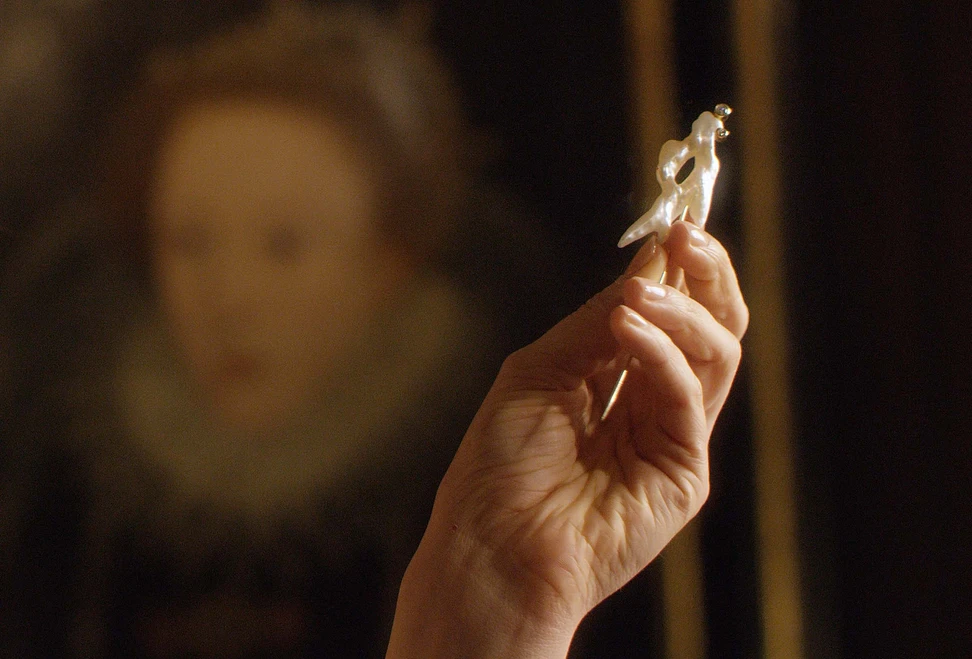
CD Pearls biwa pearl and diamond Abstract pin
Part of their mystique lies in how they are formed. Natural pearls occur entirely by chance, when a mollusc responds to an irritant by building layers of material around it, making them exceptionally rare. Cultured pearls, by contrast, are real pearls too, but their formation is prompted by human intervention, usually through the insertion of a bead nucleus, mantle tissue or both.
The pearl industry was transformed by Kokichi Mikimoto, founder of the Mikimoto pearl house, who successfully produced cultured pearls in 1893 and helped bring them to commercial scale in the early 20th century, making a gem once reserved for the very few more widely available.
Pearls also span far more than the familiar Akoya, freshwater and South Sea varieties. Some pearls are grown in oysters, others in mussels, clams, conchs or sea snails. Some are nacreous, built from the same iridescent substance that lines the inside of a shell, while others, including conch, Melo and quahog pearls, are non-nacreous, with glittering, porcelain-like surfaces.
Let’s take a closer look at the many forms this magical gem can take.
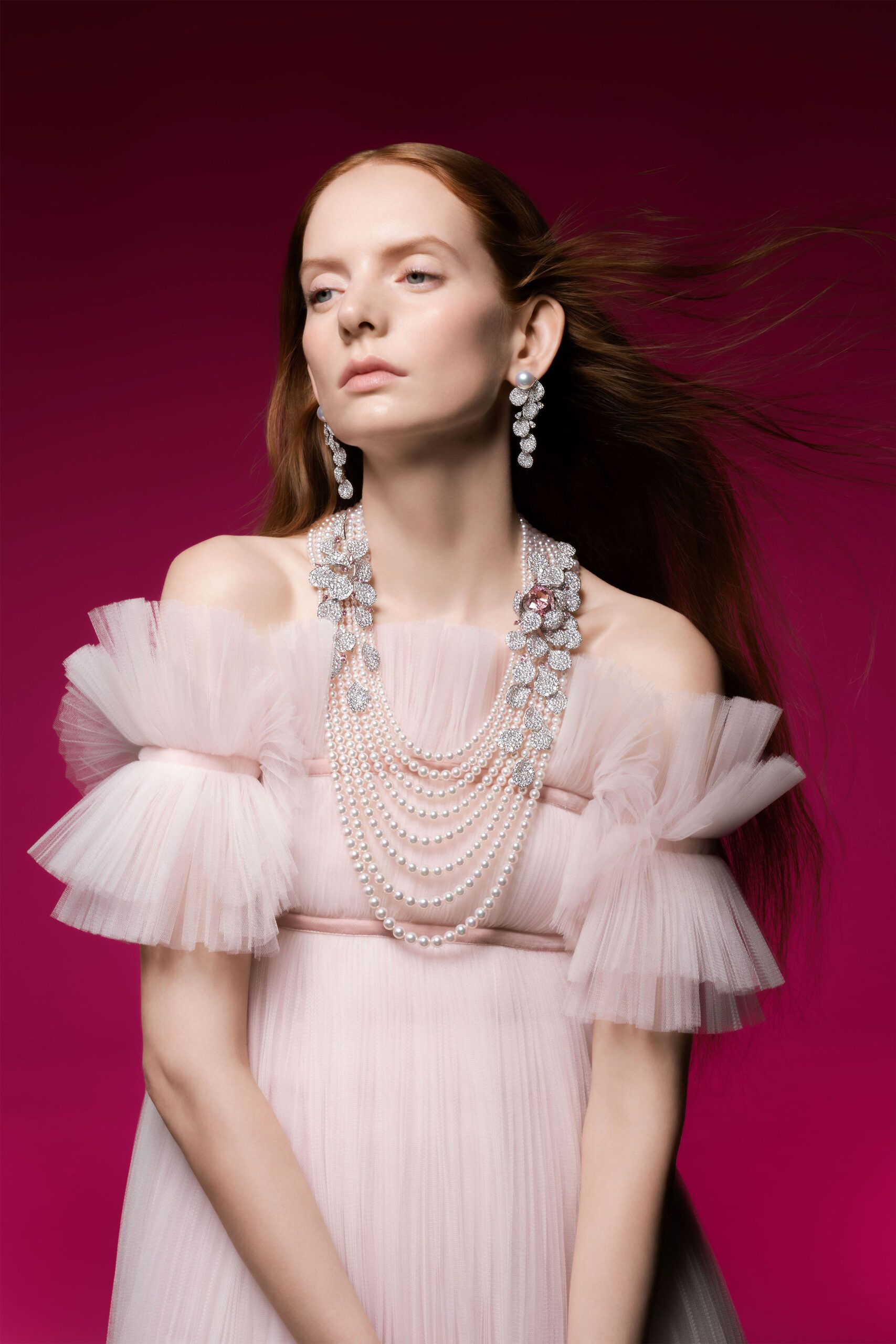
Mikimoto pearl jewellery
AkoyaPearls
The go-to for the classic strand necklace, there’s no doubt that Akoya pearls are the most famous pearl of the bunch. Produced by the Pinctada fucata oyster, also known as the Akoya pearl oyster, they are farmed primarily in Japan and China and prized for their brilliant lustre. Their near-perfect roundness is achieved by implanting a small bead nucleus and mantle tissue into the oyster, a technique brought to commercial scale by Mikimoto in the early 20th century. Most fall between 3mm and 9mm in size and usually take between 10 and 18 months to form. White and cream are the classic colours, but grey-blue, silver-blue and even gold also exist.


FreshwaterPearls
The most abundant cultured pearl on the market, freshwater pearls are grown in mussels rather than oysters, in lakes, rivers and ponds, with China accounting for the vast majority of global supply. In saltwater pearl farming, a shell bead is implanted into the oyster to form the pearl’s core, and because of its size, an oyster can only accommodate one or two at a time. In most freshwater cultivation, only a tiny sliver of mussel tissue is used, with no bead. Because the implants are so small, a single mussel can receive as many as 24 to 32 of them at once, potentially producing dozens of pearls in a single harvest. The result is a broad variety of colours – from white and cream to pink, peach, and lavender – determined by a number of factors, including the mussel’s genetics, the mantle tissue used in cultivation, as well as trace elements in its environment. What’s particularly astonishing is that a single mussel can produce pearls in several different shades at once.


South SeaPearls
South Sea pearls are among the largest cultured pearls in the world, grown by the Pinctada maxima – the largest of the saltwater pearl oysters – in the warm waters of Australia, Indonesia, the Philippines, and Myanmar. The thick layers of nacre – the iridescent substance secreted by the oyster that forms both the pearl and the mother-of-pearl lining of the shell – that build up over up to around three years of growth give South Sea pearls a unique milky glow. White and silver are the colours most associated with this variety of gem, produced by the silver-lipped variety of the oyster, with Australia the dominant source of the finest examples. The gold-lipped variety of the same oyster, meanwhile, produces the warm golden South Sea pearls, with the Philippines, particularly around the islands of Palawan, home to some of the finest examples.


TahitianPearls
The only major cultured pearl variety known for its naturally dark colours, Tahitian pearls are yielded by the Pinctada margaritifera, the black-lipped oyster, in the lagoons of French Polynesia. Their colour comes from dark pigments in the oyster’s own nacre – no dye involved – and spans one of the most diverse colour ranges of any pearl, from silver-grey, bronze, aubergine and dark green to the most coveted of all, peacock, a dark green-grey to blue-grey with a rose or purple overtone caused by light interacting with the nacre layers, which shifts as the light changes. The name comes not from Tahiti island specifically, but from the fact that pearl farmers from across French Polynesia’s archipelagos historically brought their harvests there to sell. Today, the designation has a formal trade definition, and only pearls cultivated in French Polynesian waters may bear it.


Keshi Pearls
During cultivation, an oyster sometimes rejects its implanted nucleus, but rather than stopping there, the remaining mantle tissue continues secreting nacre regardless – the result is a keshi pearl, formed with no core at all. Being composed almost entirely of nacre gives keshi pearls a dazzling lustre. Having no nucleus to dictate a shape means they grow however they choose, producing organic forms that are impossible to predict. Keshi means “poppy seed” in Japanese, a nod to their teenier size, and these pearls usually emerge in smaller quantities than standard cultured pearls.


BaroquePearls
If you thought baroque was a type of pearl, you wouldn’t be alone. Baroque is actually a term for irregularly shaped pearls, ranging from the gently skewed to the fabulously asymmetric. For much of the 20th century, the market treated roundness as a key measure of a pearl’s value and baroque shapes were considered lesser. That hierarchy has since shifted considerably, with a new generation of designers finding creative possibilities in their imperfect, sculptural forms.


BiwaPearls
Japan’s Lake Biwa was once the historic centre of freshwater cultured pearl production, and the pearls it produced were unlike anything else, often flat, elongated, with a distinctive high lustre that set them apart from the rounder varieties coming out of China. That era is largely over as pollution and environmental damage severely reduced production, and genuine Biwa pearls are now pretty rare and historically significant.


MabePearls
The mabe pearl takes its distinctive shape from growing pressed against the inside of the oyster’s shell rather than within its tissue. The result is a dome with a flat back, allowing it to sit flush in a ring, earring, or brooch setting with the dome facing outward.


Conch Pearls
Only around one in every 10,000 to 15,000 Queen conch – a sea snail found in Caribbean waters – produces any pearl at all, and fewer than 10 per cent of those pearls are gem quality, meaning only around one in 100,000 to 150,000 conchs yields a gem-quality example. That rarity alone would make them remarkable, but the pearl itself is equally unusual, being non-nacreous, with a porcelain surface and characteristic flame pattern, and at its finest displaying a vivid rose pink.


CortezPearls
Produced by Perlas del Mar de Cortez – the world’s only Cortez pearl farm and among the first pearl operations certified under Fair Trade Gems protocols – these pearls come from the rainbow-lipped oyster in Mexico’s Sea of Cortez and are defined by a shifting, multi-coloured iridescence of purples, greens, blues, and golds. Commercial production began in the 1990s, and while quantities remain very small, they have attracted a loyal following among collectors.

AbalonePearls
Abalone are farmed in significant numbers around the world, but for their meat and their shell, not their whole pearls, which form rarely and are not commercially cultivated at scale in the same way as other pearls. When they do occur, in Haliotis molluscs found off coasts including California, New Zealand, South Africa, and Japan, they carry the same extraordinary iridescence as the shell itself, with electric shades of blues, greens, and purples.


MeloPearls
The Melo pearl’s flame-orange colour is unlike anything else in the gem world. Made by the Melo melo sea snail in the South China Sea and across Southeast Asia, they are non-nacreous, found only naturally, and among the rarest and most valuable natural pearls when priced by carat weight. The flame pattern visible on the surface comes from the pearl’s fibrous internal structure rather than nacre, which is similar in appearance to a conch pearl but produced by a different marine gastropod. Long prized in Asia, they appear occasionally at major international auctions and attract serious attention when they do.


QuahogPearls
The quahog clam is best known as an ingredient in New England chowder, which makes it an unlikely source of one of the rarest pearls in the world. Found along the US East Coast, the quahog occasionally produces a pearl in deep lavender to purple, a colour derived directly from the clam’s shell pigmentation and found almost nowhere else in such a vivid hue. It cannot be commercially cultured; every example is entirely natural, and gem-quality pieces are extraordinarily scarce. The clam’s cultural significance also predates any interest in its pearl by centuries, as the quahog shell was used to create wampum, the shell beads and belts used by Indigenous peoples of the Northeastern Woodlands for ceremonial or social purposes.


SeedPearls
Before cultured pearls changed the industry in the early 20th century, the smallest natural pearls – under 2mm, gathered from wild oyster and mussel beds – were used in remarkably intricate works. During the Victorian and Edwardian eras, hundreds, sometimes thousands, of seed pearls were worked into single pieces, from tiaras, brooches and mourning jewellery to court dress, in arrangements that could take a craftsman weeks to complete.


If this guide proves anything, it’s that pearls are among jewellery’s most surprising and varied gems, taking shape in a fascinating range of shapes, colours and sizes.


WORDS
Joshua Hendren is a London-based journalist specialising in jewellery, watches, luxury and lifestyle. As a freelance writer, his work has featured across a variety of media, including the Financial Times, Vanity Fair, The Telegraph and The New York Times.
RelatedArticles
Discover the brand: the story from various angles.