Club Talks: Arsen Yarman on Armenian Goldsmiths and the Jewels History Forgot
As soon as I opened Arsen Yarman’s two-volume Jewelry and Armenian Goldsmiths Under the Ottomans, I knew that this was not a book to skim. It is vast, scholarly and deeply personal in its mission to bring renewed attention to the Armenian goldsmiths whose names, hands and creations helped shape the jewellery culture of the Ottoman world.
A researcher and independent historian of Ottoman Armenian heritage, Yarman has spent years tracing these forgotten makers through archives, family collections and scattered historical records. The resulting two-volume work is both the culmination of that detective work and an attempt to restore the Armenian masters who helped shape Ottoman jewellery culture to their rightful place in history.
For this edition of Club Talks, I spoke with him about the thrill of unearthing lost names and missing jewels, the challenge of piecing together fragmented archives, and why the legacy of these remarkable craftsmen deserves to be far better known.
Katerina: You sifted through archives scattered across multiple countries, from Yerevan to Venice to Istanbul. What was the biggest obstacle in accessing or verifying information?
Arsen: The greatest difficulty was not simply accessing documents but connecting scattered fragments into a reliable historical narrative. Records relating to Armenian jewellers in the Ottoman Empire are dispersed across a vast geography and preserved in many languages, from Ottoman Turkish to Armenian and European sources.
One recurring challenge was names. The same individual often appeared under different spellings depending on the language, the scribe or whether Eastern or Western Armenian forms were used. To help address this, I included alternative spellings throughout the book, as well as a guide to Armenian names for future researchers.
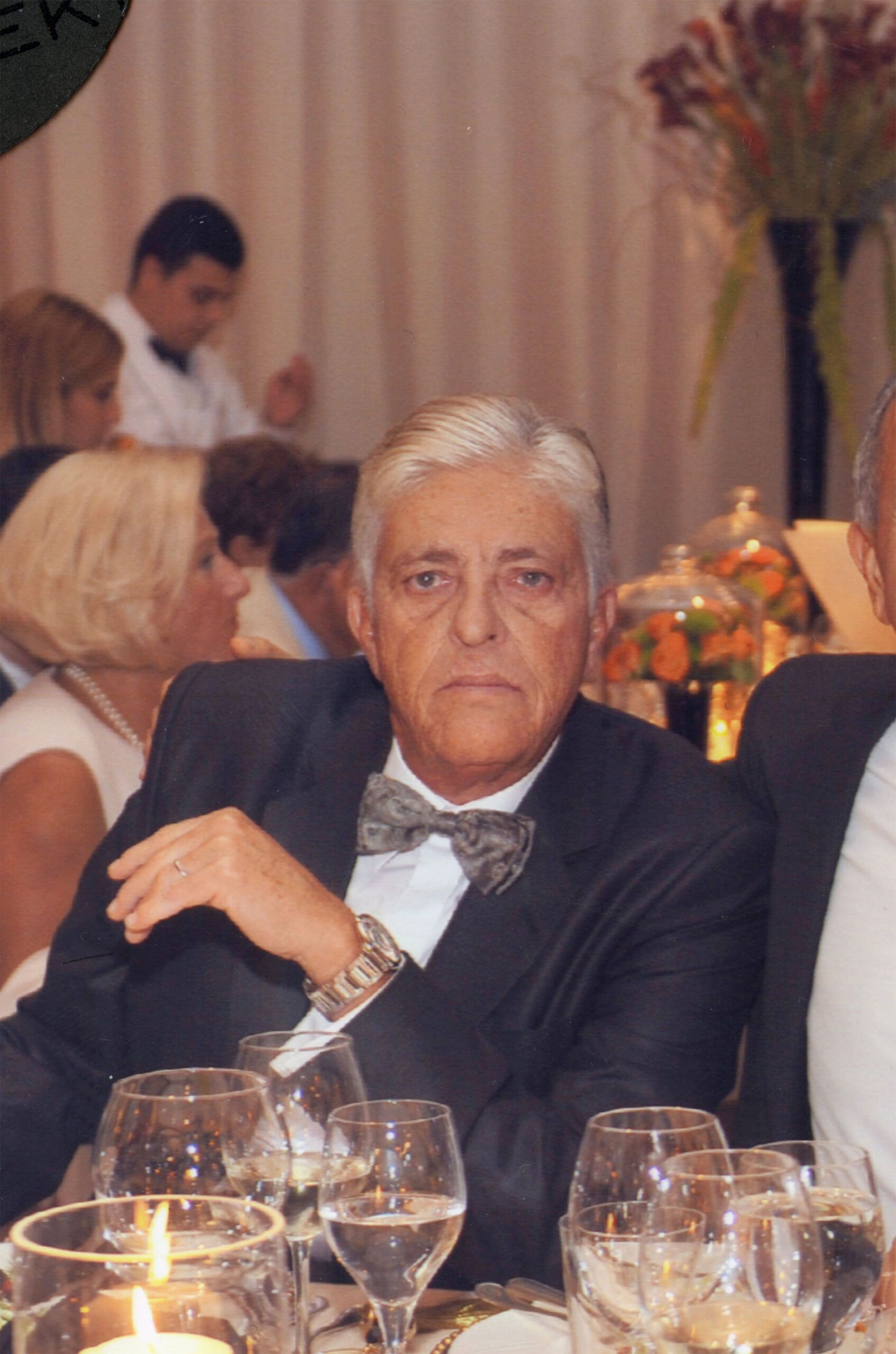
Istanbul-based researcher, collector and patron Arsen Yarman has dedicated years to uncovering the forgotten stories of Armenian goldsmiths in the Ottoman Empire.
There were also moments that forced me to rethink sections entirely. Some records that first appeared isolated gradually revealed themselves as part of much larger networks of families, workshops, merchants and court connections. At that point, the story could no longer be told only through individuals. It became clear that this was also the history of a long-standing civilisation of production.
Katerina: A book this richly illustrated requires trust from collectors, museums and private families who may never have shared their heirlooms before. How did you persuade people to open their archives and jewellery boxes?
Arsen: Reaching such a rich visual archive required not only research, but also the building of trust. Collectors, institutions and families were willing to open their doors when they understood that this project was not commercial in purpose, but an effort to preserve cultural heritage.
I explained that these objects were more than beautiful possessions. They were witnesses to history, labour and identity. Once people understood that, many chose to share photographs, drawings, family records and jewels that had never previously been made public.
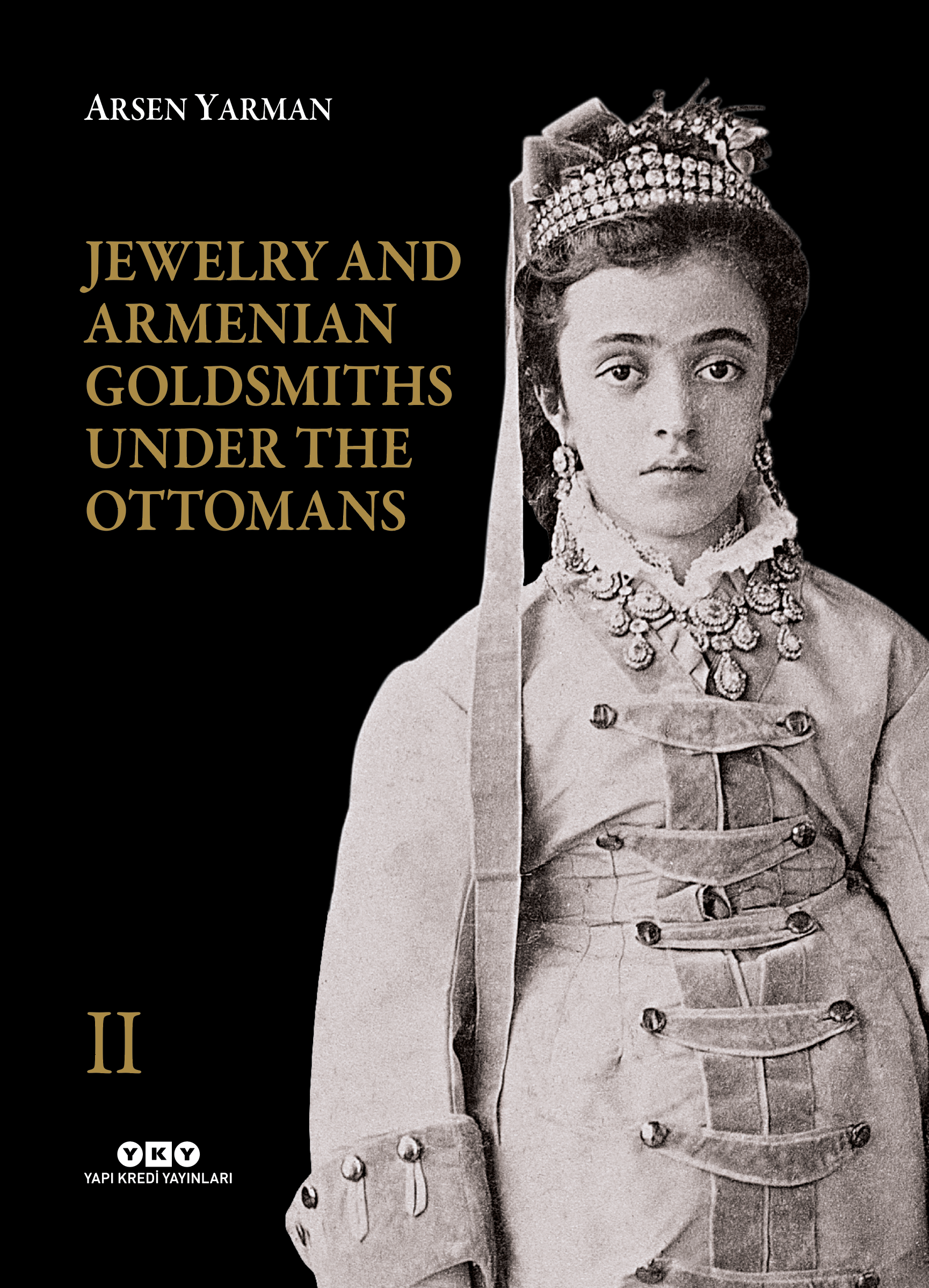
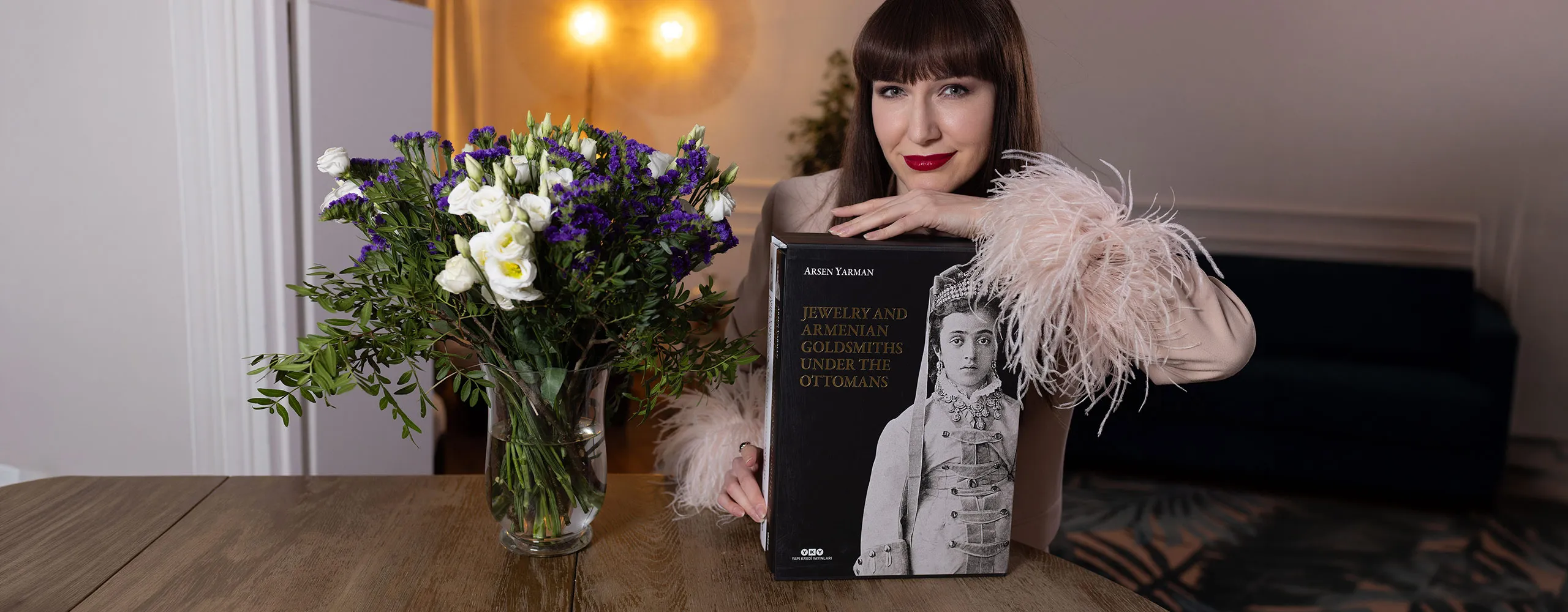
Volume II of Arsen Yarman's Jewelry and Armenian Goldsmiths Under the Ottomans, a richly illustrated work dedicated to recovering a forgotten chapter of jewellery history.
That trust allowed important discoveries to emerge. Through private collections and family estates, I was able to document works by masters whose names had faded from view, including jewellers such as Mıgırdiç Melkonyan and Levon Mazlumyan.
For me, the visual richness of the book is not simply illustration. It is the return of a shared memory.
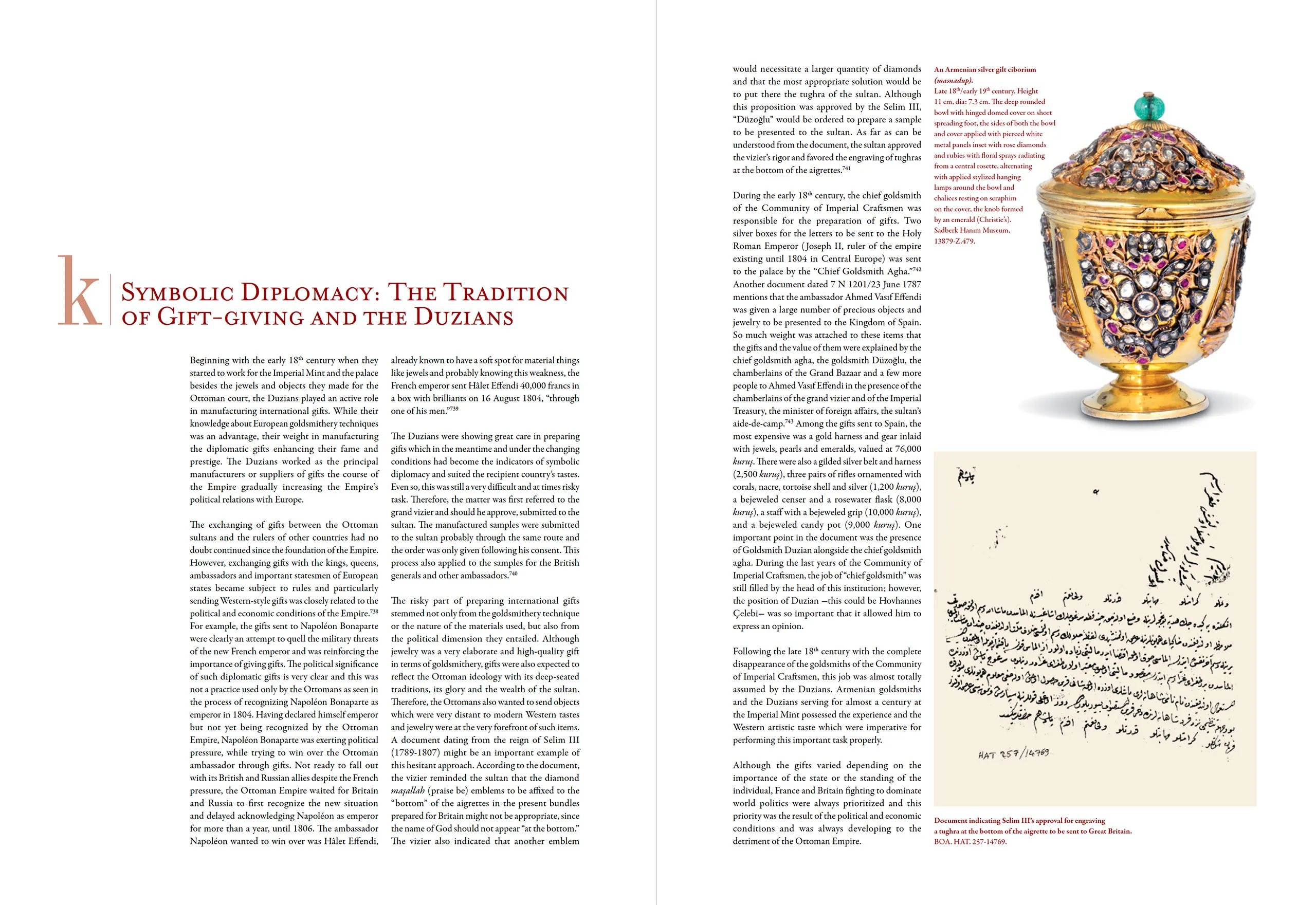
A spread from the encyclopaedic, two-volume Jewelry and Armenian Goldsmiths Under the Ottomans
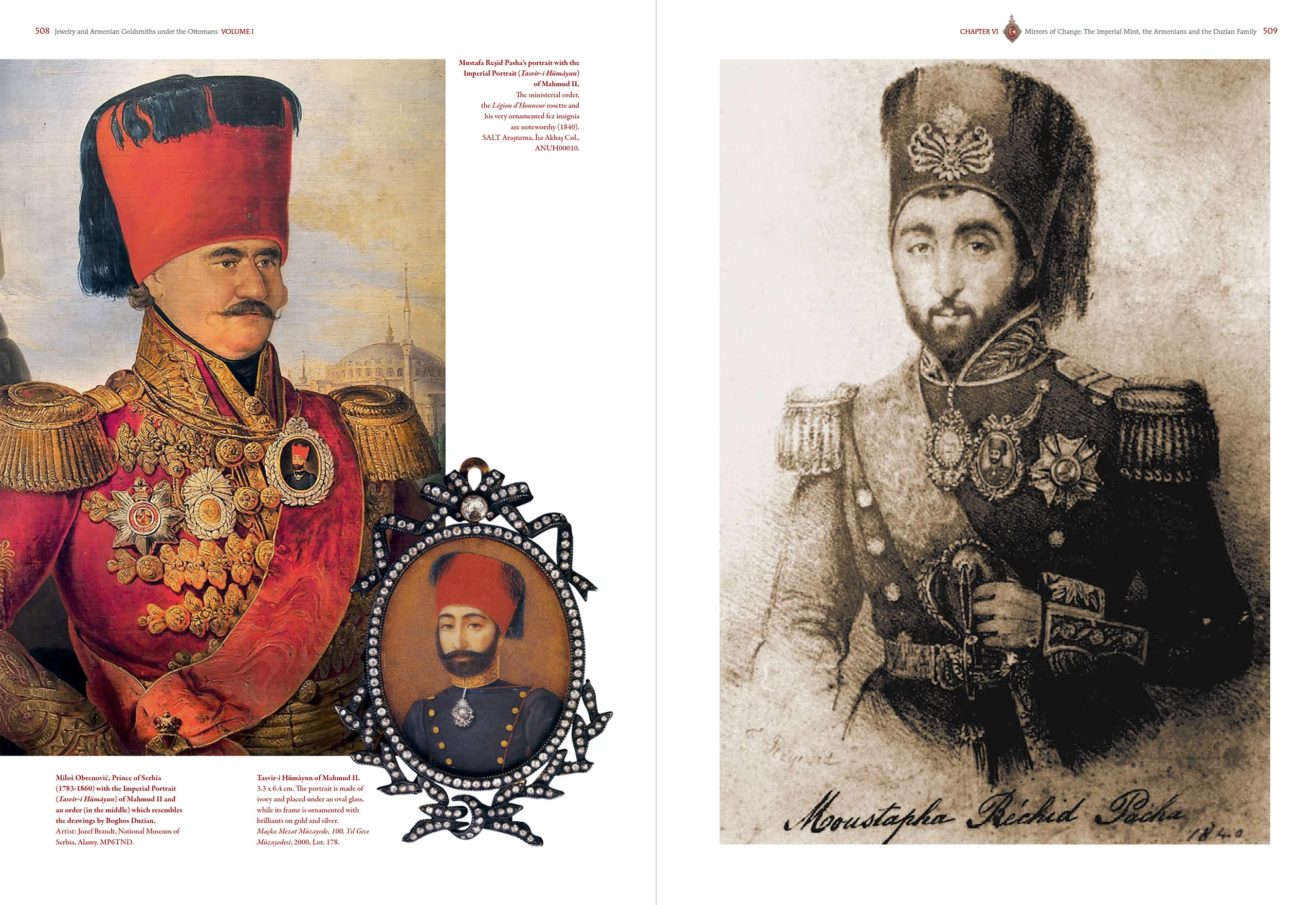
A spread from the encyclopaedic, two-volume Jewelry and Armenian Goldsmiths Under the Ottomans
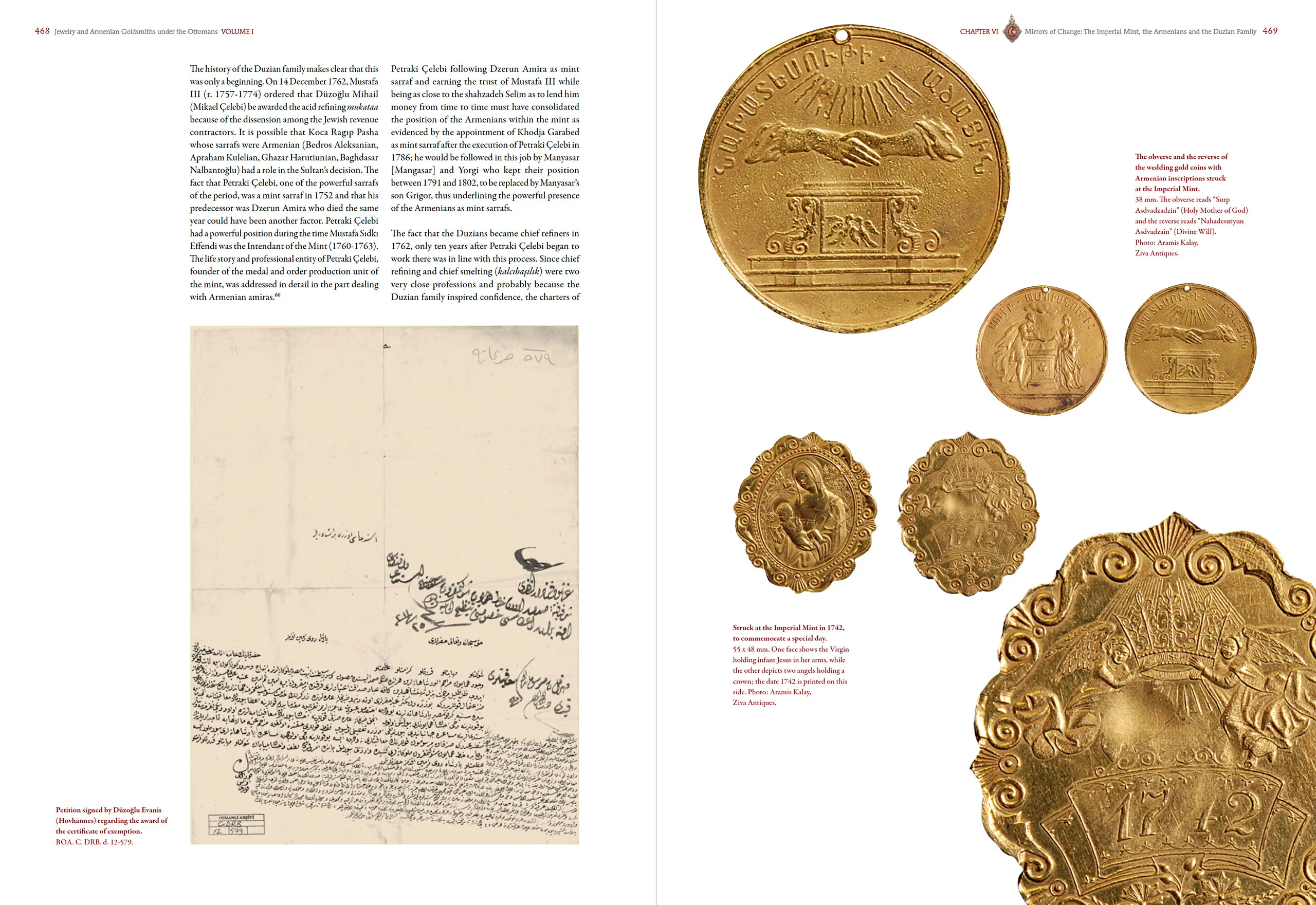
A spread from the encyclopaedic, two-volume Jewelry and Armenian Goldsmiths Under the Ottomans
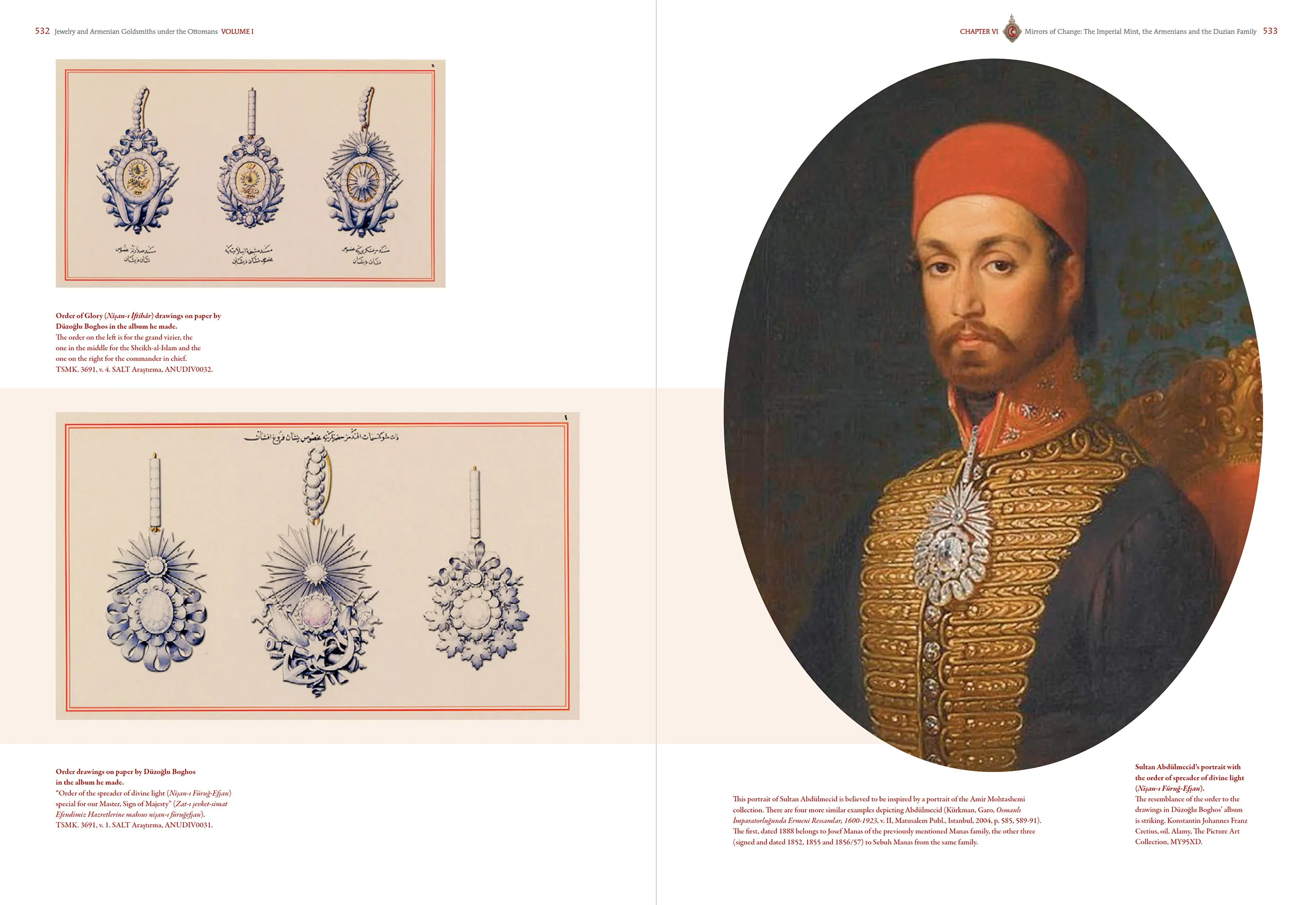
A spread from the encyclopaedic, two-volume Jewelry and Armenian Goldsmiths Under the Ottomans
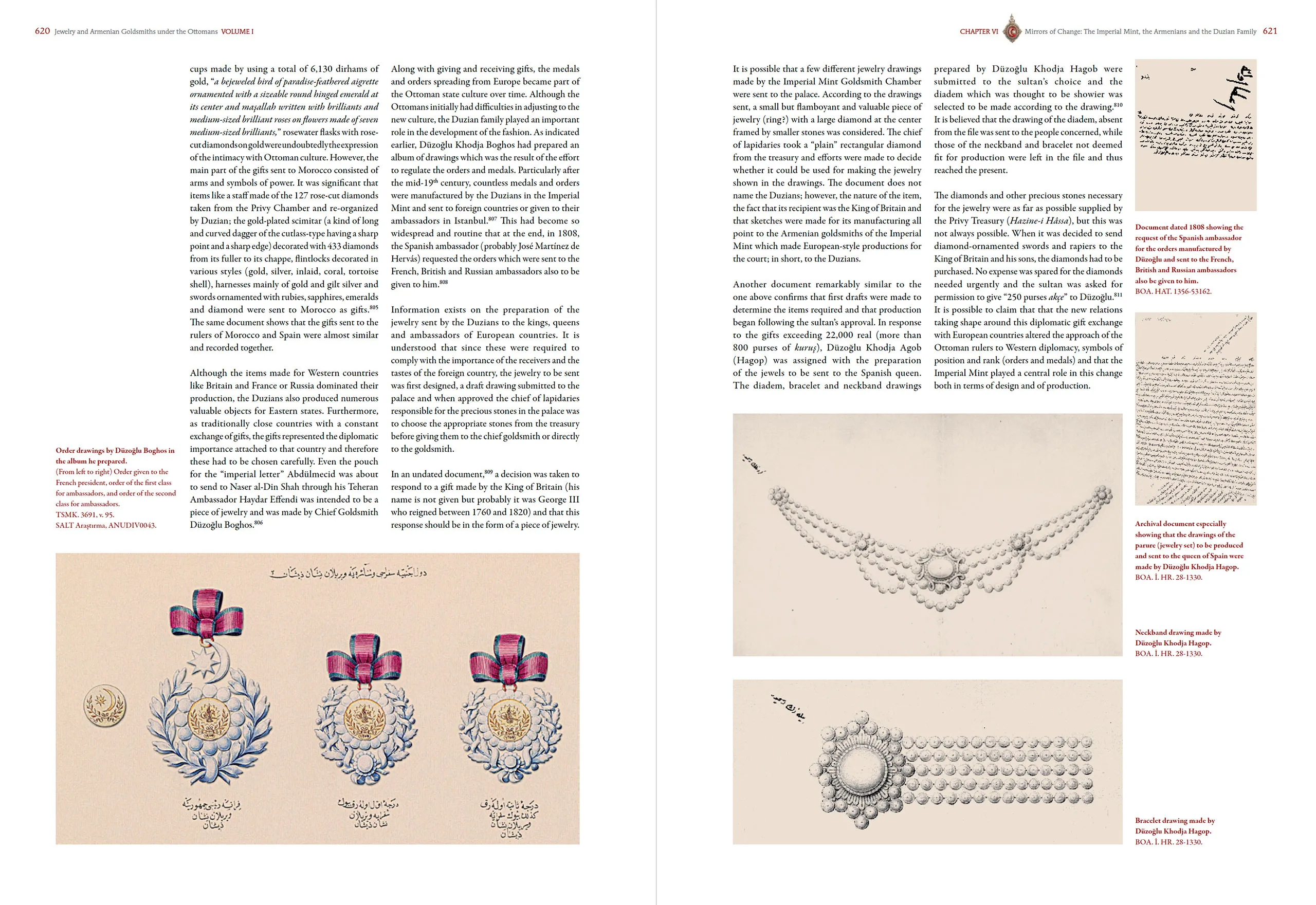
A spread from the encyclopaedic, two-volume Jewelry and Armenian Goldsmiths Under the Ottomans
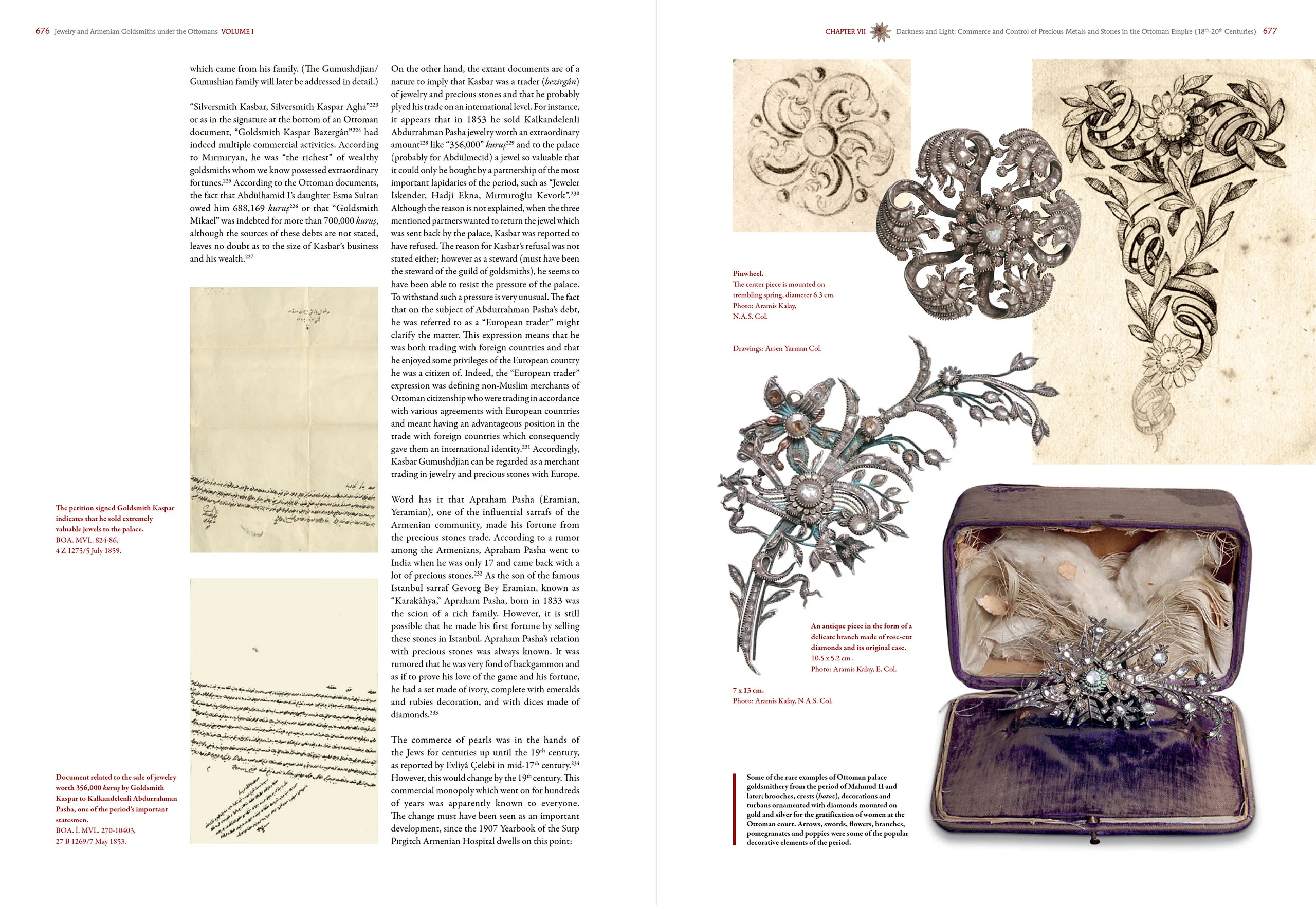
A spread from the encyclopaedic, two-volume Jewelry and Armenian Goldsmiths Under the Ottomans
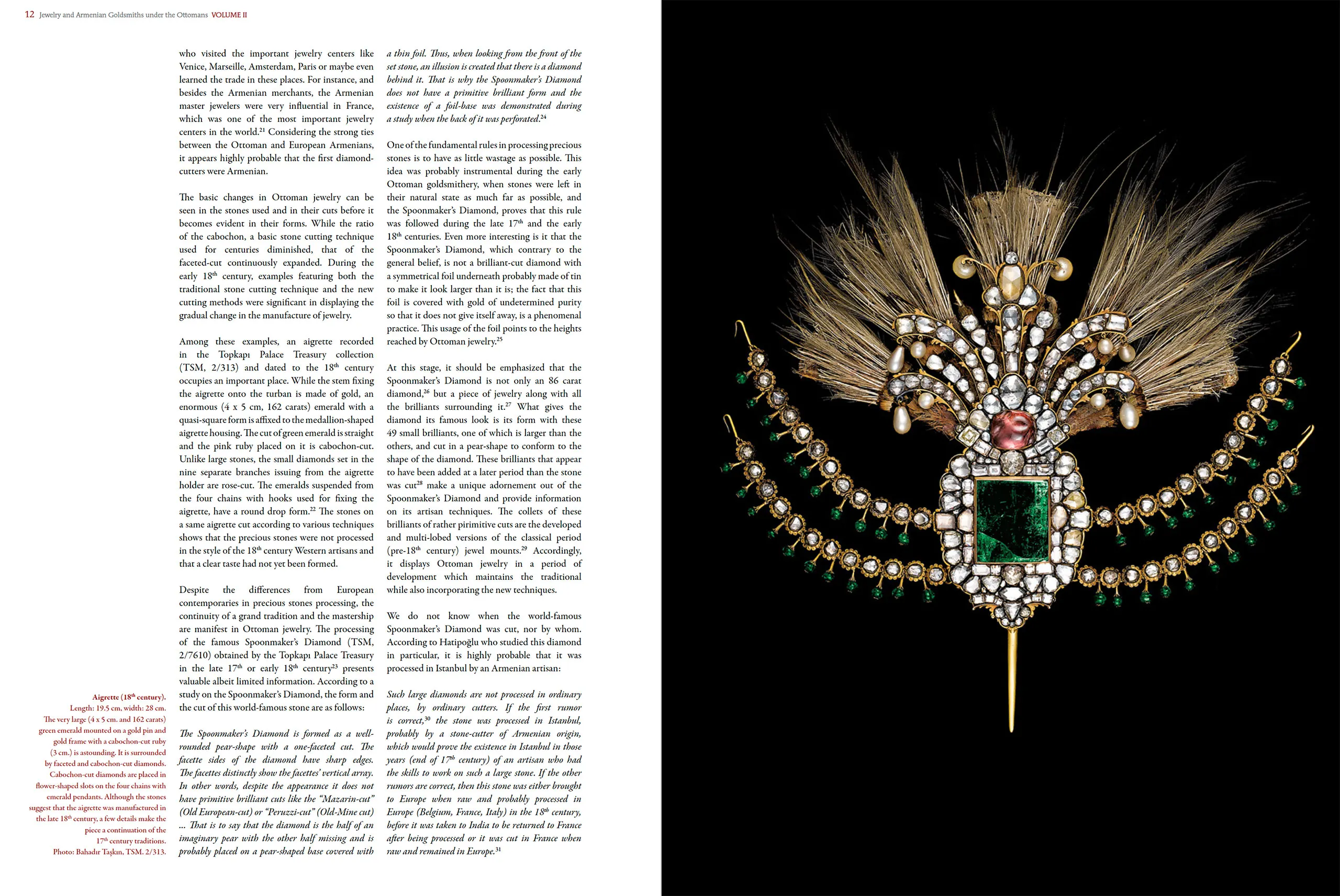
A spread from the encyclopaedic, two-volume Jewelry and Armenian Goldsmiths Under the Ottomans
Katerina: Were there any treasures you were determined to include, but simply could not trace?
Arsen: Of course. In a project of this scale, some of the greatest absences are the objects whose existence is clearly documented, yet whose whereabouts remain unknown.
One of the families I most wanted to represent more fully was the Duzian dynasty, who played a central role in Ottoman goldsmithing, mint administration, jewellery production and the trade in precious stones from the 18th century onwards. Their names appear throughout the book, yet many important works connected to them have not survived publicly or remain untraced.
I was also unable to locate certain pieces whose existence is recorded in historical sources, including works by the engraver and gem expert Mgrditch Benderian, whose creations were once collected by Khedive Abbas Hilmi Pasha of Egypt.
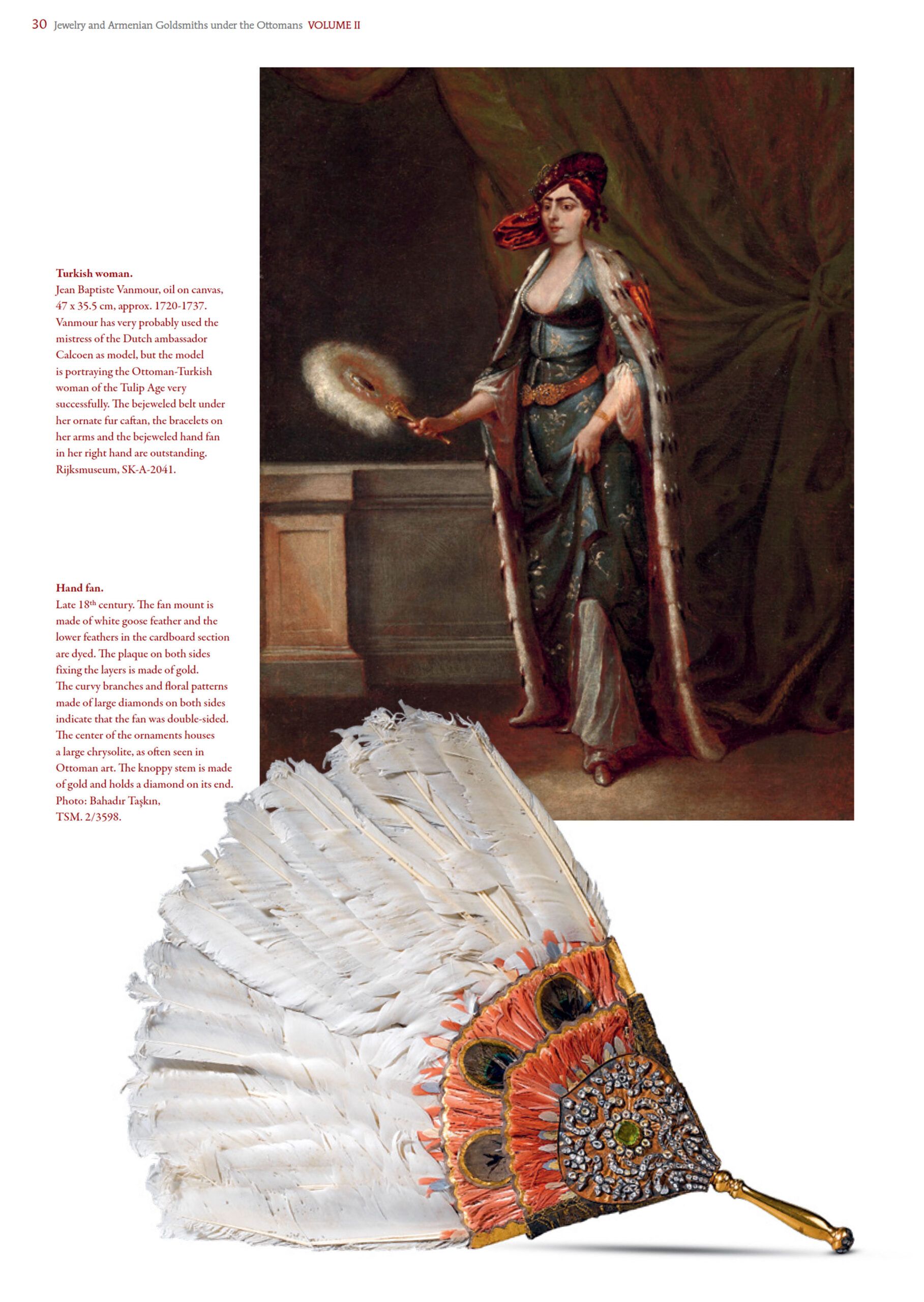
An Ottoman Turkish woman depicted by Jean Baptiste Vanmour (c.1720–1737) alongside an 18th-century jewelled hand fan, illustrating the rich decorative traditions of Ottoman dress and adornment
There are also diplomatic jewels described in documents but still physically missing, such as a diamond engraved with the tughra of Abdülhamid II believed to have been created for Queen Victoria. In historical research, a document may prove that an object existed, while the object itself remains silent.
In that sense, the book is also a call to search again for lost treasures.
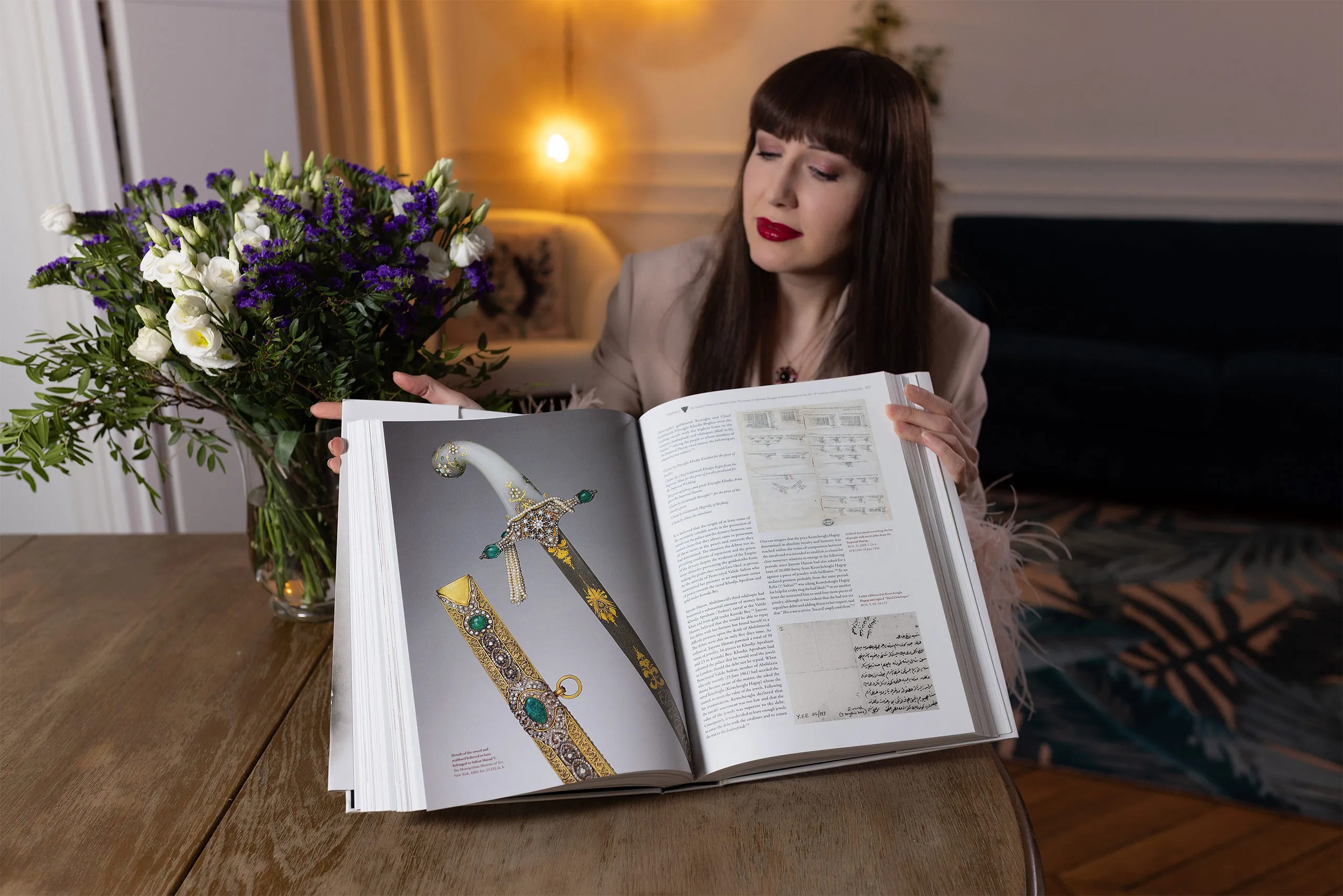
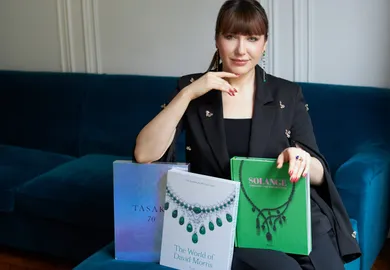
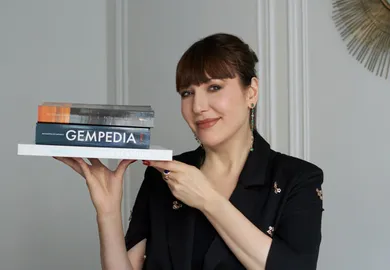
Katerina leafs through Arsen Yarman's extraordinary two-volume work, uncovering the forgotten stories of Armenian masters who shaped Ottoman jewellery culture
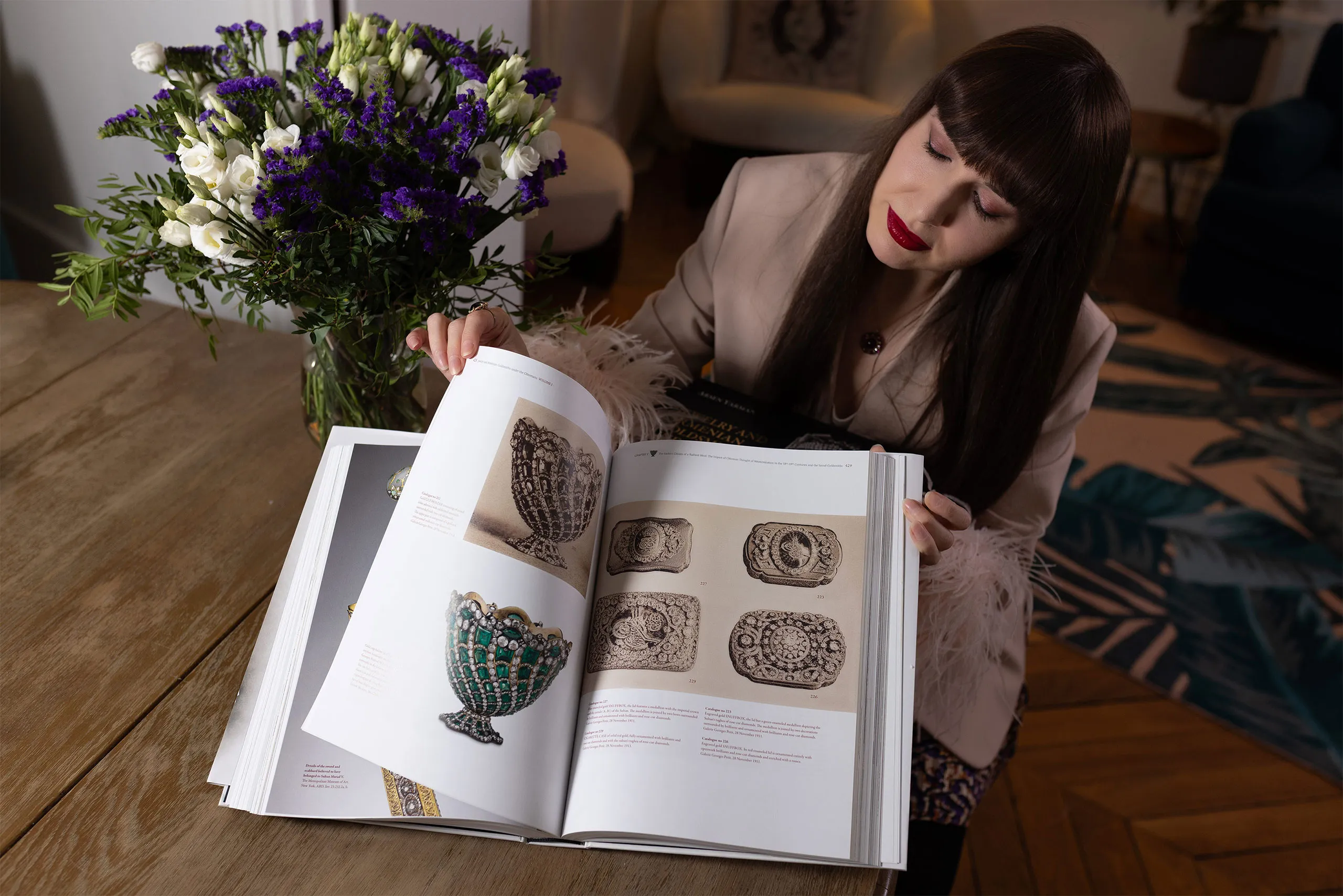
Katerina leafs through Arsen Yarman's extraordinary two-volume work, uncovering the forgotten stories of Armenian masters who shaped Ottoman jewellery culture
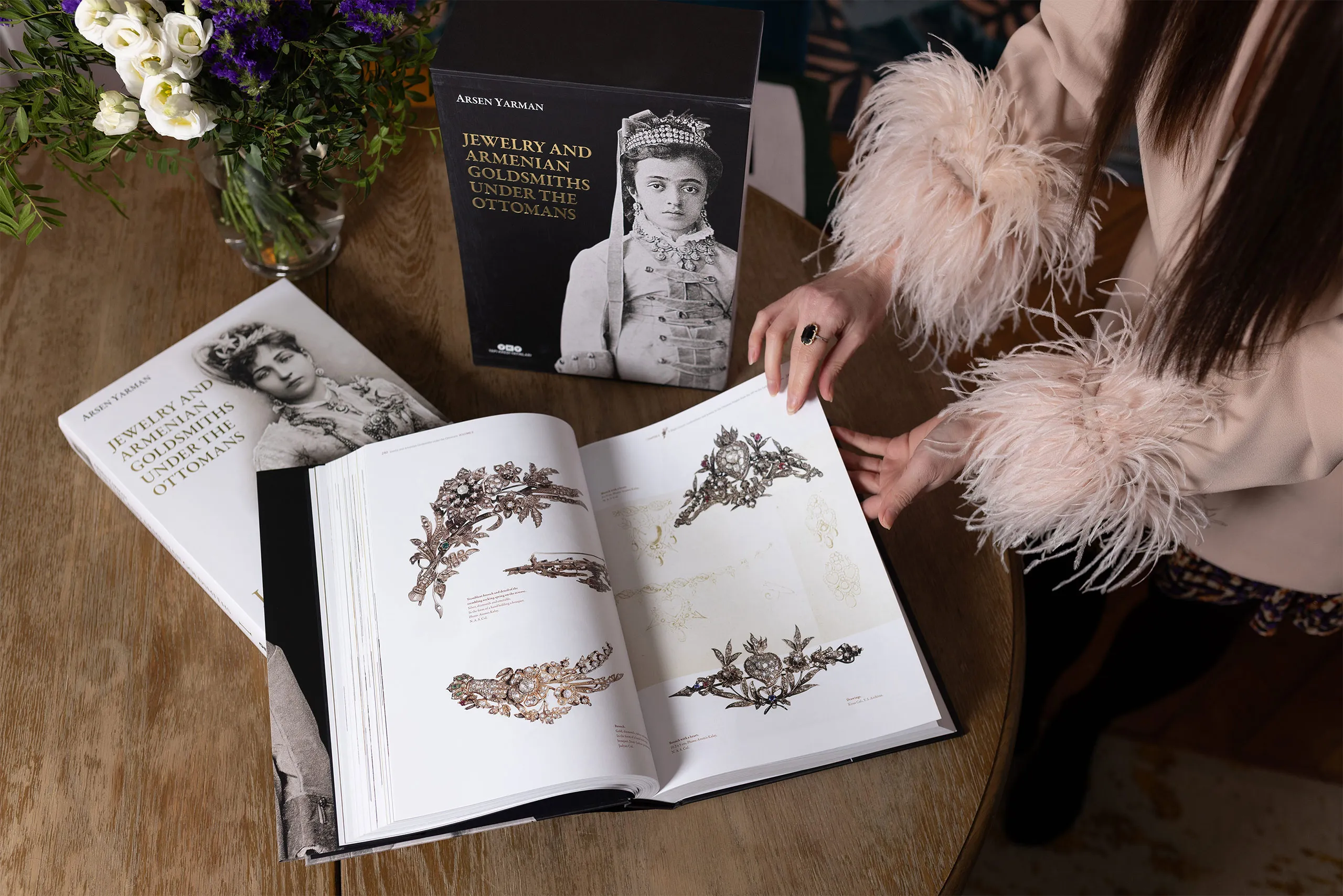
Katerina leafs through Arsen Yarman's extraordinary two-volume work, uncovering the forgotten stories of Armenian masters who shaped Ottoman jewellery culture
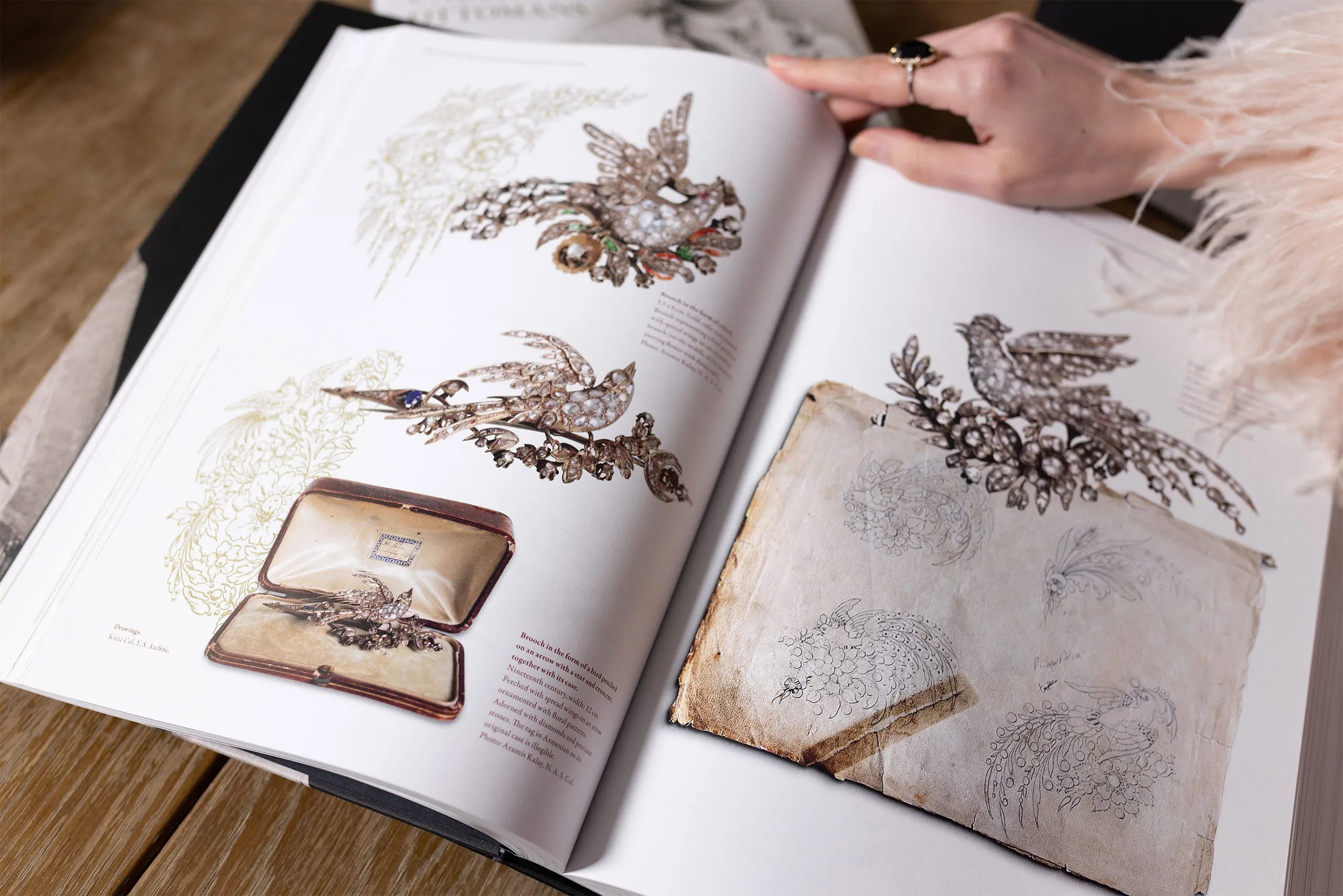
Katerina leafs through Arsen Yarman's extraordinary two-volume work, uncovering the forgotten stories of Armenian masters who shaped Ottoman jewellery culture
Katerina: You uncovered seals, decrees, workshop records and forgotten documents. Was there one discovery that changed how you understood the scale of Armenian goldsmiths’ influence?
Arsen: It is difficult to choose only one because every document in the book mattered to me. Sometimes a photograph captures the spirit of an era, a drawing reveals the intelligence of design and a single archive record can reshape what we think we know.
One discovery that moved me deeply was the 1898 Permanent Statute of Unity and Solidarity of the Armenian Jewellers’ Guild. It set out rules for apprenticeship, workshop order and guild administration, but it also revealed a culture of mutual care, with provisions for illness, marriage, old age and death.
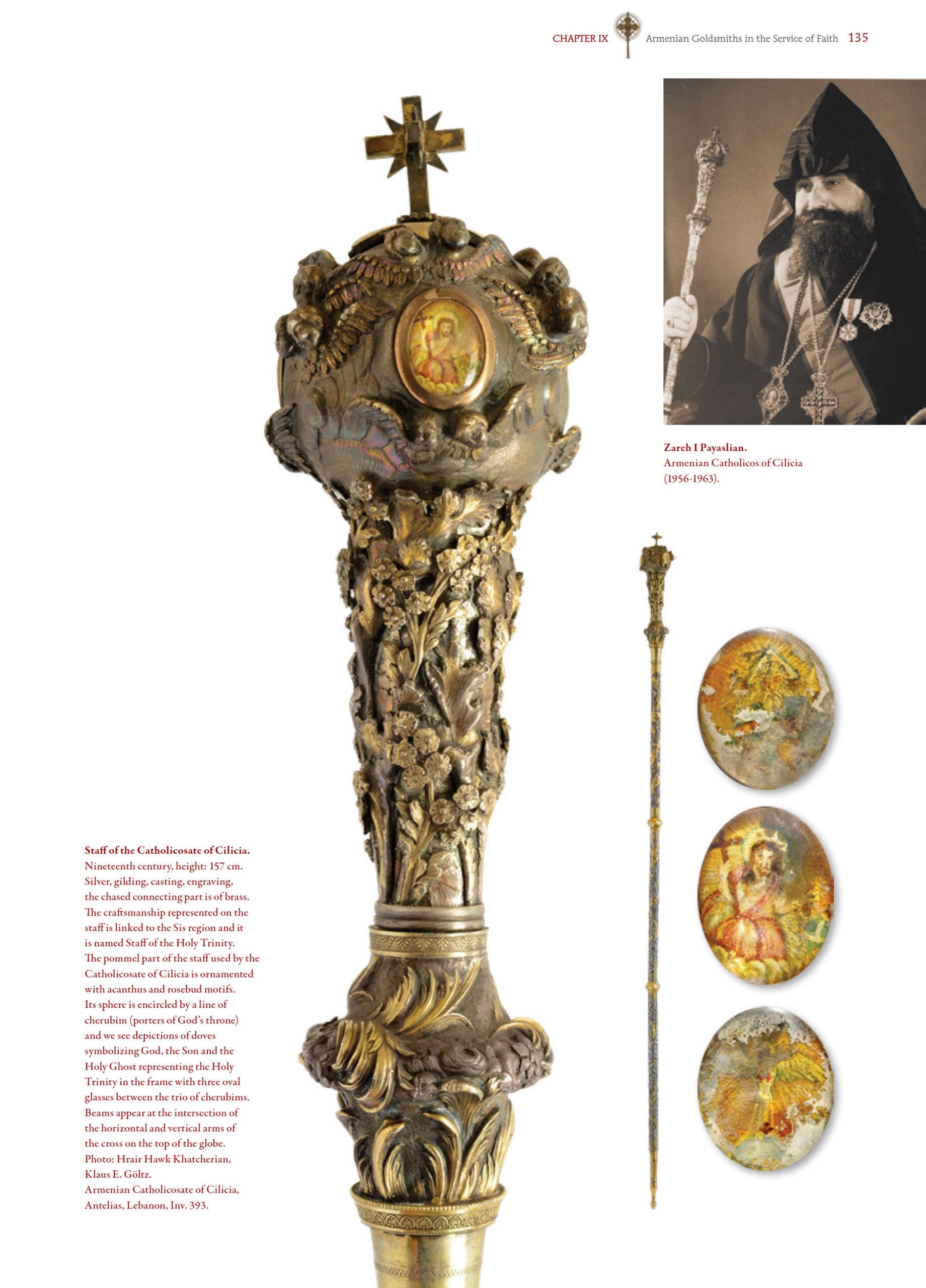
The ornate staff of the Armenian Catholicosate of Cilicia demonstrates how Armenian goldsmiths applied their mastery not only to jewellery, but also to sacred objects created in the service of faith
Reading it, I felt I was hearing the voices of craftsmen who had worked at the bench more than a century earlier. It showed that Armenian jewellers were not only skilled makers, but part of a disciplined and closely connected professional community.
For me, that document remains one of the most valuable discoveries in the book because it preserves not only how they worked, but how they lived.
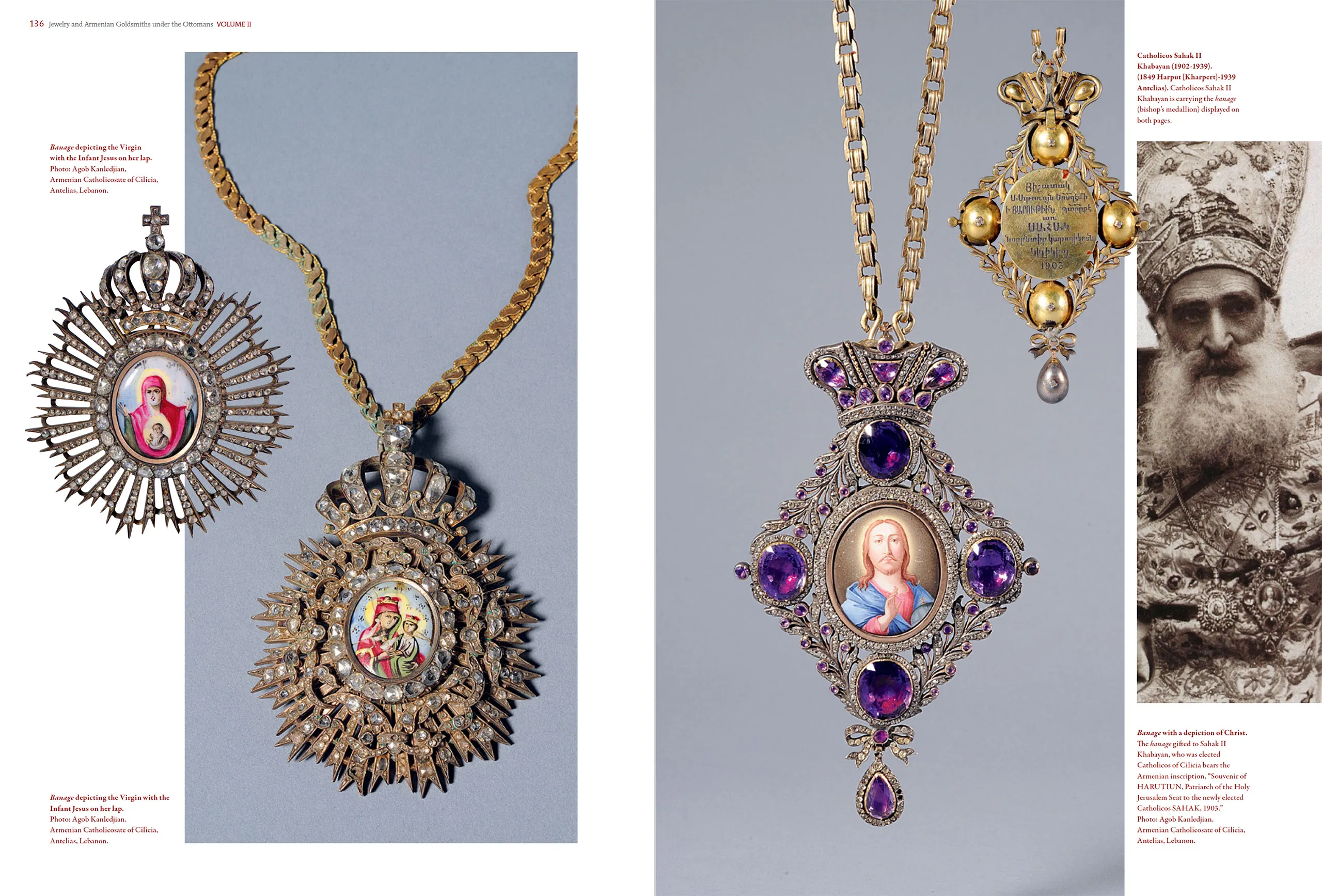
Gem-set pectoral medallions and badges from the Armenian Catholicosate of Cilicia demonstrate the extraordinary artistry applied to sacred adornment and religious regalia
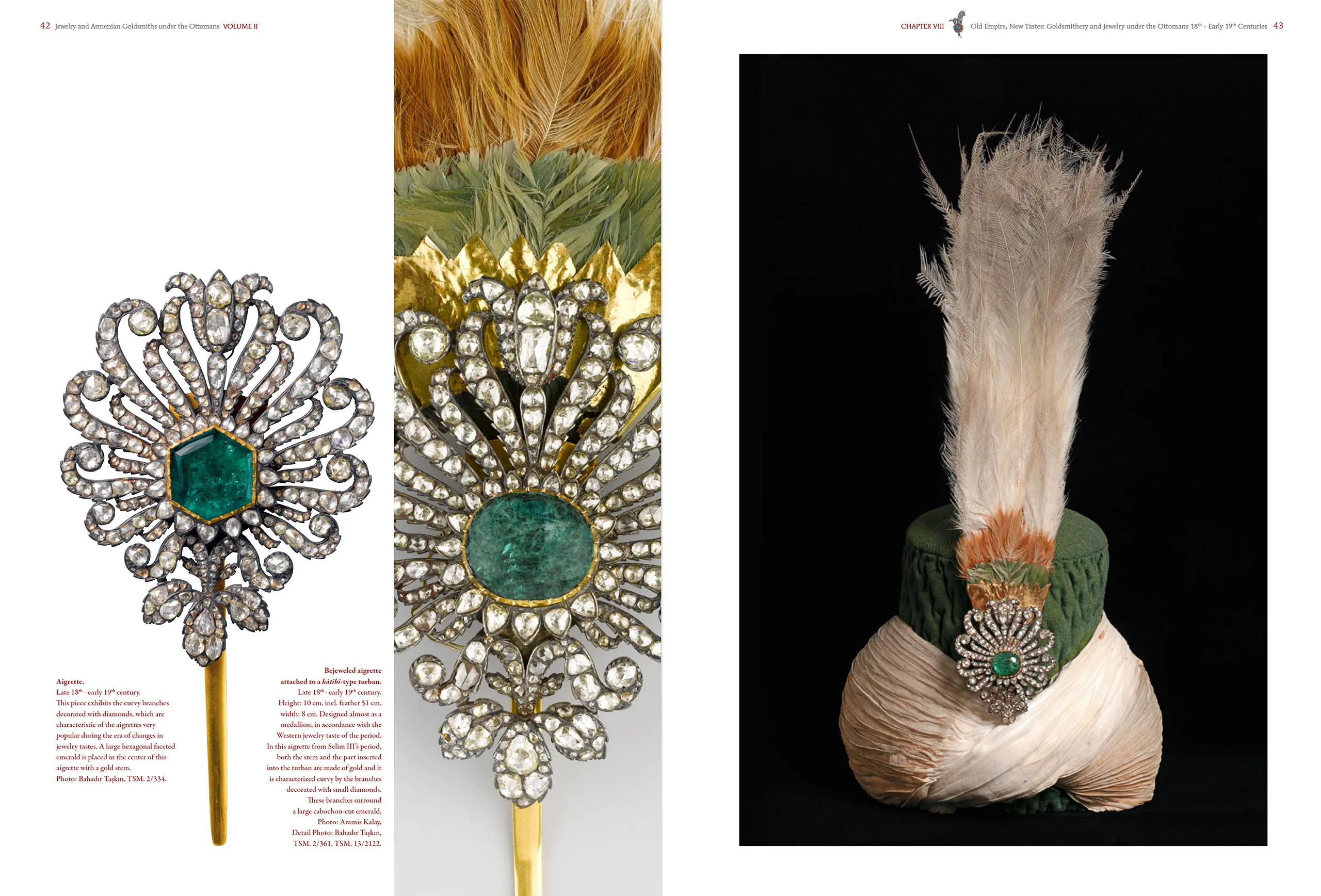
This late 18th-century aigrette, set with diamonds and a vivid cabochon emerald, comes to life when shown mounted on an Ottoman headdress crowned with plumes
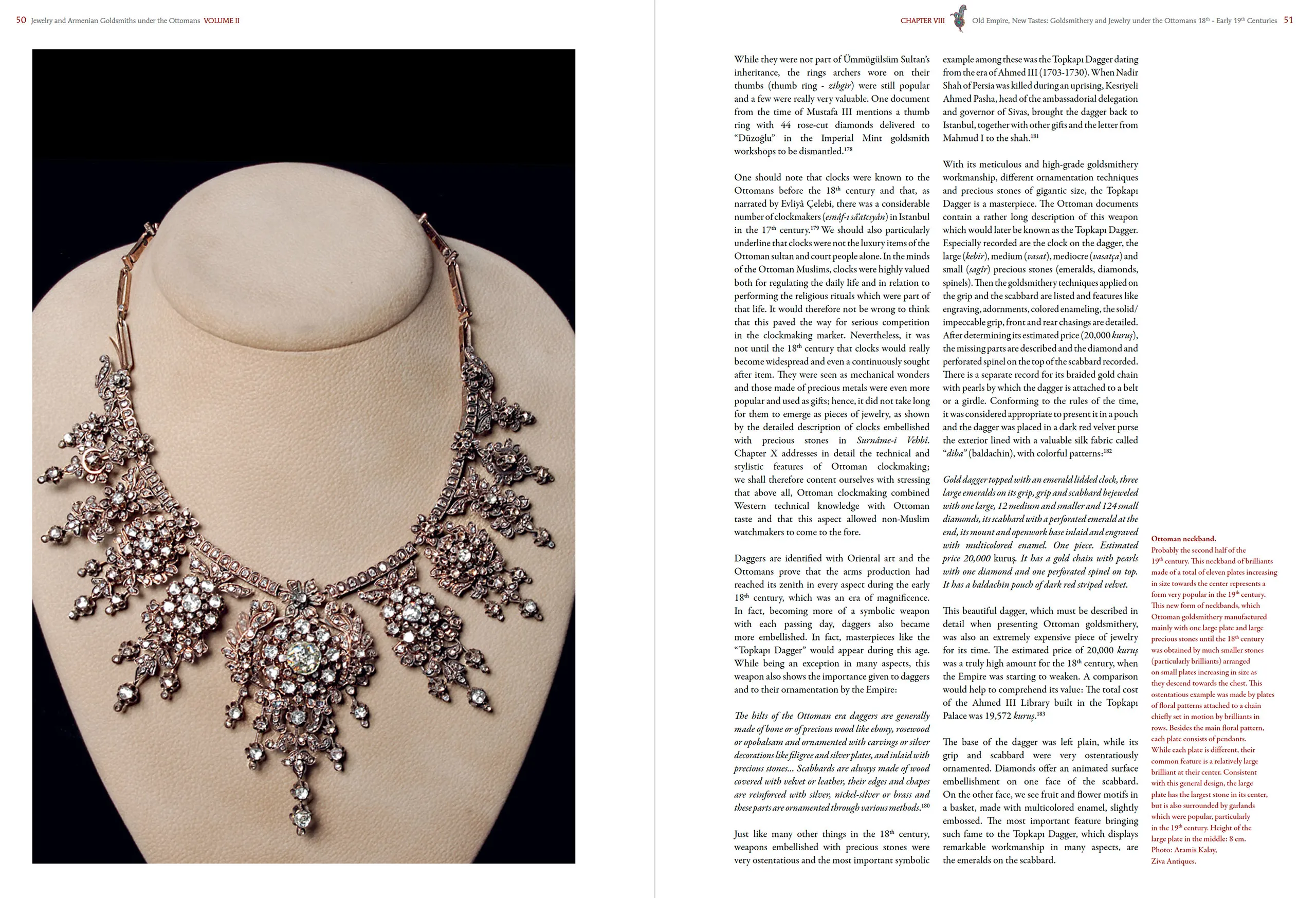
An Ottoman neckband from the second half of the 19th century, composed of eleven graduated diamond-set plates that descend towards the chest
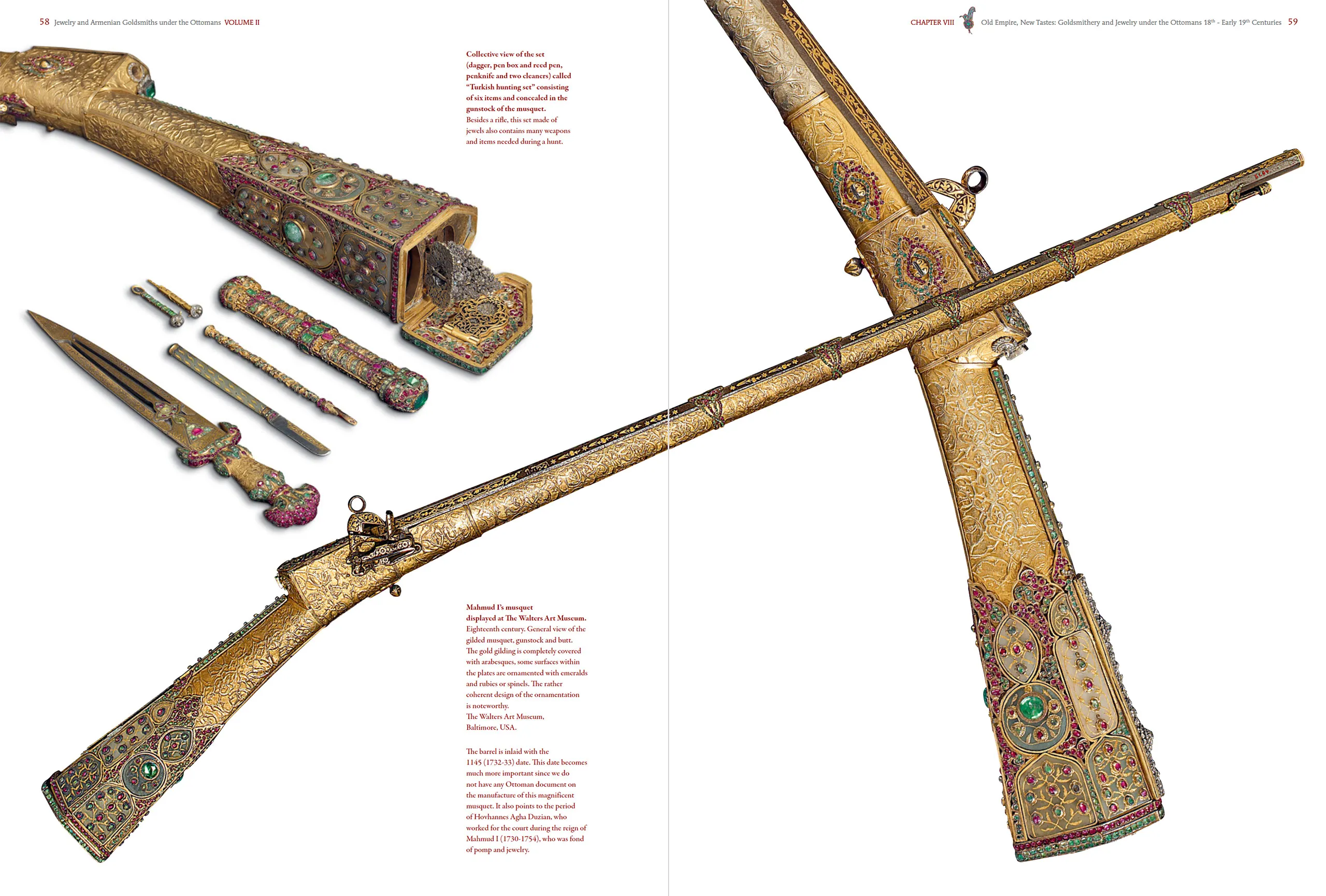
An 18th-century jewelled musket concealing a six-piece 'Turkish hunting set', where precious stones and intricate goldsmithing transform a weapon into a masterpiece of decorative art
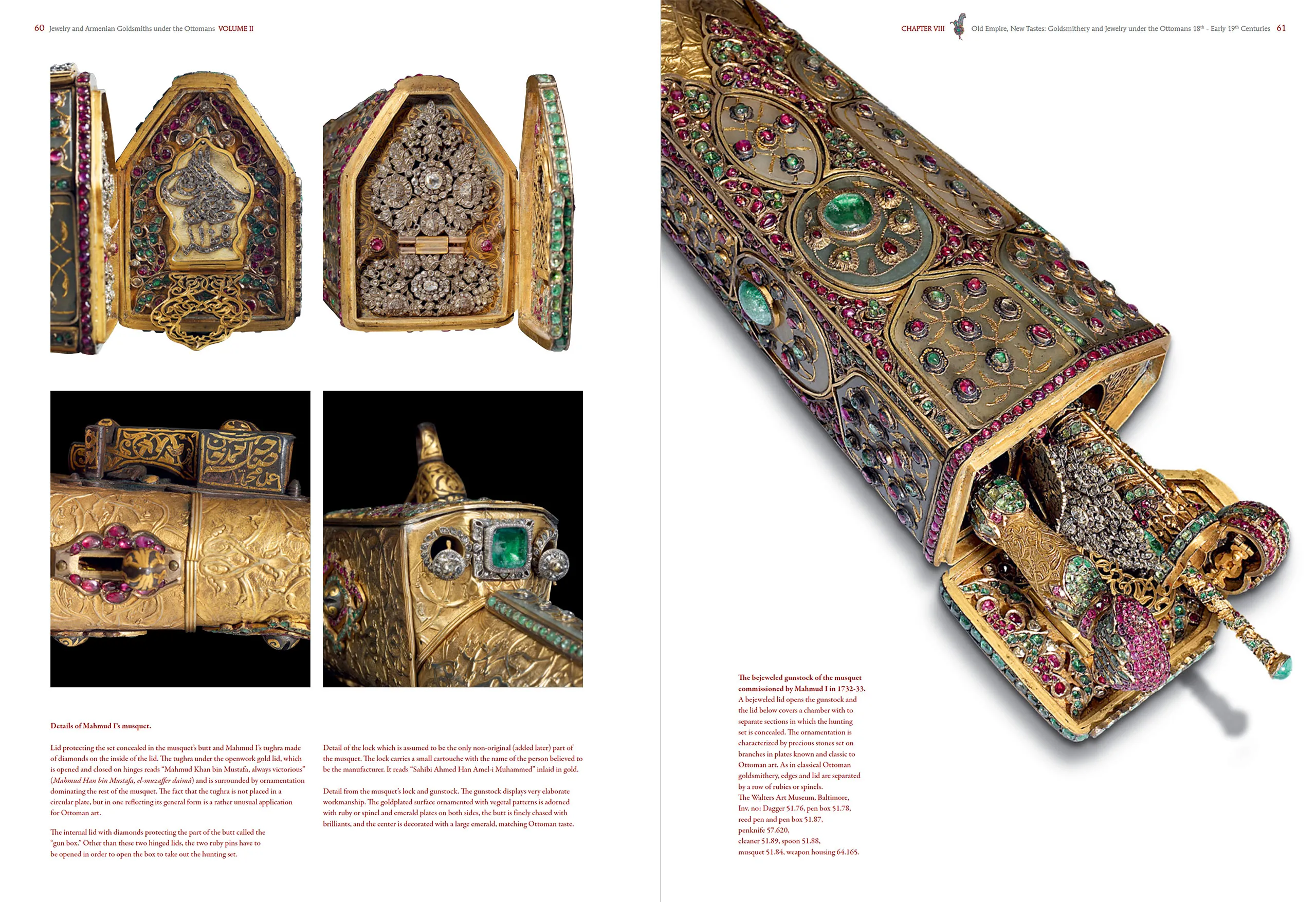
Commissioned by Mahmud I in 1732–33, this jewelled gunstock conceals a hidden hunting set and is lavishly decorated with emeralds, rubies, spinels and diamonds in the classical Ottoman manner.
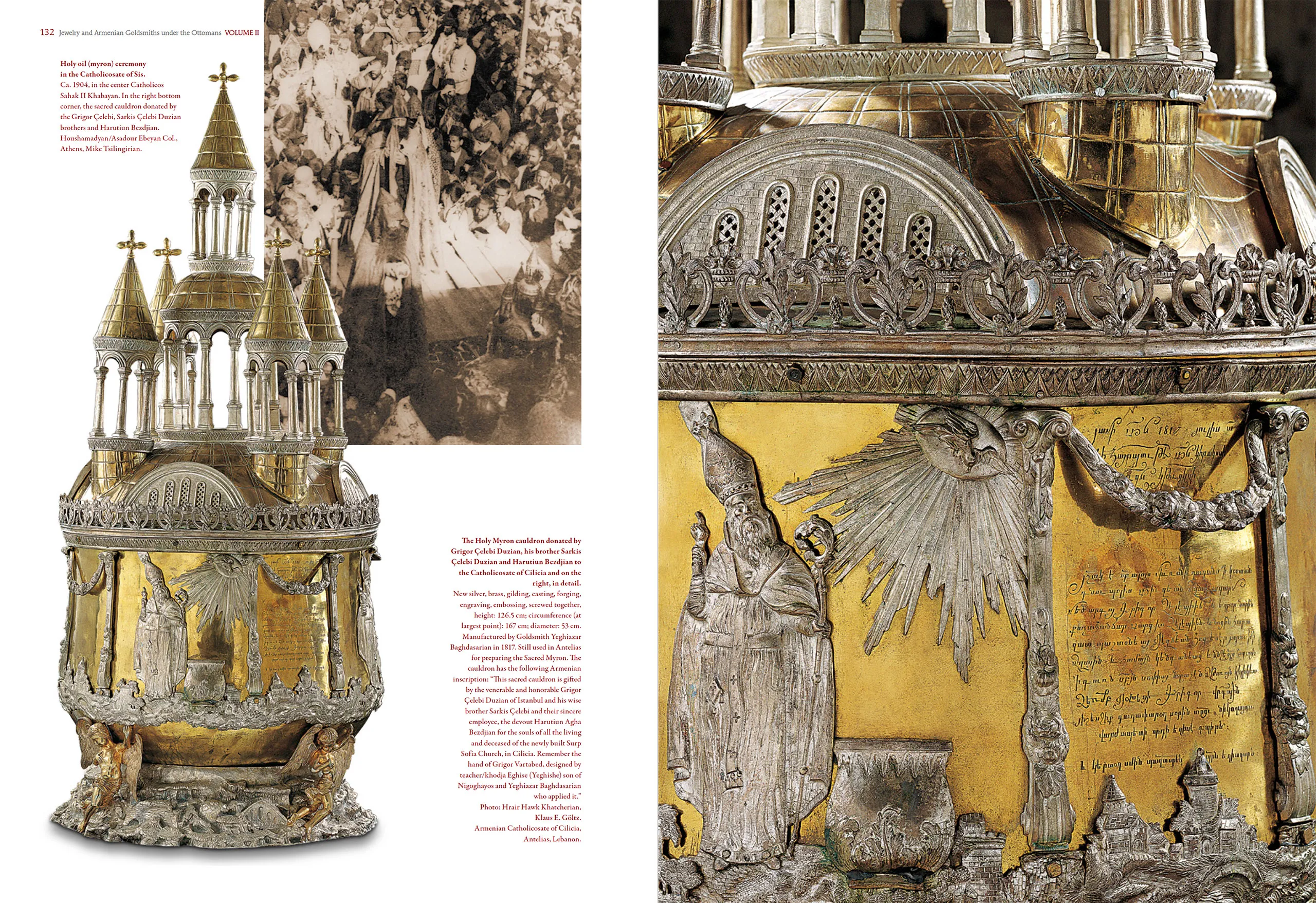
Resembling a miniature domed sanctuary, the Holy Myron cauldron demonstrates the remarkable artistry devoted to the ceremonial treasures of the Armenian Church
Katerina: What role did Armenian jewellers play in connecting East and West
Arsen: For centuries, Armenian merchants and craftsmen operated across trade routes linking India, Persia, the Ottoman Empire and Europe. They were not only makers, but intermediaries who moved precious stones, techniques and taste across borders. In many ways, they helped jewellery ideas travel.
Katerina: After years of research, what part of the process gave you the greatest personal satisfaction?
Arsen: One of the greatest satisfactions was seeing jewels that had long existed only as records, faded photographs or archival notes reappear in the hands of their present owners. To hear the family stories behind them, and to understand how they had been preserved across generations, was deeply moving.
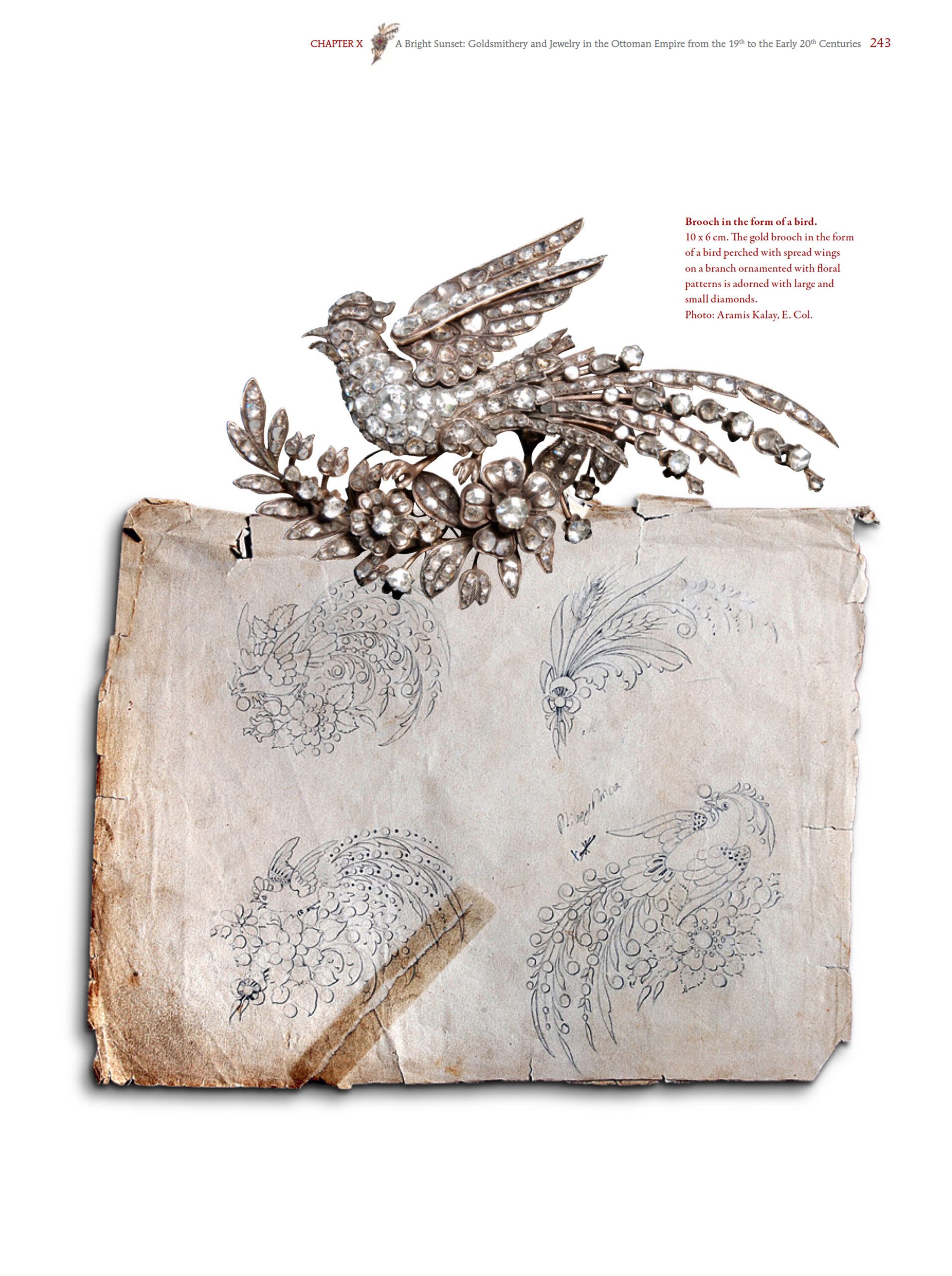
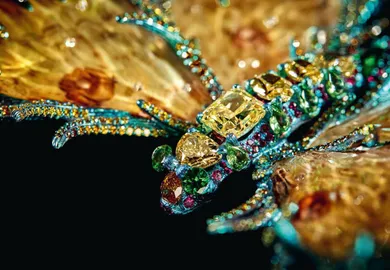
A diamond-set bird brooch and its surviving sketches provide a rare window into the creative process, tracing the journey from an artist's first ideas to a finished jewel
Another moment that affected me profoundly came while researching the swordsmith known in his works as Acemoglu. I identified him as the Armenian Chief Swordsmith Sarkis Acemoğlu, who served the Ottoman palace, and later learned that he had been buried in an Armenian cemetery in Istanbul.
I searched the cemetery for days, reading inscriptions stone by stone, until I finally found his fallen gravestone, leaning into the earth and almost forgotten. It is difficult to describe that feeling. It was as if a master who had been silent for centuries had begun to speak again.
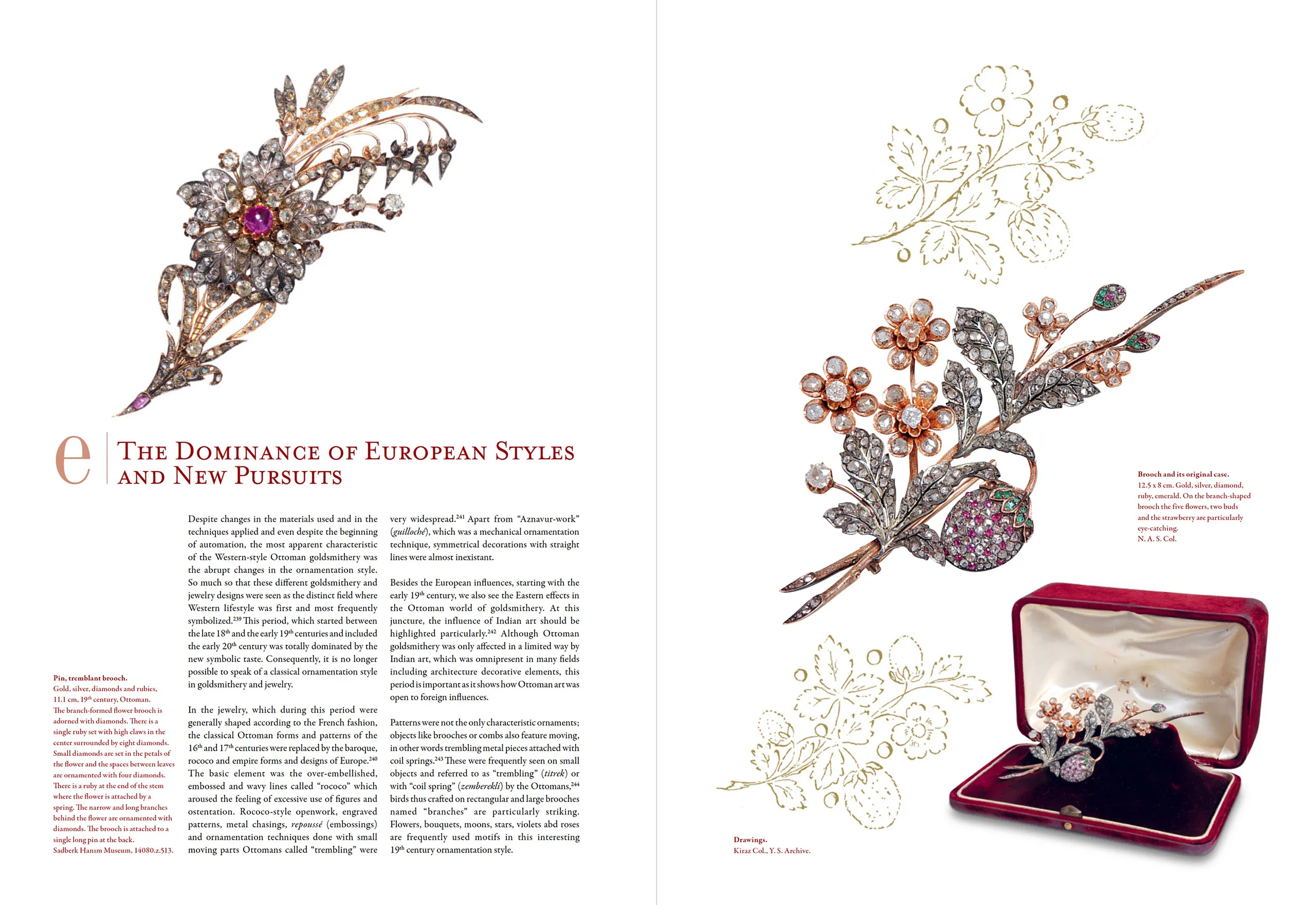
These naturalistic floral brooches reflect the growing influence of European taste on Ottoman jewellery
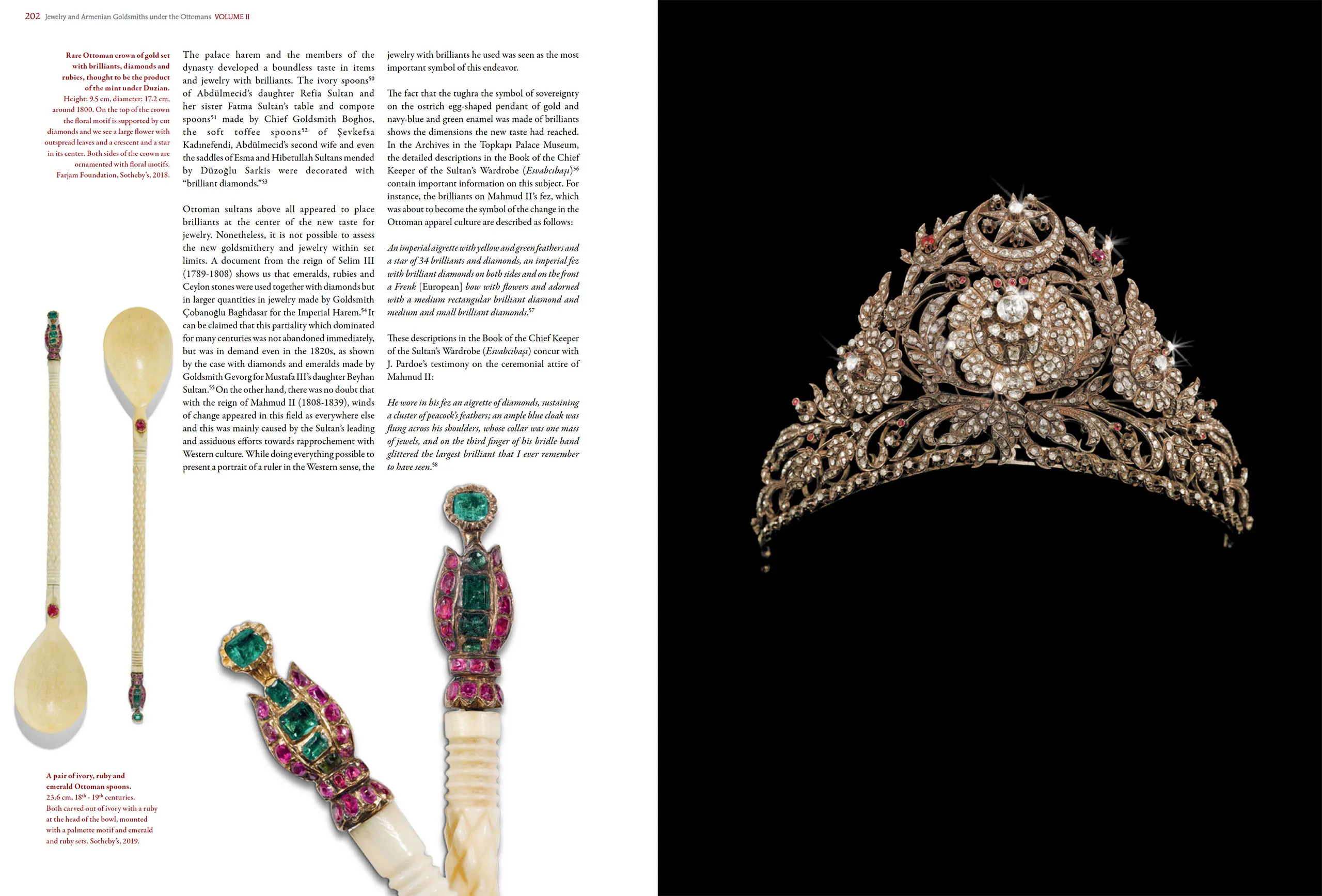
A diamond-set Ottoman crown and a pair of jewelled ivory spoons demonstrate the breadth of Ottoman decorative arts, from ceremonial regalia to objects of everyday use
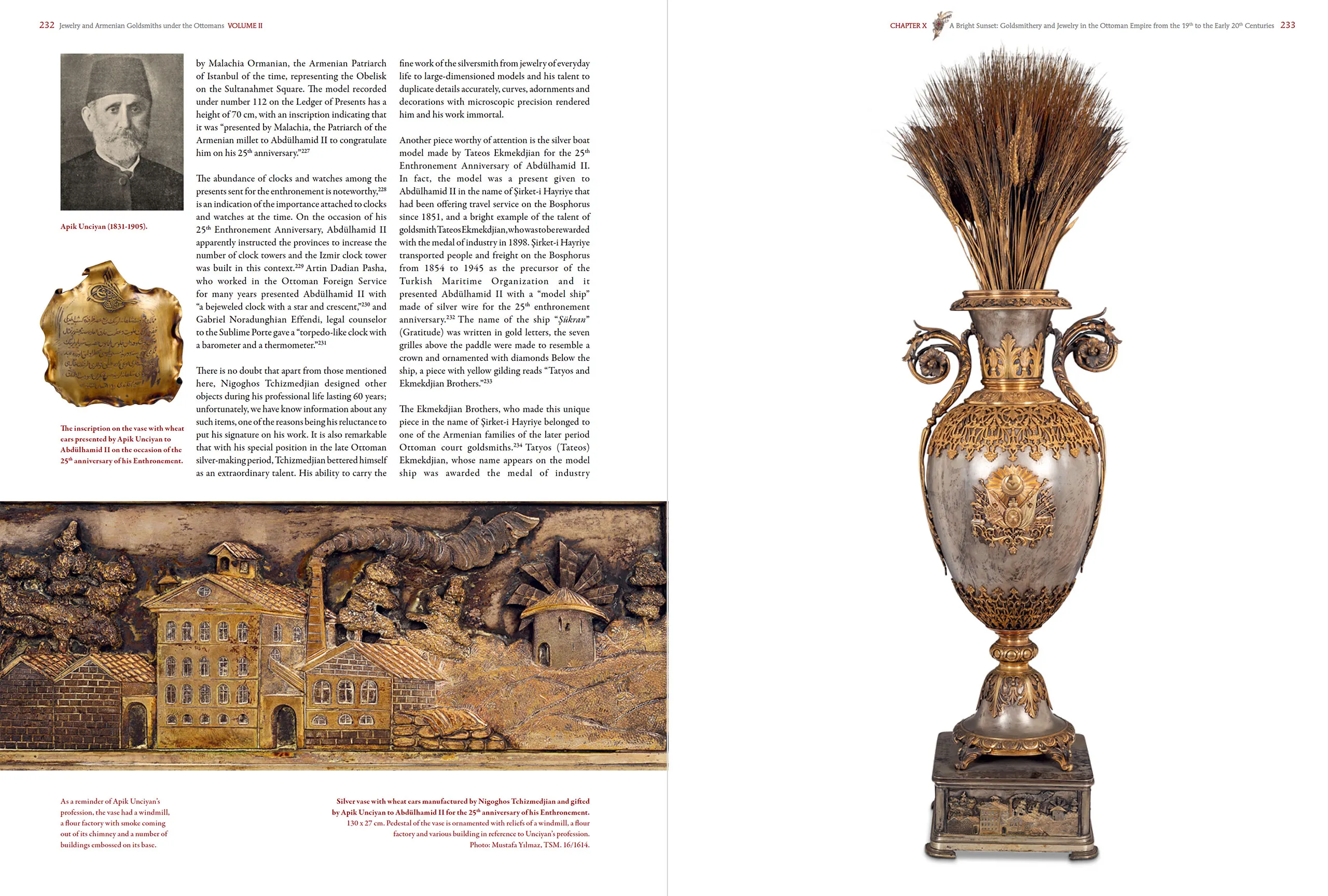
A silver vase crowned with wheat ears, presented to Abdülhamid II on the 25th anniversary of his enthronement
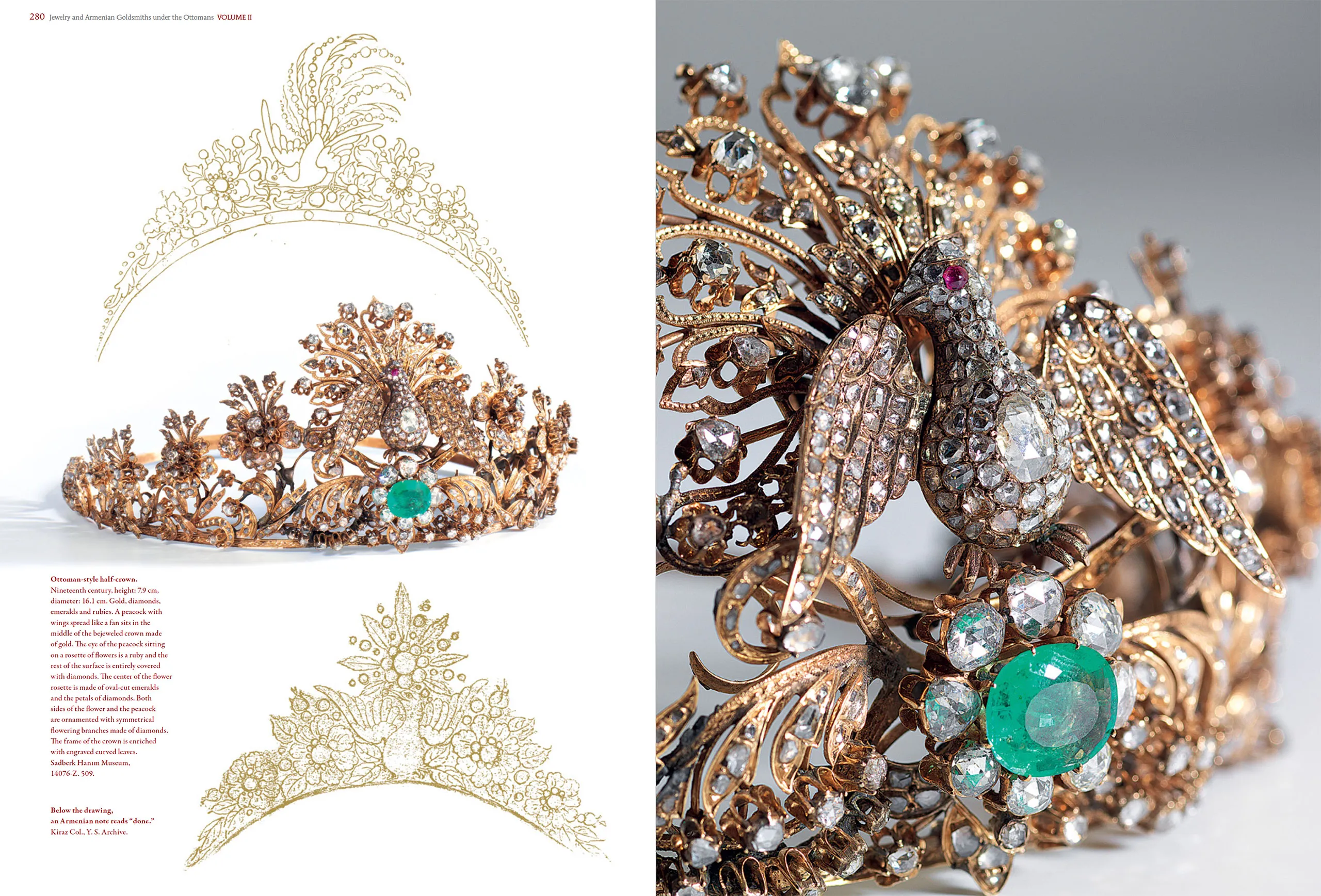
An Ottoman-style half-crown set with diamonds, emeralds and rubies, its central peacock symbolising beauty and splendour
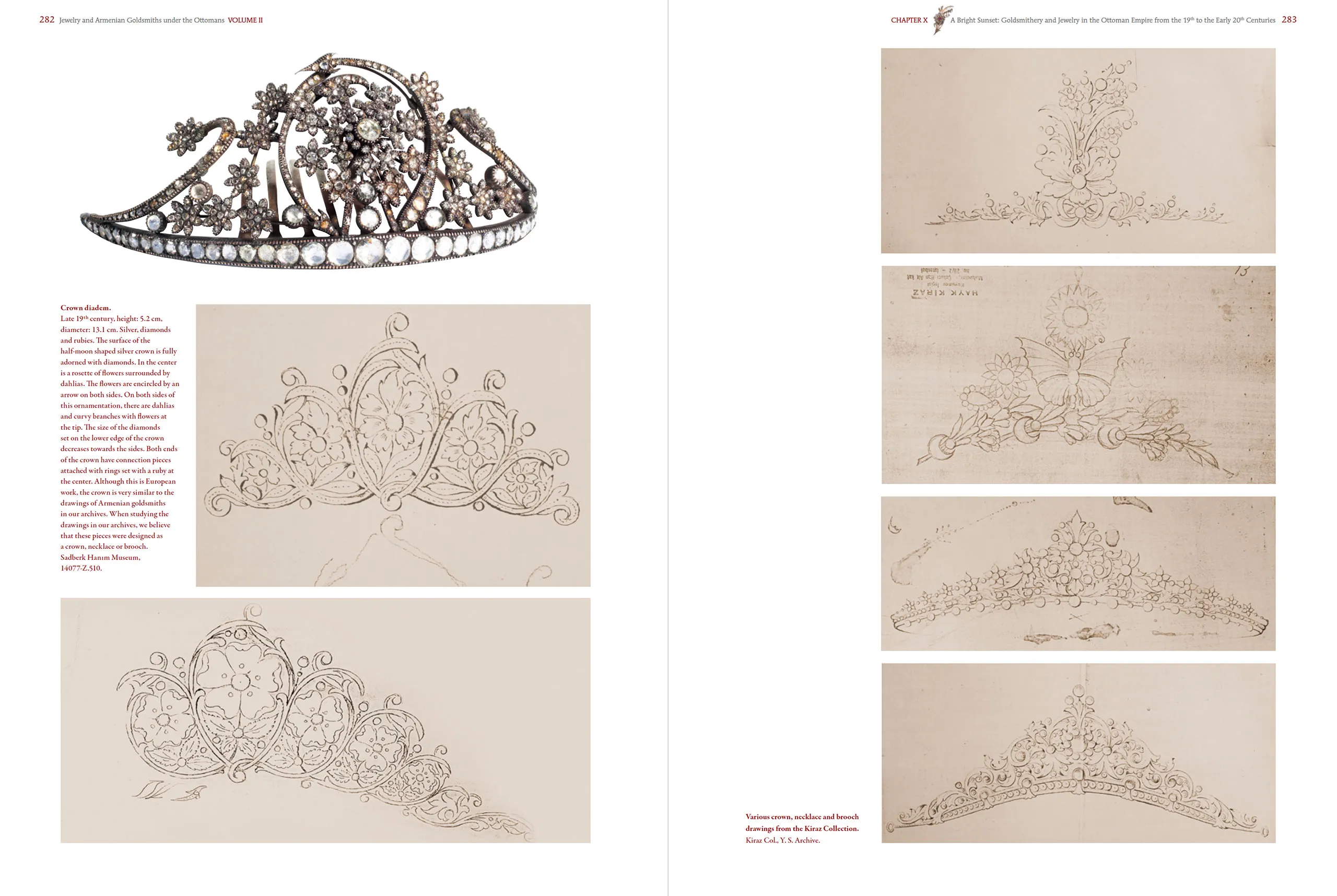
A late 19th-century diamond and ruby diadem displayed alongside archival drawings of crowns and jewelled ornaments from the Kiraz Collection
Katerina: For today’s collectors or curators, are there subtle clues that might suggest an unsigned 18th or 19th century jewel could have been made by an Armenian master?
Arsen: We should be careful about assigning objects too confidently because many Armenian jewellers worked across different empires and adapted closely to local tastes. There is no single fixed style that can simply be labelled “Armenian”.
What I would call the Armenian hand is often seen instead in refinement, technical discipline and an ability to unite different visual languages with great sensitivity. These masters worked in the Ottoman world, Persia, Russia, Europe and beyond, often blending influences rather than repeating one formula.
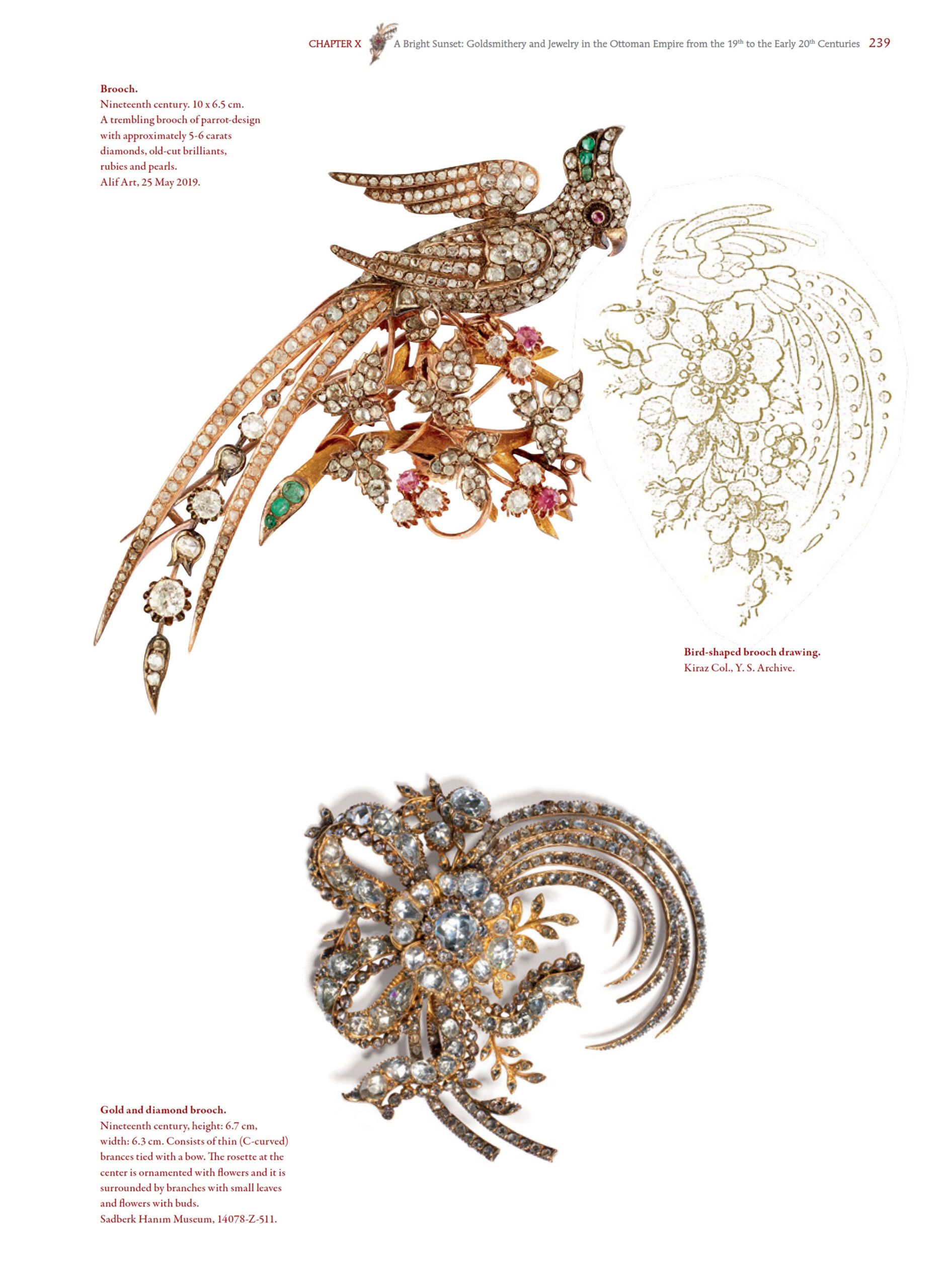
Birds and floral sprays demonstrate the popularity of naturalistic designs in late Ottoman jewellery
Certain technical traditions were especially associated with Armenian jewellers, including sophisticated foil-backing used to enhance diamonds and the strong adhesive once known as Armenian cement, used in stone-setting. Contemporary sources also frequently remarked on their skill in mounting and finishing precious stones.
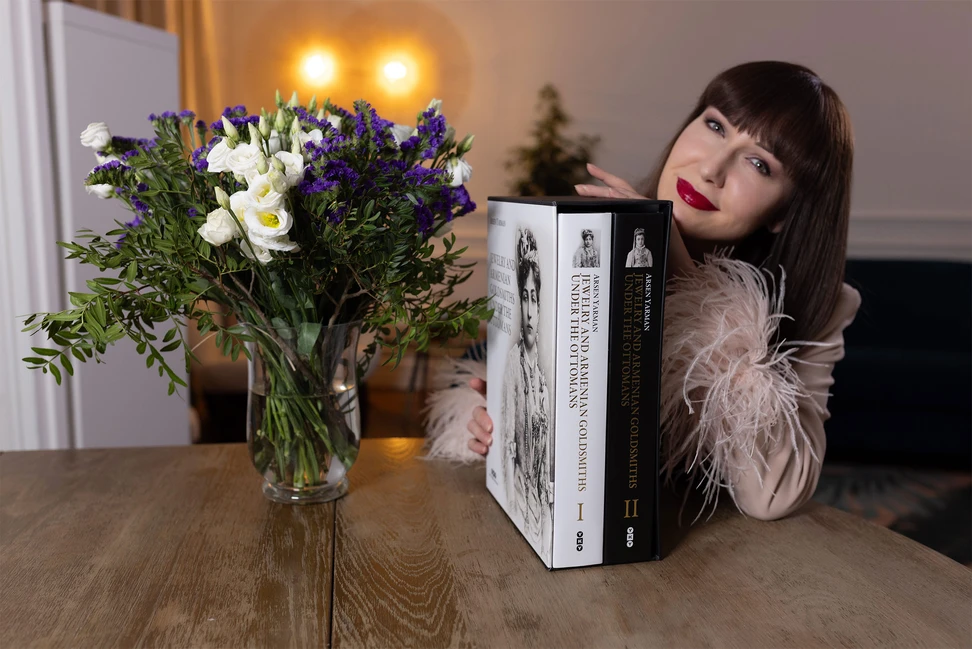
Two volumes, thousands of archival discoveries and countless stories waiting to be rediscovered
So rather than looking for one motif, I would look for intelligence of workmanship, elegance of proportion and technical confidence. Often there is no signature, but the craftsmanship speaks for itself.
Inspired to learn more? Order your copy of Jewelry and Armenian Goldsmiths Under the Ottomans here and use the discount code KRTN10 to receive 10% off.


WORDS
Katerina Perez Is a jewellery insider, journalist and brand consultant with more than 15 years’ experience in the jewellery sector. Paris-based, Katerina has worked as a freelance journalist and content editor since 2011, writing articles for international publications. To share her jewellery knowledge and expertise, Katerina founded this website and launched her @katerina_perez Instagram in 2013.
RelatedArticles
Discover the brand: the story from various angles.