From Mine, to Klein, to You: Mark Klein and the Modern Evolution of a Diamond Dynasty
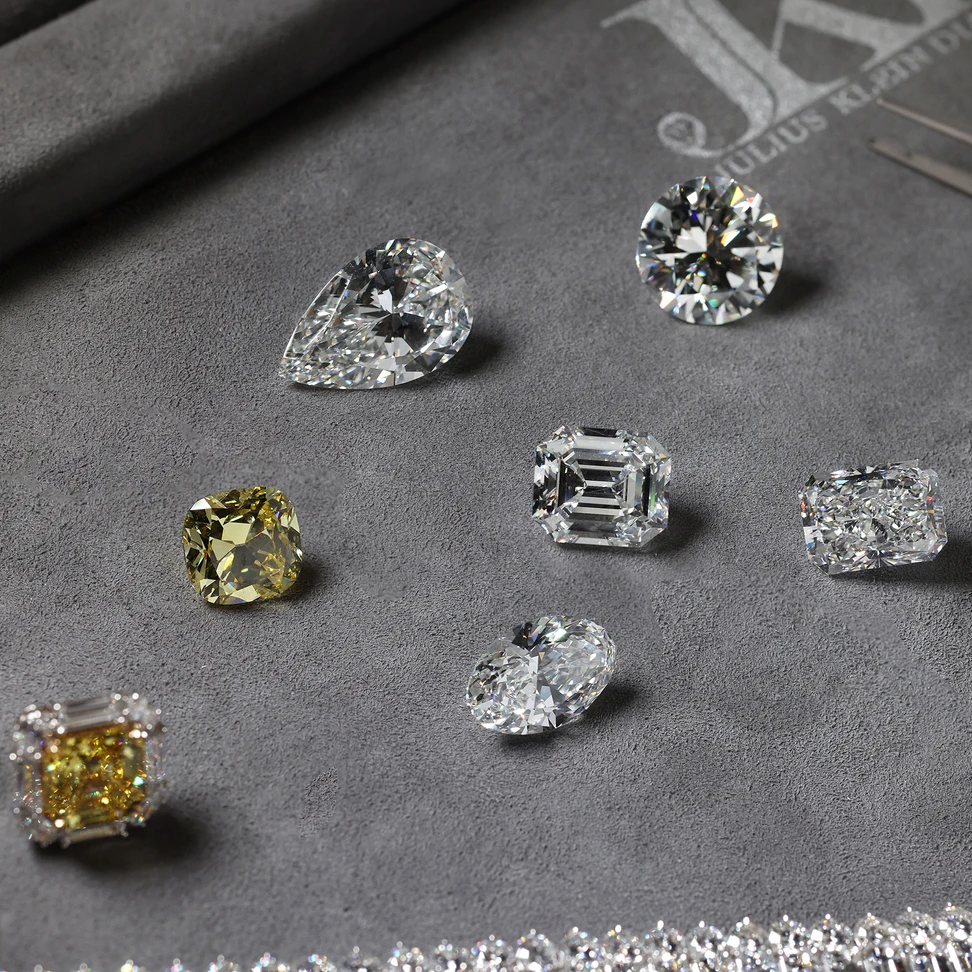
It’s a bright afternoon on Fifth Avenue when I step into the Julius Klein office, in the heart of New York’s historic diamond district. At the same desk where he films his “What’s on Your Desk Today” series for Instagram, Vice President Mark Klein is surrounded by parcels of brilliance: radiant cuts, emeralds and a particularly fiery pair of yellow diamonds that refract the light like bottled sunshine.
Mark, known to his followers as @therealdiamantaire, greets me with the easy confidence of someone who has grown up surrounded by diamonds. His desk tells a deeper story, however—part archive, part playground for a third-generation diamantaire who still finds wonder in every facet. “My grandfather used to say, ‘Above all else, a diamond must be beautiful,’” Mark tells me as he slides a tray closer.
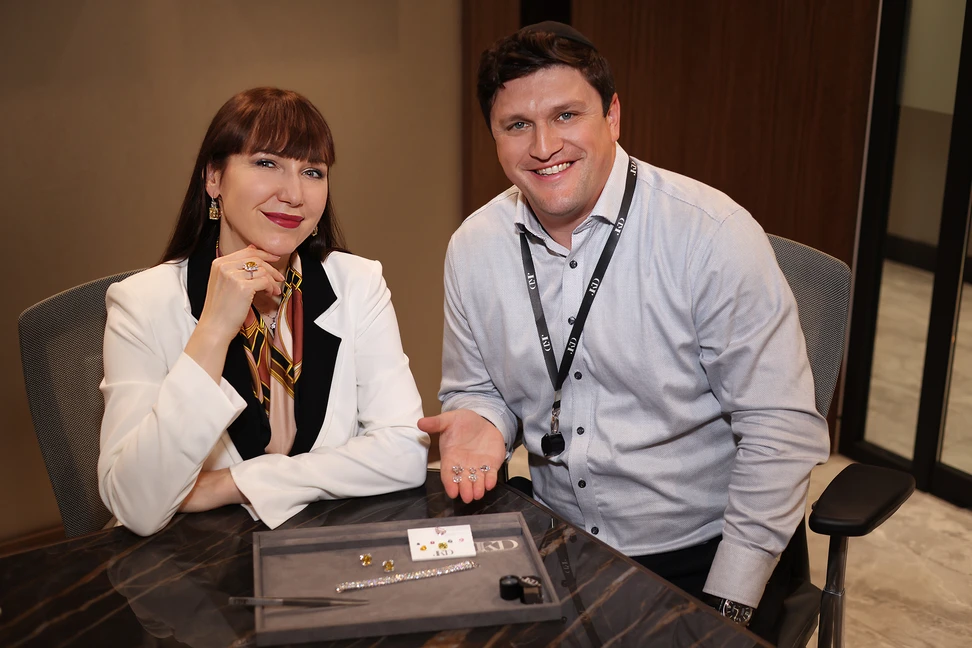
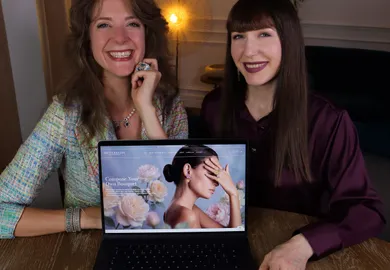
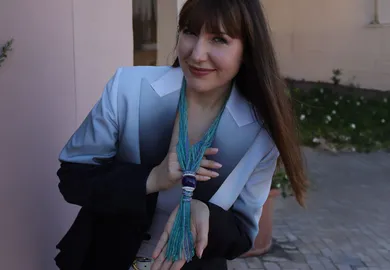
Katerina meets Mark Klein, Vice President of Julius Klein, in the World Diamond Tower in NYC
That sentiment, I soon discover, runs through every corner of Julius Klein, a company that has been at the centre of the B2B diamond trade since 1948. From its beginnings as a specialist in precision-cut stones to its reputation today as a global leader in exceptional, hard-to-find natural diamonds, Julius Klein remains both a custodian of tradition and a pioneer of modern diamond craftsmanship. At its helm today is Mark, the antithesis of what you might imagine a diamond dealer to be: amiable and animated as he flips through the diamonds in front of him, searching for stones that he knows will excite me.
As we talk, it becomes clear that Julius Klein’s story is as much about people as it is about diamonds. The company was founded in 1948 by Julius Klein, a man whose integrity and meticulous eye set the standard for everything that followed. His approach was methodical and exacting—every facet and every presentation detail mattered.
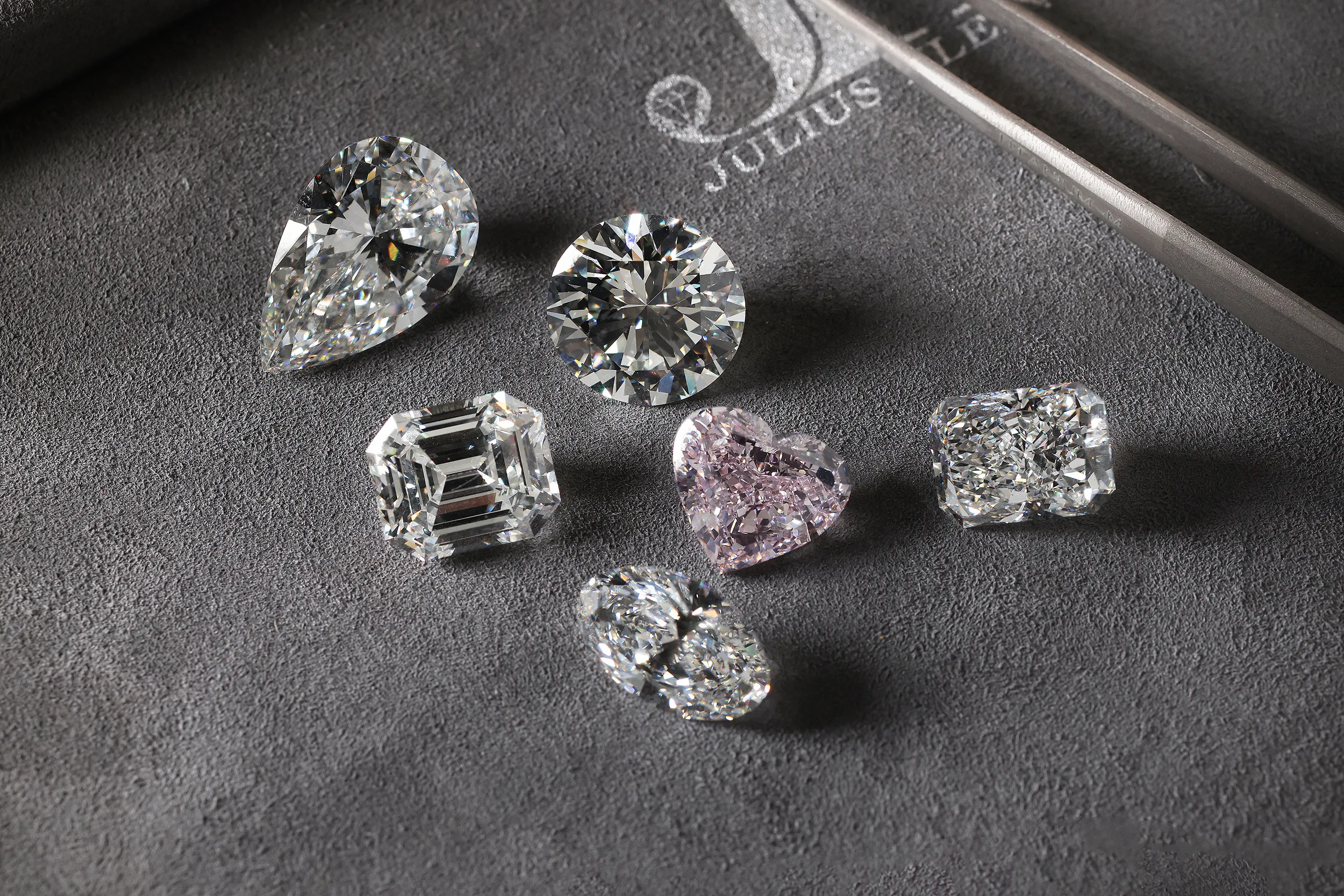
A selection of natural Fancy coloured pink, blue, red, orange and yellow diamonds in various cuts and carat weights
“Even the paper,” Mark recalls with a smile. “If the parcel had a tear, my grandfather would make us replace it immediately. He believed the first impression of a diamond should already tell you everything.” That insistence on perfection dictated not only how the stones were cut, but how they were seen. It’s a small detail, but it speaks volumes: the way you handle a diamond reflects the respect you have for its rarity, and for the expertise required to reveal its true character.
Martin Klein, Mark’s father and current CEO carried that same precision forwards, transforming the company’s focus along the way. While his father specialised in calibrated diamonds and fancy shapes, Martin was drawn to larger stones and developed a fascination with colour. Long before the world recognised the magic of pink and blue diamonds, he was one of the first to buy rough from the Argyle mine in Australia. “When my father showed the little brownish-red rough he had acquired to a colleague, he said, ‘How much did you pay for this?’,” Mark laughs. “When he heard the price, he just shook his head and said, ‘You must be crazy.’ My father told him, “I’m either that, or a genius.'"
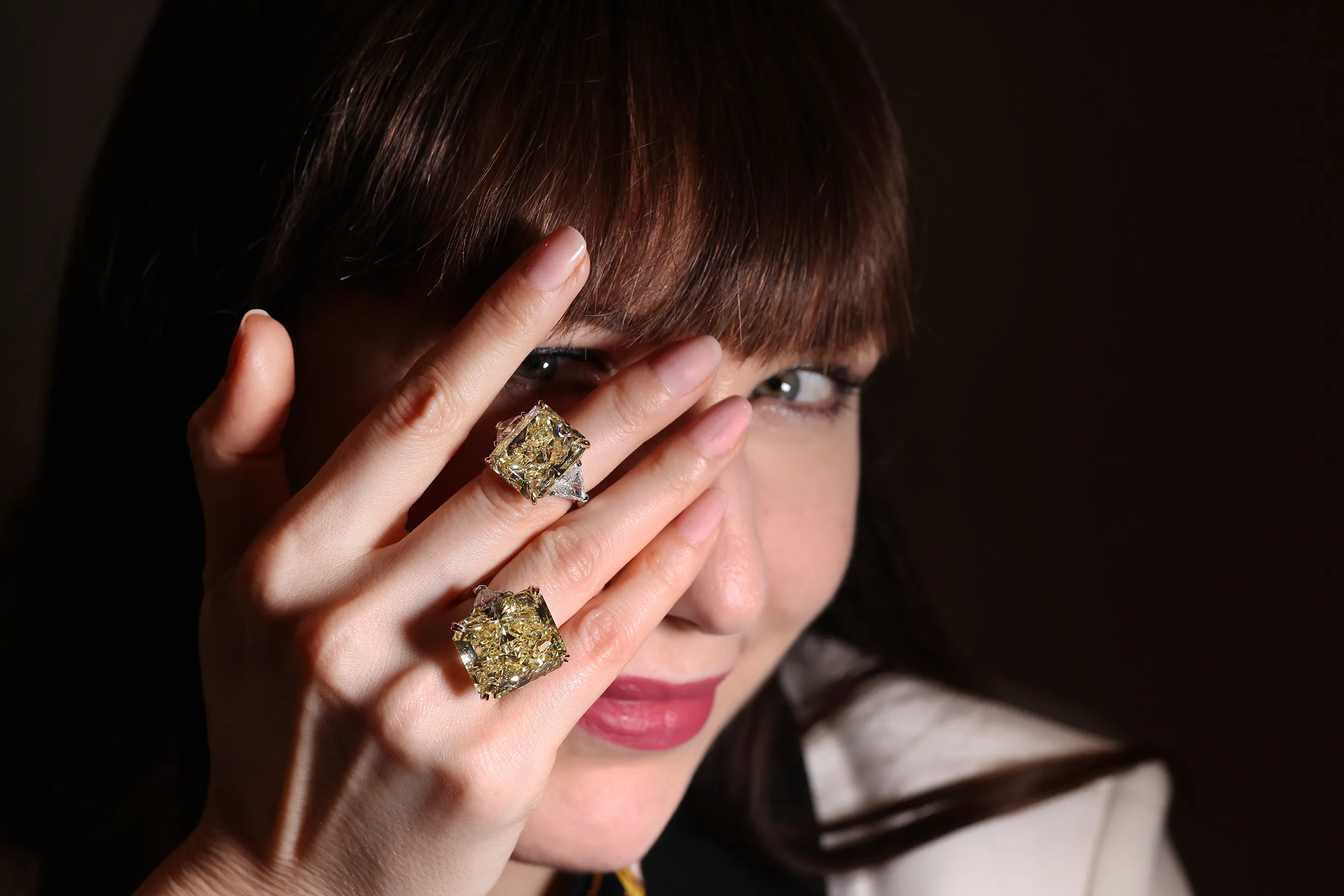
Katerina wears 20 and 30 carat radiant cut Fancy Intense Yellow diamonds rings by Julius Klein
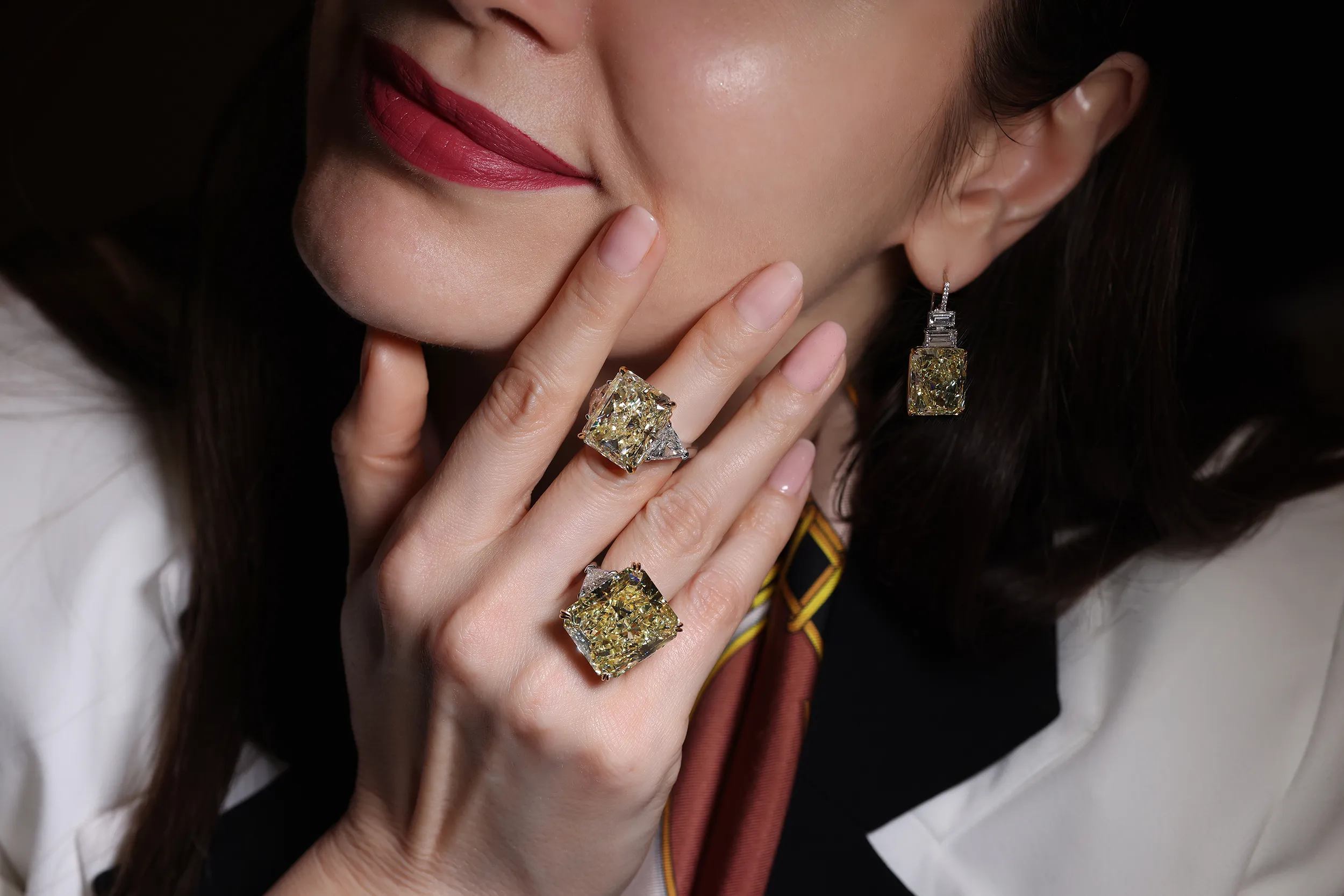
The rings paired with radiant cut Fancy Intense Yellow diamond earrings of 30 carats
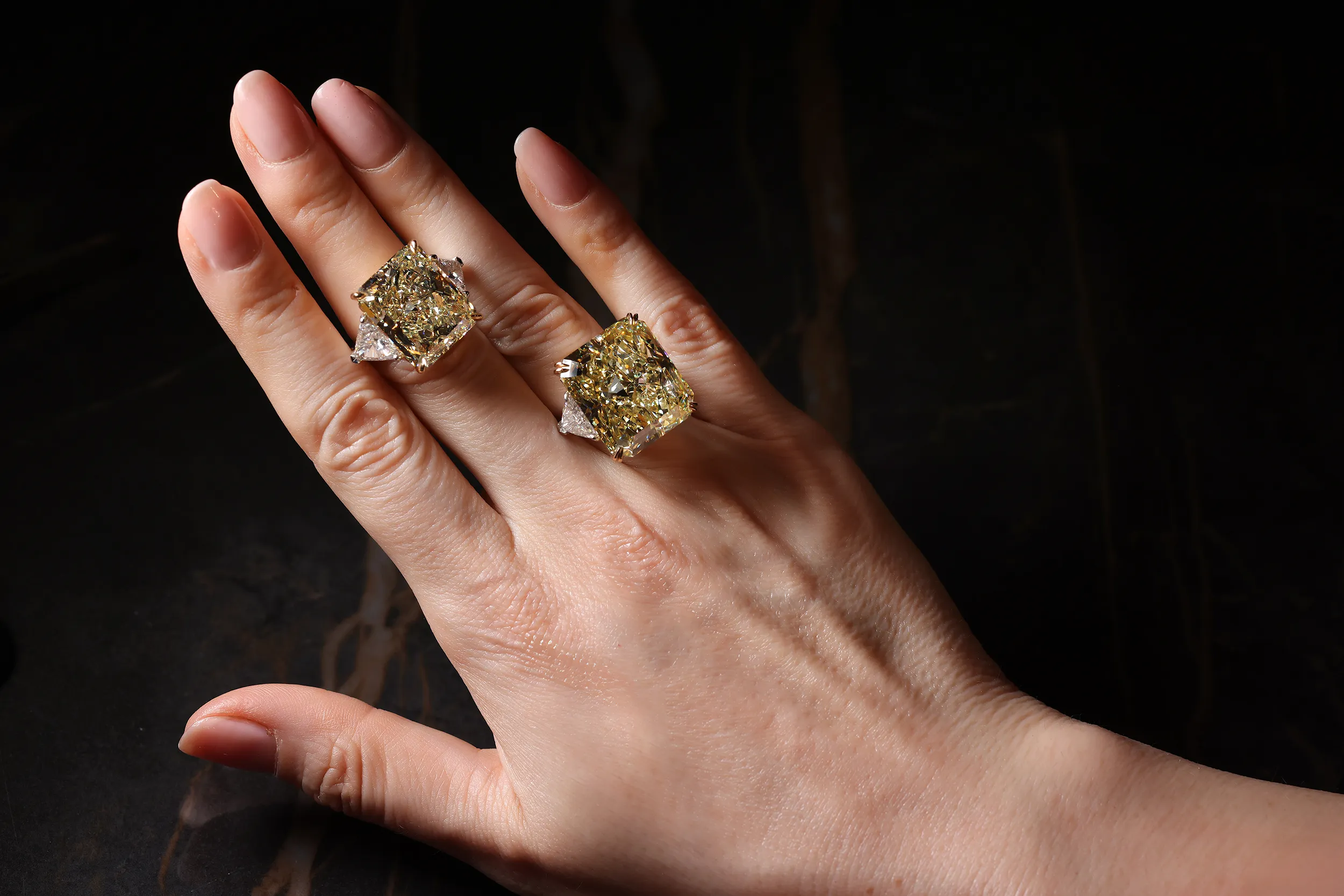
Every diamond in the Julius Klein inventory is unique in its own way
History, of course, proved him right. What began as a risk turned into a revelation—a reminder that in the Klein family, tradition has never meant standing still. Each generation has found its own way to expand the definition of rarity, with the same unwavering values of integrity, craftsmanship, dedication and trust guiding every choice the company makes.
Listening to Mark describe his work, I can see that his relationship with diamonds is completely instinctive. He speaks of them not as commodities, but as individuals, each with its own temperament. “Every single item in our inventory is unique in its own way,” he says. “It shouldn’t need to be set in a piece of jewellery to be special. The stones themselves are already remarkable.”
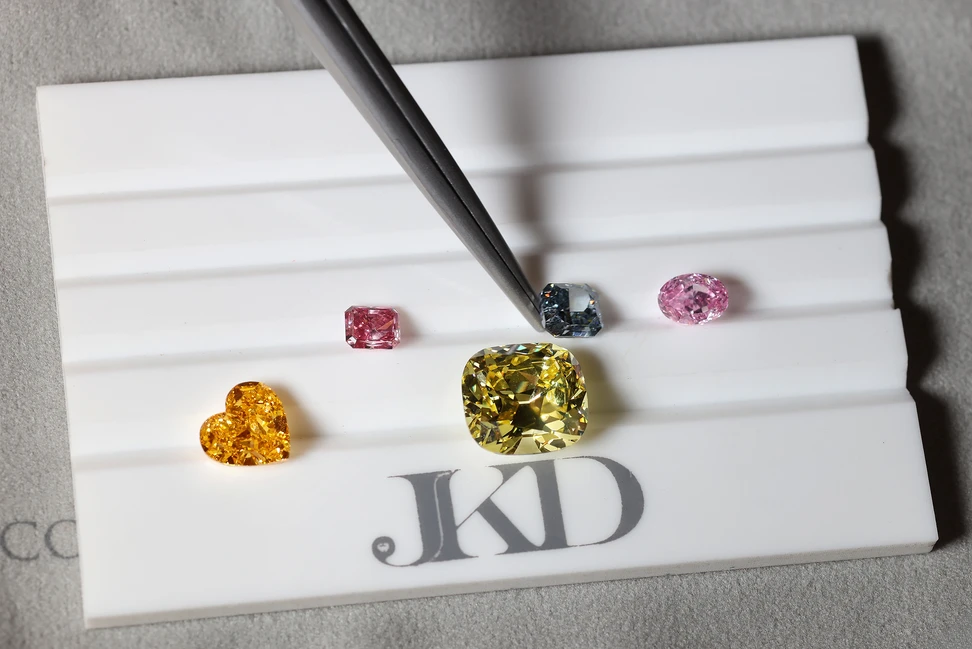
Coloured diamonds in all shapes and sizes are a speciality of Julius Klein
This philosophy governs everything he turns his hand to. Whether fine-tuning a 10-carat D Flawless or coaxing more light into a honey-coloured diamond, Mark insists that the same attention to beauty applies. “The process doesn’t change,” he tells me. “The difference is only in the price per carat, not in the care. Every stone is planned, marked, cut and polished with the same deliberation because every diamond deserves to reach its full potential.”
He recounts a recent project he oversaw: a pair of 6-carat Asscher-cut diamonds that he chose to recut, sacrificing weight to achieve a more open culet and better light return. “Some people wouldn’t cut away weight to make a diamond more beautiful, let alone two that match,” he says. “But this is precisely what gives them their soul.”
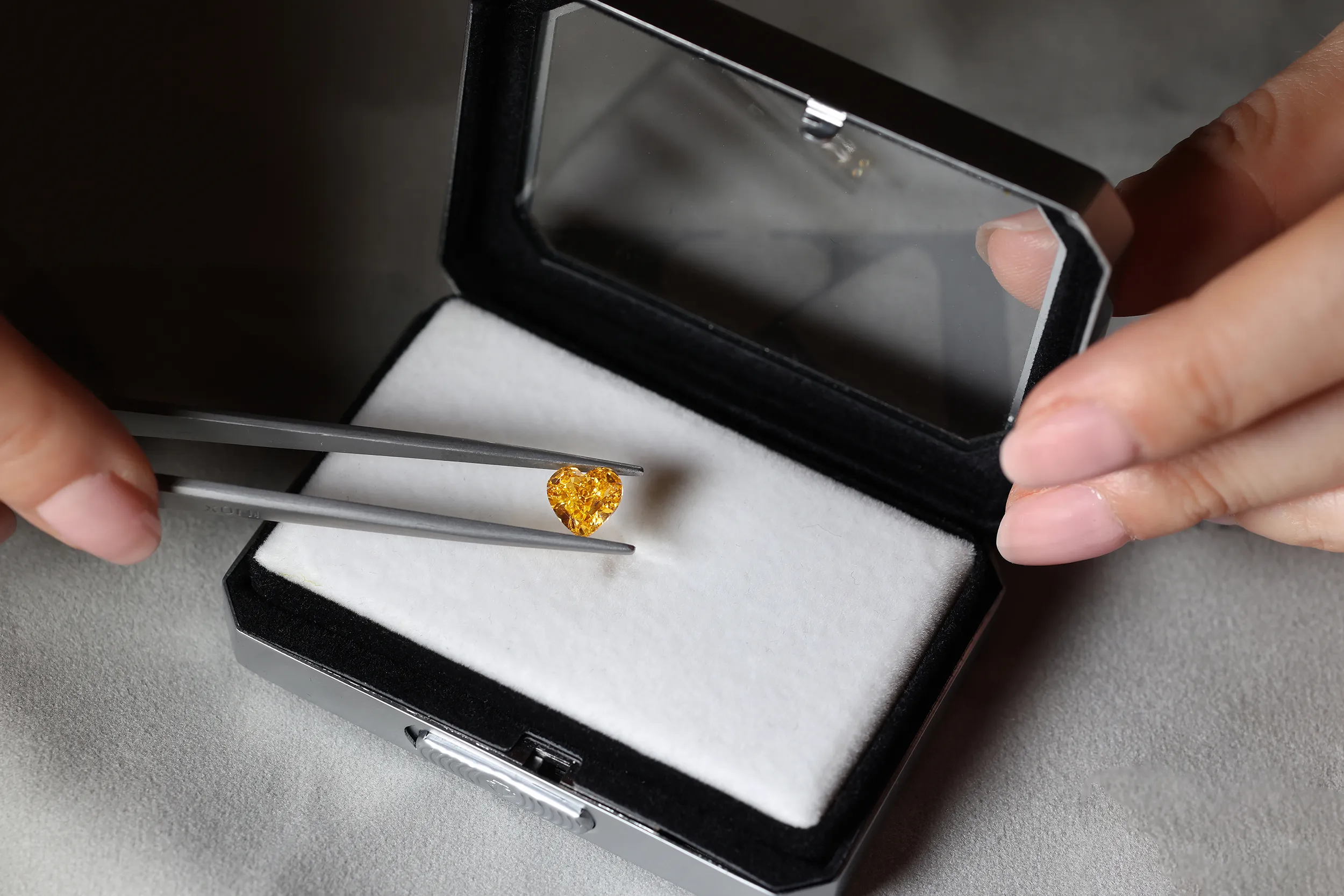
Katerina examines a loose Fancy Vivid Yellow-Orange heart shape diamond
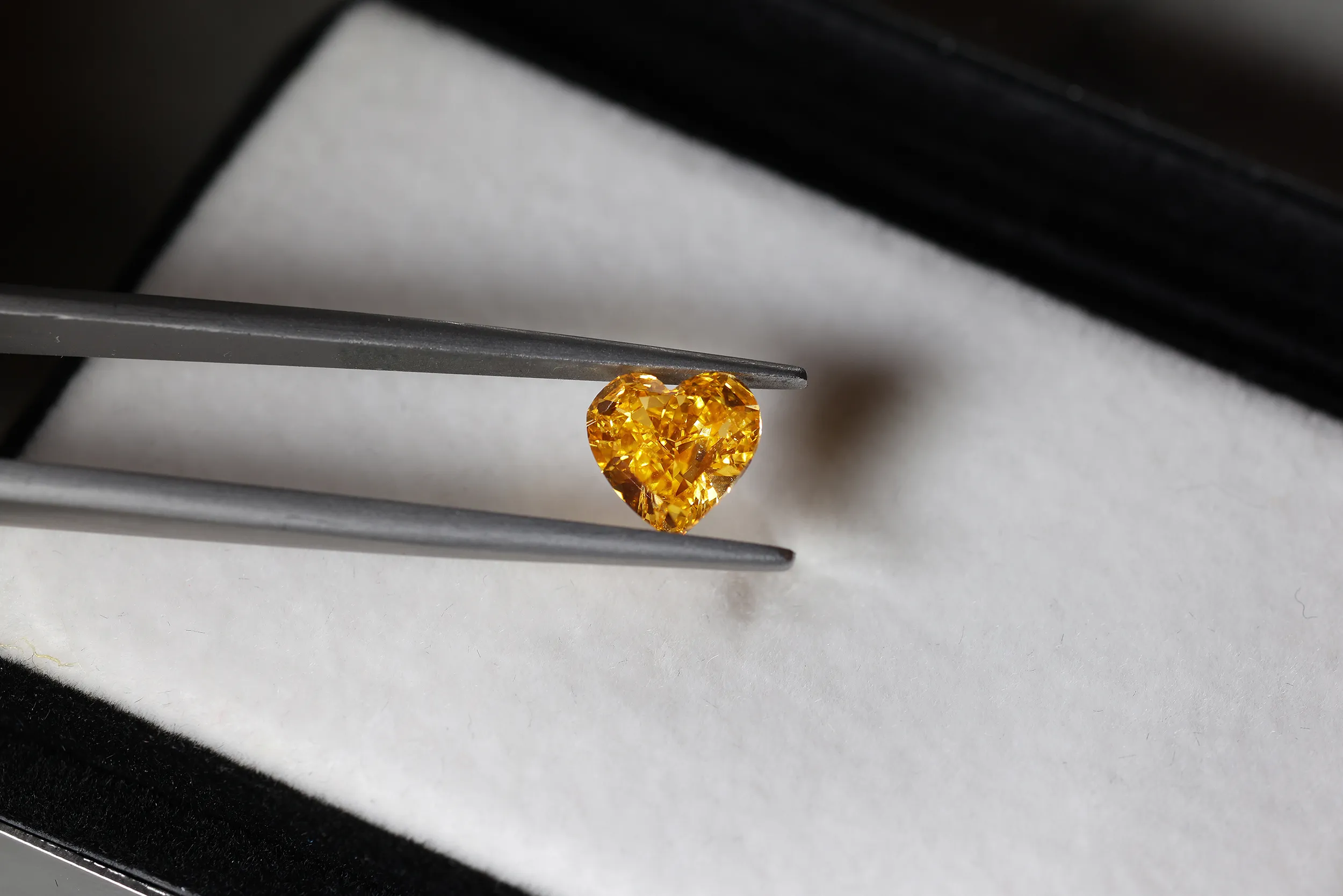
A closer look at the Fancy Vivid Yellow-Orange heart shape diamond
It’s a refreshing perspective that elevates the diamond beyond its grading report and back into the realm of emotion. Beauty, after all, isn’t a number; it’s a feeling. And in Mark’s world, it’s the pursuit of that feeling that continues to set Julius Klein apart in the world of natural diamonds.
When I ask Mark how the diamond world has changed, he says, “You can’t just be the guy with the big diamonds anymore. People want something that feels personal—something with character.” Julius Klein has always dealt in rarity, but today that definition is expanding. Under Mark’s direction, the company is a major supplier of not only the most coveted colourless diamonds but also shields, lozenges, kites and Old Mine and Old European cuts—antique shapes once considered unfashionable. “They were dead for years,” he says. “Now people love them again because they’re distinctive—they have personality.”
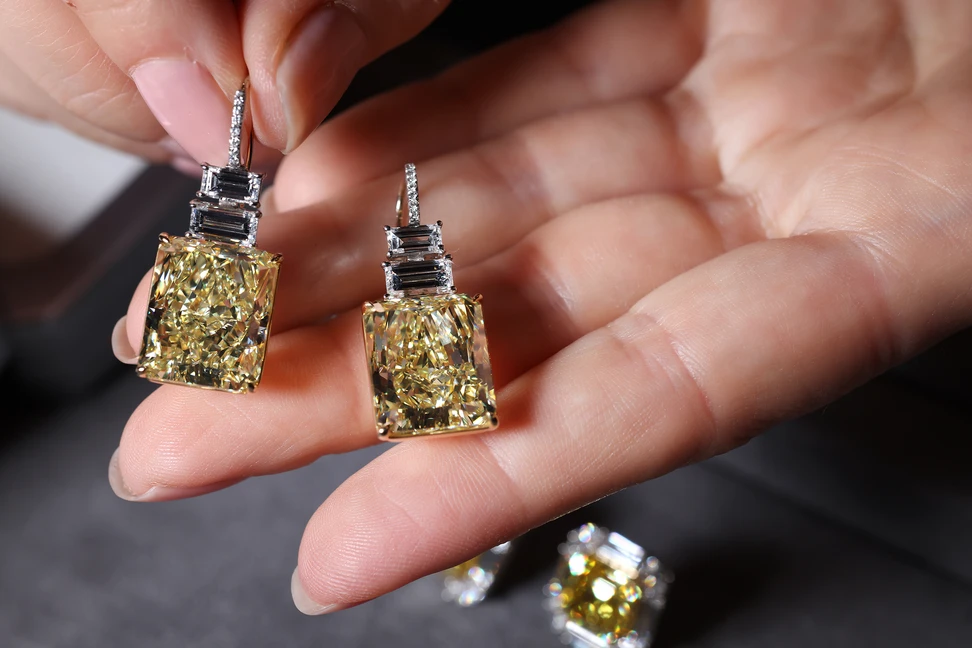
Julius Klein has long been known as “the brand behind the brands”, supplying exceptional diamonds and jewellery to major jewellery houses
Mark’s diamond cutters often reshape stones to create perfect pairs or to harmonise with coloured gemstones. His decision, years ago, to start buying brown diamonds raised eyebrows at the time. “My father thought I was crazy,” he laughs. “Now they’re everywhere.” As with his father and grandfather before him, Mark has a knack for sensing where the market is heading next. Today, those seeking the most in-demand cuts and colours, whether a brown diamond, timeless Old Mine cut or an elongated baguette, know they will find them at Julius Klein.
From the resurgence of coloured gems to the rise of stackable designs and the embrace of “athleisure jewellery”—pieces that bring diamonds into everyday life—the evolving ways people choose to express themselves are a constant source of inspiration. “There’s never a time people don’t want jewellery,” he tells me. “It’s just the styles that change.”
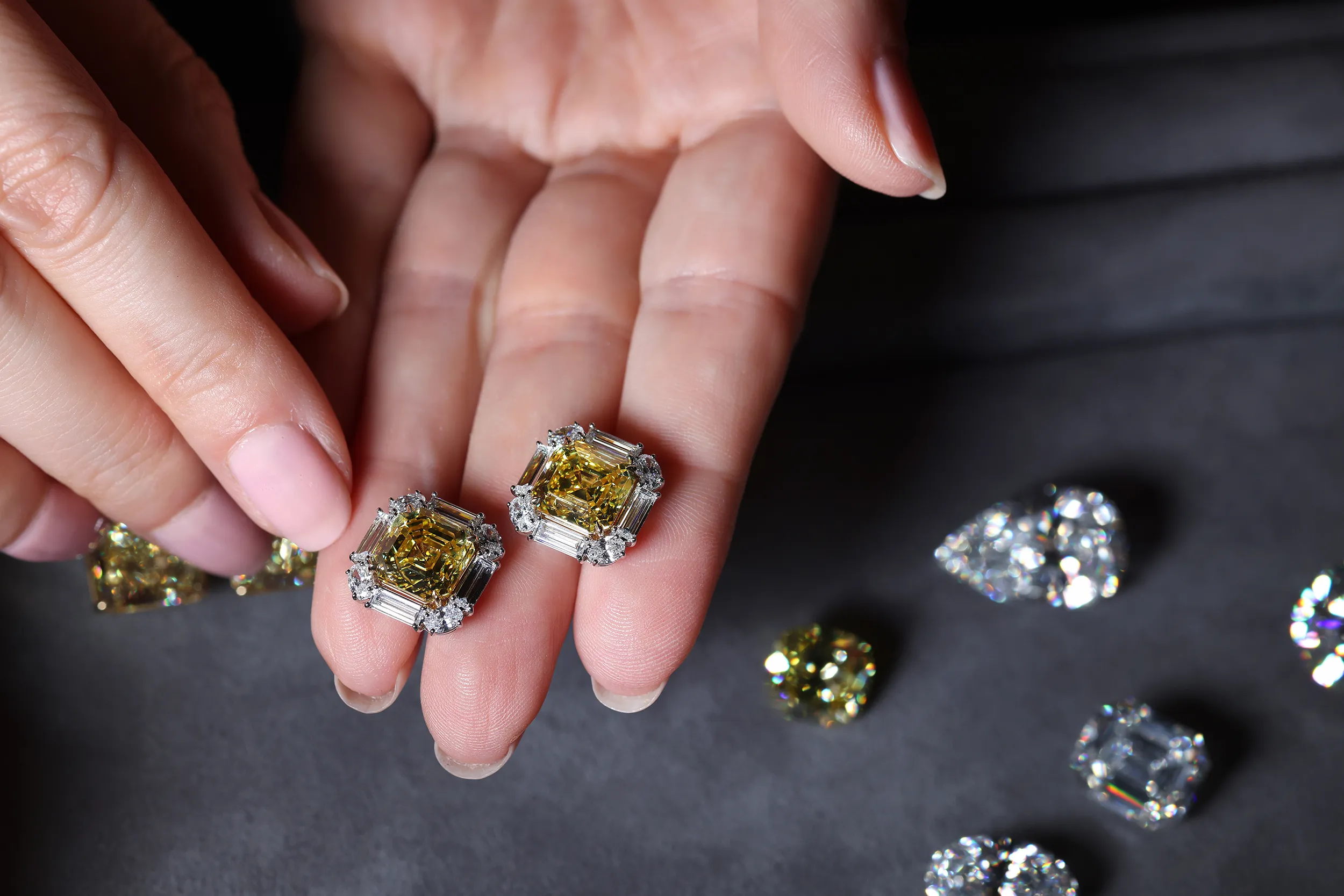
Julius Klein earrings set with Vivid Yellow square emerald cut diamonds, framed by colourless baguette and oval cut diamonds
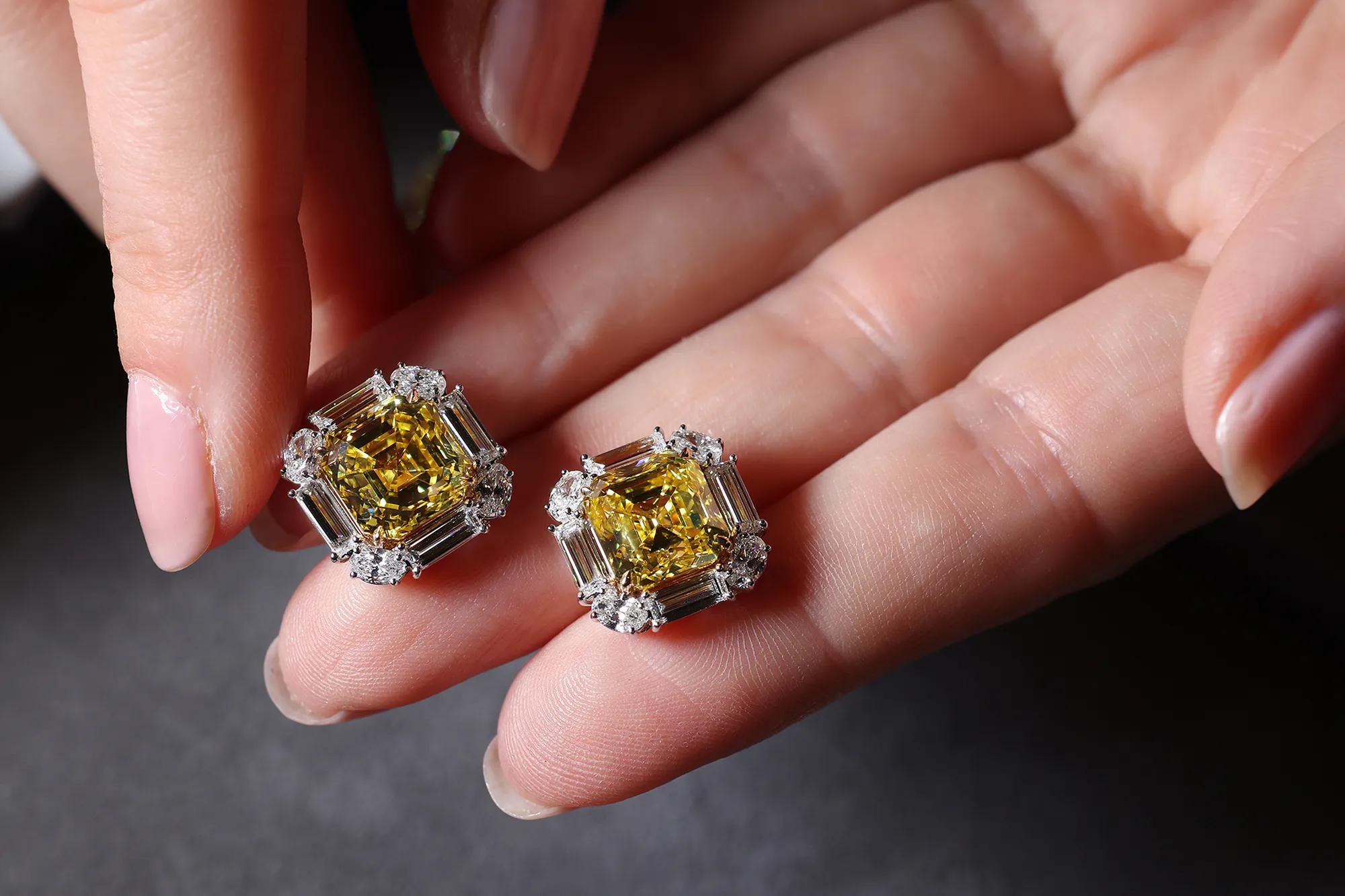
Julius Klein earrings set with Vivid Yellow square emerald cut diamonds, framed by colourless baguette and oval cut diamonds
Listening to him, I can’t help but agree. The way women wear diamonds today has fundamentally changed. We no longer save them for black-tie events and because of that, jewellery has become more versatile and more human. Now, we wear them as part of our everyday life. And as Mark speaks, it’s clear he sees Julius Klein as an active participant in this evolution, with the company opening its doors, both literally and figuratively, to a new kind of collector: one who values individuality over tradition.
Despite its international reach, Julius Klein is perfectly content to exist behind the scenes. The company has long been known within the trade as “the brand behind the brands”—the trusted source that supplies exceptional diamonds and jewellery to major jewellery houses, independent retailers, private jewellers and concierge services. “We don’t need our name on the box,” Mark says. “Our craftsmanship speaks for itself.” And it does. Whether a diamond ends up in a one-of-a-kind high jewellery creation or a timeless engagement ring, the Julius Klein hallmark is always there—in the balance, the cut, the care.
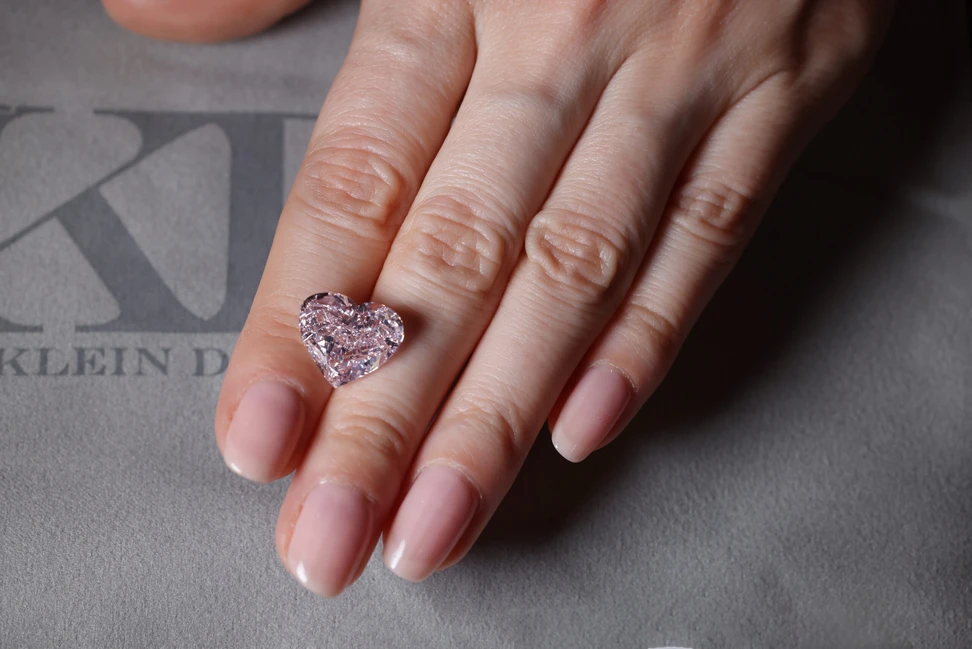
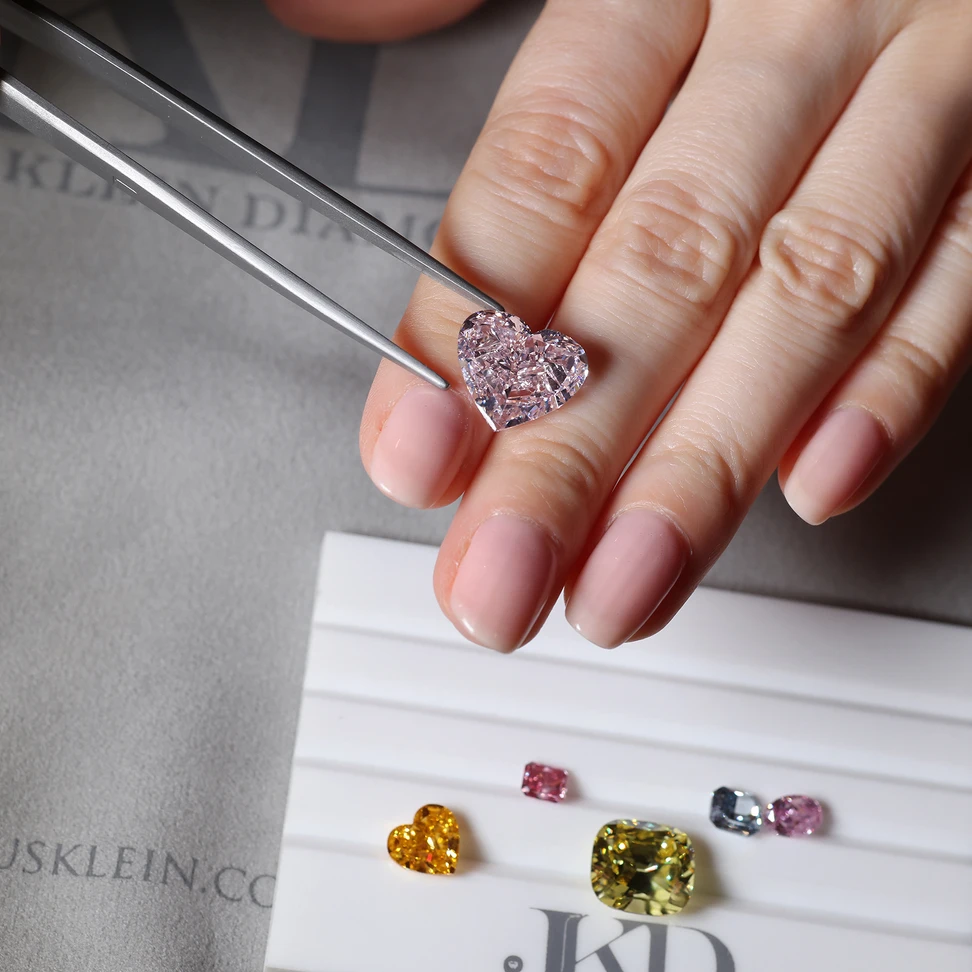
A 9 carat Fancy Pink heart shape diamond, cut and polished by Julius Klein
The jewellery the company creates is crafted with these partners in mind. These are pieces designed to sit within another jeweller’s universe—high jewellery and true one-of-a-kinds that retailers can present to their clients as part of their own offering. “We help build their brand, their way,” Mark tells me. “Our role is to give them the support and expertise to create something exceptional.” Whether a partner is searching for a single stone to design around or wants to collaborate with Julius Klein’s in-house design and production teams to bring a unique piece to life, the approach is the same: flexible, collaborative and entirely tailored.
That support extends far beyond sourcing. The designers at Julius Klein gravitate towards combinations that feel unexpected—sophisticated, yet never ordinary. For Mark and his team, the smallest decisions are often the ones that matter most. When I met Mark at the JCK show in Las Vegas last year, he told me that side stones are never selected at random, with each one deliberately chosen to complement and enhance the shape of the centre stone. “We prefer not to call them side stones,” he shares. “They’re accent stones because they complete the story.” He compares the process to framing art: if the frame is wrong, it distracts; if it’s right, it elevates the whole piece.
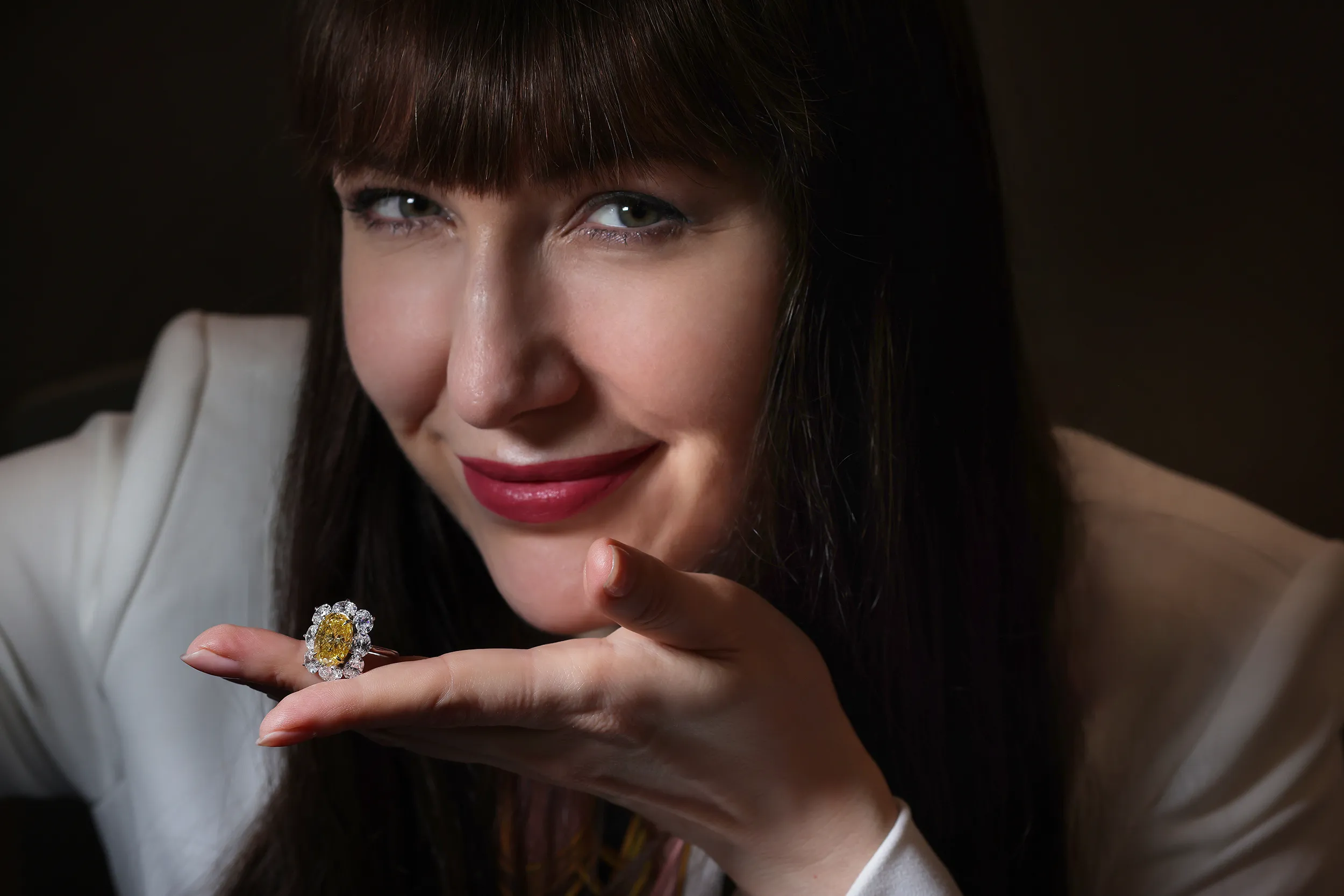
Julius Klein cluster ring, set with a 6 carat Vivid Yellow oval cut diamond, surrounded by eight colourless oval diamonds
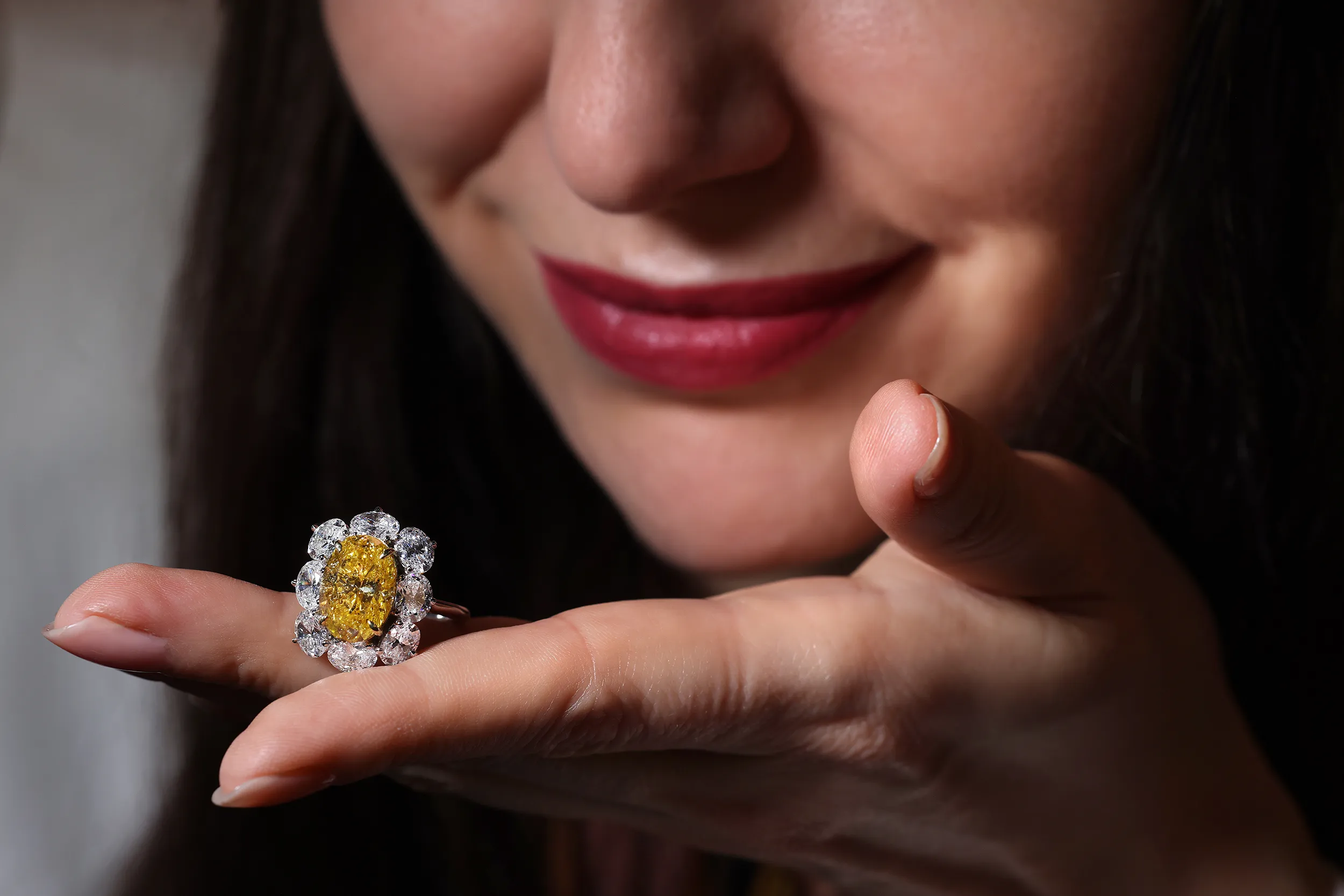
A closer look at the 6 carat Vivid Yellow oval cut diamond cluster ring by Julius Klein with a colourless oval diamond surround
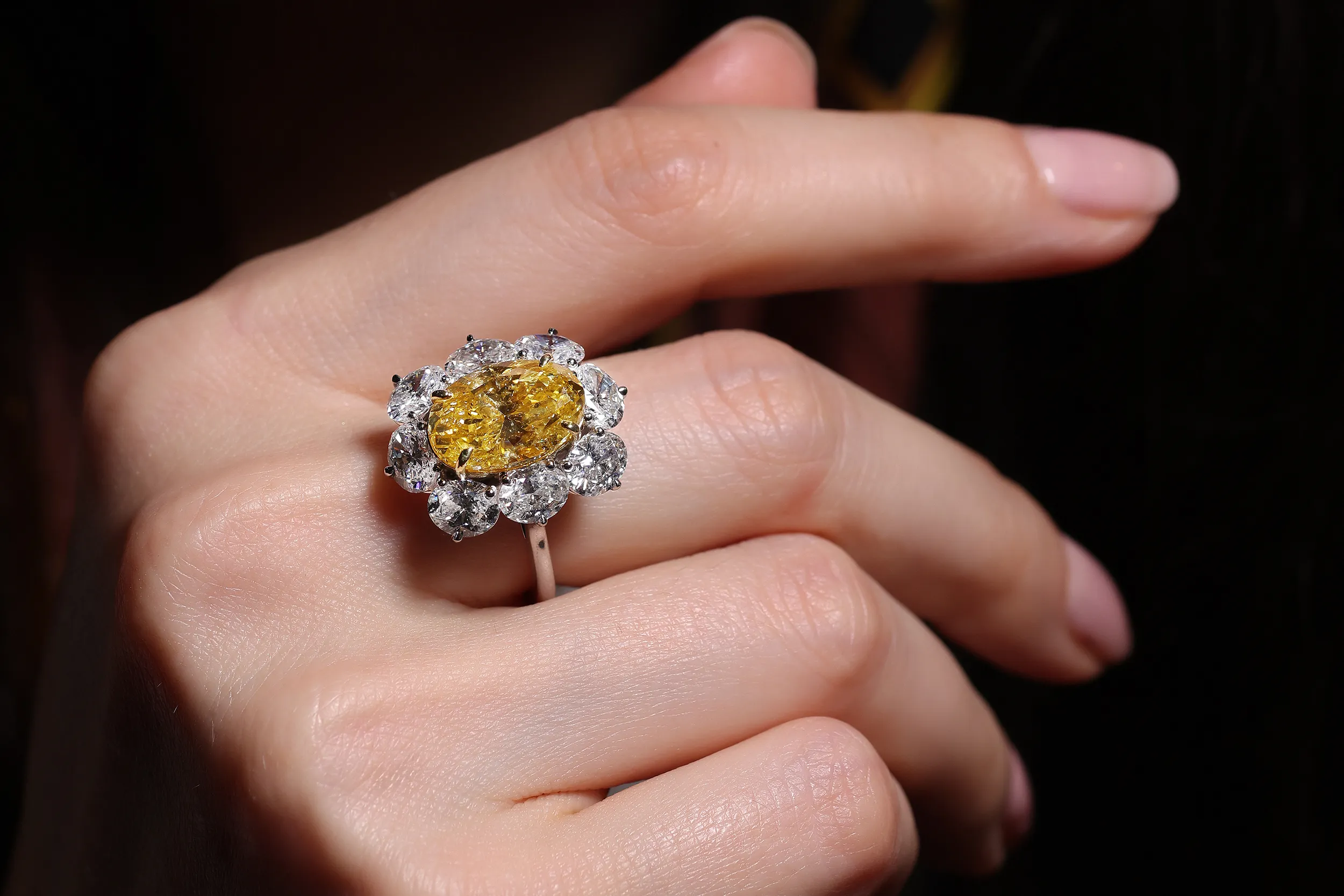
Whether a diamond ends up in a one-of-a-kind jewel or a timeless engagement ring, the Julius Klein hallmark is always there—in the balance, the cut and the care
Beyond the diamonds themselves, there’s a broader legacy at work. The company’s long-standing commitment to ethical sourcing and community development stretches from its partnerships in Africa to its philanthropic initiatives closer to home. In Namibia and Botswana, Julius Klein invests in training local cutters and supporting education projects, ensuring that the diamond trade enriches the communities from which it draws its brilliance.
In New York, the newly established Ella Klein Internship with the Women’s Jewelry Association honours the family matriarch’s spirit of mentorship and empowerment, helping the next generation of women enter the trade with confidence. This sentiment echoes the company’s own motto—From Mine, to Klein, to You—a reminder that every diamond’s journey at Julius Klein is, at its core, a human one, shaped by the hands, choices and passions of those who bring its light to life.
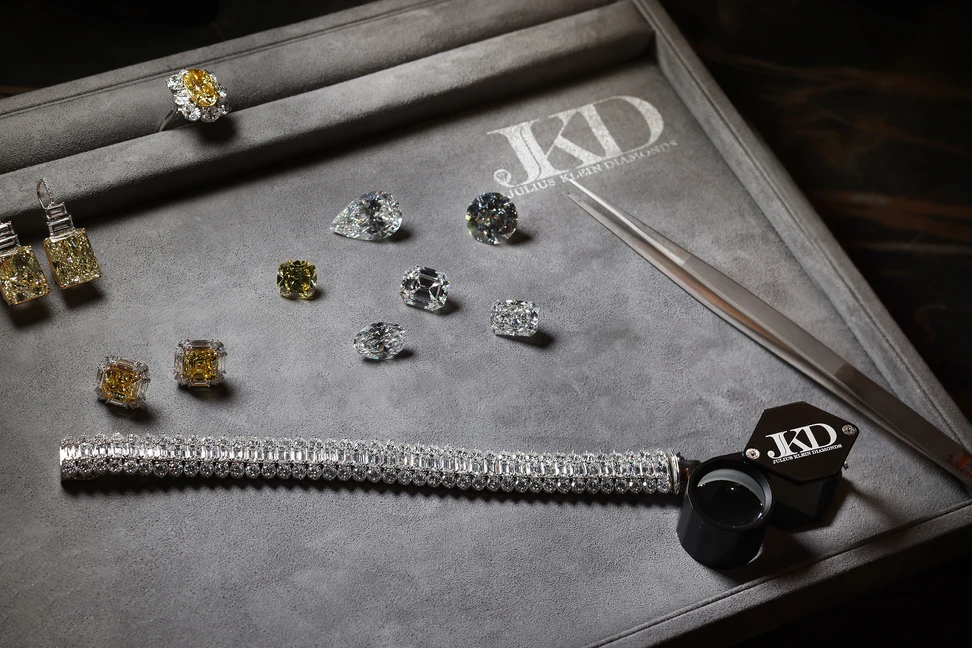
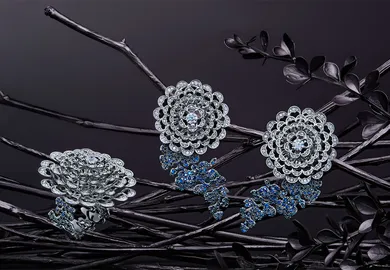
An array of loose diamonds and high jewellery on display at Julius Klein
As our conversation winds down, Mark’s energy never falters. He speaks with the same enthusiasm about future projects as he does about the stones on his desk. His inquisitiveness stretches far beyond the diamond district—he tells me about his dream of cycling from city to city on a kind of “gemstone expedition”, discovering new materials, ideas and people along the way. It’s a metaphor for how he moves through the world: open, observant, always searching.
“My goal is simple,” he says as he gathers the trays back into place. “I want someone to look at a stone and feel something—like it’s speaking directly to them.” It’s said without theatrics, just a genuine conviction from someone who has spent his life around diamonds and approaches every one with curiosity. Mark honours the precision of his grandfather and the daring of his father, but he’s also charting his own path. He isn’t trying to reinvent the Julius Klein legacy so much as keep it moving forwards and outwards, expanding into new shapes, new colours and new ways of perceiving beauty.
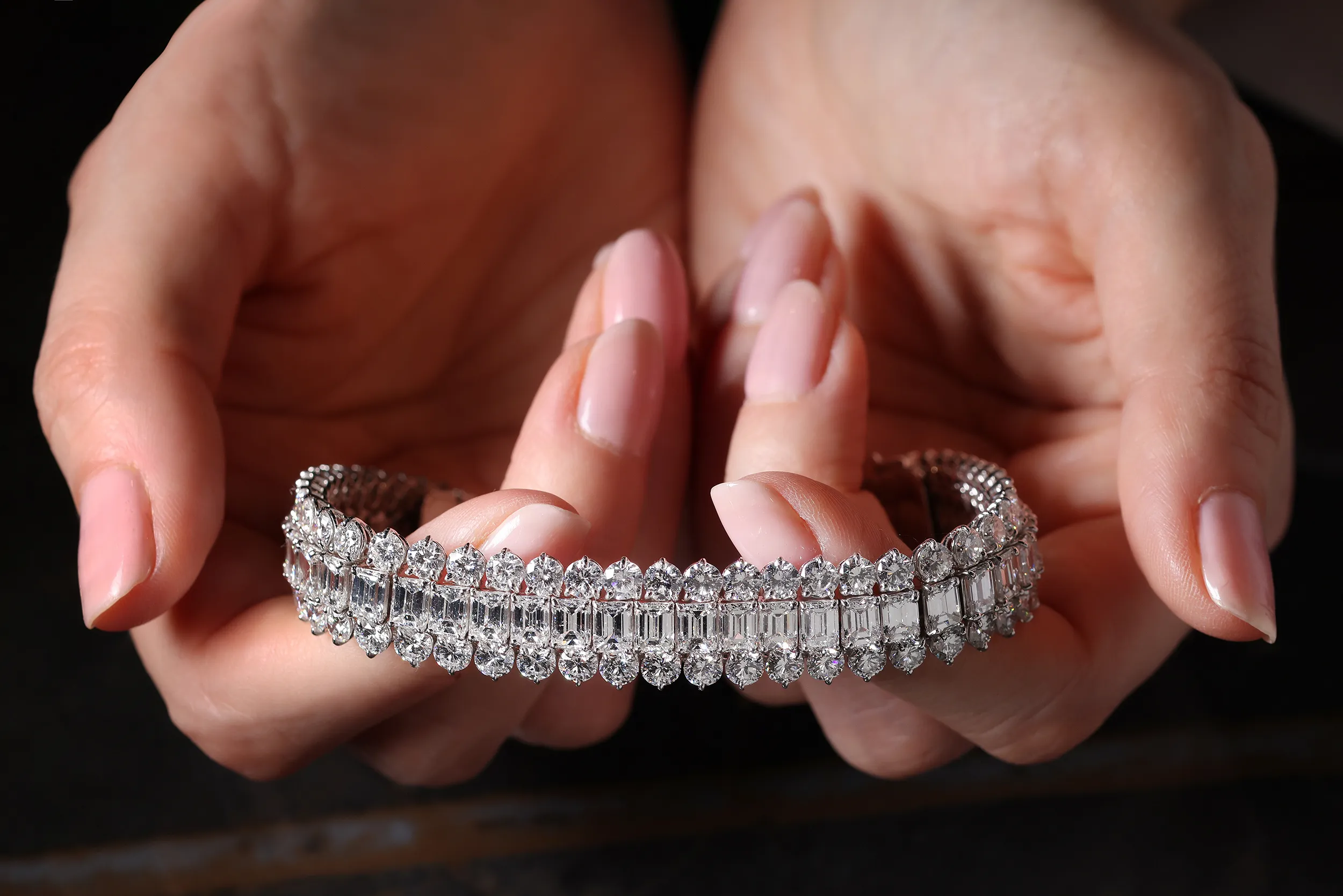
An emerald cut and round diamond high jewellery bracelet by Julius Klein
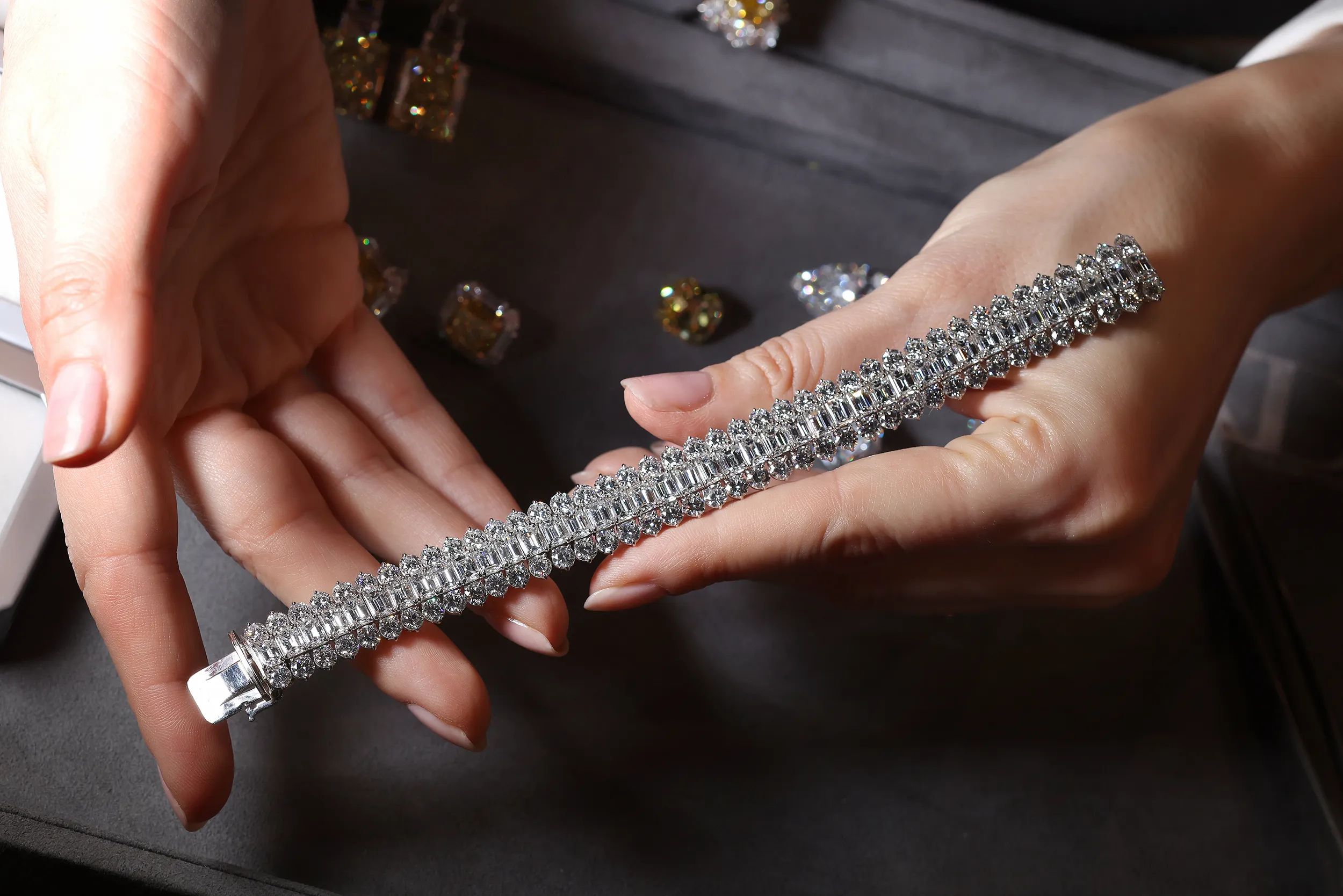
An emerald cut and round diamond high jewellery bracelet by Julius Klein
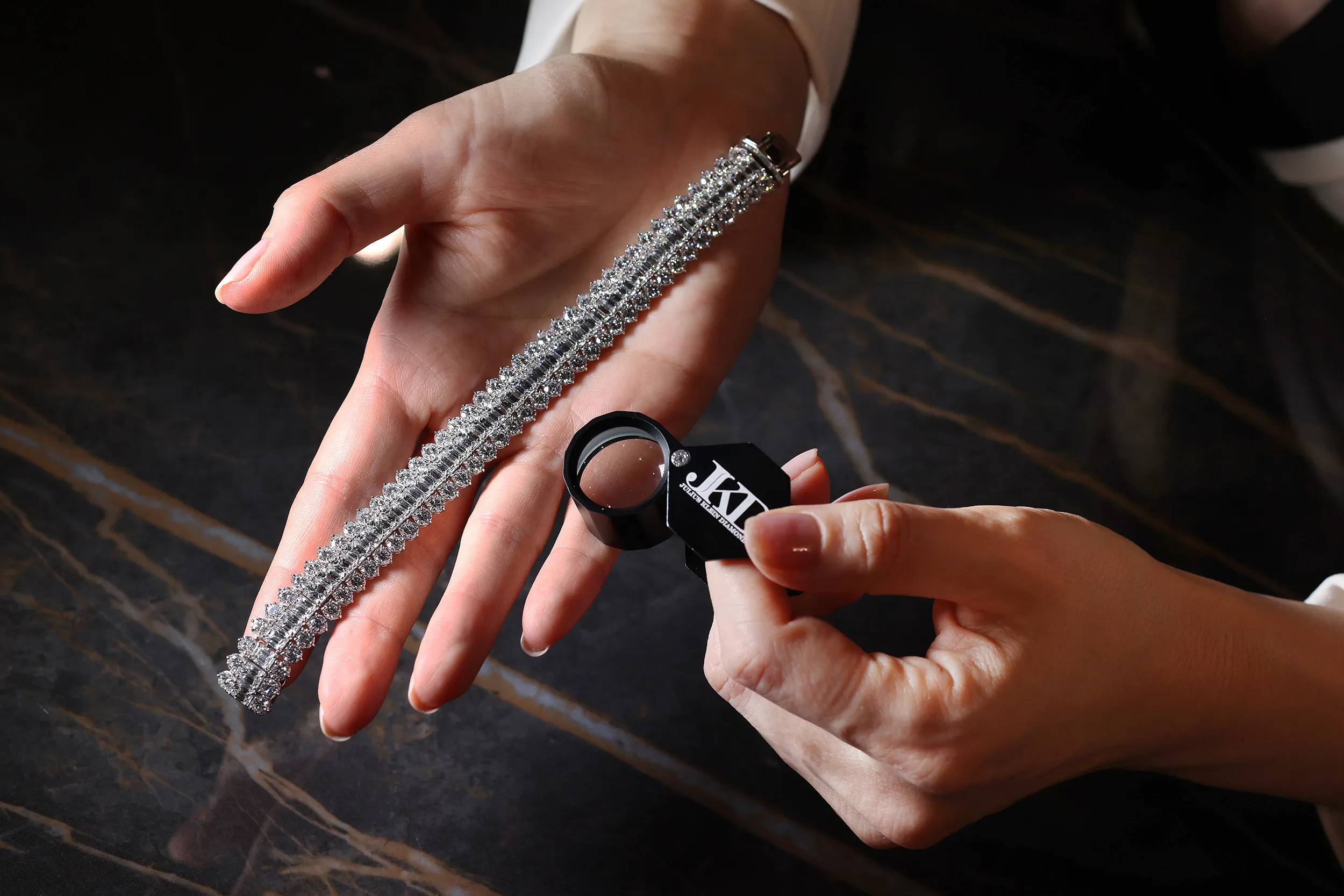
An emerald cut and round diamond high jewellery bracelet by Julius Klein
In his hands, Mark leads a diamond house that stays true to its roots while paying close attention to what clients want today. It’s this clear, confident direction and forward-thinking outlook that make Julius Klein the go-to destination for designers, retailers and collectors seeking diamonds of distinction.

WORDS
Katerina Perez Is a jewellery insider, journalist and brand consultant with more than 15 years’ experience in the jewellery sector. Paris-based, Katerina has worked as a freelance journalist and content editor since 2011, writing articles for international publications. To share her jewellery knowledge and expertise, Katerina founded this website and launched her @katerina_perez Instagram in 2013.
RelatedArticles
Discover the brand: the story from various angles.